IYFCH22-49MICRO ULTRIX BIPLANE
Hobbico Inc
Click to zoom
Application Details
- Equipment Class
- DXX - Part 15 Low Power Communication Device Transmitter
- Date of Grant
- Oct 16, 2005
- Application Purpose
- Original Equipment
- Date of Application
- Oct 16, 2005
- Equipment Note
- MICRO ULTRIX BIPLANE
- Frequency Range
- 49.86000000 - 49.86000000
- Company
- Hobbico Inc
- Country
- United States
Documents & Files
Document Text
Text extracted from the exhibit documents filed with the FCC. Open a document above to read the original.
Users Manual
Your MICRO ULTRIX ™ Biplane is not a toy, but rather a sophisticated, working model that functions very much like an actual airplane. Because of its realistic performance, the model, if not assembled and operated correctly, could possibly cause injury to yourself and spectators or damage property. We highly recommend that you get experienced, knowledgeable help with assembly and during your first flights, to make your R/C modeling experience totally enjoyable. You’ll learn faster and avoid risking your model before you’re truly ready to solo. Your local hobby shop has information about flying clubs in your area whose membership includes qualified instructors. You can also contact the national Academy of Model Aeronautics (AMA), which has more than 2,500 chartered clubs across the country. Instructor training programs and insured newcomer training are available through any one of these clubs. Contact the AMA at the address or toll-free phone number below. Academy of Model Aeronautics 5151 East Memorial Drive Muncie, IN 47302 (800) 435-9262 Fax: (765) 741-0057 or via the internet at:www.modelaircraft.org 1. Do not alter or modify the model. If you make any modifications, you will void your warranty. 2. Test the operation of the model before each flight to ensure that all equipment is operating properly and that the model remains structurally sound. 3. Fly only on calm days (with wind speeds less than 3 mph) and in large open areas free of trees, people, buildings or any other obstacles. The R/C model hobby becomes more and more enjoyable as your experience grows. Your chances for success and graduation to higher levels are very good if you take your time and follow the flying instructions carefully and completely. We hope you enjoy flying your MICRO ULTRIX Biplane. Electronic Control Unit:This unit controls the motors. Also, it monitors the battery voltage and turns off the motors when the voltage gets low. That way there will be enough battery power to operate the motors for steering during the landing. Motors:The motors rotate the props to provide thrust. NiMH Battery:Rechargeable batteries which are used to power the airplane. Transmitter (TX):This is the hand-held unit that sends the signal to the receiver. As you move the sticks on the transmitter, the motors in the airplane will react accordingly. GLOSSARY PRECAUTIONS PROTECT YOUR MODEL, YOURSELF AND OTHERS. FOLLOW THIS IMPORTANT SAFETY PRECAUTION 2 Welcome to the world of R/C aero modeling. You will find your new hobby to be exciting, very interesting and most of all, a lot of fun. You have purchased, quite possibly, the best flying, the most reliable and the easiest flying R/C airplane available today. Be sure to follow the written instructions completely and in detail. Doing this will assure you of a successful first flight and many continued hours of enjoyment from your new R/C hobby. Caution: Do not use rechargeable (NiCd) batteries . ❏1. Place the transmitter antenna into the top of the transmitter case as shown above. Tighten it down “clockwise” until it has a snug fit. Do not overtighten the antenna. ❏2. The transmitter that controls your airplane requires one alkaline “9V” battery. To install the battery, turn over the transmitter, remove the battery hatch using a Phillips screwdriver and install the battery. Be sure to follow the diagram inside the battery compartment. PREPARE THE TRANSMITTER 3 UNPACKING THE BOX Check the parts against the list below. If any parts are damaged or missing, please call us at: (217) 398-8970. Transmitter Antenna (1)Items not shown: Transmitter (1)Instruction Manual (1) Airplane (1) Charger (1) Extra Propellers (2) PARTS AND HARDWARE LET’S GET STARTED ❏3. Reinstall the battery hatch, switch on the transmitter and check the LEDs on the front of the transmitter. If the green light is on, it is safe to fly. If not, you need to install fresh batteries. Also check to make sure that the batteries are installed correctly. CAUTION: Do not use rechargeable (NiCd) batteries. Do not mix old and new batteries. Do not mix alkaline, standard (carbon-zinc) or rechargeable (NiCd) batteries. ❏1. Remove the battery hatch from the charger by removing the hatch screw with a Phillips screwdriver. ❏2. Following the diagram in the charger, install six “C” size batteries. Make sure the positive (+) and negative (–) poles match up correctly with the diagram molded inside the battery compartment. ❏3. Reinstall the battery hatch by replacing the screw and switch on the charger. If the red light is flashing, the charger is ready to be used. If no lights come on, check to make sure that the batteries are installed correctly. If they are, you need to install fresh batteries. INSTALL BATTERIES IN THE CHARGER 4 ❏1. Before operating your MICRO ULTRIX Biplane you will need to charge the NiMH battery pack in the airplane. To do so, make sure the airplane is switched off (OFF is toward the front of the airplane). ❏2. Turn on the charger. Plug the charger cable into the charge socket on the airplane. The charger will plug in only one way. ❏3. Switch on the charger to begin charging. The red LED will flash as long as the battery is charging. Once the battery is charged, the red LED will turn off and the green LED will turn solid. Be aware that during the charging, the green LED will turn on momentarily. Charging should take 5 to 10 minutes. • Make sure the battery is fully discharged before charging. • Never leave a charging battery unattended. • Never let the battery charge until it feels hot. A hot battery is an overcharged battery. Only let the battery get warm to the touch. • A properly cared for battery pack will last a long time. If the battery pack is continually overcharged or charged at too high of a rate, the life of the battery pack will be shortened. ATTENTION:The product you have purchased is powered by a rechargeable battery. At the end of its useful life, under various state and local laws, it may be illegal to dispos…
Text truncated - open the document above for the full version.
External Photos
PHOTOGRAPH OF THE PRODUCT FRONT VIEW OF THE PRODUCT PHOTOGRAPH OF THE PRODUCT REAR VIEW OF THE PRODUCT
ID Label/Location Info
FCC ID: IYFCH22-49 MADE IN CHINA This device complies with part 15 of the FCC Rules. Operation is subject to the following two conditions: (1) this device may not cause harmful interference, and (2) this device must accept any interference received, including interference that may cause undesired operation.
Internal Photos
PHOTOGRAPH OF THE PRODUCT INNER CIRCUIT TOP VIEW PHOTOGRAPH OF THE PRODUCT INNER CIRCUIT BOTTOM VIEW
Operational Description
Application No.: HM155160 Date: 13 October 2005 FCC ID: IYFCH22-49 Circuit Description The 49.86 MHz crystal oscillator drives the base of Q4 the final/buffer amplifier. The modulation provided by IC. The output of Q4 has the matching network consisting of L2and C6 that limit the harmonic content and effect the proper coupling of the antenna to the output stage. Antenna, Ground and Power Source The antenna consists of a 98.8 long telescoping chrome over brass tubing. There is no external ground connection. The ground is only that of the printed circuit board. Electric current is supplied by a 9 Volt (“6F22” size battery x 1) primary battery. Operation Descriptions The transmitter is a toy airplane operating at 49.86MHz band. The transmitter is powered by a 9Volt battery (6F22) and the transmitting frequency is crystal controlled. There are two joystick to control the forward reverse motor and director of movement. The operation is achieved by different combinations of form pulse modulating signal on the 49.86MHz carrier frequency. Remarks: The transmitter is a 2 Joystick transmitter. The EUT continues to transmit while Joystick is being pressed. It is Pulse transmitter, Modulation byIC; and type is Pulse modulation.
Test Report
香 港 標 準 及 檢 定 中 心 Hong Kong Standards and Testing Centre Date : 2005-10-12 TEST REPORT Page 1 of 17 No. : HM155160 This report shall not be reproduced unless with prior written approval from the Hong Kong Standards and Testing Centre. 香港新界大埔工業村大宏街10號 10 Dai Wang Street, Taipo Industrial Estate, N.T., Hong Kong Tel: (852) 2666 1888 Fax: (852) 2664 4353 Homepage: www.hkstc.org E-mail: [email protected] For full text of “Conditions of Issuance of Test Report”, please refer to overleaf or refer to the website of STC: www.hkstc.org (the section “Application and Quotation”). Applicant: Hobbico Inc 2904 Research Road PO Box:9021 Champaign, IL 61826-9021 United States Description of Samples: Model name: MICRO ULTRIX BIPLANE Model no.: HCAA1993 Brand name: FlyZone FCC ID: IYFCH22-49 Date Samples Received: 2005-09-21 Date Tested: 2005-09-30 Investigation Requested: FCC Part 15 Subpart C Conclusions: The submitted product COMPLIED with the requirements of Federal Communications Commission [FCC] Rules and Regulations Part 15. The tests were performed in accordance with the standards described above and on Section 2.2 in this Test Report. Remarks: ---- K C Lee, EMD for Chief Executive 香 港 標 準 及 檢 定 中 心 Hong Kong Standards and Testing Centre Date : 2005-10-12 TEST REPORT Page 2 of 17 No. : HM155160 香港新界大埔工業村大宏街10號 10 Dai Wang Street, Taipo Industrial Estate, N.T., Hong Kong Tel: (852) 2666 1888 Fax: (852) 2664 4353 Homepage: www.hkstc.org E-mail: [email protected] For full text of “Conditions of Issuance of Test Report”, please refer to overleaf or refer to the website of STC: www.hkstc.org (the section “Application and Quotation”). CONTENT: Cover Page 1 of 17 Content Page 2-3 of 17 1.0 General Details 1.1 Test Laboratory Page 4 of 17 1.2 Applicant Details Page 4 of 17 Applicant HKSTC Code Number for Applicant Manufacturer 1.3 Equipment Under Test [EUT] Page 5 of 17 Description of EUT operation 1.4 Date of Order Page 5 of 17 1.5 Submitted Samples Page 5 of 17 1.6 Test Duration Page 5 of 17 1.7 Country of Origin Page 5 of 17 2.0 Technical Details 2.1 Investigations Requested Page 6 of 17 2.2 Test Standards and Results Summary Page 6 of 17 3.0 Test Results 3.1 Emission Page 7-10 of 17 3.2 Bandwidth Measurement Page 11-12 of 17 香 港 標 準 及 檢 定 中 心 Hong Kong Standards and Testing Centre Date : 2005-10-12 TEST REPORT Page 3 of 17 No. : HM155160 香港新界大埔工業村大宏街10號 10 Dai Wang Street, Taipo Industrial Estate, N.T., Hong Kong Tel: (852) 2666 1888 Fax: (852) 2664 4353 Homepage: www.hkstc.org E-mail: [email protected] For full text of “Conditions of Issuance of Test Report”, please refer to overleaf or refer to the website of STC: www.hkstc.org (the section “Application and Quotation”). Appendix A List of Measurement Equipment Page 13 of 17 Appendix B Duty Cycle Correction During 100 msec Page 14-15 of 17 Appendix C Photographs Page 16-17 of 17 香 港 標 準 及 檢 定 中 心 Hong Kong Standards and Testing Centre Date : 2005-10-12 TEST REPORT Page 4 of 17 No. : HM155160 香港新界大埔工業村大宏街10號 10 Dai Wang Street, Taipo Industrial Estate, N.T., Hong Kong Tel: (852) 2666 1888 Fax: (852) 2664 4353 Homepage: www.hkstc.org E-mail: [email protected] For full text of “Conditions of Issuance of Test Report”, please refer to overleaf or refer to the website of STC: www.hkstc.org (the section “Application and Quotation”). 1.0 General Details 1.1 Test Laboratory The Hong Kong Standards and Testing Centre Ltd. EMC Laboratory 10 Dai Wang Street, Taipo Industrial Estate New Territories, Hong Kong 1.2 Applicant Details Applicant Hobbico Inc 2904 Research Road PO Box:9021 Champaign, IL 61826-9021 United States HKSTC Code Number for Applicant STS002 Manufacturer WaSan Mould & Plastic Manufactory Nanlong Industrial Area, Sanxiang Zhongshan, Guangdong, China 香 港 標 準 及 檢 定 中 心 Hong Kong Standards and Testing Centre Date : 2005-10-12 TEST REPORT Page 5 of 17 No. : HM155160 香港新界大埔工業村大宏街10號 10 Dai Wang Street, Taipo Industrial Estate, N.T., Hong Kong Tel: (852) 2666 1888 Fax: (852) 2664 4353 Homepage: www.hkstc.org E-mail: [email protected] For full text of “Conditions of Issuance of Test Report”, please refer to overleaf or refer to the website of STC: www.hkstc.org (the section “Application and Quotation”). 1.3 Equipment Under Test [EUT] Description of Sample Model Name: MICRO ULTRIX BIPLANE Manufacturer: WaSan Mould & Plastic Manufactory Brand Name: FlyZone Model Number: HCAA1993 Input Voltage: 9Vd.c. (“6F22” size battery x 1) 1.3.1 Description of EUT Operation The Equipment Under Test (EUT) is a Hobbico Inc, MICRO ULTRIX BIPLANE. The transmitter is a 2 Joystick transmitter. The EUT continues to transmit while Joystick is being pressed. It is pulse transmitter, Modulation by IC, and type is pulse modulation. 1.4 Date of Order 2005-09-21 1.5 Submitted Sample(s): 1 Sample per model 1.6 Test Duration 2005-09-30 1.7 Country of Origin China 香 港 標 準 及 檢 定 中 心 Hong Kong Standards and Testing Centre Date : 2005-10-12 TEST REPORT Page 6 of 17 No. : HM155160 香港新界大埔工業村大宏街10號 10 Dai Wang Street, Taipo Industrial Estate, N.T., Hong Kong Tel: (852) 2666 1888 Fax: (852) 2664 4353 Homepage: www.hkstc.org E-mail: [email protected] For full text of “Conditions of Issuance of Test Report”, please refer to overleaf or refer to the website of STC: www.hkstc.org (the section “Application and Quotation”). 2.0 Technical Details 2.1 Investigations Requested Perform ElectroMagnetic Interference measurement in accordance with FCC 47CFR [Codes of Federal Regulations] Part 15 and ANSI C63.4:2003 for FCC Certification. 2.2 Test Standards and Results Summary Tables EMISSION Results Summary Test Condition Test Requirement Test Method Class / Test Result Severity Pass Failed N/A Field Strength of Fundamental Emissions & Spurious Emissions FCC 47CFR 15.235 ANSI C63.4:2003 N/A Radiated Emissions FCC 47CFR 15.209 ANSI C63.4:2003 Class B Conducted Emissions on AC, 0.15MHz to 30MHz FCC 47CFR 15.207 ANSI C63.4:2003 Class B Note: N/A - Not Applicable 香 港 標 準 及 檢 定 中 心 Hong Kong Standards and Testing Centre …
Text truncated - open the document above for the full version.
Test Setup Photos
TEST SET UP PHOTOGRAPH OF THE PRODUCT MEASUREMENT OF RADIATED EMISSION TEST SET UP
Contact Information
Applicant
Neal Cloud(Senior Product Manager)
Test Firm
Hong Kong Standards and Testing CentreWilson Wong
Technical Specifications
| # | Rule Parts | Frequency Range | Power Output |
|---|---|---|---|
| 1 | 15C | 49.86 MHz - 49.86 MHz | - |
Other Applications from Hobbico Inc
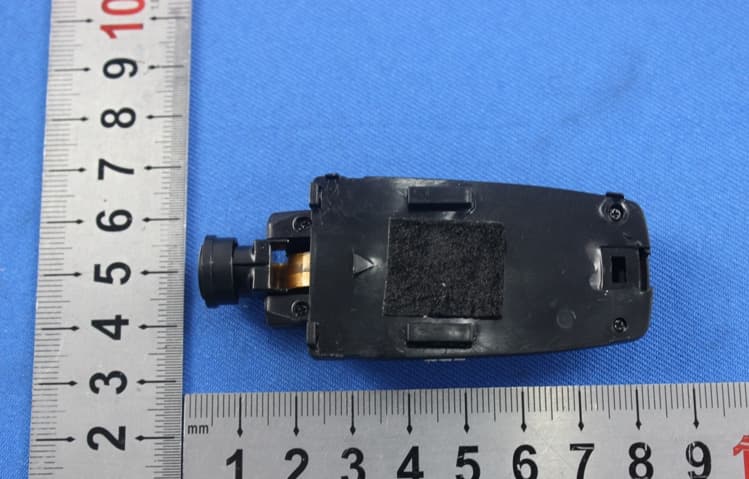
IYFZ1000
Oct 08, 2015wifi module (only for the camera)
Equipment Class
DTS - Digital Transmission System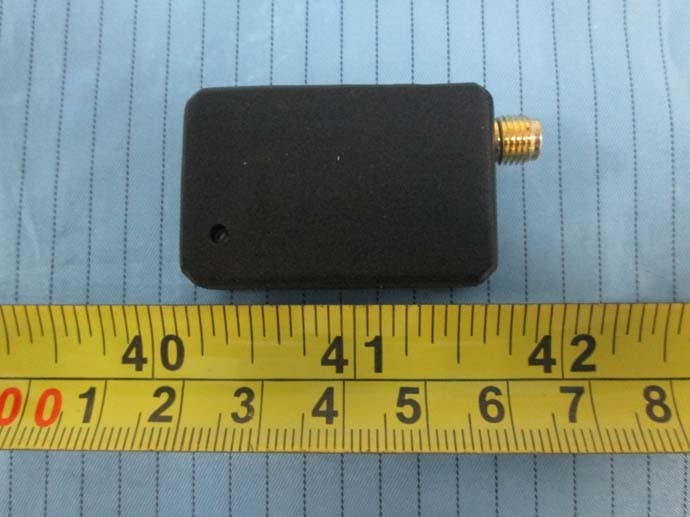
IYFFPVT1
Sep 28, 2015Tactic FPV-T1 5.8GHz 25mW Transmitter
Equipment Class
DXX - Part 15 Low Power Communication Device Transmitter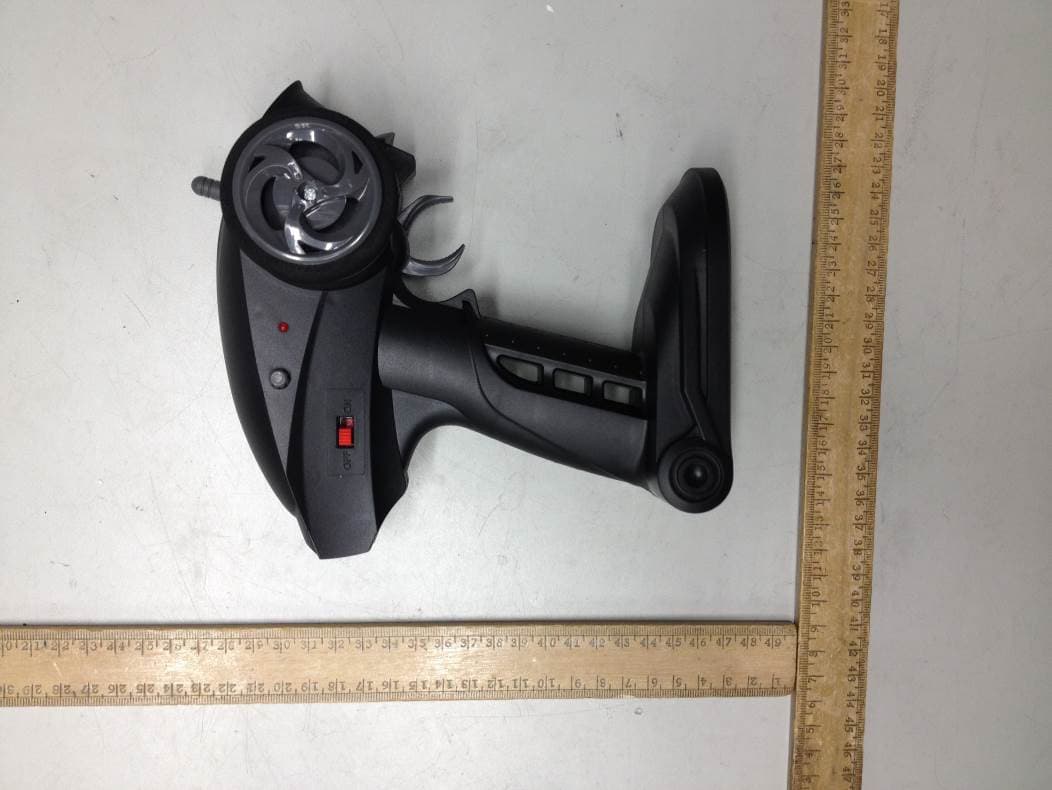
IYFRVLC01
Sep 08, 2015Radio Control Toy Transmitter (2.4GHz)
Equipment Class
DXX - Part 15 Low Power Communication Device Transmitter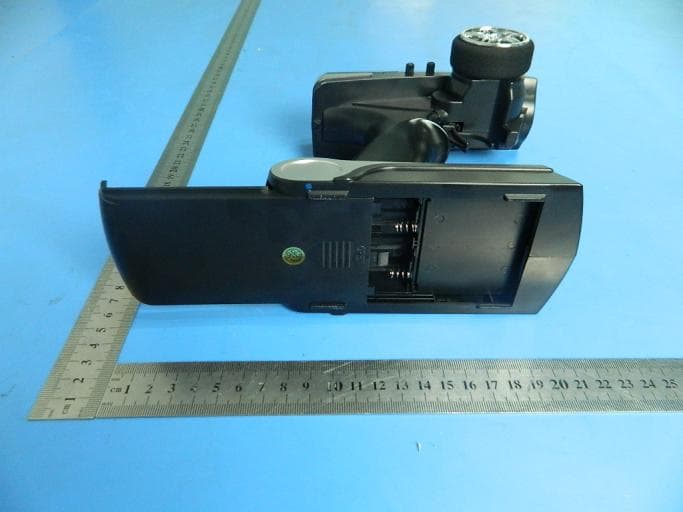
IYFDIDJ1001
Aug 28, 2015D103
Equipment Class
DSS - Part 15 Spread Spectrum Transmitter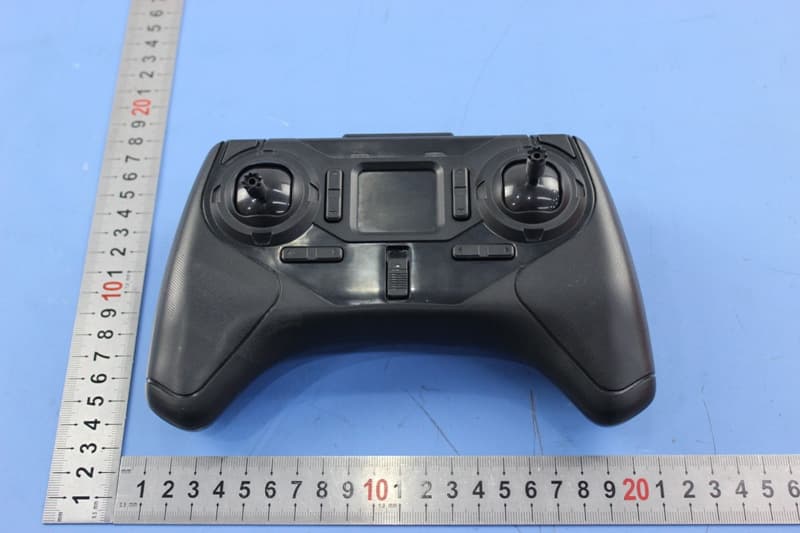
IYFMR100
Jul 01, 2015Radio controlled model quadcopter and transmitter/receiver
Equipment Class
DXX - Part 15 Low Power Communication Device Transmitter