JFZR4180LK8ch Receiver
Audio-Technica Corporation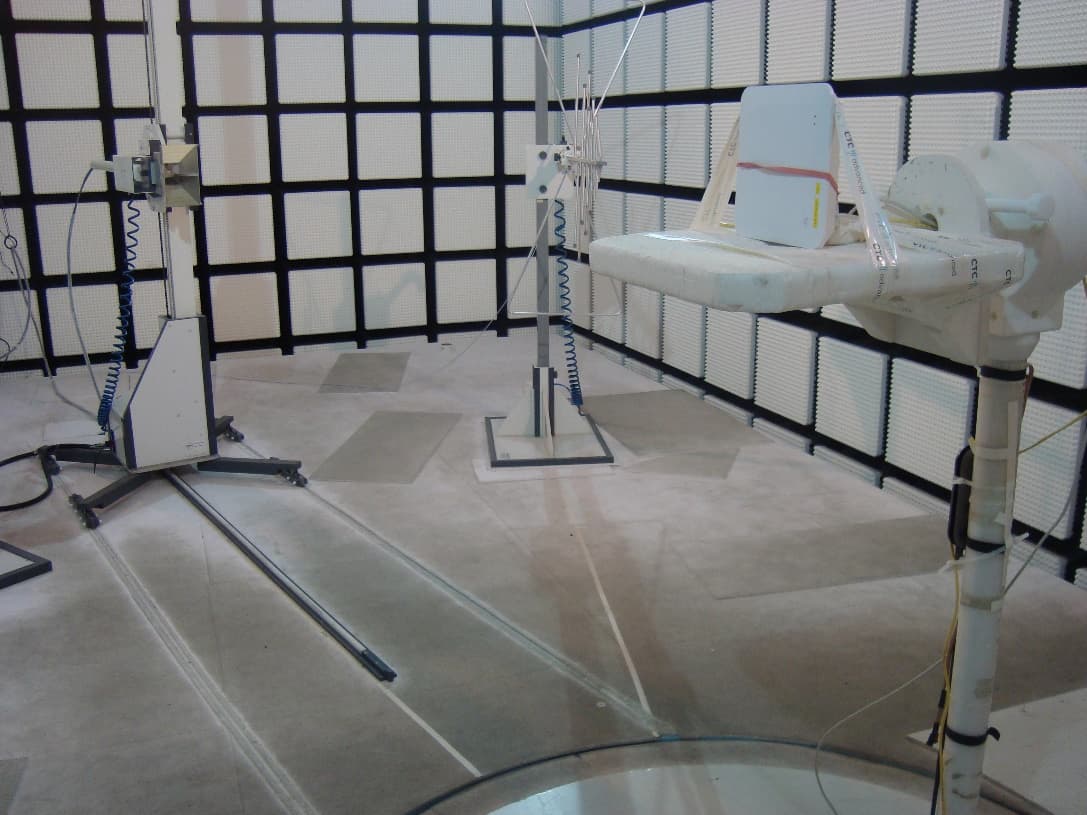
Click to zoom
Application Details
- Equipment Class
- PUB - Part 15 Unlicensed PCS Base Station
- Date of Grant
- Mar 18, 2021
- Application Purpose
- Original Equipment
- Date of Application
- Mar 18, 2021
- Equipment Note
- 8ch Receiver
- Frequency Range
- 1921.53600000 - 1928.44800000
- Company
- Audio-Technica Corporation
- Country
- Japan
Documents & Files
Document Text
Text extracted from the exhibit documents filed with the FCC. Open a document above to read the original.
Users Manual
Engineered Sound Wireless Systems Quick Start Guide English ■Important information Warning: To prevent fire or shock hazard, do not expose this apparatus to rain or moisture. Caution: • Do not expose this apparatus to drips or splashes. • To avoid electric shock, do not open the cabinet. • Refer servicing to qualified personnel only. • Do not expose this apparatus to excessive heat such as sunshine, fire or the like. • Do not subject this apparatus to strong impact. • Do not place any objects filled with liquids, such as vases, on this apparatus. • To prevent fire, do not place any naked flame sources (such as lighted candles) on this apparatus. • Do not install this apparatus in a confined space such as a bookcase or similar unit. • Install this apparatus only in the place where ventilation is good. Battery caution: • Keep batteries out of the reach of children. • Observe correct polarity as marked. • Do not expose the battery to excessive heat such as sunshine, fire or the like. • Always consider the environmental issues and follow local regulations when disposing of batteries. • Remove depleted battery immediately. • Danger of explosion if battery is incorrectly replaced. Replace only with the same or equivalent type. • Do not use a leaking battery. If battery leakage occurs, avoid contact with skin. If contact occurs, immediately wash thoroughly with soap and water. • If battery leakage comes into contact with your eyes, immediately flush with water and seek medical attention. For customers in the USA FCC Notice Warning: This device complies with Part 15 of the FCC Rules. Operation is subject to the following two conditions: (1) This device may not cause harmful interference, and (2) this device must accept any interference received, including interference that may cause undesired operation. Caution: You are cautioned that any changes or modifications not expressly approved in this manual could void your authority to operate this equipment. RF Exposure Statement This device (ESW-R4180LK / ESW-R4180DAN) complies with FCC radiation exposure limits set forth for an uncontrolled environment and meets the FCC radio frequency (RF) Exposure Guidelines. This equipment has very low levels of RF energy that it deemed to comply without maximum permissive exposure evaluation. (MPE). But it is desirable that it should be installed and operated keeping the radiator at least 20cm or more away from person’s body. This device (ESW-T4101 / ESW-T4102/C510 / ESW-T4106 / ESW-T4107) complies with FCC radiation exposure limits set forth for an uncontrolled environment and meets the FCC radio frequency (RF) Exposure Guidelines. This equipment has very low levels of RF energy that is deemed to comply without testing of specific absorption rate (SAR). Contact: Responsible Company: Audio-Technica U.S., Inc. Address: 1221 Commerce Drive, Stow, Ohio 44224, USA Tel: 330-686-2600 For customers in Canada ISED statement This device contains licence-exempt transmitter(s)/receiver(s) that comply with Innovation, Science and Economic Development Canada’s licence-exempt RSS(s). Operation is subject to the following two conditions: 1. This device may not cause interference. 2. This device must accept any interference, including interference that may cause undesired operation of the device. This device complies with RSS-102 radiation exposure limits set forth for an uncontrolled environment. This equipment should be installed and operated with minimum distance 20cm between the radiator & your body. Français ■Informations importantes Avertissement: Pour éviter tout risque de choc électrique ou d’incendie, n’exposez pas cet appareil à la pluie ou à l’humidité. Attention: • Protégez cet appareil des projections et des gouttes d’eau. • Pour éviter tout risque de choc électrique, n’ouvrez pas le boîtier. • Confiez tous travaux d’entretien à un technicien qualifié. • N’exposez pas cet équipement à des températures excessives, telles que celles de la lumière directe du soleil, d’une flamme ou autres. • Ne soumettez pas cet équipement à de forts impacts. • Ne placez pas d’objets remplis de liquide tels que des vases, sur l’appareil. • Pour éviter tout risque d’incendie, ne placez pas de flammes nues (telles que des bougies allumées) sur l’appareil. • N’installez pas cet appareil dans un espace confiné tel qu’une étagère ou un endroit similaire. • Installez cet appareil uniquement dans des endroits avec une bonne ventilation. Mise en garde relative aux piles: • Tenez les piles hors de portée des enfants. • Respectez la polarité correcte indiquée. • N'exposez pas la pile à une chaleur excessive telle que les rayons du soleil, un feu ou autre source de chaleur. • Prenez toujours en considération l'impact environnemental et suivez les réglementations locales lors de la mise au rebut des piles. • Retirez immédiatement toute pile déchargée. • Danger d'explosion en cas de positionnement incorrect de la pile. Remplacez uniquement avec des piles de type identique ou équivalent. • N'utilisez pas une pile qui fuit. En cas de fuite de la pile, évitez tout contact avec la peau. En cas de contact, rincez aussitôt abondamment au savon et à l'eau. • Si le liquide de la pile entre en contact avec vos yeux, lavez aussitôt avec de l'eau et consultez un médecin. Pour les clients aux États-Unis Avis de la FCC Avertissement: Cet appareil est conforme à la Partie 15 du règlement de la FCC. Son fonctionnement est soumis aux deux conditions suivantes : (1) Cet appareil ne doit pas causer d’interférence nocive et (2) cet appareil doit accepter les interférences reçues, y compris les interférences pouvant provoquer un fonctionnement indésirable. Attention: Vous êtes averti que tout changement ou modification non expressément approuvé dans ce manuel est susceptible d’annuler votre droit d’utilisation de cet appareil. Déclaration d’exposition aux radiofréquences Cet appareil (ESW-R4180LK / ESW-R4180DAN) est conforme aux limites d’exposition concernant l’expo…
Text truncated - open the document above for the full version.
External Photos
2021-03-0 2 Page 1 of 5 Annex A: Photographs of the Test Set- up Photo 1: Radiated Emission Photo 2: Radiated Emission Test report no.: 1-1068/20-01-07 2021-03-0 2 Page 2 of 5 Photo 3: Conducted Emission Test report no.: 1-1068/20-01-07 2021-03-0 2 Page 3 of 5 Annex B: External Photographs of the EUT Photo 1: Photo 2: Test report no.: 1-1068/20-01-07 2021-03-0 2 Page 4 of 5 Annex C: Internal Photographs of the EUT Photo 1: Photo 2: Test report no.: 1-1068/20-01-07 2021-03-0 2 Page 5 of 5 Photo 3: Photo 4:
ID Label/Location Info
Audio-Technica Corporation 8CH RECEIVER MODEL: ESW-R4180LK S/No. FCC ID : JFZR4180LK IC : 1752B-R4180LK Warning This device complies with Part 15 of the FCC Rules. Operation is subject to the following two conditions: (1) This device may not cause harmful interference, and (2) this device must accept any interference received, including interference that may cause undesired operation. AB Audio-Technica LINK WARNING! Audio-Technica LINK DEVICES ONLY INPUT: 19V 100mA FREQ.: 1920-1930MHz MADE IN MALAYSIA ESW-R4180LK A MODEL LABEL P# 2347-00080 H49 x W118.75 2021.02.10 Color K
Internal Photos
2021-03-0 2 Page 1 of 5 Annex A: Photographs of the Test Set- up Photo 1: Radiated Emission Photo 2: Radiated Emission Test report no.: 1-1068/20-01-07 2021-03-0 2 Page 2 of 5 Photo 3: Conducted Emission Test report no.: 1-1068/20-01-07 2021-03-0 2 Page 3 of 5 Annex B: External Photographs of the EUT Photo 1: Photo 2: Test report no.: 1-1068/20-01-07 2021-03-0 2 Page 4 of 5 Annex C: Internal Photographs of the EUT Photo 1: Photo 2: Test report no.: 1-1068/20-01-07 2021-03-0 2 Page 5 of 5 Photo 3: Photo 4:
RF Exposure Info
© CTC advanced GmbH Page 1 of 3 BNetzA - CAB - 02/21 - 102 D - P L - 1 2 0 7 6 - 0 1 - 0 3 Maximum Permissible Exposure (MPE) & Exposure evaluation Report identification number: 1-1068/20-01-08 MPE (FCC_ISED) Certification numbers and labeling requirements FCC ID JFZR4180LK ISED number 1752B-R4180LK HVIN (Hardware Version Identification Number) ESW-R4180LK PMN (Product Marketing Name) ESW-R4180LK FVIN (Firmware Version Identification Number) -/- HMN (Host Marketing Name) ESW-R4180LK This report is electronically signed and valid without handwriting signature. For verification of the electronic signatures, the public keys can be requested at the testing laboratory. Document authorised: Alexander Hnatovskiy Marco Scigliano Lab Manager Testing Manager Radio Communications & EMC Radio Communications & EMC Report no.: 1-1068/20-01-08 © CTC advanced GmbH Page 2 of 3 EUT technologies: Technologies: Max. declared power [dBm] Antenna gain max.: [dBi] conducted EIRP UPCS 1925 20.0 (avg) decl. 23. (avg) 3.0 Prediction of MPE limit at given distance - FCC Equation from page 18 of OET Bulletin 65, Edition 97-01 S = PG / 4π R 2 where: S = Power density P = Power input to the antenna G = Antenna gain R = Distance to the center of radiation of the antenna PG = Output Power including antenna gain The table below is excerpted from Table 1B of 47 CFR 1.1310 titled “Limits for Maximum Permissible Exposure (MPE), Limits for General Population/Uncontrolled Exposure” Frequency Range (MHz) Power Density (mW/cm 2 ) Averaging Time (minutes) 300 -1500 f/1500 30 1500 - 100000 1.0 30 where f = Frequency (MHz) Prediction: worst case TechnologyUPCS Frequency1925MHz PDeclared max power input to the antenna20dBm RDistance20cm GAntenna gain3dBi SMPE limit for uncontrolled exposure1.0000 mW/cm 2 Calculated Power density: 0.0397mW/cm² Calculated percentage of limit: 3.97% This prediction demonstrates the following: The power density levels for FCC at a distance of 20 cm are below the maximum levels allowed by regulations. Report no.: 1-1068/20-01-08 © CTC advanced GmbH Page 3 of 3 Prediction of MPE limit at given distance - ISED RSS-102, Issue 5, 2.5.2 RF exposure evaluation is required if the separation distance between the user and/or bystander and the device’s radiating element is greater than 20 cm, except when the device operates as follows: • below 20 MHz and the source-based, time-averaged maximum e.i.r.p. of the device is equal to or less than 1 W (adjusted for tune-up tolerance); • at or above 20 MHz and below 48 MHz and the source-based, time-averaged maximum e.i.r.p. of the device is equal to or less than 4.49/ƒ 0.5 W (adjusted for tune-up tolerance), where ƒ is in MHz; • at or above 48 MHz and below 300 MHz and the source-based, time-averaged maximum e.i.r.p. of the device is equal to or less than 0.6 W (adjusted for tune-up tolerance); • at or above 300 MHz and below 6 GHz and the source-based, time-averaged maximum e.i.r.p. of the device is equal to or less than 1.31 x 10 -2 ƒ 0.6834 W (adjusted for tune-up tolerance), where ƒ is in MHz; • at or above 6 GHz and the source-based, time-averaged maximum e.i.r.p. of the device is equal to or less than 5 W (adjusted for tune-up tolerance). Prediction: worst case UPCS Frequency 1920 MHz R Distance 20 cm P Max power input to the antenna 20 dBm G Antenna gain 3 dBi P G Maximum EIRP 23 dBm P G Maximum EIRP 199.5 mW Exclusion Limit from above: 2.30 W Calculated percentage of Limit: 8.69% Conclusion: RF exposure evaluation is not required.
Test Report
2020-12-17 Page 1 of 62 TEST REPORT Test Report No.: 1-1068/20-01-07 Testing Laboratory Applicant CTC advanced GmbH Untertürkheimer Straße 6 – 10 66117 Saarbrücken/Germany Phone: + 49 681 5 98 - 0 Fax: + 49 681 5 98 - 9075 Internet: http://www.ctcadvanced.com e-mail: [email protected] Accredited Test Laboratory: The testing laboratory (FCC part 15 D) is accredited according to DIN EN ISO/IEC 17025 (2018) by the Deutsche Akkreditierungsstelle GmbH (DAkkS) The accreditation is valid for the scope of testing procedures as stated in the accreditation certificate with the registration number: D-PL-12076-01-04 / -05 Audio-Technica Corp. 2-46-1 Nishi-naruse, Machida 194-8666 Tokyo / Japan Phone: +81 4 27 39 91 06 34 05 Contact: Hiroki Sato e-mail: [email protected] Phone: +81 4 27 39 91 06 34 05 Manufacturer Audio-Technica Corp. 2-46-1 Nishi-naruse, Machida 194-8666 Tokyo / Japan Test Standard/s FCC Part 15, subpart D: 2016 Isochronous UPCS Device 1920 – 1930 MHz Industry Canada RSS-213, Issue 3: 2015 2 GHz Licence-exempt Personal Communication Service Devices (LE-PCS) Test Item Kind of product: 8ch Receiver Product name: ESW-R4180LK HVIN: PMN: FVIN: HMN: FCC ID: ESW-R4180LK ESW-R4180LK / / JFZR4180LK IC: 1752B-R4180LK S/N serial number: Radiated: / Conducted: / HW hardware status: TP2 SW software status: V0035 Frequency [MHz]: 1920 -1930 Type of Modulation: π/2-DBPSK, π/8-D8PSK Number of channels: 5 RF Channels, 5x12 = 60 TDMA Duplex Channels Antenna: Two integrated antennas Power Supply: 19 V, Power supply from Smart Mixer Temperature Range: -20°C to 50°C Test Report authorised: Test performed: 2020-12-17 Lenjoint, Marco 2020-12-17 Wolf, Joachim Lab Manager RC Head of Department EPNS Test report no.: 1-1068/20-01-07 2020-12-17 Page 2 of 62 1 Table of contents 1 Table of contents ......................................................................................................................................... 2 2 General information .................................................................................................................................... 4 2.1 Notes and disclaimer ....................................................................................................................... 4 2.2 Application details ........................................................................................................................... 4 3 Test standard/s: ........................................................................................................................................... 4 4 Test Environment ........................................................................................................................................ 5 5 Summary of Measurement Results ........................................................................................................... 6 6 Test Set-up ................................................................................................................................................... 7 6.1 Frequency Measurements ............................................................................................................... 7 6.2 Timing Measurements ..................................................................................................................... 7 6.3 Conducted Emission Test ............................................................................................................... 7 6.4 Radiated Emission Test ................................................................................................................... 8 6.5 Power Line Conducted Emissions Test ....................................................................................... 10 6.6 Monitoring Tests............................................................................................................................. 11 6.7 Radiated Output Power Test ......................................................................................................... 11 7 Detailed Test Results ................................................................................................................................ 12 7.1 Power Line Conducted Emissions ............................................................................................... 12 7.2 Digital Modulation Techniques ..................................................................................................... 15 7.3 Labeling Requirements .................................................................................................................. 15 7.4 Antenna Requirements .................................................................................................................. 16 7.5 Channel Frequencies ..................................................................................................................... 16 7.6 Automatic Discontinuation of Transmission ............................................................................... 17 7.7 Peak Power Output ........................................................................................................................ 18 7.8 Emission Bandwidth B ........................................................................................................... 23 7.9 Power Spectral Density ................................................................................................................. 26 7.10 In-Band Unwanted Emissions, Conducted .............................................................................. 27 7.11 Out-of-Band Emissions, Conducted ......................................................................................... 32 7.12 Carrier Frequency Stability ........................................................................................................ 36 7.13 Frame Repetition Stability ......................................................................................................... 37 7.14 Frame Perio…
Text truncated - open the document above for the full version.
Test Setup Photos
2021-03-0 2 Page 1 of 5 Annex A: Photographs of the Test Set- up Photo 1: Radiated Emission Photo 2: Radiated Emission Test report no.: 1-1068/20-01-07 2021-03-0 2 Page 2 of 5 Photo 3: Conducted Emission Test report no.: 1-1068/20-01-07 2021-03-0 2 Page 3 of 5 Annex B: External Photographs of the EUT Photo 1: Photo 2: Test report no.: 1-1068/20-01-07 2021-03-0 2 Page 4 of 5 Annex C: Internal Photographs of the EUT Photo 1: Photo 2: Test report no.: 1-1068/20-01-07 2021-03-0 2 Page 5 of 5 Photo 3: Photo 4:
Contact Information
Applicant
Fumio Kamimura(General Manager, Engineering Planning Division)
Test Firm
cetecom advanced GmbHGerald Schmidt
Technical Specifications
| # | Rule Parts | Frequency Range | Power Output | Tolerance |
|---|---|---|---|---|
| 1 | 15D | 1.92 GHz - 1.93 GHz | 100.00 mW | 4.0000000000 ppm |
Other Applications from Audio-Technica Corporation
JFZDT3207DF2
Apr 06, 2026DESK STAND TRANSMITTER
Equipment Class
DWM - Part 15 Wireless MicrophoneJFZT210CS
Jul 17, 2024UniPak Transmitter
Equipment Class
TLD - Licensed LPAS DeviceJFZT220CS
Jul 17, 2024Handheld Transmitter
Equipment Class
TLD - Licensed LPAS DeviceJFZCKS50TW2R
Jun 10, 2024Wireless Headphones
Equipment Class
DTS - Digital Transmission SystemJFZCKS30TWPR
Apr 02, 2024Wireless Headphones
Equipment Class
DSS - Part 15 Spread Spectrum Transmitter