KOBGTE12CUniversal Garage/Gate Opener Transmitter
Lear Corporation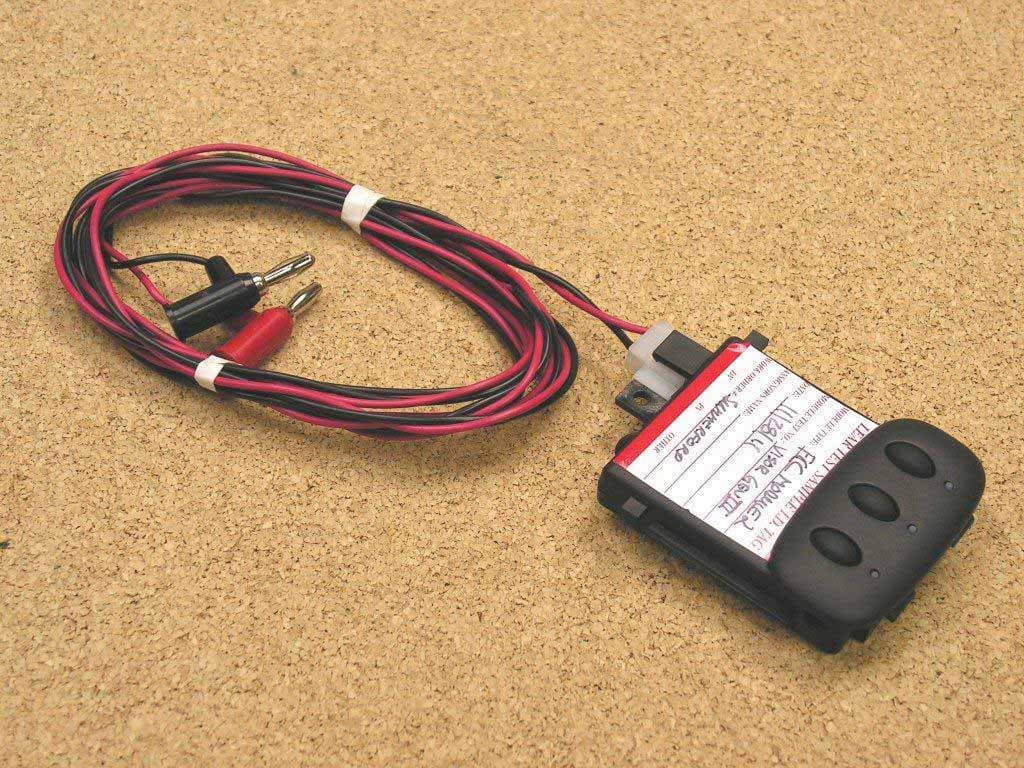
Click to zoom
Application Details
- Equipment Class
- DSC - Part 15 Security/Remote Control Transmitter
- Date of Grant
- Jan 31, 2012
- Application Purpose
- Original Equipment
- Date of Application
- Jan 31, 2012
- Equipment Note
- Universal Garage/Gate Opener Transmitter
- Frequency Range
- 390.00000000 - 390.00000000
- Company
- Lear Corporation
- Country
- United States
Documents & Files
Document Text
Text extracted from the exhibit documents filed with the FCC. Open a document above to read the original.
Users Manual
Lear Corporation World Headquarters 21557 Telegraph Road Southfield, MI 48034 USA Summerford, Jason Page 2 of 2 FCC/IC Statement INFORMATION TO BE INCLUDED IN THE END USER'S MANUAL The following information must be included in the end product user’s manual to ensure continued FCC and Industry Canada regulatory compliance. The ID numbers must be included in the manual if the device label is not readily accessible to the end user. The compliance paragraphs below must be included in the user's manual. ****************************************************************************** FCC ID: KOBGTE12C Model: UHR3V IC: 3521A-GTE12C This device complies with Part 15 of the FCC Rules and with Industry Canada license-exempt RSS standard(s). Operation is subject to the following two conditions: (1) This device may not cause harmful interference, and (2) This device must accept any interference received, including interference that may cause undesired operation. Le présent appareil est conforme aux CNR d'Industrie Canada applicables aux appareils radio exempts de licence. L'exploitation est autorisée aux deux conditions suivantes : (1) l'appareil ne doit pas produire de brouillage, et (2) l'utilisateur de l'appareil doit accepter tout brouillage radioélectrique subi, même si le brouillage est susceptible d'en compromettre le fonctionnement. Note: Changes or modifications not expressively approved by the party responsible for compliance could void the user's authority to operate the equipment. ******************************************************************************
Cover Letter(s)
January 27, 2012 Federal Communications Commission Equipment Approval Services P.O. Box 358315 Pittsburgh, PA 15251-5315 Re: Certification for Lear Transmitter Model/PN(s): UHR3V FCC ID: KOBGTE12C IC: 3521A-GTE12C Please find enclosed application materials for certification of Lear Transmitter. We tested it and found it to comply with FCC Part 15. If there are any questions regarding the application or testing performed, please contact me at the above address or call 734-483-4211, fax 734-647-2106, or e-mail [email protected]. Sincerely, Valdis V. Liepa Research Scientist
Cover Letter(s)
Lear Corporation World Headquarters 21557 Telegraph Road Southfield, MI 48034 USA Federal Communications Commission Applications Processing Branch 7435 Oakland Mills Road Colombia, MD 21046 Re: Letter of Agency for FCC Compliance Testing Please be advised that Lear Corporation authorizes Dr. Valdis V. Liepa of the University of Michigan, Department of Electrical Engineering and Computer Science, Ann Arbor, Michigan, to act on our behalf in front of the Federal Communications Commission with respect to all matters relating to certification. Anti-Drug Abuse Certification: I further certify that no party (as defined in 1.2002 of CFR47, 1992) to this application, including myself, is subject to a denial of federal benefits, that includes FCC benefits, pursuant to Section 5301 of the Anti Drug Abuse Act of 1988, 21 U.S.C. 853(a). Dated this _____25________day of _January_, 2012_. By: _________ __ Jason Summerford______ (Signature) (Print name) Title: Senior RF Engineer___________ _ email: [email protected] _____ ___ On behalf of: Lear Corporation _______ (Company Name) Telephone: (248) 447-1357 ___ Fax: (248) 447-1683 ____
Cover Letter(s)
Re: Certification for Lear Transmitter FCC ID: KOBGTE12C IC: 3521A-GTE12C REQUEST FOR CONFIDENTIALITY Pursuant to FCC 47 CRF 0.457(d) and 0.459 and IC RSP-100, Section 10, Lear requests that a part of the subject application be held confidential. Lear has spent substantial effort in developing this product and it is one of the first of its kind in industry. Having the subject information easily available to "competition" would negate the advantage they have achieved by developing this product. Not protecting the details of the design will result in financial hardship. Type of Confidentiality Requested Exhibit Short Term Permanent (1) ID Label & Location Short Term Permanent (3) External Photos Short Term Permanent 1 (4) Block Diagram Short Term Permanent (5) Schematics Short Term Permanent (7) Test Setup Photos Short Term Permanent (8) User’s Manual Short Term Permanent (9) Internal Photos Short Term Permanent (10) Parts List & Placement Short Term Permanent (11) RF Exposure Short Term Permanent 2 (12) Description of Operation (partial only) 1. Block Diagram includes internal oscillator frequency information that the manufacturer considers to be proprietary. 2. Part of the Description of Operation exhibit contains information that the manufacturer considers to be proprietary. Permanent Confidentiality: Lear requests the exhibits listed above as permanently confidential be permanently withheld from public review. Short-Term Confidentiality (FCC Only): Lear requests the exhibits selected above as short term confidential be withheld from public view for a period of 45 days from the date of the Grant of Equipment Authorization and prior to marketing. If there are any questions regarding this request, please contact me at the above address or call 734-483-4211, fax 734-647-2106 or e-mail [email protected]. Sincerely, Valdis V. Liepa, Research Scientist University of Michigan
ID Label/Location Info
Lear Corporation World Headquarters 21557 Telegraph Road Southfield, MI 48034 USA Summerford, Jason Date: January 3, 2012 RE: Lear Universal Transmitter Model # UHR3V FCC ID: KOBGTE12C IC: 3521A-GTE12C Label Drawing Label Location
Operational Description
FCC Home | Search | RSS | Updates | E-Filing | Initiatives | Consumers | Find People Joseph Brunett <[email protected]> Response to Inquiry to FCC (Tracking Number 972797) oetech@fccsun27w .fcc.gov <oetech@fccsun27w .fcc.gov>Mon, Sep 27, 2010 at 3:07 PM To: [email protected] Office of Engineering and Technology Inquiry: --- Reply from Customer on 09/22/2010 --- Per our telephone discussion today, the following should help to clarify the product's operation in the programing mode. When programming the unit, the consumer selects from a set of 5 different "guess and test" programming modes (4 modes called fixed-code modes that are selected based on the number of dip switches on their garage door remote, and one rolling code mode selected from the make and model of their door opener). Once the user has made this choice, they then employ only that one programming mode in training their door opener receiver. The 8 frequencies certified in the original product are employed across these 5 modes, with the longest guess time belonging to the 9-dip fixed code mode which employs 4 of the certified frequencies in a guess time of 55 seconds. The other 4 modes (8-dip, 10-dip, 12-dip fixed, and rolling code mode) all took less than 55 seconds to complete, and each employed no more than 4 of the certified frequencies. The new product is almost identical, employing the same 5 "guess and test" programming modes plus a non-transmitting gate programing mode. To extend the functionality of the product to a greater number of door openers, 4 new frequencies are being added to the product. For example the 9-dip fixed code programming mode now employs a total of 8 frequencies in less than 55 seconds. This is accomplished by decreasing the time spent at each frequency. All of the "guess and test" programming modes continue to have total guess times less than 55 seconds in the new product. Response: The proposal is acceptable for filing based on approval of the original version and the following. 1) While the device transmits on more frequencies than the original device, the total time in a single programming mode during setup is still within the time approved in the original. (55sec.) 2) The device is designed for a single programming mode based on user selection. 3) The aggregate bandwidth of the frequencies in the programming mode meets the bandwidth requirement. 4) In normal use, the device is still permitted, as approved in the original device, of transmitting at 315 Mhz and 390 MHz with a single button press to mitigate interference as noted in the original request. Future proposals do not need coordination with the FCC if it operates within the above conditions. If the above is confirmed, no other reply is necessary. Otherwise, please explain. 9/28/2010Gmail - Response to Inquiry to FCC (Tr... https://mail.google.com/mail/?ui=2&ik...1/2
Operational Description
Lear Car2U™ Home Automation System Lear Car2U System Owner’s Guide Page 1 The Lear Car2U™ System The Lear Car2U™ System is a universal transmitter that includes two primary features – a garage door opener and a platform for remote activation of devices within the home. The Car2U System’s garage door opener function replaces the common hand-held garage door opener with a three-button transmitter that is integrated into the interior of your vehicle. After being programmed for garage doors, the Car2U System transmitter can be programmed to operate security devices and home lighting systems. Additional Lear Car2U System information can be found online at www.learcar2U.com or by calling the toll-free Car2U System help line at 866-572- 2728. Types of Garage Door Openers (Rolling Code and Fixed Code) The Lear Car2U System may be programmed to operate rolling code and fixed code garage door openers. • Rolling code garage door openers were produced after 1996 and are code protected. Rolling code means the coded signal is changed every time your remote control garage door opener is used. • Fixed code garage door openers were produced prior to 1996. Fixed code uses the same coded signal every time. It is manually programmed by setting DIP switches for a unique personal code. To see if your hand-held transmitter is rolling or fixed code, open the battery cover. If your garage door transmitter does not have switches (shown below) following the rolling code instructions. Lear Car2U™ Home Automation System Lear Car2U System Owner’s Guide Page 2 If there is a panel of (coded) DIP switches (shown below) follow the fixed code instructions. Programming the Lear Car2U™ System If your garage door opener uses a rolling code transmitter, follow the rolling code instructions for programming starting on page 4. If your garage door opener uses a fixed code transmitter, follow the fixed code instructions for programming starting on page 7. CAUTION • Do not use the Lear Car2U System with any garage door opener that does not have a “stop and reverse” feature. This includes any garage door opener model manufactured before April 1, 1982. • Read the instructions completely before attempting to program the Lear Car2U System. Because of the steps involved, it may be helpful to have another person assist you in programming the transmitter. • Be sure to keep the original remote control transmitter for use in other vehicles as well as for future Lear Car2U System programming. You only need it for fixed code device programming. It is also recommended that upon the sale or lease termination of the vehicle, the programmed Lear Car2U System buttons should be erased for security reasons. Refer to “Erasing Lear Car2U System buttons” or for assistance, contact the toll-free Car2U System help line at 866-572- 2728. • Make sure that people and objects are clear of the garage door opener or security device you are programming. When programming a garage door, it is advised to park outside the garage. Lear Car2U™ Home Automation System Lear Car2U System Owner’s Guide Page 3 Programming Considerations ! Read the instructions completely before attempting to program the Car2U™ System ! The following items may assist you in programming the system o Ladder o Screwdriver o Writing pad and a pencil or pen ! Retain the original transmitter for use in other vehicles as well as for future programming procedures (i.e. new Car2U System-equipped vehicle purchase) ! Upon the sale of the vehicle, it is recommended that the programmed Car2U System buttons should be erased for security reasons (refer to “Erasing the Lear Car2U System buttons”) ! Repeat the programming steps for each garage door opener you wish to program up to a maximum of three CAUTION Programming the rolling code garage door opener involves time-sensitive actions. Read the ENTIRE procedure prior to beginning so you will know which actions are time-sensitive. If you do not follow the time-sensitive actions, the device will time out and you will have to repeat the procedure. Make sure that your key is ON and engine is OFF while programming the transmitter. Use the following steps to program up to three different devices. Lear Car2U™ Home Automation System Lear Car2U System Owner’s Guide Page 4 Programming the Car2U™ System to Work with a Rolling Code Garage Door Opener If your garage door opener uses a rolling code transmitter, use the following directions for programming. 1. Firmly press the 2 outer Car2U System buttons for 1-2 seconds, then release. 2. Go to the garage to locate the garage door opener motor and its “learn” button. You may need a ladder to reach the unit and you may need to remove the unit’s cover or light lens to locate the “learn” button. Press the “learn” button, after which, you will have 10-30 seconds to return to your vehicle and complete the following steps. If you cannot locate the “learn” button, refer to the Owner’s Manual of your garage door opener or call the toll-free Car2U System help line at 866-572-2728. 3. Return to your vehicle. Press and hold the Car2U System button you would like to use to control the garage door. You may need to hold the button from 5- 20 seconds, during which time the selected button indicator light will blink slowly. Immediately (within 1 second) release the button once the garage door moves. When the button is released, the indicator light will begin to blink rapidly until programming is complete. Lear Car2U™ Home Automation System Lear Car2U System Owner’s Guide Page 5 4. Press and release the button again. The garage door should move, confirming that programming is successful. If your garage door does not operate, repeat the previous steps in this section. After successful programming, you will be able to operate your Car2U System by pressing the button you programmed to activate the opener. The indicator light above the selected button will turn on to confirm that the Car2U System is responding to the button command. Lear Ca…
Text truncated - open the document above for the full version.
Test Report
University of Michigan Radiation Laboratory FCC Part 15, IC RSS-210/Gen - Test Report No. 417124-619 Page 1 of 27 The University of Michigan Radiation Laboratory 3228 EECS Building Ann Arbor, MI 48109-2122 Tel: (734) 764-0500 Fax: (734) 647-2106 Measured Radio Frequency Emissions From Lear Corporation Transmitter FCC ID: KOBGTE12C IC: 3521A-GTE12C Test Report No. 417124-619 January 26, 2012 Copyright © 2012 For: Lear Corporation 21557 Telegraph Rd Southfield, MI 48033 Contact: Jason Summerford [email protected] Phone: 248.447.1357 Fax: 248.447.1689 Testing supervised by: Measurements made by: Valdis V. Liepa Report Approved by:__________________________ Valdis V. Liepa Test report written by: Valdis V. Liepa Research Scientist Summary Tests for compliance with FCC Regulations, CFR 47, Part 15 and with Industry Canada RSS-210/Gen, were performed on a Lear, FCC ID: KOBGTE12C, IC: 3521A-GTE12C. This device under test (DUT) is subject to the rules and regulations as a Transmitter. In testing completed on January 23, 2012, the DUT tested met the allowed specifications for radiated emissions by 0.8 dB. Conducted emissions are not subject to regulation as the DUT is powered by a 12 VDC automotive power system. University of Michigan Radiation Laboratory FCC Part 15, IC RSS-210/Gen - Test Report No. 417124-619 Page 2 of 27 Table of Contents 1. Introduction ...................................................................................................................................... 3 2. Equipment Used ............................................................................................................................... 3 3. Device Under Test ........................................................................................................................... 4 3.1 Description & Block Diagram .............................................................................................. 4 3.2 Variants and Samples ............................................................................................................ 4 3.3 Modes of Operation .............................................................................................................. 4 3.4 Exemptions ........................................................................................................................... 5 3.5 EMC Relevant Modifications ............................................................................................... 5 4. Emissions Limits .............................................................................................................................. 6 4.1 Radiated Emissions Limits .................................................................................................... 6 4.2 Power Line Conducted Emissions Limits ............................................................................. 6 5. Measurement Procedures ................................................................................................................. 7 5.1 Semi-Anechoic Chamber Radiated Emissions ...................................................................... 7 5.2 Outdoor Radiated Emissions ................................................................................................. 7 5.3 Radiated Field Computations ................................................................................................ 7 5.4 Indoor Power Line Conducted Emissions ............................................................................. 7 5.5 Supply Voltage Variation ...................................................................................................... 8 6. Test Results ...................................................................................................................................... 8 6.1 Radiated Emissions ............................................................................................................... 8 6.1.1 Correction for Pulse Operation ......................................................................................... 8 6.1.2 Emission Spectrum ........................................................................................................... 8 6.1.3 Emission Bandwidth ......................................................................................................... 8 6.1.4 Supply Voltage and Supply Voltage Variation ................................................................. 9 6.2 Conducted Emissions ............................................................................................................ 9 University of Michigan Radiation Laboratory FCC Part 15, IC RSS-210/Gen - Test Report No. 417124-619 Page 3 of 27 1. Introduction This Lear Transmitter was tested for compliance with FCC Regulations, Part 15, adopted under Docket 87-389, April 18, 1989 as subsequently amended, and with Industry Canada RSS-210/Gen, Issue 8, December 2010. Tests were performed at the University of Michigan Radiation Laboratory Willow Run Test Range following the procedures described in ANSI C63.4-2003 "Methods of Measurement of Radio- Noise Emissions from Low-Voltage Electrical and Electronic Equipment in the Range of 9 kHz to 40 GHz". The Site description and attenuation characteristics of the Open Site facility are on file with FCC Laboratory, Columbia, Maryland (FCC Reg. No: 91050) and with Industry Canada, Ottawa, ON (File Ref. No: IC 2057A-1). 2. Equipment Used The test equipment commonly used in our facility is listed in Table 2.1. Except where indicated as a pre- test, monitoring, or support device; all equipment listed below is a part of the University of Michigan Radiation Laboratory (UMRL) quality system. This quality system has been established to ensure all equipment has a clearly identifiable classification, calibration expiry date, and that all calibrations are traceable to national standards. Table 2.1 Test Equipment. Test Instrument Used Manufacturer/Model Q Number Spectrum Analyzer…
Text truncated - open the document above for the full version.
Contact Information
Applicant
Kristof von Czarnowski(RF Engineer)
Technical Contact
University of Michigan/EECSValdis V. Liepa
[email protected]734-483-4211
1301 Beal Avenue · Michigan · United States
Test Firm
University of MichiganValdis Liepa
Technical Specifications
| # | Rule Parts | Frequency Range | Power Output |
|---|---|---|---|
| 12 | 15.231 | 390 MHz - 390 MHz | - |
Other Applications from Lear Corporation
KOBJXF23B
Jul 20, 2026RKE Transmitter with UWB
Equipment Class
DSC - Part 15 Security/Remote Control Transmitter
KOBJXF23A
Sep 26, 2023RKE Transmitter with UWB
Equipment Class
DSC - Part 15 Security/Remote Control Transmitter
KOBHT13BTPM
Oct 15, 2012Security/Remote Control Transmitter
Equipment Class
DSC - Part 15 Security/Remote Control TransmitterKOBATA12A
Jun 20, 2012Remote keyless entry / Remote start
Equipment Class
DSC - Part 15 Security/Remote Control Transmitter
KOBGTE12A
Apr 20, 2012Car2U System TX
Equipment Class
DSC - Part 15 Security/Remote Control Transmitter