KOBLEARGIPKAutomotive Immobilizer Module
Lear Corporation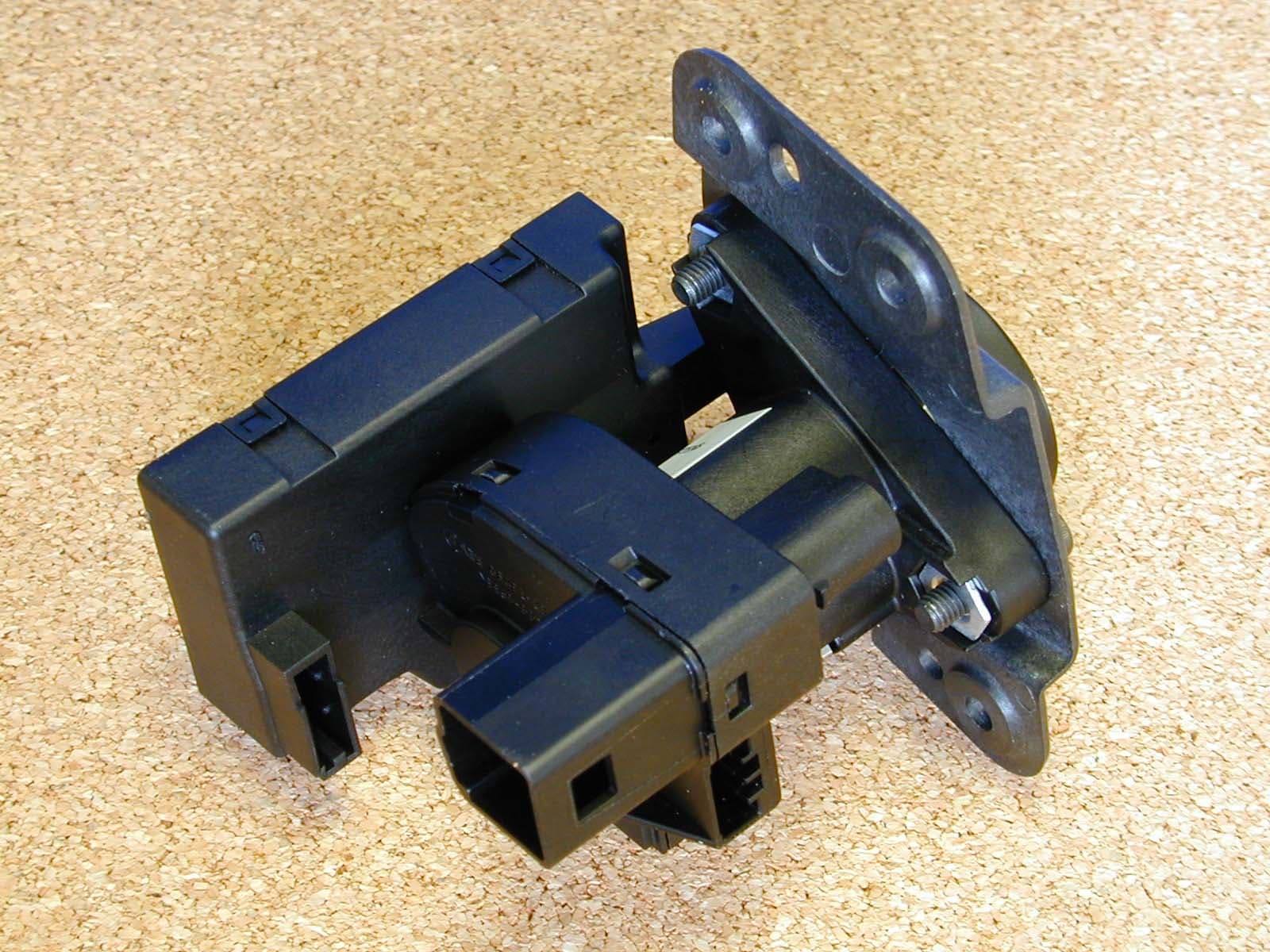
Click to zoom
Application Details
- Equipment Class
- DCD - Part 15 Low Power Transmitter Below 1705 kHz
- Date of Grant
- Jan 05, 2003
- Application Purpose
- Original Equipment
- Date of Application
- Jan 05, 2003
- Equipment Note
- Automotive Immobilizer Module
- Frequency Range
- 0.12500000 - 0.12500000
- Company
- Lear Corporation
- Country
- United States
Documents & Files
Document Text
Text extracted from the exhibit documents filed with the FCC. Open a document above to read the original.
Users Manual
Re: Certification for Lear GM Passkey III Immobilizer Model: GM Passkey III FCC ID: KOBLEARGIPK IC: 3521A-LEARGIPK USER'S MANUAL INFORMATION (PRELIMINARY) The User's Manual is in preparation. The following material will be contained in the manual: FCC ID: KOBLEARGIPK IC: 3521A-LEARGIPK This device complies with Part 15 of the FCC Rules and with RSS-210 of Industry Canada. Operation is subject to the following two conditions: (1) This device may not cause harmful interference, and (2) This device must accept any interference received, including interference that may cause undesired operation. WARNING: Changes or modifications not expressively approved by the party responsible for compliance could void the user's authority to operate the equipment. The term “IC:” before the radio certification number only signifies that Industry Canada technical specifications were met.
Block Diagram
Riad Ghabra Page 1 Created on 11/14/2002 9:15 PM PK3+ Functional Description The PK3 immobilizer module is a passive anti-theft system whose purpose is to prevent the engine from starting if the module does not detect a valid key upon engine startup. The key contains a battery-less electronic device (transponder) that derives its energy from the low frequency field. The key electronic device acts as a transceiver when communicating with the module. The module contains a 125 kHz transceiver, a microprocessor, and a vehicle bus transceiver. Upon inserting and turning the key in the ignition lock cylinder of the vehicle, the module is triggered to check the validity of the key by mutual authentication. The module sends a challenge to the key by modulating the 125 kHz carrier signal and then waiting for a response from the key while keeping the carrier on. If the challenge is valid, the key responds with its password by modulating the module carrier signal. The entire radio frequency communication process lasts 62 ms typically. The outcome of this authentication process is sent on the vehicle bus via the bus transceiver. The microprocessor controls the low frequency transceiver by encoding and decoding data to the key. It also handles the communication on the bus. Block Diagram of Immobilizer System Operation Coil Key Ignition Lock Cylinder Transponder Low Frequency Transceiver Module 125 KHz Battery Ground Ignition Bus
Cover Letter(s)
Re: Certification for Lear GM Passkey III Immobilizer Model: GM Passkey III FCC ID: KOBLEARGIPK IC: 3521A-LEARGIPK REQUEST FOR CONFIDENTIALITY Pursuant to 47 CRF 0.459, Lear requests that a part of the subject application be held confidential. This comprises Exhibits (5) Schematics (10) Parts List (Part of Exhibit only) Lear has spent substantial effort in developing this product and it is one of the first of its kind in industry. Having the subject information easily available to "competition" would negate the advantage they have achieved by developing this product. Not protecting the details of the design will result in financial hardship. If there are any questions regarding this request, please contact me at the above address or call 734-483-4211, fax 734-647-2106 or e-mail [email protected]. Sincerely, Valdis V. Liepa Research Scientist University of Michigan January 4, 2003 Re: Certification for Lear GM Passkey III Immobilizer Model: GM Passkey III FCC ID: KOBLEARGIPK IC: 3521A-LEARGIPK STATEMENT OF MODIFICATIONS There were no modifications made to the DUT by this test laboratory. (Also see Section 3.1 of the attached Test Report). _____________________ Valdis V. Liepa Research Scientist Re: Certification for Lear GM Passkey III Immobilizer Model: GM Passkey III FCC ID: KOBLEARGIPK IC: 3521A-LEARGIPK GENERAL PRODUCT INFORMATION The device, for which certification is pursued, has been designed by: Lear Corporation 3521A-LEARGIPK 5200 Auto Club Drive Dearborn, MI 48126 Gerard Grabowski Tel: 313-593-9604 Fax: 313-240-3832 It will be manufactured by: Lear Corporation 5200 Auto Club Drive Dearborn, MI 48126 Gerard Grabowski Tel: 313-593-9604 Fax: 313-240-3832 Canadian Contact: General Motors of Canada #163-005 1908 Colonel Sam Drive Oshawa, Ontario Canada, L1H 8P7 18002633777 Re: Certification for Lear GM Passkey III Immobilizer Model: GM Passkey III FCC ID: KOBLEARGIPK IC: 3521A-LEARGIPK POWER OF ATTORNEY A letter granting Valdis V. Liepa the Power of Attorney is on file and can be provided when so requested.
Cover Letter(s)
RE: Lear Corporation FCC ID: KOBLEARGIPK This is in response to the comments made on the above application. 1) Please provide a higher resolution schematic. The values/designators were not distinguishable. A request has been made to the manufacturer and we will upload updated schematics as soon as they become available. 2) Measurements made using a loop antenna below 30 MHz should be made with the loop antenna positioned in each of 3 axis. It can not be determined from the test report if this was performed. Please confirm if this was performed. The emissions recorded in the test report are the worst case emissions from the DUT for all orientations. 3) Emissions within 26 dB of the fundamental are considered as part of the occupied bandwidth of the fundamental and are not considered spurious emissions. Please provide information to show that the levels within the 90 - 110 kHz restricted band are > 26 dB below the fundamental. Figure 6.2 in the test report shows that the DUT emissions are more than 35 dB down in the 90- 100 kHz band. 4) Although all levels meet the limits provided, the field strength levels of the spurious emissions reported for all spurious emissions 500 kHz and higher exceed that of the fundamental at 125 kHz. This is in violation of Section 15.209(c) & 15.215(b) of the Commission's Rules. In the data table, the emissions of the DUT have been corrected to their 300m/30m limit locations. Hence, the harmonic fields > 0.49 MHz (at 30m) cannot be directly compared to the fundamental (at 300m). If one adds 20dB (or 40 dB, or whatever) to all harmonics above 0.49 MHz to correct the 30m values to 300m, the requirement is met.
Cover Letter(s)
American Telecommunications Certification Body Inc. 6731 Whittier Ave, McLean, VA 22101 January 6, 2003 RE: Lear Corporation FCC ID: KOBLEARGIPK After a review of the submitted information, I have a few comments on the above referenced Application. 1) Please provide a higher resolution schematic. The values/designators were not distinguishable. 2) Measurements made using a loop antenna below 30 MHz should be made with the loop antenna positioned in each of 3 axis. It can not be determined from the test report if this was performed. Please confirm if this was performed. 3) Emissions within 26 dB of the fundamental are considered as part of the occupied bandwidth of the fundamental and are not considered spurious emissions. Please provide information to show that the levels within the 90 - 110 kHz restricted band are > 26 dB below the fundamental. 4) Although all levels meet the limits provided, the field strength levels of the spurious emissions reported for all spurious emissions 500 kHz and higher exceed that of the fundamental at 125 kHz. This is in violation of Section 15.209(c) & 15.215(b) of the Commission's Rules. Timothy R. Johnson Examining Engineer mailto: [email protected] The items indicated above must be submitted before processing can continue on the above referenced application. Failure to provide the requested information may result in application termination. Correspondence should be considered part of the permanent submission and may be viewed from the Internet after a Grant of Equipment Authorization is issued. Please do not respond to this correspondence using the email reply button. In order for your response to be processed expeditiously, you must submit your documents through the AmericanTCB.com website. Also, please note that partial responses increase processing time and should not be submitted. Any questions about the content of this correspondence should be directed to the sender.
Operational Description
Riad Ghabra Page 1 Created on 11/14/2002 9:15 PM PK3+ Functional Description The PK3 immobilizer module is a passive anti-theft system whose purpose is to prevent the engine from starting if the module does not detect a valid key upon engine startup. The key contains a battery-less electronic device (transponder) that derives its energy from the low frequency field. The key electronic device acts as a transceiver when communicating with the module. The module contains a 125 kHz transceiver, a microprocessor, and a vehicle bus transceiver. Upon inserting and turning the key in the ignition lock cylinder of the vehicle, the module is triggered to check the validity of the key by mutual authentication. The module sends a challenge to the key by modulating the 125 kHz carrier signal and then waiting for a response from the key while keeping the carrier on. If the challenge is valid, the key responds with its password by modulating the module carrier signal. The entire radio frequency communication process lasts 62 ms typically. The outcome of this authentication process is sent on the vehicle bus via the bus transceiver. The microprocessor controls the low frequency transceiver by encoding and decoding data to the key. It also handles the communication on the bus. Block Diagram of Immobilizer System Operation Coil Key Ignition Lock Cylinder Transponder Low Frequency Transceiver Module 125 KHz Battery Ground Ignition Bus
Test Report
9 DUT on OATS Close-up on the DUT on OATS
Test Setup Photos
9 DUT on OATS Close-up on the DUT on OATS
Contact Information
Applicant
Kristof von Czarnowski(RF Engineer)
Technical Contact
University of Michigan/EECSValdis V Liepa
[email protected]734-483-4211
1301 Beal Ave. · Ann Arbor, Michigan · United States
Non-Technical Contact
University of Michigan/EECSValdis V Liepa
[email protected]734-483-4211
Test Firm
University of MichiganValdis Liepa
Technical Specifications
| # | Rule Parts | Frequency Range | Power Output |
|---|---|---|---|
| 1 | 15C | 0.125 MHz - 0.125 MHz | - |
Other Applications from Lear Corporation
KOBJXF23B
Jul 20, 2026RKE Transmitter with UWB
Equipment Class
DSC - Part 15 Security/Remote Control Transmitter
KOBJXF23A
Sep 26, 2023RKE Transmitter with UWB
Equipment Class
DSC - Part 15 Security/Remote Control Transmitter
KOBHT13BTPM
Oct 15, 2012Security/Remote Control Transmitter
Equipment Class
DSC - Part 15 Security/Remote Control TransmitterKOBATA12A
Jun 20, 2012Remote keyless entry / Remote start
Equipment Class
DSC - Part 15 Security/Remote Control Transmitter
KOBGTE12A
Apr 20, 2012Car2U System TX
Equipment Class
DSC - Part 15 Security/Remote Control Transmitter