MVZCAP-DEC1CAP Converter
Gorman Redlich Manufacturing Co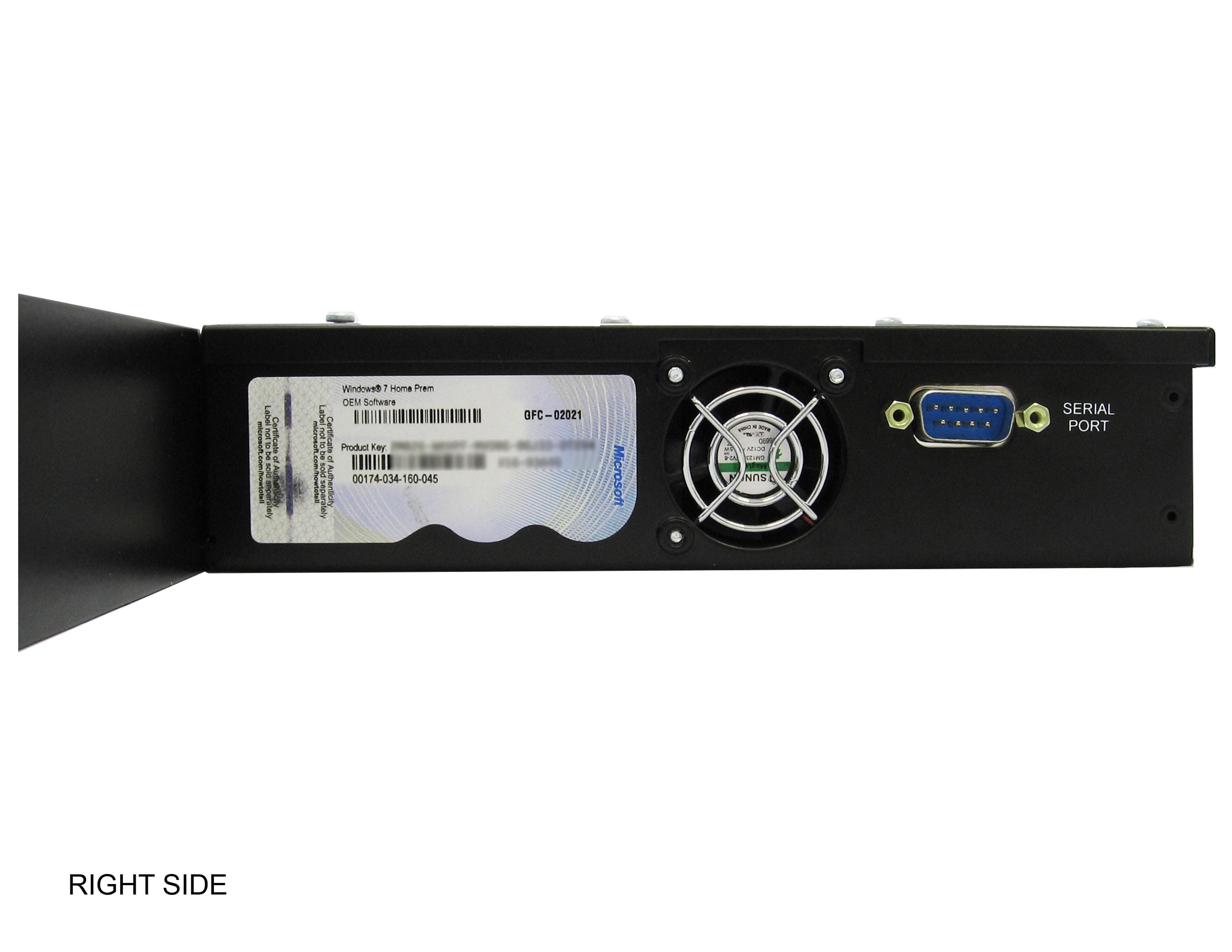
Click to zoom
Application Details
- Equipment Class
- EAD - Part 11 Emergency Alert Devices
- Date of Grant
- Jan 29, 2013
- Application Purpose
- Original Equipment
- Date of Application
- Jan 28, 2013
- Equipment Note
- CAP Converter
- Country
- United States
Documents & Files
Document Text
Text extracted from the exhibit documents filed with the FCC. Open a document above to read the original.
Users Manual
Page 1 of 15 INSTRUCTION MANUAL MODEL CAP-DEC 1 Common Alerting Protocol Universal Intermediary Device FCC ID: MVZ CAP-DEC 1 5.25.2012 v2.23 5-24-2012 GORMAN REDLICH 257 West Union St. Athens, Ohio 45701 Ph: 740-593-3150 Fax: (740) 592-3898 www.Gorman-Redlich.com email: [email protected] Page 2 of 15 FCC warning Warning: Changes or modifications to this unit not expressly approved by the party responsible for compliance could void the user authority to operate the equipment. FCC Compliance Statement This device complies with Part 15 of the FCC Rules. Operation is subject to the following two conditions: (1) This device may not cause harmful interference, and (2) This device must accept any interference received including interference that may cause undesired operation. NOTE: This equipment has been tested and found to comply with the limits for a Class B digital device, pursuant to Part 15 of the FCC Rules. These limits are designed to provide reasonable protection against harmful interference in a residential installation. This equipment generates, uses and can radiate radio frequency energy and, if not installed and used in accordance with the instructions, may cause harmful interference to radio communications. However, there is no guarantee that interference will not occur in a particular installation. If this equipment does cause harmful interference to radio or television reception, which can be determined by turning the equipment off and on, the user is encouraged to try to correct the interference by one or more of the following measures: • Reorient or relocate the receiving antenna • Increase the separation between the equipment and receiver • Connect the equipment into an outlet on a circuit different from that to which the receiver is needed • Consult the dealer or an experienced radio/TV technician for help Page 3 of 15 WARRANTY For a period of 1 year from date of shipment, Gorman-Redlich warrants the CAP-DEC 1 to be free from defects in materials and workmanship and will repair or replace, at its option, any CAP-DEC 1 unit that fails in normal service without a charge for parts or labor and with a flat $25 fee, prepaid by purchaser, to cover shipping and handling. Units can only be accepted for adjustment under Warranty following notification by letter, telephone or e-mail. Units showing evidence of modification or abuse, in the judgment of Gorman-Redlich, cannot be accepted for repair under Warranty, but will be repaired for a reasonable fee, with the consent of the purchaser. COMMON ALERTING PROTOCOL AND THE EMERGENCY ALERT SYSTEM The Common Alerting Protocol (CAP) is an XML-based data format for exchanging public warnings and emergencies between alerting technologies. CAP allows warning messages to be distributed consistently and simultaneously across multiple warning systems. This protocol allows for the inclusion of large amounts of information about emergency situations which can range from general situational data to information intended for specific alerting platforms. The Emergency Alert System (EAS) is a national warning system in the United States put into place on January 1, 1997. In addition to alerting the public of local weather emergencies such as tornadoes and flash floods, the EAS enables the President of the United States to address the public on short notice via radio and television broadcast. EAS regulations and standards are governed by the Public Safety and Homeland Security Bureau of the FCC. EAS has become part of the Federal Emergency Management Agency's (FEMA) Integrated Public Alert and Warning System (IPAWS) and is jointly coordinated by FEMA, the Federal Communications Commission (FCC), and the National Weather Service (NOAA/NWS). GENERAL DESCRIPTION OF MODEL CAP-DEC 1 UNIVERSAL INTERMEDIARY DEVICE The Gorman-Redlich CAP-DEC 1 Universal Intermediary Device retrieves CAP formatted alert files from various sources on the internet. These files are compared to a variety of standards and specifications, including the CAP v1.2 standard, the FEMA IPAWS Profile and the EAS-CAP Implementation Guide to ensure message validity as well as being filtered by location and effective time period. Valid messages are then transformed into an EAS Specific Area Message Encoding (SAME) formatted header and passed on, along with additional audio, to attached EAS equipment for transmission in a similar fashion to EAS alerts received over the air. Page 4 of 15 Front Panel 1. Intake ventilation grate 2. Universal Serial Bus (USB) port to the right of the ventilation grate 3. Red power LED labeled “POWER” to the right of the USB port Side Panel 1. Exhaust ventilation grate 2. RS232 serial data port labeled “SERIAL PORT” Rear Panel 1. PS/2 mouse port labeled “MOUSE” 2. PS/2 keyboard port labeled “KEYBOARD” 3. RS232 serial data port labeled “SERIAL PORT” 4. VGA video-out port labeled “VGA PORT” 5. Four (4) Universal Serial Bus (USB) ports labeled “USB 1” “USB 2” “USB 3” and “USB 4” 6. 10/100/1000 RJ45 ethernet port labeled “LAN” 7. 1/8-inch TRS line audio input jack labeled “AUDIO IN” 8. 1/8-inch TRS audio output jack labeled “AUDIO OUT” 9. 1/8-inch TRS microphone input jack labeled “MIC IN” 10. BNC alert audio connector labeled “ALERT AUDIO” 11. Barrel-type power jack labeled “12V 5A” Page 5 of 15 The CAP-DEC 1 Intermediary Device The FCC classifies Common Alerting Protocol (CAP) equipment into three categories: integrated devices, universal intermediary devices and component intermediary devices. The Gorman-Redlich CAP-DEC 1 unit is set to operate as a universal intermediary device. This means that it will transform valid CAP alerts into EAS messages and output them as bursts of FSK data, attention tone, message audio and EOM which can be input to a variety of EAS encoder/decoder devices. The CAP-DEC 1c unit operates as a component intermediary device. This means that the unit will transform valid CAP alerts into EAS messages and output them by means of a specialize…
Text truncated - open the document above for the full version.
Operational Description
NAB Radio Show Booth #114 Price $1350 Gorman-Redlich CAP-DEC 1 www.gorman-redlich.com [email protected] phone:740-593-3150 CAP-to-EAS Decoder System The emergency alerting experts at Gorman Redlich have an economical answer to the CAP message capability requirement. The CAP-DEC 1, offered as a standalone unit, will translate received CAP alerts into EAS headers and audio able to be received by your current EAS equipment in the same manner as current EAS messages. • Built by the experts with 35 years of experience in the emergency alerting industry • Passed the IPAWS Conformity Assessment Program and is listed in the FEMA RKB • Standalone converter does not require purchase of complete encoder-decoder system • One rack unit space requirement for small equipment footprint • Monitors up to three (3) CAP alert server URLs (expandable) • Built-in text-to-speech functionality • Built-in codecs for relaying attached alert audio • RS232 serial connectivity for faster alert transmission* • 1/8" TRS jacks for audio in, audio out, and microphone in • Email alert reports via built-in email server • Print alert reports to USB or network printer • Large on-board storage for log files and message/audio archives • 100+ year MTBF mobile-engineered storage for cool, quiet, reliable, shock-proof performance • Easy to update software via download over the internet • May be configured via keyboard, monitor and mouse or optional USB KVM switch • Automatically updates and synchronizes clock via preconfigured NTP servers • Up to 5 USB ports for attaching printers, storage devices, network adapters, etc. • 10/100/1000 Gigabit RJ45 LAN connection for fast network connectivity • Built-in firewall for network security • Powerful 1.66GHz dual core Intel Atom processor • 1GB of RAM *RS232 connectivity available only for Gorman-Redlich EAS encoder/decoder units with firmware v9.7 and above.
Test Report
Gorman-Redlich Mfg Co Page 1 of 2 257 West Union St Athens, Ohio 45701 Ph: 740.593.315, Fax: 740.592.3898 http://www.Gorman-Redlich.com Integrated Public Alert and Warning System (IPAWS) Conformity Assessment Program Supplier’s Declaration of Conformity (SDoC) SDOC-CAPDEC1-12250 Gorman-Redlich Mfg Co 257 West Union St Athens, Ohio 45701 Phone: 740.593.3150, Fax: 740.592.3898 http://www.Gorman-Redlich.com [email protected] Product Name: Gorman-Redlich CAP-DEC1 Software v2.20 FCC ID (if applicable): N/A Product Category: CAP-to-EAS Converter Product Description: The Gorman-Redlich CAP-DEC1 Software v2.20 supports the Emergency Alert System (EAS), including the conversion of alerts from the Common Alerting Protocol (CAP) format to EAS formatted headers and audio intended for transmission to FCC Part 11 Certified EAS encoder/decoder devices for radio broadcasters and television station operators. Conformance to the following standards allows Gorman-Redlich CAP-DEC1 Software v2.20 to receive digital messages through the Internet and other networks from local public safety operations centers and retransmit those messages in a timely manner: • Organization for the Advancement of Structured Information Standards (OASIS) CAP v1.2 Standard • OASIS CAP v1.2 USA IPAWS Profile v1.0 • CAP EAS Implementation Guide Version 1.02 Installed Options: Software version 2.20 build 5.19.2011 Gorman-Redlich Mfg Co Page 2 of 2 257 West Union St Athens, Ohio 45701 Ph: 740.593.315, Fax: 740.592.3898 http://www.Gorman-Redlich.com Vendor-Provided Products Tested with Gorman-Redlich CAP-DEC1 Software v2.20: Manufacturer Product Name Model No./Unique ID None Additional Information (if necessary): Specifications for Gorman-Redlich CAP-DEC1 Software v2.20 as well as additional alert and warning accessories and broadcast products may be accessed at the following Web site: http://www.Gorman-Redlich.com. Gorman-Redlich Mfg Co hereby declares that Gorman-Redlich CAP-DEC1 Software v2.20 product conforms to the Organization for the Advancement of Structured Information Standards (OASIS) Common Alerting Protocol (CAP) v1.2 Standard (1 July 2010), OASIS CAP v1.2 USA IPAWS Profile v1.0 (13 October 2009) and CAP EAS Implementation Guide Version 1.02 by passing the test cases in the referenced report in their entirety without exclusions. The report for the test performed at the Incident Management Test and Evaluation Laboratory (IMTEL), Science Applications International Corporation (SAIC), located at 75 Valley Oak Drive in Somerset, Kentucky, is identified as follows: Test Report Identification: TR-CAP-DEC-1-12250 issued May 2011. 7 June 2011 ____________________ _______________________________________________ Issue Date Supplier’s Authorized Representative Signature ________________JAMES GORMAN _______________ Supplier’s Authorized Representative Printed Name This information contained herein has been provided by the vendor of the product with permission to make the information publicly available. The U.S. Department of Homeland Security (DHS) is making this information available as a public service; however, DHS IS PROVIDING THE INFORMATION “AS IS.” DHS MAKES NO EXPRESS OR IMPLIED WARRANTIES AND SPECIFICALLY, DHS MAKES NO WARRANTIES OR MERCHANTABILITY OR FITNESS FOR A PARTICULAR PURPOSE, REGARDING THE ACCURACY OR USE OF THIS INFORMATION. Reference to any specific commercial products, processes, or services by trade name, trademark, vendor, or otherwise does not constitute an endorsement by or a recommendation from DHS.
Test Report
TEST of GORMAN-REDLICH Mfg. Co. Universal Intermediate Device Model CAP-DEC 1 In High RF Field FEBRUARY 17,2012 MidAmerica Electronics Service, Inc. New Albany, IN February 17, 2012 Test of Gorman-Redlich Mfg. Co. Universal Intermediate Device CAP-DEC 1 SN552 Operation in a high radio frequency field Federal Communications Commission Regulations Part 11:32(d) and11:33(c) requires tests to prove satisfactory operation of EAS encoder and decoder equipment in a severe RF environment. To satisfy this requirement, we set up the CAP-DEC 1 SN552 unit at a commercial broadcast transmitter site located in Louisville, KY. This is a common AM and FM site containing a 5KW transmitter with RF directional phasor cabinets. Also at this site are two 50KW FM stations with associated transmitters and dummy loads. For the AM requirement, the CAP-DEC 1 was set up near the open rear door of the RF cabinet. The AM field was measured using a Potomac Instruments FIM-41 SN472 Field Intensity Meter belonging to this firm. The field was measured to exceed 1 OVolts per meter on 790Khz. Photograph is attached to this report showing the meter at full scale on the 10 Volt scale along with the test CAP-DEC 1 unit. Page two For the FM requirement, the CAP-DEC 1 unit was set up on top of an air- cooled FM dummy load in order to gain access to the required 0.5volt RF field. The field was measured using a Potomac Instruments FIM-71 SN260 with calibrated Potomac Instruments antenna SN260, also belonging to this firm. The FM RF field was measured to be 0.75 volts at 98.9 Mhz. In each of these severe RF environments the CAP-DEC 1 universal intermediate device was operated with a simulated emergency message provided by a laptop computer fed thru a standard Linksys router. The CAP-DEC 1 was feeding the Gorman-Redlich EAS-1 Encoder-decoder. Photographs are attached showing the AM and FM test setups. I certify that the CAP-DEC 1 universal intermediate device operated correctly in the high RF fields and provided correct information from the simulated alert. Peter C. L. Boyce, President MidAmerica Electronics Service, Inc. Test conducted February 17, 2012 Outside view – AM & FM Transmitter site FM Test – RF Field Meter on Left (Rear View) FM Test – FM Field Meter on Left (Rear View) FM Test – FM Field excess of 0.5 V/m AM Test – AM Field Meter on Right (showing excess of 10 V/m) AM Test – AM RF Field Meter on Left (Rear View) AM Test – RF Field excess of 10 V/m MIDAMERICA ELECTRONICS SERVICE, INC. • BROADCAST and INDUSTRIAL ELECTRONICS Peter C. L. Boyce, President • INSTALLATION· MAINTENANCE· EMERGENCY SERVICE 410 MT. TABOR ROAD Office (812) 945-1209 NEW ALBANY, IN 47150 Fax (812) 945-1859 QUALIFICATIONS OF ENGINEER Peter C. L. Boyce states that he is President of MidAmerica Electronics Service, Inc., located in New Albany, Indiana. He further states that he is a graduate of Louisville Radio School, Division of Electronics Laboratories, Inc. and that he is holder of FCC Lifetime Radiotelephone License No. PG-18-11969 and that the attached engineering information was prepared by him or under his direction. That he believes it to be true and correct, That he has been associated with the technical phases of broadcasting for more than thirty consecutive years and that his engineering work has been accepted by the Federal Communications Commission. Date Peter C. L. Boyce City of New Albany President State of Indiana Midamerica Electronics Service, Inc.
Test Report
Integrated Public Alert and Warning System (IPAWS) Conformity Assessment (CA) Program Test Report Test Report [TEMPLATE] Gorman-Redlich Manufacturing Company CAP-DEC 1 (Software v2.20 build 5.19.2011) TR-CAP-DEC-1-12250 May 2011 2 of 22 12250 Table of Contents 1.0 Introduction ............................................................................................................................................ 4 1.1 System Description .......................................................................................................................... 5 1.2 Test Objective .................................................................................................................................. 5 1.3 Test Setup ........................................................................................................................................ 5 1.3.1 Laboratory Environment ....................................................................................................... 6 1.4 Test Schedule ................................................................................................................................... 6 1.5 Limitations ....................................................................................................................................... 6 2.0 Test Results ............................................................................................................................................ 7 2.1 Detailed Test Results ....................................................................................................................... 7 2.1.1 Test Case IPAWS_CA_0000 - Production Ready Status ...................................................... 7 2.1.2 Test Case IPAWS_CA_2000 EAS Baseline Alert ................................................................ 7 2.1.3 Test Case IPAWS_CA_2001 Message Type ........................................................................ 7 2.1.4 Test Case IPAWS_CA_2002 Language* .............................................................................. 8 2.1.5 Test Case IPAWS_CA_2003 Message Importance .............................................................. 8 2.1.6 Test Case IPAWS_CA_2004 Queuing* ................................................................................ 9 2.1.7 Test Case IPAWS_CA_2100 Event Code ............................................................................. 9 2.1.8 Test Case IPAWS_CA_2101 Geocode Handling - National Political .................................. 9 2.1.9 Test Case IPAWS_CA_2102 Geocode Handling - Local Political ..................................... 10 2.1.10 Test Case IPAWS_CA_2103 EAS Duplicates ................................................................. 10 2.1.11 Test Case IPAWS_CA_2104 CAP Duplicates* ............................................................... 11 2.1.12 Test Case IPAWS_CA_2105 Degenerate Messages* ...................................................... 11 2.1.13 Test Case IPAWS_CA_2200 Text-to-Speech .................................................................. 12 2.1.14 Test Case IPAWS_CA_2201 <area> Element ................................................................. 12 2.1.15 Test Case IPAWS_CA_2202 Remote Resources* ........................................................... 12 3 of 22 12250 2.1.16 Test Case IPAWS_CA_2203 Duration ............................................................................. 13 2.1.17 Test Case IPAWS_CA_2204 EAS Must-Carry ................................................................ 14 2.1.18 Test Case IPAWS_CA_2205 Message Type .................................................................... 14 2.1.19 Test Case IPAWS_CA_2206 EAS Originator .................................................................. 14 2.1.20 Test Case IPAWS_CA_2207 Target Audience ................................................................ 15 2.1.21 Test Case IPAWS_CA_2208 Expired Messages .............................................................. 15 2.2 Summarized Test Results ............................................................................................................... 16 3.0 Appendix A: References....................................................................................................................... 20 4.0 Appendix B: List of Acronyms ............................................................................................................ 21 List of Tables Table 1: Supporting Tools ............................................................................................................................ 6 Table 2: Limitations ...................................................................................................................................... 6 Table 3: Test Results – CAP to EAS Converter ......................................................................................... 16 4 of 22 12250 1.0 Introduction This report presents the results from a test of the Gorman-Redlich Manufacturing Company CAP-DEC 1, software v2.20 build 5.19.2011, referred to herein as the product 1 , which was conducted as part of the Integrated Public Alert and Warning System (IPAWS) Conformity Assessment (CA) Program. The Department of Homeland Security (DHS) Federal Emergency Management Agency (FEMA) National Continuity Programs Directorate is sponsoring the IPAWS CA Program to assist in the implementation of Executive Order (EO) 13407, “Public Alert and Warning System,” as well as to fulfill Homeland Security Presidential Directive (HSPD)-20, which establishes a comprehensive national policy on the continuity of the federal government. FEMA IPAWS provides the Nation’s next generation public alert and warning capability expanding upon the traditional audio-only radio and television Emergency Alert System (EAS). This allows the President of the United States and other authorized officials at the federal, state, local, and tribal…
Text truncated - open the document above for the full version.
Test Report
Test of GORMAN-REDLICH Mfg. Co. Universal Intermediate Device Model CAP-DEC 1 Temperature and Humidity Test May 1, 2012 Gorman Redlich Mfg.Co. Athens, OH 47501 Introduction Testing to meet FCC section 11:32 was performed by Gorman-Redlich Mfg Co over a two day period using a Tenney Environmental chamber. The purpose of this testing was to evaluate the effects of temperature and humidity on the performance of the CAP-DEC 1 Universal Intermediary Device (“the device”). Test procedure The device was placed in the Tenney Enviromental Chamber and connected to a counter and a voltmeter/distortion analyzer in order to take readings over a range of temperature and humidity. (See Photos) Each data point on the following data sheet (See Table 1) for the measured parameters of the CAP-DEC 1 was checked at the limits of the line voltage variation (102V, 120V, 138V) with absolutely no variation in any parameter at either extreme of line voltage. At each data point each tone was generated by the device under test and the frequency, amplitude and total harmonic distortion (THD) was recorded while terminated in 600 Ω. The environmental chamber was cooled to -10⁰C with the equipment under test (EUT) powered off for an overnight soak to check that the device could power up when turned on. After the reading at -10⁰C was taken a small plastic water filled container was removed from the environmental chamber to confirm that it was frozen solid, which it was. The specification for the attention signal tones is not to exceed 5% THD, which testers calculate to be -27 dBm. The data in Table 1 shows the attention signal tones met and exceeded this specification by 10 dBm over the temperature range -10⁰C to +60⁰C. The requirement that everything outside of 200Hz to 4000Hz be attenuated by at least 40 dBm with respect to the FSK tones was met and exceeded by 10 dBm THD on the 1562.5Hz tone and by 10 dBm THD on the 2083.3Hz tone over the temperature range -10⁰C to +60⁰C. The frequency of the attention signal tones did not vary over this temperature range by more than 0.01Hz and the FSK tones never varied by more than 0.02Hz. The output levels for the attention signal exceeded -10 dBm over the temperature range. Results The tests described above indicate that various temperatures and humidity had no effect on the performance of the CAP- DEC 1 Universal Intermediary Device. As such, the device meets the FCC Section 11:32 requirement. Table 1 Temperature and Humidity Readings NOTES: The device was powered off the previous evening of 2/24/2012 and held at -10⁰C to test that it would start when powered on the next morning. After taking the reading at -10⁰C, a small plastic water-filled container was removed from the chamber to confirm that the water was frozen solid, which it was. At +60⁰C the device was left on overnight and soaked at 95% humidity. At each test point, all the parameters were measured at line voltages of 102VAC, 120VAC and 138VAC with no variations in recorded data. Equipment Used in Testing Tenney Engineering Inc. TH Jr. Temperature Humidity Test Chamber; SN 7813-71H-526 HP 332A Distortion analyzer; SN 1145A 22780; Calibrated 2/21/2012 by Caltec Labs Audio Out from CAP-DEC 1 was terminated in resistor which was measured to be 600Ω with three different multimeters. Metex MXG 9802 counter; SN MB 00010903; Calibrated 2/21/2102 by Caltec Labs Superior Electric Co. Powerstat/variable autotransformer Type 116B Photos Photo 1 - Tenney Environmental Chamber Photo 2 - Controls on Tenney Enviromental Chamber Photo 3 - CAP-DEC 1 placement inside Tenney Environmental chamber Photo 4 - Taking readings of Temperture and Humidity Photo 5 - Taking reading of CAP-DEC 1 showing reading on meter
Test Report
Form EMC007-102209 Report Number: F2LQ4200-01E Rev. 2 Page 1 of 19 Issue Date: May 24, 2011 For a CAP-DEC Manufacturer: Laboratory: Gorman Redlich Manufacturing Company F2 Labs 257 West Union Street 16740 Peters Road Athens, Ohio 45701 Middlefield, Ohio 44062 United States of America United States of America The CAP-DEC, model CAP-DEC1, was tested and was found to comply with the requirements of the Federal Communications Commission outlined in the Federal Register CFR 47, Part 15, subpart B:2007 as follows: • Conducted Emissions, Part 15.107(b), Class A • Radiated Emissions, Part 15.109(b), Class A • Radiated Emissions, CISPR 22 Class B, accepted by Part 15.109(g) • Conducted Emissions, Part 15.107(a), Class B The product was received on Oct. 20, 2010 and the testing was completed on Oct. 20, 2010. Evaluation Conducted By: Report Reviewed By: Michael Toth Ken Littell EMC Project Engineer EMC Technical Manager Note: Pass/Fail criteria are based upon the following condition: Where the results are compared to published test standard or manufacturer specified limits, the PASS or FAIL opinion is considered without applying the laboratory stated measurement uncertainty. This report shall not be duplicated except in full without the written approval of F2 Labs. Reports noted as a revision replace all previously issued reports and/or antecedent report revisions issued under this job number. Verification Test Report F2 Labs 16740 Peters Road Middlefield, Ohio 44021 (440) 632-5541 Fax: (440) 632-5542 Client: Gorman Redlich Manufacturing Company Order Number: F2LQ4200 Model: CAP-DEC1 Form EMC007-102209 Report Number: F2LQ4200-01E Rev. 2 Page 2 of 19 Issue Date: May 24, 2012 Table of Contents Exhibit Title Page Cover Page 1 Table of Contents 2 I Engineering Statement 3 II Measurement Instrument List 5 III EUT Information and Data 6 IV EUT Configuration and Cables 8 V Conducted Data 9 VI Radiated Data 13 VII EUT Photos 14 VIII Modifications 18 IX Labeling 19 Document Number Description Issue Date Approved By F2LQ4200-01E First Issue Oct. 20, 2010 R. Beattie F2LQ4200-01E Rev. 1 Increase in radiated emissions uncertainty value due to tabletop setup Dec. 13, 2011 R. Beattie F2LQ4200-01E Rev. 2 Class B compliance noted at request of client May 24, 2012 K. Littell Client: Gorman Redlich Manufacturing Company Order Number: F2LQ4200 Model: CAP-DEC1 Form EMC007-102209 Report Number: F2LQ4200-01E Rev. 2 Page 3 of 19 Issue Date: May 24, 2012 Exhibit I Engineering Statement This report has been prepared on behalf of Gorman Redlich Manufacturing Company to provide documentation for the testing described herein. This equipment has been tested and found to comply with Part 15 of the FCC Rules using ANSI C63.4 2003 standards. The test results found in this test report relate only to the items tested. EQUIPMENT UNDER TEST: CAP-DEC Trade Name: Gorman Redlich Manufacturing Company Model: CAP-DEC1 Power Supply: AC/DC A PPLICABLE RULES: CFR 47, Part 15, subpart B EQUIPMENT CATEGORY: Information Technology Equipment MEASUREMENT LOCATION: F2 Labs in Middlefield, Ohio. Site description and attenuation data are on file with the FCC's Sampling and Measurement Branch at the FCC Laboratory in Columbia, MD. M EASUREMENT PROCEDURE: All measurements were performed according to the 2003 version of ANSI C63.4. A list of the measurement equipment can be found in Exhibit II. Client: Gorman Redlich Manufacturing Company Order Number: F2LQ4200 Model: CAP-DEC1 Form EMC007-102209 Report Number: F2LQ4200-01E Rev. 2 Page 4 of 19 Issue Date: May 24, 2012 U NCERTAINTY BUDGET: • •• • Radiated Emission Combined Uncertainty (+ or -) 2.66 dB Expanded Uncertainty (+ or -) 4.90 dB • Conducted Emission Combined Uncertainty (+ or -) 1.13 dB Expanded Uncertainty (+ or -) 2.26 dB This uncertainty represents an expanded uncertainty expressed at approximately the 95% confidence level using a coverage factor of k=2. Client: Gorman Redlich Manufacturing Company Order Number: F2LQ4200 Model: CAP-DEC1 Form EMC007-102209 Report Number: F2LQ4200-01E Rev. 2 Page 5 of 19 Issue Date: May 24, 2012 Exhibit II List of Measurement Instrumentation Test Equipment Used: Equipment Type Asset Number Manufacturer Model Serial Number Calibration Due Date Shield Room CL014 Shielding Resources 3 Meter 001 Oct. 31, 2010 Temp/Hum. Recorder CL118 Extech RH520 H005870 Dec. 11, 2010 OATS CL017 Compliance Labs N/A 001 Aug. 26, 2011 Spectrum Analyzer 0204 Hewlett Packard HP8591A 3149A02546 Oct. 26, 2010 Receiver 0145 Rohde & Schwarz Display, EASI-0- 804-8932-52; RF Unit, ESMI-RF 1032-5640-53 84982/015; 849152/005 May 14, 2011 Antenna 1-Chamber 0142 ETS/EMCO 3142B 9811-1330 Oct. 31, 2010 Antenna 2-OATS 0105 Sunol Sciences JB1 A101101 July 22, 2011 Pre-Amplifier 0197 Hewlett Packard 8447D 1726A01006 Dec. 7, 2010 AC Power System CL097 California Instruments PACS-1-CTS 71565 Aug. 13, 2011 AC Power System CL062 California Instruments 5001iX-CTS 7000-417-1 Aug. 13, 2011 Temp/Hum. Recorder CL119 Extech RH520 H005869 Oct. 9, 2010 Spectrum Analyzer 0141 Hewlett Packard 8591E 3520A04145 Sep. 29, 2011 Transient Limiter CL102 Hewlett Packard 11947A 3107A03325 Dec. 31, 2010 LISN 2 0147 Solar 8028-50-TS-24- BNC 1128 Oct. 28, 2010 LISN 4 0146 Solar 8028-50-TS-24- BNC 1127 Oct. 26, 2010 Client: Gorman Redlich Manufacturing Company Order Number: F2LQ4200 Model: CAP-DEC1…
Text truncated - open the document above for the full version.
Contact Information
Applicant
James T Gorman
Technical Contact
Gorman Redlich Mfg. Co.James Thomas Gorman
[email protected]7405933150
257 W. Union St. · Athens · United States
Technical Specifications
| # | Rule Parts | Frequency Range | Power Output |
|---|---|---|---|
| 1 | 11 | - | - |
Other Applications from Gorman Redlich Manufacturing Co

MVZCRW-S
Jul 11, 2004Weather Radio Receiver
Equipment Class
CXX - Communications Rcvr for use w/ licensed Tx and CBs