P2JT2CSSProcessor Board
3S Group Incorporated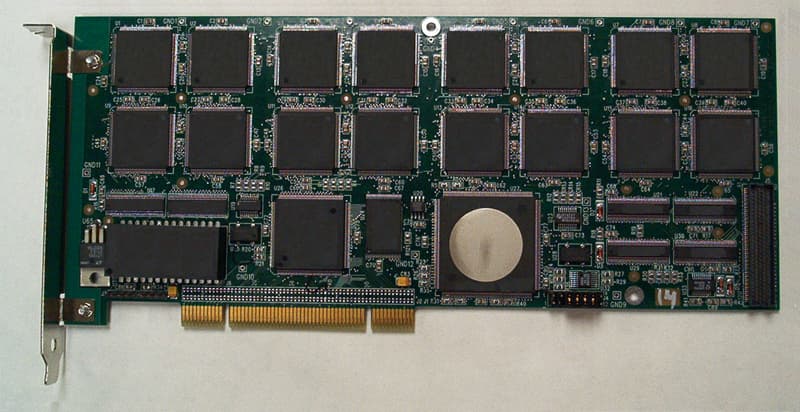
Click to zoom
Application Details
- Equipment Class
- JBC - Part 15 Class B Computing Device/Personal Computer
- Date of Grant
- Mar 23, 2002
- Application Purpose
- Original Equipment
- Date of Application
- Mar 23, 2002
- Equipment Note
- Processor Board
- Company
- 3S Group Incorporated
- Country
- United States
Documents & Files
Document Text
Text extracted from the exhibit documents filed with the FCC. Open a document above to read the original.
Users Manual
March 20, 2002 American TCB Incorporated 6731 Whittier Ave. Suite C110 McLean, VA 22101 Re:FCC ID P2JT2CSS Attn.: Mr. William Graff Mr. Graff, 3S Group is submitting a modified copy of our T2CSS User Manual which contains only those sections that are required for FCC certification of the Type 2 Cryptographic Support Server device. We had previously submitted a copy of the full manual, which the present submission supercedes. Please delete our previous manual and submit the present copy to the FCC as part of the certification process. Sincerely, 3S Group Incorporated Satpal S Sahn i President
Users Manual
3S Group T2CSS User’s Manual Product Name:Type 2 Cryptographic Support Server FCC ID:P2JT2CSS FCC Compliance Statement This device complies with Part 15 of the FCC Rules for Class B digital devices. Operation is subject to the following two conditions: (1) this device may not cause harmful interfer- ence, and (2) this device must accept any interference received, including interference that may cause undesired op- eration. FCC Notice NOTE: This equipment has been tested and found to comply with the limits for a Class B digital device, pursuant to Part 15 of the FCC Rules. These limits are designed to provide reasonable protection against harmful in- terference in a residential installation. This equipment generates electromag- netic energy and, if not installed and used in accordance with the instructions, may cause harmful interference with other electronic components. If, when installed within a host per- sonal computer (PC), this equipment does cause harmful interference, which can be determined by turning the host com- puter off and on, the user is encouraged to try to correct the interference by one or more of the following measures: • Verify that the cover of the host computer chassis is prop- erly closed. • Increase the separation between the equipment and host com- puter • Connect the equipment into an outlet on a circuit different from that to which the host computer is connected. Table of Contents 1 Introduction................................................................................6 2 Overview....................................................................................8 2.1 Operating Environment........................................................8 2.2 System Use.......................................................................9 2.3 System Overview...........................................................10 2.3.1 T2CSS System Components................................ 10 2.3.1.1 T2CSS Hardware Components.................... 10 3 Installation..............................................................................14 3.1 Hardware.........................................................................14 Copyright © 2001 by 3S Group Incorporated All rights reserved. No part of this publication may be reproduced, stored in a retrieval system, or transmitted, in any form or by any means, electronic, mechanical, photocopying, recording, or otherwise, without the prior written consent of 3S Group. Printed in the United States of America. Introduction The Type 2 Cryptographic Support Server (T2CSS) User's Manual includes an overview of the T2CSS system and instructions for installing, adminis- tering and operating the T2CSS through the Administrator's interface. The intended audience for this manual is the Administrator who has been delegated as the System/Security Administrator for the domain in which use of the T2CSS is intended. The instructions in this document assume the reader has some knowledge of Windows NT administration and the available tools. The administrator should have a basic understanding of the operating system, directory struc- ture, and typical Windows NT commands, as well as familiarity with the Graphical User Interface (GUI). Basic knowledge of the FORTEZZA card, its API, and its and library would be helpful; the documentation at http://www.armadillo.huntsville.al.us/Fortezza_docs/index.html is highly recommended. The hardware information in this manual applies to the Peripheral Component Interconnect (PCI) bus architecture supported by the Windows NT operating system. Overview This section gives a basic overview of the T2CSS system and discusses the operating environment, use and problem reporting capabilities. 2.1 Operating Environment The T2CSS consists of a PCI board and host software designed to work on a Personal Computer (PC) platform. The system characteristics, operating sys- tem and T2CSS configuration related parameters are described below. System Characteristics: The following minimum requirements are recommended: Pentium II, 266 MHz or better 96MB RAM 4 GB hard drive SVGA graphics display controller Monitor Keyboard 33 MHz PCI slot (one per T2CSS board) Operating System: Windows NT 4.0 Server or Enterprise Server with service pack 3 or greater T2CSS Configuration Requirements: Primary memory 128KB (minimum) for the Windows NT driver 2-3 MB for T2CSS Application Hard Drive 18MB for T2CSS install image (not including Windows NT memory management) 144KB (maximum) per Virtual FORTEZZA Card containing 48 certificates (approximately 3KB per certificate); times the anticipated number of VFCs in the T2CSS 10MB (minimum) audit log file Note: 1. The total number of VFCs are dependent upon the user organization. 2. The size of the audit log file is dependent upon the audit settings and the number of errors occurring. If one or a few events are being monitored, the size of the audit log file will be smaller than if all events are being monitored. The audit log file will inevitably grow if the audit function is enabled because the T2CSS will typically operate continuously. So it is highly recommended that the Administrator review, archive (off the system) or purge audit log files regularly. Otherwise, the system performance will suffer, especially when Windows NT has contention for disk space. 2.2 System Use The T2CSS provides security services appropriate for protecting Sensitive But Unclassified (SBU) data. The Virtual FORTEZZA Card and the T2CSS board are the operational elements used to perform the security processing. The T2CSS board is an intelligent PCI board that mounts directly into a 32- bit 33 MHz host bus expansion slot. The T2CSS PCI board contains eight cryptographic processors and a control processor. The control processor dis- tributes the data between the host and the cryptographic processors. The T2CSS provides confidentiality, data integrity, digital signature, key management, and auditing. The encryption, hashing a…
Text truncated - open the document above for the full version.
Cover Letter(s)
March 20, 2002 American TCB Incorporated 6731 Whittier Ave. Suite C110 McLean, VA 22101 Re:FCC ID P2JT2CSS Attn.: Mr. William Graff Dear Mr. Graff, This letter affirms 3S Group’s requirement for confidentiality of the Type 2 Cryptographic Support Server (T2CSS) Block Diagram, submitted as part of the FCC Certification Application. Further, per your request, our FCC Registration Number is FRN 0005-0851-96. If you have any question, please call me at (703) 281-5015. Sincerely, 3S Group Incorporated Satpal S Sahn i President
Cover Letter(s)
02/02/02 In reference to FCC ID: P2JTCSS Mr. Sahni Upon completion of review of your application for FCC ID, P2JTCSS there are several items that need to be addressed. Please address each issue below. 1) Please provide letters requesting confidentiality for the block diagram, schematic, and theory of operation. The FCC w ill not allow us to seek confidentiality for the manual, please remove any confidential information in the manual and re submit. 2) It appears that the item being certified is a computer card installed that can be installed in a typical machine, hence for testing the card should either be tested on a extender card or with the most of the shielding from the host computer removed, as per 15.32 of the FCC rules, please verify this was done. 3) Please verify that this device only operates at 50 MHz for the main clock, if it operates at frequency above 108 MHz, please provide data up to at least the 10 th harmonic of the processor operating speed. 4) Please also verify how the requirements as stated in 15.102(a) for marketing such equipment be met. This information needs to be in the manual. Please include the complete FCC statements in the manual. Te report references that at least 10db of additional shielding was observed with the cabinet cover closed, this indicates that additional information on shielding must be placed in the manual per 15.102 requirements. 5) The manual should include all the required FCC information per 15..21 including warnings about unauthorized modifications. 6) Addressing the report, the data show n reflects several signals that appear to be out of limits. If these are ambient signals they should not be listed. Please provide me w ith at least 6 data points from 30 MHz to 1000 MHz data you provided that are below the limit and are from the computer system in general w ith the covered removed. 7) The test data indicates both Class A and Class B data,, for certification we only deal with Class B, please remove all Class A testing data from the report. Or place it in an appendix for reference only. 8) It is not clear if the data is in peak or quasi peak. Please verify w hich detector was used. 9) Please provide plots of the line conducted and test data below 30 MHz on the system. Since this device is plugged into a computer that operates off 110 or 220V, it must be verified that the systems still operates in accordance w ith the Part 15 rules. 10) Please provide the required statements from the applicant on the drug free policy as required. 11) Please provide the FRN number for the applicant so we can upload the application to the FCC 12) We have converted your photos from JPEG to Adobe – please submit these in adobe acrobat format in the future. 13) Please provide a complete set up photos of both the line conducted test as w ell as radiated test (both front and back shots) as well as set up draw ing of both. 14) Provide a list of the peripherals used and their FCC ID numbers for this filing. 15) The report references that it was tested in compliance with Part 15 of the FCC rules, please confirm it was tested in accordance to ANSI C63.4 , We w ill grant the application upon providing the requested information. Regards David A. Case NCE Examining Engineer mailto:[email protected] The items indicated above must be submitted before processing can continue on the above referenced application. Failure to provide the requested information may result in application termination. Correspondence should be considered part of the permanent submission and may be viewed from the Internet after a Grant of Equipment Authorization is issued. Please do not respond to this correspondence using the email reply button. In order for your response to be processed expeditiously, you must submit your documents through the AmericanTCB.com website. Also, please note that partial responses increase processing time and should not be submitted. Any questions about the content of this correspondence should be directed to the sender.
Test Report
1 ™ TEMPEST INC. 112 Elden Street Herndon, Virginia 20170 (703) “TEMPEST” (836-7378) FAX: 709-9565 e-mail: [email protected] http://www.tempest- inc.com *** Our 16th Year in Business: 1985 - 2001 *** Report of Electromagnetic Interference Testing Performed in Accordance with the Rules of the Federal Communications Commission: Title 47, Part 15 of the Code of Federal Regulations on the Type 2 Cryptographic Support Server, Serial No. 14 made by 3S Group, Incorporated 125 Church Street NE, Vienna Virginia 22180 by_______________________________________________ ® Louis T. Gnecco, M.S.E.E., President Certified Electromagnetic Compatibility Engineer: Cert.# EMC-000544-NE November 2, 2001 2 COPYRIGHT 2001 BY TEMPEST INC.: This document may not be reproduced, recorded electronically, or transmitted electronically, in whole or in part, without the written consent of TEMPEST INC. 3 Abstract As requested by Purchase Order Number 21176 issued by 3S Group, Incorporated on October 24, 2001, on November 2, 2001 TEMPEST INC. performed Electromagnetic Compatibility tests in accordance with Title 47, Part 15 of The Code of Federal Regulations on the following device hereafter called the Equipment Under Test: Type 2 Cryptographic Support Server, Serial number 4. made by 3S Group, Incorporated of Vienna, Virginia. When properly installed in a typical personal computer, the Equipment Under Test produces no measurable signals in the 30 to 1000 MHz frequency range when tested in an Open Area Test Site at a distance of 3 meters. The Equipment Under Test complies with the requirements for both Class A and Class B digital devices of Title 47, Para. 15.109 of the Code of Federal Regulations. We recommend that production units maintain the same configuration as the sample that was tested. 4 Table of Contents SectionTitlePage Cover page1 Abstract 2 Table of Contents3 List Of Illustrations4 List of Tables4 Reference Documents4 1.0 Introduction.5 1.1 Purpose.5 1.2 Test Location.5 1.3 Cognizant Personnel.5 2.0Description of the Equipment Under Test.6 3.0Test Procedures.7 3.1Test Equipment.7 3.2Calibration Check7 3.3 Dynamic Range and Detection System Sensitivity Tests.7 3.3.1Preliminary Laboratory Tests7 3.4 Local Interference Test:8 3.5Measurements.8 4.0 Results.9 5.0Conclusions and Recommendations.9 Appendix A: Tables10 Appendix B: Glossary16 About TEMPEST INC.20 5 List of Tables Table TitlePage 1List of Test Equipment Used11 2Test Data 12 Reference Documents: TITLE 47, PARA. 15.109 OF THE CODE OF FEDERAL REGULATIONS 6 1.0Introduction. As requested by Purchase Order Number 21176 issued by 3S Group, Incorporated on October 24, 2001, on November 2, 2001 TEMPEST INC. performed Electromagnetic Compatibility tests in accordance with Title 47, Part 15 of The Code of Federal Regulations on the following device hereafter called the Equipment Under Test: Type 2 Cryptographic Support Server, Serial number 4. made by 3S Group, Incorporated of Vienna, Virginia. 1.1 Purpose. The purpose of this test was to determine if the Equipment Under Test complies with the requirements of Title 47, Para. 15.109 of The Code of Federal Regulations, otherwise known as the Rules of the Federal Communications Commission. 1.2 Test Location. Preliminary testing was performed in the Laboratory facilities of TEMPEST INC. Final testing was performed in the FCC-listed Open Area Test Site of TEMPEST INC. 1.3 Cognizant Personnel. The following personnel conducted, witnessed, or are cognizant of the test: Mr. Jason Papadopoulos, Electronics Engineer 3S Group, Incorporated 125 Church Street NE #204 Vienna, Virginia 22180 (703) 281-5015 fax, 281-7816 [email protected] Mr. Louis T. Gnecco, President, TEMPEST INC. 112 Elden St. Herndon, Virginia 20170-4809 7 (703) 836-7378 e-mail: [email protected] 2.0Description of the Equipment Under Test. The Equipment Under Test consists of a Type 2 Cryptographic Support Server, a encryption device consisting of a single slot long card printed circuit board that is made to install in a Personal Computer. Photos and detailed technical information are available at the following web sites: http://www.threesi.com/prodserv.htm http://www.threesi.com/specs.htm The Equipment Under Test was activated by installing it in a PME Platinum Systems Personal Computer, model P3-500 (tower configuration.) After activating the software and getting the Equipment Under Test to run normally, the monitor, keyboard, and mouse were removed from the Personal Computer. This was done to reduce any ambients that could obscure the emissions from the Equipment Under Test. 8 3.0Test Procedures. As described below, final testing was performed in accordance with Title 47, Para. 15.109 of The Code of Federal Regulations, using TEMPEST INC.’s FCC-listed Open Area Test Site (OATS.) The Equipment Under Test is normally installed in a personal computer, and therefore does not connect to any a.c. power lines. For this reason, no Power Line Conducted Interference tests are applicable to this device, and none were performed. 3.1Test Equipment. Table 1 is a list of the test equipment used. As shown in the table, biconical and log periodic antennas and a Hewlett-Packard spectrum analyzer were used to detect the emissions produced by the Equipment Under Test. 3.2Calibration Check. Using its internal calibration source, the calibration of the spectrum analyzer was verified both immediately before and immediately after the test. 3.3 Dynamic Range and Detection System Sensitivity Tests. Before testing, the dynamic range of the instrumentation was determined to be 80 dB, and the detection system sensitivity was -80 dBm. 3.3.1 Preliminary Laboratory Tests: Before installing the Equipment Under Test, the emissions produced by the host computer alone were first measured and recorded at a distance of one meter inside the 10 ft. x12 ft. x 8 ft. high 100 dB shielded anechoic chamber in the laboratory of TEMPEST INC. The Equipment under test was then installed and activa…
Text truncated - open the document above for the full version.
Test Report
1 TEMPEST INC. 112 Elden Street Herndon, Virginia 20170 (703) “TEMPEST” (836-7378) FAX: 709-9565 e-mail: [email protected] http://www.tempest- inc.com *** Our 17th Year in Business: 1985 - 2002 *** Report of Electromagnetic Interference Testing Performed in Accordance with the Rules of the Federal Communications Commission: Title 47, Part 15 of the Code of Federal Regulations on the Type 2 Cryptographic Support Server (T2CSS) made by 3S Group Incorporated 125 Church Street NE, Vienna Virginia 22180 by Louis T. Gnecco, M.S.E.E., President Certified Electromagnetic Compatibility Engineer: Cert.# EMC-000544-NE March 12, 2002 COPYRIGHT 2002 BY TEMPEST INC.: This document may be transmitted electronically to 3S Group, Inc., American TCB Inc., and to the United States Federal Communications Commission. This document may not be further disseminated, reproduced, recorded electronically, or transmitted electronically, in whole or in part, without the written consent of TEMPEST INC. 2 Abstract As requested by Purchase Order Number 21176 issued by 3S Group Incorporated, on February 22 and 24, 2002 TEMPEST INC. performed Electromagnetic Compatibility tests in accordance with Title 47, Part 15 of The Code of Federal Regulations on the following device, hereafter called the Equipment Under Test (EUT): Type 2 Cryptographic Support Server (T2CSS) serial number 4 made by 3S Group Incorporated of Vienna, Virginia. When installed in a typical personal computer, the Equipment Under Test complies with the requirements for Class B digital devices of Title 47, Par. 15.109 of the Code of Federal Regulations. This report is submitted electronically. 3 Table of Contents SectionTitlePage Cover page1 Abstract 2 Table of Contents3 List Of Illustrations4 List of Tables4 Reference Documents4 1.0 Introduction.5 1.1 Purpose.5 1.2 Test Location.5 1.3 Cognizant Personnel.5 2.0Description of the Equipment Under Test.6 3.0Test Procedures.7 3.1Test Equipment.7 3.2Calibration Check7 3.3 Dynamic Range and Detection System Sensitivity Tests.7 3.4 Local Interference Test:7 3.5Measurements.8 4.0 Results.9 5.0Conclusions and Recommendations.9 Appendix A: Illustrations 10 Appendix B: Tables11 4 List of Illustrations The following illustrations are submitted electronically as Microsoft Word (.doc) and Bit Mapped (.bmp) files: File NameTITLE 3Si-1.docTest Setup: Line Conducted Emissions 3Si-2.bmp Test Setup: Line Conducted Emissions 3Si-3.bmp Test Setup: Line Conducted Emissions 3Si-4.bmp Test Setup: Line Conducted Emissions 3Si-5.bmp Test Setup: Radiated Emissions 3Si-6.bmp Test Setup: Radiated Emissions List of Tables Table TitlePage 1List of Test Equipment Used11 1AHost Computer11 2Test Data 12 Reference Documents: (a) TITLE 47, PAR. 15.109 OF THE CODE OF FEDERAL REGULATIONS (b) ANSI C63.4: “American National Standard for Methods of Measurement of Radio-Noise Emissions of Low-Voltage Electrical and Electronic Equipment in the Range of 9 kHz to 40 GHz” IEEE (c) “Report of Electromagnetic Interference Testing Performed in Accordance with the Rules of the Federal Communications Commission: Title 47, Part 15 of the Code of Federal Regulations on the Type 2 Cryptographic Support Server (T2CSS) made by 3S Group Incorporated 125 Church Street NE, Vienna Virginia 22180” TEMPEST INC. November 2, 2001 5 1.0Introduction. As requested by Purchase Order Number 21176 issued by 3S Group Incorporated, on February 22 and 24 2002 TEMPEST INC. performed Electromagnetic Compatibility tests in accordance with References (a) and (b) on the following device, hereafter called the Equipment Under Test: Type 2 Cryptographic Support Server (T2CSS) serial number 4 made by 3S Group Incorporated of Vienna, Virginia. 1.1 Purpose. The purpose of this test was to determine if the Equipment Under Test complies with the requirements of Reference (a.). 1.2 Test Location. Testing was performed in the Electromagnetic Compatibility Laboratory and the FCC-listed Open Area Test Site of TEMPEST INC. 1.3 Cognizant Personnel. The following personnel conducted, witnessed, or are cognizant of the test: Mr. Jason Papadopoulos, Electronics Engineer 3S Group Incorporated 125 Church Street NE #204 Vienna, Virginia 22180 (703) 281-5015 fax, 281-7816 [email protected] Mr. Louis T. Gnecco, President, TEMPEST INC. 112 Elden St. Herndon, Virginia 20170-4809 (703) 836-7378 e-mail: [email protected] 6 2.0Description of the Equipment Under Test. The Equipment Under Test consists of a Type 2 Cryptographic Support Server (T2CSS), an encryption device consisting of a printed circuit board that is made to install in a Personal Computer. Photos and detailed technical information are available at the following web sites: http://www.threesi.com The Equipment Under Test was activated by installing it in a typical Personal Computer, with the cover removed. A keyboard, mouse, video display and printer were connected during all of the tests. As verified by the manufacturer, the Equipment Under Test utilizes only a 50 MHz clock.. 7 3.0Test Procedures. As described below, final testing was performed in accordance with references (a) and (b.) Both Radiated and Power Line (mains) Conducted emissions were measured. 3.1Test Equipment. Table 1 is a list of the test equipment used. Table 1A describes the host computer. Biconical and log periodic antennas, and a Hewlett-Packard spectrum analyzer were used in an Open area Test Site (OATS) to detect radiated emissions. Two Line Impedance Stabilization Networks (LISNs) were used in a 10 ft x 12 ft x 8 ft high Electromagnetically Shielded Room, along with a Hewlett Packard Spectrum Analyzer to detect the Power Line (Mains) conducted emissions. 3.2Calibration Check. Using its internal calibration source, the calibration of the spectrum analyzers was verified both immediately before and immediately after each test. 3.3 Dynamic Range and Detection System Sensitivity Tests. Before testing, the dynamic range of the instrumentation was determined to be 80 dB, an…
Text truncated - open the document above for the full version.
Test Setup Photos
12 ft. 10 ft. 80 cm 8 ft. MICROWAVE ABSORBING MATERIAL LISNs 1.5m 1m 40 cm TOP VIEW Center Line 10 cm 10 cm keyboard mouse printer cpu monitor
Contact Information
Applicant
Satpal S Sahni(President)
[email protected](703)281-5015
Technical Contact
3S Group IncorporatedJason Papadopoulos
[email protected]703-281-5015
125 Cheurch Street · Vienna, Virginia · United States
Test Firm
Tempest Inc.Louis Gnecco
Technical Specifications
| # | Rule Parts | Frequency Range | Power Output |
|---|---|---|---|
| 1 | 15B | - | - |