P7XMSINDInhaler
Siemens AG PG CE P MD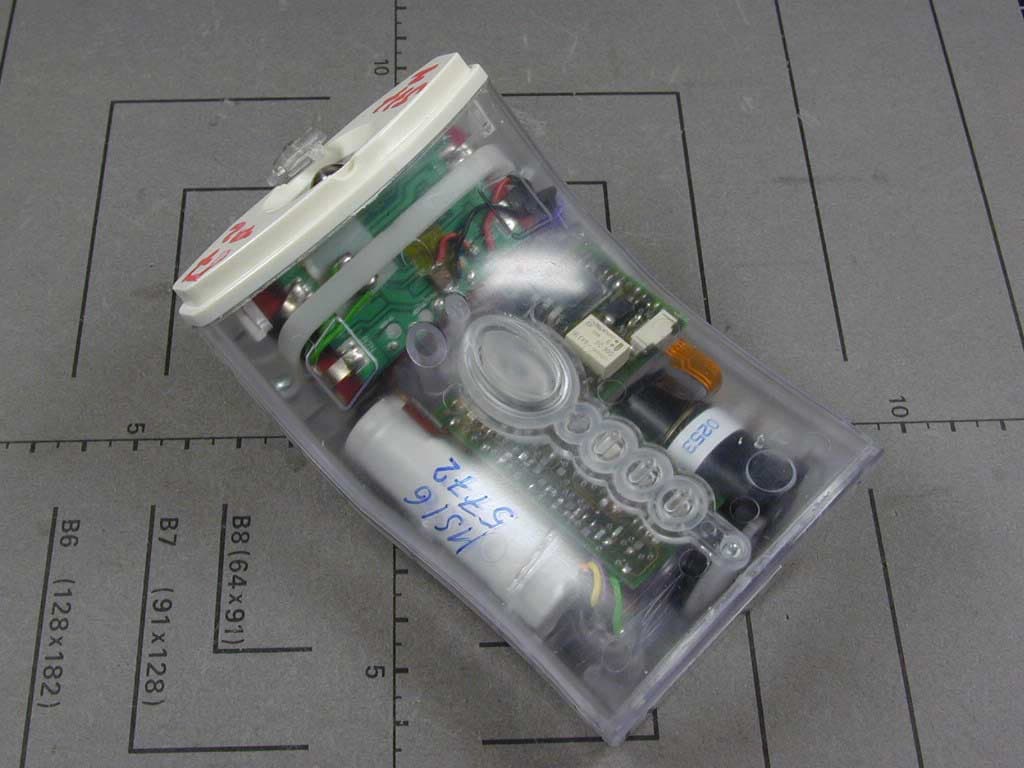
Click to zoom
Application Details
- Equipment Class
- 8CC - Part 18 Consumer Device
- Date of Grant
- Mar 25, 2002
- Application Purpose
- Original Equipment
- Date of Application
- Mar 25, 2002
- Equipment Note
- Inhaler
- Frequency Range
- 1.55000000 - 1.60000000
- Company
- Siemens AG PG CE P MD
- Country
- Germany
Documents & Files
Document Text
Text extracted from the exhibit documents filed with the FCC. Open a document above to read the original.
Users Manual
Premaireô Inhaler Page 1 Caution: Investigational device limited by federal law to investigational use DESCRIPTION The Premaireô Inhaler is a hand held, pocket-sized, ultrasonic nebulizer using prefilled dosators (Premaire dosators) to deliver certain medications via inhalation. The Premaire Inhaler consists of the following. • Premaire Inhaler (FCC Identifier P7XMSIND) • Battery recharger • Safety cover for the activation button (to be used during cleaning) • Dosator cartridge with mouthpiece • This patient guide INDICATIONS The Premaire inhaler is intended for use only with Premaire dosators. Please refer to the Premaire dosator package insert for the specific indications for use. CONTRAINDICATONS Please refer to the Premaire dosator package insert for specific contraindications. WARNINGS Warning: Low Battery • 3 second continuous tone AFTER atomization • FOLLOWED by a red LED next to the icon for 8 seconds. • The warning means that there are 5 or less actuations of the inhaler left on this battery charge. Warning: Motor Malfunction • 3 second continuous tone after activation. • FOLLOWED by a red LED next to the icon for 8 seconds. Premaireô Inhaler Page 2 • This warning means that the vial is empty in which the remaining drug should be checked or there is a malfunction of the device in which the device help dept. should be called for inquiries/trouble shooting. Warning: Inhaler Expiration • 3 second continuous tone AFTER atomization. • FOLLOWED by a yellow LED next to the icon for 30 seconds. • This warning means that there are approximately 100 actuations left for the inhaler. A new inhaler should be ordered. Warning: Inhaler recharging • The inhaler recharging icon LED will be red at a low battery condition. • The icon LED will be FLASHING green during recharging • The icon LED will be SOLID green when inhaler is fully recharged. • Inhaler CAN NOT be used while recharging. Warning: Overheat protection • 3 second continuous tone immediately after activating of the button. • Under this condition the normal function of the device is not available. • FOLLOWED by the two upper red LED¥s and alternately flashing for 8 s • Allow 10 minutes for cooling down of the device PRECAUTIONS Precaution: The optimum operating temperatures for the Premaire inhaler are between 59 o F (15 o C) and 86 o F (30 o C). Precaution: The inhaler may not deliver a dose of medication below 40 o F (15 o C). Premaireô Inhaler Page 3 Precaution: The atomizing horn may be hot after activating the inhaler. DO NOT TOUCH. Precaution: Do not immerse the inhaler in water. Precaution: The inhaler may be used for up to 5 to 15 sequential actuations depending on the frequency of time between the activation after which it is necessary to wait for 10 minutes to allow the temperature safety control to reset. The overheating condition is indicated by a 3s beep followed by alternating flashing of the two (upper) red LED¥s for 8s just after activation of the pushbutton. Under overheating condition no function is provided. HANDLING AND USE Setting up the inhaler (Please refer to figures below for component description) 1. Carefully unpack the patient kit that contains the following items. a. Premaire Inhaler b. Recharger (not shown) c. Safety cover for the activation button (to be used during cleaning) shown on Premaire Inhaler. d. Dosator cartridge with mouthpiece a. c. d. 2. Remove the atomizing horn cover from the inhaler. Premaireô Inhaler Page 4 3. Place safety cover, c., over button to prevent activation while cleaning 4. Carefully rinse the atomizing area with tap water; allow time to air dry. 5. Plug the recharger into a wall outlet. Then plug recharger cable into Premaire (Charger can be used with input voltage from 90 - 264 VAC, 50/60 Hz). 6. Allow the Premaire inhaler to charge for a minimum of 8 hours before its first use. 7. The icon LED will be flashing green while recharging and change to solid green when fully charged. Delivery of a dose 8. Remove the dosator cartridge, d., from its container. 9. Turn the dosator cartridge upside down so the top is resting on a flat, stable surface such as a counter or tabletop with the mouthpiece positioned over the spout. 10. Grasp the plastic cylinder housing and press down until a click is heard and a small drop of solution appears at the end of the spout. The dosator cartridge is now activated. Repeat this step if you do not hear the click. 11. Insert the activated dosator cartridge into the inhalerís reservoir. Gently pull back the mouthpiece to expose the spout. Premaireô Inhaler Page 5 12. The Premaire system must be primed before its first use. To prime, press activation button ì2î times (pausing 2 seconds between each depression) until a mist appears. 13. Wipe the atomizer horn with a clean cloth. Gently lower the mouthpiece to cover the spout and the atomizing horn on the inhaler. The mouthpiece will engage the inhaler with a click. The hinged mouthpiece on the dosator cartridge must align with the atomizing horn on the device. 14. The inhaler is a ready to deliver medication. 15. Exhale fully. 16. Place the mouthpiece in your mouth, ensuring you completely seal the mouthpiece with your lips. Premaireô Inhaler Page 6 17. Press the activation button on the inhaler until you hear the motor, then release the button and start inhaling through the mouthpiece. It is important to breath normally and not too quickly or deeply. Once the sound from the motor is complete, you should stop inhaling. You should hold your breath for 10 seconds. 18. You have received one ìpuffî of medications. If you are directed to take two ìpuffsî to receive a complete dose, wait 1 minute then repeat steps 14-16. Recharging the device 19. The inhaler must be fully recharged after the red LED illuminates. 20. Plug the recharger into a wall outlet then plug recharger cable into Premaire a. The inhaler recharging icon LED will be red at a low battery condition. b. The icon LED will be FLASHING green durin…
Text truncated - open the document above for the full version.
Cover Letter(s)
Request for Confidentiality Date: March 08, 2002 American Telecommunications Certification Body, Inc. 6731 Whittier Avenue Suite C110 McLean, VA 22101 RE: Certification Application FCC ID: P7XMSIND Please be advised that the following information is to be held confidential and behalf of Siemens AG: • Schematic Diagram • Block Diagram • Technical Description The application contains technical information which Siemens AG deems to be trade secrets and proprietary. If made public, the information might be used to the disadvantage of the applicant in the market place. Thank you for your attention to this matter. Signatory Johann Roidt
External Photos
Page 1 of 3 FCC ID P7XMSIND External Photographs Page 2 of 3 Page 3 of 3
ID Label/Location Info
FCC ID P7XMSIND Label Information
Internal Photos
Page 1 of 5 FCC ID P7XMSIND Internal Photographs Page 2 of 5 Page 3 of 5 Page 4 of 5 Page 5 of 5
Test Report
EMV-Prüfzentrum EMI/EMC-Testcenter Page 1 of 26 Pages Straubing, 01 October 2001 T E S T - R E P O R T No. 51904-10515-3 for MSI 6 Inhalator Applicant:Siemens AG, PG CE P MD Purpose of testing:To show compliance with FCC Code of Federal Regulations, Part 18 Subpart B, section 18.305 Note: The test data of this report relate only to the individual item which has been tested. This report shall not be reproduced except in full extent without the written approval of the testing laboratory. EMV-Prüfzentrum EMI/EMC-Testcenter Test Report No. 51904-10515-3 Page 2 of 22 Pages Table of Contents 1. Administrative Data ....................................................................................3 2.Identification of Test Laboratory .................................................................4 3.Summary of Test Results ...........................................................................5 4.Operation Mode of EUT..............................................................................6 5.Configuration of EUT and Peripheral Devices............................................7 6.Measuring Methods ....................................................................................8 6.1. Conducted Emission 0.45 MHz - 30 MHz (§18.307) ............................8 6.2.Radiated Emission 30 MHz - 1 GHz (FCC §18.305 ...........................10 6.3.Radiated Emission 1 GHz - 4.5 GHz (FCC §18.305) .........................12 7.Equipment List..........................................................................................14 8.Photographs Taken During Testing..........................................................16 9.List of Measurements ...............................................................................18 9.1.List of Measurements According To FCC Part 15 Subpart B ...........................................................................................19 10. Referenced Regulations ...........................................................................20 11. Test Results..............................................................................................21 EMV-Prüfzentrum EMI/EMC-Testcenter Test Report No. 51904-10515-3 Page 3 of 22 Pages 1.Administrative Data Equipment Under Test (EUT):MSI 6 Serial number(s):5772 Type of equipment:Inhalator Parts/accessories: FCC-ID: Applicant:Siemens AG (full address)Bahnhofstrasse 43 D-96254 Redwitz Contract identification:--- Contact person:Mr. Klaus van der Linden Manufacturer:Siemens AG, PG CE P MD Receipt of EUT:August 17, 2001 Date of test:August 31, 2001 Note:--- Responsible for testing:Johann Roidt Responsible for test report:Johann Roidt EMV-Prüfzentrum EMI/EMC-Testcenter Test Report No. 51904-10515-3 Page 4 of 22 Pages 2.Identification of Test Laboratory Test Laboratory:Senton GmbH EMI/EMC Test Center (full address):Aeussere Fruehlingstrasse 45 D-94315 Straubing Germany Contact person:Mr. Johann Roidt Communication:Telephone(+49) 0 94 21 / 55 22-0 Fax (+49) 0 94 21 / 55 22-99 eMail:[email protected] FCC registration number:90926 Industry Canada file number:IC 3050 EMV-Prüfzentrum EMI/EMC-Testcenter Test Report No. 51904-10515-3 Page 5 of 22 Pages 3.Summary of Test Results The tested sample complies with the requirements set forth in the FCC Part 18 Subpart C, section 18.305 of the Federal Communication Commission (FCC). Johann Roidt Technical Manager EMV-Prüfzentrum EMI/EMC-Testcenter Test Report No. 51904-10515-3 Page 6 of 22 Pages 4.Operation Mode of EUT Not applicable EMV-Prüfzentrum EMI/EMC-Testcenter Test Report No. 51904-10515-3 Page 7 of 22 Pages 5.Configuration of EUT and Peripheral Devices Configuration of cables of EUT Not applicable Configuration of peripheral devices connected to EUT Allt test were performed with the EUT in standby and manually triggered EMV-Prüfzentrum EMI/EMC-Testcenter Test Report No. 51904-10515-3 Page 8 of 22 Pages 6.Measuring Methods 6.1.Conducted Emission 0.45 MHz - 30 MHz (§18.307) Conducted emissions were measured in the frequency range 0.45 MHz to 30 MHz. The bandwidth of the EMI-Receiver was set to 9 kHz and the detector-function was set to CISPR quasi-peak. The test setup was made in accordance with ANSI C63.4-1992. Measurements were performed on phase and neutral lines of the power-cords of the tested system. Preliminary scans were taken with the detector-function of the EMI- receiver set to peak to determine the conducted EMI-profile of the EUT. At the final test the cables and equipment were placed and moved within the range of positions likely to find their maximum emissions. See figure 1 for the measurement setup. Test equipment used (see equipment list for details): 04, 22, 23, 60, 63 EMV-Prüfzentrum EMI/EMC-Testcenter Test Report No. 51904-10515-3 Page 9 of 22 Pages 9 10 11 5 8 2 7 4 1 3 6 Figure 1: Example of measurement setup for conducted emission test 1 EUT 8 LISN for EUT 2 Monitor 9 LISN for peripheral device(s) 3 Keyboard 10 Test receiver 4 Mouse 11 Shielded room 5 Parallel Printer 6 Serial Printer 7 Wooden table EMV-Prüfzentrum EMI/EMC-Testcenter Test Report No. 51904-10515-3 Page 10 of 22 Pages 6.2.Radiated Emission 30 MHz - 1 GHz (FCC §18.305 Radiated emissions are measured over the frequency range from 30 MHz to 1 GHz. The bandwidth of the EMI-receiver is set to 120 kHz and the detector-function is set to CISPR quasi-peak. The test setup is made in accordance with ANSI C63.4-1992. Measurements are made in both the horizontal and vertical planes of polarization. Preliminary scans are taken in a semi-anechoic room using a spectrum analyzer with the detector function set to peak. Hand-held or body-worn devices are rotated through three orthogonal axes to determine which attitude and configuration produces the highest emission relative to the limit and therefore shall be used for final testing. All tests are performed at a test-distance of 3 meters. For final testing an open-area test-site is used. During the tests the EUT is rotated all around and the …
Text truncated - open the document above for the full version.
Test Setup Photos
EMV-Prüfzentrum EMI/EMC-Testcenter Test Report No. 51904-10515-3 Page 17 of 22 Pages Photos No. 8.1 - 8.2 Test setup for radiated emission testing (semi anechoic room)
Contact Information
Applicant
Klaus Van Der Linden(Project Manager)
Technical Contact
Senton GmbHJohann Roidt
[email protected]49 9421 55 22 13
Aeussere Fruehlingstrasse 45 · Straubling · Germany
Test Firm
TUV SUD Product Service GmbH PS-EMC-STRRainer Heller
Technical Specifications
| # | Rule Parts | Frequency Range | Power Output |
|---|---|---|---|
| 1 | 18 | 1.55 MHz - 1.6 MHz | - |