QDJ-0205NWT01GSM Referance design
Chi Mei Communication Systems, Inc.
Click to zoom
Application Details
- Equipment Class
- PCB - PCS Licensed Transmitter
- Date of Grant
- Jun 09, 2002
- Application Purpose
- Original Equipment
- Date of Application
- Jun 09, 2002
- Equipment Note
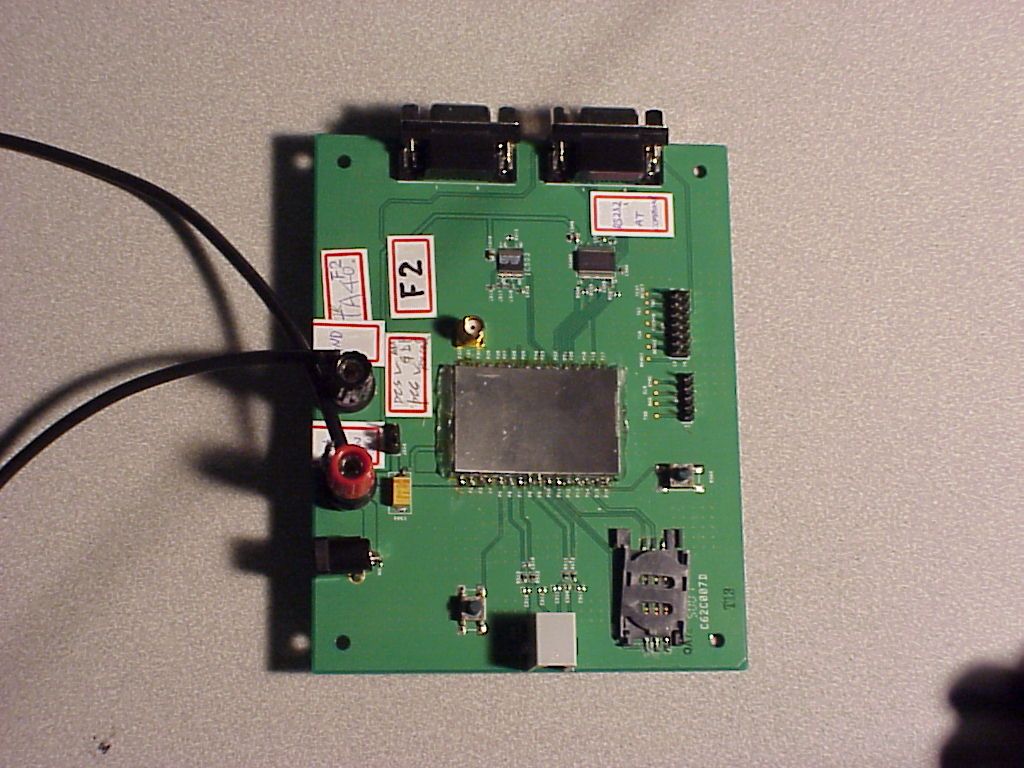
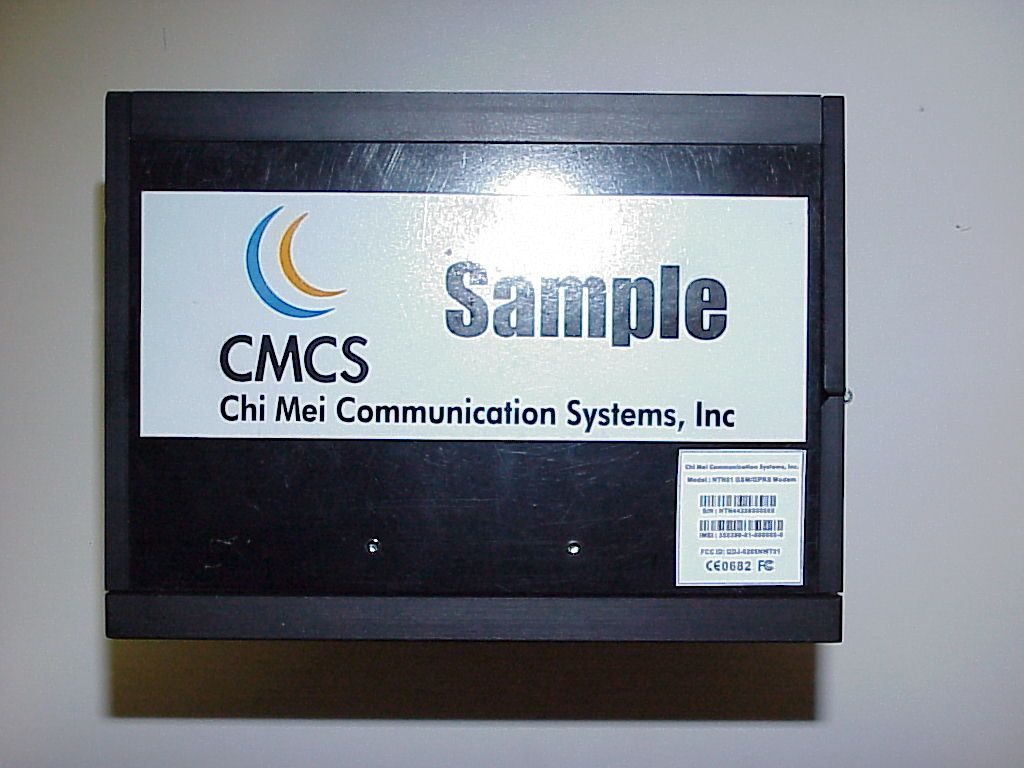
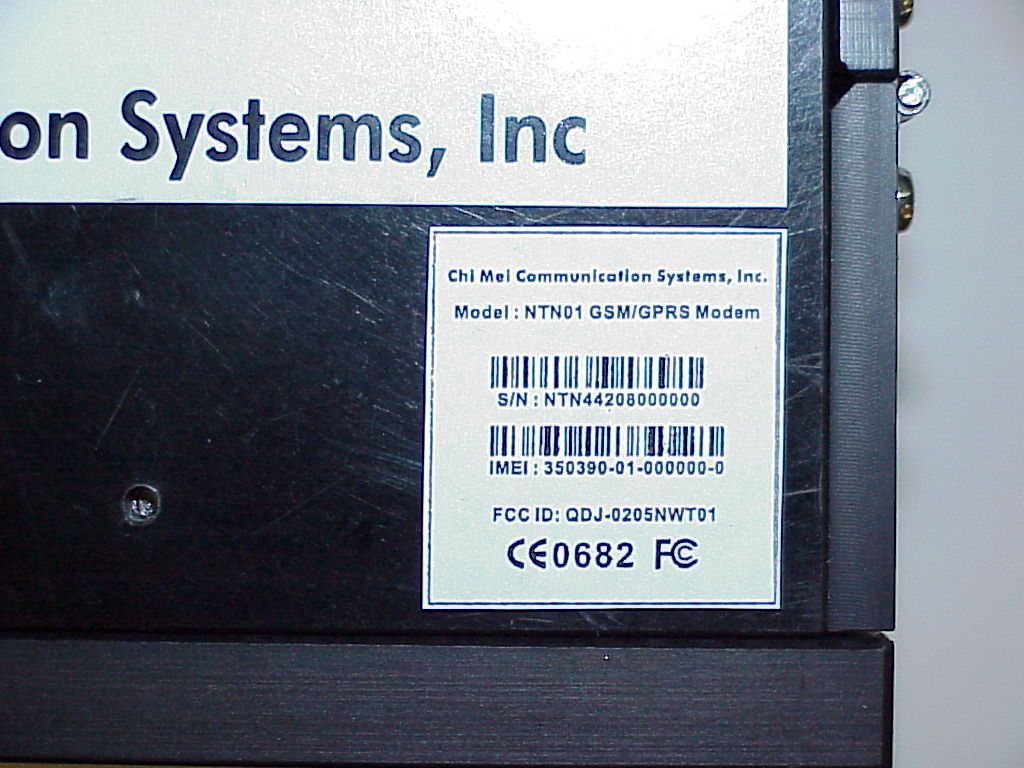
- GSM Referance design
- Frequency Range
- 1850.20000000 - 1909.80000000
- Country
- Taiwan
Documents & Files
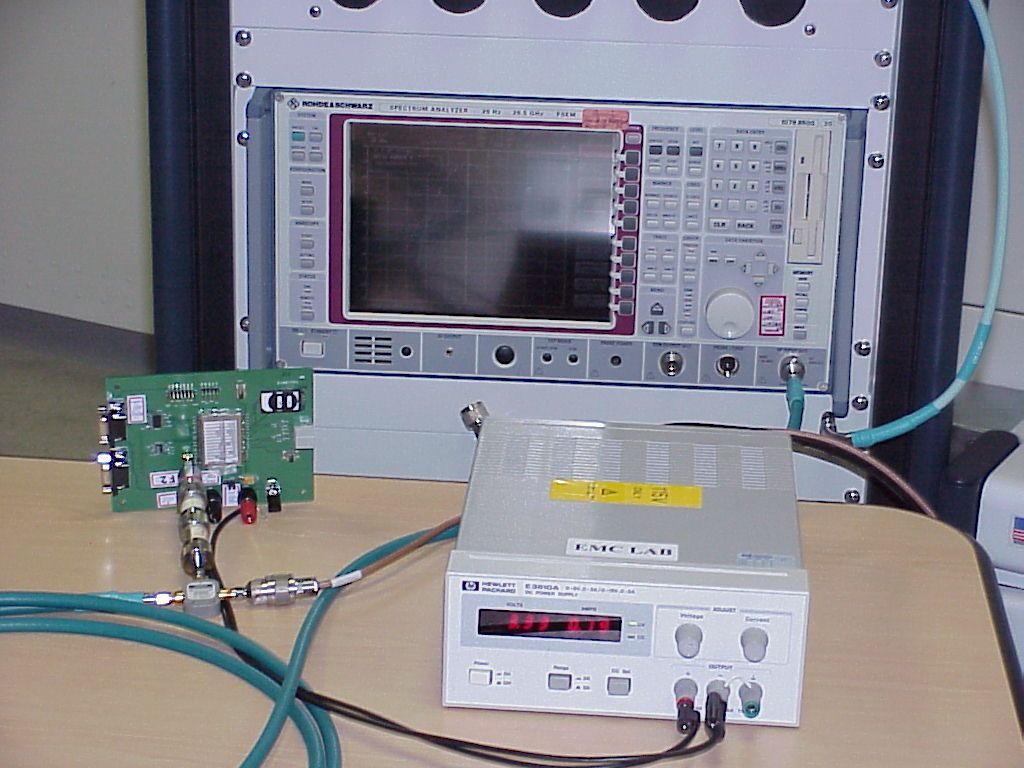
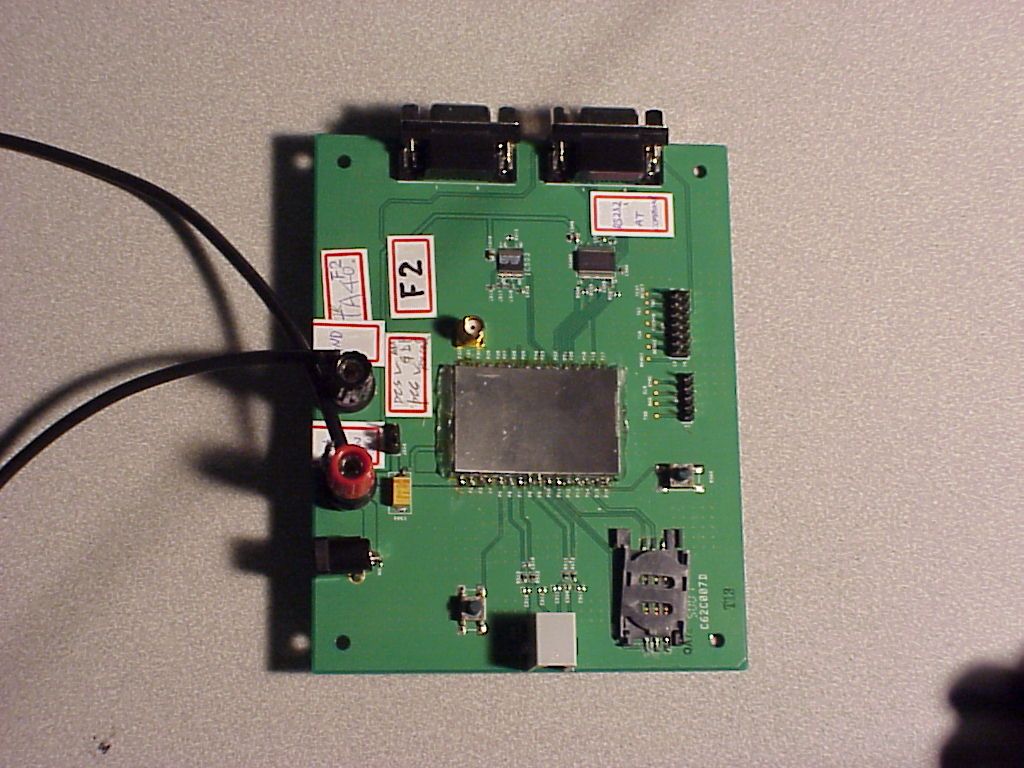
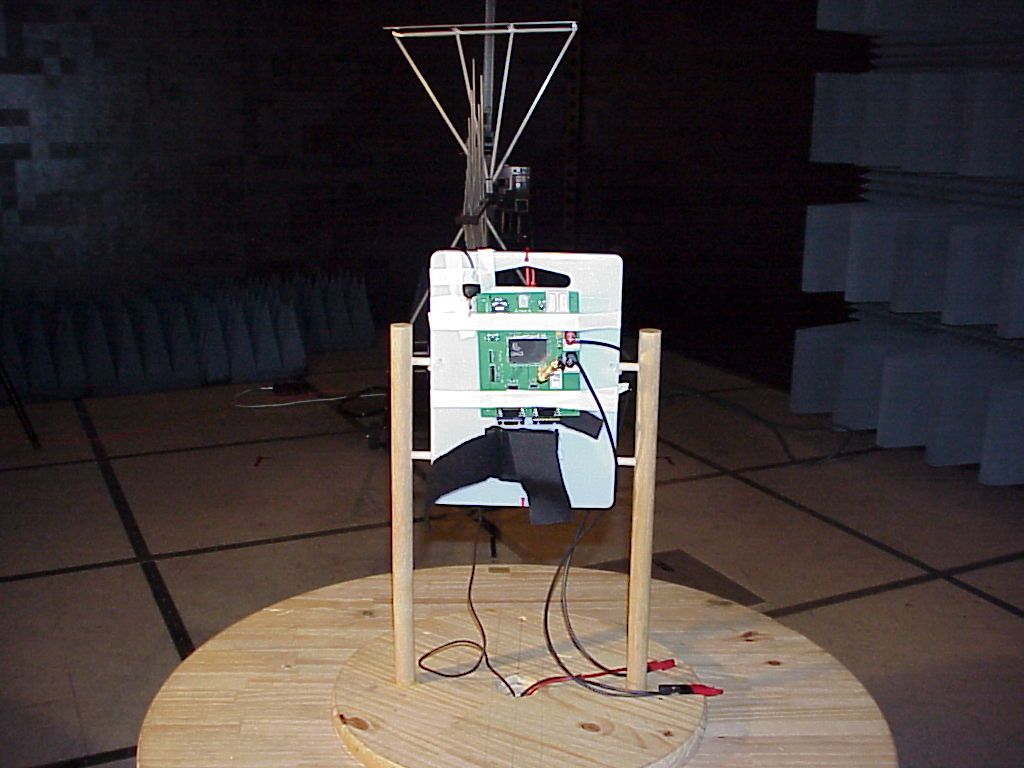
Document Text
Text extracted from the exhibit documents filed with the FCC. Open a document above to read the original.
Users Manual
GPRS Modem Using Newton (NTN01) Application Example of Newton Date: 5/29/02 Doc. No.: NTNAMSML003C Copyright Statement Copyright 2002 by Chi Mei Communication Systems, Inc. (CMCS) All rights reserved. No part of this publication may be reproduced, transmitted, transcribed, stored in a retrieval system or translated into any language or computer language, in any form or by any means, electronic, mechanical, magnetic, optical, chemical, manual or otherwise, without the prior written permission of CMCS. Disclaimer CMCS makes no representations or warranties, either expressed or implied, with respect to the contents hereof and specifically disclaims any warranties, merchantability or fitness for any particular purpose. Further, CMCS reserves the right to revise this publication and to make changes from time to time in the contents hereof without obligation of CMCS to notify any person of such revision or changes. ALL INFORMATION IS PROVIDED BY CMCS ON AN "AS IS" BASIS ONLY. CMCS PROVIDES NO REPRESENTATIONS AND WARRANTIES, EXPRESS OR IMPLIED, INCLUDING THE IMPLIED WARRANTIES OF FITNESS FOR A PARTICULAR PURPOSE, MERCHANTABILITY AND NONINFRINGE- MENT. i Table of Contents Welcome ....................................................... 1 Features ............................................................... 1 Overview ....................................................... 2 Package contents ................................................. 2 Minimum system requirements ............................ 2 The Tri-Band GSM/GPRS module box ............... 3 Installation and configuration......................... 5 Installing SIM card .............................................. 5 Installing batteries ............................................... 7 Making connections ............................................. 7 Configuring the connection with PC ................... 7 Using the module box ................................... 18 Appendix: SAR Report ................................... 20 ii Safety Precautions When using this product, the safety precautions below must be taken against possible legal issues and damages. SAFETY IN AIRCRAFT The interference would be caused by this product to an aircraft's navigation system and its network. In most countries, using this product on board an airplane is against the law. SAFETY FOR ENVIRONMENTS Do not use this product in gas stations. Also the use of this product is prohibited in fuel storehouse, chemical plants and locations containing explosives. SAFETY ON THE ROAD Vehicle drivers in motion are not permitted to use telephony services with the handheld device, except in the case of emergency. In some countries, using hand- free devices as an alternative is allowed. SAFETY ABOUT RADIATION This product should be operated in the suggested normal condition only to ensure the radiative performance and safety of the interference. SAFETY FOR MEDICAL EQUIPMENTS This product may cause malfunctions of medical equipments. In most hospital or medical centers, the use of this product is forbidden. Attention • There are no user serviceable parts inside this product. If this product appears to be broken, call a qualified service personnel or send this product to your original dealer. Do not attempt to disassemble or repair this product as it may result in electric shock or unrecoverable damage to the product itself. • Keep this product out of reach of small children. • Remove this product from your handheld device when not in use. Store this product in its protective case in a cool dry place. iii • The antenna of this product is not removable. Do not try to detach the antenna from the product. • Avoid touching the antenna while in use, otherwise it may cause adverse effect to signal reception. FCC Compliance Statement This device complies with Part 15 of the FCC Rules. Operation is subject to the following two conditions: (1) this device may not cause harmful interference, and (2) this device must accept any interference received, including interference that may cause undesired operation. Statement according FCC part 15.21 Modifications not expressly approved by CMCS could void the user's authority to operate the equipment. Statement according FCC part 15.105 NOTE: This equipment has been tested and found to comply with the limits for a Class B digital device, pursuant to Part 15 of the FCC Rules. These limits are designed to provide reasonable protection against harmful interference in a resi- dential installation. This equipment generates, uses and can radiate radio fre- quency energy and, if not installed and used in accordance with the instructions, may cause harmful interference to radio communications. However, there is no guarantee that interference will not occur in a particular installation. If this equipment does cause harmful interference to radio or television reception, which can be determined by turning the equipment off and on, the user is encouraged to try to correct the interference by one or more of the following measures: • Reorient or relocate the receiving antenna. • Increase the separation between the equipment and receiver. • Connect the equipment into an outlet on a circuit different from that to which the receiver is connected. Consult the dealer or an experienced radio/TV technician for help. RF exposure Tests for SAR are conducted using standard operating positions specified by the FCC with the phone transmitting at its highest certified power level in all tested frequency bands. Although the SAR is determined at the highest certified power level, the actual SAR level of the phone while operation can be well below the maximum value. This is because the phone is designed to operate at multiple power levels so as to use only the power required to reach the network. In gen- iv eral, the closer you are to a wireless base station antenna, the lower the power output. Before a phone model is available for sale to the public, it must be tested and cer…
Text truncated - open the document above for the full version.
Attestation Statements
Page 1 of 1 CETECO M Inc. 411 Dixon Landing Road Milpitas, CA 95035 U. S . A. Phone: + 1 408 586 6200 Fax: + 1 408 586 6299 e-mail: [email protected] UR L: www .c etec om.c om Description of test configuration The PCS / GSM Reference design is designed to cover the 900/1800 and 1900 MHz band. The 900/1800 MHZ bands are in line with the GSM specification and fulfill the requirements of the GSM MoU as well as the regulatory requirements of the European Union. This application and the testing done for the reference design are for the GSM 1900 band for the US only. The SAR tests are informative only and show that the design can pass these tests in similar applications. The SAR results however are not representative for handsets. This reference design will be sold to OEM’s, which create their own cellular phone or similar application like data module. The radio parameter will not change; the MMI (Man – machine – interface) will be adapted to the different designs. Each OEM has to design it’s own antenna and has to apply for his own application. The manual contains the necessary statement. The Reference design was tested in a non-conductive box, which didn’t provide any shielding. The SAR test were only done for body SAR since this application didn’t provided a held to ear position. The SAR tests were done with zero distance to the box. The reference design will not be sold to end users only to OEM’s. For the radiated emission tests according the FCC part 24 the measurements were done outside the box on the module level to show compliance independent from the OEM design. Lothar Schmidt Technical Ma nager EMC/Radio/ SAR GSM-module
Block Diagram
CMCS Proprietary & Confidential Date: 2002/5/31 CMCS GSM/GPRS Module, Newton (NTN01) Function Block Diagram Copyright Statement Copyright 2002 by Chi Mei Communication Systems, Inc. All rights reserved. No part of this publication may be reproduced, transmitted, transcribed, stored in a retrieval system or translated into any language or computer language, in any form or by any means, electronic, mechanical, magnetic, optical, chemical, manual or otherwise, without the prior written permission of Chi Mei Communication Systems, Inc. Disclaimer Chi Mei Communication Systems, Inc. makes no representations or warranties, either expressed or implied, with respect to the contents hereof and specifically disclaims any warranties, merchantability or fitness for any particular purpose. Further, Chi Mei Communication Systems, Inc. reserves the right to revise this publication and to make changes from time to time in the contents hereof without obligation of Chi Mei Communication Systems, Inc. to notify any person of such revision or changes. ALL INFORMATION IS PROVIDED BY CMCS ON AN "AS IS" BASIS ONLY. CMCS PROVIDES NO REPRESENTATIONS AND WARRANTIES, EXPRESS OR IMPLIED, INCLUDING THE IMPLIED WARRANTIES OF FITNESS FOR A PARTICULAR PURPOSE, MERCHANTABILITY AND NONINFRINGEMENT. CMCS GSM/GPRS Module, Newton (NTN01) Function Block Diagram Confidential Radio Frequency Block Back end RF front end clock PLL CMCS Proprietary & Confidential Page 1 of 3 CMCS GSM/GPRS Module, Newton (NTN01) Function Block Diagram Confidential Base Band Block Receive frequency: GSM850: 869~894MHz DCS: 1805~1880-MHz PCS: 1930~1990 Transmit frequency: GSM850: 824~849MHz, IF:798MHz DCS: 1805~1880-MHz, IF: 766MHz PCS: 1930~1990, IF: 854MHz Receive IF: 100KHz System clock: 13MHz Page 2 of 3 CMCS Proprietary & Confidential CMCS GSM/GPRS Module, Newton (NTN01) Function Block Diagram Confidential CMCS Proprietary & Confidential Page 3 of 3
Cover Letter(s)
CMCS Proprietary & Confidential - 1 - NON DISCLOSURE AGREEMENT In order to protect certain confidential information, Chi Mei Communication Systems, Inc. as CMCS in the following and the Participant identified below, agree to the following: 1. Definitions A Discloser is a party disclosing confidential information. A Recipient is a party receiving disclosed confidential information. An Associate is a subsidiary, parent or corporate affiliate of Recipient, or a third party contractually bound to Recipient in accord with this Agreement. 2. Agreement Coordinator Each party designates the following person, if any, as its Agreement Coordinator for coordinating the disclosure or receipt of confidential information: CMCS: Chandler Liang ______ Phone +886-2-23708699 ext 2233 Participant: _________________ phone __________ 3. CMCS Confidential Information (a) Confidential information, if any, disclosed by CMCS is described as Future product definitions and marketing information, Technical information related to CMCS products and Systems, including the photos and the schematics of the circuitry of the product and Systems (b) and may be used by the Recipient and its Associates, if any, only for the following purpose and subject to the obligations under Section 5: Developing and integrating future products (for example, "developing future products", "evaluation for possible licensing", "providing user support for product xyz", "integration of products abc with xyz", or "any purpose"). 4. Participant Confidential Information (a) Confidential information, if any, disclosed by Participant is described as Technical and commercial information related to the company and its products (b) and may be used by the Recipient and its Associates, if any, only for the following purpose and subject to the obligations under Section 5: To integrate CMCS products into its products (for example, "developing future products", "evaluation for possible licensing", "providing user support for product xyz", "integration of products abc with xyz", or "any purpose"). 5. Recipient’s Obligations (a) Recipient will protect, and will ensure its participating Associates will protect, the disclosed confidential information by using the same degree of care, but no less than a reasonable degree of care, to prevent the unauthorized use, dissemination or publication of the confidential information as Recipient uses to protect its own confidential information of a like nature. Recipient may reassign its employees. Recipient will provide reasonable prior notice to Discloser if Recipient is required to disclose the confidential information under operation of law. (b) Recipient will comply with all applicable export laws. 6. Disclosure and Protection Periods CMCS Proprietary & Confidential - 2 - The Disclosure Period and the Protection Period start on the Begin Disclosure Date unless a different start date is specified. Recipient's obligations under Section 5(a) only apply to confidential information disclosed during the Disclosure Period. Recipient's obligations under Section 5(a) stop at the end of the Protection Period. The Disclosure Period will be one month, and the Protection Period will be six months, if not specified below. The Begin Disclosure Date is 21 June 2002. (for example, the date confidential information is first disclosed). The Disclosure Period ends on the following date or at the end of the following time period: 6 months (Specify a date or a time period, for example, soon after the confidential information is last disclosed and preferably less than one year from the Begin Disclosure Date). The Protection Period ends on the following date or at the end of the following time period: 2 years (Specify a date or time period, for example, soon after the confidential information is to become public, preferably less than three years from the Begin Disclosure Date). 7. Marking Recipient's obligations under this Agreement extend only to confidential information that is (a) itemized in Section 3(a) or 4(a); or (b) both described generally in Section 3(a) or 4(a) and (i) marked at the time of disclosure to show its confidential nature, or (ii) unmarked (for example, orally or visually disclosed) but treated as confidential at the time of disclosure. 8. Exclusions This Agreement imposes no obligation upon Recipient with respect to information that (a) was in Recipient's possession before receipt from Discloser, (b) is or becomes publicly known without breach by Recipient, (c) is rightfully received by Recipient from a third party without a duty of confidentiality, (d) is disclosed by Discloser to a third party without a duty of confidentiality on the third party, (e) is independently developed or learned by Recipient or (f) is disclosed by Recipient with Discloser's prior written approval. 9. Choice of Law Without regard to choice of law provisions, this Agreement is governed by and will be construed in accordance with the laws of Taiwan. 10. Warranty Each Discloser warrants that it has the right to make the disclosures under this Agreement. Each Recipient warrants that its participating Associates will protect disclosed confidential information in accordance with the terms of this Agreement. TO THE EXTENT PERMITTED BY APPLICABLE LAW, NO OTHER WARRANTIES ARE MADE BY EITHER PARTY UNDER THIS AGREEMENT AND ANY CONFIDENTIAL INFORMATION DISCLOSED UNDER THIS AGREEMENT IS PROVIDED "AS IS." 11. Miscellaneous Neither party acquires any intellectual property rights under this Agreement except the rights granted in Sections 3 and 4. This Agreement imposes no obligation on either party to purchase, sell, license, transfer or otherwise dispose of any technology, services or products. This Agreement does not create any agency or partnership relationship. All additions or modifications to this Agreement must be made in writing and must be signed by both parties. This Agreement may be signed in duplicate CMCS Proprietary & Confidential - 3 - origina…
Text truncated - open the document above for the full version.
Operational Description
Overview of the Global System for Mobile Communications John Scourias [email protected] Table of Contents 1. History of GSM 2. Services provided by GSM 3. Architecture of the GSM network 3.1. Mobile Station 3.2. Base Station Subsystem 3.3. Network Subsystem 4. Radio link aspects 4.1. Multiple access and channel structure 4.1.1. Traffic channels 4.1.2. Control channels 4.1.3. Burst structure 4.2. Speech coding 4.3. Channel coding and modulation 4.4. Multipath equalization 4.5. Frequency hopping 4.6. Discontinuous transmission 4.7. Discontinuous reception 4.8. Power control 5. Network aspects 5.1. Radio resources management 5.1.1. Handover 5.2. Mobility management 5.2.1. Location updating 5.2.2. Authentication and security 5.3. Communication management 5.3.1. Call routing 6. Conclusion and comments Page 1 of 15Overview of the Global System for Mobile Communications 6/6/02file://G:\Emc\Projects\CMCS\251-2002%20Newton\FCC%20documnetation\gsmreport.htm History of GSM During the early 1980s, analog cellular telephone systems were experiencing rapid growth in Europe, particularly in Scandinavia and the United Kingdom, but also in France and Germany. Each country developed its own system, which was incompatible with everyone else's in equipment and operation. This was an undesirable situation, because not only was the mobile equipment limited to operation within national boundaries, which in a unified Europe were increasingly unimportant, but there was also a very limited market for each type of equipment, so economies of scale and the subsequent savings could not be realized. The Europeans realized this early on, and in 1982 the Conference of European Posts and Telegraphs (CEPT) formed a study group called the Groupe Spécial Mobile (GSM) to study and develop a pan- European public land mobile system. The proposed system had to meet certain criteria: l Good subjective speech quality l Low terminal and service cost l Support for international roaming l Ability to support handheld terminals l Support for range of new services and facilities l Spectral efficiency l ISDN compatibility In 1989, GSM responsibility was transferred to the European Telecommunication Standards Institute (ETSI), and phase I of the GSM specifications were published in 1990. Commercial service was started in mid-1991, and by 1993 there were 36 GSM networks in 22 countries [6] . Although standardized in Europe, GSM is not only a European standard. Over 200 GSM networks (including DCS1800 and PCS1900) are operational in 110 countries around the world. In the beginning of 1994, there were 1.3 million subscribers worldwide [18], which had grown to more than 55 million by October 1997. With North America making a delayed entry into the GSM field with a derivative of GSM called PCS1900, GSM systems exist on every continent, and the acronym GSM now aptly stands for Global System for Mobile communications. The developers of GSM chose an unproven (at the time) digital system, as opposed to the then-standard analog cellular systems like AMPS in the United States and TACS in the United Kingdom. They had faith that advancements in compression algorithms and digital signal processors would allow the fulfillment of the original criteria and the continual improvement of the system in terms of quality and cost. The over 8000 pages of GSM recommendations try to allow flexibility and competitive innovation among suppliers, but provide enough standardization to guarantee proper interworking between the components of the system. This is done by providing functional and interface descriptions for each of the functional entities defined in the system. Services provided by GSM From the beginning, the planners of GSM wanted ISDN compatibility in terms of the services offered and the control signalling used. However, radio transmission limitations, in terms of bandwidth and cost, do not allow the standard ISDN B-channel bit rate of 64 kbps to be practically achieved. Page 2 of 15Overview of the Global System for Mobile Communications 6/6/02file://G:\Emc\Projects\CMCS\251-2002%20Newton\FCC%20documnetation\gsmreport.htm Using the ITU-T definitions, telecommunication services can be divided into bearer services, teleservices, and supplementary services. The most basic teleservice supported by GSM is telephony. As with all other communications, speech is digitally encoded and transmitted through the GSM network as a digital stream. There is also an emergency service, where the nearest emergency-service provider is notified by dialing three digits (similar to 911). A variety of data services is offered. GSM users can send and receive data, at rates up to 9600 bps, to users on POTS (Plain Old Telephone Service), ISDN, Packet Switched Public Data Networks, and Circuit Switched Public Data Networks using a variety of access methods and protocols, such as X.25 or X.32. Since GSM is a digital network, a modem is not required between the user and GSM network, although an audio modem is required inside the GSM network to interwork with POTS. Other data services include Group 3 facsimile, as described in ITU-T recommendation T.30, which is supported by use of an appropriate fax adaptor. A unique feature of GSM, not found in older analog systems, is the Short Message Service (SMS). SMS is a bidirectional service for short alphanumeric (up to 160 bytes) messages. Messages are transported in a store-and-forward fashion. For point-to-point SMS, a message can be sent to another subscriber to the service, and an acknowledgement of receipt is provided to the sender. SMS can also be used in a cell-broadcast mode, for sending messages such as traffic updates or news updates. Messages can also be stored in the SIM card for later retrieval [2] . Supplementary services are provided on top of teleservices or bearer services. In the current (Phase I) specifications, they include several forms of call forward (such as call forwarding when the mobile subscriber …
Text truncated - open the document above for the full version.
Parts List/Tune Up Info
Tune up This device is designed for OEM installation and therefore does not have a tune up procedure. Each OEM is required to obtain their own certification for each device this module in installed and therefore will be required to provide a tune up procedure for that device.
RF Exposure Info
Test Report: 30229741 Date of Report: Apri115, 2002 Job #: 3022974 Date of Test: April 8,2002 Total No ofPages Contained in this Report: 38 NVLAP Laboratory Code 200201-0 Accredited for testing to FCC Parts 15 Warnock Harsay --- .i,,- =-- Review Date: If' il7/0.? ( All services undertaken are subject to the following general policy: Reports are submitted for exclusive use of the client to whom they are addressed. Their significance is subject to the adequacy and representative character of the samples and to the comprehensiveness of the tests, examinations or surveys made. This report shall not be reproduced except in full, without written consent of lntertek Testing Services, NA Inc. This report must not be used to claim product endorsement by NVLAP, NlST nor any other agency of the U.S. Government. ,,", ~ ...A 1- .~ ---;I) em: ~ &' "~",,J. : l~-=~) Intertek Testing Services NA, Inc. 1365 Adams Court, Menlo Park, CA 94025 Telephone 650-463-2900 Fax 650-463-2910 Home Page www.etlsemko.com tor Chi Mei Communications Systems, Inc on the CMCS Tri-Band GSM/GPRS Module Model N umber: Newton 1365 Adams Court, Menlo Park, CA 94025 Chi Mei Communications Systems, Inc, Model No: NewtonDate of Test: April 8, 2002 Report: 30229741Page 1 of 38RSS-102 & FCC Part 2 SAR Evaluation TABLE OF CONTENTS 1.0JOB DESCRIPTION................................................................................................................2 1.1Client Information..........................................................................................................2 1.2Equipment under test (EUT)...........................................................................................2 1.3Test plan reference.........................................................................................................3 1.4System test configuration................................................................................................3 1.4.1System block diagram & Support equipment......................................................3 1.4.2Test Position......................................................................................................4 1.4.3Test Condition...................................................................................................5 1.5Modifications required for compliance............................................................................5 1.6Additions, deviations and exclusions from standards.......................................................5 2.0SAR EVALUATION.................................................................................................................6 2.1SAR Limits.....................................................................................................................6 2.2Configuration Photographs.............................................................................................7 2.3System Verification......................................................................................................11 2.4Evaluation Procedures..................................................................................................11 2.5Test Results..................................................................................................................12 3.0TEST EQUIPMENT...............................................................................................................14 3.1Equipment List.............................................................................................................14 3.2Muscle Tissue Simulating Liquid..................................................................................15 3.3E-Field Probe Calibration.............................................................................................15 3.4Measurement Uncertainty.............................................................................................16 3.5Measurement Tractability.............................................................................................16 4.0WARNING LABEL INFORMATION - USA........................................................................17 5.0REFERENCES.......................................................................................................................18 5.0DOCUMENT HISTORY........................................................................................................19 APPENDIX A - SAR Evaluation Data................................................................................................20 APPENDIX B - E-Field Probe Calibration Data................................................................................26 1365 Adams Court, Menlo Park, CA 94025 Chi Mei Communications Systems, Inc, Model No: NewtonDate of Test: April 8, 2002 Report: 30229741Page 2 of 38RSS-102 & FCC Part 2 SAR Evaluation 1.0JOB DESCRIPTION 1.1 Client Information The Newton has been tested at the request of: Company:Chi Mei Communications Systems, Inc 11 F, No. 39, Chung Hua Road Sec. 1 [email protected] Taipei, Taiwan 100 China Name of contact:Mr. Chandler Liang Telephone:+886-2-2370-8699, Ext 2233 Fax +886-2-2370-8399 1.2 Equipment under test (EUT) Product Descriptions: EquipmentCMCS Tri-Band GSM/GPRS Module Trade Name Chi Mei Communications Systems, Inc Model No: Newton FCC ID Not Labeled S/N No. Not Labeled Category Portable RF Exposure Uncontrolled Environment Frequency Band 1800 – 1910 MHz System GSM/GPRS EUT Antenna Description Type Monopole Configuration Fixed Dimensions N/A Gain 0 dBi Location Internal Use of Product:Wireless Communication Manufacturer:Chi Mei Communications Systems, Inc Production is planned:[X] Yes, [ ] No EUT receive date:April 8, 2002 EUT received condition:Good operating condition prototype. Test start date:April 8, 2002 Test end date:April 8, 2002 1365 Adams Court, Menlo Park, CA 94025 Chi Mei Communications Systems, Inc, Model No: NewtonDate of Test: April 8, 2002 Report: 30229741Page 3 of 38RSS-102 & FCC Part 2 SAR Eva…
Text truncated - open the document above for the full version.
Test Report
CETECOM Inc. CETECOM Inc. 411 Dixon Landing Road, Milpitas, CA-95035, USA Phone: +1 408 586 6200 Fax: +1 408 586 6299 www.cetecom.com Issued test report consists of 50 Pages Page 1 (50) Test report no.:251FCC24/2002 FCC Part 24 / RSS 133 (Newton) FCC LISTED, REG. NO.: 101450 & RECOGNIZED BY INDUSTRY CANADA IC – 3925 CETECOM Inc. Test report no.: 251FCC24/2002 Issue date: 2002-02-27 Page 2 (50) Table of Contents 1 General information 1.1 Notes 1.2 Testing laboratory 1.3 Details of applicant 1.4 Application details 1.5 Test item 1.6 Test standards 2 Technical test 2.1 Summary of test results 2.2 Test report 1 General information 1.1 Notes The test results of this test report relate exclusively to the test item specified in 1.5. The CETECOM Inc. does not assume responsibility for any conclusions and generalisations drawn from the test results with regard to other specimens or samples of the type of the equipment represented by the test item. The test report may only be reproduced or published in full. Reproduction or publication of extracts from the report requires the prior written approval of the CETECOM Inc. TEST REPORT PREPARED BY: EMC Engineer: Mark Sechrist 1.2 Testing laboratory CETECOM Inc. 411 Dixon Landing Road, Milpitas, CA-95035, USA Phone: +1 408 586 6200 Fax: +1 408 586 6299 E-mail: [email protected] Internet: www.cetecom.com CETECOM Inc. Test report no.: 251FCC24/2002 Issue date: 2002-02-27 Page 3 (50) 1.3 Details of applicant Name : Chi Mei Communication Systems,Inc. Street : 11F, No. 39, Chung Hua Road Sec. 1 City : Taipei 100 Country : Taiwan Contact : Chandler Liang Telephone : +886-2-23708699 ext.2233 Tele-fax : +886-2-23708399 e-mail : [email protected] 1.4 Application details Date of receipt of application : 2/23/02 Date of receipt test item : 2/23/02 Date of test : 2/26/02, 2/27/02 1.5 Test item Manufacturer : Chi Mei Communication Systems,Inc. Model No : Newton Description : GSM/GPRS Modem Serial No. : F1 Additional information Frequency : 1850.2MHz-1909.8MHz Type of modulation : GMSK Number of channels : 299 Antenna : Quarter wave-length whip Power supply : DC 3.6 volt Out…
Text truncated - open the document above for the full version.
Contact Information
Applicant
James Wen(Manager)
Technical Contact
CETECOM, Inc.Lothar Schmidt
[email protected]408-586-6214
411 DIxon Landing · Milpitas, California · United States
Non-Technical Contact
CETECOM, Inc.Lothar Schmidt
[email protected]408-586-6214
Test Firm
Cetecom Inc.Lothar Schmidt
Technical Specifications
| # | Rule Parts | Frequency Range | Power Output | Emission | Tolerance |
|---|---|---|---|---|---|
| 1 | 24E | 1.85 GHz - 1.91 GHz | 1.64 W | 317KGXW | 0.0640000000 ppm |
Other Applications from Chi Mei Communication Systems, Inc.

QDJ-GOXW
Mar 11, 2012Tablet PC
Equipment Class
DSS - Part 15 Spread Spectrum TransmitterQDJ-VPHN1044G
May 15, 2011Smart Phone
Equipment Class
DSS - Part 15 Spread Spectrum Transmitter
QDJZOE
Feb 21, 20113G Data Module
Equipment Class
PCB - PCS Licensed Transmitter
QDJ-F902
Feb 25, 2010SMART PHONE
Equipment Class
DSS - Part 15 Spread Spectrum Transmitter
QDJ-0602DBS01
Jun 13, 2006Smart Phone
Equipment Class
DTS - Digital Transmission System