QVJSAP300Fleetlink Access Point 300 Wireless Data Comm
FleetMind Solution Inc.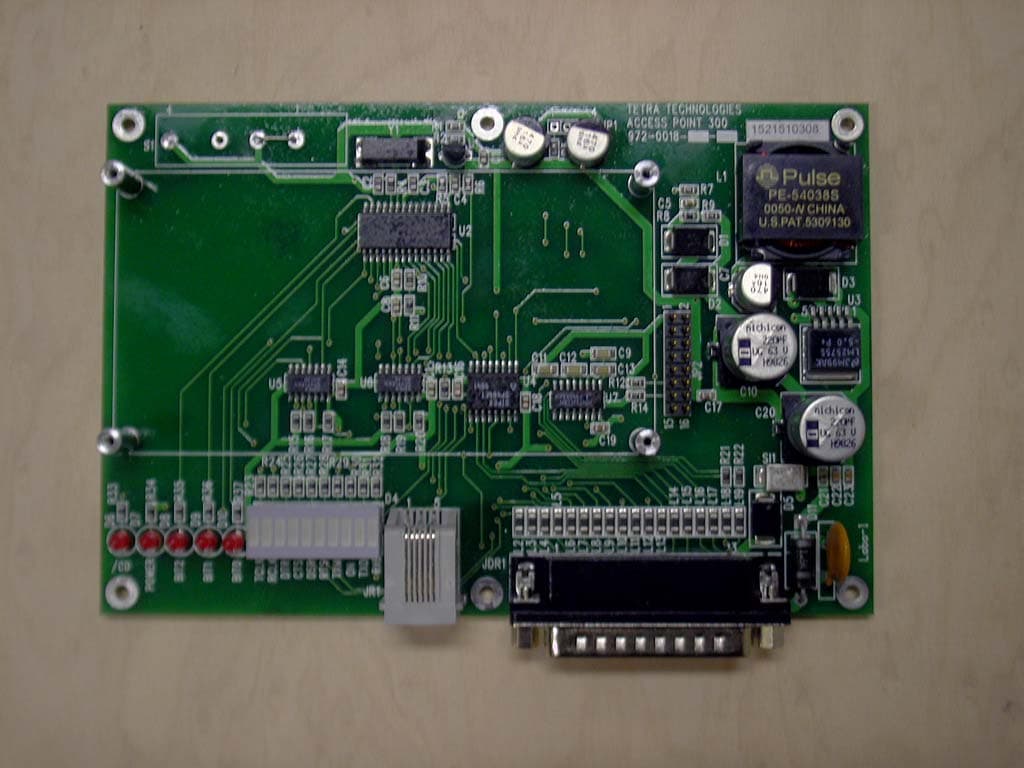
Click to zoom
Application Details
- Equipment Class
- DTS - Digital Transmission System
- Date of Grant
- Aug 10, 2003
- Application Purpose
- Original Equipment
- Date of Application
- May 04, 2003
- Equipment Note
- Fleetlink Access Point 300 Wireless Data Comm
- Frequency Range
- 906.00000000 - 924.00000000
- Company
- FleetMind Solution Inc.
- Country
- Canada
Documents & Files
Document Text
Text extracted from the exhibit documents filed with the FCC. Open a document above to read the original.
Users Manual
February 2003 APREL Project No.: FMSB-Access Point-3944 Consulting * Research * Training * Certification Testing Since 1981 FCC ID: QVJSAP300 Access Point 300 Exhibit 9 User’s Manual Fleetlink Access Point 300 Installation Guide © 2003 FleetMind Solutions Inc. All rights reserved. Fleetlink Access Point 300 Installation Guide The information contained in this manual is subject to change without notice. All statements, information and recommendations in this manual are believed to be accurate, but are presented without warranty of any kind, express or implied. Users must take full responsibility for their use of any products. No part of this publication may be reproduced or transmitted in any form or by any means, electronic or mechanical, including photocopying and recording without prior written consent from FleetMind Solutions Inc. The FleetMind and Fleetlink logos and designs are trademarks of FleetMind Solutions Inc. All other trademarks are the property of their respective owners. The license agreement is contained within the software’s installer. FleetMind Solutions Inc., 455 Fénelon Blvd., Suite 110, Dorval QC H9S 5T8, CANADA Document Part Number: 33-911-0004-01.A (0304) CONTENTS3 PreliminariesChapter 1 Welcome to Fleetlink............................................................... 6 Important Safety and Compliance Information........................ 6 FCC Compliance Statement (USA)...................................... 7 Industry Canada Certification............................................... 7 Using the Documentation........................................................ 8 Conventions.......................................................................... 8 Suggested Reading.............................................................. 9 Service and Support................................................................ 9 Contacting Us.......................................................................... 9 IntroductionChapter 2 Introduction............................................................................ 12 What is the Access Point 300?.............................................. 12 Access Point 300 Radio Box.............................................. 13 Proxim RXA-300................................................................. 14 ESCC Card......................................................................... 14 Software.............................................................................. 15 Cable and Splitter............................................................... 16 Access Point InstallationTerminal....................................... 17 InstallationChapter 3 Introduction............................................................................ 20 Installation Considerations.................................................... 20 Antenna Installation............................................................ 20 Installing the Access Point 300.............................................. 22 Access Point 300 System Components.............................. 22 Installation Procedure......................................................... 24 CONTENTS4 Chapter 1 Preliminaries CHAPTER 1 Preliminaries 6 Welcome to Fleetlink Welcome to Fleetlink, FleetMind’s fleet management solution. In this installation guide, you will learn about the Fleetlink Access Point 300, including how to install it. The guide is divided into three chapters (see “Using the Documentation” in this chapter), which will help you understand how the Access Point 300 works and the role it plays in the Fleetlink solution. Important Safety and Compliance Information Note This section applies to the Fleetlink Access Point 300 model, specifically model S-AP- 300. Before you install or use the Fleetlink product, read the FCC and other regulatory material found below, as well as in the other documents that accompanied your order. This section provides information on the following topics: •FCC compliance statement (USA) •Industry Canada Certification Warning To meet FCC/IC RF exposure guidelines, you must keep at least 8in. (20 cm.) from the antenna during operation. FLEETLINK ACCESS POINT 300 Installation Guide 7 FCC Compliance Statement (USA) This equipment has been tested and found to comply with the limits for a Class B digital device, pursuant to Part 15. These limits are designed to provide reasonable protection against harmful interference in a residential environment notwithstanding use in commercial, business and industrial environments. This equipment generates, uses, and can radiate radio frequency energy and, if not installed and used in accordance with the product manuals, may cause harmful interference to radio communications. This equipment also complies with the FCC Part 15 Subpart C. Caution Changes or modifications to this unit not expressly approved by the party responsible for compliance could void your authority to operate this equipment. Industry Canada Certification This Class B digital apparatus complies with Canadian ICES ICES-003 and RSS 210. CHAPTER 1 Preliminaries 8 Using the Documentation This installation guide assumes some basic understanding of the Fleetlink fleet management system and is intended for installers. It is divided into the following three chapters: 1Preliminaries Provides general information about the manual, safety and compliance information, as well as information on how to contact customer support. 2Introduction Provides an overview of the Access Point 300, including information about its components. 3Installation Provides installation considerations, as well as detailed installation instructions. Conventions This user guide uses the following conventions to convey instructions and information: Table1 Installation Guide Conventions ConventionDescription BoldWhen bold is used within procedures, it identifies key’s on the PC or on the Access Point Installation Terminal.(e.g., Press Enter.). CautionIndicates reader be…
Text truncated - open the document above for the full version.
Users Manual
CHAPTER 1 Preliminaries 6 Welcome to Fleetlink Welcome to Fleetlink, FleetMind’s fleet management solution. In this installation guide, you will learn about the Fleetlink Access Point 300, including how to install it. The guide is divided into three chapters (see “Using the Documentation” in this chapter), which will help you understand how the Access Point 300 works and the role it plays in the Fleetlink solution. Important Safety and Compliance Information Note This section applies to the Fleetlink Access Point 300 model, specifically model S-AP- 300. Before you install or use the Fleetlink product, read the FCC and other regulatory material found below, as well as in the other documents that accompanied your order. This section provides information on the following topics: •FCC compliance statement (USA) •Industry Canada Certification Warning To meet FCC/IC RF exposure guidelines, you must keep at least 8in. (20 cm.) from the antenna during operation.
Attestation Statements
February 2003 APREL Project No.: FMSB-Access Point-3944 Consulting * Research * Training * Certification Testing Since 1981 FCC ID: QVJSAP300 Access Point 300 Exhibit 10 Attestation Statements FCC Part 15, Subpart B Class A Certificate of Conformity FCC Part 15.247, 15.207, 15.205, 15.203 Statement of Compliance February 2003 APREL Project No.: FMSB-Access Point-3944 Consulting * Research * Training * Certification Testing Since 1981 Certificate of Compliance FCC ID: QVJSAP300 PRODUCT: Access Point 300 MANUFACTURER: FleetMind Solutions We certify that the pertinent tests have been performed on the above-described equipment and that this equipment conforms to the applicable requirements of FCC Parts 15.247, 15.207, 15.205, 15.203 See Exhibit 2, Engineering Reports J J a a y y S S a a r r k k a a r r Jayanta (Jay) K. Sarkar Technical Director, Standards and Certification APREL Laboratories
Cover Letter(s)
February 2003 APREL Project No.: FMSB-Access Point-3944 Consulting * Research * Training * Certification Testing Since 1981 FCC ID: QVJSAP300 Access Point 300 Table of Contents List of Exhibits Submitted E E X X H H I I B B I I T T 1 1 : : C C O O V V E E R R L L E E T T T T E E R R S S a) Application overview b) Equipment Identification c) Authorization Letter /Agent Designated (Jay Sarkar) d) Request for confidentiality Exhibit 2:Engineering Reports (Test Reports) Introduction a) Power Lines Conducted Emissions (15.207) b) Direct Sequence Bandwidth(15.247(a)(2) ) c) Maximum Peak Output Power (15.247 (b)(3)) d) Peak Power Spectral Density (15.247(d)) e) Antenna Requirements (15.203) f) Radiated Emissions Spurious (15.247(c)) &Restricted Bands (15.205(a)) g) Process Gain Exhibit 3: Operational/Technical Description (Confidential) Exhibit 4: ID Label/Location Exhibit 5:External Photographs of the Equipment Internal Photographs of the equipment Exhibit 6:Block Diagram (Confidential) Exhibit 7: Schematic Diagram (Confidential) Exhibit 8:Parts List (Confidential), Tune–up Procedure Exhibit 9:User’s Manual Exhibit 10:a) Attestation Statement: FCC Part 15 Declaration of Conformance (DoC) certificate b) Attestation Statement: the equipment complies with Parts 15.247, 15.207, 15.205, 15.203 Exhibit 11:RF Exposure Information
Cover Letter(s)
February 2003 APREL Project No.: FMSB-Access Point-3944 Consulting * Research * Training * Certification Testing Since 1981 FCC ID: QVJSAP300 Access Point 300 Exhibit 1 a) Application overview b) Equipment c) Authorization Letter /Agent Designated (Jay Sarkar) d) Request for confidentiality February 2003 APREL Project No.: FMSB-Access Point-3944 Consulting * Research * Training * Certification Testing Since 1981 EXHIBIT 1b Equipment Identification FCC ID: QVJSAP300 MANUFACTURER: FleetMind Solutions PRODUCT: Access Point 300 EUT TYPE: Licensed Non-Broadcast Station Transmitter (TNB) TX Frequency: 902-928 MHz MEASURED ERP: 107.2 mW
External Photos
Client: FleetMind Solutions Product: Access Point FCC ID: QVJSAP300 See INTERNAL PHOTOS FOR External Photos
ID Label/Location Info
February 2003 APREL Project No.: FMSB-Access Point-3944 Consulting * Research * Training * Certification Testing Since 1981 FCC ID: QVJSAP300 Access Point 300 Exhibit 4 Label/Location Applicant: Fleetmind Solutions Inc. FCC ID: QVJ SAP300 CAN: 4530ASAP300 FleetMind Solutions Inc., 455 Fenelon Blvd suite 110, Dorval (QC), H9S 5T8, Canada Page 4-1 Exhibit 4. Photographs Access Point 300 pursuant 47 CFR External Photograph Access Point 300: Photograph 4 - 1: Complete system. FleetMind Solutions Inc. Produit/Product: Access Point 300 Modèle / Model: S-AP-300 FCC ID: QVJSAP300 IC: 4530ASAP300 Fabriqué au Canada Made in Canada P/N: 897-001 This product contains a transmitter approved under FCC and CAN rules. This device complies with the limits for Class B digital devices, pursuant to Part 15 of the FCC Rules. Operation is subject to the following two conditions: (1) this device may not cause harmful interference, and (2) this device must accept any interference received, including interference that may cause undesired operation . Cet appareil numérique de la Classe B est conforme à la norme NMB-003. This Class B digital apparatus complies with Canadian ICES-003. Figure 4 - 1: Label marking. Applicant: Fleetmind Solutions Inc. FCC ID: QVJ SAP300 CAN: 4530ASAP300 FleetMind Solutions Inc., 455 Fenelon Blvd suite 110, Dorval (QC), H9S 5T8, Canada Page 4-2 Photograph 4 - 2: Front view of the Access Point 300. Applicant: Fleetmind Solutions Inc. FCC ID: QVJ SAP300 CAN: 4530ASAP300 FleetMind Solutions Inc., 455 Fenelon Blvd suite 110, Dorval (QC), H9S 5T8, Canada Page 4-3 Photograph 4 - 3: Close-up front view of the Access Point 300. Applicant: Fleetmind Solutions Inc. FCC ID: QVJ SAP300 CAN: 4530ASAP300 FleetMind Solutions Inc., 455 Fenelon Blvd suite 110, Dorval (QC), H9S 5T8, Canada Page 4-4 Photograph 4 - 4: Bottom view of the Access Point 300.
Internal Photos
February 2003 APREL Project No.: FMSB-Access Point-3944 Consulting * Research * Training * Certification Testing Since 1981 FCC ID: QVJSAP300 Access Point 300 Exhibit 5 Photographs of the Equipment External Photos Internal Photos Applicant: Fleetmind Solutions Inc. FCC ID: QVJ SAP300 CAN: 4530ASAP300 Exhibit 5. Photographs Access Point 300 pursuant 47 CFR External Photograph Access Point 300: Photograph 5 - 1: Complete system. FleetMind Solutions Inc., 455 Fenelon Blvd suite 110, Dorval (QC), H9S 5T8, Canada Page 5-1 Applicant: Fleetmind Solutions Inc. FCC ID: QVJ SAP300 CAN: 4530ASAP300 Internal Photographs Access Point 300 Main Board: Photograph 5 - 2: Top Side of Main board. Photograph 5 - 3: Bottom Side of Main board. FleetMind Solutions Inc., 455 Fenelon Blvd suite 110, Dorval (QC), H9S 5T8, Canada Page 5-2 Applicant: Fleetmind Solutions Inc. FCC ID: QVJ SAP300 CAN: 4530ASAP300 Internal Photographs Radio Proxim: Photograph 5 - 4: Top Side of Radio Proxim. Photograph 5 - 5: Bottom Side of Radio Proxim. FleetMind Solutions Inc., 455 Fenelon Blvd suite 110, Dorval (QC), H9S 5T8, Canada Page 5-3 Applicant: Fleetmind Solutions Inc. FCC ID: QVJ SAP300 CAN: 4530ASAP300 FleetMind Solutions Inc., 455 Fenelon Blvd suite 110, Dorval (QC), H9S 5T8, Canada Page 5-4 Internal Photographs Filter: Photograph 5 - 6: Top Side of Filter. Photograph 5 - 7: Bottom Side of Filter.
RF Exposure Info
February 2003 APREL Project No.: FMSB-Access Point-3944 Consulting * Research * Training * Certification Testing Since 1981 FCC ID: QVJSAP300 Access Point 300 Exhibit 11 RF Exposure Information February 2003 APREL Project No.: FMSB-Access Point-3944 Consulting * Research * Training * Certification Testing Since 1981 RF EXPOSURE COMPLIANCE REQUIREMENT FCC ID: QVJSM110T Client: FleetMind Solutions Product: Access Point 300, Model: S-AP-300 The FleetMind Access Point 300 is a low power Direct Sequence Spread Spectrum System and as such is eligible for exemption for the RF Compliance requirement due to the following clauses: Ref: Supplement C (Edition 01-01)to OET Bulletin 65 (Edition 97-01) Evaluating Compliance with FCC Guidelines for Human Exposure to Radio frequency Electromagnetic Fields SECTION 3: RF EXPOSURE COMPLIANCE FOR SPREAD SPECTRUM TRANSMITTERS For spread spectrum transmitters operating under 47 CFR §15.247, it is specified in 47 CFR §15.247(b)(4) that these devices must operate in a manner that ensures the public is not exposed to RF energy levels in excess of the Commission's guidelines. These devices are categorically excluded from routine environmental evaluation because they generally operate at relatively low power levels where there is a high likelihood of compliance with the RF exposure standards. For some low power devices it may be necessary to ensure compliance with the RF exposure limits by using a combination of simple procedures such as installation and operating instructions, warning instructions and/or warning labels on the device to ensure that the device will not expose nearby persons above the applicable MPE limits. In most cases, the "worst case" distance at which an MPE limit is met for mobile devices can be estimated according to the power density produced by an isotropic source with radiated output power equivalent to that transmitted by the device as discussed in OET Bulletin 65. . If a transmitter is designed to operate next to the body of its user or at close proximity to persons, a RF evaluation may be requested according to 47 CFR §1.1307(c) and (d). These types of evaluations are typically limited to transmitters that are intended to operate in very close proximity to the body, using 0.5 watt of output power or more with a high signal transmitting duty factor, and which do not incorporate obvious effective means for users to meet RF exposure compliance. When RF evaluation is requested, the procedures described in this supplement for evaluating mobile and portable devices with respect to MPE or SAR limits may be used. METHODS TO ENSURE COMPLIANCE FOR SPREAD SPECTRUM TRANSMITTERS The examples shown in the Table 1 are not intended to establish mandatory procedures for RF exposure compliance for spread spectrum transmitters. Other methods and procedures may be acceptable based on device output power, operating configurations and exposure conditions. The range of power levels and distances used are approximate values representative of typical operating conditions for most spread spectrum transmitters operating at 915 or 2450 MHz. For certain fixed and mobile transmitters that are not designed to be carried next to the body of a user during normal operation, the use of appropriate operating and warning instructions in the February 2003 APREL Project No.: FMSB-Access Point-3944 Consulting * Research * Training * Certification Testing Since 1981 operator's manual or warning labels on the device may offer effective means to prevent users and nearby persons from exposure at a specified distance from the device ...” Conclusion: The product is a Direct Sequence Spread Spectrum System (Mobile Device) having a relatively low power of 107.2 mW conducted with antenna gain of 3dBd. The user manual also contains a 20 cm distance installation recommendation, thus meeting the MPE requirements. ,
RF Exposure Info
51 Spectrum Way Tel (613) 820-2730Email: [email protected] Nepean, OntarioFax (613) 820-4161 HTTP://www.aprel.com Canada K2R 1E6 RF EXPOSURE REQUIREMENTS MAXIMUM PERMISSIBLE EXPOSURE (MPE) Calculation Method of RF Safety Distance Introduction FCC ID QVJSAP300 FleetMind Solutions Inc. Purpose of the Report This technical report is a detailed environmental analysis of the radio frequency exposure from use of the Fleetlink Access Point 300 Wireless Data Communication unit, manufactured by FleetMind Solutions, FCC ID:QVJSAP300 frequency range of 902-928 MHz. The following analysis demonstrate that the Access Point 300 is in compliance with the requirements for maximum permissible exposure (MPE) to radio frequency exposure as defined in the FCC Rules, 47 CFR 2. 1091, as amended and the limits as given in the FCC Rules, 47 CFR 2. 1.1310, table 1, Radio Frequency radiation exposure limits and meets the RF Safety Distance. Limits The criteria listed in the following table are used to evaluate the environmental impact of human exposure to radio frequency (RF) radiation as specified in 1.1307(b). LIMITS FOR MAXIMUM PERMISSIBLE EXPOSURE (MPE) Frequency Range (MHz) Electric Field Strength (V/m) Magnetic Field Strength (A/m) Power Density (mW/cm²) 300-1500......F/300 1500-100,000......5 300-1500......F/1500 1500-100,000......1.0 F=frequency of interest Classification of Device/Applicability of Rules Mobile devices The Fleetlink Access Point 300 Wireless Data Communication unit is properly defined as a mobile device per 47 CFR 2.1091 (b), which states that “mobile devices are defined as transmitters designed to be used in other than fixed locations and to generally be used in such a way that a separation distance of at least 20 centimeters is normally maintained between radiating antennas and the body of the user or nearby persons.” Fleetlink Access Point 300 Wireless Data Communication unit is designed to be used in mobile applications.. The recommended location of the antenna is on the roof top on a flat ground plane, at 51 Spectrum Way Tel (613) 820-2730Email: [email protected] Nepean, OntarioFax (613) 820-4161 HTTP://www.aprel.com Canada K2R 1E6 least 10 cm away from any uneven surface. When choosing a location for the antenna, consideration is given to metal obstructions. FCC ID QVJSAP300 For applications for the Fleetlink Access Point 300 Wireless Data Communication unit, typically at least a separation distance of 20 centimeters is maintained between the radiating antennas and the body of the user or nearby person in order to meet the FCC exposure guidelines while the device is in operation. A statement is included in the User’s Manual recommending maintaining a separation distance of 20 centimeter. However, this statement does not in anyway reflects that proximity of less than 20 centimeters are hazardous. The recommendation of a 20-cm separation distance ensures that a well-defined margin with respect to the maximum permissible exposure as estimated using a theoretical prediction model. Operation mode: The device is a Direct Sequence Spread Spectrum System operating under section 15.247. Maximum exposure (Safety distance) calculation is based Maximum Peak Output Power when the system was in continuous transmitting mode providing the worst case RF exposure. The RF calculation is based on omni- directional antennas. Methodology for calculation of RF Safety Distance: Calculations can be made to predict RF Field strength and power density levels around typical RF Sources. For example, in the case of a single radiating antenna, a prediction for power density in the far field of the antenna can be made by use of the general equations below. These equations are generally accurate in the far field of an antenna but will over-predict power density in the near field, where they could be used for making a worst case or conservative prediction. S= PG/4ðR 2 Where: S= power density, mW/cm² P= power input to the antenna, mW G= power gain of the antenna relative to an isotropic radiator R=distance to the center of radiation of the antenna, cm or: S=EIRP/ 4ðR 2 Where: EIRP = equivalent (or effective) isotropically radiated power Calculation of RF Saftey Distance: Using the above fundamental equation for power density, we can derive the following equation for determining the safety distance: R = [PG/4ðS] 1/2 51 Spectrum Way Tel (613) 820-2730Email: [email protected] Nepean, OntarioFax (613) 820-4161 HTTP://www.aprel.com Canada K2R 1E6 FCC ID QVJSAP300 S = The maximum permissible exposure (MPE) limit for general population/uncontrolled exposure for this band is: F/1500 = 906/1500 = 0.604 mW/cm 2 P = 20.3 dBm = 107.2 mW (Power Density at low channel with maximum peak output RF power, conducted, at antenna terminal) G = 5.2 dBi G = 10 (5.2/10) = 3.311 numeric gain (Highest antenna gain to be used with the devise) R = [(107.2 mW) (3.311) / 4ð (0.604 mW/ cm 2 )] 1/2 R = 6.84 cm (The minimum separation distance required). Since the minimum RF Safety distance determined above is much lower than the 20-cm requirement for a mobile device and as recommended in the User’s Manual (8 inches), compliance is demonstrated. Jayanta K. Sarkar Technical Director of Standards & Certification APREL Laboratories
Test Report
February 2003 APREL Project No.: FMSB-Access Point-3944 Consulting * Research * Training * Certification Testing Since 1981 EXHIBIT 2 Engineering Reports (Test Reports) Introduction FCC ID: QVJSAP300 51 Spectrum Way Nepean ON K2R 1E6 Tel: (613) 820-2730 Fax: (613) 820-4161 email: [email protected] April 2003 APREL Project No.: FMSB-Access Point-3944 Assessment of Compliance with Respect to FCC Rules & Regulations Part 15.247, 15.205, 15.207,15.209: Direct Sequence Spread Spectrum System Access Point 300 Model S-AP-300 FleetMind Solutions April 2003 Page APREL Project No FMSB-Access Point-3944 This report shall not be reproduced, except in full, without the express written approval of APREL Laboratories 2 Consulting * Research * Training * Certification Testing Since 1981 E E n n g g i i n n e e e e r r i i n n g g R R e e p p o o r r t t Subject:Assessment of Compliance in accordance with the FCC Rules & Regulations Part 15.247, 15.205, 15.207 15.209: Direct Sequence Spread Spectrum System FCC ID: QVJSAP300 Equipment: Access Point 300 Model: S-AP-300 Client: FleetMind Solutions 455 Fenalon, Suite 110 Dorval, Quebec, H9S 5T8 Project #: FMSB-Access Point-3944 Prepared By:APREL Laboratories, Regulatory Compliance Division 51 Spectrum Way Nepean, Ontario K2R 1E6 Approved by: ________________________Date:____________ Jay Sarkar Technical Director, Standards & Certification Submitted by: ________________________Date:____________ Jay Sarkar Technical Director, Standards & Certification Released by: ________________________Date:____________ Dr. Jack J. Wojcik, P.Eng. April 2003 Page APREL Project No FMSB-Access Point-3944 This report shall not be reproduced, except in full, without the express written approval of APREL Laboratories 3 Consulting * Research * Training * Certification Testing Since 1981 CERTIFICATE OF COMPLIANCE Applicant name and address FleetMind Solutions 455 Fenalon, Suite 110 Dorval, Quebec, H9S 5T8 Date and Location of Testing Date: December 2002 Project No. : FMSB-ACCESS POINT-3944 Test Location: APREL Laboratories, Nepean, ON CANADA Equipment Type:Access Point 300, Wireless Modem Model(s):S-AP-300 FCC Rule Parts:§ 15.247; 15.205, 15.207, 15.209 Classification:Spread Spectrum Transceiver (DSS) Method/System:Direct Sequence Spread Spectrum System (DSSSS) Max. Peak OutputRF Power:107.2mW (20.3 dBm) RF Band:902-928 MHz conducted This equipment has been shown to be capable of compliance with applicable technical standards as indicated in the measurement report and was tested in accordance with the measurement procedures specified in ANSI C-63-4. I attest to the accuracy of the data. All measurements reported were carried out under my supervision and are correct to the best of my knowledge and belief. I assume full responsibility for the compliance of these measurements and vouch for the qualifications of the persons taking them. This relates only to the sample tested. FCC ID: QVJSAP300 APPLICANT: FleetMind Solutions April 2003 Page APREL Project No FMSB-Access Point-3944 This report shall not be reproduced, except in full, without the express written approval of APREL Laboratories 4 Consulting * Research * Training * Certification Testing Since 1981 FCC ID: QVJSAP300 Client: FleetMind Solutions Product: Access Point 300, Model: S-AP-300 Table of Contents Engineering Summary5 Summary of Test Data5 Introduction6 Product Information7 FCC Submission Information8 Sections: Description of Tests a. Power Lines Conducted Emissions11 b. Direct Sequence Bandwidth34 c. Maximum Peak Power Output50 d. Power Density55 e. Antenna Requirements63 f. Radiated Spurious Emissions65 & Restricted Bands g.Processing Gain78 Test Equipment List: See Appendix A April 2003 Page APREL Project No FMSB-Access Point-3944 This report shall not be reproduced, except in full, without the express written approval of APREL Laboratories 5 Consulting * Research * Training * Certification Testing Since 1981 FCC ID: QVJSAP300 Applicant: FleetMind Solutions Equipment: Access Point 300 Wireless Modem Models: S-AP-300 Standard: FCC Rules and Regulations Parts 15.247, 15.205, 15.207, 15.209 ENGINEERING SUMMARY This report contains the measurement results of the engineering evaluation performed on a FleetMind Access Point 300, henceforth referred to as the Device Under Investigation (DUI). The measurements were carried out in accordance with the FCC Rules and Regulations Parts 15.247, 15.205, 15.207, 15.209. The product was evaluated when it was set at the maximum power. The FleetMind Access Point 300 is a Direct Sequence Spread Spectrum System operating at 902-928 MHz band. The unit was tested at frequencies 906 MHz (L), 915 MHz (M) , 924 MHz (H) and continuos mode. The DUI was evaluated and the measurement results are presented in this report. All measurements were performed as conducted. The results presented in this report relate only to the sample tested. Compliance Summary Test DescriptionSection Compliance Summary Pass/Fail Power lines Conducted Emissions Ref Paragraph FCC Part 15.207 APass Direct Sequence Bandwidth Ref Paragraph FCC Part 15.247 (a) (2) B Pass Maximum Peak Output Power Ref Paragraph FCC Part 15.247 (b) C Pass Peak Power Spectral Density Ref Paragraph FCC Part 15.207 D Pass Antenna Requirements Ref Paragraph FCC Part 15.247(d) E Pass Radiated Emissions Spurious Ref Paragraph FCC Part 15.247 F Pass Restricted Bands Ref Paragraph FCC Part 15.205 F Pass Processing Gain Ref Paragraph FCC Part 15.247 ( c ) G Pass April 2003 Page APREL Project No FMSB-Access Point-3944 This report shall not be reproduced, except in full, without the express written approval of APREL Laboratories 6 Consulting * Research * Training * Certification Testing Since 1981 FCC ID: QVJSAP300 Client: FleetMind Solutions Product: Access Point 300, Model: S-AP-300 INTRODUCTION General This report describes the results of the Compliance test under FCC Part 15.247, 15.205, 15.207, 15.209 conducted on a FleetMind Access Point Wireless …
Text truncated - open the document above for the full version.
Test Report
February 2003 APREL Project No.: FMSB-Access Point-3944 Consulting * Research * Training * Certification Testing Since 1981 FCC ID: QVJSAP300 Access Point 300 Exhibit 2a Engineering Report on Power Lines Conducted Emissions (15.207) April 2003 Page APREL Project No FMSB-Access Point-3944 This report shall not be reproduced, except in full, without the express written approval of APREL Laboratories 10 Consulting * Research * Training * Certification Testing Since 1981 Section A Test: Power Lines (Transmitter AC Wireline) Conducted Emissions FCC ID: QVJSAP300 Client: FleetMind Solutions Product: Access Point 300, Model: S-AP-300 April 2003 Page 11 APREL Project No FMSB-Access Point-3944 This report shall not be reproduced, except in full, without the express written approval of APREL Laboratories Consulting * Research * Training * Certification Testing Since 1981 Test: Power Lines (Transmitter AC Wireline) Conducted Emissions FCC ID: QVJSAP300 Client: FleetMind Solutions Product: Access Point 300, Model: S-AP-300 Reference:FCC Part 15.207/Industry Canada RSS 210, 6.6 (a) Criteria:For an intentional radiator, which is designed to be connected to the public utility (AC) power line, the radio frequency voltage that is conducted back onto the AC power line on any frequency or frequencies within the band 450 kHz to 30 MHz shall not exceed 250 micro-volts (48 dbμV). Compliance with this provision shall be based on the measurement of the radio frequency voltage between each power line and ground at the power terminals. Condition:Conducted Test Set-up: Test setup from Figure a1 was used. Equipment:See Appendix A Methodology:…
Text truncated - open the document above for the full version.
Contact Information
Applicant
Douglas Hartley(Technical Manager Hardware and Engineering)
Technical Contact
APREL LaboratoriesJayanta (Jay) K Sarkar
[email protected]613-820-2730
51 Spectrum Way · Nepean Ontario · Canada
Non-Technical Contact
APREL LaboratoriesJayanta (Jay) K Sarkar
[email protected]613-820-2730
Test Firm
APREL LaboratoriesJay Sarkar
Technical Specifications
| # | Rule Parts | Frequency Range | Power Output |
|---|---|---|---|
| 1 | 15C | 906 MHz - 924 MHz | 107.00 mW |
Other Applications from FleetMind Solution Inc.
QVJSM110T
Jul 27, 2003Fleetlink M1 On-Board Computer/Wireless LAN
Equipment Class
DSS - Part 15 Spread Spectrum Transmitter