RN2601SD-DCertified Wireless USB Module
Wisair Inc.
Click to zoom
Application Details
- Equipment Class
- UWB - Ultra Wideband Transmitter
- Date of Grant
- Dec 20, 2007
- Application Purpose
- Original Equipment
- Date of Application
- Sep 10, 2007
- Equipment Note
- Certified Wireless USB Module
- Frequency Range
- 3100.00000000 - 4800.00000000
- Company
- Wisair Inc.
- Country
- United States
Documents & Files
Document Text
Text extracted from the exhibit documents filed with the FCC. Open a document above to read the original.
Users Manual
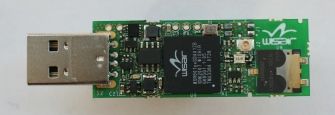
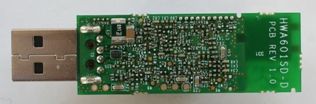
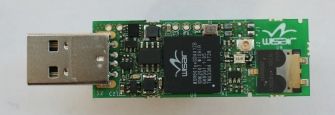
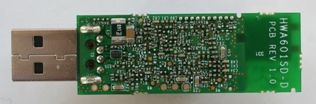
Certified Wireless USB Module User Guide - Preliminary - WUSB Module User Guide R 0.1 Page 2 Wisair Wireless USB About Wisair Wisair is a leading provider of WiMedia ultra-wideband (UWB) chipset solutions for consumer electronics, PC peripherals, and mobile devices. Leveraging the management teams’ decades of wireless communications product development expertise, Wisair is the first company to deliver fully-functional WiMedia-based UWB chipsets and small form-factor reference designs. Today, the fabless semiconductor company continues to focus on delivering low-cost, low- power, and high bit-rate wireless connectivity solutions. For more information, visit www.wisair.com . © Wisair 2007. All rights reserved. All right, title and interest, copyrights, patents, know- how, trade secrets and other intellectual property relating to this publication and to Wisair products are proprietary products of Wisair Ltd. (“Wisair”). The information presented in this publication does not form part of any quotation or contract, is believed to be accurate and reliable, and may change. No part of this publication may be reproduced in any form whatsoever without prior written approval by Wisair. Any and all other trademarks, product names and other intellectual property rights are the sole property of their respective owners. Wisair Proprietary Information Customer Support: Tel: +972-3-7676606 Fax: 972-3-7677608 [email protected] Wisair doc. version UG10033 R 0.1 WUSB Module User Guide R 0.1 Wisair Wireless USB Page 3 Table of Contents 1 Introduction ...................................................................................................... 4 1.1 Key Features ............................................................................................................. 5 1.2 Package Details ........................................................................................................ 5 2 Software Installation........................................................................................ 6 2.1 Automatic PC Driver Installation................................................................................ 6 2.1.1 Connect the Host module (HWA) ...................................................................................... 8 2.2 WisMan Management and Testing Utility .................................................................. 9 3 Maintenance ................................................................................................... 10 3.1 Firmware Update ..................................................................................................... 10 3.2 Troubleshooting....................................................................................................... 10 3.2.1 Verifying Driver Installation .............................................................................................. 10 3.2.2 Reading Software and Firmware Version ........................................................................ 11 4 Technical Specifications ............................................................................... 12 5 FCC Statements ............................................................................................. 13 6 Testing Procedure ......................................................................................... 14 Table of Figures Figure 1: PC to PC communication via WiMedia based application ........................................ 4 Figure 2: PC to PC Peripheral device (example: DVD-RW device) via WUSB........................ 4 Figure 3: WSR601 WUSB Module for host/device– Component Side..................................... 5 Figure 4: WSR601 WUSB Module for host/device – Print Side ............................................... 5 Figure 5: Windows Device Manager Window – HWA driver indication.................................. 10 Figure 6: Windows Device Manager Window – Mass Storage Device driver indication ........ 11 Figure 7: Initial screen............................................................................................................ 14 Figure 8: Radio Test Mode tab .............................................................................................. 14 Figure 9: WisMan Radio Test Mode tab ................................................................................ 15 WUSB Module User Guide R 0.1 Page 4 Wisair Wireless USB 1 Introduction The Wisair Certified Wireless USB reference design kit enables you to set up an ad hoc, Wireless network instantly, extending USB range without the need for a network infrastructure, while providing the right balance between functionality and aesthetics. It allows remote content browsing, sharing, control, multi channel streaming, hotsync, printing, fast copy and very fast information exchange between PC and USB 2.0/1.1 PC peripherals. The types of content supported are: data, applications, pictures, and compressed video and audio files. Figure 1: PC to PC communication via WiMedia based application Figure 2: PC to PC Peripheral device (example: DVD-RW device) via WUSB WUSB Module User Guide R 0.1 Wisair Wireless USB Page 5 Figure 3: WSR601 WUSB Module for host/device– Component Side Figure 4: WSR601 WUSB Module for host/device – Print Side 1.1 Key Features Single port USB 2.0/1.1 CWUSB Host or Device Wire Adapter functionality with advanced throughput Support for Cable Association— Cable association functionality is provided by the reference design 1.2 Package Details The package includes: Category Main Item Accessories Hardware Wireless USB module Software CDROM - software installation package Documentation User Guide (this document) WUSB Module User Guide R 0.1 Page 6 Wisair Wireless USB 2 Software Installation 2.1 Automatic PC Driver Installation Ensure that your PC system hardware and software are both operational. Note: If your PC contains a previous HWA/DWA driver installation, please perform a proper uninstall procedure using the Control…
Text truncated - open the document above for the full version.
Cover Letter(s)
27 Habarzel st. Ramat Hachayal, Tel Aviv 69710 Tel: +972-3-7676606 Fax: +972-3-6477608 www.wisair.com Date: 11 September 2007 Chief, Authorization Branch Federal Communications Commission 7435 Oakland Mills Road Columbia, MS 21046 To Whom It May Concern: Please be advised that Wisair, Inc. authorizes TDK RF solutions to act on our behalf, until otherwise notified, for applications submitted to the Federal Communication (FCC) regarding Ultra-Wideband (UWB) products. We certify that we are not subject to denial of federal benefits that include FCC benefits, pursuant to Section 5301 of the Anti-Drug Abuse ACT of 1988, U.S.C.862. Further, no party, as defined in 47 CFR 1.2002(b), to the application is subject to denial of federal benefits, that include FCC benefits. ______________________ David Meshulam V.P R&D
Cover Letter(s)
27 Habarzel st. Ramat Hachayal, Tel Aviv 69710 Tel: +972-3-7676606 Fax: +972-3-6477608 www.wisair.com Date: 11 September 2007 Chief, Authorization Branch Federal Communications Commission 7435 Oakland Mills Road Columbia, MS 21046 Re: Wisair Certification Application FCC ID: RN2601SD_D To Whom It May Concern: Please be advised that the following exhibits are to be held confidential on behalf of Wisair: o Schematics o Block Diagrams o Bill of Materials This application contains technical information that wisair considers to be trade secrets and proprietary. If made public, the information might be used to the disadvantage of the applicant in the market place. ______________________ David Meshulam V.P R&D
Cover Letter(s)
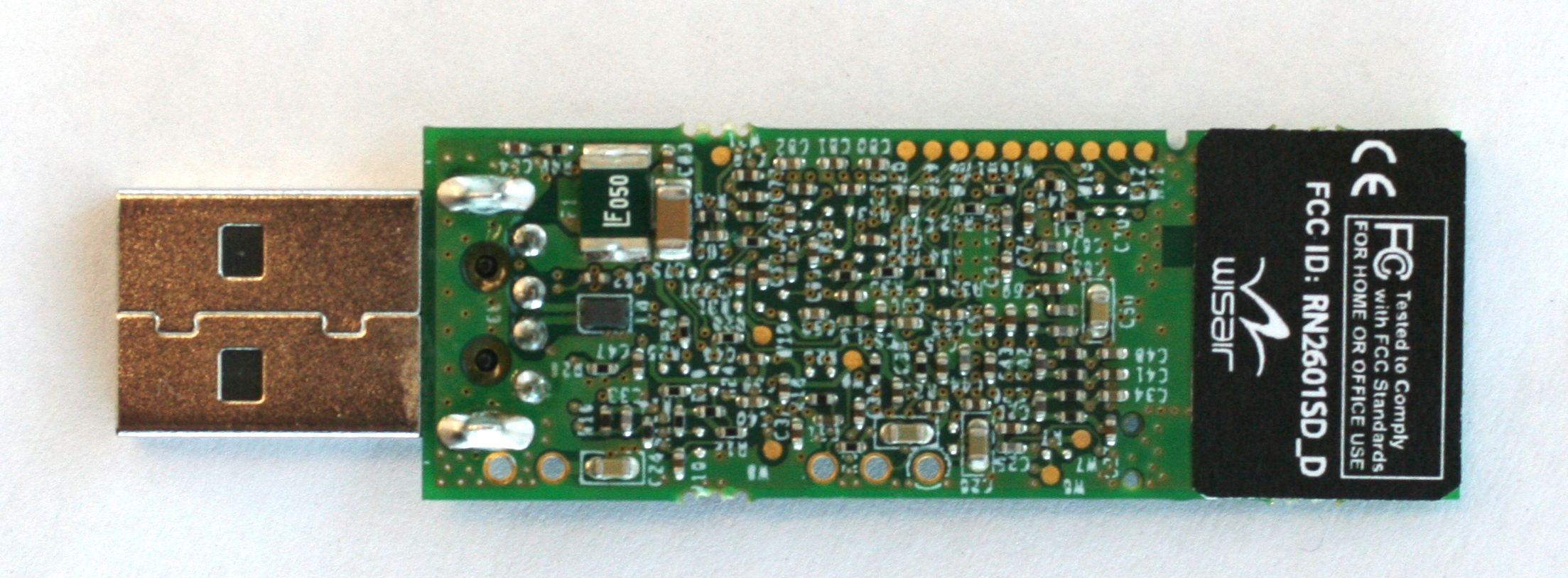
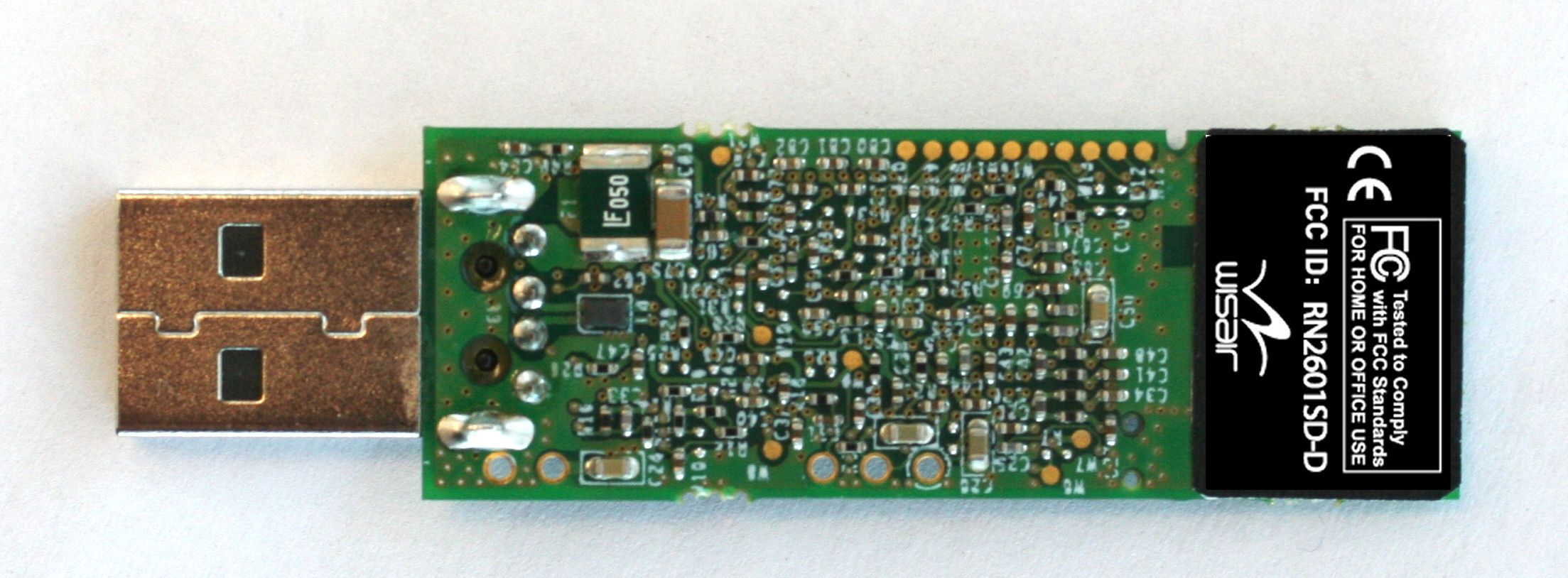
27 Habarzel st. Ramat Hachayal, Tel Aviv 69710 Tel: +972-3-7676606 Fax: +972-3-6477608 www.wisair.com Date: 11 September 2007 Chief, Authorization Branch Federal Communications Commission 7435 Oakland Mills Road Columbia, MS 21046 Subject: Request for unlicensed Modular Transmitter Approval. Reference: FCC 07-56A1 47 CFR 15.212 To Whom It May Concern: Wisair, Ltd. hereby requests FCC Equipment Authorization as a Singular Modular Transmitter of the Wisair Model 601SD-D, UWB Module, FCC ID: RN2601SD_D. Wisair intends to manufacture this device and market it under several brand names and brand I.D.s as a computer accessory or as an item connected to another equipment. This letter addresses the information required by points one through eight of 47 CFR 15.212. 1. The modular transmitter must have its own RF shielding . All shielding necessary for normal operation is accomplished by the multi-layer construction of the printed wiring board which incorporates multiple ground layers in its construction. As this transmitter is designed to operate stand-alone in its own enclosure, connected to an industry-standard USB interface, no additional shielding is incorporated to minimize coupling. 2. The modular transmitter must have buffered modulation/data inputs. The Wisair 601SD-D UWB Module receives data via the industry-standard USB 2.0 interface. This USB interface is implemented within the WSR601SD integrated circuit as may be seen on sheet five of the schematic diagram included in the filing for FCC Equipment Authorization. The USB interface limits the data rate to those defined by the USB standard. 3. The modular transmitter must have its own power supply regulation. The Wisair 601SD-D UWB module receives power from the USB interface via the standard USB connector. This +5 Volt source is regulated on the module to produce the four power domains required by the module circuitry; +3.3V, +1.8V, +1.5V and +1.2V. The power regulation topology may be seen on sheet two of the schematic diagram included in the filing for FCC Equipment Authorization. 4. the modular transmitter antenna must comply with the antenna and transmission system requirements of section 15.203,15.204(b) and 15.204(c) the antenna of the Wisair 601SD-D UWB module is a ceramic LTCC component, OMRON p/n WXA-N2SL, which is permanently soldered to the printed wiring board. 27 Habarzel st. Ramat Hachayal, Tel Aviv 69710 Tel: +972-3-7676606 Fax: +972-3-6477608 www.wisair.com 5. The modular transmitter must be tested in a stand-alone configuration. As described in section 2.5.3 of the test report included in the filing for FCC equipment authorization, the 601SD-D UWB module was tested without a plastic housing, connected to the USB port of a P.C as it usually intends to operate. The 601SD-D is designed with an industry standard USB connector as its electrical and mechanical interface to a host or a device system. 6. The modular transmitter must be equipped with either a permanently affixed label or must be capable of electronically displaying the FCC identification number. An example of the label which will be used is included in the filling of the FCC equipment Authorization. 7. The modular transmitter must comply with any specific rule or operating requirements applicable to the transmitter part 15.519 if the FCC rules and regulation requires that a UWB transmitter shall transmit only when it is sending information to an associated receiver. That rules part also requires that the UWB intentional radiator shall cease transmission within 10 seconds unless it receives an acknowledgement from the associated receiver that its transmission is being received. An acknowledgement of the reception must continue to be received by the UWB intentional radiator at least every 10 seconds or the UWB device must cease transmitting. This requirement is met by design and is implemented by the firmware encoded into the device. 8. The modular transmitter must comply with any applicable RF exposure requirements in its final configuration. From the measurement data we can see that the peak detected EIRP at 3 meters distance and 8 MHz RBW yields a result of –27.55dBm. Translated to 20 cm this would yield a result of –4.03 dBm. Correlating this to a worst-case scenario with a 50 MHz RBW would yield 20.4 dBm EIRP. 20.4 dBm is equal to 110mW EIRP. Plugging this into the above equation yields: 2 2 /0219.0 )20(4 110 cmmWS?? ? Based on these worse case calculations the device is well below the maximum permissible exposure limit of 1mW/cm2 by a large margin. David Meshulam Vice-President, R&D
Cover Letter(s)
27 Habarzel st. Ramat Hachayal, Tel Aviv 69710 Tel: +972-3-7676606 Fax: +972-3-6477608 www.wisair.com Date: 24 September 2007 Chief, Authorization Branch Federal Communications Commission 7435 Oakland Mills Road Columbia, MS 21046 Subject: Request for unlicensed Modular Transmitter Approval. Reference: FCC 07-56A1 47 CFR 15.212 To Whom It May Concern: Wisair, Ltd. hereby requests FCC Equipment Authorization as a Singular Modular Transmitter of the Wisair Model 601SD-D, UWB Module, FCC ID- RN2601SD-D. Wisair intends to manufacture this device and market it under several brand names and brand I.D.s as a computer accessory or as an item connected to another equipment. This letter addresses the information required by points one through eight of 47 CFR 15.212. 1. The modular transmitter must have its own RF shielding . All shielding necessary for normal operation is accomplished by the multi-layer construction of the printed wiring board which incorporates multiple ground layers in its construction. As this transmitter is designed to operate stand-alone in its own enclosure, connected to an industry-standard USB interface, no additional shielding is incorporated to minimize coupling. 2. The modular transmitter must have buffered modulation/data inputs. The Wisair 601SD-D UWB Module receives data via the industry-standard USB 2.0 interface. This USB interface is implemented within the WSR601SD integrated circuit as may be seen on sheet five of the schematic diagram included in the filing for FCC Equipment Authorization. The USB interface limits the data rate to those defined by the USB standard. 3. The modular transmitter must have its own power supply regulation. The Wisair 601SD-D UWB module receives power from the USB interface via the standard USB connector. This +5 Volt source is regulated on the module to produce the four power domains required by the module circuitry; +3.3V, +1.8V, +1.5V and +1.2V. The power regulation topology may be seen on sheet two of the schematic diagram included in the filing for FCC Equipment Authorization. 4. the modular transmitter antenna must comply with the antenna and transmission system requirements of section 15.203,15.204(b) and 15.204(c) the antenna of the Wisair 601SD-D UWB module is a ceramic LTCC component, OMRON p/n WXA-N2SL, which is permanently soldered to the printed wiring board. 27 Habarzel st. Ramat Hachayal, Tel Aviv 69710 Tel: +972-3-7676606 Fax: +972-3-6477608 www.wisair.com 5. The modular transmitter must be tested in a stand-alone configuration. As described in section 2.5.3 of the test report included in the filing for FCC equipment authorization, the 601SD-D UWB module was tested without a plastic housing, connected to the USB port of a P.C as it usually intends to operate. The 601SD-D is designed with an industry standard USB connector as its electrical and mechanical interface to a host or a device system. 6. The modular transmitter must be equipped with either a permanently affixed label or must be capable of electronically displaying the FCC identification number. An example of the label which will be used is included in the filling of the FCC equipment Authorization. 7. The modular transmitter must comply with any specific rule or operating requirements applicable to the transmitter part 15.519 if the FCC rules and regulation requires that a UWB transmitter shall transmit only when it is sending information to an associated receiver. That rules part also requires that the UWB intentional radiator shall cease transmission within 10 seconds unless it receives an acknowledgement from the associated receiver that its transmission is being received. An acknowledgement of the reception must continue to be received by the UWB intentional radiator at least every 10 seconds or the UWB device must cease transmitting. This requirement is met by design and is implemented by the firmware encoded into the device. 8. The modular transmitter must comply with any applicable RF exposure requirements in its final configuration. From the measurement data we can see that the peak detected EIRP at 3 meters distance and 8 MHz RBW yields a result of –27.55dBm. Translated to 20 cm this would yield a result of –4.03 dBm. Correlating this to a worst-case scenario with a 50 MHz RBW would yield 20.4 dBm EIRP. 20.4 dBm is equal to 110mW EIRP. Plugging this into the above equation yields: 2 2 /0219.0 )20(4 110 cmmWS== π Based on these worse case calculations the device is well below the maximum permissible exposure limit of 1mW/cm2 by a large margin. David Meshulam Vice-President, R&D
ID Label/Location Info
RN2601SD_D
ID Label/Location Info
RN2601SD-D
Operational Description
Theory of operation: Wisair 601SD-D USB dongle. The Wisair 601SD-D is a UWB radio device with a USB interface to the host computer, and USB interface to a device. The 601SD-D is intended to provide a short-range wireless USB connection for computers and peripheral units equipped with a USB 2.0 interface. The 601SD-D is powered entirely from the USB connector of the device to which it is attached or from a separate power supply. The 601SD-D operates in the frequency band defined in the FCC rules and regulation for UWB device. Specifically, it operates between the frequencies of 3.168 and 4.752 GHz per the industry-defined WiMedia 1.1 specification. The 601SD-D is based on the WSR601SD integrated circuit device and supporting circuitry for filtering, interface and power conditioning. The 601SD-D has an integrated antenna; there is no facility for an external antenna. The schematic diagram shows a connector, Hirrose type, in the RF path. This is a production test connector, it is not accessible for outside of the unit housing. Following the integrated antenna is a bandpass filter with a passband from 3.1 GHz to 4.8 GHz which provides suppression of unwanted transmitter emission and receiver interference rejection in the 2.4 GHz and 5.1 GHz bands. The WSR601SD is the main chip RF Transceiver generates the system reference frequency from a 24 MHz crystal resonator. The 24 MHz reference is multiplied to 5.280 GHz internally in the 601SD by a PLL multiplier. From this frequency the three band frequencies, 3.432 GHz, 3.960 GHz and 4.488 GHz for both transmit and receive modes are derived internally within the 601SD by direct synthesis. In addition to the band frequencies, a 1056 MHz clock for ADCs and DACs within the 610SD Base band Processor is generated. The interface between the 601SD-D dongle and the host / Device system is via the industry- defined USB 2.0. References. MultiBand OFDM Physical Layer Specification 1.1. MAC-PHY Interface Specification 1.0. Universal Serial Bus Specification 2.0.
Test Report
Compliance Report of Wisair UWB Module 601SD-D Customer: Wisair Date: September 6, 2007 TDK Report: TTS-TR-T112-120 Test performed by: TDK R&D Corporation 1101 Cypress Creek Rd Cedar Park, TX 78613 Technician Checked by Radiated 30 MHz to 40 GHz A. Medina K. Yata Report A. Medina P. Carson/K. Yata All services undertaken are subject to the following general policy. Reports are submitted for exclusive use of the client to whom they are addressed. Their significance is subject to the adequacy and representative character of the samples and to the comprehensiveness of the tests, examinations or surveys made. This report shall not be reproduced except in full, without written consent of TDK R&D Corporation. This report must not be used to claim product endorsement by A2LA, NVLAP nor any other agency of the US Government. This document contains confidential information and cannot be disclosed outside of Wisair or any affiliated company in whole or in part without the express written permission of TDK R&D Corporation. 1. Executive Summary An EMC evaluation to determine compliance of the Wisair UWB Module 601SD-D with requirements of FCC 47 CFR Part 15, Subpart F Section 15.519 was conducted. All references are to the most current version of the Code of Federal Regulations 47 that are currently in effect. In accordance with §2.1033, the following data is presented in support of the Certification of the Modular WUSB Full Mini Card and antennas. The client should retain a copy of this document on file for at least 5 years after the manufacturing of the product has been discontinued. Test Description FCC 47 CFR Section Compliance Operational Limitations 15.519(a) The client has been notified of these limitations. In normal operating mode the transmitter will only send data when associated with a receiver. See section 5 for detail UWB Bandwidth 15.519(b) Yes Radiated Emissions 15.519(c), 15.209 Yes Radiated Emissions in GPS Bands 15.519(d) Yes Peak Emissions within a 50 MHz Bandwidth 15.519(e) Yes Labelling Requirements 15.19/15.212 Yes Report prepared by Approved by Armando Medina Kunio Yata September 6, 2007 September 12, 2007 TTS-TR-T112-120 page 2 of 48 2. Task Description 2.1. Scope Reference FCC ET Docket No. 98-153, FCC 02-48 First R&O; FCC 47 CFR, Part 15, Subpart A; FCC 47 CFR, Part 15, Subpart B; FCC 47 CFR, Part 15, Subpart C; FCC 47 CFR, Part 15, Subpart F FCC ET Docket No. 04-352, Petition for Waiver of the Part 15 UWB Regulations Filed by MBOA-SIG (Adopted: March 10, 2005) FCC Second R&O 07-56A1 Part 15 unlicensed modular transmitter approval 47 CFR 15.212 Title Revision of Part 15 of the Commission’s Rules Regarding Ultra-Wideband Transmissions Systems; Code of Federal Regulations, Part 15 Subpart A: General Code of Federal Regulations, Part 15 Subpart B: Unintentional Radiators Code of Federal Regulations, Part 15 Subpart C: Intentional Radiators Code of Federal Regulations, Part 15 Subpart F: Ultra- Wideband Operation Purpose of Test To gain FCC Certification for technical requirements for Handheld UWB Modular Systems operating between 3.1 GHz and 10.6 GHz. Test Procedures The tests were conducted in accordance with the following documents: FCC ET Docket 98-153, FCC 02-48 First R&O, FCC 07- 56A1 ANSI C63.4: 2003: Methods of Measurement of Radio- Noise Emissions from Low-Voltage Electrical and Electronic Equipment in the Range of 9 kHz to 40 GHz FCC Code of Federal Regulations 47, Part 15 Subpart A: General FCC ET Docket No. 04-352, Petition for Waiver of the Part 15 UWB Regulations Filed by MBOA-SIG (Adopted: March 10, 2005) General Procedures FCC Code of Federal Regulations 47, Part 2 Frequency Allocations and Radio Treaty Matter: General Rules and Regulations Classification of EUT Hand Held Ultra-Wideband Module Page 3 of 48 2.2. Related Submittal(s)/Grant(s) As required in FCC 07-56A1 and 47 CFR 15.212 a cover letter requesting modular approval is included in the application for equipment authorization. 2.3. Test Plan Reference Publication Year Title FCC 47 CFR, Part 15, Subpart A 10/2004 Code of Federal Regulations, Part 15 Subpart A: General FCC 47 CFR, Part 15, Subpart B 10/2004 Code of Federal Regulations, Part 15 Subpart B: Unintentional Radiators FCC 47 CFR, Part 15, Subpart C 10/2004 Code of Federal Regulations, Part 15 Subpart C: Intentional Radiators FCC 47 CFR, Part 15, Subpart F 10/2004 Code of Federal Regulations, Part 15 Subpart F: Ultra-Wideband Operation FCC ET Docket 98-153, FCC 02-48 First R&O 04/2002 Revision of Part 15 of the Commission’s Rules Regarding Ultra- Wideband Transmissions Systems: First Report & Order ANSI C63.4 01/2004 Methods of Measurement of Radio- Noise Emissions from Low-Voltage Electrical and Electronic Equipment in the Range of 9 kHz to 40 GHz FCC ET Docket No. 04- 352 3/2005 Petition for Waiver of the Part 15 UWB Regulations Filed by MBOA-SIG FCC 47 CFR, Part 15, Subpart C 04/2007 Part 15.212 unlicensed Modular Transmitter Approval 2.4. Client Information APPLICANT Name: Wisair Address: 27 Habarzel st., Tel-Aviv 69710 Israel Contact Person: David Meshulam MANUFACTURER Name: Wisair Address: 27 Habarzel st., Tel-Aviv 69710 Israel Contact Person: David Meshulam Page 4 of 48 2.5. Equipment Under Test (EUT) The following information (with the exception of the date information) has been supplied by the applicant. The test results in this report pertain only to the item tested. General Brand Name Wisair Product Name Wireless USB Dongle Model Name or Number 601SD-D Serial Number 70112010 Type of Equipment UWB Radio Transmitter Input Power Supply Type USB port Classification Hand held Ultra-Wideband module system Technical Power Supply Requirements N/A RF Output Rating -41.3 dBm EIRP @ 3 meters Operating Frequency Range 3100 MHz to 4800 MHz RF Output Impedance 50 Ω Channel Spacing N/A Pulse Width N/A Pulse Repetition Frequency N/A 10 dB Bandwidth >500 MHz Modulation/Constellation Multiband OFDM Oscillators’ Frequencies 24MHz, 1056MHz EUT Ports USB2…
Text truncated - open the document above for the full version.
Contact Information
Applicant
Serdar Yurdakul(Director of Marketing)
Technical Contact
TDK RF SolutionsArmando Medina
[email protected]512-258-9478
1101 Cypress Creek Rd · Cedar Park, Texas · United States
Non-Technical Contact
TDK RF SolutionsPat Carson
[email protected]209-351-1584
Test Firm
TDK RF Solutions, Inc.Robert Sutton
Technical Specifications
| # | Rule Parts | Frequency Range | Power Output |
|---|---|---|---|
| 1 | 15F | 3.10 GHz - 4.80 GHz | - |