SRQ-BLADES6LTE/WCDMA/GSM (GPRS) Multi-Mode Digital Mobile Phone
ZTE Corporation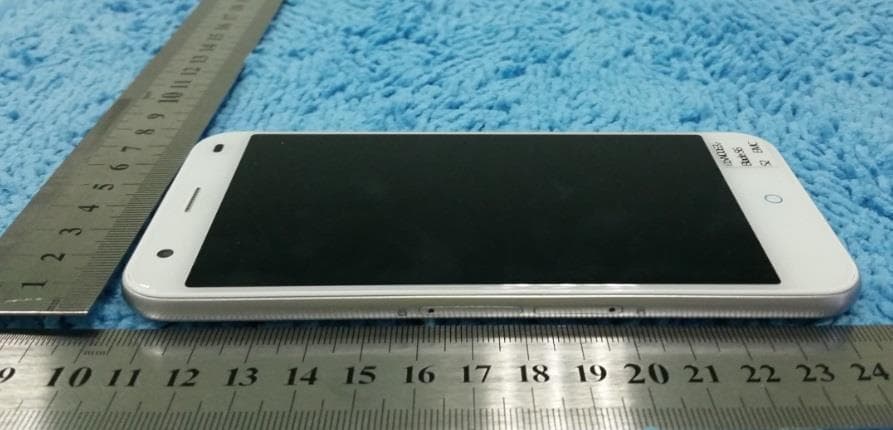
Click to zoom
Application Details
- Equipment Class
- PCE - PCS Licensed Transmitter held to ear
- Date of Grant
- Jul 27, 2015
- Application Purpose
- Original Equipment
- Date of Application
- Jul 26, 2015
- Equipment Note
- LTE/WCDMA/GSM (GPRS) Multi-Mode Digital Mobile Phone
- Frequency Range
- 2510.00000000 - 2560.00000000
- Company
- ZTE Corporation
- Country
- China
Documents & Files
Document Text
Text extracted from the exhibit documents filed with the FCC. Open a document above to read the original.
Users Manual
1 ZTE Blade S6 User Manual 2 About This Manual Thank you for choosing this ZTE mobile device. In order to keep your device in its best condition, please read this manual and keep it for future reference. Copyright Copyright © 2015 ZTE CORPORATION All rights reserved. No part of this publication may be quoted, reproduced, translated or used in any form or by any means, electronic or mechanical, including photocopying and microfilm, without the prior written permission of ZTE Corporation. Notice ZTE Corporation reserves the right to make modifications on print errors or update specifications in this guide without prior notice. This manual has been designed with the utmost care to ensure the accuracy of its content. However, all statements, information and recommendations contained therein do not constitute a warranty of any kind, either expressed or implied. Please refer to For Your Safety to be sure to use your phone properly and safely. We offer self-service for our smart terminal device users. Please visit the ZTE official website (at www.ztedevice.com) for more information on self-service and supported product models. Information on the website takes precedence. 3 Disclaimer ZTE Corporation expressly disclaims any liability for faults and damages caused by unauthorized modifications of the software. Images and screenshots used in this manual may differ from the actual product. Content in this manual may differ from the actual product or software. Trademarks ZTE and the ZTE logos are trademarks of the ZTE Corporation. Google and Android are trademarks of Google, Inc. The Bluetooth ® trademark and logos are owned by the Bluetooth SIG, Inc. and any use of such trademarks by ZTE Corporation is under license. microSDHC logo is a trademark of the SD-3C, LLC. Qualcomm ® Snapdragon™ processors are products of Qualcomm Technologies, Inc. Qualcomm and Snapdragon are trademarks of Qualcomm Incorporated, registered in the United States and other countries. Used with permission. Other trademarks and trade names are the property of their respective owners. 4 Version No.: R1.0 Edition Time: May 4, 2015 Manual No.: 5 Contents Getting Started ....................................................... 11 Getting to Know Your Phone ............................................ 11 Knowing the Keys ............................................................ 13 Installing the nano-SIM Card ............................................ 13 Installing the microSDHC™ Card ..................................... 15 Charging the Battery ........................................................ 16 Extending the Battery Life ................................................ 18 Powering On/Off .............................................................. 18 Setting Up for the First Time ............................................. 18 Locking/Unlocking the Screen and Keys ........................... 19 Using the Touch Screen ................................................... 20 Getting to Know the Home Screen ................................... 21 Personalizing ......................................................... 23 Changing the System Language ...................................... 23 Setting the Date and Time ................................................ 23 Changing Ringtone and Notification Sound ...................... 23 Turning On/Off Touch Sound ............................................ 24 Adjusting Volume ............................................................. 24 Switching to Silent Mode .................................................. 25 Applying New Wallpapers ................................................. 25 Changing Screen Brightness ............................................ 26 Protecting Your Phone With Screen Locks ........................ 26 Protecting Your Phone With Encryption ............................ 27 Knowing the Basics ............................................... 29 6 Monitoring the Phone Status ............................................ 29 Managing Notifications ..................................................... 30 Organizing With Folders .................................................. 33 Rearranging the Favorites Tray ........................................ 34 Entering Text ................................................................... 35 Editing Text ...................................................................... 42 Opening and Switching Apps ........................................... 43 Connecting to Networks and Devices .................. 44 Connecting to Mobile Networks ........................................ 44 Connecting to Wi-Fi ® ....................................................... 46 Using Wi-Fi Direct ® .......................................................... 50 Connecting to Bluetooth ® Devices .................................... 51 Connecting to Your Computer via USB ............................. 53 Sharing Your Mobile Data Connection .............................. 55 Connecting to Virtual Private Networks ............................ 58 Phone Calls ............................................................ 61 Placing and Ending Calls ................................................. 61 Answering or Rejecting Calls ........................................... 61 Working With the Call Log ................................................ 62 Calling Your Contacts ...................................................... 64 Checking Voicemail ......................................................... 64 Using Options During a Call ............................................. 64 Managing Multi-party Calls ............................................... 65 Adjusting Your Call Settings ............................................. 67 People ..................................................................... 71 7 Checking Contact Details ................................................. 71 Adding a New Contact...........................…
Text truncated - open the document above for the full version.
Cover Letter(s)
SCS-F18: Project and Product Certification Representative Authorization Letter Page 1 of 2 Rev 5.0 775 Montague Expressway Milpitas, CA 95035 Tel: 408-526-1188 Fax: 408-526-1088 Email: [email protected] Project and Product Certification Representative Authorization Letter Reason for Amendment (current / obsolete) Revision History Approved Date From To Initial Release (obsolete) 1.0 1.0 Nov-14-2006 Revised wording (obsolete) 1.0 2.0 Sept–25-2007 Updated company template (obsolete) 2.0 3.0 Jan-31-2012 Updated letter information (obsolete) 3.0 4.0 May-23-2014 Added FCC ID field (current) 4.0 5.0 Sept 16 2014 SCS-F18: Project and Product Certification Representative Authorization Letter Page 2 of 2 Rev 5.0 ZTE Corporation 20/07/2015 To: SIEMIC, INC. 775 Montague Expressway, Milpitas, CA 95035 USA Dear Sir/Madam, Re: Product Certification Representative Authorization Letter We, _____ ZTE Corporation _____hereby authorize SIEMIC, Inc. to act as a Certification Body for certifying for the following project(s): LTE/WCDMA/GSM(GPRS)Multi-Mode Digital Mobile Phone, Blade S6 Lite、Blade S6、ZTE Blade S6、ZTE Blade S6 Lite FCC ID: SRQ-BLADES6 Sincerely, Client’s signature Client’s name / title Min Zhang / Mir Contact information / address ZTE Plaza, Keji Road South, Nanshan District, Shenzhen, China
Cover Letter(s)
To SEMIC We ZTE CORPORATION, ZTE Plaza, Keji Road South, Shenzhen, China Declare under our sole responsibility that the product LTE/WCDMA/GSM(GPRS)Multi-Mode Digital Mobile Phone. We declare that this product has 4 model name due to Marketing requirements, and there is no any deference of this product.. Company Name: ZTE Corporation Address : ZTE Plaza, Keji Road South, Nanshan District, Shenzhen, China Name / Title : Min Zhang / Miss Signature : Phone : +86-21-68897541 Email : [email protected] Date :2015/7/14 Model : Blade S6 Lite , Blade S6 , ZTE Blade S6 ,ZTE Blade S6 Lite
Cover Letter(s)
SCS-F19: Confidentiality Request Letter Page 1 of 3 Rev 4.0 775 Montague Expressway Milpitas, CA 95035 Tel: 408-526-1188 Fax: 408-526-1088 Email: [email protected] Confidentiality Request Letter Reason for Amendment (current / obsolete) Revision History Approved Date From To Initial Release (obsolete) 1.0 1.0 Nov-14-2006 Adding CFR 2.459 (obsolete) 1.0 2.0 August – 11 - 2008 Updated company template & Added text box (obsolete) 2.0 3.0 Jan-31-2012 Added IC confidentiality letter form (current) 3.0 4.0 March-26-2015 SCS-F19: Confidentiality Request Letter Page 2 of 3 Rev 4.0 ZTE Corporation 20/07/2015 To: Federal Communications Commission Authorization and Evaluation Division 7435 Oakland Mills Road Columbia, MD Subject: Permanent Confidentiality Request for FCC ID: SRQ-BLADES6 We hereby request confidential treatment of information accompanying this application as outlined below: - Block Diagram - Schematics - Operational Description - Tune up Procedure - Part List The above materials contain trade secrets and proprietary information not customarily released to the public. The public disclosure of these materials may be harmful to the applicant and provide unjustified benefits to its competitors. The applicant understands that pursuant to Section 0.457 & 0.459 of the Rules, disclosure of this application and all accompanying documentation will not be made before the date of the Grant for this application. Sincerely, Client’s signature : Client’s name & title : Min Zhang / Manager Contact information / address: ZTE Plaza, Keji Road South, Nanshan District, Shenzhen, China SCS-F19: Confidentiality Request Letter Page 3 of 3 Rev 4.0 ZTE Corporation 06/07/2015 To: Federal Communications Commission Office of Engineering and Technology Equipment Authorization Division 7345 Oakland Mills Road Columbia, Maryland 21046 Subject: Short Term Confidentiality Request for FCC ID: SRQ -BLADES6 To Whom It May Concern: Pursuant to sections 0.457 and 0.459 of CFR 47 and to avoid premature release of sensitive information prior to marketing or release of the product to the public, the applicant requests the following documents contained in this certification application be temporarily withheld from public disclosure for an initial period of 45 or 180 days (please check one). - User Manual - Internal Photo - Setup Photo The above materials contain trade secrets and proprietary information not customarily released to the public. The public disclosure of these materials may be harmful to the applicant and provide unjustified benefits to its competitors. Sincerely, Client’s signature : Client’s name & title : Min Zhang / Manager Contact information / address : ZTE Plaza, Keji Road South, Nanshan District, Shenzhen, China
External Photos
External Photos EUT EUT External Photos EUT External Photos EUT EUT External Photos EUT EUT External Photos EUT EUT External Photos EUT EUT
ID Label/Location Info
Back of EUT Label and label location L l
Internal Photos
Internal Photos EUT EUT WWAN Module WiFi Module Internal Photos EUT EUT Wifi Auxiliary antenna Wifi main antenna Internal Photos EUT EUT Internal Photos EUT Internal Photos EUT Internal Photos EUT EUT Internal Photos EUT EUT
RF Exposure Info
©Copyright. All rights reserved by CTTL. SAR TEST REPORT No. I15Z41437-SEM01 For ZTE CORPORATION LTE/WCDMA/GSM(GPRS)Multi-Mode Digital Mobile Phone Model Name: Blade S6 Lite、Blade S6、ZTE Blade S6、ZTE Blade S6 Lite Marketing Name: ZTE With Hardware Version: wrbA Software Version: BLADE_S_EIYV1.0.0B01 FCC ID: SRQ-BLADES6 Issued Date: 2015-7-15 Note: The test results in this test report relate only to the devices specified in this report.This report shall not be reproduced except in full without the written approval of CTTL. Test Laboratory: CTTL, Telecommunication Technology Labs, Academy of Telecommunication Research, MIIT No.52, HuayuanNorth Road, Haidian District, Beijing, P. R. China 100191. Tel:+86(0)10-62304633-2512,Fax:+86(0)10-62304633-2504 Email: [email protected], website:www.chinattl.com TESTING CNAS L0570 No. I15Z14437-SEM01 Page 2 of 179 ©Copyright. All rights reserved by CTTL. REPORT HISTORY Report Number Revision Issue Date Description I15N00530-SAR Rev.0 2015-7-15 Initial creation of test report No. I15Z14437-SEM01 Page 3 of 179 ©Copyright. All rights reserved by CTTL. TABLE OF CONTENT 1 TEST LABORATORY .................................................................................................................... 5 1.1 TESTING LOCATION ........................................................................................................................................ 5 1.2 TESTING ENVIRONMENT ................................................................................................................................. 5 1.3 PROJECT DATA ............................................................................................................................................... 5 1.4 SIGNATURE ..................................................................................................................................................... 5 2 STATEMENT OF COMPLIANCE .................................................................................................. 6 2 STATEMENT OF COMPLIANCE .................................................................................................. 6 3 CLIENT INFORMATION ................................................................................................................ 8 3.1 APPLICANT INFORMATION .............................................................................................................................. 8 3.2 MANUFACTURER INFORMATION ..................................................................................................................... 8 4 EQUIPMENT UNDER TEST (EUT) AND ANCILLARY EQUIPMENT (AE) ................................. 9 4.1 ABOUT EUT ................................................................................................................................................... 9 4.2 INTERNAL IDENTIFICATION OF EUT USED DURING THE TEST .......................................................................... 9 4.3 INTERNAL IDENTIFICATION OF AE USED DURING THE TEST .......................................................................... 10 5 TEST METHODOLOGY .............................................................................................................. 11 5.1 APPLICABLE LIMIT REGULATIONS ................................................................................................................ 11 5.2 APPLICABLE MEASUREMENT STANDARDS .................................................................................................... 11 6 SPECIFIC ABSORPTION RATE (SAR) ...................................................................................... 12 6.1 INTRODUCTION ............................................................................................................................................. 12 6.2 SAR DEFINITION .......................................................................................................................................... 12 7 TISSUE SIMULATING LIQUIDS ................................................................................................. 13 7.1 TARGETS FOR TISSUE SIMULATING LIQUID .................................................................................................... 13 7.2 DIELECTRIC PERFORMANCE ......................................................................................................................... 13 8 SYSTEM VERIFICATION ............................................................................................................ 17 8.1 SYSTEM SETUP ............................................................................................................................................. 17 8.2 SYSTEM VERIFICATION ................................................................................................................................. 18 8.3 JUSTIFICATION FOR EXTENDED SAR DIPOLE CALIBRATIONS ....................................................................... 19 9 MEASUREMENT PROCEDURES .............................................................................................. 20 9.1 TESTS TO BE PERFORMED ............................................................................................................................. 20 9.2 GENERAL MEASUREMENT PROCEDURE ........................................................................................................ 21 9.3 WCDMA MEASUREMENT PROCEDURES FOR SAR ...................................................................................... 22 9.4 BLUETOOTH & WI-FI MEASUREMENT PROCEDURES FOR SAR .................................................................... 23 9.5 SAR MEASUREMENT FOR LTE ..................................................................................................................... 23 9.6 POWER DRIFT ............................................................................................................................................... 24 10 AREA SCAN…
Text truncated - open the document above for the full version.
RF Exposure Info
No. I15Z14437-SEM01 Page 121 of 179 ©Copyright. All rights reserved by CTTL. Picture C.7 Server for DASY 4 Picture C.8 Server for DASY 5 C.4.4 Device Holder for Phantom The SAR in the phantom is approximately inversely proportional to the square of the distance between the source and the liquid surface. For a source at 5mm distance, a positioning uncertainty of ±0.5mm would produce a SAR uncertainty of ±20%. Accurate device positioning is therefore crucial for accurate and repeatable measurements. The positions in which the devices must be measured are defined by the standards. The DASY device holder is designed to cope with the different positions given in the standard. It has two scales for device rotation (with respect to the body axis) and device inclination (with respect to the line between the ear reference points). The rotation centers for both scales is the ear reference point (ERP). Thus the device needs no repositioning when changing the angles. The DASY device holder is constructed of low-loss POM material having the following dielectric parameters: relative permittivity =3 and loss tangent =0.02. The amount of dielectric material has been reduced in the closest vicinity of the device, since measurements have suggested that the influence of the clamp on the test results could thus be lowered. <Laptop Extension Kit> The extension is lightweight and made of POM, acrylic glass and foam. It fits easily on the upper part of the Mounting Device in place of the phone positioner. The extension is fully compatible with the Twin-SAM and ELI phantoms. Picture C.9-1: Device Holder Picture C.9-2: Laptop Extension Kit C.4.5 Phantom The SAM Twin Phantom V4.0 is constructed of a fiberglass shell integrated in a table. The shape of the shell is based on data from an anatomical study designed to No. I15Z14437-SEM01 Page 122 of 179 ©Copyright. All rights reserved by CTTL. Represent the 90 th percentile of the population. The phantom enables the dissymmetric evaluation of SAR for both left and right handed handset usage, as well as body-worn usage using the flat phantom region. Reference markings on the Phantom allow the complete setup of all predefined phantom positions and measurement grids by manually teaching three points in the robot. The shell phantom has a 2mm shell thickness (except the ear region where shell thickness increases to 6 mm). Shell Thickness: 2 ± 0. 2 mm Filling Volume: Approx. 25 liters Dimensions: 810 x l000 x 500 mm (H x L x W) Available: Special Picture C.10: SAM Twin Phantom No. I15Z14437-SEM01 Page 123 of 179 ©Copyright. All rights reserved by CTTL. ANNEX D Position of the wireless device in relation to the phantom D.1 General considerations This standard specifies two handset test positions against the head phantom – the “cheek” position and the “tilt” position. t w Width of the handset at the level of the acoustic b w Width of the bottom of the handset A Midpoint of the width t w of the handset at the level of the acoustic output B Midpoint of the width b w of the bottom of the handset Picture D.1-a Typical ―fixed‖ case handset Picture D.1-b Typical ―clam-shell‖ case handset Picture D.2 Cheek position of the wireless device on the left side of SAM No. I15Z14437-SEM01 Page 124 of 179 ©Copyright. All rights reserved by CTTL. Picture D.3 Tilt position of the wireless device on the left side of SAM D.2 Body-worn device A typical example of a body-worn device is a mobile phone, wireless enabled PDA or other battery operated wireless device with the ability to transmit while mounted on a person’s body using a carry accessory approved by the wireless device manufacturer. Picture D.4 Test positions for body-worn devices D.3 Desktop device A typical example of a desktop device is a wireless enabled desktop computer placed on a table or desk when used. The DUT shall be positioned at the distance and in the orientation to the phantom that corresponds to the intended use as specified by the manufacturer in the user instructions. For devices that employ an external antenna with variable positions, tests shall be performed for all antenna positions specified. Picture 8.5 show positions for desktop device SAR tests. If the intended use is not specified, the device shall be tested directly against the flat phantom. No. I15Z14437-SEM01 Page 125 of 179 ©Copyright. All rights reserved by CTTL. Picture D.5 Test positions for desktop devices D.4 DUT Setup Photos Picture D.6 ANNEX E Equivalent Media Recipes The liquid used for the frequency range of 800-3000 MHz consisted of water, sugar, salt, preventol, No. I15Z14437-SEM01 Page 126 of 179 ©Copyright. All rights reserved by CTTL. glycol monobutyl and Cellulose. The liquid has been previously proven to be suited for worst-case. The Table E.1 shows the detail solution. It’s satisfying the latest tissue dielectric parameters requirements proposed by the IEEE 1528 and IEC 62209. Table E.1: Composition of the Tissue Equivalent Matter Frequency (MHz) 835 Head 835 Body 1900 Head 1900 Body 2450 Head 2450 Body 5800 Head 5800 Body Ingredients (% by weight) Water 41.45 52.5 55.242 69.91 58.79 72.60 65.53 65.53 Sugar 56.0 45.0 \ \ \ \ \ \ Salt 1.45 1.4 0.306 0.13 0.06 0.18 \ \ Preventol 0.1 0.1 \ \ \ \ \ \ Cellulose 1.0 1.0 \ \ \ \ \ \ Glycol Monobutyl \ \ 44.452 29.96 41.15 27.22 \ \ Diethylenglycol monohexylether \ \ \ \ \ \ 17.24 17.24 Triton X-100 \ \ \ \ \ \ 17.24 17.24 Dielectric Parameters Target Value ε=41.5 σ=0.90 ε=55.2 σ=0.97 ε=40.0 σ=1.40 ε=53.3 σ=1.52 ε=39.2 σ=1.80 ε=52.7 σ=1.95 ε=35.3 σ=5.27 ε=48.2 σ=6.00 No. I15Z14437-SEM01 Page 127 of 179 ©Copyright. All rights reserved by CTTL. ANNEX F System Validation The SAR system must be validated against its performance specifications before it is deployed. When SAR probes, system components or software are changed, upgraded or recalibrated, these must be validated with the SAR system(s) that operates with such components. Table F.1: System Validation Probe SN. Liquid name Validation date F…
Text truncated - open the document above for the full version.
RF Exposure Info
No. I15Z14437-SEM01 Page 156 of 179 ©Copyright. All rights reserved by CTTL. No. I15Z14437-SEM01 Page 157 of 179 ©Copyright. All rights reserved by CTTL. No. I15Z14437-SEM01 Page 158 of 179 ©Copyright. All rights reserved by CTTL. No. I15Z14437-SEM01 Page 159 of 179 ©Copyright. All rights reserved by CTTL. No. I15Z14437-SEM01 Page 160 of 179 ©Copyright. All rights reserved by CTTL. No. I15Z14437-SEM01 Page 161 of 179 ©Copyright. All rights reserved by CTTL. No. I15Z14437-SEM01 Page 162 of 179 ©Copyright. All rights reserved by CTTL. No. I15Z14437-SEM01 Page 163 of 179 ©Copyright. All rights reserved by CTTL. 1900 MHz Dipole Calibration Certificate No. I15Z14437-SEM01 Page 164 of 179 ©Copyright. All rights reserved by CTTL. No. I15Z14437-SEM01 Page 165 of 179 ©Copyright. All rights reserved by CTTL. No. I15Z14437-SEM01 Page 166 of 179 ©Copyright. All rights reserved by CTTL. No. I15Z14437-SEM01 Page 167 of 179 ©Copyright. All rights reserved by CTTL. No. I15Z14437-SEM01 Page 168 of 179 ©Copyright. All rights reserved by CTTL. No. I15Z14437-SEM01 Page 169 of 179 ©Copyright. All rights reserved by CTTL. No. I15Z14437-SEM01 Page 170 of 179 ©Copyright. All rights reserved by CTTL. No. I15Z14437-SEM01 Page 171 of 179 ©Copyright. All rights reserved by CTTL. 2450 MHz Dipole Calibration Certificate No. I15Z14437-SEM01 Page 172 of 179 ©Copyright. All rights reserved by CTTL. No. I15Z14437-SEM01 Page 173 of 179 ©Copyright. All rights reserved by CTTL. No. I15Z14437-SEM01 Page 174 of 179 ©Copyright. All rights reserved by CTTL. No. I15Z14437-SEM01 Page 175 of 179 ©Copyright. All rights reserved by CTTL. No. I15Z14437-SEM01 Page 176 of 179 ©Copyright. All rights reserved by CTTL. No. I15Z14437-SEM01 Page 177 of 179 ©Copyright. All rights reserved by CTTL. No. I15Z14437-SEM01 Page 178 of 179 ©Copyright. All rights reserved by CTTL. No. I15Z14437-SEM01 Page 179 of 179 ©Copyright. All rights reserved by CTTL. ANNEX I Accreditation Certificate
Test Report
GCCT No. 150703-RF Page 1 of 22 FCC RADIO TESTREPOR No. 150703-RF for ZTE CORPORATION LTE/WCDMA/GSM(GPRS)Multi-Mode Digital Mobile Phone Model: Blade S6 Lite Trade Name: ZTE Issued Date: 2015-07-14 Note: The test results in this test report relate only to the devices specified in this report. This report shall not be reproduced except in full without the written approval of GCCT. Te s t L a b o r a t o r y : GCCT, Guangdong Telecommunications Terminal Products Quality Supervision and Testing Center Technology Road, High-tech Zone, He Yuan, Guang Dong, PR China 517001 Tel:+86(0)762-3607221, Fax:+86(0)762-3603336 Email: [email protected]. www.ncct.org.cn GCCT No. 150106-RF Page 2 of 22 CONTENTS GENERAL SUMMARY ................................................................................................................... 3 1.Test Laboratory .......................................................................................................................... 4 1.1 Testing Location .............................................................................................................................. 4 1.2Testing Environment .............................................................................................................................. 4 1.3.Project Data ........................................................................................................................................... 4 2.Client Information ...................................................................................................................... 5 2.1Applicant Information ............................................................................................................................ 5 2.2Manufacturer Information ...................................................................................................................... 5 3.Equipment Under Test (EUT) and Ancillary Equipment (AE) ................................................. 6 3.1About EUT ............................................................................................................................................. 6 3.2Internal Identification of EUT ................................................................................................................ 6 3.3Internal Identification of AE .................................................................................................................. 6 4.Test Results ................................................................................................................................ 7 4.1Summary of Test Results ....................................................................................................................... 7 4.2Statements .............................................................................................................................................. 7 5.Test Equipments Utilized .......................................................................................................... 8 5.1List of Measuring Equipment ................................................................................................................ 8 5.2Climate Chamber ................................................................................................................................... 9 ANNEX A: Detailed Test Results ................................................................................................ 10 A.1 Output Power(22.913(a)/24.232(b)) ................................................................................................... 10 A.3 Occupied Bandwidth(22.917(a)/24.238(b)) ....................................................................................... 13 A.4 Emission Limit(22.917(b)/ 24.238(b)) ............................................................................................... 13 A.5 Band Edge Compliance(22.917(b)/ 24.238) ...................................................................................... 20 A.6 Conducted Spurious Emission(22.917(a)/24.238(a)) ......................................................................... 20 A.7Peak-to-average ratio(24.232(d)) ........................................................................................................ 21 ANNEX B: Report Revision History ........................................................................................... 22 GCCT No. 150703-RF Page 3 of 22 GENERAL SUMMARY Product Name LTE/WCDMA/GSM(GPRS)Multi-Mode Digital Mobile Phone Model Name Blade S6 Lite Applicant ZTE CORPORATION Manufacturer ZTE CORPORATION Te s t Laboratory GCCT, Guangdong Telecommunications Terminal Products Quality Supervision and Testing Center Reference Standards FCC CFR 47 Part 22(2014-1-10):“Public Mobile Services” FCC CFR 47 Part 24(2014-1-10):“PERSONALCOMMUNICATIONS SERVICES” ANSI-TIA-603-C(2004):“Land Mobile FM or PM-Communication Equipment-Measurement and Performance Standards” Test Conclusion This portable wireless…
Text truncated - open the document above for the full version.
Contact Information
Applicant
Chaijue Ding(Certification Manager)
Test Firm
Telecommunication Technology Labs,zhen xue
[email protected]861062304633
Technical Specifications
| # | Rule Parts | Frequency Range | Power Output | Emission | Tolerance |
|---|---|---|---|---|---|
| 44 | 27 | 2.51 GHz - 2.56 GHz | 95.00 mW | 18M0W7D | 0.003 ppm |
Other Applications from ZTE Corporation

SRQ-ZTEA53
Nov 06, 2022LTE/WCDMA/GSM(GPRS) Multi-Mode Digital Mobile Phone with Bluetooth and WiFi
Equipment Class
DSS - Part 15 Spread Spectrum Transmitter
SRQ-ZTEA53-1
Nov 05, 2022LTE/WCDMA/GSM(GPRS) Multi-Mode Digital Mobile Phone with Bluetooth and WiFi
Equipment Class
JBP - Part 15 Class B Computing Device Peripheral
SRQ-ZTET1002
Sep 23, 2022Tablet PC
Equipment Class
PCB - PCS Licensed Transmitter
SRQ-Z6103
Aug 14, 2022LTE/UMTS Digital Mobile Phone with Bluetooth and WiFi
Equipment Class
DTS - Digital Transmission System
SRQ-ZTET0801
Jul 18, 2022Tablet with GSM, WCDMA, LTE, Bluetooth and WiFi
Equipment Class
DSS - Part 15 Spread Spectrum Transmitter