SRQ-ZTER621JGSM Digital Mobile Phone
ZTE Corporation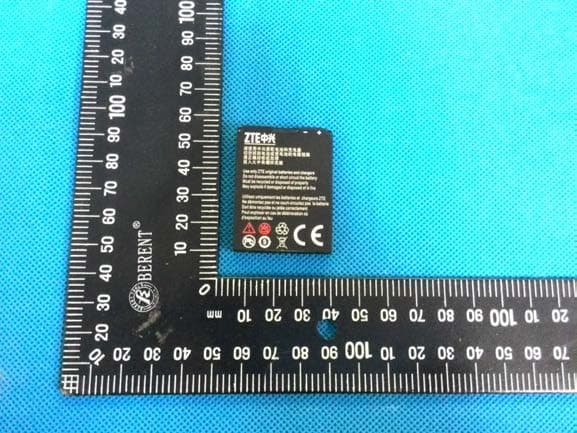
Click to zoom
Application Details
- Equipment Class
- PCE - PCS Licensed Transmitter held to ear
- Date of Grant
- Jan 20, 2014
- Application Purpose
- Original Equipment
- Date of Application
- Jan 19, 2014
- Equipment Note
- GSM Digital Mobile Phone
- Frequency Range
- 1850.20000000 - 1909.80000000
- Company
- ZTE Corporation
- Country
- China
Documents & Files
Document Text
Text extracted from the exhibit documents filed with the FCC. Open a document above to read the original.
Users Manual
R621J Mobile Phone User Manual LEGAL INFORMATION Copyright © 2012 ZTE CORPORATION. All rights reserved. No part of this publication may be excerpted, reproduced, translated or utilized in any form or by any means, electronic or mechanical, including photocopying and microfilm, without the prior written permission of ZTE Corporation. The manual is published by ZTE Corporation. We reserve the right to make modifications on print errors or update specifications without prior notice. Version No.: R 1.0 Edition Time: 2014.01.17 3 Table of Contents SECURITY ................................ 4 SAFETY PRECAUTIONS ......... 4 FCC COMPLIANCE ................ 13 HEALTH AND SAFETY INFORMATION ....................... 14 LIMITATION OF LIABILITY ... 17 KEY FUNCTIONS ................... 18 INTERFACE ICONS ............... 20 BATTERY ................................ 20 INSERTING THE SIM/SD CARD ................................................ 22 CHARGING THE BATTERY ... 24 POWERING YOUR PHONE ON/OFF ................................... 26 WRITING TEXT ....................... 26 ADDING CONTACT TO THE PHONEBOOK ......................... 27 MAKING AND RECEIVING CALLS .................................... 28 USER PROFILES ................... 30 CALL CENTER ....................... 31 SETTING YOUR PHONE ........ 32 ORGANIZER ........................... 33 FILE MANAGER ..................... 34 MULTIMEDIA .......................... 34 USING SERVICES .................. 36 4 Security To protect your mobile phone from illegal use, take the security measures as follows: Set PIN codes of the SIM card. Set handset lock code. Set call restrictions. Safety Precautions This section includes some important information on safe and efficient operation. Please read this information before using the phone. Operational Precautions Please use your phone properly. When making or receiving a call, please hold your phone as holding a wireline telephone. Make sure that the phone is at least one inch (about two point five centimeters) from your body when transmitting.. 5 Some people may be susceptible to epileptic seizures or blackouts when exposed to flashing lights, such as when watching television or playing video games. If you have experienced seizures or blackouts, or if you have a family history of such occurrences, please consult your doctor before playing video games on your phone or enabling a flashing- light feature on your phone. (The flashing-light feature is not available on all products.) Keep the phone out of the reach of small children. The phone may cause injury if used as a toy. Precautions While Driving Please pay attention to the traffic safety. Check the laws and regulations on the use of your phone in the area where you drive. Always obey them. Use hands-free function of the phone, if available. Pull off the road and park before making or answering a call if conditions require. 6 Precautions for Medical Devices and Facilities When using your phone near pacemakers, please always keep the phone more than eight inches (about twenty centimeters) from the pacemaker when the phone is switched on. Do not carry the phone in the breast pocket. Use the ear opposite the pacemaker to minimize the potential for interference. Switch off the phone immediately if necessary. Some phones may interfere with some hearing aids. In the event of such interference, you may consult your hearing aids manufacturer to discuss alternatives. If you use any other personal medical device, please consult the manufacturer of your device to determine if it is adequately shielded from RF energy. In those facilities with special demand, such as hospital or health care facilities, please pay attention to the restriction on the use of mobile phone. Switch off your phone if required. 7 Mobile Phone Please use original accessories or accessories approved by the phone manufacturer. Using any unauthorized accessories may affect your mobile phone’s performance, damage your phone or even cause danger to your body and violate related local regulations about telecom terminals. Turn off your phone before you clean it. Use a damp or anti-static cloth to clean the phone. Do not use a dry cloth or electrostatically charged cloth. Do not use chemical or abrasive cleaners as these could damage the phone. As your mobile phone can produce electromagnetic field, do not place it near magnetic items such as computer disks. Using the phone near electrical appliances such as TV, telephone, radio and personal computer can cause interference. Do not expose your mobile phone to direct sunlight or store it in hot areas. High temperatures can shorten the life of electronic devices. Keep your phone dry. Any liquid may damage your phone. 8 Do not drop, knock or harshly treat the phone. Rough handling can break internal circuit boards. Do not connect the phone with any incompatible enhancement. Do not attempt to disassemble the mobile phone or battery. Do not store the phone with flammable or explosive articles. Do not charge the mobile phone without battery. Some electronic devices are susceptible to electromagnetic interference sent by phone if inadequately shielded. Please use phone at least 20 cm or as far away as you can from TV set, radio and other automated office equipment so as to avoid electromagnetic interference. Operating phone may interfere with medical devices like hearing aides and pacemakers, or other medical devices in hospital. Consult a physician or the manufacturer of the medical device before using phone. Be aware of the usage limitation when using phone at places such as oil warehouses, or chemical factories, where there are explosive gases or explosive products being processed, because even if your phone is in idle state, it still transmits radio frequency (RF) energy. 9 Therefore, power off your phone if required. Do not touch the antenna while calling. Otherwise it will affect the quality of calling…
Text truncated - open the document above for the full version.
Cover Letter(s)
THIS MUST BE SIGNED BY THE APPLICANT AND SHOULD BE PLACED ON APPLICANTS LETTERHEAD ONLY IF AGENT IS SUBMITTING APPLICATION 022311 – 6 Authority to Act as Agent Date: _2013/5/30 American Certification Body, Inc. 6731 Whittier Avenue Suite C110 McLean, VA 22101 To Whom It May Concern: East China Institute of Telecommunications / Jarek Liu_ is authorized to act on our behalf, until otherwise notified, for applications to American Certification Body, Inc. (ACB). We certify that we are not subject to denial of federal benefits, that includes FCC benefits, pursuant to Section 5301 of the Anti-Drug Abuse Act of 1988, 21 U.S.C. 862. Further, no party, as defined in 47 CFR 1.2002 (b), to the application is subject to denial of federal benefits, that includes FCC benefits. Thank you, Agency Agreement Expiration Date: ____12 months_____ By: Zhang Min (Signature 1 ) (Print name) Title: Certification Manager On behalf of: ZTE CORPORATION (Company Name) Telephone: 0755-26770345 1 - Must be signed by applicant contact given for applicant on the FCC site, or by the authorized agent if an appropriate authorized agent letter has been provided. Letters should be placed on appropriate letterhead.
Cover Letter(s)
THIS MUST BE SIGNED BY THE APPLICANT/AGENT AND SHOULD BE PLACED ON APPROPRIATE LETTERHEAD Request for Confidentiality Date: 2014/1/14 Subject: Confidentiality Request for: SRQ-ZTER621J ______ Pursuant to FCC 47 CRF 0.457(d) and 0.459 and IC RSP-100, Section 10, the applicant requests that a part of the subject FCC application be held confidential. Type of Confidentiality Requested Exhibit Short Term Permanent Block Diagrams Short Term External Photos Short Term Permanent* 1 Internal Photos Short Term Permanent Operation Description/Theory of Operation Short Term Permanent Parts List & Placement/BOM Short Term Permanent Tune-Up Procedure Short Term Permanent Schematics Short Term Test Setup Photos Short Term Permanent* User’s Manual *Note: ______(Insert Explanation as Necessary)______ ZTE CORPORATION has spent substantial effort in developing this product and it is one of the first of its kind in industry. Having the subject information easily available to "competition" would negate the advantage they have achieved by developing this product. Not protecting the details of the design will result in financial hardship. Permanent Confidentiality: The applicant requests the exhibits listed above as permanently confidential be permanently withheld from public review due to materials that contain trade secrets and proprietary information not customarily released to the public. Short-Term Confidentiality: The applicant requests the exhibits selected above as short term confidential be withheld from public view for a period of ___(specify number of days not to exceed 180) 2 ___ days from the date of the Grant of Equipment Authorization and prior to marketing. This is to avoid premature release of sensitive information prior to marketing or release of the product to the public. Applicant is also aware that they are responsible to notify ACB in the event information regarding the product or the product is made available to the public. ACB will then release the documents listed above for public disclosure pursuant to FCC Public Notice DA 04-1705. NOTE for Industry Canada Applications: The applicant understands that until such time that IC distinguishes between Short Term and Permanent Confidentiality, either type of marked exhibit above will simply be marked Confidential when submitted to IC. Sincerely, By: _______ Zhang Min (Signature/Title 3 ) (Print name) 1 - The asterisked items (*) require further justification before permanent confidentiality will be allowed. These also currently require review by the FCC under their Permit-But-Ask policy before the grant is issued and can delay completion of an application. Further justification should be added to the note above. One such example for a potted device would be: “The EUT is FULLY potted using a non-removable epoxy based material. Removal of potting material causes irreparable damage to internal circuitry. See photographs exhibits that outline the device before and after potting.” 2 - Please refer to http://acbcert.com/documents/misc-docs/Memo-Short-Term-Vs-Standard-Confidentiality.pdf for complete details. 3 - Must be signed by applicant contact given for applicant on the FCC site, or by the authorized agent if an appropriate THIS MUST BE SIGNED BY THE APPLICANT/AGENT AND SHOULD BE PLACED ON APPROPRIATE LETTERHEAD authorized agent letter has been provided. Letters should be placed on appropriate letterhead.
External Photos
0200 external photo Mobile phone Mobile phone Mobile phone Mobile phone Mobile phone Mobile phone Mobile phone Battery Battery Earphone Charger Charger label
RF Exposure Info
Page 2 of 142 Revision Version Report Number Revision Date Memo 2013SR0200 00 2013/12/30 Initial creation of test report No. 2013SR0200 Page 3 of 142 CONTENTS 1 Test Laboratory .......................................................................................................................... 5 1.1 Testing Location .............................................................................................................................. 5 1.2 Testing Environment ....................................................................................................................... 5 1.3 Project Data ...................................................................................................................................... 5 1.4 Signature .......................................................................................................................................... 5 2 Statement of Compliance .......................................................................................................... 6 3 Client Information ...................................................................................................................... 8 3.1 Applicant Information ..................................................................................................................... 8 3.2 Manufacturer Information ............................................................................................................... 8 4 Equipment Under Test (EUT) and Ancillary Equipment (AE) ................................................. 9 4.1 About EUT ........................................................................................................................................ 9 4.2 Internal Identification of EUT used during the test .................................................................... 10 4.3 Internal Identification of AE used during the test ...................................................................... 10 5 TEST METHODOLOGY ............................................................................................................ 11 5.1 Applicable Limit Regulations ........................................................................................................ 11 5.2 Applicable Measurement Standards ............................................................................................. 11 6 Specific Absorption Rate (SAR) ............................................................................................. 12 6.1 Introduction.................................................................................................................................... 12 6.2 SAR Definition ............................................................................................................................... 12 7 Tissue Simulating Liquids ...................................................................................................... 13 7.1 Targets for tissue simulating liquid ............................................................................................. 13 7.2 Dielectric Performance ................................................................................................................. 13 8 System verification .................................................................................................................. 16 8.1 System Setup ................................................................................................................................. 16 8.2 System Verification ....................................................................................................................... 17 9 Measurement Procedures ....................................................................................................... 18 9.1 Tests to be performed ................................................................................................................... 18 9.2 General Measurement Procedure ................................................................................................ 19 9.3 WCDMA Measurement Procedures for SAR ............................................................................... 20 9.4 Bluetooth & Wi-Fi Measurement Procedures for SAR............................................................... 21 9.5 Power Drift ..................................................................................................................................... 22 10 Conducted Output Power ...................................................................................................... 23 No. 2013SR0200 Page 4 of 142 10.1 Manufacturing tolerance ............................................................................................................. 23 10.2 GSM Measurement result ........................................................................................................... 24 11 Simultaneous TX SAR Considerations ................................................................................ 26 11.1 Introduction .................................................................................................................................. 26 11.2 Transmit Antenna Separation Distances ................................................................................... 26 11.3 Standalone SAR Test Exclusion Considerations ..................................................................... 27 12 SAR Test Result ..................................................................................................................... 29 13 SAR Measurement Variability ............................................................................................... 32 14 Measurement Uncertainty ..................................................................................................... 34 15 Main Test Instrument ............................................................................................................. 36 A…
Text truncated - open the document above for the full version.
Test Report
No.2013RG0200 Page 2 of 49 CONTENTS 1. TEST LABORATORY ......................................................................................................................... 4 1.1. TESTING LOCATION ........................................................................................................................ 4 1.2. TESTING ENVIRONMENT ............................................................................................................... 4 1.3. PROJECT DATA .................................................................................................................................. 4 1.4. SIGNATURE ......................................................................................................................................... 4 2. CLIENT INFORMATION ................................................................................................................... 5 2.1. APPLICANT INFORMATION ........................................................................................................... 5 2.2. MANUFACTURER INFORMATION ................................................................................................ 5 3. EQUIPMENT UNDER TEST (EUT) AND ANCILLARY EQUIPMENT (AE) ............................. 6 3.1. ABOUT EUT ......................................................................................................................................... 6 3.2. INTERNAL IDENTIFICATION OF EUT USED DURING THE TEST ........................................ 6 3.3. INTERNAL IDENTIFICATION OF AE USED DURING THE TEST ........................................... 6 3.4. STATEMENTS ...................................................................................................................................... 6 4. REFERENCE DOCUMENTS ............................................................................................................. 7 4.1. REFERENCE DOCUMENTS FOR TESTING ................................................................................. 7 5. SUMMARY OF TEST RESULTS ....................................................................................................... 8 6. TEST EQUIPMENTS UTILIZED ...................................................................................................... 9 7. TEST ENVIRONMENT...................................................................................................................... 11 ANNEX A: MEASUREMENT RESULTS .................................................................................................. 13 A.1 OUTPUT POWER (§22.913(A)/§24.232(C)) ........................................................................................ 13 A.2 99%OCCUPIED BANDWIDTH (§2.1049(H)(I)) ................................................................................ 15 A.3 -26DB EMISSION BANDWIDTH (§22.917(B)/§24.238(B)) ............................................................... 22 A.4 BAND EDGE AT ANTENNA TERMINALS (§22.917(B)/§24.238(B)) .............................................. 29 A.5 FREQUENCY STABILITY (§2.1055/§24.235) .................................................................................... 33 A.6. CONDUCTED SPURIOUS EMISSION ............................................................................................. 35 No.2013RG0200 Page 3 of 49 A.7 RADIATED ............................................................................................................................................. 42 ANNEX B DEVIATIONS FROM PRESCRIBED TEST METHODS ...................................................... 49 No.2013RG0200 Page 5 of 49 2. Client Information 2.1. Applicant Information Company Name: ZTE Corporation Address /Post: ZTE Plaza, Keji Road South, Hi-Tech, Industrial Park, Nanshan District,Shenzhen, Guangdong, 518057, P.R.China Country: China 2.2. Manufacturer Information Company Name: ZTE Corporation Address /Post: ZTE Plaza, Keji Road South, Hi-Tech, Industrial Park, Nanshan District,Shenzhen, Guangdong, 518057, P.R.China Country: China No.2013RG0200 Page 6 of 49 3. Equipment Under Test (EUT) and Ancillary Equipment (AE) 3.1. About EUT EUT Description GSM Digital Mobile Phone Model name ZTE R621J FCC ID SRQ-ZTER621J Frequency GSM850/1900 Extreme Temperature -30/+50°C Nominal Voltage 3.7V Extreme High Voltage 4.2V Extreme Low Voltage 3.5V Note: Photographs of EUT are shown in ANNEX A of this test report. 3.2. Internal Identification of EUT used during the test EUT ID* SN or IMEI HW Version SW Version Date of receipt N10 865459015200 761 W62M11A1-1 ZTE_R621J_01 2013-12-02 *EUT ID: is used to identify the test sample in the lab internally. 3.3. Internal Identification of AE used during the test AE ID* Description SN AE1 RF cable --- AE2 Dummy Battery --- *AE ID: is used to identify the test sample in the lab internally. 3.4. Statements The product ZTE R621J , supporting GSM, manufactured by ZTE Corporation is a new product for testing. ECIT has verified that the compliance of the tested device specified in section 5 of this test report is successfully evaluated according to the procedure and test methods as defined in type certification requirement listed in section 5 of this test report. No.2013RG0200 Page 7 of 49 4. Reference Documents 4.1. Reference Documents for testing The following documents listed in this section are referred for testing. Reference Title FCC Part 24 PERSONAL COMMUNICATIONS SERVICES FCC Part 22 PUBLIC MOBILE SERVICES ANSI-TIA-603-C Land Mobile FM or PM Communications Equipment Measurement and Performance Standards ANSI C63.4 Methods of Measurement of Radio-Noise Emissions from Low-Voltage Electrical and Electronic Equipment in the Range of 9 kHz to 40 GHz KDB971168 Procedures for Compliance Measurement of the Fundamental Emission Power of Licensed Wideband (> 1 MHz) Digital Transmission Systems No.2013RG0200 Page 8 of 49 5. SUMMARY OF TEST RESULTS Item Test items FCC rules result 1 Output Power 22.913(a)/24.232(c) Pass 2 Emi…
Text truncated - open the document above for the full version.
Test Setup Photos
FCC Part 22H/Part 15C-Test Photograph Description: ERP Test Setup Description: Substitution Antenna for ERP Test Description: EIRP Test Setup Description: Substitution Antenna for EIRP Test Test Photograph Test Mode: Mode 2 Description: Conducted Emission Test Setup Test Mode: Mode 1 Description: Front View of Conducted Emission Test Setup Test Mode: Mode 1 Description: Side View of Conducted Emission Test Setup Test Mode: Mode 2 Description: Frontview of Radiated Emission Test Setup Test Mode: Mode 1 Description: Frontview of Radiated Emission Test Setup Test Mode: Mode 1 Description: Backview of Radiated Emission Test Setup
Test Setup Photos
Picture 1-1: Left Head Touch Cheek Position Picture 1-2: Left Head Tilt 15° Position Picture 1-3: Right Head Touch Cheek Position Picture 1-4: Right Head Tilt 15° Position Test positions for body: The Body SAR is tested at the following 4 test positions all with the distance =10mm between the EUT and the phantom bottom : Picture 1-5: Toward Phantom (10mm) Picture 1-6: Toward Ground (10mm)
Contact Information
Applicant
Chaijue Ding(Certification Manager)
Technical Contact
East china institute of TelecommunicationsLiu Jianquan
[email protected]86-21-63843300
7F, G Area,No. 668, Beijing East Road · Shanghai · China
Test Firm
East China Institute of TelecommunicationsJing Li
[email protected]862-163-8433
Technical Specifications
| # | Rule Parts | Frequency Range | Power Output | Emission | Tolerance |
|---|---|---|---|---|---|
| 2 | 24E | 1.85 GHz - 1.91 GHz | 612.00 mW | 300KGXW | 0.1 ppm |
Other Applications from ZTE Corporation

SRQ-ZTEA53
Nov 06, 2022LTE/WCDMA/GSM(GPRS) Multi-Mode Digital Mobile Phone with Bluetooth and WiFi
Equipment Class
DSS - Part 15 Spread Spectrum Transmitter
SRQ-ZTEA53-1
Nov 05, 2022LTE/WCDMA/GSM(GPRS) Multi-Mode Digital Mobile Phone with Bluetooth and WiFi
Equipment Class
JBP - Part 15 Class B Computing Device Peripheral
SRQ-ZTET1002
Sep 23, 2022Tablet PC
Equipment Class
PCB - PCS Licensed Transmitter
SRQ-Z6103
Aug 14, 2022LTE/UMTS Digital Mobile Phone with Bluetooth and WiFi
Equipment Class
DTS - Digital Transmission System
SRQ-ZTET0801
Jul 18, 2022Tablet with GSM, WCDMA, LTE, Bluetooth and WiFi
Equipment Class
DSS - Part 15 Spread Spectrum Transmitter