TQ8-AM210F2GNDIGITAL CAR AUDIO SYSTEM
HYUNDAI MOBIS CO., LTD.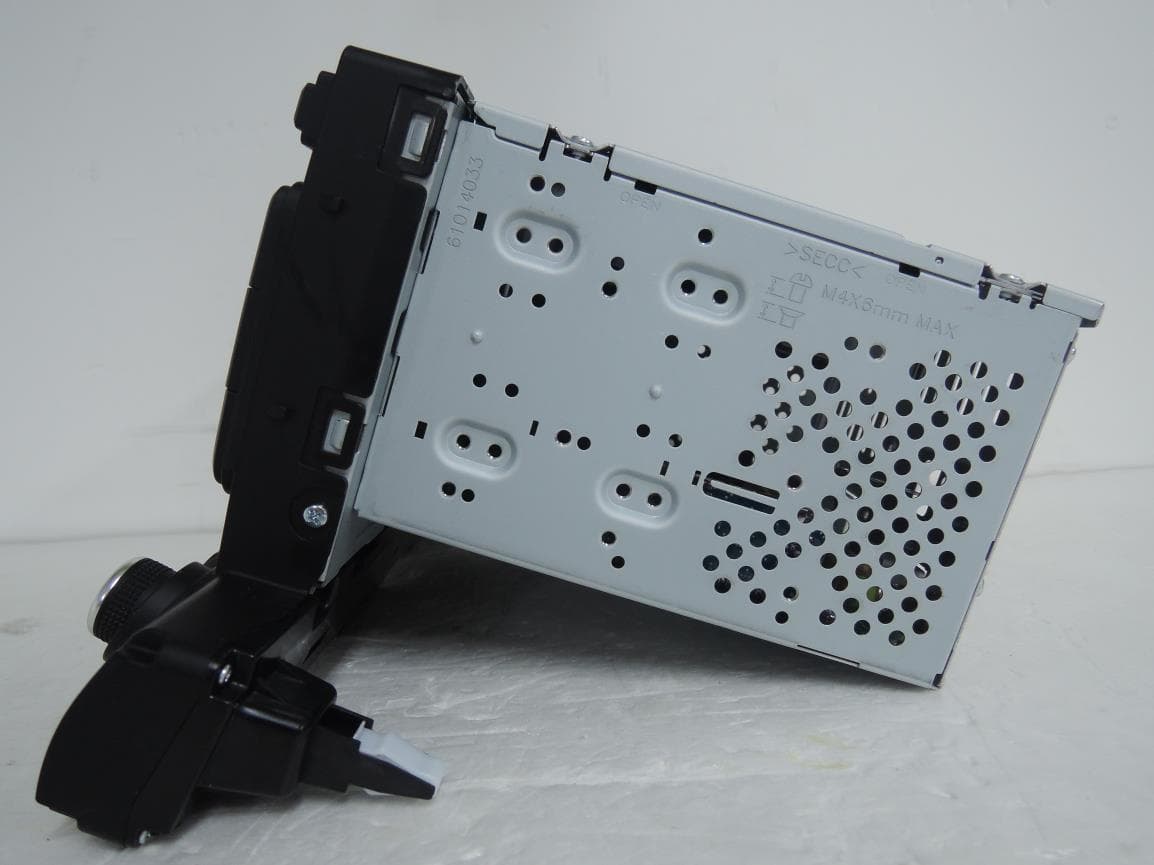
Click to zoom
Application Details
- Equipment Class
- DSS - Part 15 Spread Spectrum Transmitter
- Date of Grant
- Mar 25, 2015
- Application Purpose
- Original Equipment
- Date of Application
- Mar 25, 2015
- Equipment Note
- DIGITAL CAR AUDIO SYSTEM
- Frequency Range
- 2402.00000000 - 2480.00000000
- Company
- HYUNDAI MOBIS CO., LTD.
- Country
- South Korea
Documents & Files
Document Text
Text extracted from the exhibit documents filed with the FCC. Open a document above to read the original.
Users Manual
4 1 Features of your vehicle The Bluetooth and Voice Recognition Manual is provided in two versions due to software version differences.Before reading the manual, check the following. ■ DOT LCD type audio Press the key Select [Phone] 1. If you CAN find “Audio Streaming” menu, (Go to #### page) 2. If you CANNOT find “Audio Streaming” menu, (Go to 2 page) SETUP ■ Color LCD type audio Press the key Select [Phone] 1. If you CAN find “Streaming Audio” menu, (Go to #### page) 2. If you CANNOT find “Streaming Audio” menu, (Go to 62 page) SETUP H_MD_A3.0_AUDIO_3XMU7G3E00:BH hma 4-109~(Audio).qxd 11/28/2014 10:15 AM Page 1 Features of your vehicle 2 4 How vehicle audio worksAM and FM radio signals are broad-cast from transmitter towers locatedaround your city. They are intercept-ed by the radio antenna on your vehi-cle. This signal is then processed bythe radio and sent to your vehiclespeakers. When a strong radio signal hasreached your vehicle, the preciseengineering of your audio systemensures the best possible qualityreproduction. However, in somecases the signal coming to your vehi-cle may not be strong and clear. This can be due to factors, such asthe distance from the radio station,closeness of other strong radio sta-tions or the presence of buildings,bridges or other large obstructions inthe area. AM broadcasts can be received atgreater distances than FM broad-casts. This is because AM radiowaves are transmitted at low fre-quencies. These long distance, lowfrequency radio waves can follow thecurvature of the earth rather thantravelling straight. In addition, theycurve around obstructions resultingin better signal coverage. ¢¢¢ JBM001 FM reception ¢¢¢ ¢¢¢ JBM002 AM reception H_MD_A3.0_AUDIO_3XMU7G3E00:BH hma 4-109~(Audio).qxd 11/28/2014 10:15 AM Page 2 4 3 Features of your vehicle FM broadcasts are transmitted athigh frequencies and do not bend tofollow the earth's surface. Becauseof this, FM broadcasts generallybegin to fade within short distancesfrom the station. Also, FM signals areeasily affected by buildings, moun-tains, and obstructions. This can leadto undesirable or unpleasant listen-ing conditions which might lead youto believe a problem exists with yourradio. The following conditions arenormal and do not indicate radiotrouble: • Fading - As your vehicle moves away from the radio station, thesignal will weaken and sound willbegin to fade. When this occurs,we suggest that you select anotherstronger station. • Flutter/Static - Weak FM signals or large obstructions between thetransmitter and your radio can dis-turb the signal causing static orfluttering noises to occur. Reducingthe treble level may lessen thiseffect until the disturbance clears. • Station Swapping - As an FM signal weakens, another more powerfulsignal near the same frequencymay begin to play. This is becauseyour radio is designed to lock ontothe clearest signal. If this occurs,select another station with astronger signal. • Multi-Path Cancellation - Radio sig- nals being received from severaldirections can cause distortion orfluttering. This can be caused by adirect and reflected signal from thesame station, or by signals from twostations with close frequencies. Ifthis occurs, select another stationuntil the condition has passed. JBM003 FM radio station ¢¢¢ JBM004 JBM005 H_MD_A3.0_AUDIO_3XMU7G3E00:BH hma 4-109~(Audio).qxd 11/28/2014 10:15 AM Page 3 Features of your vehicle 4 4 Using a cellular phone or a two- way radio When a cellular phone is used insidethe vehicle, noise may be producedfrom the audio system. This does notmean that something is wrong withthe audio equipment. In such a case,try to operate mobile devices as farfrom the audio equipment as possible. Caring for disc• If the temperature inside the car is too high, open the car windows to venti-late before using the system. • It is illegal to copy and use MP3/WMA files without permission.Use CDs that are created only bylawful means. • Do not apply volatile agents, such as benzene and thinner, use nor-mal cleaners and magnetic spraysmade for analogue disc onto CDs. • To prevent the disc surface from getting damaged, hold CDs by theedges or the center hole only. • Clean the disc surface with a piece of soft cloth before playback (wipeit from the center to the outsideedge). • Do not damage the disc surface or attach pieces of sticky tape orpaper. • Make certain only CDs are insert- ed into the CD player (Do not insertmore than one CD at a time). • Keep CDs in their cases after use to protect them from scratches or dirt. • Depending on the type of CD- R/CD-RW CDs, certain CDs maynot operate normally according tothe manufacturing companies. Insuch circumstances, continueduse may cause malfunctions toyour audio system. ✽ NOTICE - Playing an Incompatible CopyProtected Audio CD Some copy protected CDs, which donot comply with international audioCD standards (Red Book), may notplay on your car audio. Please notethat inabilities to properly play acopy protected CD may indicatethat the CD is defective, not the CDplayer. CAUTION When using a communication system such as a cellular phone or a radio set inside the vehicle, a separate external antenna must be fitted. When a cellular phone or a radio set is used with an internal antenna alone, it may interfere with the vehicle's elec- trical system and adversely affect safe operation of the vehicle. WARNING Do not use a cellular phonewhile driving. Stop at a safelocation to use a cellular phone. H_MD_A3.0_AUDIO_3XMU7G3E00:BH hma 4-109~(Audio).qxd 11/28/2014 10:15 AM Page 4 4 5 Features of your vehicle NOTE:Order of playing files (folders) : 1. Song playing order : to sequentially. 2. Folder playing order :❋ If no song file is contained in the folder, that folder is not displayed. WARNING • Do not stare at the screen while driving. Staring at thescreen for prolonged periodsof time could lead to trafficaccidents. • Do not disassemble, assem- ble, or modify the audio sys-tem. Such acts could result inaccidents, fire, or elect…
Text truncated - open the document above for the full version.
Attestation Statements
HYUNDAI MOBIS CO., LTD. 203 Teheran-ro, Gangnam-gu, Seoul, Korea, 135-977 Tel. 82-31-260-0098 / Fax. 82-31-280-276 Date : March 19, 2015 Subject: Letter of Declaration Dear Sirs, This is the difference of the model used in the exporting country. There is no difference of electrical performance and circuit performance. Basic model name Family models name AM210F2GN AM210F2GG, AM210F2GE AM210F2GL, AM211F2GG AM211F2GE Sincerely yours, __________________________________ Seung Hoon, Choe /Manager
Cover Letter(s)
HYUNDAI MOBIS CO., LTD. 203 Teheran-ro, Gangnam-gu, Seoul, Korea, 135-977 Date: March 19, 2015 Letter of Authorization We, the undersigned, hereby authorize Harvey Sung of DT&C Co., Ltd. to act on our behalf in all manners relating to application for equipment authorization for FCCID: TQ8-AM210F2GN including signing of all documents relating to these matters. Any and all acts carried out by DT&C Co., Ltd. on our behalf shall have the same affect as acts of our own. This authorization is valid until further written notice from HYUNDAI MOBIS CO., LTD. “I, the undersigned, hereby certify that we are not subject to a denial of federal benefits, that includes FCC benefits, pursuant to Section 5301 of the Anti-Drug Abuse Act of 1988, 21 U.S.C. 853(a).” Sincerely, Seung Hoon Choe Manager
Cover Letter(s)
DT&C Co., Ltd. 42, Yurim-ro, 154beon-gil, Cheoin-gu, Yongin-si, Gyeonggi-do, Korea 449-935 Date: March 19, 2015 UL Verification Services Inc. 47173 Benicia Street Fremont, CA 94538, USA To whom it may concern: I, the undersigned, hereby authorize Ms. Claire Hoque/Application Examiner of Compliance Engineering Services, Inc., d.b.a. Compliance Certification Services and hereafter referred to as CCS, to act on our behalf in all manners relating to application for equipment authorization, including signing of all documents relating to these matters. Any and all acts carried out by Ms. Claire Hoque of CCS on our behalf shall have the same effect as acts of our own. I, the undersigned, hereby certify that we are not subject to a denial of federal benefits, that includes FCC benefits, pursuant to Section 5301 of the Anti-Drug Abuse Act of 1988, 21 U.S.C. 853(a). In authorizing CCS as our agent, we still recognize that we are responsible to: a) comply with the relevant provisions of the certification program; b) make all necessary arrangements for the conduct of the evaluation, including provision for examining documentation and access to all areas, records (including internal audit reports) and personnel for the purposes of evaluation (e.g. testing, inspection, assessment, surveillance, reassessment) and resolution of complaints; c) make claims regarding certification only in respect of the scope for which certification has been granted; d) do not use our product certification in such a manner as to bring the Certification Division into disrepute and not make any statement regarding our product certification which the Certification Division may consider misleading or unauthorized; e) upon suspension or cancellation of certification, discontinue use of all advertising matter that contains any reference thereto and return any certification documents as required by the Certification Division; f) use certification only to indicate the products are certified as being in conformity with specified standards;
Cover Letter(s)
HYUNDAI MOBIS CO., LTD. 203 Teheran-ro, Gangnam-gu, Seoul, Korea, 135-977 Date: March 19, 2015 UL Verification Services Inc. 47173 Benicia Street Fremont, CA 94538, USA RE: Request of Confidentiality for FCCID: TQ8-AM210F2GN To Whom It may Concern: Pursuant to Sections 0.457 and 0.459 of the Commission`s Rules(CFR 47), and Section 552 (b) (4) of the Freedom of Information Act, HYUNDAI MOBIS CO., LTD. hereby requests confidentiality and treatment of certain information accompanying this application. The materials contain trade secrets and proprietary information not customarily released to the public. The public disclosure of these matters might be harmful to the Applicant and provide unjustified benefits to its competitors. We are also hereby request Short-Term Confidentiality for 180 days after the grant as outlined in Public Notice DA 04-1705. This provision will give HYUNDAI MOBIS CO., LTD. temporary confidentiality of commercially sensitive information prior to product release. The requested permanent and Short-Term Confidential exhibits are listed as follows: PERMANENT & SHORT-TERM CONFIDENTIAL LIST Exhibit Description PERMANENT 1 Block Diagram 2 Schematics 3 Part Lists 4 Operation Description SHORT-TERM 5 Internal Photos 6 External Photos 7 Test-Setup Photos 8 User Manual The Applicant understands that pursuant to Rule 0.457, disclosure of this application and all accompanying documentations, where applicable, will not be public before the date of the Grant for this application. Sincerely, Seung Hoon Choe Manager
External Photos
FCCID: TQ8-AM210F2GN Copyright Ⓒ 2015, DT&C Co., Ltd. Page 1 / 3 View 1 FCCID: TQ8-AM210F2GN Copyright Ⓒ 2015, DT&C Co., Ltd. Page 2 / 3 View 2 FCCID: TQ8-AM210F2GN Copyright Ⓒ 2015, DT&C Co., Ltd. Page 3 / 3 View 3
ID Label/Location Info
FCC ID: TQ8-AM210F2GN Copyright Ⓒ 2015, DT&C Co., Ltd. SAMPLE LABEL & LOCATION LABELLING REQUIREMENTS The Label shown shall be permanently affixed at a conspicuous location on the device and be readily visible to the user at the time of purchase Label locate Top side This device complies with Part 15 of the FCC Rules. Operation is subject to the following two conditions: 1) This device may not cause harmful interference, and 2) This device must accept any interference received, including interference that may cause undesired operation of the device. - The FCC label shown is representative of the label that will appear on the radio when in production. Other information may also be included on this label.
Internal Photos
FCCID: TQ8-AM210F2GN Copyright Ⓒ 2015, DT&C Co., Ltd. View 1 FCCID: TQ8-AM210F2GN Copyright Ⓒ 2015, DT&C Co., Ltd. View 2 FCCID: TQ8-AM210F2GN Copyright Ⓒ 2015, DT&C Co., Ltd. View 3 FCCID: TQ8-AM210F2GN Copyright Ⓒ 2015, DT&C Co., Ltd. View 4 FCCID: TQ8-AM210F2GN Copyright Ⓒ 2015, DT&C Co., Ltd. View 5 FCCID: TQ8-AM210F2GN Copyright Ⓒ 2015, DT&C Co., Ltd. View 6 FCCID: TQ8-AM210F2GN Copyright Ⓒ 2015, DT&C Co., Ltd. View 7 FCCID: TQ8-AM210F2GN Copyright Ⓒ 2015, DT&C Co., Ltd. View 8 FCCID: TQ8-AM210F2GN Copyright Ⓒ 2015, DT&C Co., Ltd. View 9 FCCID: TQ8-AM210F2GN Copyright Ⓒ 2015, DT&C Co., Ltd. View 10 FCCID: TQ8-AM210F2GN Copyright Ⓒ 2015, DT&C Co., Ltd. View 6 <Module> FCCID: TQ8-AM210F2GN Copyright Ⓒ 2015, DT&C Co., Ltd. View 7 <Antenna>
RF Exposure Info
-~ - - ± &dBm ) - - The MPE calculation for this exposure is shown below. ▪=+- =+ == MHz MPE Calculations : (Bluetooth) HYUNDAI MOBIS Co., Ltd. FCCID: TQ8-AM210F2GN Frequency range : 2402 MHz2480 dBm Min. Measured RF output power :dBm Target Power & Tolerance :dBm 3.43 2.001.50.5 Maximum antenna peak gain :dBi Maximum output power for the calculatio n3.50 dBm dB ( Max. 3.50 3.5 The EUT will only be used with a separation of 20 centimeters or greater between the antenna and the body of the user. EIRPPGNote 3.50 dBm3.50 dBiP = Power input to the antenna(dBm) 7.00 dBm5.012 mWG = Power gain of the antenna(dBi) - ▪S=- = = Power density at the specific separation EIRP / ( 4 R 2 π ) Note 5.012 / ( 4 X 20 2 X π )S = Maximum power dencity(mW/cm 2 ) The maximum permissible exposure(MPE) of the general population/Uncontrolled for this device is 1.0 mW/cm 2 . 0.000998 mW/cm 2 EIRP = Equivalent Isotropic Radiated Power(mW) R = Distance to the center of the radiation of the antenna(20cm) Conclusion : The exposure condition of this device is compliant with FCC rules. TRF-RF-206(01)140415
Test Report
FCCID: TQ8-AM210F2GN DTNC1502-00845 Report No.: DRTFCC1503-0065 TRF-RF-212(03)140515 Page 2 / 71 Copyright ○ C 2015, DT&C Co., Ltd. Test Report Version Test Report No. Date Description DRTFCC1503-0065 Mar. 26, 2015 Initial issue FCCID: TQ8-AM210F2GN DTNC1502-00845 Report No.: DRTFCC1503-0065 TRF-RF-212(03)140515 Page 3 / 71 Copyright ○ C 2015, DT&C Co., Ltd. Table of Contents 1.General Information ................................................................................................................ 5 1.1. Testing Laboratory .......................................................................................... 5 1.2. Details of Applicant ......................................................................................... 5 1.3. Description of EUT .......................................................................................... 5 1.4. Declaration by the manufacturer .................................................................... 5 1.5. Information about the FHSS characteristics: ................................................ 6 1.6. Test Equipment List ........................................................................................ 7 1.7. Summary of Test Results ................................................................................ 8 1.8 Conclusion of worst-case and operation mode .............................................. 9 2. Transmitter Radiated Spurious Emissions and Conducted Spurious Emission .......... 10 2.1. Test Setup ...................................................................................................... 10 2.2. Limit ................................................................................................................ 10 2.3. Test Procedures............................................................................................. 11 2.3.1. Test Procedures for Radiated Spurious Emissions................................ 11 2.3.2. Test Procedures for Conducted Spurious Emissions ............................ 11 2.4. Test Results ................................................................................................... 12 2.4.1. Radiated Emission .................................................................................... 12 2.4.2. Conducted Spurious Emissions .............................................................. 15 3. Carrier Frequency Separation............................................................................................. 39 3.1.Test Setup ..................................................................................................... 39 3.2. Limit ................................................................................................................ 39 4.Number of Hopping Frequencies ........................................................................................ 44 4.1.Test Setup ..................................................................................................... 44 4.2. Limit ................................................................................................................ 44 5. 20dBc BW .............................................................................................................................. 50 5.1. Test Setup ...................................................................................................... 50 5.2. Limit ................................................................................................................ 50 5.3. Test Procedure .............................................................................................. 50 5.4. Test Results ................................................................................................... 50 6. Time of Occupancy (Dwell Time) ........................................................................................ 56 6.1. Test Setup ...................................................................................................... 56 6.2. Limit ................................................................................................................ 56 6.3. Test Procedure .............................................................................................. 56 6.4. Test Results ................................................................................................... 56 7. Maximum Peak Output Power Measurement .................................................................... 61 7.1. Test Setup ...................................................................................................... 61 7.2. Limit ................................................................................................................ 61 7.3. Test Procedure ............................................................................................... 61 7.4. Test Results ................................................................................................... 62 8. Transmitter AC Power Line Conducted Emission ............................................................ 68 FCCID: TQ8-AM210F2GN DTNC1502-00845 Report No.: DRTFCC1503-0065 TRF-RF-212(03)140515 Page 4 / 71 Copyright ○ C 2015, DT&C Co., Ltd. 8.1. Test Setup ...................................................................................................... 68 8.2. Limit ................................................................................................................ 68 8.3. Test Procedures ............................................................................................. 68 8.4. Test Results: N/A ........................................................................................... 68 9. Antenna Requirement .......................................................................................................... 69 10. Occupied Bandwidth (99%) ............................................................................................... 70 APPENDIX I .....................................…
Text truncated - open the document above for the full version.
Test Setup Photos
FCC ID: TQ8-AM210F2GN Copyright Ⓒ 2015, DT&C Co., Ltd. Test Setup photographs EUT Position: X-axis FCC ID: TQ8-AM210F2GN Copyright Ⓒ 2015, DT&C Co., Ltd. Test Setup Photo of Radiated Measurement (0.009 ~ 30MHz) FCC ID: TQ8-AM210F2GN Copyright Ⓒ 2015, DT&C Co., Ltd. Test Setup Photo of Radiated Measurement (below 1000MHz) FCC ID: TQ8-AM210F2GN Copyright Ⓒ 2015, DT&C Co., Ltd. Test Setup Photo of Radiated Measurement (Above 1GHz)
Contact Information
Applicant
Seung Hoon Choe(Senior Engineer)
Test Firm
DT&C Co.,Changho Lee
Technical Specifications
| # | Rule Parts | Frequency Range | Power Output |
|---|---|---|---|
| 1 | 15C | 2.40 GHz - 2.48 GHz | 2.00 mW |
Other Applications from HYUNDAI MOBIS CO., LTD.
TQ8-FOB-4FC0M22
Sep 11, 2026FOB Smart Key
Equipment Class
DSC - Part 15 Security/Remote Control TransmitterTQ8-FOB-4FC0M44
Sep 10, 2026FOB Smart Key
Equipment Class
DSC - Part 15 Security/Remote Control TransmitterTQ8-FOB-4FC1U44
Jul 20, 2026FOB Smart Key
Equipment Class
DSC - Part 15 Security/Remote Control TransmitterTQ8-FOB-4FC1M44
Jul 08, 2026FOB Smart Key
Equipment Class
DSC - Part 15 Security/Remote Control TransmitterTQ8-FOB-4FC0U22
Jun 17, 2026FOB Smart Key
Equipment Class
DSC - Part 15 Security/Remote Control Transmitter