V426450D6DECT 6.0 BIG-BUTTON EMERGENCY PHONE
KINGTEL Corporation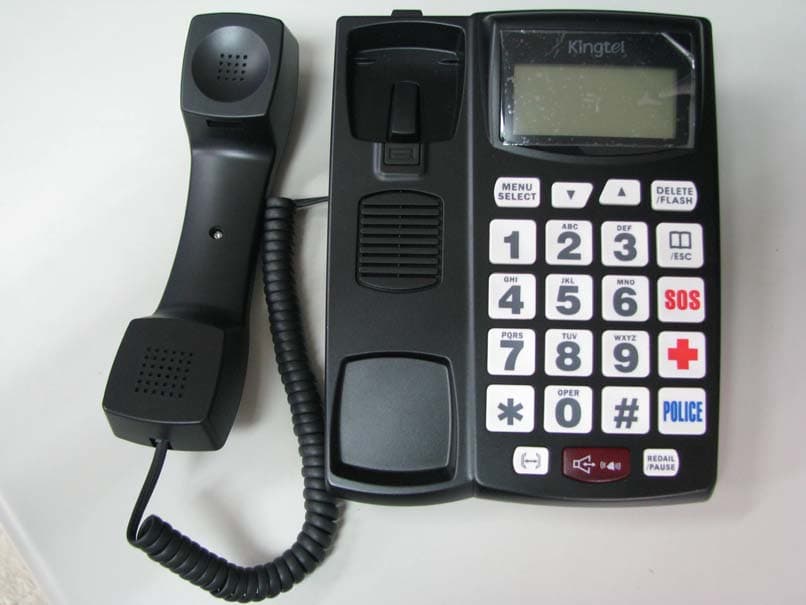
Click to zoom
Application Details
- Equipment Class
- PUB - Part 15 Unlicensed PCS Base Station
- Date of Grant
- Nov 30, 2010
- Application Purpose
- Original Equipment
- Date of Application
- Nov 29, 2010
- Equipment Note
- DECT 6.0 BIG-BUTTON EMERGENCY PHONE
- Frequency Range
- 1921.53600000 - 1928.44800000
- Company
- KINGTEL Corporation
- Country
- Taiwan
Documents & Files
Document Text
Text extracted from the exhibit documents filed with the FCC. Open a document above to read the original.
Users Manual
KT-6450D/D6 DECT / DECT6.0 Big Button Emergency Phone + Portable Talking Pendant Declaration of conformity Hereby, KINGTEL Corp. declares that this KT-6450D product is in compliance with the essential requirements and other relevant provisions of Directive 1999/5/EC. A copy of the Declaration of Conformity can be found at http://www.kingtel.com.tw. Disclaimer and limitation of liability KINGTEL Corp. and its affiliates or licensees assume no responsibility for any damage or loss resulting from the use of this guide. KINGTEL Corp. and its affiliates or licensees assume no responsibility for any loss or claims by third parties that may arise through the use of this software. KINGTEL Corp. and its affiliates or licensees assume no responsibility for any damage or loss caused by deletion of data as a result of malfunction, dead battery, or repairs. Be sure to make backup copies of all important data on other media to protect against data loss. TO THE MAXIMUM EXTENT PERMITTED BY APPLICABLE LAW, UNDER NO CIRCUMSTANCES SHALL KINGTEL CORP. OR ANY OF ITS AFFILIATES OR LICENSEES BE RESPONSIBLE FOR ANY LOSS OF DATA OR INCOME OR ANY SPECIAL, INCIDENTAL, CONSEQUENTIAL OR INDIRECT DAMAGES HOWSOEVER CAUSED. THE CONTENTS OF THIS DOCUMENT ARE PROVIDED “AS IS.” EXCEPT AS REQUIRED BY APPLICABLE LAW, NO WARRANTIES OF ANY KIND, EITHER EXPRESS OR IMPLIED, INCLUDING, BUT NOT LIMITED TO, THE IMPLIED WARRANTIES OF MERCHANTABILITY AND FITNESS FOR A PARTICULAR PURPOSE, ARE MADE IN RELATION TO THE ACCURACY, RELIABILITY, OR CONTENTS OF THIS DOCUMENT. KINGTEL CORP. RESERVES THE RIGHT TO REVISE THIS DOCUMENT OR WITHDRAW IT AT ANY TIME WITHOUT PRIOR NOTICE. FCC Notice Your unit may cause TV or radio interference (for example, when using a telephone in close proximity to receiving equipment). The Federal Communications Commission (FCC) of the United States can require you to stop using your phone if such interference cannot be eliminated. If you require assistance, contact your local service facility. This device complies with part 15 of the FCC rules. Operation is subject to the following two conditions: (1) this device may not cause harmful interference, and (2) this device must accept any interference received, including interference that may cause undesired operation. Any changes or modifications not expressly approved by KINGTEL Corp. could void the user’s authority to operate this device. FCC INFORMATION Part 68 is a Federal regulation which requires equipment to be tested and registered with the FCC prior to its connection to the network. This equipment complies with Part 68 of FCC rules. On the bottom of the telephone is a label that contains, among other information, the FCC Registration Number and the Ringer Equivalence Number (REN) for this equipment. You must, upon request, provide this information to your telephone company. The Ringer Equivalence Number, which is used to determine the number of devices you may connect to your phone line, indicates the amount of power that your telephone draws from the telephone company line during ringing. If you have more than one telephone (or other terminal device) connected to the telephone company line, you should total the ringer equivalence numbers (REN s), and be sure that the total is not more than five. Your telephones may not ring if the total is more than five. Also, in some rural locations, your telephone may not ring if the REN total is more than three. RESTRICTIONS You must not connect your telephone to coin-operated lines or party lines. INSTALLATION This model telephone must be connected to the telephone company lines through a modular jack. The required USOC for the modular jack is RJ11C for desk mounting and RJ11W for wall mounting. The USOC number is printed on the label on the bottom of your telephone. HEARING-AID COMPATIBILITY The handset on your telephone will work with magnetically-coupled hearing aids. You can use a hearing aid equipped with a T (Telephone) switch. IN CASE OF TROUBLE If your telephone should cause problems on the telephone line, the telephone company can temporarily disconnect your service. The telephone company must then notify and allow you to correct the problem. The telephone company may from time to time change its lines or equipment. They must notify you if planned changes will affect your telephone service, to allow you to take steps to prevent interruptions. Part 15 regulates the electromagnetic energy emitted by equipment to minimize interference to radio, television, and other wireless devices. This telephone complies with Part 15 of the FCC Rules. In the unlikely event that interference occurs, move the telephone and/or radio, television, etc. to increase the separation distance. The installation of the base unit should allow at least 20 centimeter between the base and persons to be in compliance with FCC RF exposure guidelines. For body worn operation, the portable part (handset) has been tested and meets FCC RF exposure guidelines. This device must not be co-located or operating in conjunction with any other antenna or transmitter. The changes or modifications not expressly approved by the party responsible for compliance could void the user’s authority to operate the equipment. IC Information This product meets the applicable Industry Canada technical specification. 1. The Industry Canada label identifies certified equipment. This certification means that the equipment meets telecommunications network protective, operational and safety requirements as prescribed in the appropriate Terminal Equipment Technical Requirements documents(s). The department does not guarantee the equipment will operate to the user's satisfaction. 2. Before installing this equipment, users should ensure that it is permissible to be connected to the facilities of the local telecommunications company. The equipment must also be installed using an acceptable method of connection. The customer should be aware that compliance with the above conditi…
Text truncated - open the document above for the full version.
External Photos
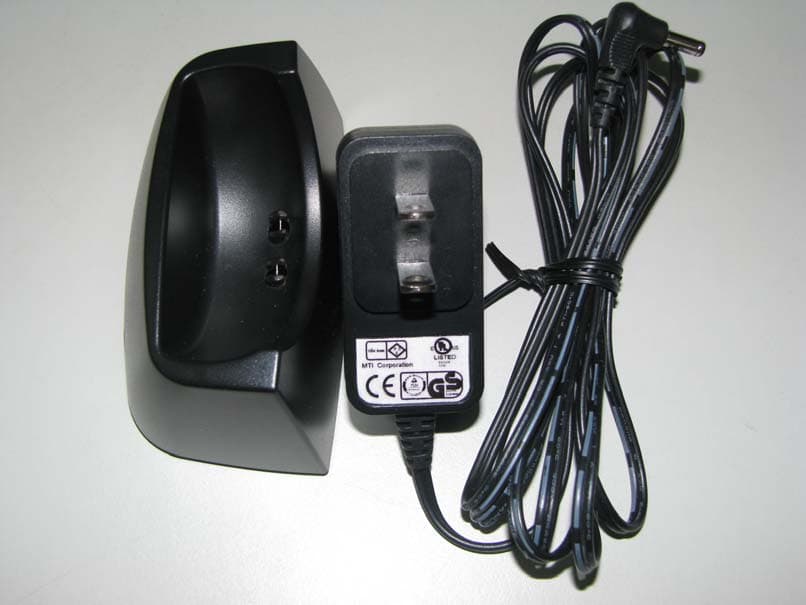
FCC ID: V426450D6 ETC Report No.: 10-04-MAS-036 Page A1 of A4 ANNEX A: EXTERNAL CONSTRUCTION PHOTOS OF EUT 1. Outside view 1 of EUT 2. Outside view 2 of EUT FCC ID: V426450D6 ETC Report No.: 10-04-MAS-036 Page A2 of A4 3. Outside view 1 of Adapter 4. Outside view 2 of Adapter FCC ID: V426450D6 ETC Report No.: 10-04-MAS-036 Page A3 of A4 5. Outside view 3 of Adapter 6. core FCC ID: V426450D6 ETC Report No.: 10-04-MAS-036 Page A4 of A4 7. core
ID Label/Location Info
FCC ID Label_Location
Internal Photos
FCC ID: V426450D6 ETC Report No.: 10-04-MAS-036 Page B1 of B6 ANNEX B: INTERNAL CONSTRUCTION PHOTOS OF EUT 1. Inside View 1 of EUT 2. Inside View 2 of EUT FCC ID: V426450D6 ETC Report No.: 10-04-MAS-036 Page B2 of B6 3. Inside View 3 of EUT 4. Antenna FCC ID: V426450D6 ETC Report No.: 10-04-MAS-036 Page B3 of B6 5. Module 6. Front view of PCB1 FCC ID: V426450D6 ETC Report No.: 10-04-MAS-036 Page B4 of B6 7. Rear view of PCB1 8. Front view of PCB2 FCC ID: V426450D6 ETC Report No.: 10-04-MAS-036 Page B5 of B6 9. Rear view of PCB2 10. Front view of PCB3 FCC ID: V426450D6 ETC Report No.: 10-04-MAS-036 Page B6 of B6 11. Rear view of PCB3
RF Exposure Info
FCC ID: V426450D6 Sheet 29 of 88 Sheets ETC Report No.: 10-04-MAS-036 Electronics Testing Center, Taiwan No.8, Lane 29, Wenming RD., LeShan Tsuen, GuiShan Shiang, Taoyuan County 33383, Taiwan, R.O.C. Rev. No 1.0 6.11 Safety exposure levels 6.11.1 Standard Applicable: FCC 15.319(i) UPCS devices are subject to the radio frequency radiation exposure requirements specified in FCC parts 1.1307 (b), 2.1091 and 2.1093, as appropriate. All equipment shall be considered to operate in a “general population / uncontrolled environment. For portable devices tests according to IEEE 1528 are requested, if applicable. 6.11.2 Measurement procedure Consideration of radio frequency radiation exposure for EUT is done as SAR test according IEEE1528 (for PP) MPE calculation as below (for FP, Repeater) SAR test results: not applicable MPE calculation: The EUT is considered as a mobile device according to OET Bulletin 65, Edition -97-01. Therefore distance to human body of min. 20 cm is determined. The limit of Power density for General Population / Umcontrolled Exposure is 1.0 mW/cm². Formula: S = EIRP / 4πR² Calculation: EIRP Radiated Power (dBm) 15.23 EIRP Radiated Power (mW) 33.34 R Distance (cm) 20 S Power Density (mW/cm²)0.0066 6.11.3 Results:Complies
Test Report
FCC ID: V426450D6 Sheet 1 of 88 Sheets ETC Report No.: 10-04-MAS-036 Electronics Testing Center, Taiwan No.8, Lane 29, Wenming RD., LeShan Tsuen, GuiShan Shiang, Taoyuan County 33383, Taiwan, R.O.C. Rev. No 1.0 CONFORMANCE TEST REPORT FOR FCC Part 15, subpart B and subpart D Report No.: 10-04-MAS-036 Client: Kingtel Corporation Product: DECT 6.0 Big-Button Emergency Phone Model: KT-6450D6 FCC ID: V426450D6 Manufacturer/supplier: APEX Electronics Factory Date test item received: 2010/04/07 Date test campaign completed: 2010/10/20 Date of issue: 2010/10/21 The test result only corresponds to the tested sample. It is not permitted to copy this report, in part or in full, without the permission of the test laboratory. Total number of pages of this test report: 88 pages Total number of pages of photos: External photos 4 pages Internal photos 6 pages Setup photos 2 pages Test Engineer Checked By Approved By John Li Joe Hsieh Winpo Tsai FCC ID: V426450D6 Sheet 2 of 88 Sheets ETC Report No.: 10-04-MAS-036 Electronics Testing Center, Taiwan No.8, Lane 29, Wenming RD., LeShan Tsuen, GuiShan Shiang, Taoyuan County 33383, Taiwan, R.O.C. Rev. No 1.0 Table of Contents Page 1 GENARAL INFORMATION......................................................................................................... 4 1.1 Testing Laboratory..................................................................................................................... 4 1.2 Client Information....................................................................................................................... 4 1.3 Manufacturer...............................................................................................................................4 2 TEST INFORMATION................................................................................................................... 5 2.1 Description of Tested Device(s)............................................................................................... 5 2.2 Test Environment....................................................................................................................... 5 3 TEST REPORT SUMMARY......................................................................................................... 6 3.1 Test Summary............................................................................................................................ 6 3.2 Other Comments........................................................................................................................ 7 4 TEST SETUP.................................................................................................................................. 8 4.1 Frequency and Timing Measurements................................................................................... 8 4.2 Conducted Emission Tests....................................................................................................... 8 4.3 Radiated Emission Tests.......................................................................................................... 9 4.4 Power line Conducted Tests.................................................................................................... 9 4.5 Monitoring Tests....................................................................................................................... 10 5 TEST EQUIPMENT LIST............................................................................................................ 11 6 TEST RESULT............................................................................................................................. 12 6.1 Coordination with fixed microwave........................................................................................ 12 6.2 Cross Reference...................................................................................................................... 13 6.3 Labeling Requirements........................................................................................................... 15 6.4 Power line Conducted Emissions.......................................................................................... 16 6.5 Antenna Requirement............................................................................................................. 19 6.6 Digital Modulation Techniques............................................................................................... 19 6.7 Peak Transmit Power.............................................................................................................. 20 6.8 Power Spectral Density........................................................................................................... 24 6.9 Antenna Gain............................................................................................................................ 28 6.10 Automatic discontinuation of transmission......................................................................... 28 6.11 Safety exposure levels.......................................................................................................... 29 6.12 Emission Bandwidth B.......................................................................................................... 30 6.13 Monitoring time....................................................................................................................... 34 6.14 Monitoring threshold.............................................................................................................. 35 6.15 Maximum transmit period..................................................................................................... 36 FCC ID: V426450D6 Sheet 3 of 88 Sheets ETC Report No.: 10-04-MAS-036 Electronics Testing Center, Taiwan No.8, Lane 29, Wenming RD., LeShan Tsuen, GuiShan Shiang, Taoyuan County 33383, Taiwan, R.O.C. Rev. No 1.0 6.16 System Acknowledgement.................................................................................…
Text truncated - open the document above for the full version.
Test Report
ELECTRONICS TESTING CENTER, TAIWAN NO. 8 LANE 29, WENMING RD., LESHAN TSUEN, GUISHAN SHIANG, TAOYUAN COUNTY 33383, TAIWAN, R. O. C. TEL: +886 3 3280026 EXT 585 FAX: +886 3 3276188 [email protected] Revised: July 22, 2006 FCC Part 15D - APPLICATION FORM & SELF-DECLARATION Applicant Name Kingtel Corporation Address 7F-1, No. 396, Sec. 1, Neihu Road, Neihu District 11493, Taipei City Contact person Carole Pao Telephone No. 886 2 8797 2308 # 6202 Fax No. 886 2 8797 2309 Manufacturer Name APEX Electronics Factory Address No. 3 Industrial Zone No. 4 Ridgepole Fuyong, BaoAn District, Shen Zhen, GuangDong, China P ortable P art F ix P art FCC ID V42650D6 V426450D6 Model Number KT-650D6 KT-6450D6 Device Name DECT 6.0 Portable Talking Pendant DECT 6.0 Big-Button Emergency Phone HW version SN-47433 SN-47450 SW version 090713_01 090713_01 Antenna Type ROD Antenna PCB Type Antenna Max. Antenna Gain (dBi) 0 dBi 0 dBi Adapter Input AC 110 ~ 240 V Adapter Output DC 6 ~ 9 V Mains Power Voltage FP Input DC 6 ~ 9 V Battery Voltage DC 3.7 V Number of channels 5 Carriers frequency(MHz) 1921.536 1923.264 1924.992 1926.720 1928.448 Nominal Receive Bandwidth +/- 500 kHz Frame period (ms) 10 Timeslot Plan 24 timeslots per frame. First 12 timeslots used for PP transmissions and other 12 timeslots used for FP transmissions. Burst Length Range (us) Min 90 Max 390 Operating Temperature Range (°C) Min 5 °C °C°C °C Max 50 °C °C°C °C Does a system built with the EUT that implement the provisions of 47CFR 15.323(c)(5) enabling the use of the upper threshold for deferral? Yes No According to 47CFR15.323(c)(5), does your model not use bandwidth in further cooperation with other devices at any range? Yes No Does a system built using the EUT that operate under the provisions of 47CFR 15.323(c)(6) incorporating provisions for waiting for a channel to go clear? Yes No According to 47CFR15.323(c)(8), does EUT use the same antennas for transmission and reception as for monitoring? Yes No Does a system built with the EUT that operate under the provisions of 47CFR 15.323(c)(10) to test for deferral only in conjunction with a companion device? Yes No Does a system built using the EUT that operate under the provisions of 47CFR 15.323(c)(11) enabling the access criteria check on the receive channel while in the presence of collocated interferers? Yes No According to 47CFR15.323(c)(12), does EUT not work in a mode with denies fair access to spectrum for other devices. Yes No Does your model have the monitoring made through the radio receiver used for communication? Yes No Does your model transmit control and signaling channels? Yes No According to 47CFR15.307(b), does the applicant have the affidavit from UTAM Inc.? Yes No According to 47CFR15.319(b), do all transmissions use only digital modulation techniques? Yes No Reaction of EUT Situation FP PP Switch-off compare device B A Hook-on by compare device B N Switch-off by EUT A A Hook-on at EUT side N A Remove Power from EUT A A The provisions within the EUT for self-check, by which compliance with 47CFR15.319(f) is obtained: A – Connection break down, cease of transmit B – Connection break down, EUT transmits signaling information C – Connection break down, compare device transmits signaling information N – Not possible Remove Power from compare device B A DECLARED BY: 2010.04.06 Carole Pao Date Name (print) Signature & Chop ELECTRONICS TESTING CENTER, TAIWAN NO. 8 LANE 29, WENMING RD., LESHAN TSUEN, GUISHAN SHIANG, TAOYUAN COUNTY 33383, TAIWAN, R. O. C. TEL: +886 3 3280026 EXT 585 FAX: +886 3 3276188 [email protected] Revised: July 22, 2006 NOTE: FCC Part 15.323(c)(5) If access to spectrum is not available as determined by the above, and a minimum of 40 duplex system access channels are defined for the system, the time and spectrum windows with the lowest power level below a monitoring threshold of 50 dB above the thermal noise power determined for the emission bandwidth may be accessed. A device utilizing the provisions of this paragraph must have monitored all access channels defined for its system within the last 10 seconds and must verify, within the 20 milliseconds (40 milliseconds for devices designed to use a 20 milliseconds frame period) immediately preceding actual channel access that the detected power of the selected time and spectrum windows is no higher than the previously detected value. The power measurement resolution for this comparison must be accurate to within 6 dB. No device or group of co-operating devices located within 1 meter of each other shall during any frame period occupy more than 6 MHz of aggregate bandwidth, or alternatively, more than one third of the time and spectrum windows defined by the system. FCC Part 15.323(c)(6) If the selected combined time and spectrum windows are unavailable, the device may either monitor and select different windows or seek to use the same windows after waiting an amount of time, randomly chosen from a uniform random distribution between 10 and 150 milliseconds, commencing when the channel becomes available. FCC Part 15.323(c)(8) The monitoring system shall use the same antenna used for transmission, or an antenna that yields equivalent reception at that location. FCC Part 15.323(c)(10) An initiating device may attempt to establish a duplex connection by monitoring both its intended transmit and receive time and spectrum windows. If both the intended transmit and receive time and spectrum windows meet the access criteria, then the initiating device can initiate a transmission in the intended transmit time and spectrum window. If the power detected by the responding device can be decoded as a duplex connection signal from the initiating device, then the responding device may immediately begin transmitting on the receive time and spectrum window monitored by the initiating device. ANSI C63.17 § 8.3 To comply with 47CFR15.323(c)(10), the EUT must monitor both its transmit time/spectrum window and its receive time/spectrum wi…
Text truncated - open the document above for the full version.
Test Setup Photos
FCC ID: V426450D6 ETC Report No.: 10-04-MAS-036 Page 1 of 2 Photos of Radiation Measuring Setup FCC ID: V426450D6 ETC Report No.: 10-04-MAS-036 Page 2 of 2 Photos of Conduction Measuring Setup
Contact Information
Applicant
Carole Pao(Project Manager)
Test Firm
Electronics Testing Center, TaiwanWin-Po Tsai
Technical Specifications
| # | Rule Parts | Frequency Range | Power Output |
|---|---|---|---|
| 1 | 15D | 1.92 GHz - 1.93 GHz | 33.00 mW |
Other Applications from KINGTEL Corporation
V42650D6
Nov 30, 2010DECT 6.0 PORTABLE TALKING PENDANT
Equipment Class
PUE - Part 15 Unlicensed PCS portable Tx held to ear