VHOESTXMUSICAL SOUND EFFECTS CONTROLLER, TRANSMITTER
Atlantic Quality Design, Inc.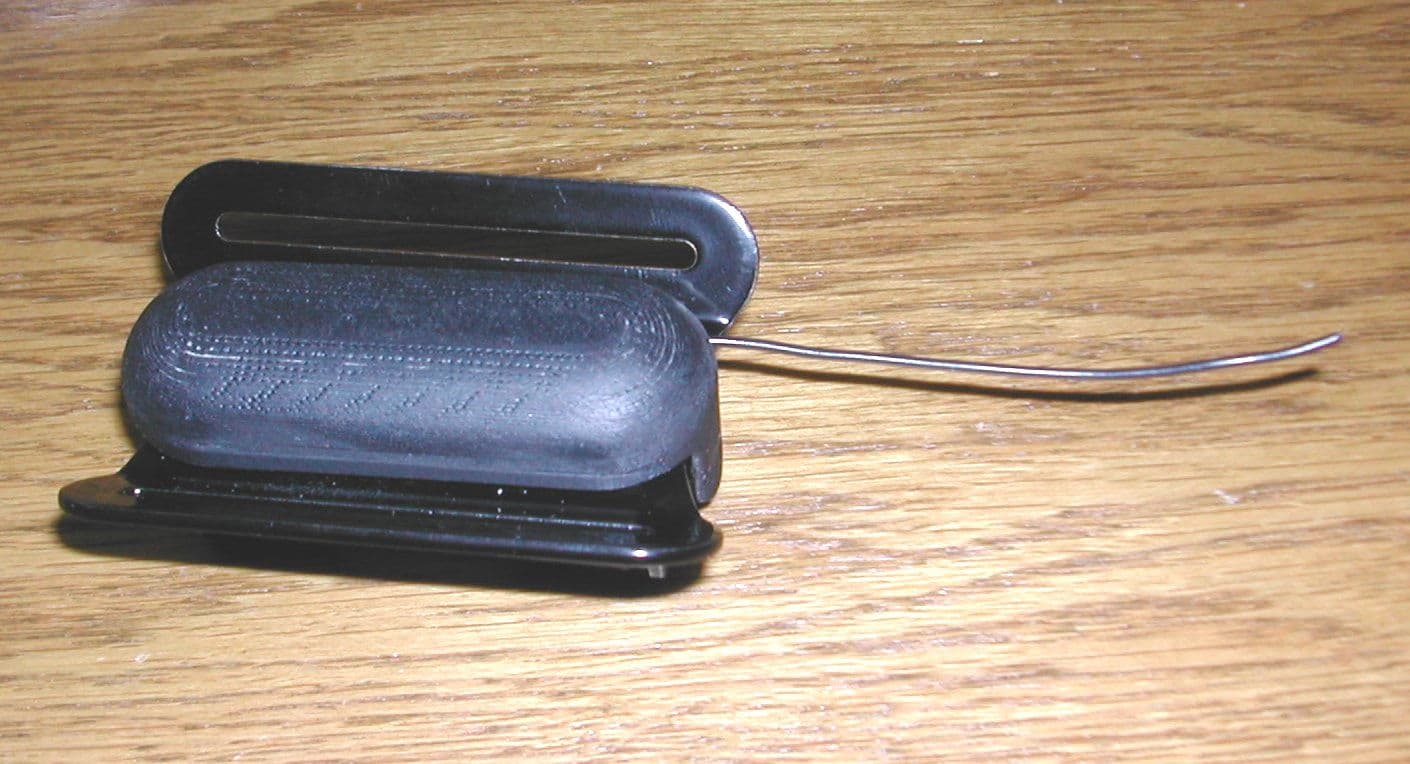
Click to zoom
Application Details
- Equipment Class
- DXX - Part 15 Low Power Communication Device Transmitter
- Date of Grant
- Oct 09, 2007
- Application Purpose
- Original Equipment
- Date of Application
- Oct 03, 2007
- Equipment Note
- MUSICAL SOUND EFFECTS CONTROLLER, TRANSMITTER
- Frequency Range
- 916.48000000 - 916.48000000
- Country
- United States
Documents & Files
Document Text
Text extracted from the exhibit documents filed with the FCC. Open a document above to read the original.
Users Manual
FCC NOTIFICATION This device complies with Part 15 of the FCC Rules. Operation is subject to the following two conditions: (1) this device may not cause harmful interference, and (2) this device must accept any interference received, including interference that may cause undesired operation. Changes or modifications not expressly approved by the manufacturer could void the user's authority to operate the equipment. eStrap sensor radio transmitter model ESTX: FCC ID VHOESTX, IC: 7235A-ESTX. Radio receiver is model ESRX: FCC ID VHOESRX, IC: 7235A-ESRX. LIMITED WARRANTY If the product fails during the warranty period due to a defect in materials or workmanship, we will repair or replace it, or refund your purchase price, our choice. Call us to arrange warranty service before you ship. We disclaim liability for damages caused by our product or the use, misuse or abuse of our product. With use of this product, the user accepts responsibility for applying it intelligently and properly, with the user’s and others’ safety in mind at all times. We do not repair or replace equipment or instruments used with our products. WARRANTY PERIOD: 1 YEAR FOR BOTH PARTS AND LABOR. 30-day Money Back Guarantee: If for any reason you are not satisfied with this product, you may return it within 30 days for a full refund. The eStrap TM IS PATENT PENDING The eStrap TM Wireless Strap Controlled Expression System with Classic Wah by Ned Steinberger Atlantic Quality Design, Inc. 562 Oak Hill Road, Fincastle, Virginia 24090 (540) 966-4356 www.aqdi.com For technical support, call us or see our web site. Copyright © 2007 Revision A THIS PRODUCT CONTAINS INTELLECTUAL PROPERTY OF ATLANTIC QUALITY DESIGN, INC. AND IS NOT TO BE COPIED IN WHOLE OR IN PART, INCLUDING MECHANICAL, ELECTRONIC HARDWARE, COMPUTER SOFTWARE AND/OR INTEGRATED CIRCUIT DESIGNS. NO PATENT LICENSES ARE CONVEYED WITH THE SALE OF THIS PRODUCT. eStrap TM User’s Manual 2 Effects Unit Setup Designed in concert with Ned Steinberger, the eStrap wireless expression system is a revolutionary new effects control tool that is easy to use. • Connect the effects unit as shown in the picture. • The green light will start blinking when power is applied • The EFFECTS cable is an optional connection • Use only the supplied wall power adapter. • The effects unit has no foot switches, so you can set it out of the way, on your amp or pedalboard. Strap Sensor Setup A sensor on the strap detects the tension in the strap and sends it to the effects unit wirelessly. • Insert the two supplied AAA batteries into the strap sensor’s battery clip, observing polarity. • Strap on your guitar. • Push the button to turn the eStrap sensor on. The effects unit light will light solidly. • A light glows within the button when the sensor is on, and the light on the effects unit also comes on solid. Calibrate To calibrate the strap sensor to your playing style: • Press and hold the button on the strap sensor about a second until the light comes on steadily. • Release the button (the light blinks) and move the instrument neck through the desired range of motion. • Once the light stops blinking, the calibration is complete. You are ready to play. Calibrate with different ranges of motion to get different feelings and effects: Up Only Up and Down Down Only eStrap TM User’s Manual 3 Bypass To bypass the effects unit, just turn off the strap sensor by pressing the button. The light on the effects unit will blink while bypassed. The button is designed to toggle bypass with a quick tap. A high quality electronic bypass is used that introduces no distortion or tone change when bypassed, as long as the eStrap effects unit is powered. Using external effects control, when bypassed the eStrap effects unit maintains its last setting. Settings Guitarists love to tweak pedals to get new sounds. With the eStrap, you won’t even have to remove the cover to do this because tone tweaks are accessible from the outside of the box. Eight switches are available and have the following functions: Switch 1. Controls direction of wah vs. direction of motion Switch 2. Controls smoothing of strap action, for fast or slow response Switches 3-7. Controls wah tone, from gutsy growl to coyote screech (see Wah Tone below) Switch 8. Pedal wiring switch selects between two common wiring systems for expression pedals Use a small implement to push the seven switches on (right) / off (left). The pedal wiring switch slides from left to right. Experiment with the controls to get the response you like! Wah Tone The classic wah setting is had with switches 5 and 2 on (right), and switches 1, 3, and 4 off (left). Switches 3, 4 and 5 control the frequency response, and switches 1 and 2 control the shape of the response, Q, range and such. The wah circuit in the eStrap uses a vintage inductor like the original wahs of yesteryear. Wireless Considerations The eStrap is a wireless device that operates within frequency bands designated by the government for unlicensed devices. This means that other devices may interfere with the eStrap. If you experience interference, reorient the eStrap effects unit as that may reduce the interference. The eStrap operates on different frequencies than wireless guitar transmitters. Also please note that the two small black items on top of the effects unit are not switches! Do not step on them! They are radio antennas. When stowing the eStrap, be sure the antennas will not be damaged in a gig bag. The antenna on the strap sensor is a short wire. Leave it coming straight out from the sensor; don’t coil it up as that reduces the wireless range. eStrap TM User’s Manual 4 Also note that you do not have to be controlling your own sound with the eStrap. It’s possible for one guitarist to be wearing the strap and another instrumentalist to be connected to the effects unit! Isn’t that wild? Expression Pedal Use The eStrap can substitute for an expression pedal. This is very useful with capable effects units that can …
Text truncated - open the document above for the full version.
External Photos
Model ESTX External Photos Top view: Bottom view:
ID Label/Location Info
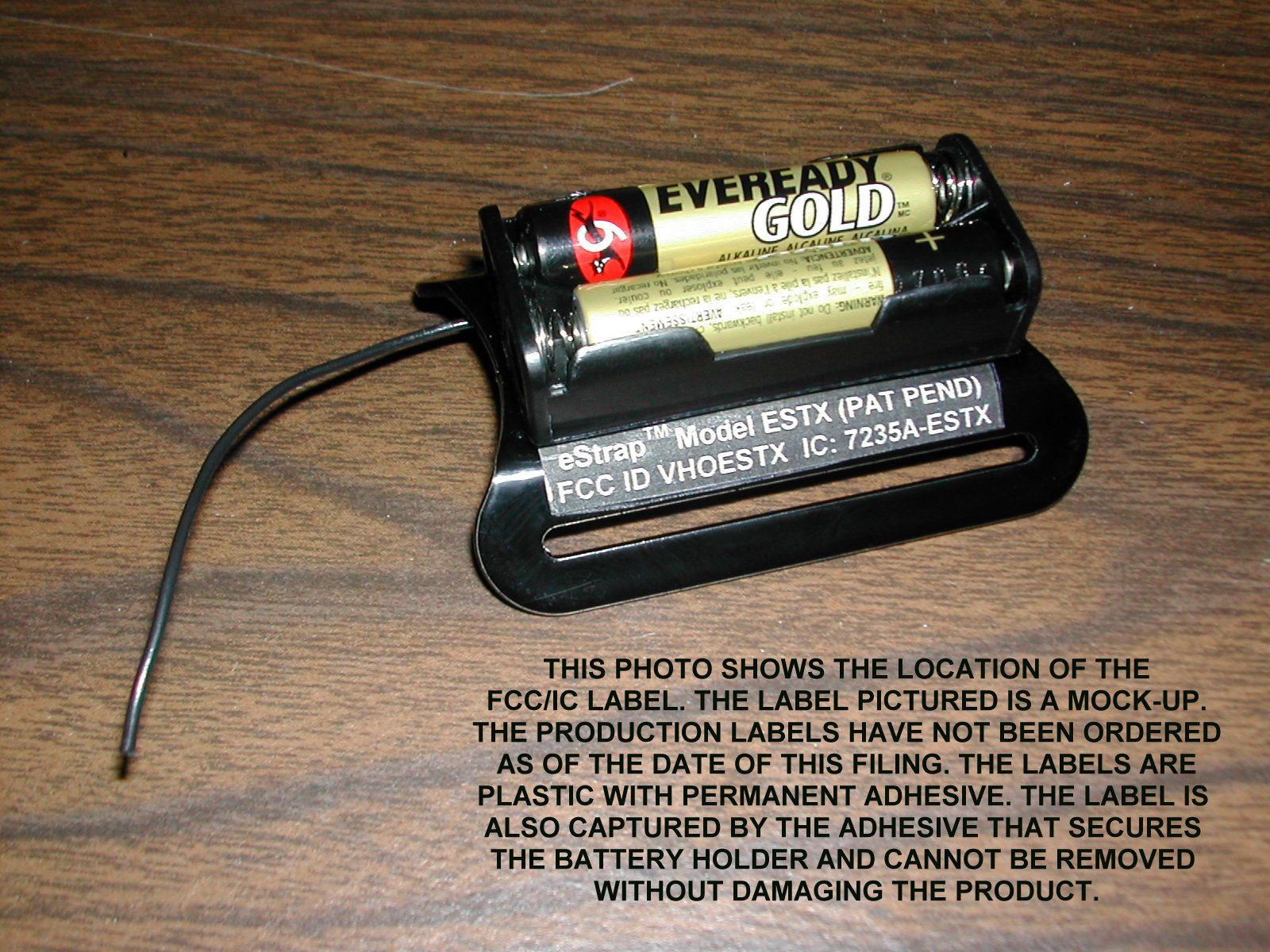
Note: Product is too small for a full-text label. The user manual contains the required compliance information. eStrap TM Model ESTX (PAT PEND) FCC ID VHOESTX IC: 7235A-ESTX
Internal Photos
Model ESTX Internal Photos Assembled, working unit: Opposite side of circuit board, before assembly:
Parts List/Tune Up Info
Model ESTX Tuning Procedure The ESTX uses a fixed frequency radio module that is not tunable. Therefore, there is no tuning procedure applied during manufacture.
Test Report
1 TEMPEST INC. 112 Elden Street Herndon, Virginia 20170 (703) “TEMPEST” (836-7378) FAX:(703) 709-9565 [email protected] http://www.tempest-inc.com *** Our 22nd Year in Business: 1985 - 2007 *** Results of Electromagnetic Compatibility Testing Performed in Accordance with Title 47, Part 15 of the United States Code of Federal Regulations on the Model ESTX Transmitter of the eStrap™ System, a Strap-Controlled Guitar Expression System made by Atlantic Quality Design, Inc. 562 Oak Hill Road, Fincastle Virginia 24090 Prepared by: ____________________________________________________________ Louis T. Gnecco, M.S.E.E., President Certified Electromagnetic Compatibility Engineer: Cert.# EMC-000544-NE August 6, 2007 COPYRIGHT 2007 BY TEMPEST INC.: This document may be transmitted electronically to Atlantic Quality Design, Inc., Timco Engineering, Inc., and to the United States Federal Communications Commission. This document may not be further disseminated, reproduced, recorded electronically, or transmitted electronically, in whole or in part, without the written consent of Atlantic Quality Design, Inc. and TEMPEST INC. 2 Abstract As requested by purchase order # 10140 issued by Atlantic Quality Design, Inc., during the period of August 1 - 6, 2007 TEMPEST INC. performed the Electromagnetic Compatibility Tests required for intentional radiators by Title 47, Part 15 of the United States Code Of Federal Regulations on the Model ESTX Transmitter of the eStrap™ system, a strap-controlled guitar expression system made by Atlantic Quality Design, Inc. The eStrap™ system is called the “Strap-Controlled Expression System with Classic Wah.” It consists of a transmitter and a receiver. The transmitter is a battery-powered device that mounts on the shoulder strap of an electric guitar. Inside the transmitter is a strain gauge. It measures the varying amount of tension that the musician puts on the shoulder strap as he plays. The transmitter converts the strain gauge reading to a digital signal, operating in bursts at approximately 60 times per second. The digital signal is then used to modulate the frequency of a 916 MHz carrier. This FM signal is radiated by a short, flexible wire that forms a 1/4 wave rod antenna. Normally placed approximately ten feet from the transmitter, the receiver is powered by an a.c. adapter. The receiver detects the digital FM signal produced by the transmitter and uses it digitally to create special effects on the guitar’s music, all under the control of the musician This report only presents the results of testing performed on the Model ESTX Transmitter, FCC ID # VHOESTX. Receiver testing is described in a separate report. The Transmitter’s radiated emissions were measured, as required for intentional radiators by Title 47 of the United States Code of Federal Regulations, Part 15, sections 15.33(a,) 15.33(a)(1), 15.209(a), 15.249(3)(c), 15.249(3)(d.) The testing was performed in accordance with ANSI C63.4-2003. The field strength of the fundamental transmit frequency did not exceed 50 millivolts per meter at 3 meters. None of the first ten harmonics were found to exceed 500 microvolts per meter at 3 meters. No other emissions were found to exceed 200 microvolts per meter at 3 meters. The eStrap™ Transmitter that was tested complies with the requirements of Title 47, Part 15 of the United States Code of Federal Regulations for Intentional radiators. 3 Table of Contents Section Title Page Cover page 1 Abstract 2 Table of Contents 3 List Of Illustrations 4 List of Tables 4 Reference Documents 4 1.0 Introduction. 5 1.1 Purpose. 5 1.2 Test Location. 5 1.3 Cognizant Personnel. 5 2.0 Description of the eStrap™ Transmitter. 6 3.0 Test Procedures. 7 3.1 Instruments. 7 3.2 Calibration Check 7 3.3 Dynamic Range and Detection System Sensitivity Tests. 7 3.4 Local Interference Test. 7 3.5 Measurements. 8 3.5.1 Radiated Measurements 8 3.5.2 Cables 8 4.0 Results. 9 5.0 Conclusions . 9 Illustrations 10 Tables 13 Appendix A: Cross-reference to the Documentation Requirements of ANSI C63.4-2003. 16 4 List of Illustrations The following illustrations are also submitted electronically as .jpg files: Figure File Name TITLE Page. 1 Fig-T1.jpg eStrap™ Transmitter 11 2 Fig-T2.jpg Block Diagram of Test Setup, Radiated Emissions 12 List of Tables Table Title Page 1 Instruments 14 2 Data 15 Reference Documents: (a) United States Code of Federal Regulations, Title 47, Part 15 (b) ANSI C63.4-2003: “American National Standard for Methods of Measurement of Radio-Noise Emissions of Low-Voltage Electrical and Electronic Equipment in the Range of 9 kHz to 40 GHz” (c) “Results of Electromagnetic Compatibility Testing Performed in Accordance with Title 47, Part 15 of the United States Code of Federal Regulations on the Model ESRX Receiver of the eStrap™ System, a Strap-Controlled Guitar Expression System made by Atlantic Quality Design, Inc. 562 Oak Hill Road, Fincastle Virginia 24090 ” TEMPEST INC.: August 6, 2007 5 1.0 Introduction. As requested by purchase order #10140 issued by Atlantic Quality Design, Inc., during the period of August 1 - 6, 2007 TEMPEST INC. performed Electromagnetic Compatibility tests in accordance with References (a) and (b) on the Model ESTX Transmitter of the eStrap™ system made by Atlantic Quality Design, Inc. of Fincastle, Virginia 1.1 Purpose. The purpose of this test was to determine if the eStrap™ Transmitter complies with the requirements of Reference (a.) 1.2 Test Location. Testing was performed in the FCC-listed Open Area Test Site of TEMPEST INC. 1.3 Cognizant Personnel. The following personnel conducted, witnessed, or are cognizant of the test: Louis T. Gnecco, President Paula Levin Gnecco Vice President TEMPEST INC. 112 Elden Street, Herndon, Virginia 20170 (703) 836-7378 e-mail: [email protected] Mr. Hank Wallace, President Atlantic Quality Designs, Inc. 562 Oak Hill Road, Fincastle, VA 24090 540-966-4356 (v) 540-966-4358 (f) [email protected] 6 2.0 Descriptio…
Text truncated - open the document above for the full version.
Test Setup Photos
Test setup photos from testing lab:
Contact Information
Applicant
Henry B. Wallace(President)
Test Firm
Tempest Inc.Louis Gnecco
Technical Specifications
| # | Rule Parts | Frequency Range | Power Output |
|---|---|---|---|
| 1 | 15C | 916.48 MHz - 916.48 MHz | - |
Other Applications from Atlantic Quality Design, Inc.
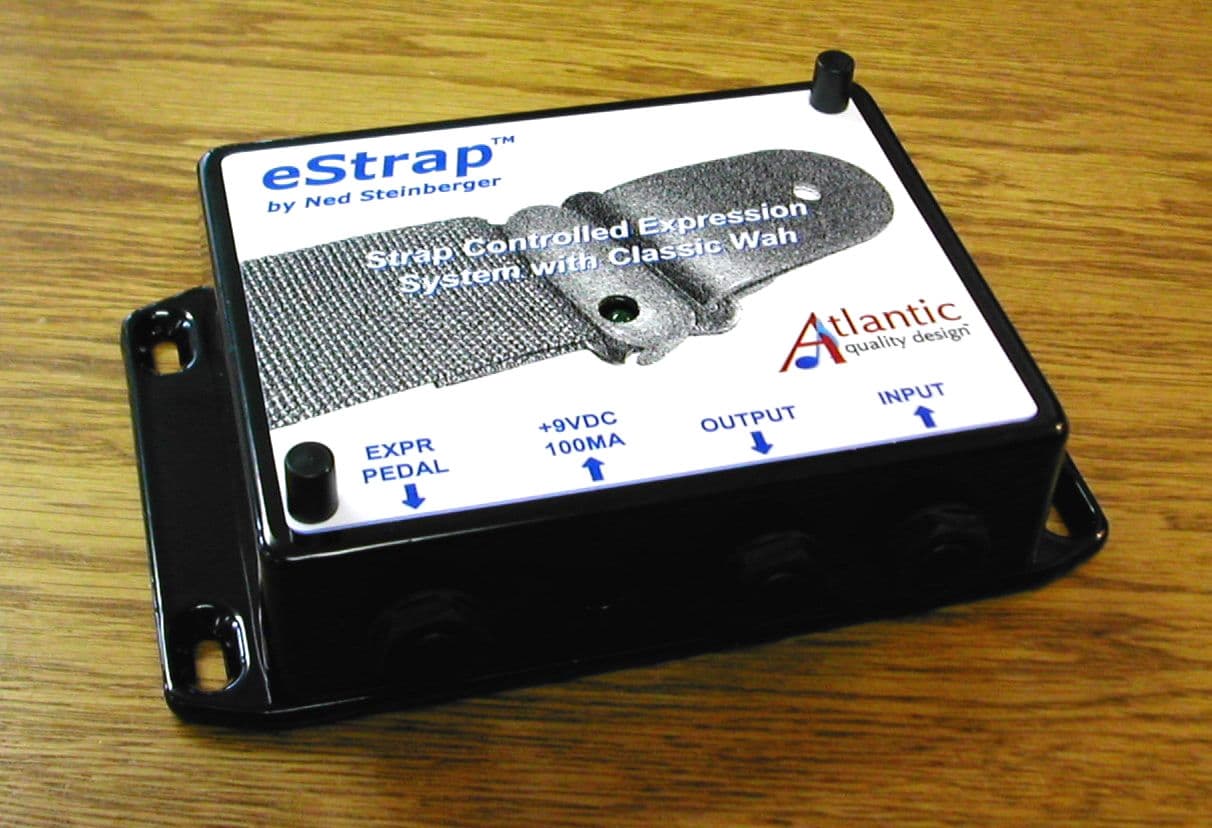
VHOESRX
Oct 09, 2007MUSICAL SOUND EFFECTS CONTROLLER, RECEIVER
Equipment Class
CYY - Communications Receiver used w/Pt 15 Transmitter