WQ8BATS-BT508BATTERY&ELECTRICAL SYSTEM TESTER
Autel Intelligent Technology Corp., Ltd.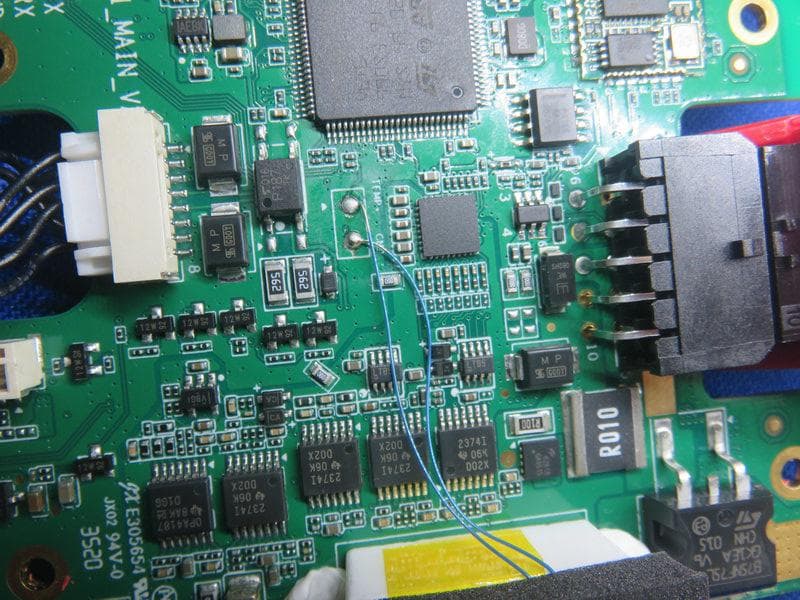
Click to zoom
Application Details
- Equipment Class
- DSS - Part 15 Spread Spectrum Transmitter
- Date of Grant
- Nov 22, 2020
- Application Purpose
- Original Equipment
- Date of Application
- Nov 22, 2020
- Equipment Note
- BATTERY&ELECTRICAL SYSTEM TESTER
- Frequency Range
- 2402.00000000 - 2480.00000000
- Country
- China
Documents & Files
Document Text
Text extracted from the exhibit documents filed with the FCC. Open a document above to read the original.
Users Manual
i Trademarks Autel ® , MaxiSys ® , MaxiDAS ® , MaxiScan ® , MaxiCheck ® , and MaxiRecorder ® are trademarks of Autel Intelligent Technology Corp., Ltd., registered in China, the United States and other countries. All other marks are trademarks or registered trademarks of their respective holders. Copyright Information No part of this manual may be reproduced, stored in a retrieval system or transmitted, in any form or by any means, electronic, mechanical, photocopying, recording, or otherwise without the prior written permission of Autel. Disclaimer of Warranties and Limitation of Liabilities All information, specifications and illustrations in this manual are based on the latest information available at the time of printing. Autel reserves the right to make changes at any time without notice. While information of this manual has been carefully checked for accuracy, no guarantee is given for the completeness and correctness of the contents, including but not limited to the product specifications, functions, and illustrations. Autel will not be liable for any direct, special, incidental, indirect damages or any economic consequential damages (including the loss of profits). IMPORTANT Before operating or maintaining this unit, please read this manual carefully, paying extra attention to the safety warnings and precautions. For Services and Support pro.autel.com www.autel.com 1-855-288-3587/1-855-AUTELUS (North America) 0086-755-86147779 (China) [email protected] For technical assistance in all other markets, please contact your local selling agent. ii Safety Information For your own safety and the safety of others, and to prevent damage to the device and vehicles upon which it is used, it is important that the safety instructions presented throughout this manual be read and understood by all persons operating or coming into contact with the device. There are various procedures, techniques, tools, and parts for servicing vehicles, as well as in the skill of the person doing the work. Because of the vast number of test applications and variations in the products that can be tested with this equipment, we cannot possibly anticipate or provide advice or safety messages to cover every circumstance. It is the automotive technician’s responsibility to be knowledgeable of the system being tested. It is crucial to use proper service methods and test procedures. It is essential to perform tests in an appropriate and acceptable manner that does not endanger your safety, the safety of others in the work area, the device being used, or the vehicle being tested. Before using the device, always refer to and follow the safety messages and applicable test procedures provided by the manufacturer of the vehicle or equipment being tested. Use the device only as described in this manual. Read, understand, and follow all safety messages and instructions in this manual. Safety Messages Safety messages are provided to help prevent personal injury and equipment damage. All safety messages are introduced by a signal word indicating the hazard level. DANGER Indicates an imminently hazardous situation which, if not avoided, will result in death or serious injury to the operator or to bystanders. WARNING Indicates a potentially hazardous situation which, if not avoided, could result in death or serious injury to the operator or to bystanders. Safety Instructions The safety messages herein cover situations Autel is aware of. Autel cannot know, evaluate or advise you as to all of the possible hazards. You must be certain that any condition or service procedure encountered does not jeopardize your personal safety. DANGER When an engine is operating, keep the service area WELL VENTILATED or attach a building exhaust removal system to the engine exhaust system. Engines produce carbon monoxide, an odorless, poisonous gas that causes slower reaction time and can lead to serious personal injury or loss of life. SAFETY WARNINGS iii Wear safety glasses and protective clothing. NEVER smoke or allow a spark or flame in vicinity of battery or engine. Have plenty of fresh water and soap nearby in case battery acid contacts skin, clothing or eyes. If battery acid contacts skin or clothing, wash immediately with soap and water. If acid enters eye, immediately flush eye with cold running water for at least ten minutes and get medical attention immediately. Use caution when working with metallic tools to prevent sparks or short circuits. Remove any jewelry or watches before you start servicing the battery. Keep hair, hands, and clothing as well as tester leads and cords away from moving blades and belts. iv Contents Safety Information ..................................................................................................................................... ii Safety Messages ....................................................................................................................................... ii Safety Instructions ..................................................................................................................................... ii 1 Using This Manual ............................................................................................................................... 1 Conventions ....................................................................................................................................... 1 Bold Text .................................................................................................................................... 1 Notes and Important Messages .................................................................................................. 1 Hyperlink ..................................................................................................................................... 1 Illustrations ................................................................................................................................…
Text truncated - open the document above for the full version.
ID Label/Location Info
LabelLocationOnEUT Label ProductName:BATTERY&ELECTRICALSYSTEMTESTER ModelNo.:MaxiBASB200 FCCID:WQ8BATS-BT508 ThisdevicecomplieswithPart15oftheFCCRules.Operation issubjecttothefollowingtwoconditions: (1)Thisdevicemaynotcauseharmfulinterference,and (2)Thisdevicemustacceptanyinterferencereceived,including interferencethatmaycauseundesiredoperation.
Internal Photos
FCCID:WQ8BATS-BT508 ANT
Operational Description
version01 AutelIntelligentTech.Corp.,Ltd. DeclarationconcerningAntennaSpecification Itisherebydeclaredthattheproduct ModelNo.:MaxiBASB200,MaxiBASBT508,MaxiBASBT506 FCCID:WQ8BATS-BT508 fulfillstherequirementinFCCtestrelatingtotheantennatype. ThedevicespecifiedaboveconfirmstotheFCCrecommendationsfor internal antennatype(s) describedbelow: ModelNo.ofantenna:N/A Typeofantenna:PCBAntenna Gainoftheantenna:0.6dBi Frequencyrange: 2402MHz~2480MHz Themountingoftheantennaisfixedtotheradiomoduleandnootherantennashouldbeused. Companyname:AutelIntelligentTech.Corp.,Ltd. Address:7th-8th,10thFloor,Bldg.B1,Zhiyuan,XueyuanRd.Xili,Nanshan,Shenzhen, China City:Shenzhen ZIP/Postalcode:518110 Country:Chin Place:Shenzhen,China Date:11/23/2020 Signature:
RF Exposure Info
RFEXPOSUREEVALUATION AccordingtoFCC1.1310:Thecriterialistedinthefollowingtableshallbeusedto evaluatetheenvironmentimpactofhumanexposuretoradiofrequency(RF)Radiation asspecifiedin§1.1307(b) FCCID:WQ8BATS-BT508 EUTSpecification EUTNightLightForKids Frequencyband(Operating)WLAN:2.412GHz~2.462GHz WLAN:5.18GHz~5.24GHz WLAN:5.745GHz~5.825GHz Others:2.402GHz~2.480GHzBDR+EDR DevicecategoryPortable(<20cmseparation) Mobile(>20cmseparation) Others___ ExposureclassificationOccupational/Controlledexposure(S=5mW/cm2) GeneralPopulation/Uncontrolledexposure(S=1mW/cm2) AntennadiversitySingleantenna Multipleantennas Txdiversity Rxdiversity Tx/Rxdiversity Max.outputpowerBT:2.050dBm(0.0016W) Antennagain(Max)0.6dBi EvaluationappliedMPEEvaluation SAREvaluation LimitsforMaximumPermissibleExposure(MPE) Frequency Range(MHz) ElectricField Strength(V/m) MagneticField Strength(A/m) Power Density(mW/cm 2 ) Average Time (A)LimitsforOccupational/ControlExposures 300-1500----F/3006 1500-100000----56 (B)LimitsforGeneralPopulation/UncontrolExposures 300-1500----F/15006 1500-100000----130 Friistransmissionformula:Pd=(Pout*G)\(4*pi*R2) Where Pd=PowerdensityinmW/cm 2 Pout=outputpowertoantennainMw G=gainofantennainlinearscale Pi=3.1416 R=distancebetweenobservationpointandcenteroftheradiatorincm PdthelimitofMPE,1mW/cm2.Ifweknowthemaximumgainoftheantennaand totalpowerinputtotheantenna,throughthecalculation,wewillknowthedistance wheretheMPElimitisreached. MeasurementResult BDR+EDR: Operating Mode Channel Frequency Measured Power Tuneup tolerance Max.Tune upPower Antenna Gain Powerdensity at20cm Powerdensity Limits (mW/cm 2 ) (MHz)(dBm)(dBm)(dBm)(dBi)(mW/cm 2 ) BDR 24021.8181.818 ±12.8180.60.00041 24411.7311.731 ±12.7310.60.00041 24802.0192.019 ±13.0190.60.00051 EDR 24021.8841.884 ±12.8840.60.00041 24411.7401.740 ±12.7400.60.00041 24802.0502.050 ±13.0500.60.00051
Test Report
Report No.: 18220WC00145401FCC ID: WQ8BATS-BT508Page 1 of 51 Code:AB-RF-05-a FCC TEST REPORT Client Name:Autel Intelligent Tech. Corp., Ltd. Address: 7th-8th, 10th Floor, Bldg. B1, Zhiyuan, Xueyuan Rd. Xili, Nanshan, Shenzhen, China Product Name:BATTERY&ELECTRICAL SYSTEM TESTER Date:Nov. 20, 2020 Shenzhen Anbotek Compliance Laboratory Limited Report No.: 18220WC00145401FCC ID: WQ8BATS-BT508Page 2 of 51 Code:AB-RF-05-a Contents 1. General Information ............................................................................................................................................... 5 1.1. Client Information ....................................................................................................................................... 5 1.2. Description of Device (EUT) ..................................................................................................................... 5 1.3. Auxiliary Equipment Used During Test ................................................................................................... 6 1.4. Description of Test Modes ........................................................................................................................ 6 1.5. List of channels ........................................................................................................................................... 7 1.6. Description Of Test Setup ......................................................................................................................... 8 1.7. Test Equipment List .................................................................................................................................... 9 1.8. Measurement Uncertainty ....................................................................................................................... 10 1.9. Description of Test Facility ...................................................................................................................... 10 2. Summary of Test Results ................................................................................................................................... 11 3. Conducted Emission Test ................................................................................................................................... 12 3.1. Test Standard and Limit .......................................................................................................................... 12 3.2. Test Setup .................................................................................................................................................. 12 3.3. Test Procedure .......................................................................................................................................... 12 3.4. Test Data .................................................................................................................................................... 12 4. Radiation Spurious Emission and Band Edge ................................................................................................ 17 4.1. Test Standard and Limit .......................................................................................................................... 17 4.2. Test Setup .................................................................................................................................................. 17 4.3. Test Procedure .......................................................................................................................................... 18 4.4. Test Data .................................................................................................................................................... 19 5. Maximum Peak Output Power Test .................................................................................................................. 27 5.1. Test Standard and Limit .......................................................................................................................... 27 5.2. Test Setup .................................................................................................................................................. 27 5.3. Test Procedure .......................................................................................................................................... 27 5.4. Test Data .................................................................................................................................................... 27 6. 20DB Occupy Bandwidth Test ........................................................................................................................... 31 6.1. Test Standard ............................................................................................................................................ 31 6.2. Test Setup .................................................................................................................................................. 31 6.3. Test Procedure .......................................................................................................................................... 31 6.4. Test Data .................................................................................................................................................... 31 7. Carrier Frequency Separation Test ................................................................................................................... 35 7.1. Test Standard and Limit .......................................................................................................................... 35 7.2. Test Setup .................................................................................................................................................. 35 7.3. Test Procedure .....................................................................................................................…
Text truncated - open the document above for the full version.
Test Setup Photos
FCCID:WQ8BATS-BT508 PhotoofPowerLineConductedEmissionTest PhotoofRadiationEmissionTest
Contact Information
Applicant
Frank Li(President)
Test Firm
Shenzhen Anbotek Compliance Laboratory LimitedJeff Zhu
Technical Specifications
| # | Rule Parts | Frequency Range | Power Output |
|---|---|---|---|
| 1 | 15C | 2.40 GHz - 2.48 GHz | 1.60 mW |
Other Applications from Autel Intelligent Technology Corp., Ltd.
WQ8-DV2121
Sep 05, 2025AUTOMOTIVE DIAGNOSIS & ANALYSIS SYSTEM
Equipment Class
DTS - Digital Transmission System
WQ8-BCE100
Jun 26, 2024LITHIUM BATTERY BALANCER
Equipment Class
DTS - Digital Transmission System
WQ8-ALT100L
Apr 01, 2024Battery Leakage Tester
Equipment Class
DTS - Digital Transmission System
WQ8-SK2311
Feb 19, 2024UNIVERSAL SMART KEY
Equipment Class
DSC - Part 15 Security/Remote Control TransmitterWQ8-DA2211
Jan 23, 2024ADAS Calibration Frame
Equipment Class
DSS - Part 15 Spread Spectrum Transmitter