XELH-680Bluetooth Stereo Headset
Shenzhen Hongnanke Communication Equipment Co., Ltd.
Click to zoom
Application Details
- Equipment Class
- DSS - Part 15 Spread Spectrum Transmitter
- Date of Grant
- Jun 28, 2011
- Application Purpose
- Original Equipment
- Date of Application
- Jun 27, 2011
- Equipment Note
- Bluetooth Stereo Headset
- Frequency Range
- 2402.00000000 - 2480.00000000
- Country
- China
Documents & Files
Document Text
Text extracted from the exhibit documents filed with the FCC. Open a document above to read the original.
Users Manual
www.oricore.com H-680 蓝牙立体声耳机 USER GUIDE Thank you for selecting Bluetooth headset H-680 The H-680 lets you listen to stereo music through your Bluetooth - enabled mobile phone or music player,while ensuring you never miss a call. Use the 2.5mm music cable for wired music listening from your MP3 or PC. Folding style is more fashionable and convenient. H-680 Bluetooth headset with stylish patent design, perfect construction, stereo R, L model, Let you enjoy the wonderful music. H-680 Bluetooth headset is compliant with Bluetooth Version 2.1 +EDR specification,and is compatible with latest mobile phones supporting Bluetooth headset or handsfree profiles. Getting Started H-680 Charging Your Headset Turning Your Headset On and Off Paring Your Headset Wearing Your Headset Using Your Headset Transferring a Call Connected With the Last Paired Device Use the 2.5mm Stereo Music Cable Troubleshooting Safety Information Care and Maintenance Products Specifications Contents ................................................................................... ................................................................................ ................................................................... ..................................................................................... .................................................................................. .................................................................................... ........................................................................................ .......................................................... ................................................................ ........................................................................................... ....................................................................................... .................................................................................. ................................................................................ 3 3 3 4 5 5 7 8 8 8 9 10 11 - 1 -- 2 - 1、 2、 3、 4、 5、Charging Jack 6、 7、Play/Pause 8、 9、Microphone 10、Music Cable Faucet Volume “+” Volume “-” Multi-function Button (MFB) Indicator Next track key Last track key 4 9 7 8 3 10 1 2 5 6 H-680 Chart Familiar with Your Bluetooth Headset Tensile DisplayFolding Display Getting Started H-680 To use your H-680 Stereo Bluetooth headset,please follow the steps below, 1.Ensure your Bluetooth headset is fully charged. 2.Pair your charged Bluetooth headset with a Bluetooth-enable mobile phone prior to use Bluetooth headset first time,it is suggested that you fully recharge the battery first. Charging Your Headset Rechargeable battery with Micro-USB charging option from AC power supply, PC via USB cable, The battery indicator will turn red when charging. Turning on the headset Press and hold the MFB for 3 seconds until a "beep" is heard.About paring function, please refer to "Paring Your Headset". Pairing Your Headset The headset works with Bluetooth-enable phones, prior to using and pairing your headset for the first time ,please check if your mobile phone is Bluetooth-enable. The pairing instructions for typical Bluetooth-enable mobile phone are explained on the next page.The headset pairing procedure may vary depending on the setting of your mobile phone.Please contact the manufacture of your mobile phone or its agent further information. Pairing Your Headset 1. Press the headset and the mobile phone where they are easily viewable and no more than one meter apart. 2. Ensure the headset is turned off. 3. Please press the MFB 2 second until you hear“Beep”Tone,the blue led long show,the headset being pariing, 4. Activate your mobile phones's Bluetooth function,please refer to your mobile phone user guide for details. 5. Set the mobile phone to search for Bluetooth devices within range and select “H-680”from the list of devices shown. 6. Enter password “0000”and press“ok”to pair your headset with mobile phone ,when the pairing is completed , the headset enters in standby - 3 -- 4 - mode. If your phone’s Bluetooth version is 2.1, it is no need to enter the passkey when pairing. 7. Now you can use your Bluetooth headset to listen to the music and make a call. Some mobile phone ,when they are re-started ,the headset will be connected with the mobile phone automatically. Wearing Your Headset Please note the Left / Right wearing indicator inside the headband. Alternatively always wear the H-680 with the MFB on your right. Using Your Headset Answering a Call When a call is coming,the ring tone will be heard by headset, Press the MFB once to accept the call or answer the call via your mobile phone in normal way. Rejecting a Call Press the MFB for 2 seconds to reject the incoming call. Ending a Call While speaking,Press the MFB once to end the call or hang up on your mobile phone. Adjusting the Volume (Being calling or playing music) Turn up the volume Wheel to raise up the volume,each turning up on wheel,the volume will be up,until to the MAX and you will hear "DU" alarm,Turn down the volume Wheel to raise down the volume,each turning up on wheel,the volume will be down,until to the bottom and you will hear “DU” alarm, Play/Pause Music When the Bluetooth headset was connected with stereo mobile phone , press Play/Pause once to play music and press it once again to pause music . (Attention:your mobile phone must support A2DP profile.) - 5 -- 6 - Stopping the Music While playing music,press the "Play/Pause” for 2 seconds to stop the music. Last Track Connected with stereo mobile phone, Be playing, press the "Last Track " key to select the last track. Next Track Connected with stereo mobile phone, Be playing, press the "Next Track " key to select the next track. Transferring a Call While speaking,long press the "Play/Pause” to transfer the call from your headset toyour mobile phone(Please check if your mobile phone has this function), repeat the above procedure to transfer the call f…
Text truncated - open the document above for the full version.
External Photos
TOP VIEW OF EUT BOTTOM VIEW OF EUT RIGHT VIEW OF EUT LEFT VIEW OF EUT FRONT VIEW OF EUT BACK VIEW OF EUT
ID Label/Location Info
FCC ID:XELH‐680
Internal Photos
INTERNAL VIEW OF EUT-1 INTERNAL VIEW OF EUT-2 INTERNAL VIEW OF EUT-3 INTERNAL VIEW OF EUT-4 INTERNAL VIEW OF EUT-5
Test Report
FCC Test Report Report No.: AGC07S110601F2 FCC ID : XELH‐680 PRODUCT DESIGNATION : Bluetooth Stereo Headset BRAND NAME : ORICORE TEST MODEL : H‐680 CLIENT : Shenzhen Hongnanke Communication Equipment CO., Ltd DATE OF ISSUE : June 18, 2011 STANDARD(S) : FCC Part 15 Rules Attestation of Global Compliance Co., Ltd. CAUTION: This report shall not be reproduced except in full without the written permission of the test laboratory and shall not be quoted out of context. Report No.: AGC06P110501F2 Page 1 of 43 VERIFICATION OF COMPLIANCE Applicant Shenzhen Hongnanke Communication Equipment CO., Ltd No.16, the Second Industry Park, Xiakeng Tongle, Longgang District, Shenzhen, Guangdong, China. Manufacturer Shenzhen Hongnanke Communication Equipment CO., Ltd No.16, the Second Industry Park, Xiakeng Tongle, Longgang District, Shenzhen, Guangdong, China. Product Designation Bluetooth Stereo Headset Brand Name ORICORE Model Name H-680 FCC ID XELH-680 Report Number AGC07S110601F2 Date of Test June 14, 2011 to June 17, 2011 WE HEREBY CERTIFY THAT: The above equipment was tested by Attestation of Global Compliance Co., Ltd. The test data, data evaluation, test procedures, and equipment configurations shown in this report were made in accordance with the procedures given in ANSI C63.4 (2003) and the energy emitted by the sample EUT tested as described in this report is in compliance with radiated emission limits of FCC Rules Part 15.247. Checked By: Curoky Chen June 18, 2011 Authorized By Forrest Lei June 18, 2011 Report No.: AGC06P110501F2 Page 2 of 43 TABLE OF CONTENTS 1 GENERAL INFORMATION ...................................................................................................................................................... 4 1.1PRODUCT DESCRIPTION ................................................................................................................................................ 4 1.2TABLE OF CARRIER FREQUENCYS ............................................................................................................................ 4 1.3RECEIVER INPUT BANDWIDTH ..................................................................................................................................... 4 1.4EXAMPLE OF A HOPPING SEQUENCY IN DATA MODE ......................................................................................... 5 1.5EQUALLY AVERAGE USE OF FREQUENCIES AND BEHAVIOUR ........................................................................ 5 1.6RELATED SUBMITTAL(S) / GRANT (S) ........................................................................................................................ 5 1.7TEST METHODOLOGY ...................................................................................................................................................... 5 1.8TEST FACILITY ................................................................................................................................................................... 6 1.9SPECIAL ACCESSORIES ................................................................................................................................................. 6 1.10EQUIPMENT MODIFICATIONS ...................................................................................................................................... 6 2 SYSTEM TEST CONFIGURATION ........................................................................................................................................ 7 2.1CONFIGURATION OF TESTED SYSTEM ...................................................................................................................... 7 2.2EQUIPMENT USED IN TESTED SYSTEM ..................................................................................................................... 7 3 SUMMARY OF TEST RESULTS ............................................................................................................................................. 8 4. DESCRIPTION OF TEST MODES ......................................................................................................................................... 8 5 PEAK OUTPUT POWER .......................................................................................................................................................... 9 5.1 MEASUREMENT PROCEDURE ...................................................................................................................................... 9 5.2 TEST SET-UP (BLOCK DIAGRAM OF CONFIGURATION) ...................................................................................... 9 5.3 MEASUREMENT EQUIPMENT USED ......................................................................................................................... 10 5.4 LIMITS AND MEASUREMENT RESULT ..................................................................................................................... 10 6 20 DB BANDWIDTH ............................................................................................................................................................... 11 6.1 MEASUREMENT PROCEDURE .................................................................................................................................... 11 6.2 TEST SET-UP (BLOCK DIAGRAM OF CONFIGURATION) .................................................................................... 11 6.3 MEASUREMENT EQUIPMENT USED ......................................................................................................................... 11 6.4 LIMITS AND MEASUREMENT RESULTS .................................................................................................................. 11 7. CONDUCTED SPURIOUS EMISSION ................................................................................................................................ 13 7.1 MEASUREMENT PROCEDURE ......................................................…
Text truncated - open the document above for the full version.
Test Setup Photos
CONDUCTED EMISSION RADIATED EMISSION
Contact Information
Applicant
Weifeng Bai(General Manager)
Test Firm
Attestation of Global Compliance Shenzhen Co. Ltd.Forrest Lei
Technical Specifications
| # | Rule Parts | Frequency Range | Power Output |
|---|---|---|---|
| 1 | 15C | 2.40 GHz - 2.48 GHz | 1.90 mW |
Other Applications from Shenzhen Hongnanke Communication Equipment Co., Ltd.

XEL-AGMBUDS3
Oct 10, 2024TWS Bluetooth Headset
Equipment Class
DSS - Part 15 Spread Spectrum Transmitter
XELTWS-B7
Mar 24, 2020True wireless Bluetooth headset
Equipment Class
DSS - Part 15 Spread Spectrum Transmitter
XELLB-200
May 17, 2015Bluetooth Headset
Equipment Class
DXX - Part 15 Low Power Communication Device Transmitter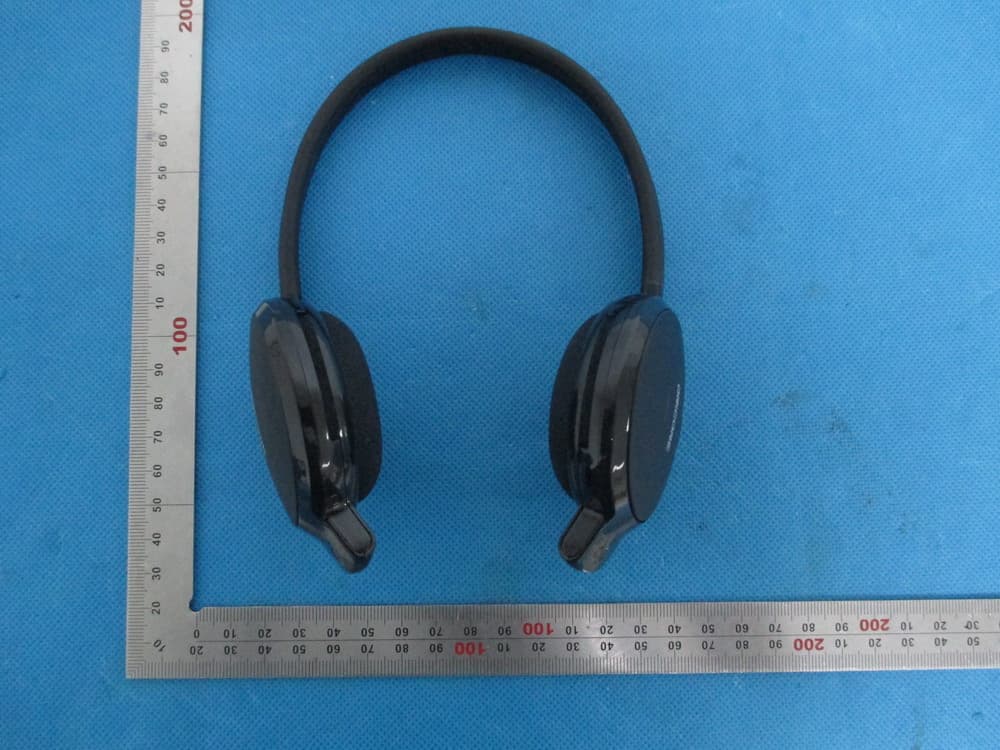
XELK700
May 14, 2014Bluetooth Stereo Headset
Equipment Class
DSS - Part 15 Spread Spectrum Transmitter
XELBH-501
May 06, 2014Bluetooth Stereo Headset
Equipment Class
DTS - Digital Transmission System