ZNFH345GSM/WCDMA/LTE PHONE + BLUETOOTH, DTS b/g/n
LG Electronics USA, Inc.Application Details
- Equipment Class
- DTS - Digital Transmission System
- Date of Grant
- Apr 14, 2015
- Application Purpose
- Original Equipment
- Date of Application
- Apr 10, 2015
- Equipment Note
- GSM/WCDMA/LTE PHONE + BLUETOOTH, DTS b/g/n
- Frequency Range
- 2402.00000000 - 2480.00000000
- Company
- LG Electronics USA, Inc.
- Country
- United States
Documents & Files
Document Text
Text extracted from the exhibit documents filed with the FCC. Open a document above to read the original.
Users Manual
Printed in China BC Start Guide Welcome TCS527188.1 MBM65217901 (1.0) 1 TABLE OF CONTENTS INTRODUCTION...................................................2 Your Phone ..........................................................4 Setup ...................................................................6 Unlocking the screen ...........................................8 Making a call .......................................................8 Adding a new contact ..........................................8 Sending a message ..............................................9 Gesture shot ......................................................10 QuickMemo+ .....................................................11 Wi-Fi Calling ......................................................12 T-Mobile Applications ........................................13 Accessories .......................................................14 Approved Firmware Versions ..............................15 Safety Tips .........................................................15 Information About Safeguarding Handsets .........16 Emergency Dialing .............................................16 Caring For Your Phone .......................................17 Additional Information .......................................18 Safety ................................................................21 Open Source Software Notice Information ..........60 Limited Warranty Statement ...............................61 2 INTRODUCTION Support This guide provides you with the information you need to get started. For more information and additional support, please visit www.t-mobile.com/support where you can: • Register at My.T-Mobile.com to check your minutes, pay your bill, upgrade your phone, and change your rate plan. • Review your phone’s User Manual and troubleshooting FAQs. • View the latest troubleshooting solutions in the Support Forums or ask a question of your own. You can also access account and device information from your phone. 1 From the Home screen, touch . 2 Under the Apps tab, touch T-Mobile > T-Mobile My Account . NOTE • Some content and illustrations may differ from your device depending on the region, service provider, software version, or OS version, and are subject to change without prior notice. • This device is not suitable for people who have a visual impairment due to the touchscreen keyboard. 3 Service If you are a new T-Mobile ® customer and your service has not yet been activated, call Customer Care at 1-800-937-8997 and a T-Mobile Activations representative will assist you. You will need the following information when activating service: • Service Agreement and agent code on your Agreement. • Your name, home address, home phone number, and billing address. • Your Social Security number, current driver’s license number, and date of birth for credit check purposes. • Your choice of T-Mobile plan and services (see http://www.t-mobile.com/ for latest plan information). • Micro SIM serial number and IMEI number (located on the box barcode label). 4 Your Phone 12543 76 1 Headset Jack 2 Microphone 3 Earpiece 4 Proximity Sensor 5 Front Camera Lens 6 Charger/USB port 7 Microphone 5 1 2 5 3 4 1 Rear Camera Lens 2 Flash 3 Volume Keys 4 Speaker 5 Power/Lock Key 6 Setup Turning on the phone Press and hold the Power/Lock Key for a few seconds. Charging the phone • The Charger/USB port is at the bottom of the phone. • To maximize battery life, make sure that the battery is fully charged before you use it the first time. 7 Before you start using the phone, you must insert the SIM or USIM card and battery. Installing the SIM or USIM card and battery 1 Remove the back cover. 2 Slide the SIM card into the SIM card slot as shown in the figure below. 3 Insert the battery. 4 Replace the back cover. NOTE Only microSIM card types work with this device. 8 Unlocking the screen By default, your screen will lock after a period of inactivity, then turn off. 1 Press the Power/Lock Key or double-tap on the screen. 2 Swipe the screen in any direction to unlock it. Making a call 1 From the Home screen, tap > Apps tab (if necessary) > to open the dialer. 2 Enter the number using the dialer. To delete a digit, tap . 3 After entering the desired number, tap to place the call. 4 To end the call, tap . TIP! To enter “+” to make international calls, touch and hold . Adding a new contact 1 From the Home screen, tap > Apps tab (if necessary) > and enter the new contact’s number. 2 Tap > Add to Contacts. 3 If you want to add a picture to the new contact, tap the image icon. Choose Take photo or Select from Gallery. 4 Enter the desired information for the contact. 5 Tap Save. 9 Sending a message 1 From the Home screen, tap > Apps tab (if necessary) > > to create a new message. 2 Enter a contact name or contact number into the To field. As you enter the contact name, matching contacts appear. You can tap a suggested recipient and add more than one contact. NOTE You may be charged for each text message you send. Please consult with your service provider. 3 Tap the text field and begin composing your message. 4 Tap to open the messaging options. TIP! You can tap to attach a file that you want to share. 5 Tap Send to send your message. TIP! • The 160-character limit may vary from country to country, depending on the language and how the text message is coded. • If an image, video or audio file is added to a text message, it is automatically converted into a multimedia message and you may be charged accordingly. 10 Gesture shot The Gesture shot feature allows you to take a picture with a hand gesture using the front camera. To take a photo There are two methods for using the Gesture shot feature. • Raise your hand, with an open palm, until the front camera detects it and a box appears on the screen. Then close your hand into a fist to start the timer, allowing you time to get ready. • Raise your hand, in a clenched fist, until the front camera detects it and a box appear…
Text truncated - open the document above for the full version.
Cover Letter(s)
Date: March 31, 2015 UL Verific ation Services Inc. Certification Division 47173 Benicia Street Fremont, CA 94538, USA To whom it may concern: I, the undersigned, hereby authorize UL Verification Services Inc. to act on our behalf in all manners relating to application for equipment authorization, including signing of all documents relating to these matters. Any and all acts carried out by UL Verification Services Inc. on our behalf shall have the same effect as acts of our own. I, the undersigned, hereby certify that we are not subject to a denial of federal benefits, that includes FCC benefits, pursuant to Section 5301 of the Anti-Drug Abuse Act of 1988, 21 U.S.C. 853(a). In authorizing UL Verification Services Inc.as our agent, we still recognize that we are responsible to: a)comply with the relevant provisions of the certification program; b) make all necessary arrangements for the conduct of the evaluation, including provision for examining documentation and access to all areas, records (including internal audit reports) and personnel for the purposes of evaluation (e.g. testing, inspection, assessment, surveillance, reassessment) and resolution of complaints; c)make claims regarding certification only in respect of the scope for which certification has been granted; d) do not use our product certification in such a manner as to bring the Certification Division into disrepute and not make any statement regarding our product certification which the Certification Division may consider misleading or unauthorized; e)upon suspension or cancellation of certification, discontinue use of all advertising matter that contains any reference thereto and return any certification documents as required by the Certification Division; f)use certification only to indicate the products are certified as being in conformity with specified standards; g)endeavor to ensure that no certificate or report nor any part thereof is used in a misleading manner; h) ensure that any reference to our product certification in communication media such as documents, brochures or advertising, complies with the requirements of the Certification Division; i)keep a record of all complaints made known to the us relating to the product’s compliance with requirements of the relevant standard and to make these records available to the Certification Division when requested; j)take appropriate action with respect to such complaints and any deficiencies found in products or services that affect compliance with the requirements for certification; k) doc ument the actions taken. T his authorization is valid until further written notice from the applicant. S incerely Yours, ____________________ J ongchul Lee Director On b ehalf of LG E lectronics Mobilecomm U.S.A.,Inc
Cover Letter(s)
Feder al Communications Commission Authorization and Evaluation Division 7435 Oakland Mills Road Columbia MD 21046 Subj ect: FCC ID: Request for Confidentiality ZNFH345 To W hom It May Concern: Pursuant to Sections 0.457 and 0.459 of the Commission’s Rules (CFR 47), and Section 552 (b) (4) of the Freedom of Information Act, LG ELECTRONICS MobileComm USA hereby requests confidentiality and treatment of certain information accompanying this application. The materials contain trade secrets and proprietary information not customarily released to the public. The public disclosure of these matters might be harmful to the Applicant and provide unjustified benefits to its competitors. We are also hereby request Short-Term Confidentiality for 180 days after the grant as outlined in Public Notice DA 04-1705. This provision will give LG ELECTRONICS MobileComm USA temporary confidentiality of commercially sensitive information prior to product release. The r equested Permanent and Temporary Confidential exhibits are listed as follows: PERM ANENT AND SHORT-TERM CONFIDENTIAL LIST Exhibit Description PERMANENT 1 Block Diagram, Operational Descriptions and Tune-Up Procedure 2 Schematics, Part placement, and Part List 3 Antenna Specification SHORT-TERM 1 External Photos 2 Internal Photos 3 Test -Setup Photos 4 User’s Manual The A pplicant understands that pursuant to Rule 0.457, disclosure of this application and all accompanying documentations, where applicable, will not be made public before the date of the Grant for this application. Sinc erely Yours, Date: March 31, 2015 ____________________ Jongchul Lee Director On b ehalf of LG E lectronics Mobilecomm U.S.A.,Inc
ID Label/Location Info
Rear ※ FCC ID Label Form Model: H345 FCC ID: ZNFH345 IMEI : XXXXXXXXX Made in Korea The FCC ID shown will be readily visible at the time of purchase. Note ! The label of the EUT is made of a white polypropylene laminate film and it's attached to the EUT by an adhesive. The adhesive is permanent type with strong strength. Additionally, the FCC ID is readily visible to the purchaser at the time of purchase because the phone will be marketed without the battery installed.
RF Exposure Info
NVLAP LAB CODE 200065-0 SAR EVALUATION REPORT FCC 47 CFR § 2.1093 IEEE Std 1528-2013 For GSM/WCDMA/LTE PHONE + BLUETOOTH, DTS b/g/n FCC ID: ZNFH345 Model Name: LG-H345, H345, LGH345, LGMS345, MS345, LG-MS345 Report Number: 15I19960-S1 Issue Date: 4/1/2015 Prepared for LG ELECTRONICS MOBILECOMM U.S.A., INC. 1000 Sylvan Avenue Englewood Cliffs, New Jersey 07632 Prepared by UL VERIFICATION SERVICES INC. 47173 BENICIA STREET FREMONT, CA 94538, U.S.A. TEL: (510) 771-1000 FAX: (510) 661-0888 Report No.: 15I19960-S1 Issue Date: 4/1/2015 Page 2 of 46 UL Verification Services Inc. Doc. No.: 1.0 This report shall not be reproduced without the written approval of UL Verification Services Inc. Revision History Rev. Date Revisions Revised By -- 4/1/2015 Initial Issue -- Report No.: 15I19960-S1 Issue Date: 4/1/2015 Page 3 of 46 UL Verification Services Inc. Doc. No.: 1.0 This report shall not be reproduced without the written approval of UL Verification Services Inc. Table of Contents 1. Attestation of Test Results ......................................................................................................... 5 2. Test Specification, Methods and Procedures ............................................................................ 6 3. Facilities and Accreditation ........................................................................................................ 6 4. SAR Measurement System & Test Equipment .......................................................................... 7 4.1. SAR Measurement System ........................................................................................................ 7 4.2. SAR Scan Procedures ............................................................................................................... 8 4.3. Test Equipment ........................................................................................................................ 10 5. Measurement Uncertainty ......................................................................................................... 11 6. Device Under Test (DUT) Information ...................................................................................... 12 6.1. DUT Description ...................................................................................................................... 12 6.2. Wireless Technologies ............................................................................................................. 12 6.3. Nominal and Maximum Output Power ...................................................................................... 13 6.4. General LTE SAR Test and Reporting Considerations ............................................................. 14 7. RF Exposure Conditions (Test Configurations) ...................................................................... 15 8. Dielectric Property Measurements & System Check .............................................................. 16 8.1. Dielectric Property Measurements ........................................................................................... 16 8.2. System Check.......................................................................................................................... 19 9. Conducted Output Power Measurements ................................................................................ 21 9.1. GSM ........................................................................................................................................ 21 9.2. W-CDMA ................................................................................................................................. 23 9.3. LTE .......................................................................................................................................... 29 9.4. Wi-Fi 2.4GHz ........................................................................................................................... 35 9.5. Bluetooth ................................................................................................................................. 35 10. Measured and Reported (Scaled) SAR Results ....................................................................... 36 10.1. GSM850 ............................................................................................................................... 38 10.2. GSM1900 ............................................................................................................................. 38 10.3. W-CDMA Band V ................................................................................................................. 38 10.4. W-CDMA Band IV ................................................................................................................ 39 10.5. W-CDMA Band II .................................................................................................................. 39 10.6. LTE Band 2 (20MHz Bandwidth) .......................................................................................... 40 10.7. LTE Band 4 (20MHz Bandwidth) .......................................................................................... 41 10.8. LTE Band 12 (10MHz Bandwidth) ........................................................................................ 42 10.9. Wi-Fi (DTS Band) ................................................................................................................. 42 Report No.: 15I19960-S1 Issue Date: 4/1/2015 Page 4 of 46 UL Verification Services Inc. Doc. No.: 1.0 This report shall not be reproduced without the written approval of UL Verification Services Inc. 10.10. Bluetooth .............................................................................................................................. 43 11. SAR Measurement Variability ................................................................................................... 44 12. Simultaneous Transmission SAR Analysis ............................…
Text truncated - open the document above for the full version.
RF Exposure Info
Plot No. 1 Test Laboratory: UL Verification Services Inc., SAR Lab 5 Date/Time: 2/5/2015 9:11:53 PM GSM 850 Frequency: 836.6 MHz; Duty Cycle: 1:8.00018; Room Ambient Temperature: 24.0°C; Liquid Temperature: 23.0°C Medium parameters used (interpolated): f = 836.6 MHz; σ = 0.922 S/m; ε r = 42.109; ρ = 1000 kg/m 3 DASY5 Configuration: - Area Scan Setting: Find Secondary Maximum Within: 2.0 dB and with a peak SAR value greater than 0.0012W/kg - Electronics: DAE4 Sn1439; Calibrated: 5/14/2014 - Probe: EX3DV4 - SN3749; ConvF(8.75, 8.75, 8.75); Calibrated: 1/26/2015; - Sensor-Surface: 2.5mm (Mechanical Surface Detection) - Phantom: TWIN SAM v5.0; Type: QD000P40CD; Serial: TP:1829 RHS/Touch_GSM Voice_ch 190/Area Scan (7x12x1): Measurement grid: dx=15mm, dy=15mm Info: Interpolated medium parameters used for SAR evaluation. Maximum value of SAR (measured) = 0.694 W/kg RHS/Touch_GSM Voice_ch 190/Zoom Scan (5x5x7)/Cube 0: Measurement grid: dx=8mm, dy=8mm, dz=5mm Reference Value = 27.96 V/m; Power Drift = 0.04 dB Peak SAR (extrapolated) = 0.818 W/kg SAR(1 g) = 0.636 W/kg; SAR(10 g) = 0.476 W/kg Info: Interpolated medium parameters used for SAR evaluation. Maximum value of SAR (measured) = 0.720 W/kg 0 dB = 0.720 W/kg = -1.43 dBW/kg Plot No. 2 Test Laboratory: UL Verification Services Inc., SAR Lab 5 Date/Time: 2/5/2015 9:25:07 PM GSM 850 Frequency: 836.6 MHz; Duty Cycle: 1:2.60016; Room Ambient Temperature: 24.0°C; Liquid Temperature: 23.0°C Medium parameters used (interpolated): f = 836.6 MHz; σ = 0.922 S/m; ε r = 42.109; ρ = 1000 kg/m 3 DASY5 Configuration: - Area Scan Setting: Find Secondary Maximum Within: 2.0 dB and with a peak SAR value greater than 0.0012W/kg - Electronics: DAE4 Sn1439; Calibrated: 5/14/2014 - Probe: EX3DV4 - SN3749; ConvF(8.75, 8.75, 8.75); Calibrated: 1/26/2015; - Sensor-Surface: 2.5mm (Mechanical Surface Detection (Locations From Previous Scan Used)), Sensor-Surface: 2.5mm (Mechanical Surface Detection) - Phantom: TWIN SAM v5.0; Type: QD000P40CD; Serial: TP:1829 RHS/Touch_GPRS VoIP 3 slots_ch 190/Area Scan (7x12x1): Measurement grid: dx=15mm, dy=15mm Info: Interpolated medium parameters used for SAR evaluation. Maximum value of SAR (measured) = 1.05 W/kg RHS/Touch_GPRS VoIP 3 slots_ch 190/Zoom Scan (5x5x7)/Cube 0: Measurement grid: dx=8mm, dy=8mm, dz=5mm Reference Value = 34.09 V/m; Power Drift = -0.04 dB Peak SAR (extrapolated) = 1.22 W/kg SAR(1 g) = 0.943 W/kg; SAR(10 g) = 0.705 W/kg Info: Interpolated medium parameters used for SAR evaluation. Maximum value of SAR (measured) = 1.07 W/kg 0 dB = 1.07 W/kg = 0.29 dBW/kg Plot No. 3 Test Laboratory: UL Verification Services Inc., SAR Lab 5 Date/Time: 2/5/2015 11:44:16 PM GSM 850 Frequency: 836.6 MHz; Duty Cycle: 1:8.00018; Room Ambient Temperature: 24.0°C; Liquid Temperature: 23.0°C Medium parameters used (interpolated): f = 836.6 MHz; σ = 0.984 S/m; ε r = 53.366; ρ = 1000 kg/m 3 DASY5 Configuration: - Area Scan Setting: Find Secondary Maximum Within: 2.0 dB and with a peak SAR value greater than 0.0012W/kg - Electronics: DAE4 Sn1439; Calibrated: 5/14/2014 - Probe: EX3DV4 - SN3749; ConvF(8.61, 8.61, 8.61); Calibrated: 1/26/2015; - Sensor-Surface: 2.5mm (Mechanical Surface Detection) - Phantom: ELI v5.0 (A); Type: QDOVA001BB; Serial: 1213 Front/GSM Voice_ch 190/Area Scan (7x12x1): Measurement grid: dx=15mm, dy=15mm Info: Interpolated medium parameters used for SAR evaluation. Maximum value of SAR (measured) = 0.516 W/kg Front/GSM Voice_ch 190/Zoom Scan (5x5x7)/Cube 0: Measurement grid: dx=8mm, dy=8mm, dz=5mm Reference Value = 23.18 V/m; Power Drift = 0.06 dB Peak SAR (extrapolated) = 0.577 W/kg SAR(1 g) = 0.467 W/kg; SAR(10 g) = 0.356 W/kg Info: Interpolated medium parameters used for SAR evaluation. Maximum value of SAR (measured) = 0.520 W/kg 0 dB = 0.520 W/kg = -2.84 dBW/kg Plot No. 4 Test Laboratory: UL Verification Services Inc., SAR Lab 5 Date/Time: 2/5/2015 11:58:40 PM GSM 850 Frequency: 836.6 MHz; Duty Cycle: 1:2.60016; Room Ambient Temperature: 24.0°C; Liquid Temperature: 23.0°C Medium parameters used (interpolated): f = 836.6 MHz; σ = 0.984 S/m; ε r = 53.366; ρ = 1000 kg/m 3 DASY5 Configuration: - Area Scan Setting: Find Secondary Maximum Within: 2.0 dB and with a peak SAR value greater than 0.0012W/kg - Electronics: DAE4 Sn1439; Calibrated: 5/14/2014 - Probe: EX3DV4 - SN3749; ConvF(8.61, 8.61, 8.61); Calibrated: 1/26/2015; - Sensor-Surface: 2.5mm (Mechanical Surface Detection (Locations From Previous Scan Used)), Sensor-Surface: 2.5mm (Mechanical Surface Detection) - Phantom: ELI v5.0 (A); Type: QDOVA001BB; Serial: 1213 Front/GPRS VoIP 3 slots_ch 190/Area Scan (7x12x1): Measurement grid: dx=15mm, dy=15mm Info: Interpolated medium parameters used for SAR evaluation. Maximum value of SAR (measured) = 0.767 W/kg Front/GPRS VoIP 3 slots_ch 190/Zoom Scan (5x5x7)/Cube 0: Measurement grid: dx=8mm, dy=8mm, dz=5mm Reference Value = 28.20 V/m; Power Drift = -0.07 dB Peak SAR (extrapolated) = 0.850 W/kg SAR(1 g) = 0.683 W/kg; SAR(10 g) = 0.521 W/kg Info: Interpolated medium parameters used for SAR evaluation. Maximum value of SAR (measured) = 0.761 W/kg 0 dB = 0.761 W/kg = -1.19 dBW/kg Plot No. 5 Test Laboratory: UL Verification Services Inc., SAR Lab 4 Date/Time: 2/6/2015 10:24:20 AM GSM 1900 Frequency: 1880 MHz; Duty Cycle: 1:8.00018; Room Ambient Temperature: 24.0°C; Liquid Temperature: 23.0°C Medium parameters used: f = 1880 MHz; σ = 1.371 S/m; ε r = 39.842; ρ = 1000 kg/m 3 DASY5 Configuration: - Area Scan Setting: Find Secondary Maximum Within: 2.0 dB and with a peak SAR value greater than 0.0012W/kg - Electronics: DAE4 Sn1377; Calibrated: 8/27/2014 - Probe: EX3DV4 - SN3929; ConvF(7.23, 7.23, 7.23); Calibrated: 5/9/2014; - Sensor-Surface: 2.5mm (Mechanical Surface Detection (Locations From Previous Scan Used)), Sensor-Surface: 2.5mm (Mechanical Surface Detection) - Phantom: SAM with CRP; Type: QD000P40CD; Serial: 1768 LHS/Touch_GSM Voice_ch 661/Area Scan (7x12x1): Measurement grid: dx=15mm, dy=15mm Maximum value of SAR (m…
Text truncated - open the document above for the full version.
RF Exposure Info
Plot No. 1 Test Laboratory: UL Verification Services Inc., SAR Lab 1 Date/Time: 2/2/2015 9:31:21 AM 20140202_SystemPerformanceCheck-D2450V2 SN 748 Frequency: 2450 MHz; Duty Cycle: 1:1; Room Ambient Temperature: 24.0°C; Liquid Temperature: 23.0°C Medium parameters used: f = 2450 MHz; σ = 2.032 S/m; ε r = 50.614; ρ = 1000 kg/m 3 DASY5 Configuration: - Area Scan Setting: Find Secondary Maximum Within: 2.0 dB and with a peak SAR value greater than 0.0012W/kg - Electronics: DAE4 Sn1352; Calibrated: 11/7/2014 - Probe: EX3DV4 - SN3902; ConvF(7.35, 7.35, 7.35); Calibrated: 5/19/2014; - Sensor-Surface: 2.5mm (Mechanical Surface Detection) - Phantom: ELI-B v5.0; Type: QDOVA002AA; Serial: TP:1195 Body/Pin=100 mW/Area Scan (8x8x1): Measurement grid: dx=12mm, dy=12mm Maximum value of SAR (measured) = 6.02 W/kg Body/Pin=100 mW/Zoom Scan (7x7x7)/Cube 0: Measurement grid: dx=5mm, dy=5mm, dz=5mm Reference Value = 60.770 V/m; Power Drift = -0.01 dB Peak SAR (extrapolated) = 11.3 W/kg SAR(1 g) = 5.38 W/kg; SAR(10 g) = 2.46 W/kg Maximum value of SAR (measured) = 7.67 W/kg 0 dB = 7.67 W/kg = 8.85 dBW/kg Plot No. 2 Test Laboratory: UL Verification Services Inc., SAR Lab 1 Date/Time: 2/2/2015 9:54:47 AM 20140202_SystemPerformanceCheck-D2450V2 SN 748 Frequency: 2450 MHz; Duty Cycle: 1:1 Body/Pin=100 mW/Z Scan (1x1x21): Measurement grid: dx=20mm, dy=20mm, dz=5mm Maximum value of SAR (measured) = 7.40 W/kg Plot No. 3 Test Laboratory: UL Verification Services Inc., SAR Lab 3 Date/Time: 2/3/2015 6:24:12 PM 02032015_SystemPerformanceCheck-D1750V2 SN 1050 Frequency: 1750 MHz; Duty Cycle: 1:1; Room Ambient Temperature: 24.0°C; Liquid Temperature: 23.0°C Medium parameters used: f = 1750 MHz; σ = 1.339 S/m; ε r = 38.599; ρ = 1000 kg/m 3 DASY5 Configuration: - Area Scan Setting: Find Secondary Maximum Within: 2.0 dB and with a peak SAR value greater than 0.0012W/kg - Electronics: DAE4 Sn1380; Calibrated: 7/23/2014 - Probe: EX3DV4 - SN3773; ConvF(7.44, 7.44, 7.44); Calibrated: 4/22/2014; - Sensor-Surface: 2.5mm (Mechanical Surface Detection) - Phantom: SAM with CRP; Type: SAM; Head/Pin=100 mW/Area Scan (7x7x1): Measurement grid: dx=15mm, dy=15mm Maximum value of SAR (measured) = 4.66 W/kg Head/Pin=100 mW/Zoom Scan (7x7x7)/Cube 0: Measurement grid: dx=5mm, dy=5mm, dz=5mm Reference Value = 59.45 V/m; Power Drift = 0.03 dB Peak SAR (extrapolated) = 6.41 W/kg SAR(1 g) = 3.49 W/kg; SAR(10 g) = 1.84 W/kg Maximum value of SAR (measured) = 4.69 W/kg 0 dB = 4.69 W/kg = 6.71 dBW/kg Plot No. 4 Test Laboratory: UL Verification Services Inc., SAR Lab 3 Date/Time: 2/3/2015 6:40:48 PM 02032015_SystemPerformanceCheck-D1750V2 SN 1050 Frequency: 1750 MHz; Duty Cycle: 1:1 Head/Pin=100 mW/Z Scan (1x1x21): Measurement grid: dx=20mm, dy=20mm, dz=5mm Maximum value of SAR (measured) = 4.69 W/kg Plot No. 5 Test Laboratory: UL Verification Services Inc., SAR Lab 3 Date/Time: 2/6/2015 11:55:02 AM 20150206_SystemPerformanceCheck-D750V3 SN 1019 Frequency: 750 MHz; Duty Cycle: 1:1; Room Ambient Temperature: 24.0°C; Liquid Temperature: 23.0°C Medium parameters used: f = 750 MHz; σ = 0.894 S/m; ε r = 40.105; ρ = 1000 kg/m 3 DASY5 Configuration: - Area Scan Setting: Find Secondary Maximum Within: 2.0 dB and with a peak SAR value greater than 0.0012W/kg - Electronics: DAE4 Sn1380; Calibrated: 7/23/2014 - Probe: EX3DV4 - SN3773; ConvF(9.34, 9.34, 9.34); Calibrated: 4/22/2014; - Sensor-Surface: 2.5mm (Mechanical Surface Detection (Locations From Previous Scan Used)), Sensor-Surface: 2.5mm (Mechanical Surface Detection) - Phantom: SAM with CRP; Type: QD000P40CD; Serial: 1768 Head/Pin=100 mW/Area Scan (7x7x1): Measurement grid: dx=15mm, dy=15mm Maximum value of SAR (measured) = 0.966 W/kg Head/Pin=100 mW/Zoom Scan (7x7x7)/Cube 0: Measurement grid: dx=5mm, dy=5mm, dz=5mm Reference Value = 33.45 V/m; Power Drift = -0.00 dB Peak SAR (extrapolated) = 1.19 W/kg SAR(1 g) = 0.790 W/kg; SAR(10 g) = 0.516 W/kg 0 dB = 0.966 W/kg = -0.15 dBW/kg Plot No. 6 Test Laboratory: UL Verification Services Inc., SAR Lab 3 Date/Time: 2/6/2015 12:10:28 PM 20150206_SystemPerformanceCheck-D750V3 SN 1019 Frequency: 750 MHz; Duty Cycle: 1:1 Head/Pin=100 mW/Z Scan (1x1x21): Measurement grid: dx=20mm, dy=20mm, dz=5mm Maximum value of SAR (measured) = 0.969 W/kg Plot No. 7 Test Laboratory: UL Verification Services Inc., SAR Lab 4 Date/Time: 2/2/2015 11:48:38 AM 20150202_SystemPerformanceCheck-D1900V2 SN 5d163 Frequency: 1900 MHz; Duty Cycle: 1:1; Room Ambient Temperature: 24.0°C; Liquid Temperature: 23.0°C Medium parameters used: f = 1900 MHz; σ = 1.533 S/m; ε r = 51.896; ρ = 1000 kg/m 3 DASY5 Configuration: - Area Scan Setting: Find Secondary Maximum Within: 2.0 dB and with a peak SAR value greater than 0.0012W/kg - Electronics: DAE4 Sn1377; Calibrated: 8/27/2014 - Probe: EX3DV4 - SN3929; ConvF(7.25, 7.25, 7.25); Calibrated: 5/9/2014; - Sensor-Surface: 2.5mm (Mechanical Surface Detection) - Phantom: ELI-B V5.0; Type: QDOVA001BB; Serial: S/n:1216 Body/Pin=100 mW/Area Scan (7x7x1): Measurement grid: dx=15mm, dy=15mm Maximum value of SAR (measured) = 5.17 W/kg Body/Pin=100 mW/Zoom Scan (7x7x7)/Cube 0: Measurement grid: dx=5mm, dy=5mm, dz=5mm Reference Value = 58.71 V/m; Power Drift = -0.01 dB Peak SAR (extrapolated) = 7.14 W/kg SAR(1 g) = 3.85 W/kg; SAR(10 g) = 1.99 W/kg Maximum value of SAR (measured) = 5.23 W/kg 0 dB = 5.23 W/kg = 7.19 dBW/kg Plot No. 8 Test Laboratory: UL Verification Services Inc., SAR Lab 4 Date/Time: 2/2/2015 12:06:19 PM 20150202_SystemPerformanceCheck-D1900V2 SN 5d163 Frequency: 1900 MHz; Duty Cycle: 1:1 Body/Pin=100 mW/Z Scan (1x1x21): Measurement grid: dx=20mm, dy=20mm, dz=5mm Maximum value of SAR (measured) = 5.19 W/kg Plot No. 9 Test Laboratory: UL Verification Services Inc., SAR Lab 5 Date/Time: 2/4/2015 1:51:47 PM 20150204 SystemPerformanceCheck-D835V2 SN 4d142 Frequency: 835 MHz; Duty Cycle: 1:1; Room Ambient Temperature: 24.0°C; Liquid Temperature: 23.0°C Medium parameters used: f = 835 MHz; σ = 0.921 S/m; ε r = 42.105; ρ = 1000 kg/m 3 DASY5 Configuration: - …
Text truncated - open the document above for the full version.
RF Exposure Info
Head Tissue Simulating Liquids Head Tissue Parameters according to IEEE Std 1528-2013 / IEC 62209 / FCC KDB 865664 D01 Narrow- Band Solutions (±5% tolerance) Product HSL300V2 HSL450V2 HSL750V2 HSL900V2 HSL1450V2 HSL1750V2 HSL1800V2 HSL1900V2 HSL1950V2 HSL2450V2 Test Frequency (MHz) 300 450 750 835, 900 1450, 1500, 1640 1750 1800, 1900 1900 1950, 2000 2450, 2600 Main Ingredients Water, Sugar Water, Sugar Water, Sugar Water, Sugar Water, DGBE Water, DGBE Water, DGBE Water, DGBE Water, DGBE Water, DGBE Broad- Band Solutions (±5% tolerance) Product HBBL30-250V3 HBBL1350-1850V3 HBBL1550-1950V3 HBBL1900-3800V3 HBBL3500-5800V5 Test Frequency (MHz) 30-250 1400-1800 1750-1900 1950-3000 3500-5800 Main Ingredients Water, Tween Water, Tween Water, Tween Water, Tween Water, Oil Body Tissue Simulating Liquids Body Tissue (Muscle) Parameters according to FCC KDB 865664 D01 Narrow- Band Solutions (±5% tolerance) Product MSL300V2 MSL450V2 MSL750V2 MSL900V2 MSL1450V2 MSL1750V2 MSL1800V2 MSL1900V2 MSL1950V2 MSL2450V2 Test Frequency (MHz) 300 400, 450 750 835, 900 1450, 1500, 1640…
Text truncated - open the document above for the full version.
Contact Information
Applicant
David Kim(Team leader, LGEUS NA Policy & Regulatory Affairs)
Test Firm
UL Verification Services Inc. (formerly UL CCS)Jay Kogoma
Technical Specifications
| # | Rule Parts | Frequency Range | Power Output |
|---|---|---|---|
| 2 | 15C | 2.40 GHz - 2.48 GHz | 1.00 mW |
Other Applications from LG Electronics USA, Inc.
ZNFTONET80S
Nov 13, 2023Bluetooth Earbuds
Equipment Class
DTS - Digital Transmission System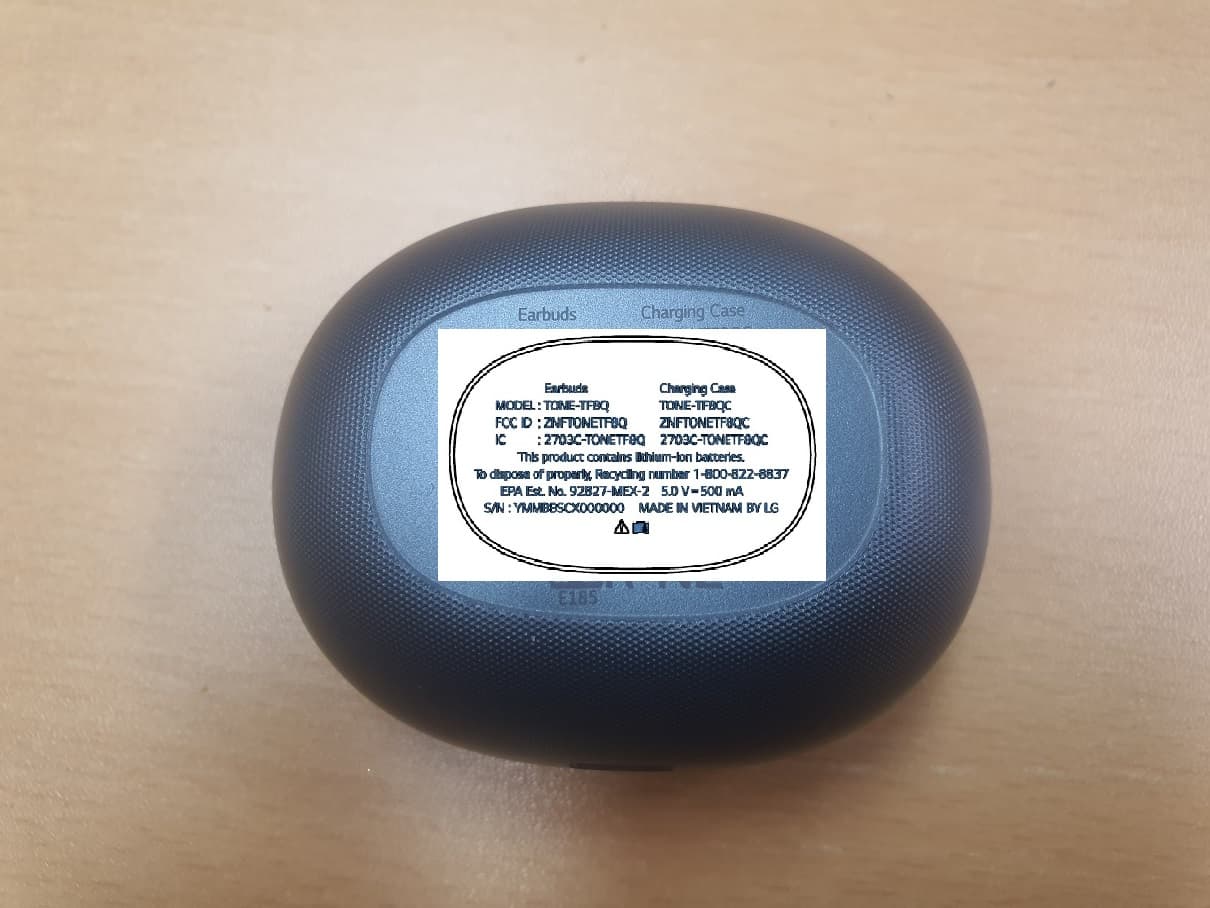
ZNFTONETF8QC
Jun 21, 2022Bluetooth Earbud (Cradle)
Equipment Class
JBP - Part 15 Class B Computing Device Peripheral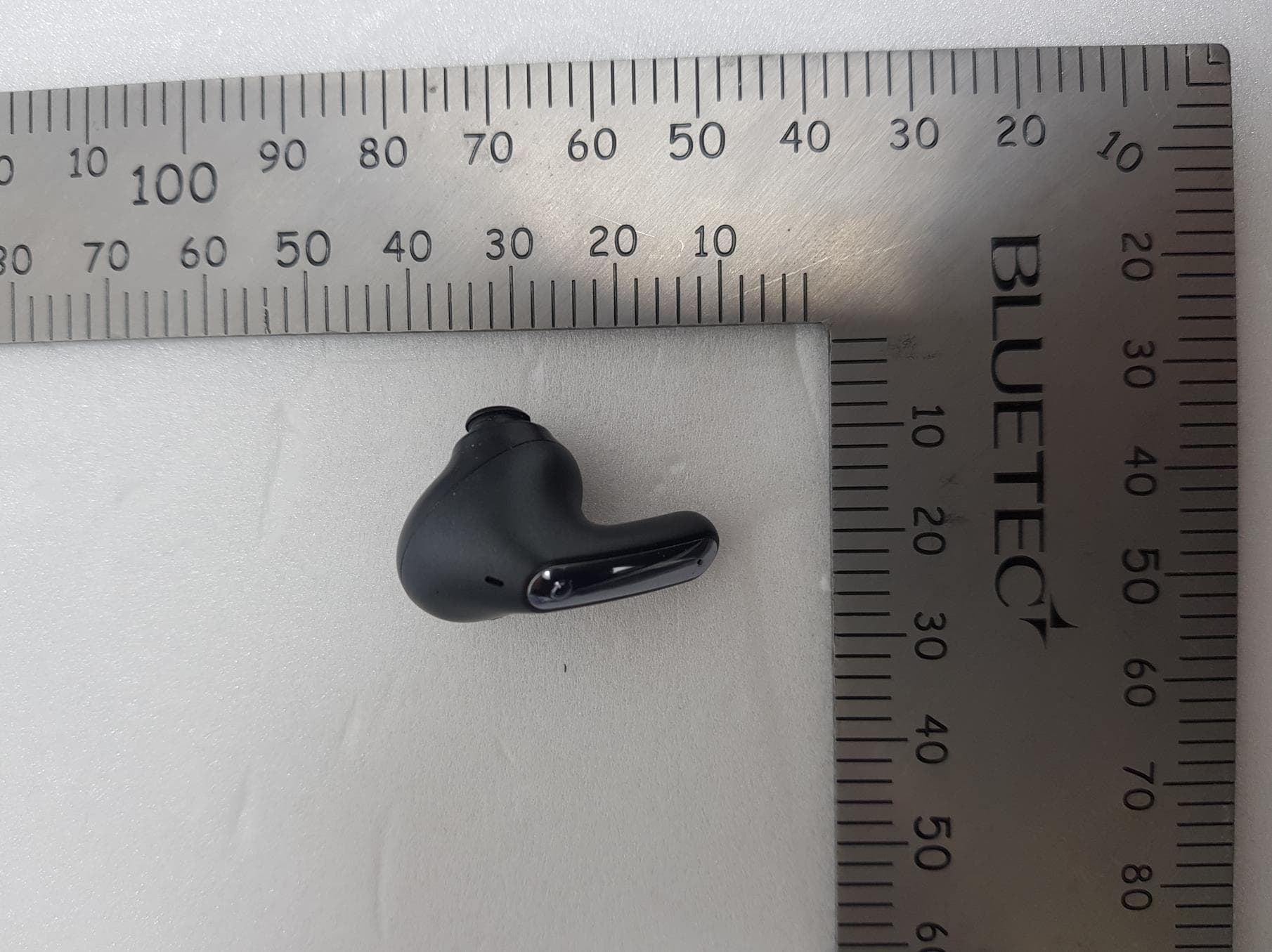
ZNFTONEFP8
May 30, 2021Bluetooth Earbud
Equipment Class
DTS - Digital Transmission System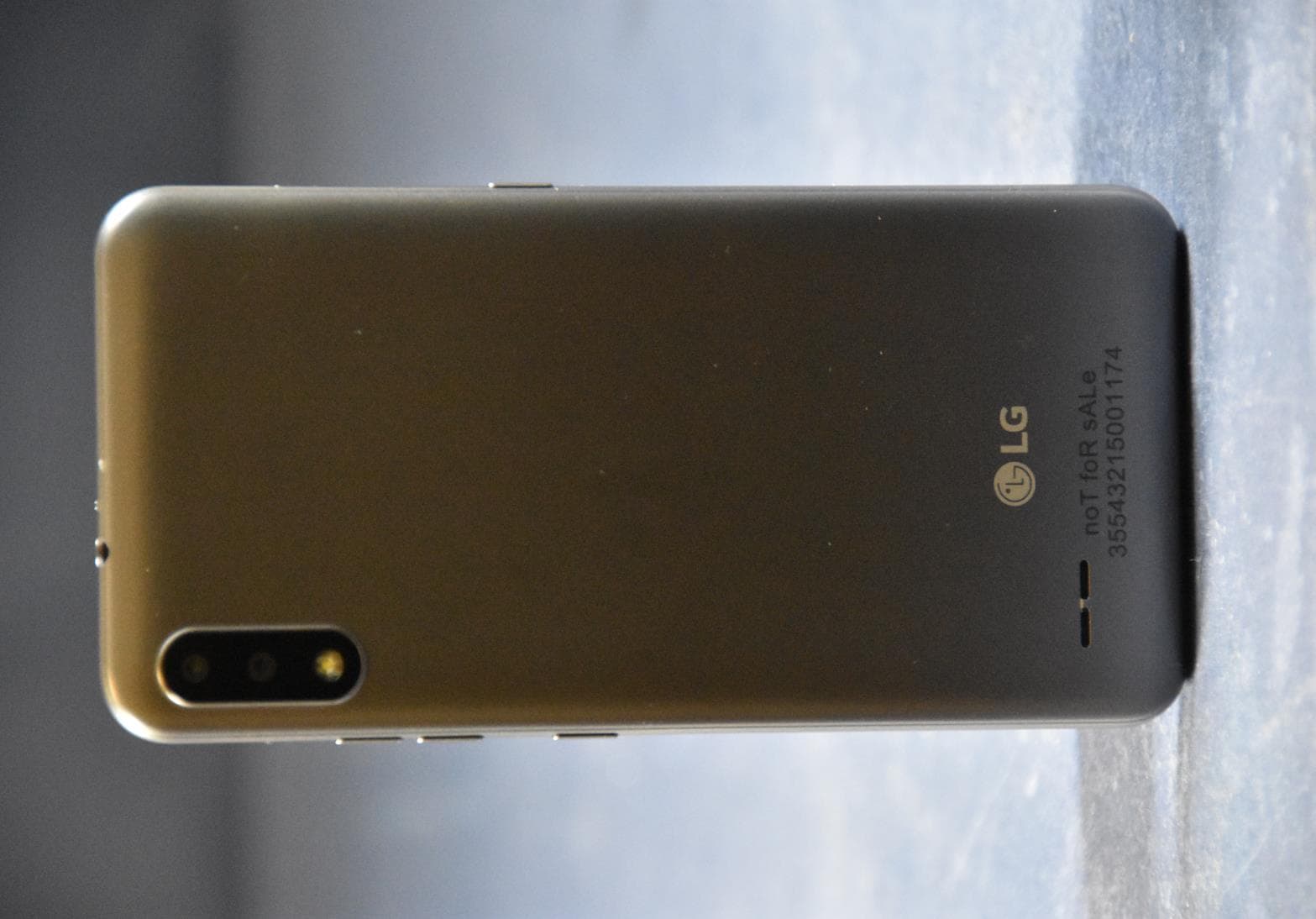
ZNFK200AM
Feb 18, 2021Portable Handset
Equipment Class
DSS - Part 15 Spread Spectrum Transmitter
ZNFK735MM
Feb 10, 2021Portable Handset
Equipment Class
NII - Unlicensed National Information Infrastructure TX