ZNFH791GSM/WCDMA/LTE PHONE + BLUETOOTH, DTS/UNII a/b/g/n/ac and NFC
LG Electronics USA, Inc.Application Details
- Equipment Class
- NII - Unlicensed National Information Infrastructure TX
- Date of Grant
- Sep 24, 2015
- Application Purpose
- Original Equipment
- Date of Application
- Sep 23, 2015
- Equipment Note
- GSM/WCDMA/LTE PHONE + BLUETOOTH, DTS/UNII a/b/g/n/ac and NFC
- Frequency Range
- 5745.00000000 - 5825.00000000
- Company
- LG Electronics USA, Inc.
- Country
- United States
Documents & Files
Document Text
Text extracted from the exhibit documents filed with the FCC. Open a document above to read the original.
Users Manual
Safety + Warranty Seguridad + Garantía Sécurité + Garantie English / Español / Français MBM65257401 (1.0) Printed in Korea Contents Contenido Sommaire 1.0 English 1.1 Safety information 3 1.2 Declarations of conformity 12 1.3 Regulatory marks and warnings 13 1.4 Limited warranty statement 15 2.0 Español 2.1 Información de seguridad 23 2.2 Declaraciones de conformidad 33 2.3 Marcas regulatorias y advertencias 34 2.4 Declaración de garantía limitada 36 2.5 Certificado de garantía limitada (Puerto Rico) 44 3.0 Français 3.1 Informations de sécurité 49 3.2 Attestations de conformité 59 3.3 Marquages et avertissements réglementaires 61 3.4 Déclaration de garantie limitée 63 1 Safety + Warranty ENGLISH 3 1.1 Safety information Before turning on your phone, review the basic safety information provided here. For online help and support, visit support.google.com/ nexus. General safety & handling While using your phone, be aware of the following common-sense guidelines. Your environment • Safe operating temperatures. Do not use or store in ambient temperatures lower than –20°C (–4°F) or higher than 50°C (122°F). • In automobiles. Do not leave your phone or set up the hands-free kit near the air bag. If wireless equipment is improperly installed and the air bag is deployed, you may be seriously injured. • When children are present. The SIM card ejection tool and the SIM card tray included with Nexus are very small objects that represent a choking hazard. Keep them out of reach of small children. • Around explosives. Do not use in areas where sparks from the phone might cause a fire or explosion. • On airplanes. Observe all rules and instructions for use of electronic devices. Most airlines allow electronic use only between and not during takeoffs and landings. There are three main types of airport security devices: X-ray machines (used on items placed on conveyor belts), magnetic detectors (used on people walking through security checks), and magnetic wands (hand-held devices used on people or individual items). You can send your Nexus through airport X-ray machines. But do not send it 4 1.1 Safety information through airport magnetic detectors or expose it to magnetic wands. Emergency call limitations • You can use your phone for an emergency call only if it is turned on and you are located within your carrier’s service area. Safety tips To avoid damaging your phone and reduce the risk of fire or electric shock, explosion, or other hazards, observe these common-sense precautions: • Use only with cables, chargers, and other accessories approved by LG. • Do not drop, strike, or shake your phone. • Do not damage the power cord by bending, twisting, pulling, heating, or placing heavy items on it. • Do not attempt to repair or modify or remanufacture the phone . It is equipped with an internal rechargeable battery, which should be replaced only by LG or an authorized LG repair center. • Do not open, disassemble, crush, bend or deform, puncture, or shred the phone. • Do not modify or remanufacture, attempt to insert foreign objects into the battery, immerse or expose to water or other liquids, expose to fire, explosion or other hazard. Such conditions may present the risk of fire or explosion. • Only use the battery for the system for which it’s specified. • Only use the battery with a charging system that has been approved and qualified with the system per IEEE1725. Use of an unqualified and non-approved battery or charger may present a risk of fire, explosion, leakage, or other hazard. • Do not short circuit the battery or allow metallic 5 conductive objects to contact battery terminals. • Replace the battery only with another battery that has been approved and qualified with the system per this standard, IEEE1725. Use of an unqualified and non-approved battery may present a risk of fire, explosion, leakage, or other hazard. Only authorized service providers shall replace battery (If the battery is non-user replaceable) • Battery usage by children should be supervised. • Avoid dropping the phone or battery. If the phone or battery is dropped, especially on a hard surface, and the user suspects damage, take it to a service center for inspection. • Improper battery use may result in a fire, explosion, or other hazard. • Do not insert foreign objects into the phone. • Do not place the phone in a microwave oven. • Do not expose the phone to fire, explosion, or other hazards. • Clean with a soft, damp cloth. Don’t use harsh chemicals (such as alcohol, benzene, or thinners) or detergents to clean your phone. • Do not handle the phone with wet hands or immerse or expose to water or other liquids. • Dispose of your phone and battery separately from household waste and in accordance with local regulations. • Like many electronic devices, your phone generates heat during normal operation. Extremely prolonged, direct skin contact in the absence of adequate ventilation may result in discomfort or minor burns. Therefore, use care when handling your phone during or immediately after operation. Battery warnings • To reduce the risk of electric shock or damage to the equipment, plug the charger into an AC outlet that is easily accessible at all times. • Do not attempt to remove or replace the battery 6 1.1 Safety information yourself. Only a service provider authorized by LG should replace the battery, which must meet the standard IEEE 1725. • Use only with a charging system that has been qualified per CTIA Certification Requirements for Battery System Compliance to IEEE 1725. Use of an unqualified battery may present a risk of fire, explosion, leakage, or other hazard. • The charger and adapter are intended for indoor use only. • Make sure that no sharp-edged items, such as an animal’s teeth or nails, come into contact with the battery. • Do not expose the battery charger or adapter to direct sunlight or use it in places with high humidity, such as a bathroom. • Do not place or answer calls while charging the phone. …
Text truncated - open the document above for the full version.
Users Manual
support.google.com/nexus ? 1 2 1, 2, 3... NFC BullheadQSG1:1 / millimeter Bernardo NúñezN/AN/A 2015 Aug 14 V4 PROJECT CONFIDENTIAL DOCUMENT DATE SCALE/unit AUTHOR(S)APPROVED BY REVISION ASSOCIATED CAD FILE 157.4 Cut Print pantone 311c Fold “Angler” Angler QSG 0000-00000-00 195574_H2_0000-00000-00_AnglerP_QSG.ai Adobe Illustrator CC 2014 08.18.15 JW 2015-05-13 Angler folder.pdf 139.5 mm x 157.4mm Pantone 311 U Pantone 424 C Pantone 420 U 250g Belle recycled paper Overall Aqueous Varnish (Back) MBM65397501 (1.0) Printed in Korea (H) support.google.com/nexus ? 1 2 1, 2, 3... NFC BullheadQSG1:1 / millimeter Bernardo NúñezN/AN/A 2015 Aug 14 V4 PROJECT CONFIDENTIAL DOCUMENT DATE SCALE/unit AUTHOR(S)APPROVED BY REVISION ASSOCIATED CAD FILE 157.4 Cut Print pantone 311c Fold “Angler” Angler QSG 0000-00000-00 195574_H2_0000-00000-00_AnglerP_QSG.ai Adobe Illustrator CC 2014 08.18.15 JW 2015-05-13 Angler folder.pdf 139.5 mm x 157.4mm Pantone 311 U Pantone 424 C Pantone 420 U 250g Belle recycled paper Overall Aqueous Varnish (Back)
Cover Letter(s)
Date : January 9, 2015 UL Verification Services Inc. Certification Division 47173 Benicia Street Fremont, CA 94538, USA To whom it may concern: I, the undersigned, hereby authorize UL Verification Services Inc. to act on our behalf in all manners relating to application for equipment authorization, including signing of all documents relating to these matters. Any and all acts carried out by UL Verification Services Inc. on our behalf shall have the same effect as acts of our own. In authorizing UL Verification Services Inc as our agent, we still recognize that we are responsible to: a) comply with the relevant provisions of the certification program; b) make all necessary arrangements for the conduct of the evaluation, including provision for examining documentation and access to all areas, records (including internal audit reports) and personnel for the purposes of evaluation (e.g. testing, inspection, assessment, surveillance, reassessment) and resolution of complaints; c) make claims regarding certification only in respect of the scope for which certification has been granted; d) do not use our product certification in such a manner as to bring the Certification Division into disrepute and not make any statement regarding our product certification which the Certification Division may consider misleading or unauthorized; e) upon suspension or cancellation of certification, discontinue use of all advertising matter that contains any reference thereto and return any certification documents as required by the Certification Division; f) use certification only to indicate the products are certified as being in conformity with specified standards; LG Electronics MobileComm U.S.A 1000 Sylvan Avenue Englewood Cliffs, NJ 07632 g) endeavor to ensure that no certificate or report nor any part thereof is used in a misleading manner; h) ensure that any reference to our product certification in communication media such as documents, brochures or advertising, complies with the requirements of the Certification Division; i) keep a record of all complaints made known to the us relating to the product’s compliance with requirements of the relevant standard and to make these records available to the Certification Division when requested; j) take appropriate action with respect to such complaints and any deficiencies found in products or services that affect compliance with the requirements for certification; k) document the actions taken. This authorization is valid until further written notice from the applicant. Sincerely Yours, Signature Jongchul Lee Director, NA Regulatory & Environmental Affairs. LG Electronics USA, Inc.
Cover Letter(s)
Date: AUG 31, 2015 Federal Communications Commission Authorization and Evaluation Division 7435 Oakland Mills Road, Columbia, MD 21046 RE: Request of Confidentiality for FCC ID: ZNFH791 Equipment Class: NII-Unlicensed National Information Infrastructure TX To Whom It May Concern: Pursuant to Sections 0.457 and 0.459 of the Commission’s Rules (CFR 47), and Section 552 (b) (4) of the Freedom of Information Act, LG Electronics MobileComm USA hereby requests confidentiality and treatment of certain information accompanying this application. The materials contain trade secrets and proprietary information not customarily released to the public. The public disclosure of these matters might be harmful to the Applicant and provide unjustified benefits to its competitors. We are also hereby request Short-Term Confidentiality for 180 days after the grant as outlined in Public Notice DA 04-1705. This provision will give LG Electronics MobileComm USA temporary confidentiality of commercially sensitive information prior to product release. The requested Permanent and Temporary Confidential exhibits are listed as follows: The Applicant understands that pursuant to Rule 0.457, disclosure of this application and all accompanying documentations, where applicable, will not be made public before the date of the Grant for this application. Sincerely, LG Electronics MobileComm U.S.A 1000 Sylvan Avenue Englewood Cliffs, NJ 07632 PERMANENT AND SHORT-TERM CONFIDENTIAL LIST Exhibit Description PERMANENT 1 Block Diagram 2 Operational Descriptions 3 Schematics SHORT-TERM 1 External Photos 2 Internal Photos 3 Test-Setup Photos 4 User’s Manual
ID Label/Location Info
[Step 1][Step 2]FCC ID Setting menu Step 1Select About phone Step 2Select Regulatory information Description of E-label on the ZNFH791 1. FCC ID is applied by E-label on device. Description of E-label on the ZNFH791 2. FCC ID is applied on packaging. 3. Instruction of E-label on the user manual
RF Exposure Info
NVLAP LAB CODE 200065-0 SAR EVALUATION REPORT FCC 47 CFR § 2.1093 IEEE Std 1528-2013 For GSM/WCDMA/LTE PHONE + BLUETOOTH, DTS/UNII a/b/g/n/ac & NFC FCC ID: ZNFH791 Model Name: LG-H791, LGH791, H791 Report Number: 15I21237-S1V1 Issue Date: 9/14/2015 Prepared for LG ELECTRONICS MOBILECOMM USA, INC. 1000 SYLVAN AVENUE ENGLEWOOD CLIFFS, NEW JERSEY 07632, UNITED STATES of AMERICA Prepared by UL VERIFICATION SERVICES INC. 47173 BENICIA STREET FREMONT, CA 94538, U.S.A. TEL: (510) 771-1000 FAX: (510) 661-0888 Report No.: 15I21237-S1V1 Issue Date: 9/14/2015 Page 2 of 74 UL Verification Services Inc. Doc. No.: 1.0 This report shall not be reproduced without the written approval of UL Verification Services Inc. Revision History Rev. Date Revisions Revised By V1 9/14/2015 Initial Issue -- Report No.: 15I21237-S1V1 Issue Date: 9/14/2015 Page 3 of 74 UL Verification Services Inc. Doc. No.: 1.0 This report shall not be reproduced without the written approval of UL Verification Services Inc. Table of Contents 1. Attestation of Test Results ......................................................................................................... 5 2. Test Specification, Methods and Procedures ............................................................................ 6 3. Facilities and Accreditation ........................................................................................................ 6 4. SAR Measurement System & Test Equipment .......................................................................... 7 4.1. SAR Measurement System ........................................................................................................ 7 4.2. SAR Scan Procedures ............................................................................................................... 8 4.3. Test Equipment ........................................................................................................................ 10 5. Measurement Uncertainty ......................................................................................................... 10 6. Device Under Test (DUT) Information ...................................................................................... 11 6.1. DUT Description ...................................................................................................................... 11 6.2. Wireless Technologies ............................................................................................................. 12 6.3. Nominal and Maximum Output Power ...................................................................................... 13 6.4. General LTE SAR Test and Reporting Considerations ............................................................. 15 6.5. LTE (TDD) Considerations ....................................................................................................... 17 7. RF Exposure Conditions (Test Configurations) ...................................................................... 18 8. Dielectric Property Measurements & System Check .............................................................. 19 8.1. Dielectric Property Measurements ........................................................................................... 19 8.2. System Check.......................................................................................................................... 24 9. Conducted Output Power Measurements ................................................................................ 27 9.1. GSM ........................................................................................................................................ 27 9.2. W-CDMA ................................................................................................................................. 29 9.3. LTE .......................................................................................................................................... 35 9.4. Wi-Fi 2.4GHz (DTS Band) ....................................................................................................... 49 9.5. Wi-Fi 5GHz (U-NII Bands)........................................................................................................ 50 9.6. Bluetooth ................................................................................................................................. 51 10. Measured and Reported (Scaled) SAR Results ....................................................................... 52 10.1. GSM850 ............................................................................................................................... 54 10.2. GSM1900 ............................................................................................................................. 54 10.4. W-CDMA Band II .................................................................................................................. 55 10.5. W-CDMA Band IV ................................................................................................................ 55 10.6. W-CDMA Band V ................................................................................................................. 55 10.7. LTE Band 2 (20MHz Bandwidth) .......................................................................................... 56 10.8. LTE Band 4 (20MHz Bandwidth) .......................................................................................... 57 Report No.: 15I21237-S1V1 Issue Date: 9/14/2015 Page 4 of 74 UL Verification Services Inc. Doc. No.: 1.0 This report shall not be reproduced without the written approval of UL Verification Services Inc. 10.9. LTE Band 5 (10MHz Bandwidth) .......................................................................................... 58 10.10. LTE Band 7 (20MHz Bandwidth) .......................................................................................... 58 10.12. LTE Band 17 (10MHz Bandwidth) ..................................…
Text truncated - open the document above for the full version.
RF Exposure Info
Plot No. 1 Test Laboratory: UL Verification Services Inc., SAR Lab 1 Date/Time: 7/8/2015 9:20:22 PM 20150708 SystemPerformanceCheck-D2600V2 SN 1036 Frequency: 2600 MHz; Duty Cycle: 1:1; Room Ambient Temperature: 24.0C; Liquid Temperature: 23.0C Medium parameters used: f = 2600 MHz; σ = 2.026 S/m; ε r = 38.643; ρ = 1000 kg/m 3 DASY5 Configuration: - Area Scan Setting: Find Secondary Maximum Within: 2.0 dB and with a peak SAR value greater than 0.0012W/kg - Electronics: DAE4 Sn1352; Calibrated: 11/7/2014 - Probe: EX3DV4 - SN3929; ConvF(6.68, 6.68, 6.68); Calibrated: 4/22/2015; - Sensor-Surface: 2.5mm (Mechanical Surface Detection) - Phantom: SAM; Type: QD000P40CD; Serial: TP 1751 Head/Pin=100 mW/Area Scan (8x8x1): Measurement grid: dx=12mm, dy=12mm Maximum value of SAR (measured) = 7.43 W/kg Head/Pin=100 mW/Zoom Scan (7x7x7)/Cube 0: Measurement grid: dx=5mm, dy=5mm, dz=5mm Reference Value = 65.567 V/m; Power Drift = -0.08 dB Peak SAR (extrapolated) = 13.6 W/kg SAR(1 g) = 6.08 W/kg; SAR(10 g) = 2.66 W/kg Maximum value of SAR (measured) = 8.92 W/kg 0 dB = 8.92 W/kg = 9.50 dBW/kg Plot No. 2 Test Laboratory: UL Verification Services Inc., SAR Lab 1 Date/Time: 7/8/2015 9:40:35 PM 20150708 SystemPerformanceCheck-D2600V2 SN 1036 Frequency: 2600 MHz; Duty Cycle: 1:1 Head/Pin=100 mW/Z Scan (1x1x21): Measurement grid: dx=20mm, dy=20mm, dz=5mm Maximum value of SAR (measured) = 8.54 W/kg Plot No. 3 Test Laboratory: UL Verification Services Inc., SAR Lab 1 Date/Time: 7/8/2015 10:00:26 PM 20150708 SystemPerformanceCheck-D2450V2 SN 706 Frequency: 2450 MHz; Duty Cycle: 1:1; Room Ambient Temperature: 24.0C; Liquid Temperature: 23.0C Medium parameters used: f = 2450 MHz; σ = 1.856 S/m; ε r = 39.141; ρ = 1000 kg/m 3 DASY5 Configuration: - Area Scan Setting: Find Secondary Maximum Within: 2.0 dB and with a peak SAR value greater than 0.0012W/kg - Electronics: DAE4 Sn1352; Calibrated: 11/7/2014 - Probe: EX3DV4 - SN3929; ConvF(6.86, 6.86, 6.86); Calibrated: 4/22/2015; - Sensor-Surface: 2.5mm (Mechanical Surface Detection) - Phantom: SAM; Type: QD000P40CD; Serial: TP 1751 Head/Pin=100 mW/Area Scan (8x8x1): Measurement grid: dx=12mm, dy=12mm Maximum value of SAR (measured) = 6.54 W/kg Head/Pin=100 mW/Zoom Scan (7x7x7)/Cube 0: Measurement grid: dx=5mm, dy=5mm, dz=5mm Reference Value = 64.287 V/m; Power Drift = -0.07 dB Peak SAR (extrapolated) = 11.7 W/kg SAR(1 g) = 5.46 W/kg; SAR(10 g) = 2.49 W/kg Maximum value of SAR (measured) = 7.84 W/kg 0 dB = 7.84 W/kg = 8.94 dBW/kg Plot No. 4 Test Laboratory: UL Verification Services Inc., SAR Lab 1 Date/Time: 7/8/2015 10:20:42 PM 20150708 SystemPerformanceCheck-D2450V2 SN 706 Frequency: 2450 MHz; Duty Cycle: 1:1 Head/Pin=100 mW/Z Scan (1x1x21): Measurement grid: dx=20mm, dy=20mm, dz=5mm Maximum value of SAR (measured) = 7.70 W/kg Plot No. 5 Test Laboratory: UL Verification Services Inc., SAR Lab 2 Date/Time: 7/10/2015 8:51:54 AM 20150710_SystemPerformanceCheck-D835V2 SN 4d142 Frequency: 835 MHz; Duty Cycle: 1:1; Room Ambient Temperature: 24.0C; Liquid Temperature: 23.0C Medium parameters used: f = 835 MHz; σ = 0.904 S/m; ε r = 42.487; ρ = 1000 kg/m 3 DASY5 Configuration: - Area Scan Setting: Find Secondary Maximum Within: 2.0 dB and with a peak SAR value greater than 0.0012W/kg - Electronics: DAE4 Sn1259; Calibrated: 1/14/2015 - Probe: EX3DV4 - SN3990; ConvF(9.7, 9.7, 9.7); Calibrated: 3/18/2015; - Sensor-Surface: 2.5mm (Mechanical Surface Detection) - Phantom: SAM with CRP; Type: SAM; Head/Pin=100 mW/Area Scan (7x7x1): Measurement grid: dx=15mm, dy=15mm Maximum value of SAR (measured) = 1.14 W/kg Head/Pin=100 mW/Zoom Scan (7x7x7)/Cube 0: Measurement grid: dx=5mm, dy=5mm, dz=5mm Reference Value = 32.313 V/m; Power Drift = -0.07 dB Peak SAR (extrapolated) = 1.40 W/kg SAR(1 g) = 0.938 W/kg; SAR(10 g) = 0.615 W/kg 0 dB = 1.14 W/kg = 0.57 dBW/kg Plot No. 6 Test Laboratory: UL Verification Services Inc., SAR Lab 2 Date/Time: 7/10/2015 9:12:47 AM 20150710_SystemPerformanceCheck-D835V2 SN 4d142 Frequency: 835 MHz; Duty Cycle: 1:1 Head/Pin=100 mW/Z Scan (1x1x21): Measurement grid: dx=20mm, dy=20mm, dz=5mm Maximum value of SAR (measured) = 1.12 W/kg Plot No. 7 Test Laboratory: UL Verification Services Inc., SAR Lab 2 Date/Time: 7/11/2015 2:23:53 PM 20150711_SystemPerformanceCheck-D1750V2 SN 1077 Frequency: 1750 MHz; Duty Cycle: 1:1; Room Ambient Temperature: 24.0C; Liquid Temperature: 23.0C Medium parameters used: f = 1750 MHz; σ = 1.48 S/m; ε r = 51.452; ρ = 1000 kg/m 3 DASY5 Configuration: - Area Scan Setting: Find Secondary Maximum Within: 2.0 dB and with a peak SAR value greater than 0.0012W/kg - Electronics: DAE4 Sn1259; Calibrated: 1/14/2015 - Probe: EX3DV4 - SN3990; ConvF(8.08, 8.08, 8.08); Calibrated: 3/18/2015; - Sensor-Surface: 2.5mm (Mechanical Surface Detection) - Phantom: ELI A v5.0; Type: QDOVA002AA; Serial: S/n:1198 Body/Pin=100 mW/Area Scan (7x7x1): Measurement grid: dx=15mm, dy=15mm Maximum value of SAR (measured) = 5.07 W/kg Body/Pin=100 mW/Zoom Scan (7x7x7)/Cube 0: Measurement grid: dx=5mm, dy=5mm, dz=5mm Reference Value = 57.226 V/m; Power Drift = 0.00 dB Peak SAR (extrapolated) = 6.94 W/kg SAR(1 g) = 3.93 W/kg; SAR(10 g) = 2.11 W/kg Maximum value of SAR (measured) = 5.24 W/kg 0 dB = 5.24 W/kg = 7.19 dBW/kg Plot No. 8 Test Laboratory: UL Verification Services Inc., SAR Lab 2 Date/Time: 7/11/2015 2:44:59 PM 20150711_SystemPerformanceCheck-D1750V2 SN 1077 Frequency: 1750 MHz; Duty Cycle: 1:1 Body/Pin=100 mW/Z Scan (1x1x21): Measurement grid: dx=20mm, dy=20mm, dz=5mm Maximum value of SAR (measured) = 5.09 W/kg Plot No. 9 Test Laboratory: UL Verification Services Inc., SAR Lab 3 Date/Time: 7/10/2015 12:33:54 AM 20150710_SystemPerformanceCheck-D1900V2 SN 5d163 Frequency: 1900 MHz; Duty Cycle: 1:1; Room Ambient Temperature: 24.0C; Liquid Temperature: 23.0C Medium parameters used: f = 1900 MHz; σ = 1.532 S/m; ε r = 51.113; ρ = 1000 kg/m 3 DASY5 Configuration: - Area Scan Setting: Find Secondary Maximum Within: 2.0 dB and with a peak SAR value greater than 0.00…
Text truncated - open the document above for the full version.
RF Exposure Info
Plot No. 1 Test Laboratory: UL Verification Services Inc., SAR Lab 2 Date/Time: 7/10/2015 6:41:44 PM GSM 850 Frequency: 836.6 MHz; Duty Cycle: 1:8.00018; Room Ambient Temperature: 24.0C; Liquid Temperature: 23.0C Medium parameters used (interpolated): f = 836.6 MHz; σ = 0.906 S/m; ε r = 42.483; ρ = 1000 kg/m 3 DASY5 Configuration: - Area Scan Setting: Find Secondary Maximum Within: 2.0 dB and with a peak SAR value greater than 0.0012W/kg - Electronics: DAE4 Sn1259; Calibrated: 1/14/2015 - Probe: EX3DV4 - SN3990; ConvF(9.7, 9.7, 9.7); Calibrated: 3/18/2015; - Sensor-Surface: 2.5mm (Mechanical Surface Detection) - Phantom: SAM with CRP; Type: SAM; LHS/Touch_GSM Voice_ch 190/Area Scan (7x13x1): Measurement grid: dx=15mm, dy=15mm Info: Interpolated medium parameters used for SAR evaluation. Maximum value of SAR (measured) = 0.473 W/kg LHS/Touch_GSM Voice_ch 190/Zoom Scan (5x5x7)/Cube 0: Measurement grid: dx=8mm, dy=8mm, dz=5mm Reference Value = 22.975 V/m; Power Drift = -0.02 dB Peak SAR (extrapolated) = 0.531 W/kg SAR(1 g) = 0.449 W/kg; SAR(10 g) = 0.357 W/kg Info: Interpolated medium parameters used for SAR evaluation. Maximum value of SAR (measured) = 0.488 W/kg 0 dB = 0.488 W/kg = -3.12 dBW/kg Plot No. 2 Test Laboratory: UL Verification Services Inc., SAR Lab 2 Date/Time: 7/10/2015 3:51:29 PM GSM 850 Frequency: 836.6 MHz; Duty Cycle: 1:1.99986; Room Ambient Temperature: 24.0C; Liquid Temperature: 23.0C Medium parameters used (interpolated): f = 836.6 MHz; σ = 0.906 S/m; ε r = 42.483; ρ = 1000 kg/m 3 DASY5 Configuration: - Area Scan Setting: Find Secondary Maximum Within: 2.0 dB and with a peak SAR value greater than 0.0012W/kg - Electronics: DAE4 Sn1259; Calibrated: 1/14/2015 - Probe: EX3DV4 - SN3990; ConvF(9.7, 9.7, 9.7); Calibrated: 3/18/2015; - Sensor-Surface: 2.5mm (Mechanical Surface Detection) - Phantom: SAM with CRP; Type: SAM; LHS/Touch_GPRS 4 slots_ch 190/Area Scan (7x13x1): Measurement grid: dx=15mm, dy=15mm Info: Interpolated medium parameters used for SAR evaluation. Maximum value of SAR (measured) = 0.676 W/kg LHS/Touch_GPRS 4 slots_ch 190/Zoom Scan (6x6x7)/Cube 0: Measurement grid: dx=8mm, dy=8mm, dz=5mm Reference Value = 27.116 V/m; Power Drift = -0.03 dB Peak SAR (extrapolated) = 0.766 W/kg SAR(1 g) = 0.621 W/kg; SAR(10 g) = 0.477 W/kg Info: Interpolated medium parameters used for SAR evaluation. Maximum value of SAR (measured) = 0.690 W/kg 0 dB = 0.690 W/kg = -1.61 dBW/kg Plot No. 3 Test Laboratory: UL Verification Services Inc., SAR Lab 2 Date/Time: 7/10/2015 11:55:37 AM GSM 850 Frequency: 836.6 MHz; Duty Cycle: 1:8.00018; Room Ambient Temperature: 24.0C; Liquid Temperature: 23.0C Medium parameters used (interpolated): f = 836.6 MHz; σ = 1.004 S/m; ε r = 54.302; ρ = 1000 kg/m 3 DASY5 Configuration: - Area Scan Setting: Find Secondary Maximum Within: 2.0 dB and with a peak SAR value greater than 0.0012W/kg - Electronics: DAE4 Sn1259; Calibrated: 1/14/2015 - Probe: EX3DV4 - SN3990; ConvF(9.97, 9.97, 9.97); Calibrated: 3/18/2015; - Sensor-Surface: 2.5mm (Mechanical Surface Detection) - Phantom: ELI B v4.0; Type: QDOVA002AA; Serial: 1196 Rear/GSM Voice_ch 190/Area Scan (8x13x1): Measurement grid: dx=15mm, dy=15mm Info: Interpolated medium parameters used for SAR evaluation. Maximum value of SAR (measured) = 0.506 W/kg Rear/GSM Voice_ch 190/Zoom Scan (5x5x7)/Cube 0: Measurement grid: dx=8mm, dy=8mm, dz=5mm Reference Value = 22.604 V/m; Power Drift = -0.06 dB Peak SAR (extrapolated) = 0.576 W/kg SAR(1 g) = 0.449 W/kg; SAR(10 g) = 0.341 W/kg Info: Interpolated medium parameters used for SAR evaluation. Maximum value of SAR (measured) = 0.504 W/kg 0 dB = 0.504 W/kg = -2.98 dBW/kg Plot No. 4 Test Laboratory: UL Verification Services Inc., SAR Lab 2 Date/Time: 7/10/2015 1:28:44 PM GSM 850 Frequency: 836.6 MHz; Duty Cycle: 1:1.99986; Room Ambient Temperature: 24.0C; Liquid Temperature: 23.0C Medium parameters used (interpolated): f = 836.6 MHz; σ = 1.004 S/m; ε r = 54.302; ρ = 1000 kg/m 3 DASY5 Configuration: - Area Scan Setting: Find Secondary Maximum Within: 2.0 dB and with a peak SAR value greater than 0.0012W/kg - Electronics: DAE4 Sn1259; Calibrated: 1/14/2015 - Probe: EX3DV4 - SN3990; ConvF(9.97, 9.97, 9.97); Calibrated: 3/18/2015; - Sensor-Surface: 2.5mm (Mechanical Surface Detection) - Phantom: ELI B v4.0; Type: QDOVA002AA; Serial: 1196 Rear/GPRS 4 slots_ch 190/Area Scan (8x13x1): Measurement grid: dx=15mm, dy=15mm Info: Interpolated medium parameters used for SAR evaluation. Maximum value of SAR (measured) = 0.702 W/kg Rear/GPRS 4 slots_ch 190/Zoom Scan (5x5x7)/Cube 0: Measurement grid: dx=8mm, dy=8mm, dz=5mm Reference Value = 26.666 V/m; Power Drift = 0.04 dB Peak SAR (extrapolated) = 0.801 W/kg SAR(1 g) = 0.631 W/kg; SAR(10 g) = 0.484 W/kg Info: Interpolated medium parameters used for SAR evaluation. Maximum value of SAR (measured) = 0.711 W/kg Rear/GPRS 4 slots_ch 190/Zoom Scan 2 (5x5x7)/Cube 0: Measurement grid: dx=8mm, dy=8mm, dz=5mm Reference Value = 26.666 V/m; Power Drift = 0.04 dB Peak SAR (extrapolated) = 0.779 W/kg SAR(1 g) = 0.469 W/kg; SAR(10 g) = 0.286 W/kg Info: Interpolated medium parameters used for SAR evaluation. Maximum value of SAR (measured) = 0.584 W/kg 0 dB = 0.584 W/kg = -2.34 dBW/kg Plot No. 5 Test Laboratory: UL Verification Services Inc., SAR Lab 2 Date/Time: 7/10/2015 2:20:53 PM GSM 850 Frequency: 836.6 MHz; Duty Cycle: 1:1.99986; Room Ambient Temperature: 24.0C; Liquid Temperature: 23.0C Medium parameters used (interpolated): f = 836.6 MHz; σ = 1.004 S/m; ε r = 54.302; ρ = 1000 kg/m 3 DASY5 Configuration: - Area Scan Setting: Find Secondary Maximum Within: 2.0 dB and with a peak SAR value greater than 0.0012W/kg - Electronics: DAE4 Sn1259; Calibrated: 1/14/2015 - Probe: EX3DV4 - SN3990; ConvF(9.97, 9.97, 9.97); Calibrated: 3/18/2015; - Sensor-Surface: 2.5mm (Mechanical Surface Detection) - Phantom: ELI B v4.0; Type: QDOVA002AA; Serial: 1196 Edge 4/GPRS 4 slots_ch 190/Area Scan (7x13x1): Measurement grid: dx=15mm, dy=15mm Info: Inter…
Text truncated - open the document above for the full version.
RF Exposure Info
Head Tissue Simulating Liquids Head Tissue Parameters according to IEEE Std 1528-2013 / IEC 62209 / FCC KDB 865664 D01 Narrow- Band Solutions (±5% tolerance) Product HSL300V2 HSL450V2 HSL750V2 HSL900V2 HSL1450V2 HSL1750V2 HSL1800V2 HSL1900V2 HSL1950V2 HSL2450V2 Test Frequency (MHz) 300 450 750 835, 900 1450, 1500, 1640 1750 1800, 1900 1900 1950, 2000 2450, 2600 Main Ingre…
Text truncated - open the document above for the full version.
Contact Information
Applicant
David Kim(Team leader, LGEUS NA Policy & Regulatory Affairs)
Test Firm
UL Verification Services Inc. (formerly UL CCS)Jay Kogoma
Technical Specifications
| # | Rule Parts | Frequency Range | Power Output |
|---|---|---|---|
| 4 | 15E | 5.75 GHz - 5.83 GHz | 68.10 mW |
Other Applications from LG Electronics USA, Inc.
ZNFTONET80S
Nov 13, 2023Bluetooth Earbuds
Equipment Class
DTS - Digital Transmission System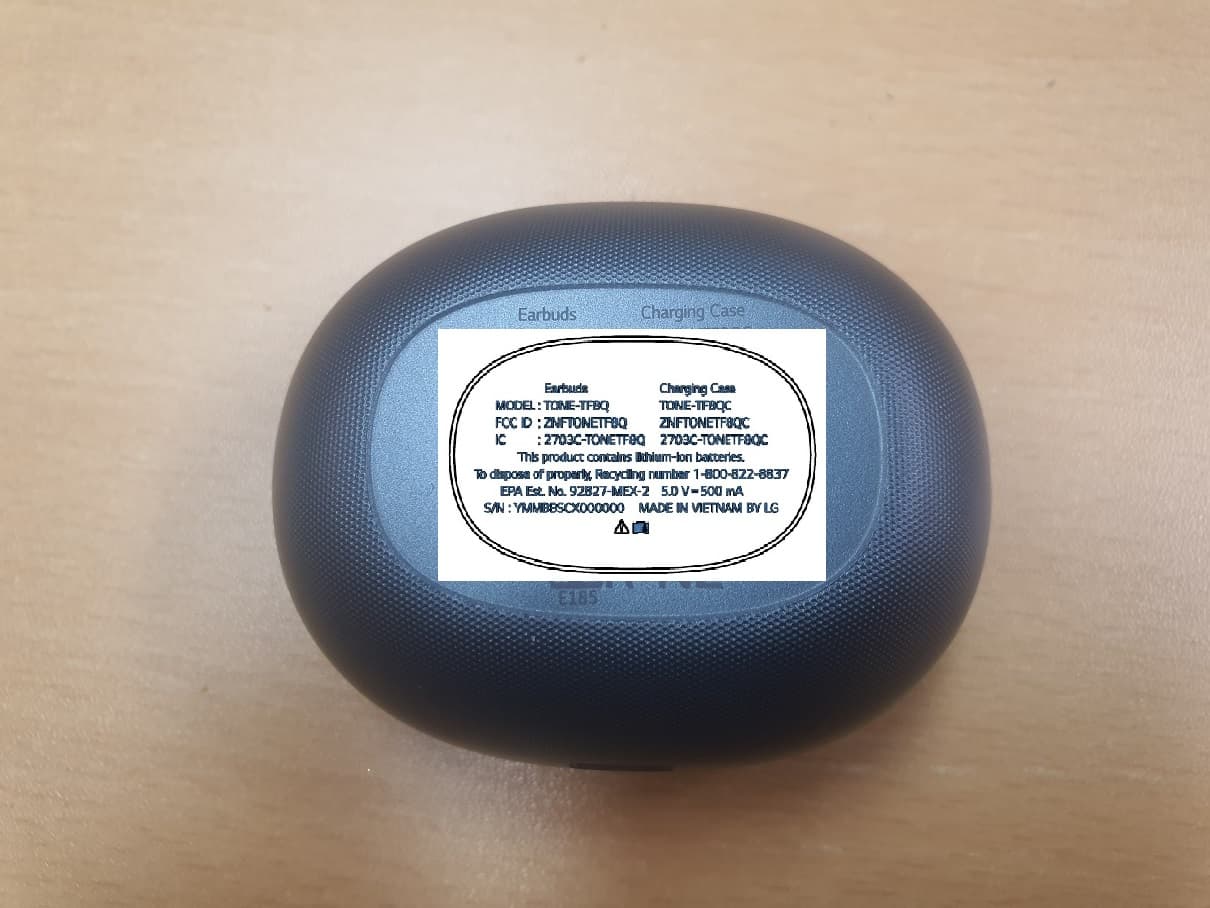
ZNFTONETF8QC
Jun 21, 2022Bluetooth Earbud (Cradle)
Equipment Class
JBP - Part 15 Class B Computing Device Peripheral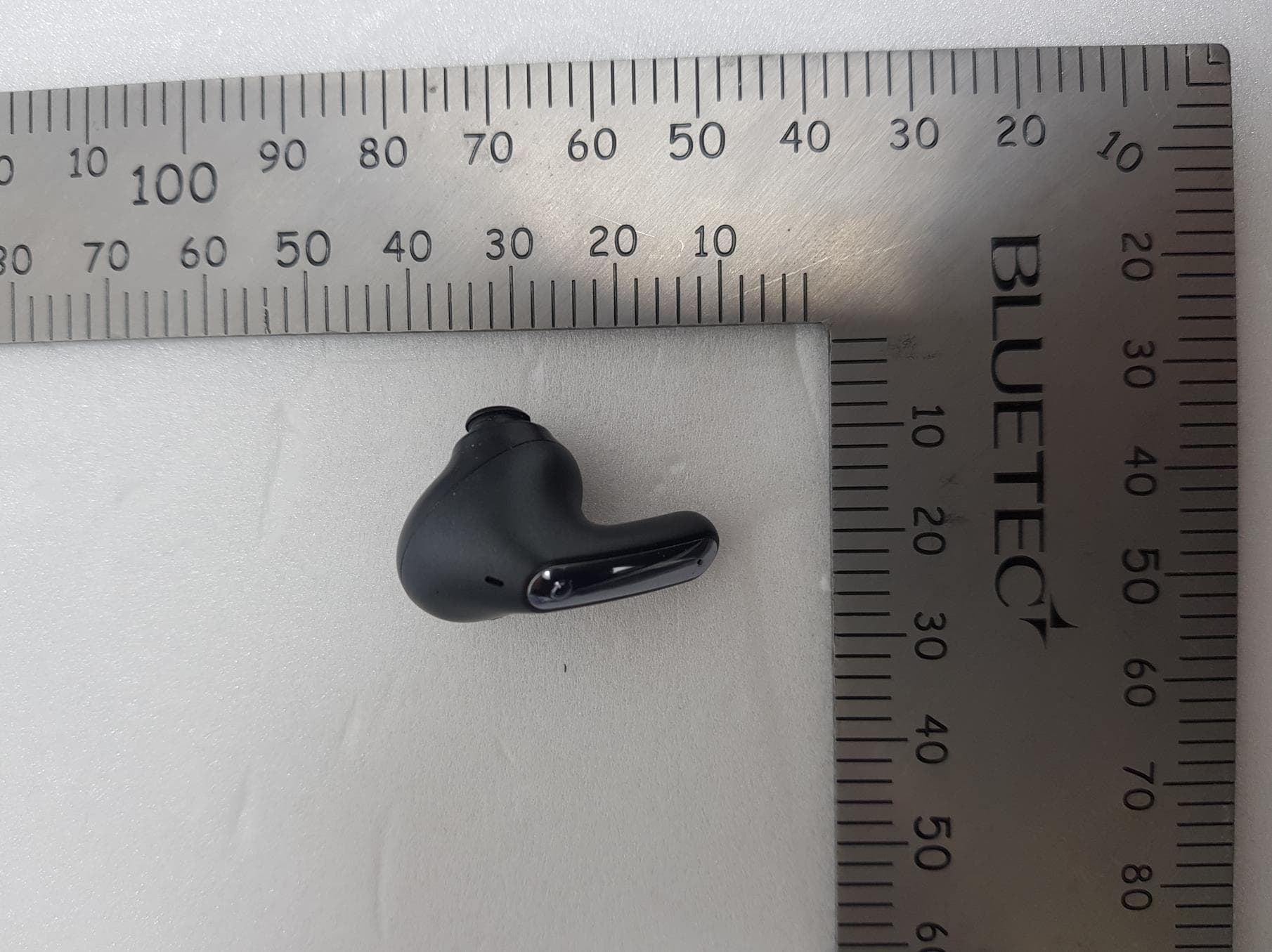
ZNFTONEFP8
May 30, 2021Bluetooth Earbud
Equipment Class
DTS - Digital Transmission System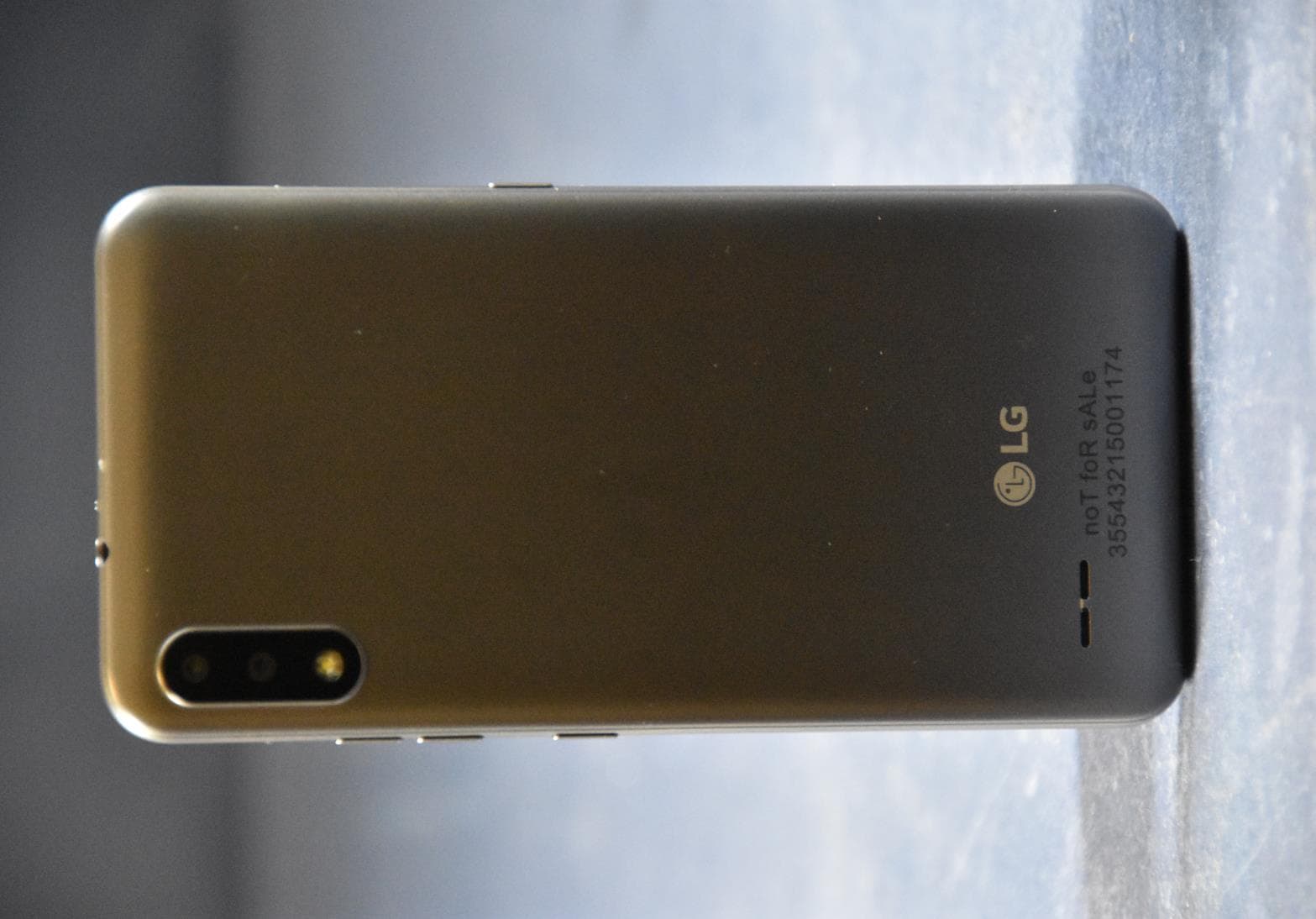
ZNFK200AM
Feb 18, 2021Portable Handset
Equipment Class
DSS - Part 15 Spread Spectrum Transmitter
ZNFK735MM
Feb 10, 2021Portable Handset
Equipment Class
NII - Unlicensed National Information Infrastructure TX