ZV9-KR-BT2026Bluetooth speaker
Shenzhen Kingree Electronic Co., Ltd.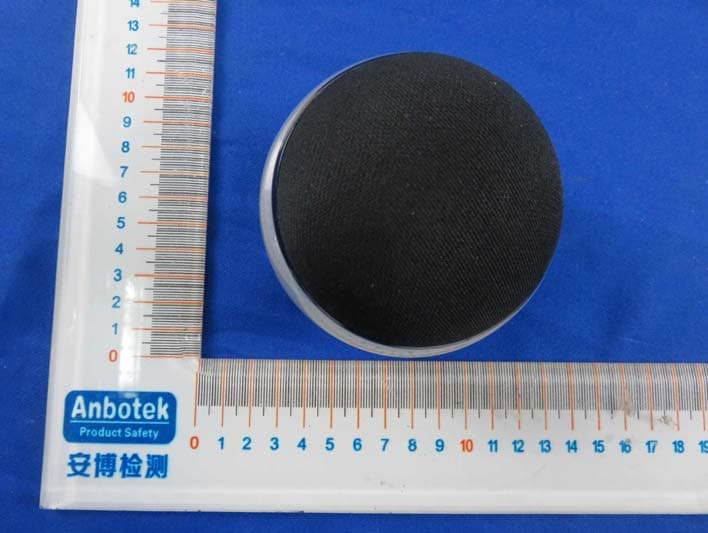
Click to zoom
Application Details
- Equipment Class
- DSS - Part 15 Spread Spectrum Transmitter
- Date of Grant
- Dec 15, 2015
- Application Purpose
- Original Equipment
- Date of Application
- Dec 14, 2015
- Equipment Note
- Bluetooth speaker
- Frequency Range
- 2402.00000000 - 2480.00000000
- Country
- China
Documents & Files
Document Text
Text extracted from the exhibit documents filed with the FCC. Open a document above to read the original.
Users Manual
WARNING Please read and follow all of the instructions & safety precautions detailed below prior to using this product. Failure to do so may result in serious personal injury and / or property damage. Safety Precautions Do not expose this product to heat sources (including open flame or direct sunlight) Do not expose this product to water or liquids. If liquid enters the product, immediately unplug the product from any connected power sources or devices. Do not disassemble or modify the product. Avoid dropping this product (or any other heavy impact which might damage the internal circuit). In the unlikely event of any abnormalities (such as strange odor, overheating, leaking, color change, etc.), discontinue use immediately. Avoid cleaning this product using liquids or chemical substances (use dry cloth only). Only use attachments/accessories specified by the manufacturer. Dispose of this item properly (do not dispose of it in trash receptacles and do not attempt to incinerate it). Do not leave this product unattended while it is in use or while it is being charged. This product is not a toy: KEEP AWAY FROM CHILDREN. Only re-charge this device using a USB port wall adapter (not included). Do not re-charge via USB port on a computer. When not being used for prolonged periods of time, please charge every 3 months to avoid damaging the battery. KR-BT2026 User Manual TheKR-BT2026is a high-quality Wireless V2.1+EDR stereo speaker. Its magnetic feature enables the user to listen to the device assembled as a sphere, or separated into two speakers (2 speaker units can be paired wirelessly together or enjoyed separately). Please see below product specifications & instructions. KR-BT2026 Specifications Battery Type: Grade A Non-Recycled Lithium Polymer Rechargeable Battery Capacity: 800 mAh Battery Duration/Lifespan: 500 times Power Input: 5V/0.5A Sound Output: 3W x 2 speakers Sensitivity: >70 dB Frequency Response: 100Hz - 20KHz Distortion Rate:<10% Range of Wireless Communication: 8-10M Charge Time (0-100%): Up to 4 hours Playback Time: Up to 5 hours Accessories: AUX audio cable & Micro USB charging cable Product Size: 3.5” in diameter Net Weight: 290g KR-BT2026 Product Map KR-BT2026 Operation 1. Separate speakers & switch BOTH units ON (BT) (a two tone prompt will notify that the speakers are successfully turned ON (BT) ) 2.KR-BT2026speaker units will automatically pair to each other within 5 seconds NOTE: theKR-BT2026default setting is stereo function (both speaker units paired to each other) Pairing an audio device to the KR-BT2026 (Stereo Function) 1. Once KR-BT2026 speakers units are turned ON (BT) and paired, search for the Bluetooth signalSpector KR-BT2026on your audio device & pair (an audio prompt will indicate successful pairing) Wireless button ON( BT )/OFF/AU 3.5mm AUX input 2. Speakers can be enjoyed magnetized together on the silicone stand, or separately on aflatsurface. NOTE Press button to refresh if theSpector KR-BT2026Bluetooth signal does not appear on your audio device Previously paired devices will automatically re-connect to theKR-BT2026speaker when both devices are turned on & within range Pairing ONE KR-BT2026 speaker unit to an audio device (Mono Function) 1. Turn ON ONE of the KR-BT2026 speaker units ONLY 2. Search for Bluetooth signalSpector KR-BT2026on your audio device & pair NOTE: repeat step 1-2 to pair the second speaker unit with a different audio device Wireless Mode (Mono or Stereo) 1. Volume control & skipping songs must be controlled directly on your audio device 2. Incoming calls must be answered directly on your audio device (KR-BT2026does NOT have an integrated microphone) NOTE: incoming phone calls will disrupt music play. To resume music mode, you must press the play button from your audio device. Connecting speaker (mono or stereo) by AUX mode 1. Plug in 3.5mm AUX audio cable into eachKR-BT2026speaker unit & into your audio device 2. Volume control & Skipping songs must be controlled directly on your audio device 3. Incoming calls must be answered directly on your audio device (KR-BT2026does NOT have an integrated microphone) To Re-charge the KR-BT2026 1. Insert AUX cables into eachKR-BT2026speaker unit & connect the USB output to a wall adapter (not included) 2. Charge time is approximately 4 hours from 0-100% NOTE: recharging will automatically stop once the battery is full FCC STATEMENT : This device complies with Part 15 of the FCC Rules. Operation is subject to the following two conditions: (1) This device may not cause harmful interference, and (2) This device must accept any interference received, including interference that may cause undesired operation. Warning: Changes or modifications not expressly approved by the party responsible for compliance could void the user's authority to operate the equipment. NOTE: This equipment has been tested and found to comply with the limits for a Class B digital device, pursuant to Part 15 of the FCC Rules. These limits are designed to provide reasonable protection against harmful interference in a residential installation. This equipment generates uses and can radiate radio frequency energy and, if not installed and used in accordance with the instructions, may cause harmful interference to radio communications. However, there is no guarantee that interference will not occur in a particular installation. If this equipment does cause harmful interference to radio or television reception, which can be determined by turning the equipment off and on, the user is encouraged to try to correct the interference by one or more of the following measures: Reorient or relocate the receiving antenna. Increase the separation between the equipment and receiver. Connect the equipment into an outlet on a circuit different from that to which the receiver is connected. Consult the dealer or an experienced radio/TV technician for help. RF warning statement: The device has been evaluated to meet …
Text truncated - open the document above for the full version.
Cover Letter(s)
SCS-F18: Project and Product Certification Representative Authorization Letter Page 1 of 2Rev 5.0 775 Montague Expressway Milpitas, CA 95035 Tel: 408-526-1188 Fax: 408-526-1088 Email: [email protected] Project and Product Certification Representative Authorization Letter Reason for Amendment (current / obsolete) Revision History Approved Date FromTo Initial Release (obsolete)1.01.0Nov-14-2006 Revised wording (obsolete)1.02.0Sept–25-2007 Updated company template (obsolete)2.03.0Jan-31-2012 Updated letter information (obsolete)3.04.0May-23-2014 Added FCC ID field (current)4.05.0Sept 16 2014 SCS-F18: Project and Product Certification Representative Authorization Letter Page 2 of 2Rev 5.0 (Shenzhen Kingree Electronic Co., Ltd.) (2015-12-10) To: SIEMIC, INC. 775 Montague Expressway, Milpitas, CA 95035 USA Dear Sir/Madam, Re: Product Certification Representative Authorization Letter We, _____Shenzhen Kingree Electronic Co., Ltd._____hereby authorize SIEMIC, Inc. to act as a Certification Body for certifying for the following project(s): Product description:Bluetooth Speaker Model name:KR-BT2026 FCC ID:ZV9-KR-BT2026 Sincerely, Client’s signature Tian Liang Huang / Electron Engineer Company Name: Shenzhen Kingree Electronic Co., Ltd. Address: 3-6F, 70 Building, Bohua Tech Park, Shangwei Industrial Area, Zhangkengjing, Guanlan Street, Shenzhen, China Email: [email protected]
Cover Letter(s)
SCS-F19: Confidentiality Request LetterPage 1 of 2 Rev 5.0 775 Montague Expressway Milpitas, CA 95035 Tel: 408-526-1188 Fax: 408-526-1088 Email: [email protected] Confidentiality Request Letter Reason for Amendment (current / obsolete) Revision History Approved Date FromTo Initial Release (obsolete)1.01.0Nov-14-2006 Adding CFR 2.459 (obsolete)1.02.0August – 11 - 2008 Updated company template & Added text box (obsolete) 2.03.0Jan-31-2012 Added IC confidentiality letter form (obsolete)3.04.0March-26-2015 Corrections to STC form. Added reference to KDB (current) 4.05.0Nov 19 2015 SCS-F19: Confidentiality Request LetterPage 2 of 2 Rev 5.0 (Shenzhen Kingree Electronic Co., Ltd.) (2015-12-10) To: Federal Communications Commission Authorization and Evaluation Division 7435 Oakland Mills Road Columbia, MD Subject:Permanent Confidentiality Requestfor FCC ID:ZV9-KR-BT2026 Pursuant to sections 0.457 and 0.459 of CFR 47, we respectfully request permanent confidential treatment of the following Exhibits accompanying this application as: -BlockDia gram - Schematics - Operational Description The above materials contain trade secrets and proprietary information not customarily released to the public. The public disclosure of these materials may be harmful to the applicant and provide unjustified benefits to its competitors. The applicant understands that disclosure of this application and all accompanying documentation will not be made before the date of the Grant for this application. Sincerely, Client’s signature Tian Liang Huang / Electron Engineer Company Name: Shenzhen Kingree Electronic Co., Ltd. Address: 3-6F, 70 Building, Bohua Tech Park, Shangwei Industrial Area, Zhangkengjing, Guanlan Street, Shenzhen, China Email: [email protected]
External Photos
Figure 1 The EUT- Overall View Figure 2 The EUT- Top View Figure 3 The EUT- Bottom View Figure 4 The EUT- Front View Figure 5 The EUT- Back View Figure 6 The EUT- Right View Figure 7 The EUT- Left View Figure 8 The EUT- Top View (Half) Figure 9 The EUT- Bottom View (Half)
ID Label/Location Info
Product Name:BluetoothSpeaker Model No.:KR-BT2026 FCC ID:ZV9-KR-BT2026
ID Label/Location Info
Label Location On EUT
Internal Photos
Figure 10 TheEUT-InsideView Figure 11 TheEUT-InsideView Figure 12 PCB of the EUT-Front View Figure 13 PCB of the EUT-Back View Antenna Figure 14 PCB of the EUT-Front View Figure 15 PCB of the EUT-Back View Figure 16 PCB of the EUT-Front View Figure 17 PCB of the EUT-Back View
RF Exposure Info
RF EXPOSURE EVALUATION FCC ID : ZV9-KR-BT2026 According to FCC 1.1310: The criteria listed in the following table shall be used to evaluate the environment impact of human exposure to radio frequency(RF) Radiation as specified in §1.1307(b): Routine SAR evaluation refers to that specifically required by §2.1093, using measurements or computer simulation. When routine SAR evaluation is not required, portable transmitters withoutput power greater than the applicable low threshold require SAR evaluation to qualify for TCB approval. Mode: BDR The maximum output power for low channel is: 1.161dBm= 1.306mW Tune up tolerance is: 1.161 ± 1dBm The Max. Tune up Power =2.161dBm= 1.645mW The calculation results= 1.645/5*√2.402 =0.510 < 3 The maximum output power for middle channel is: 0.183dBm= 1.043mW Tune up tolerance is: 0.183 ± 1dBm The Max. Tune up Power =1.183dBm= 1.313mW The calculation results= 1.313/5*√2.441=0.410 < 3 The maximum output power for high channel is: -0.166dBm= 0.962mW Tune up tolerance is: -0.166 ± 1dBm The Max. Tune up Power =0.834dBm= 1.212mW The calculation results= 1.212/5*√2.480=0.382 < 3 Mode: EDR The maximum output power for low channel is: 1.171dBm= 1.309mW Tune up tolerance is: 1.171 ± 1dBm The Max. Tune up Power =2.171dBm= 1.649mW The calculation results= 1.649/5*√2.402 =0.511 < 3 The maximum output power for middlechannel is: -0.872dBm= 0.818mW Tune up tolerance is: -0.872 ± 1dBm The Max. Tune up Power =0.128dBm= 1.030mW The calculation results= 1.030/5*√2.441=0.322 < 3 The maximum output power for high channel is: -1.391dBm= 0.726mW Tune up tolerance is: -1.391 ± 1dBm The Max. Tune up Power =-0.391dBm= 0.914mW The calculation results= 0.914/5*√2.480=0.288 < 3 Test Results:PASS.
Test Report
Shenzhen Anbotek Compliance Laboratory Limited FCC ID: ZV9-KR-BT2026 Page 1 of 53 Report No.: R011511047I Shenzhen Anbotek Compliance Laboratory Limited Tel:(86)755-26066544 Fax:(86)755-26014772 www.anbotek.com FCC TEST REPORT for Shenzhen Kingree Electronic Co., Ltd. Bluetooth Speaker Model No.: KR-BT2026 Report Number:R011511047I Date of Test:Nov. 04~ Dec. 09, 2015 Date of Report:Dec. 10, 2015 Prepare dfor:Shenzhen Kingree Electronic Co., Ltd. Address:3-6F, 70 Building, Bohua Tech Park, Shangwei Industrial Area, Zhangkengjing, Guanlan Street, Shenzhen, China Prepare dBy:Shenzhen Anbotek Compliance LaboratoryLimited Address:1/F., Building 1, SEC Industrial Park, No.0409 Qianhai Road, Nanshan District, Shenzhen, Guangdong, China Tel: (86) 755-26066544 Fax: (86) 755-26014772 Shenzhen Anbotek Compliance Laboratory Limited FCC ID: ZV9-KR-BT2026 Page 2 of 53 Report No.: R011511047I Shenzhen Anbotek Compliance Laboratory Limited Tel:(86)755-26066544 Fax:(86)755-26014772 www.anbotek.com TABLE OF CONTENTS Description Page Test Report 1. GENERAL INFORMATION ...................................................................................................... 5 1.1 Description of Device (EUT) ................................................................................................................. 5 1.2 Auxiliary Equipment Used during Test ................................................................................................. 6 1.3 Description of Test Facility ................................................................................................................... 6 1.4 Measurement Uncertainty ...................................................................................................................... 6 2. TEST PROCEDURE .................................................................................................................... 7 3. CONDUCTED EMISSION ......................................................................................................... 8 3.1 Block Diagram of Test Setup ................................................................................................................. 8 3.2 Power Line Conducted Emission Measurement Limits (15.207) .......................................................... 8 3.3 Configuration of EUT on Measurement ................................................................................................ 8 3.4 Operating Condition of EUT ................................................................................................................. 8 3.5 Test Procedure ....................................................................................................................................... 9 3.6 Power Line Conducted Emission Measurement Results ....................................................................... 9 4. RADIATION INTERFERENCE .............................................................................................. 14 4.1 Requirements (15.247, 15.209): ........................................................................................................... 14 4.2 Test Procedure ..................................................................................................................................... 14 4.3 Test Configuration ............................................................................................................................... 15 4.4 Test Results .......................................................................................................................................... 16 5. CHANNEL SEPARATION TEST ............................................................................................ 25 5.1 Measurement Procedure ....................................................................................................................... 25 5.2 Test SET-UP ........................................................................................................................................ 25 5.3 Test Equipment .................................................................................................................................... 25 5.4 Test Results .......................................................................................................................................... 26 6. 20DB BANDWIDTH TEST ....................................................................................................... 28 6.1 Measurement Procedure ....................................................................................................................... 28 6.2 Test SET-UP ........................................................................................................................................ 28 6.3 Test Equipment .................................................................................................................................... 28 6.4 Test Results .......................................................................................................................................... 28 7. QUANTITY OF HOPPING CHANNEL TEST ...................................................................... 30 7.1 Measurement Procedure ....................................................................................................................... 30 7.2 Test SET-UP ........................................................................................................................................ 30 7.3 Test Equipment .................................................................................................................................... 30 7.4 Test Results .......................................................................................................................................... 30 8.DWELLTIMETEST ................................................................................................................ 32 8.1 Measurement Procedure ..............…
Text truncated - open the document above for the full version.
Test Setup Photos
1 Photo of Power Line Conducted Emission Measurement 2 Photo of Radiation Emission Test
Contact Information
Applicant
Tian Liang Huang(Electron Engineer)
Test Firm
Shenzhen Anbotek Compliance Laboratory LimitedDaniel zhu
[email protected]86-755-26014771
Technical Specifications
| # | Rule Parts | Frequency Range | Power Output |
|---|---|---|---|
| 1 | 15C | 2.40 GHz - 2.48 GHz | 1.31 mW |
Other Applications from Shenzhen Kingree Electronic Co., Ltd.
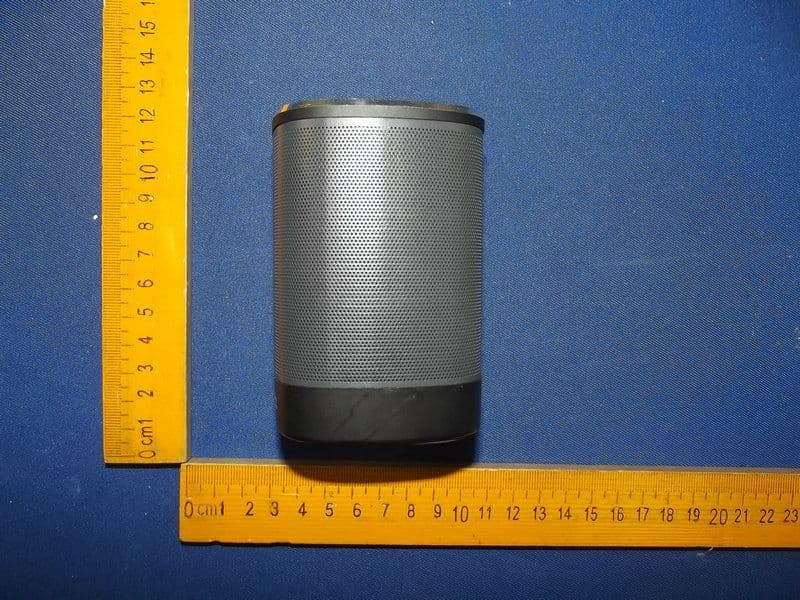
ZV9-BT2401
May 04, 2015Bluetooth Speaker
Equipment Class
DTS - Digital Transmission System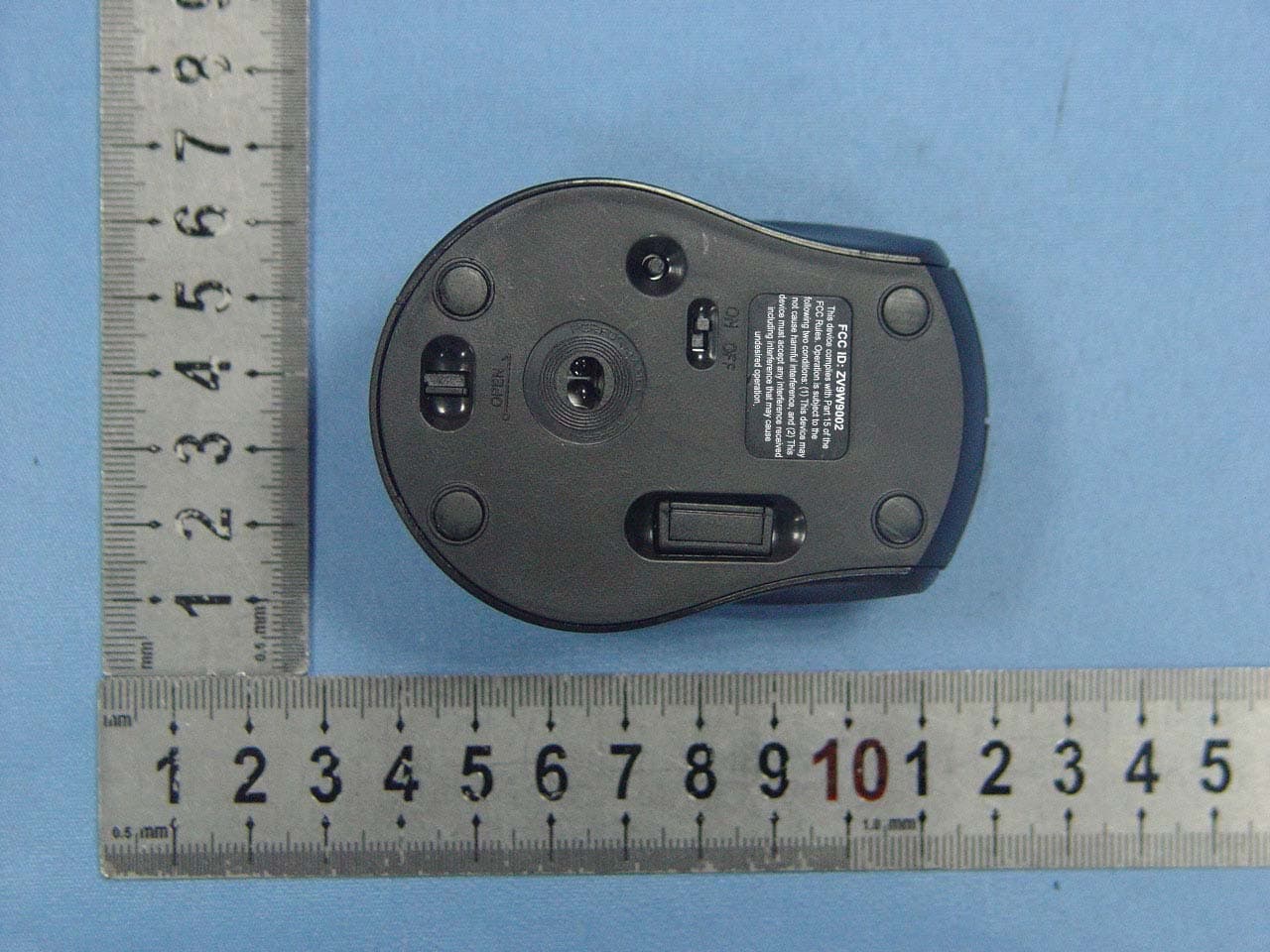
ZV9W9002
Aug 25, 20112.4G Wireless Mouse
Equipment Class
DXX - Part 15 Low Power Communication Device Transmitter