2ADINS6707X5G Smartphone
Sun Cupid Technology (HK) Ltd.Application Details
- Equipment Class
- CBE - Citizens Band End User Devices
- Date of Grant
- Oct 07, 2024
- Application Purpose
- Original Equipment
- Date of Application
- Sep 15, 2024
- Equipment Note
- 5G Smartphone
- Frequency Range
- 3590.01000000 - 3660.00000000
- Country
- Hong Kong
Documents & Files
Document Text
Text extracted from the exhibit documents filed with the FCC. Open a document above to read the original.
Attestation Statements
Sun Cupid Technology (HK) Ltd. Federal Communications Commission 7435 Oakland Mills Road Columbia MD 21046 Date: September 2, 2024 Subject: Certifications concerning “covered” equipment pursuant to Part 2.911(d)(5)(i) and (ii) To whom it may concern, Sun Cupid Technology (HK) Ltd. certifies that the equipment FCC ID: 2ADINS6707X for which authorization is sought is not “covered” equipment prohibited from receiving an equipment authorization pursuant to section 2.903 of the FCC rules. Sun Cupid Technology (HK) Ltd. certifies that, as of the date of the filing of the application, the applicant is not identified on the Covered List (as a specifically named entity or any of its subsidiaries or affiliates) as an entity producing “covered” equipment. Sincerely, ________________________ Contact Name: Danny Sit E-mail: [email protected]
Attestation Statements
Sun Cupid Technology (HK) Ltd. Federal Communications Commission Date: September 2, 2024 7435 Oakland Mills Road Columbia, MD 21046 Subject: Attestation to FCC HAC Waiver DA 23-914 FCC ID: 2ADINS6707X, Model No: S6707X To Whom It May Concern, We are certifying the HAC Compliance of FCC ID: 2ADINS6707X under the ANSI C63.19-2019, and the Volume Control performance is assessed under the condition of the limited-term waiver DA 23-914. We attest that, the package label is compliance with 47 CFR 20.19(f)(1) and states the actual conversational gain obtained under the waiver for the passing codecs demonstrated in section 2.a. and 2.b. of KDB 285076 D05 HAC Wavier and for the lowest conversational gain achieved for each 2N and 8N. Sincerely, Contact Name: Danny Sit E-mail: [email protected]
Attestation Statements
Federal Communications CommissionDA 23-914 Before the Federal Communications Commission Washington, D.C. 20554 In the Matter of Amendment of the Commission’s Rules Governing Standards for Hearing Aid-Compatible Handsets ) ) ) ) WT Docket No. 20-3 ORDER Adopted: September 29, 2023Released: September 29, 2023 By the Chief, Wireless Telecommunications Bureau: I.INTRODUCTION 1.Today we grant a limited waiver of section 20.19(b)(1) and (b)(3) of the Commission’s wireless hearing aid compatibility rules with respect to the volume control technical standard that handset manufacturers use in part to certify handsets as hearing aid-compatible under the 2019 ANSI Standard. 1 Our action is prompted by a request filed by the Alliance for Telecommunications Industry Solutions (ATIS) seeking waiver of certain aspects of these rules. 2 Under the terms of the time-limited waiver we grant today, a handset may be certified as hearing aid-compatible under the 2019 ANSI Standard if it meets the volume control testing requirements described in this Order as well as all other aspects of the 2019 ANSI Standard. 2.Consistent with ATIS’s September 12, 2023, ex parte letter (ATIS Ex Parte Letter) and as a condition of this waiver, we require a handset to pass the conversational gain test at the 2 Newton (N) force level on all available narrowband and wideband codecs and air interface combinations. 3 With respect to the 8N force level test, we agree with the ATIS Ex Parte Letter that this test should be performed, and we waive the requirement that a handset achieve at least an 18 dB conversational gain. 4 This waiver is conditioned on manufacturers performing the 8N force level test using the same testing parameters that we are requiring for the 2N force level test and to place on the handset’s package label the resulting conversational gain (even if it is below 18 dB) in a manner consistent with our existing hearing aid compatibility labeling rules. 3.With respect to the related receive distortion and noise performance (distortion/noise) and receive acoustic frequency response performance (frequency response) tests, we agree with the ATIS Ex Parte Letter that handsets must pass testing using at least one narrowband and one wideband codec of the 1 The 2019 ANSI Standard refers to the technical document entitled Accredited Standards Committee C63®– Electromagnetic Compatibility, American National Standard Methods of Measurement of Compatibility Between Wireless Communications Devices and Hearing Aids, ANSI C63.19-2019 (approved Aug. 19, 2019) (2019 ANSI Standard). 2 Petition of ATIS on Behalf of the Covered Entities of the Hearing Aid Compatibility Task Force for Limited, Interim Waiver, WT Docket Nos. 15-285 and 20-3 (filed Dec. 16, 2022) (ATIS Waiver Petition). ATIS filed its waiver petition on behalf of all manufacturers and service providers subject to section 20.19(b)(1) and (b)(3) of the Commission’s wireless hearing aid compatibility rules. Id. at 1, 4. 3 Letter from Thomas Goode, General Counsel, ATIS, to Marlene H. Dortch, Secretary, FCC, WT Docket Nos. 15- 285 and 20-3, at 2 (filed Sept. 12, 2023) (ATIS Ex Parte Letter); see also ATIS Waiver Petition at 4, 12-13. Below we explain the conversational gain test. See infra para. 9. 4 ATIS Ex Parte Letter at 2. Originally, ATIS had proposed to waive the entire 8N force level test. ATIS Waiver Petition at 10-11, 13. Federal Communications CommissionDA 23-914 2 manufacturer’s choosing. 5 We also accept ATIS’s suggestion that at least one narrowband and one wideband codec must pass testing for distortion/noise and frequency response and tests will be limited to one bit rate and only with those air interfaces associated with the chosen codecs and that the other codecs used for conversational gain at the 2N and 8N force levels are not required to undergo the distortion/noise and frequency response tests. 6 Further, as detailed below, we accept ATIS’s suggested method to set the volume control setting for testing these other codecs for conversational gain. 7 4.By taking these steps, we ensure that when the exclusive use transition period ends on December 5, 2023, new handset models can be certified as hearing aid-compatible using the 2019 ANSI Standard as modified by the conditions established in this Order. 8 Our actions allow consumers with hearing loss who use hearing aids or cochlear implants to benefit from wider availability of handsets offering improved hearing aid compatibility under the 2019 ANSI Standard’s radio frequency (RF) interference and inductive coupling requirements. In addition, our approach gives consumers assurance that a handset’s amplifier/speaker combination will provide improved volume control functionality over narrowband and wideband modes of voice communications, and that consumers have the information that they need to make informed purchasing decisions. Our actions today will move us closer to the Commission’s goal of reaching 100% hearing aid compatibility for wireless handsets, while also creating a path forward for testing to ensure that handsets have volume control capabilities. 9 5.This waiver is effective immediately upon release of this Order so that manufacturers may afford the benefits of this relief to consumers with hearing loss as soon as feasible. In reliance upon ATIS’s representations that efforts are underway to expeditiously develop a new volume control standard through the TIA standards setting process, we limit this waiver to a two-year period. 10 During this waiver period, we will evaluate the effectiveness of the waiver standard in meeting the needs of consumers with hearing loss and take action where appropriate. We expect that a two-year time limitation for the waiver will encourage all interested parties to work together to rapidly develop an improved volume control standard that we can incorporate into our rules in the future. To ensure this outcome, we condition this waiver in part on ATIS filing a status lett…
Text truncated - open the document above for the full version.
Attestation Statements
Sun Cupid Technology (HK) Ltd. Date: 9/19/2024 Federal Communications Commissions Authorization and Evaluation Division 7435 Oakland Mills Road Columbia, MD 21046 RE: CFR 47 §2.911 (d)(7) Agent Designation Attestation FCC ID: 2ADINS6707X Grantee’s FRN: 0024055386 Sun Cupid Technology (HK) Ltd. (“the applicant”) as required by section 2.911(d)(7), designates the following agent, located in the United States, for purposes of acting as the applicant’s agent for service of process. The applicant acknowledges that they will maintain an agent for no less than one year after the grantee has terminated all marketing and importation or the conclusion of any Commission-related proceeding involving the equipment. The applicant further acknowledges their responsibility under CFR 47 §2.929(c) to inform the FCC whenever the agent information changes. U.S. Agent Information: Agent Company Name: NUU,Inc. FCC FRN: 0033478264 Agent Contact Name: Danny Sit Agent US Address:8101 Ridgepoint DR., Suite 107, Irving, TX75063 Agent Email Address:[email protected] Sincerely yours, Company Name: Sun Cupid Technology (HK) Ltd. Contact Name: Danny Sit Address: 16/F, CEO Tower, 77 Wing Hong Street, Cheung Sha Wan, Kowloon, Hong Kong. Company Name: NUU,Inc. Contact Name: Danny Sit Address: 8101 Ridgepoint DR., Suite 107, Irving, TX75063 Date:9/19/2024 Date:9/19/2024
Cover Letter(s)
Sun Cupid Technology (HK) Ltd. Declaration - MIF for HAC RF Interference Evaluation To whom it may concern: This device, with FCC ID: 2ADINS6707X, Hearing Aid Compatibility Requirement is going to be certified under ANSI C63.19 2019 version per Part 20.19. For Radio Frequency Interference, Speag’s Audio Interference Analyzer (AIA) or other indirect or direct measurement was not used to determine the M rating. The M rating was determined by measuring the maximum steady state average E-field values in dB (V/m) or average antenna input power as documented in HAC test report exhibit, and adding the MIF value in dB. The MIF values below for the worst-case operation mode for all air interfaces are pre-determined values provided by Speag. UID Communication System Name MIF(dB) 10021 GSM-FDD(TDMA,GMSK) 3.63 10025 EDGE-FDD (TDMA, 8PSK, TN 0) 3.75 10460 UMTS-FDD(WCDMA, AMR) -25.43 10225 UMTS-FDD (HSPA+) -20.39 10170 LTE-FDD(SC-FDMA,1RB,20MHz,16-QAM) -9.76 10173 LTE-TDD (SC-FDMA, 1 RB, 20 MHz, 16-QAM) -1.44 10769 5G NR (CP-OFDM, 1 RB, 15 MHz, QPSK, 15 kHz) -12.08 10973 5G NR (DFT-s-OFDM, 1 RB, 100 MHz, QPSK, 30 kHz) -1.64 10061 IEEE 802.11b WiFi 2.4 GHz (DSSS, 11 Mbps) -2.02 10077 IEEE 802.11g WiFi 2.4 GHz (DSSS/OFDM, 54 Mbps) 0.12 10427 IEEE 802.11n (HT Greeneld, 150 Mbps, 64-QAM) -13.44 10069 IEEE 802.11a/h WiFi 5 GHz (OFDM, 54 Mbps) -3.15 10616 IEEE 802.11ac WiFi (40MHz, MCS0, 90pc duty cycle) -5.57 10671 IEEE 802.11ax (20MHz, MCS0, 90pc duty cycle) -5.58 11026 IEEE 802.11be (320MHz, MCS0, 99pc duty cycle) -28.73 We confirmed that the Speag simulation provided represents all the air interface modes applicable for a HAC rating for this handset. Sincerely, Contact Name: Danny Sit E-mail: [email protected]
Cover Letter(s)
Sun Cupid Technology (HK) Ltd. Date: September 2, 2024 Federal Communications Commission Office of Engineering and Technology Laboratory Division 7435 Oakland Mills Rd Columbia MD 21046-1609 Subject: Request for Confidentiality FCC ID: 2ADINS6707X To Whom It May Concern, Pursuant to the provisions of Sections 0.457 and 0.459 of Commission’s rules (47 CFR §§ 0.457, 0.459), we are requesting confidentiality for exhibits filed with the commission supporting the application of equipment authorization for those items referenced above. Applicant respectfully requests the Commission to withhold indefinitely from public disclosure the following attachments under Long-Term Confidentiality. ⚫ Schematic Diagrams ⚫ Block Diagrams ⚫ Part List ⚫ Operational Description ⚫ Tune-up Procedure The above listed documents contain detailed system and equipment descriptions that are proprietary and confidential information under applicant trade secret protection. Public disclosure of above documents would be harmful to our company and would provide competitors an unfair advantage. This information is not made publicly available even after commercial release of the device. In additional to the above mentioned documents, pursuant to Public Notice DA 04-1705 of the Commission’ s policy, in order to comply with the marketing regulations in 47 CFR §2.803 and the importation rules in 47 CFR §2.1204, while ensuring that business sensitive information remains confidential until the actual marketing of newly authorized devices. We request the commission to grant short-term confidentiality request on the following attachments for 180 days after the grant as outlined in Public Notice DA 04-1705. ⚫ External Photos ⚫ Internal Photos ⚫ Test Setup Photos ⚫ User Manual It is our understanding that all measurement test reports, FCC ID label format and correspondence during certification review process cannot be granted as confidential documents and that information will be available for public review once the grant of equipment authorization is issued. Sincerely, Contact Name: Danny Sit E-mail: [email protected]
Cover Letter(s)
Sun Cupid Technology (HK) Ltd. Date: September 2, 2024 To whom it may concern, Please be notified that I, Danny Sit, have designated Jim Tsai of Sporton International Inc. and as the persons being responsible for this project and to sign the form 731 and other documentation. Any and all acts carried out in their professional capacity by Jim Tsai of Sporton International Inc. in connection with all processes required for FCC approval and any communication needed with the national authority, shall have the same legal authority as acts on our own behalf. We further certify that neither the applicant nor any party to this application, as defined in 47 CFR Ch. 1.2002 (b), is subject to a denial to Federal benefits, that include FCC benefits, pursuant to section 5301 of the Anti-Drug Abuse Act of 1998, 21 U.S.C. 862. This authorization is limited to the following product, and shall remain in place until completion of the certification, or until revoked, whichever is earlier: FCC ID: 2ADINS6707X If you have any acknowledgement and response, please send it to Sporton International Inc. directly. Should you have any questions or comments regarding this matter, please don’t hesitate to contact me. Sincerely yours, Contact Name: Danny Sit E-mail: [email protected]
ID Label/Location Info
FCC E-Label Information A. Images of the e-label screen are provided below: B. Access to the required information on the e-label Users are able to access the information in no more than three steps in a device’s menu. The actual steps are: Settings > About phone > Regulation No any special accessories, access codes, or SIM card are required to go through the above steps. C. Devices have physical labels at point of marketing/sale visible to the purchaser (or in the alternative, on the packaging), and at time of importation? At the time of importation, marketing, and sale, the device will have the required physical label on the packaging, which will include the device’s FCC ID. D. Electronic labeling information is programmed into the device by the manufacturer at the time of manufacture. Yes. E. Electronic labeling information not modifiable by any third party. The e-label of the device is programmed by the grantee and secured in such a manner that it cannot be modified by third parties. F. All the applicable regulatory information required on the packaging or user instructions is provided according to the rules. Applicable regulatory information not found in the e-label is contained in the user manual.
RF Exposure Info
Sporton International Inc. (Shenzhen) Page : 1 of 135 TEL : +86-755-86379589 / FAX : +86-755-86379595 Issued Date : Sep. 19, 2024 FCC ID : 2ADINS6707X Form version. : 200414 FCC SAR Test Report Report No. : FA471902 FCC SAR Test Report APPLICANT : Sun Cupid Technology (HK) Ltd. EQUIPMENT : 5G Smartphone BRAND NAME : NUU MODEL NAME : S6707X MARKETING NAME : NUU X10 5G, X10 5G FCC ID : 2ADINS6707X STANDARD : FCC 47 CFR Part 2 (2.1093) We, Sporton International Inc. (Shenzhen), would like to declare that the tested sample has been evaluated in accordance with the test procedures given in 47 CFR Part 2.1093 and FCC KDB and has been in compliance with the applicable technical standards. The test results in this report apply exclusively to the tested model / sample. Without written approval of Sporton International Inc. (Shenzhen), the test report shall not be reproduced except in full. Approved by: Si Zhang Sporton International Inc. (Shenzhen) 1/F, 2/F, Bldg 5, Shiling Industrial Zone, Xinwei Village, Xili, Nanshan, Shenzhen, 518055 People’s Republic of China Sporton International Inc. (Shenzhen) Page : 2 of 135 TEL : +86-755-86379589 / FAX : +86-755-86379595 Issued Date : Sep. 19, 2024 FCC ID : 2ADINS6707X Form version. : 200414 FCC SAR Test Report Report No. : FA471902 Table of Contents 1. Statement of Compliance ............................................................................................................................................. 4 2. Administration Data ...................................................................................................................................................... 6 3. Guidance Applied .......................................................................................................................................................... 6 4. Equipment Under Test (EUT) Information ................................................................................................................... 7 4.1 General Information................................................................................................................................................ 7 4.2 General LTE SAR Test and Reporting Considerations ........................................................................................... 9 4.3 General 5G NR SAR Test and Reporting Considerations .................................................................................... 13 5. Proximity Sensor Triggering Test .............................................................................................................................. 17 6. RF Exposure Limits ..................................................................................................................................................... 18 6.1 Uncontrolled Environment .................................................................................................................................... 18 6.2 Controlled Environment ........................................................................................................................................ 18 7. Specific Absorption Rate (SAR) ................................................................................................................................. 19 7.1 Introduction .......................................................................................................................................................... 19 7.2 SAR Definition ...................................................................................................................................................... 19 8. System Description and Setup ................................................................................................................................... 20 8.1 E-Field Probe ....................................................................................................................................................... 21 8.2 Data Acquisition Electronics (DAE) ...................................................................................................................... 21 8.3 Phantom ............................................................................................................................................................... 22 8.4 Device Holder ....................................................................................................................................................... 23 9. Measurement Procedures ........................................................................................................................................... 24 9.1 Spatial Peak SAR Evaluation ............................................................................................................................... 24 9.2 Power Reference Measurement ........................................................................................................................... 25 9.3 Area Scan ............................................................................................................................................................. 25 9.4 Zoom Scan ........................................................................................................................................................... 26 9.5 Volume Scan Procedures ..................................................................................................................................... 26 9.6 Power Drift Monitoring .......................................................................................................................................... 26 10. Test Equipment List .................................................................................................................................................. 27 11. System Verification .............................................................................................................................................…
Text truncated - open the document above for the full version.
RF Exposure Info
Test Laboratory: Sporton International Inc. SAR/HAC Testing Lab Date: 2024/8/25 System Check_750MHz DUT: D750V3-SN:1099 Communication System: UID 0, CW (0); Frequency: 750 MHz;Duty Cycle: 1:1 Medium: HSL_750 Medium parameters used: f = 750 MHz; σ = 0.92 S/m; ε r = 43.6; ρ = 1000 kg/m 3 Ambient Temperature:23.7 °C; Liquid Temperature:22.5 °C DASY5 Configuration: - Probe: EX3DV4 - SN7641; ConvF(10.48, 10.36, 10.24); Calibrated: 2024/6/3 - Sensor-Surface: 1.4mm (Mechanical Surface Detection) - Electronics: DAE4 Sn715; Calibrated: 2024/1/25 - Phantom: Twin-SAM V8.0 (Right); Type: QD 000 P41 AA; Serial: 2033 - Measurement SW: DASY52, Version 52.10 (4); SEMCAD X Version 14.6.14 (7483) Pin=250mW/Area Scan (61x61x1): Interpolated grid: dx=1.500 mm, dy=1.500 mm Maximum value of SAR (interpolated) = 3.26 W/kg Pin=250mW/Zoom Scan (5x5x7)/Cube 0: Measurement grid: dx=8mm, dy=8mm, dz=5mm Reference Value = 68.88 V/m; Power Drift = -0.06 dB Peak SAR (extrapolated) = 3.45 W/kg SAR(1 g) = 2.21 W/kg; SAR(10 g) = 1.45 W/kg Smallest distance from peaks to all points 3 dB below = 17.6 mm Ratio of SAR at M2 to SAR at M1 = 68.2% Maximum value of SAR (measured) = 3.09 W/kg 0 dB = 3.09 W/kg = 4.90 dBW/kg Appendix AReport No. : FA471902 Page:1/26 Test Laboratory: Sporton International Inc. SAR/HAC Testing Lab Date: 2024/9/4 System Check_750MHz DUT: D750V3-SN:1099 Communication System: UID 0, CW (0); Frequency: 750 MHz;Duty Cycle: 1:1 Medium: HSL_750 Medium parameters used: f = 750 MHz; σ = 0.9 S/m; ε r = 42.793; ρ = 1000 kg/m 3 Ambient Temperature:23.5 °C; Liquid Temperature:22.3 °C DASY5 Configuration: - Probe: EX3DV4 - SN7577; ConvF(9.71, 9.71, 9.71); Calibrated: 2023/12/13 - Sensor-Surface: 1.4mm (Mechanical Surface Detection) - Electronics: DAE4 Sn715; Calibrated: 2024/1/25 - Phantom: Twin-SAM V8.0 (Right); Type: QD 000 P41 AA; Serial: 2033 - Measurement SW: DASY52, Version 52.10 (4); SEMCAD X Version 14.6.14 (7483) Pin=250mW/Area Scan (61x61x1): Interpolated grid: dx=1.500 mm, dy=1.500 mm Maximum value of SAR (interpolated) = 3.19 W/kg Pin=250mW/Zoom Scan (5x5x7)/Cube 0: Measurement grid: dx=8mm, dy=8mm, dz=5mm Reference Value = 65.51 V/m; Power Drift = -0.02 dB Peak SAR (extrapolated) = 3.37 W/kg SAR(1 g) = 2.15 W/kg; SAR(10 g) = 1.38 W/kg Smallest distance from peaks to all points 3 dB below = 17.6 mm Ratio of SAR at M2 to SAR at M1 = 68.2% Maximum value of SAR (measured) = 3.02 W/kg 0 dB = 3.02 W/kg = 4.80 dBW/kg Appendix AReport No. : FA471902 Page:2/26 Test Laboratory: Sporton International Inc. SAR/HAC Testing Lab Date: 2024/8/27 System Check_835MHz DUT: D835V2-SN:4d162 Communication System: UID 0, CW (0); Frequency: 835 MHz;Duty Cycle: 1:1 Medium: HSL_835 Medium parameters used: f = 835 MHz; σ = 0.934 S/m; ε r = 41.45; ρ = 1000 kg/m 3 Ambient Temperature:23.8 °C; Liquid Temperature:22.7 °C DASY5 Configuration: - Probe: EX3DV4 - SN7641; ConvF(10.19, 10.07, 9.95); Calibrated: 2024/6/3 - Sensor-Surface: 1.4mm (Mechanical Surface Detection) - Electronics: DAE4 Sn715; Calibrated: 2024/1/25 - Phantom: Twin-SAM V8.0 (Right); Type: QD 000 P41 AA; Serial: 2033 - Measurement SW: DASY52, Version 52.10 (4); SEMCAD X Version 14.6.14 (7483) Pin=250mW/Area Scan (61x61x1): Interpolated grid: dx=1.500 mm, dy=1.500 mm Maximum value of SAR (interpolated) = 3.41 W/kg Pin=250mW/Zoom Scan (5x5x7)/Cube 0: Measurement grid: dx=8mm, dy=8mm, dz=5mm Reference Value = 68.58 V/m; Power Drift = -0.04 dB Peak SAR (extrapolated) = 3.97 W/kg SAR(1 g) = 2.51 W/kg; SAR(10 g) = 1.61 W/kg Smallest distance from peaks to all points 3 dB below = 17.6 mm Ratio of SAR at M2 to SAR at M1 = 67.5% Maximum value of SAR (measured) = 3.41 W/kg 0 dB = 3.41 W/kg = 5.31 dBW/kg Appendix AReport No. : FA471902 Page:3/26 Test Laboratory: Sporton International Inc. SAR/HAC Testing Lab Date: 2024/9/5 System Check_835MHz DUT: D835V2-SN:4d162 Communication System: UID 0, CW (0); Frequency: 835 MHz;Duty Cycle: 1:1 Medium: HSL_835 Medium parameters used: f = 835 MHz; σ = 0.942 S/m; ε r = 41.846; ρ = 1000 kg/m 3 Ambient Temperature:23.3 °C; Liquid Temperature:22.6 °C DASY5 Configuration: - Probe: EX3DV4 - SN7577; ConvF(9.62, 9.62, 9.62); Calibrated: 2023/12/13 - Sensor-Surface: 1.4mm (Mechanical Surface Detection) - Electronics: DAE4 Sn715; Calibrated: 2024/1/25 - Phantom: Twin-SAM V8.0 (Right); Type: QD 000 P41 AA; Serial: 2033 - Measurement SW: DASY52, Version 52.10 (4); SEMCAD X Version 14.6.14 (7483) Pin=250mW/Area Scan (61x61x1): Interpolated grid: dx=1.500 mm, dy=1.500 mm Maximum value of SAR (interpolated) = 3.38 W/kg Pin=250mW/Zoom Scan (5x5x7)/Cube 0: Measurement grid: dx=8mm, dy=8mm, dz=5mm Reference Value = 67.18 V/m; Power Drift = 0.13 dB Peak SAR (extrapolated) = 3.80 W/kg SAR(1 g) = 2.46 W/kg; SAR(10 g) = 1.56 W/kg Smallest distance from peaks to all points 3 dB below = 17.6 mm Ratio of SAR at M2 to SAR at M1 = 67.5% Maximum value of SAR (measured) = 3.38 W/kg 0 dB = 3.38 W/kg = 5.29 dBW/kg Appendix AReport No. : FA471902 Page:4/26 Test Laboratory: Sporton International Inc. SAR/HAC Testing Lab Date: 2024/8/26 System Check_1750MHz DUT: D1750V2-SN:1137 Communication System: UID 0, CW; Frequency: 1750 MHz;Duty Cycle: 1:1 Medium: HSL_1750 Medium parameters used: f = 1750 MHz; σ = 1.376 S/m; ε r = 40.534; ρ = 1000 kg/m 3 Ambient Temperature:23.5 °C; Liquid Temperature:22.4 °C DASY5 Configuration: - Probe: EX3DV4 - SN7641; ConvF(8.74, 8.64, 8.54); Calibrated: 2024/6/3 - Sensor-Surface: 1.4mm (Mechanical Surface Detection) - Electronics: DAE4 Sn715; Calibrated: 2024/1/25 - Phantom: Twin-SAM V8.0 (Right); Type: QD 000 P41 AA; Serial: 2033 - Measurement SW: DASY52, Version 52.10 (4); SEMCAD X Version 14.6.14 (7483) Pin=250mW/Area Scan (61x61x1): Interpolated grid: dx=1.500 mm, dy=1.500 mm Maximum value of SAR (interpolated) = 14.8 W/kg Pin=250mW/Zoom Scan (5x5x7)/Cube 0: Measurement grid: dx=8mm, dy=8mm, dz=5mm Reference Value = 114.1 V/m; Power Drift = 0.03 dB Peak SAR (extrapolated) = 16.7 W/kg SAR(1 g) = 9.52 W/kg; SAR(10 g) = 4.91 W/kg Smallest dista…
Text truncated - open the document above for the full version.
RF Exposure Info
Test Laboratory: Sporton International Inc. SAR/HAC Testing Lab Date: 2024/8/22 System Check_3500MHz DUT: D3500V2-SN:1037 Communication System: UID 0, CW (0); Frequency: 3500 MHz;Duty Cycle: 1:1 Medium: HSL_3500 Medium parameters used: f = 3500 MHz; σ = 2.851 S/m; ε r = 37.182; ρ = 1000 kg/m 3 Ambient Temperature:23.8 °C; Liquid Temperature:22.6 °C DASY5 Configuration: - Probe: EX3DV4 - SN7641; ConvF(6.99, 6.9, 6.82); Calibrated: 2024/6/3 - Sensor-Surface: 1.4mm (Mechanical Surface Detection) - Electronics: DAE4 Sn715; Calibrated: 2024/1/25 - Phantom: Twin-SAM V8.0 (Right); Type: QD 000 P41 AA; Serial: 2033 - Measurement SW: DASY52, Version 52.10 (4); SEMCAD X Version 14.6.14 (7483) Pin=100mW/Area Scan (71x71x1): Interpolated grid: dx=1.200 mm, dy=1.200 mm Maximum value of SAR (interpolated) = 14.6 W/kg Pin=100mW/Zoom Scan (7x7x8)/Cube 0: Measurement grid: dx=5mm, dy=5mm, dz=1.4mm Reference Value = 71.52 V/m; Power Drift = 0.09 dB Peak SAR (extrapolated) = 19.5 W/kg SAR(1 g) = 6.98 W/kg; SAR(10 g) = 2.58 W/kg Smallest distance from peaks to all points 3 dB below = 8 mm Ratio of SAR at M2 to SAR at M1 = 74.9% Maximum value of SAR (measured) = 14.6 W/kg 0 dB = 14.6 W/kg = 11.44 dBW/kg Appendix AReport No. : FA471902 Page:15/26 Test Laboratory: Sporton International Inc. SAR/HAC Testing Lab Date: 2024/8/30 System Check_3500MHz DUT: D3500V2-SN:1037 Communication System: UID 0, CW (0); Frequency: 3500 MHz;Duty Cycle: 1:1 Medium: HSL_3500 Medium parameters used: f = 3500 MHz; σ = 2.882 S/m; ε r = 37.182; ρ = 1000 kg/m 3 Ambient Temperature:23.5 °C; Liquid Temperature:22.4 °C DASY5 Configuration: - Probe: EX3DV4 - SN7577; ConvF(6.79, 6.79, 6.79); Calibrated: 2023/12/13 - Sensor-Surface: 1.4mm (Mechanical Surface Detection) - Electronics: DAE4 Sn715; Calibrated: 2024/1/25 - Phantom: Twin-SAM V8.0 (Right); Type: QD 000 P41 AA; Serial: 2033 - Measurement SW: DASY52, Version 52.10 (4); SEMCAD X Version 14.6.14 (7483) Pin=100mW/Area Scan (71x71x1): Interpolated grid: dx=1.200 mm, dy=1.200 mm Maximum value of SAR (interpolated) = 13.6 W/kg Pin=100mW/Zoom Scan (7x7x8)/Cube 0: Measurement grid: dx=5mm, dy=5mm, dz=1.4mm Reference Value = 70.44 V/m; Power Drift = -0.05 dB Peak SAR (extrapolated) = 18.7 W/kg SAR(1 g) = 6.74 W/kg; SAR(10 g) = 2.49 W/kg Smallest distance from peaks to all points 3 dB below = 8 mm Ratio of SAR at M2 to SAR at M1 = 74.9% Maximum value of SAR (measured) = 13.8 W/kg 0 dB = 13.8 W/kg = 11.40 dBW/kg Appendix AReport No. : FA471902 Page:16/26 Test Laboratory: Sporton International Inc. SAR/HAC Testing Lab Date: 2024/8/24 System Check_3700MHz DUT: D3700V2-SN:1008 Communication System: UID 0, CW (0);…
Text truncated - open the document above for the full version.
Contact Information
Applicant
Danny Sit
Test Firm
Sporton International Inc. (Shenzhen)Randal Chen
[email protected]+86 0755-86379589
Technical Specifications
| # | Rule Parts | Frequency Range | Power Output | Emission | Tolerance |
|---|---|---|---|---|---|
| 7 | 96 | 3.59 GHz - 3.66 GHz | 121.60 mW | 77M6W7D | 2.5 ppm |
Other Applications from Sun Cupid Technology (HK) Ltd.
2ADINS6603L
Sep 17, 2024LTE Smart Phone
Equipment Class
DSS - Part 15 Spread Spectrum Transmitter2ADINS6006L
Sep 15, 2024LTE Smart Phone
Equipment Class
DTS - Digital Transmission System2ADINS6601L
Aug 01, 2024LTE Smartphone
Equipment Class
NII - Unlicensed National Information Infrastructure TX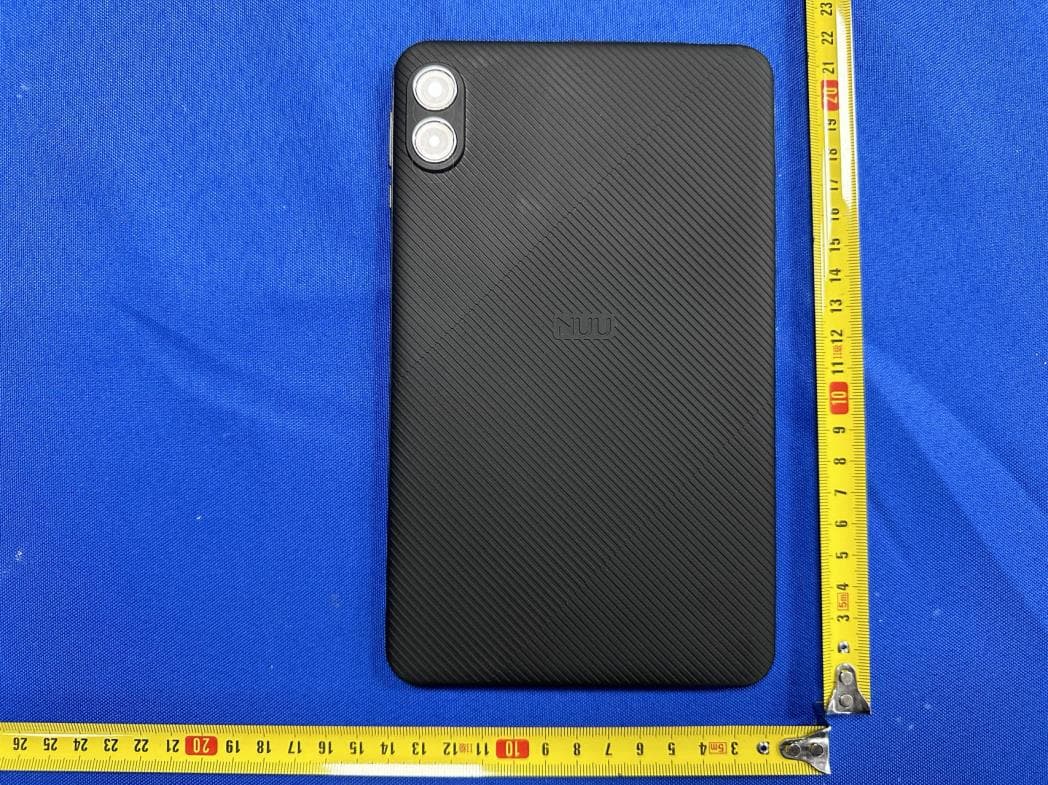
2ADINT0805L
May 17, 2023Tablet
Equipment Class
NII - Unlicensed National Information Infrastructure TX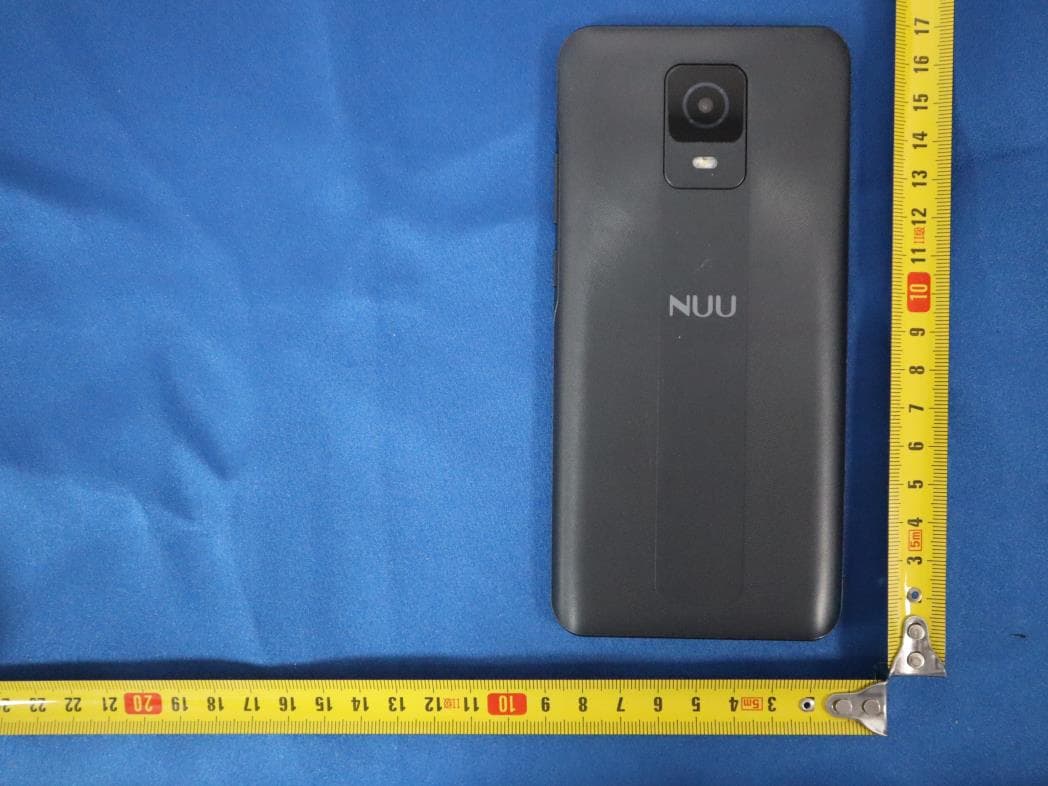
2ADINN6001L
May 08, 2023LTE Smart Phone
Equipment Class
PCE - PCS Licensed Transmitter held to ear