2ADLJPULSEmobile phone
Xwireless LLC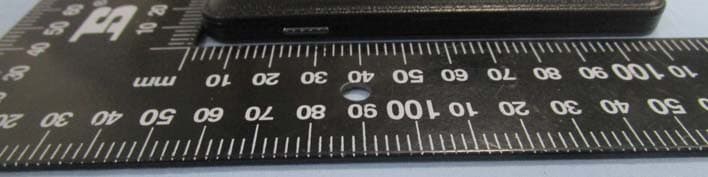
Click to zoom
Application Details
- Equipment Class
- PCE - PCS Licensed Transmitter held to ear
- Date of Grant
- Feb 11, 2015
- Application Purpose
- Original Equipment
- Date of Application
- Feb 11, 2015
- Equipment Note
- mobile phone
- Frequency Range
- 1852.40000000 - 1907.60000000
- Company
- Xwireless LLC
- Country
- United States
Documents & Files
Document Text
Text extracted from the exhibit documents filed with the FCC. Open a document above to read the original.
Users Manual
User Manual Model: Pulse FCC ID: 2ADLJPULSE The device complies with part 15 of the FCC Rules. Operation is subject to the following two conditions: (1) This device may not cause harmful interference, and (2) This device must accept any interference received, including interference that may cause undesired operation. 1 Overview Thank you for choosing the WCDMA/GSM digital mobile phone. After reading this guide you will be able to fully master the use of your phone and appreciate all its functions and ease of use. Not only does the smartphone provide you with basic call functions such as call Register, but also with many practical functions and services, to improve the time you spend working and playing. The color screen mobile phone complies with the WCDMA/GSM technology and has been approved by certification authorities both domestically and abroad. The availability of some services and features described in this manual depends on the network and your subscription. Therefore, some menu items may not be available in your phone. The shortcuts to menus and features may also vary from phone to phone. Our company reserves the right to revise this manual content without prior notice. 1.2 Safety guide If your mobile phone is lost or stolen, please contact the telecommunications authorities or a sales agent immediately to have a hold on the phone and the SIM card. This will prevent economic loss caused by unauthorized calls made from your mobile phone. When you contact the telecommunications authorities or a sales agent, they will need to know the IMEI number of our mobile phone (remove battery to expose number located on the label on back of phone). Please copy this number and keep in a safe place for future use. In order to avoid the misuse of your mobile phone please take the following preventative measures: Set the PIN number of your mobile phone’s SIM card and change this number immediately if it becomes known to a third party. Please keep the phone out of sight when leaving it in a vehicle. It is best to carry the phone with you, or lock it in the trunk. Set call barring. 1.3 Safety warnings and notices Before using your mobile phone, read and understand the following notices carefully to ensure you will use it safely and properly. 1.3.1 General attention Only the battery and battery charger specified by our company should be used in your phone. Other products might result in battery leakage, overheating, fire or explosion. To avoid your phone malfunctioning, or catching fire, please do not violently impact, jolt or throw your phone. Please do not place the battery, mobile phone, or charger in a microwave oven or high‐pressure equipment. Otherwise it could lead to unexpected accidents such as damage to the circuitry or fire hazard. Please do not use your phone near flammable or explosive gases, otherwise it could cause malfunction of your phone or fire hazard. Please do not subject your phone to high temperatures, high humidity or dusty places; otherwise this may lead to the malfunction of your phone. Keep your phone out of the reach of small children. Your phone is not a toy. Children could hurt themselves. To avoid your phone falling and malfunctioning or being damaged, please do not place it on uneven or unstable surfaces. 1.3.2 Notices when using your phone Turn off your mobile phone where the phone is not allowed, such as, on the airplane or in hospitals. Using the mobile phone in those places may impact the normal operation of electronic devices and medical instruments. Follow relevant regulations when using your mobile phone in those places. Your mobile phone has the auto turn‐on feature. Check your alarm clock settings to confirm that your mobile phone will not be turned on automatically during flight. Please do not use your mobile phone near the weak signal or high precision electronic devices. RF interference might cause malfunctioning of such electronic devices and other problems. Special tips must be paid near the following equipment: hearing aids, pace makers and other medical electronic devices, fire detectors, automatic doors and other automatic control installations. To find out the effect of mobile phones on a pacemaker or other pieces of electronic medical equipment please contact the manufacturers or local sales agents of the equipment. Please do not subject the LCD to impact or use the screen to strike things, as this will damage the LCD board and cause leakage of the liquid crystal. There is a risk of blindness if the liquid crystal substance gets into the eyes. If this occurs rinse eyes immediately with clear water (under no circumstances rub your eyes) and go immediately to a hospital for treatment. Do not disassemble or modify your mobile phone, as it will lead to damage to the phone such as battery leakage or circuitry failure. Under very rare circumstances using the mobile phone in certain model cars may negatively affect the internal electronic equipment. In order to assure your safety under such circumstances please do not use the mobile phone. Please do not use needles, pen tips, or other sharp objects on the keypad as this may damage the mobile phone or cause it to malfunction. In the event of antenna malfunction, do not use your phone, as it could be harmful to human body. Avoid letting the phone come into close contact with magnetic objects such as magnetic cards as the radiation waves of the mobile phone may erase the information stored on floppy disks, pay cards and credit cards. Please keep small metal objects, such as thumbtacks far away from the receiver. When the receiver is in use it becomes magnetic and may attract these small metal objects and thus these may cause injury or damage the mobile phone. Avoid having the mobile phone come into contact with water or other liquids. If liquids enter the phone, this could cause a short circuit, battery leakage or other malfunction. 1.3.3 Notices when using the battery The battery has a limited service life. …
Text truncated - open the document above for the full version.
Cover Letter(s)
Xwireless LLC Federal Communications Commission Authorization and Evaluation Division Equipment Authorization Branch 7435 Oakland Mills Road Columbia, MD 21046 2/7/2015 To whom it may concern: We, the undersigned, hereby authorize Eurofins Product Service GmbH to act on our behalf in all matters relating to applications for equipment authorization FCC ID: 2ADLJPULSE including the signing of all documents related to these matters. Any and all acts carried out by Eurofins Product Service GmbH on our behalf shall have the same effect as acts of our own. We also hereby certify that no party to this application is subject to a denial of benefits, including FCC benefits, pursuant to Section 5301 of the Anti-Drug Abuse Act of 1988, 21 U.S.C. 862. Sincerely, Signature [Paul Greene] [CEO] Xwireless LLC 11426 Rockville pike, Rockville Md
Cover Letter(s)
Xwireless LLC Federal Communications Commission Equipment Authorization Branch 7435 Oakland Mills Road Columbia, MD 21046 2/7/2015 Request for Confidentiality Company name: Xwireless LLC FCC ID: 2ADLJ PULSE FCC Part 15 Certification Gentlemen, In accordance with CFR 47 § 0.457 and CFR 47 § 0.459 Xwireless LLC hereby requests confidentiality of following attachments: (1) schematic diagrams, (2) detailed block diagrams, (3) detailed operational descriptions, (4) parts lists. These documents contain detailed system and equipment description and related information about the product which Xwireless LLC considers to be proprietary, confidential and a custom design and otherwise would not release to the general public. Since the design is a basis from which future technological products will evolve, Xwireless LLC considers that this information would be of benefit to its competitors and that the disclosure of the information in these documents would give competitors an unfair advantage in the market. Sincerely, Signature [Paul Greene] [CEO] Xwireless LLC 11426 Rockville pike, Rockville Md
External Photos
Xwireless LLC Model: Pulse REPORT NO.: STR15018270I-1 FCC PART 22H&24E EXHIBIT 2 - EUT EXTERNAL PHOTOGRAPHS EUT View 1 EUT View 2 Xwireless LLC Model: Pulse REPORT NO.: STR15018270I-1 FCC PART 22H&24E EUT View 3 EUT View 4 Xwireless LLC Model: Pulse REPORT NO.: STR15018270I-1 FCC PART 22H&24E EUT View 5 EUT View 6 Xwireless LLC Model: Pulse REPORT NO.: STR15018270I-1 FCC PART 22H&24E EUT View 7
ID Label/Location Info
Xwireless LLC Model: Pulse REPORT NO.: STR15018270I-1 FCC PART 22H&24E EXHIBIT 1 - PRODUCT LABELING Proposed FCC ID Label Format FCC ID: 2ADLJPULSE This device complies with Part 15 of the FCC Rules. Operation is subject to the following two conditions: (1) This device may not cause harmful interference, and (2) this device must accept any interference received, including interference that may cause undesired operation. Specifications: Text is Black in color and justified. Labels are printed in indelible ink on permanent adhesive silk-screened onto the EUT or shall be affixed at a conspicuous location on the EUT. Proposed Label Location on EUT FCC ID Label Location
Internal Photos
Xwireless LLC Model: Pulse REPORT NO.: STR15018270I-1 FCC PART 22H&24E EXHIBIT 3 - EUT INTERNAL PHOTOGRAPHS EUT Housing and Board View 1 EUT Housing and Board View 2 GSM&WCDMA Ant. WIFI&BT Ant. Xwireless LLC Model: Pulse REPORT NO.: STR15018270I-1 FCC PART 22H&24E EUT Housing and Board View 3 Solder Board-Component View 1 Xwireless LLC Model: Pulse REPORT NO.: STR15018270I-1 FCC PART 22H&24E Solder Board-Component View 2 Solder Board-Component View 3 Xwireless LLC Model: Pulse REPORT NO.: STR15018270I-1 FCC PART 22H&24E Solder Board-Component View 4
Parts List/Tune Up Info
Model Pulse_Tune up procedure Tune up procedure shall be over the power range or at specific operating power levels. 1.It must provide an operational voltage (3.4 ~ 4.2V DC) to turn on the device and on one certain channel in service mode by means of company proprietary software. 2.Base station simulator (CMU 200 ) measures the mobile phone, Model: Pulse device specific RF characteristics. 3.The maximum gains of each individual device are adjusted until the target value met. Tune‐up Power Mode Frequency Bands Tune‐up Power GSM GSM850 32.0dBm±1dB GSM1900 27.5dBm±1dB GPRS GPRS850(1 slots) 32.5dBm±1dB GPRS850(2 slots) 31.5dBm±1dB GPRS850(3 slots) 29.0dBm±1dB GPRS850(4 slots) 28.5dBm±1dB GPRS1900(1 slots) 28.0dBm±1dB GPRS1900(2 slots) 27.5dBm±1dB GPRS1900(3 slots) 27.0dBm±1dB GPRS1900(4 slots) 26.5dBm±1dB WCDMA Band V RMC 21.0dBm±1dB HSDPA 20.0dBm±1dB HSUPA 20.5dBm±1dB WCDMA Band II RMC 22.0dBm±1dB HSDPA 21.5dBm±1dB HSUPA 21.5dBm±1dB WIFI 2.4GHz 15.5dBm±1dB BT 2.4GHz 5.0dBm±1dB Then these appropriate gain settings are stored in each device individually. The user has no possibility to change these settings later on, and during manufacturing each device will be individual calibrated. The measurement is done in fully calibrated setup, which is based on a CMU 200 base station simulator. Furthermore, the hig hest power level is verified afterwards in a call measurement on three channels (low, middle and high).
Test Report
Xwireless LLC Model: Pulse REPORT NO.: STR15018270I-1 PAGE 1 OF 98 FCC PART 22H&24E FCC Part 22H & 24E Measurement and Test Report For Xwireless LLC 11426 Rockville pike, Rockville Md FCC ID: 2ADLJPULSE FCC Rules: FCC Part 22H, FCC Part 24E Product Description: mobile phone Tested Model: Pulse Report No.: STR15018270I-1 Tested Date: 2015-01-28 to 2015-02-07 Issued Date: 2015-02-07 Tested By: Vigoss Liang / Engineer Reviewed By: Lahm Peng / EMC Manager Approved & Authorized By: Jandy So / PSQ Manager Prepared By: Shenzhen SEM.Test Technology Co., Ltd. 1/F, Building A, Hongwei Industrial Park, Liuxian 2nd Road, Bao'an District, Shenzhen, P.R.C.(518101) Tel.: +86-755-33663308 Fax.: +86-755-33663309 Website: www.semtest.com.cn Note: This test report is limited to the above client company and the product model only. It may not be duplicated without prior permitted by Shenzhen SEM. Test Technology Co., Ltd. Xwireless LLC Model: Pulse REPORT NO.: STR15018270I-1 PAGE 2 OF 98 FCC PART 22H&24E TABLE OF CONTENTS 1. GENERAL INFORMATION ................................................................................................................................... 3 1.1 PRODUCT DESCRIPTION FOR EQUIPMENT UNDER TEST (EUT) ............................................................................... 3 1.2 TEST STANDARDS ................................................................................................................................................... 5 1.3 TEST METHODOLOGY ............................................................................................................................................. 5 1.4 TEST FACILITY ....................................................................................................................................................... 5 1.5 EUT SETUP AND TEST MODE ................................................................................................................................. 6 2. SUMMARY OF TEST RESULTS ........................................................................................................................... 8 3. RF EXPOSURE ......................................................................................................................................................... 9 3.1 STANDARD APPLICABLE ......................................................................................................................................... 9 3.2 TEST RESULT.......................................................................................................................................................... 9 4. RF OUTPUT POWER ............................................................................................................................................ 10 4.1 STANDARD APPLICABLE ....................................................................................................................................... 10 4.2 TEST EQUIPMENT LIST AND DETAILS ................................................................................................................... 10 4.3 TEST PROCEDURE ................................................................................................................................................. 10 4.4 ENVIRONMENTAL CONDITIONS ............................................................................................................................ 11 4.5 SUMMARY OF TEST RESULTS/PLOTS .................................................................................................................... 11 5. PEAK-TO-AVERAGE RADIO (PAR) OF TRANSMITTER ............................................................................. 18 5.1 STANDARD APPLICABLE ....................................................................................................................................... 18 5.2 TEST EQUIPMENT LIST AND DETAILS ................................................................................................................... 18 5.3 TEST PROCEDURE ................................................................................................................................................. 18 5.4 ENVIRONMENTAL CONDITIONS ............................................................................................................................ 18 5.5 SUMMARY OF TEST RESULTS ............................................................................................................................... 19 6. EMISSION BANDWIDTH ..................................................................................................................................... 21 6.1 STANDARD APPLICABLE ....................................................................................................................................... 21 6.2 TEST EQUIPMENT LIST AND DETAILS ................................................................................................................... 21 6.3 TEST PROCEDURE ................................................................................................................................................. 21 6.4 ENVIRONMENTAL CONDITIONS ............................................................................................................................ 21 6.5 SUMMARY OF TEST RESULTS/PLOTS .................................................................................................................... 22 7. OUT OF BAND EMISSIONS AT ANTENNA TERMINAL ............................................................................... 39 7.1 STANDARD APPLICABLE ....................................................................................................................................... 39 7.2 TEST EQUIPMENT LIST AND DETAILS ................................................................................................................... 39 7.3 TEST PROCEDURE .....................................................…
Text truncated - open the document above for the full version.
Test Setup Photos
Xwireless LLC Model: Pulse REPORT NO.: STR15018270I-1 FCC PART 22H&24E EXHIBIT 4 - TEST SETUP PHOTOGRAPHS Spurious Radiation Test Setup (9kHz to 30MHz) Spurious Radiation Test Setup (30MHz to 1G) Xwireless LLC Model: Pulse REPORT NO.: STR15018270I-1 FCC PART 22H&24E Spurious Radiation Test Setup (Above1G) Extreme Condition Test Setup Xwireless LLC Model: Pulse REPORT NO.: STR15018270I-1 FCC PART 22H&24E Mobile Communication Test Setup
Contact Information
Applicant
Paul Greene(CEO)
Test Firm
Shenzhen SEM.Test Technology Co., Ltd.Jandy So
Technical Specifications
| # | Rule Parts | Frequency Range | Power Output | Emission | Tolerance |
|---|---|---|---|---|---|
| 4 | 24E | 1.85 GHz - 1.91 GHz | 110.00 mW | 4M18F9W | 0.041 ppm |
Other Applications from Xwireless LLC
2ADLJ-CB68
Nov 28, 2024Mobile Phone
Equipment Class
PCE - PCS Licensed Transmitter held to ear2ADLJ-PG65
Jun 27, 2024Mobile Phone
Equipment Class
DSS - Part 15 Spread Spectrum Transmitter2ADLJ-ZG55
Apr 15, 2024Mobile Phone
Equipment Class
DTS - Digital Transmission System
2ADLJ-HD68
Feb 20, 2024Smartphone
Equipment Class
DSS - Part 15 Spread Spectrum Transmitter
2ADLJ-HD67
Feb 04, 2024Mobile Phone
Equipment Class
DSS - Part 15 Spread Spectrum Transmitter