2ADOI-SP912Bluetooth Speaker
SMARTV LTD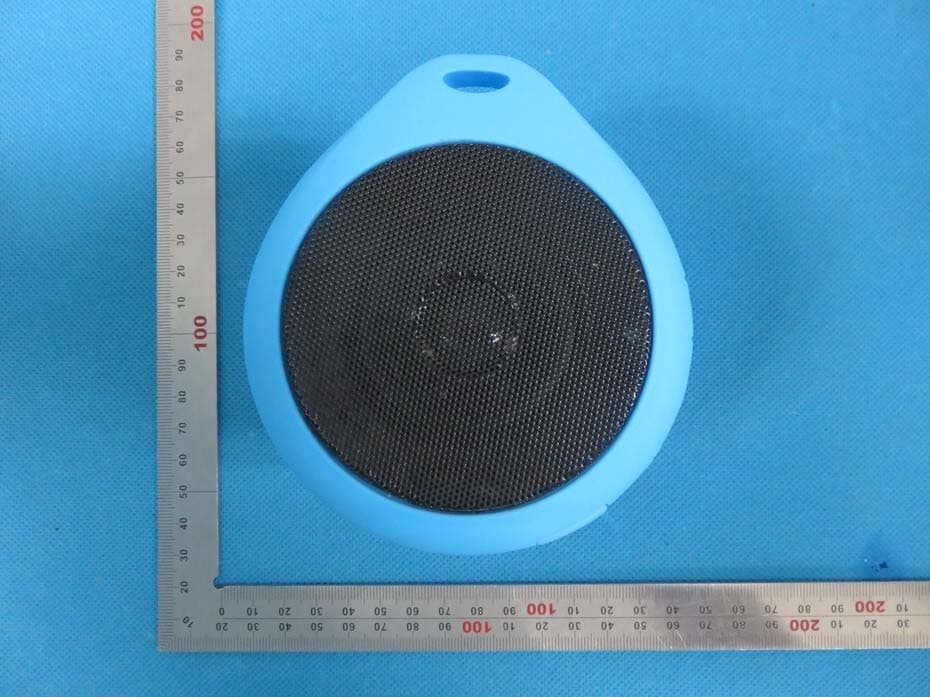
Click to zoom
Application Details
- Equipment Class
- DSS - Part 15 Spread Spectrum Transmitter
- Date of Grant
- Apr 22, 2015
- Application Purpose
- Original Equipment
- Date of Application
- Apr 22, 2015
- Equipment Note
- Bluetooth Speaker
- Frequency Range
- 2402.00000000 - 2480.00000000
- Company
- SMARTV LTD
- Country
- Hong Kong
Documents & Files
Document Text
Text extracted from the exhibit documents filed with the FCC. Open a document above to read the original.
Users Manual
SPEAKER BLUETOOTH PAIRING Automatic Power Off: The Expandable Bluetooth Speaker will automatically switch off to preserve battery power when Bluetooth is disconnected for 5 minutes. To turn it on again, please hold down the power button for about 1 second. To turn of the speaker manually, please hold down the power button for about 2-second until the LED light flashes red. When the Expandable Bluetooth Speaker is placed on a large surface, it can utilize the surface to produce more bass. You can experiment with diffe rent surfaces for diffe rent sound frequencies. Your speaker can sync wirelessly with most Bluetooth enabled devices. The speaker will automatically search for previous connections when it is initially turned on. If a connection is lost, the speaker will look to re-establish that connection again, but will not automatically look fo r the device again if the Bluetooth connection is turned off on the device until the speaker is turned off and then turned on again. If the device goes out of range and then comes back into Bluetooth range, the speaker will automatically re-establish the connection. Expandable for increased bass and louder sound Suction cup for versatile mounting Vibration action turns most large surface into a subwoofer Drop proof, Splashproof, and Dirtproof Lanyard loop and detachable clip for easy transport – just clip and go Adjustable to different sizes and shapes Bluetooth Speaker: Pressing the Bluetooth button once can stop/pause the music streaming. You can use the volume “+” and volume “-“ buttons to adjust the volume for the speaker. Hands-free Confe rence Call: While your phone is paired, you can answ er a call by pressing the Bluetooth button once and utilize the speakers hands-free speakerphone mode. When the phone is in idle, pressing the Bluetooth button twice will redial the nu mber. The speaker has a built-in rechargeable battery. When the battery is low, the LED lig ht will flash red. Simply charge the speaker with the included Micro USB. Charging time is approximately 3 hours. The average play time is 6 hours. You can monitor the battery usage on your mobile device. To secure the speaker on a smooth surface such as glass, f ollow the steps below: Clean the surface and the bottom of the suction cup with a wet cleaning cloth to remove any particles of dust. Pr ess the center of the suction cup to the surface while holding the speaker as indicated in the picture, then release the sides of the suction cup Make sure that the speaker is turned on. The blue LED light will flash rap idly indicating that the power is on. Turn on Bluetooth on your device and place it in pairing mode (check your device’s manual to find out how to add a new device to your device through Bluetooth). Place the speaker in pairing mode by pressi ng and holding the Bluetooth button for about 3 seconds, until you hear a sound Select the speaker from the lis t of discovered devices on your Bluetooth device. Wait for a few seconds until the connection is completed. If the connection is successful, a tone will sound on the speaker, and the blue LED light will flash slowly. Select a song, mov ie or game from your media device and enjoy the audio via Bluetooth from your Expandable Bluetooth Speaker. 1 2 1 2 3 4 5 6 VIBRATION ACTION Push the sides of the suction cup against the surface in a complete circle to drive the air out. Warning: If the abov e steps are not taken properly, the unit may not adhere securely . Releasing the Suction Cup: T o release the speaker, pull the triangle handle located on the top of the suction cup. Please do not attempt to pull from the top of the speaker as this may result in damage to the speaker. 3 Tran former TM + EXPANDABLE BLUETOOTH Vol - Button Bluetooth Button Vol + Button Suction Cup Tria ngle Handle Power Switch Micro USB LED Microphone Lanyard Loop BLUETOOTH CONTROLSBATTERYSUCTION CUP 3 1 2 FCC Statement: This equipment has been tested and found to comply with the limits for a Class B digital device, pursuant to part 15 of the FCC Rules. These limits are designed to provide reasonable protection against harmful interference in a residential installation. This equipment generates, uses and can radiate radio frequency energy and, if not installed and used in accordance with the instructions, may cause harmful interference to radio communications. However, there is no guarantee that interference will not occur in a particular installation. If this equipment does cause harmful interference to radio or television reception, which can be determined by turning the equipment off and on, the user is encouraged to try to correct the interference by one or more of the following measures: • Reorient or relocate the receiving antenna. • Increase the separation between the equipment and receiver. • Connect the equipment to an outlet on a circuit different from that to which the receiver is connected. This device complies with part 15 of the FCC rules. Operation is subject to the following two conditions: (1) This device may not cause harmful interference, and (2) this device must accept any interference received, including interference that may cause undesired operation. Note: Modifications to this product will void the user’s authority to operate this equipment.
Cover Letter(s)
SMARTV LTD ROOM, 1207, 33 WANG YIP STREET WEST, YUEN LONG,NT, Hong Kong TEL: +852 2803 2078 FAX: +852 2803 2079 Date (21/04/2015) TUV SUD BABT TCB Octagon House, Segensworth Road, Fareham, Hampshire, PO15 5RL Confidentiality Request FCC ID: 2ADOI-SP912 Pursuant to Sections 0.457(d)(1)(ii) and 0.459 of the Commission’s Rules, SMARTV LTD hereby requests permanent confidential treatment of information accompanying this application as outlined below: 1.Schematics 2.Bill of Materials/Parts List 3.Block Diagrams 4.Theory of Operation The above materials contain trade secrets and proprietary information not customarily released to the public. The public disclosure of these matters might be harmful to the Applicant and provide unjustified benefits to its competitors. The Applicant understands that pursuant to Rule 0.457(d)(1)(ii), disclosure of this Application and all accompanying materials will not be made before the date of the Grant for this Application. Yours sincerely, Company Officer: Michael Cheung/Manager Telephone Number: +852 2803 2078 Email: [email protected]
External Photos
External Photos TOP VIEW OF EUT BOTTOM VIEW OF EUT FRONT VIEW OF EUT BACK VIEW OF EUT LEFT VIEW OF EUT RIGHT VIEW OF EUT VIEW OF EUT(Port)
ID Label/Location Info
FCC ID Label Location FCC ID: 2ADOI-SP912
Internal Photos
Internal Photos OPEN VIEW OF EUT INTERNAL VIEW OF EUT‐1 INTERNAL VIEW OF EUT‐2 INTERNAL VIEW OF EUT‐3 Antenna
RF Exposure Info
RF Exposure evaluation Product Description: Bluetooth Speaker Model Number: SP912 FCC ID: 2ADOI-SP912 According to 447498 D01 General RF Exposure Guidance v05 The 1-g and 10-g SAR test exclusion thresholds for 100 MHz to 6 GHz at test separation distances ≤ 50 mm are determined by: [(max. power of channel, including tune-up tolerance, mW)/(min. test separation distance, mm)] ·[√f(GHz)] ≤ 3.0 for 1-g SAR and ≤ 7.5 for 10-g extremity SAR, where f(GHz) is the RF channel transmit frequency in GHz Power and distance are rounded to the nearest mW and mm before calculation The result is rounded to one decimal place for comparison Worse case is as below: [2480MHz -2.3mW output power] (2.3mW /50mm) .[√2.480(GHz)]= 0.07<3.0 for 1-g SAR Then SAR evaluation is not required NOTE: The transmitter output power formula you can refer to Part15F (K). For the maximum power, you can refer FCC test report.
Test Report
Any reproduction of this document must be done in full. No single part of this document may be reproduced without permission from STS, All Test Data Presented in this report is only applicable to presented Test sample. Shenzhen STS Test Services Co., Ltd. 1/F, Building B, Zhuoke Science Park, Chongqing Road, Fuyong, Baoan District, Shenzhen, China TEL: +86-755 3688 6288FAX: +86-755 3688 6277E-mail:[email protected] FCC TEST REPORT Report No: STS1504065 Issued for SmartV Ltd RM 1207, 33 Wang Yip Street West, Yuen Long, NT, Hong Kong Product Name: Bluetooth Speaker Brand Name: N/A Model No.: SP912 FCC ID: 2ADOI-SP912 Test Standard: FCC Part 15.247 S T L A B S Page 2 of 71 Report No.:STS1504065 TEST RESULT CERTIFICATION Applicant’s name ............ . SmartV Ltd Address ............................. RM 1207, 33 Wang Yip Street West, Yuen Long, NT, Hong Kong Manufacture's Name ........ SHENZHEN SMARTV TECHNOLOGIES., LTD. Address ............................. 4TH FLOOR, BLOCK A, NO.1 XINGUI ROAD, TONGSHENG, DALANG, LONGHUA DISTRICT, SHENZHEN, CHINA Product description Product name ..................... Bluetooth Speaker Band name .......................... N/A Model and/or type reference ......................... . SP912 Ratings ............................. . DC 3.7V by Battery Standards ........................ . FCC Part15.247 Test procedure .................... ANSI C63.4-2009 This device described above has been tested by STS, and the test results show that the equipment under test (EUT) is in compliance with the FCC requirements. And it is applicable only to the tested sample identified in the report. This report shall not be reproduced except in full, without the written approval of STS, this document may be altered or revised by STS, personal only, and shall be noted in the revision of the document. Date of Test ................................ . Date (s) of performance of tests . . Apr.13,2015 to Apr.20,2015 Date of Issue ............................... . Apr.20,2015 Test Result ................................... . Pass Testing Engineer : (Tony Liu) Technical Manager : (Vita Li) Authorized Signatory : (Bovey Yang) Page 3 of 71 Report No.:STS1504065 Table of Contents Page 1. SUMMARY OF TEST RESULTS 5 1.1 TEST FACILITY 6 1.2 MEASUREMENT UNCERTAINTY 6 2. GENERAL INFORMATION 7 2.1 GENERAL DESCRIPTION OF EUT 7 2.1 DESCRIPTION OF TEST MODES 9 2.2 TABLE OF PARAMETERS OF TEXT SOFTWARE SETTING 9 2.3BLOCK DIGRAM SHOWING THE CONFIGURATION OF SYSTEM TESTED 10 2.4 DESCRIPTION OF SUPPORT UNITS 11 2.5EQUIPMENTS LIST FOR ALL TEST ITEMS 12 3.EMC EMISSION TEST 13 3.1 CONDUCTED EMISSION MEASUREMENT 13 3.1.1 POWER LINE CONDUCTED EMISSION LIMITS 13 3.1.2 TEST PROCEDURE 14 3.1.3 TEST SETUP 14 3.1.4EUT OPERATING CONDITIONS 14 3.1.5TEST RESULTS 15 3.2 RADIATED EMISSION MEASUREMENT 17 3.2.1RADIATED EMISSION LIMITS 17 3.2.2 TEST PROCEDURE 18 3.2.3 DEVIATION FROM TEST STANDARD 18 3.2.4 TESTSETUP 19 3.2.5EUT OPERATING CONDITIONS 20 3.2.6 TEST RESULTS(WORST CASE : GFSK) 21 4. CONDUCTED SPURIOUS EMISSIONS 38 4.1 REQUIREMENT 38 4.2TEST PROCEDURE 38 4.3 TEST SETUP 38 4.4 EUT OPERATION CONDITIONS 38 4.5 TEST RESULTS 39 5. NUMBER OF HOPPING CHANNEL 42 5.1APPLIED PROCEDURES / LIMIT 42 5.2 TEST PROCEDURE 42 5.3 TEST SETUP 42 5.4 EUT OPERATION CONDITIONS 42 Page 4 of 71 Report No.:STS1504065 Table of Contents Page 5.5TEST RESULTS 43 6. AVERAGE TIME OF OCCUPANCY 44 6.1 APPLIED PROCEDURES / LIMIT 44 6.2 TEST PROCEDURE 44 6.3 TEST SETUP 44 6.4 EUT OPERATION CONDITIONS 44 6.5TEST RESULTS 45 7. HOPPING CHANNEL SEPARATION MEASUREMENT 47 7.1 APPLIED PROCEDURES / LIMIT 47 7.2 TEST PROCEDURE 47 7.3 TEST SETUP 47 7.4 EUT OPERATION CONDITIONS 47 7.5TEST RESULTS 48 8. BANDWIDTH TEST 49 8.1APPLIED PROCEDURES / LIMIT 49 8.2 TEST PROCEDURE 49 8.3 TEST SETUP 49 8.4 EUT OPERATION CONDITIONS 49 8.5TEST RESULTS 50 9. OUTPUT POWER TEST 56 9.1 APPLIED PROCEDURES / LIMIT 56 9.2 TEST PROCEDURE 56 9.3 TEST SETUP 56 9.4 EUT OPERATION CONDITIONS 56 9.5TEST RESULTS 57 10. ANTENNA REQUIREMENT 63 10.1 STANDARD REQUIREMENT 63 10.2 EUT ANTENNA 63 PHOTOS OF TEST SETUP 64 PHOTOS OF EUT 66 Page 5 of 71 Report No.:STS1504065 1. SUMMARY OF TEST RESULTS Test procedures according to the technical standards: FCC Part15 (15.247) , Subpart C Standard Section Test Item Judgment Remark 15.207 Conducted Emission PASS 15.247(a)(1) Hopping Channel Separation PASS 15.247(b)(1) Peak Output Power PASS 15.247(c) Radiated Spurious Emission PASS 15.247(d) Conducted Spurious Emission PASS 15.247(a)(iii) Number of Hopping Frequency PASS 15.247(a)(iii) Dwell Time PASS 15.247(a)(1) Bandwidth PASS 15.205 Band Edge Emission PASS 15.203 Antenna Requirement PASS Page 6 of 71 Report No.:STS1504065 1.1 TEST FACILITY Shenzhen STS Test Services Co., Ltd. Add. : 1/F, Building 2, Zhuoke Science Park, Chongqing Road, Fuyong, Baoan District, Shenzhen, China. FCC Registration No.: 842334; IC Registration No.: 12108A-1 1.2 MEASUREMENT UNCERTAINTY The reported uncertainty of measurement y ±U,where expended uncertainty U is based on a standard uncertainty multiplied by a coverage factor of k=2,providing a level of confidence of approximately 95 %。 No. Item Uncertainty 1 Conducted Emission Test ±3.18dB 2 RF power,conducted ±0.16dB 3 Spurious emissions,conducted ±0.21dB 4 All emissions,radiated(<1G) ±4.68dB 5 All emissions,radiated(>1G) ±4.71dB 6 Temperature ±0.5°C 7 Humidity ±2% Page 7 of 71 Report No.:STS1504065 2. GENERAL INFORMATION 2.1 GENERAL DESCRIPTION OF EUT Equipment Bluetooth Speaker Trade Name N/A Model Name SP912 Channel List Please refer to the Note 2. Bluetooth Frequency:2402 –2480 MHz GFSK(1Mbps),π/4-DQPSK(2Mbps),8-DPSK(3Mbps) Battery Rated Voltage: 3.7V Charge Limit: 4.2V Hardware version number SP912B-VA Software versioningnumber SMW-iGO Expandable Speaker-V316_V0.0.3_ 20141120 Connecting I/O Port(s) Please refer to the User's Manual Note: 1. For a more detailed features description, please refer to the manufacturer’s specifications or the User's Manual. Page 8 of 71 Report No…
Text truncated - open the document above for the full version.
Test Setup Photos
APPENDIX IV PHOTOGRAPHS OF TEST SETUP Radiated Measurement Photos Conducted Measurement Photos
Contact Information
Applicant
Michael Cheung
Test Firm
Shenzhen STS Test Services Co., Ltd.Bovey Yang
Technical Specifications
| # | Rule Parts | Frequency Range | Power Output |
|---|---|---|---|
| 1 | 15C | 2.40 GHz - 2.48 GHz | 2.30 mW |
Other Applications from SMARTV LTD
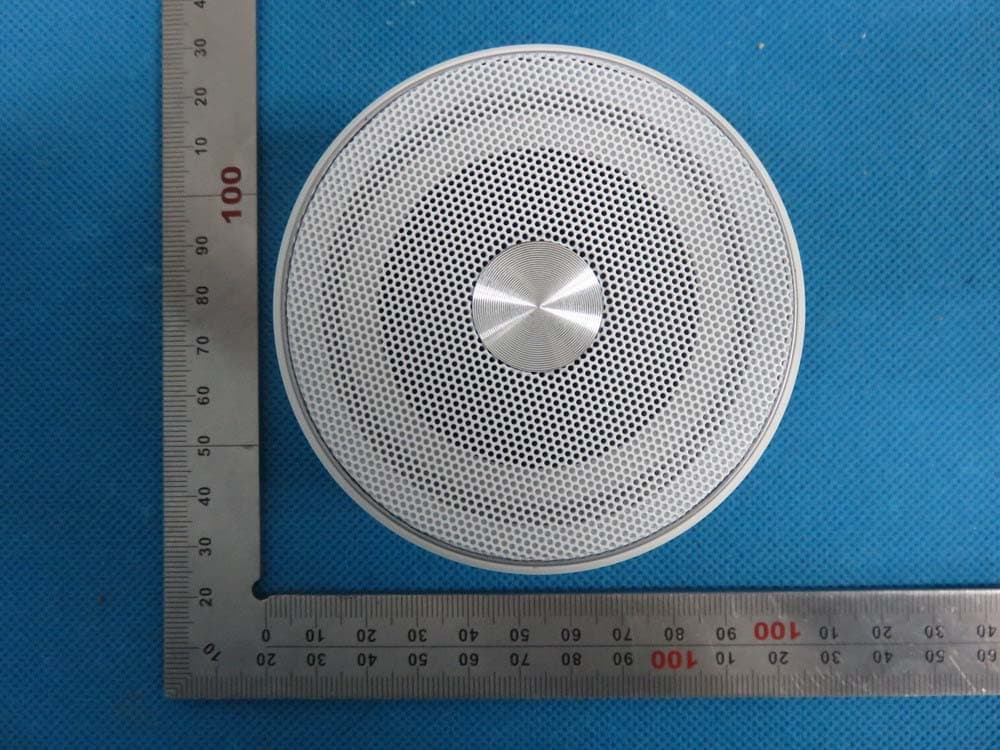
2ADOI-SP932L
May 10, 2015Bluetooth Speaker
Equipment Class
DXX - Part 15 Low Power Communication Device Transmitter