2ADZNHX63The device is a battery powered rechargeable toothbrush that can connect to a customer device such as a cellular phone or note pad via BLE.
Philips Oral Healthcare, Inc.
Click to zoom
Application Details
- Equipment Class
- DTS - Digital Transmission System
- Date of Grant
- May 25, 2015
- Application Purpose
- Original Equipment
- Date of Application
- May 20, 2015
- Equipment Note
- The device is a battery powered rechargeable toothbrush that can connect to a customer device such as a cellular phone or note pad via BLE.
- Frequency Range
- 2402.00000000 - 2480.00000000
- Country
- United States
Documents & Files
Document Text
Text extracted from the exhibit documents filed with the FCC. Open a document above to read the original.
Users Manual
FCC Compliance Statement This device complies with Part 15 of the FCC Rules. Operation is subject to the following two conditions: (1) This device may not cause harmful interference, and (2) This device must accept any interference received, including interference that may cause undesired operation.. Changes or modifications not expressly approved by Philips Oral Healthcare could void the user's authority to operate the equipment. Industry Canada Compliance Statement This device complies with Industry Canada license-exempt RSS standard(s). Operation is subject to the following two conditions: (1) This device may not cause interference, and (2) This device must accept any interference, including interference that may cause undesired operation of the device. Note: Keep this addendum with the original instruction manual 4235 020 43423 Déclaration de conformité FCC Le présent appareil est conforme aux à la section 15 de la règlementation FCC. L'exploitation est autorisée aux deux conditions suivantes: (1) l'appareil ne doit pas produire de brouillage, et (2) l'utilisateur de l'appareil doit accepter tout brouillage radioélectrique subi, même si le brouillage est susceptible d'en compromettre le fonctionnement.” Les changements ou modifications non approuvés expressément par Philips Oral Healthcare pourraient annuler l'autorité de l'utilisateur à utiliser l'équipement. Industrie Canada Déclaration de conformité Le présent appareil est conforme aux CNR d'Industrie Canada applicables aux appareils radio exempts de licence. L'exploitation est autorisée aux deux conditions suivantes: (1) l'appareil ne doit pas produire de brouillage, et (2) l'utilisateur de l'appareil doit accepter tout brouillage radioélectrique subi, même si le brouillage est susceptible d'en compromettre le fonctionnement.” Remarque: Conservez cet addenda avec le manuel d'instruction original. 4235 020 43423
Users Manual
FRANÇAIS (CANADA) Introduction Félicitations pour votre achat et bienvenue dans l’univers Philips! Pour profi ter pleinement du soutien de Philips, enregistrez votre produit sur le site : www.philips.com/welcome . Vous et votre enfant disposez désormais d’une brosse à dents connectée Sonicare. Grâce à la connexion Bluetooth, votre brosse à dents communique avec une application pour appareil mobile amusante qui motive votre enfant à apprendre les techniques brossage appropriées. Sonicare pour enfants (fig. 1) 1 Capuchon de protection hygiénique 2 Tête de brosse 3 Manche facile à tenir 4 Bouton marche-arrêt et indicateur de charge 5 Panneau amovible avec autocollants interchangeables 6 Bouton et voyants de mode de brossage 7 Chargeur 8 Panneau 9 Autocollant MISES EN GARDE IMPORTANTES LISEZ TOUTES LES INSTRUCTIONS AVANT D’UTILISER L’APPAREIL DANGER Pour éviter tout risque d’électrocution : 1 Ne placez pas et ne rangez pas le produit à un endroit où il peut tomber dans une baignoire ou un évier. 2 Ne placez pas et n’échappez pas le produit dans de l’eau ou tout autre liquide. 3 Ne touchez pas le produit s’il est tombé dans l’eau. Débranchez-le immédiatement. 4 N’utilisez pas l’appareil en prenant un bain. AVERTISSEMENTS Pour éviter tout risque de brûlure, d’électrocution, d’incendie ou d’accident : 1 Cessez d’utiliser cet appareil s’il vous semble endommagé de quelque façon que ce soit (tête de brosse, manche, chargeur). Ce produit ne contient pas de pièces remplaçables. Consultez le chapitre «Garantie et service» si votre appareil Sonicare ne fonctionne plus correctement ou doit être réparé. 2 N’utilisez jamais le chargeur si le cordon d’alimentation ou la fi che sont endommagés. 3 Tenez le cordon d’alimentation à l’écart des surfaces chauffantes. 4 N’utilisez pas le chargeur à l’extérieur. 5 N’utilisez pas le chargeur s’il est tombé dans l’eau. 6 Ce produit n’est conçu que pour le nettoyage des dents, des gencives et de la langue. Ne vous en servez que pour son utilisation prévue, tel que décrit dans cette brochure. Cessez d’utiliser ce produit et communiquez avec un médecin ou un dentiste si vous ressentez de la douleur ou un certain inconfort. 7 Cet appareil ne doit pas être utilisé par des personnes (incluant des enfants) avec des capacités physiques, sensorielles ou mentales réduites, ou qui n’ont pas l’expérience et les connaissances nécessaires, à moins qu’elles ne soient sous la surveillance d’une personne responsable de leur sécurité ou qu’elles aient reçu de cette personne des directives concernant l’utilisation de l’appareil. 8 Les enfants doivent utiliser la brosse à dents sous la supervision d’un adulte et ils ne doivent pas jouer avec l’appareil. 9 N’utilisez pas d’autres accessoires que ceux recommandés par le fabricant. 10 Si votre dentifrice contient du peroxyde, du bicarbonate de soude ou un autre type de bicarbonate (couramment utilisés dans les dentifrices blanchissants), veillez à bien nettoyer la tête de brosse et le manche avec de l’eau savonneuse après chaque utilisation. Dans le cas contraire, le plastique pourrait se fi ssurer. 11 Suivez attentivement les instructions de sécurité et d’avertissement fournies par le fabricant lorsque vous utilisez d’autres appareils à proximité d’une source d’eau et des lieux humides. Suivez les instructions fournies par le fabricant pour savoir quoi faire en cas de déversement de liquides ou de nourriture. 12 Ne pas charger votre téléphone ou votre tablette dans la salle de bains. MISES EN GARDE D’ORDRE MÉDICAL 1 Consultez votre dentiste avant d’utiliser ce produit si vous avez subi une chirurgie buccale ou gingivale au cours des 2 derniers mois. 2 Consultez votre dentiste si vos gencives saignent anormalement après vous être brossé les dents avec cet appareil ou si le saignement persiste après 1 semaine d’utilisation. 3 Si vous avez un stimulateur cardiaque ou tout autre dispositif implanté, consultez votre médecin ou le fabricant du dispositif implanté avant d’utiliser cet appareil. 4 Cet appareil Philips est conforme à toutes les normes et réglementations relatives à l’exposition aux champs électromagnétiques. 5 Consultez votre médecin avant d’utiliser votre Sonicare pour toutes préoccupations d’ordre médical. CE PRODUIT N’EST PAS UN JOUET. VÉRIFIEZ RÉGULIÈREMENT LA TÊTE DE BROSSAGE. DES FISSURES CAUSÉES PAR UNE CHUTE POURRAIENT ENTRAÎNER UN RISQUE D’ÉTOUFFEMENT . CONSERVEZ CES CONSIGNES Préparation Positionnement du panneau interchangeable La brosse à dents Sonicare For Kids est livrée avec 1 panneau amovible. 1 Retirez l’endos adhésif du panneau. 2 Appliquez le panneau sur la section blanche à l’avant du manche (fi g. 2) . Remarque : Alignez les trous du panneau avec les boutons situés à l’avant du manche. 3 Collez l’autocollant de votre choix sur le panneau en suivant les indications fournies (fi g. 3) . Pour réappliquer un panneau qui a été enlevé 1 Rincez le panneau dans l’eau tiède. Au besoin, lavez-le avec un détergent doux. 2 Laisser sécher le panneau. 3 Appliquez le panneau sur la section blanche à l’avant du manche. Fixation de la tête de brosse 1 Alignez la tête de brosse de façon que les soies pointent dans la même direction que l’avant du manche (fi g. 4) . 2 Pressez fermement la tête de brossage sur la tige de métal jusqu’à ce qu’elle s’arrête. Remarque : Il y a un léger écart entre la tête de brosse et le manche. Charge de la brosse à dents Sonicare 1 Branchez le chargeur sur une prise. 2 Placez le manche dans le chargeur (fi g. 5) . , L’indicateur de charge du bouton marche-arrêt clignote pour indiquer que la brosse à dents est en cours de charge. , Lorsque la brosse Sonicare est complètement chargée, le voyant arrête de clignoter et demeure allumé. Remarque : Lorsque le niveau de charge de la batterie est faible, la brosse Sonicare émet des signaux sonores et l’indicateur de charge clignote rapidement pendant 30 secondes après le cycle de brossage. Remarque : Lorsque vous n’utilisez pas la brosse à dents Sonicare…
Text truncated - open the document above for the full version.
Cover Letter(s)
PHILIPS Philips 22100 SothetI Everett Hwy, MS 203 Quality & Business Excellence FCC Confidentiality Request Federal Communications Commission 7435 Oakland Mills Road Columbia, MD 21046 Subject: Request for Permanent Confidentiality To whom it may concern: Date: 201 5-04-07 In accordance with 47CFR Section 0.457 and Section 0.459 pertaining to confidential material, we hereby request to hold permanently confidential all information contained within the below identified exhibits/document categories submitted pursuant to radio equipment certification requirements for FCC ID: 2ADZNHX63 1. Block Diagram 2. Operational Description 3. Schematics 4. Parts List! Tune-Up Procedure The above material contains trade secrets and proprietary information as specified by 47CFR 0.457(d) and technical data, which would customarily be guarded from competitors. The public disclosure of this information might be harmful to our company and provide unjustified benefits to our competitors. SincereClaySafety & Philips 22100 Bothell-Everett Hwy, MS203, Bothell, WA 98021
Cover Letter(s)
PHILIPS Philips 22100 Bothell Everett HWy, MS 203 Quality & Business Excellence Authorization Letter & Power of Attorney To Whom It May Concern: Date: 201 5-04-07 We hereby delegate CKC Certification Services, LLC (CKC CS) power of attorney to act on our behalf in matters pertaining to certification of products. The actions of CKC CS shall be considered the same as our own. Safety, ation Engineer Philips Oral Healthcare 22100 Bothell-Everett Hwy, MS 203, Bothell, WA 98021 see potcy on published ml
RF Exposure Info
RADIO FREQUENCY EXPOSURE REPORT ADDENDUM TO TEST REPORT 96690-20A FOR THE Device: Children’s Rechargeable Power Toothbrush with BLE Model: HX6340 Report No.: 96690-20B Date of issue: May 21, 2015 PREPARED FOR: Philips Oral Healthcare, Inc. 22100 Bothell-Everett Hwy Bothell, WA 98021 PREPARED BY: Steven Pittsford CKC Laboratories, Inc. 5046 Sierra Pines Drive Mariposa, CA 95338 The test data contained in this report documents the observed testing parameters pertaining to and are relevant for only the sample equipment tested in the agreed upon operational mode(s) and configuration(s) as identified herein. Compliance assessment remains the client’s responsibility. This report may not be used to claim product endorsement by A2LA or any government agencies. This test report has been authorized for release under quality control from CKC Laboratories, Inc. Steve Behm Director of Quality Assurance & Engineering Services CKC Laboratories, Inc. Page 2 of 9 Report No: 96690-20B Revision History Original: RF Exposure Report for Device: Children’s Rechargeable Power Toothbrush with BLE, Model: HX6340. Addendum A: To correct the calculations from MPE to SAR exemption levels. Addendum B: To correct the footer report reference and correct a typo on the Exposure Exemption Comparison plot. Purpose: To demonstrate compliance with United States, Canada and/or European Union RF Exposure requirements for Portable equipment (devices used ≤20cm from the body) or Mobile equipment (devices used >20cm from the body) with power output below exemption levels and Mobile equipment, where Maximum Permissible Exposure (MPE) Calculations apply. Device and Antenna Operating Configuration: Device operating at maximum output power with continuous transmission of modulated data. Test Procedure: This equipment is evaluated in accordance with the guidelines set forth in OET Guide 65 & ANSI C95.1 for the US, Health Canada Safety Code 6 & RSS 102 for Canada and EN 62479 or EN 62311 for EU. Other Considerations: Report considers stand-alone configurations only. Simultaneous transmissions are not evaluated. RF Exposure limits are calculated at the mid-point of the operating band. Referenced Test Reports: The following test reports were referenced in conjunction with this assessment: 96690-12 & 96690-13 Page 3 of 9 Report No: 96690-20B RF Exposure Assessment Applicability: Limit Used ☒ General Population / Uncontrolled Exposure ☐ Occupational / Controlled Exposure Equipment operational details: Config # Operating Frequency (MHz) Measured Output Power (dBm) Antenna Gain (dBi) Antenna Type / Configuration EIRP (dBm) 1 2440 -5.5 0dBi Inverted F antenna -5.5 0.28mW MPE Calculation: 2 4d EIRP DensityPower Given: EIRP in mW or W and d in cm or m Config # Distance (cm) US (1.1310) Canada (RSS-102) EU (ICNIRP) Power Density (mW/cm 2 ) Limit (mW/cm 2 ) Power Density (W/m 2 ) Limit (W/m 2 ) Power Density (W/m 2 ) Limit (W/m 2 ) 1 NA NA NA NA NA NA NA Exemption Calculation: SAR exemption levels calculated at minimum separation distance Config # Distance (mm) US (1.1310) Canada (RSS-102) EU (ICNIRP) Limit (mW) Limit (mW) Limit(mW) 1 ≤5 10 4 NA Page 4 of 9 Report No: 96690-20B Summary: Exemptions: In the case the equipment meets compliance requirements by exemption the product is approved for stand-alone use under mobile or portable conditions without further evaluation. Exemption requires any additional collocation or simultaneous transmission requirements (including necessary separation distances) have been met according to the intended use of the equipment. MPE Calculation Results: In the case the equipment meets compliance by MPE Calculations the product is approved for use under mobile conditions without further testing under the condition that any additional collocation or simultaneous transmission requirements (including necessary separation distances) have been met. It is assumed that the manufacturer shall design the equipment such that the minimum separation distance of 20cm (or greater, as listed above) is met or that the manufacturer provides a protection guide (or installation instructions) to the end user such that the antenna(s) may be installed in accordance with the manufacturer’s instructions in such a manor to maintain the minimum separation distance. General Comments: The Absorption and distribution of Electromagnetic energy in the body is a very complex phenomena that depends on the mass, shape and physiological condition of the body; the orientation of the body with respect to the fields; and, the electrical properties of the body and the environment. Variables that may play a substantial role in possible biological effects are those that characterize the environment (including but not limited to: ambient temperature, air velocity, relative humidity and body insulation); and those that characterize the individual (including but not limited to: age, gender, activity level and existing debilitation or disease). Because innumerable factors may interact to determine specific biological effects of exposure to electromagnetic fields, any protection guide should consider both intended and unintended operational environments and provide guidance for installation and use of the product such that proper separation distances can be maintained. (ANSI C95.1) Page 5 of 9 Report No: 96690-20B RF Exposure Limits United States Compliance Requirements (1.1310): RF Exposure Evaluation Limits Occupational / Controlled Exposure Frequency Range (MHz) Electric Field Strength (V/m) Magnetic Field Strength (A/m) Power Density (mW/cm 2 ) Averaging Time (minutes) 0.3-3.0 614 1.63 *(100) 6 3.0-30 1842/f 4.89/f *(900/f 2 ) 6 30-300 61.4 0.163 1 6 300-1500 --- --- f/300 6 1500-100,000 --- --- 5.0 6 RF Exposure Evaluation Limits General Population / Uncontrolled Exposure Frequency Range (MHz) Electric Field Strength (V/m) Magnetic Field Strength (A/m) Power Density (mW/cm 2 ) Averaging Time (minutes) 0.3-1.34 614 1.63 *(100) 30 1.34-30 824/f 2.19/f …
Text truncated - open the document above for the full version.
Test Report
This report contains a total of 33 pages and may be reproduced in full only. Partial reproduction may only be done with the written consent of CKC Laboratories, Inc. Philips Oral Healthcare, Inc. EMC TEST REPORT FOR Children's Rechargeable Power Toothbrush with BLE Model: HX6340 Tested To The Following Standards: FCC Part 15 Subpart C Section: 15.247 Report No.: 96690-12 Date of issue: April 20, 2015 This test report bears the accreditation symbol indicating that the testing performed herein meets the test and reporting requirements of ISO/IEC 17025 under the applicable scope of EMC testing for CKC Laboratories, Inc. We strive to create long-term, trust based relationships by providing sound, adaptive, customer first testing services. We embrace each of our customers’ unique EMC challenges, not as an interruption to set processes, but rather as the reason we are in business. Page 2 of 33 Report No.: 96690-12 TABLE OF CONTENTS Administrative Information ........................................................................................................................................... 3 Test Report Information ............................................................................................................................................ 3 Report Authorization ................................................................................................................................................. 3 Test Facility Information ............................................................................................................................................ 4 Software Versions ...................................................................................................................................................... 4 Site Registration & Accreditation Information .......................................................................................................... 4 Summary of Results ................................................................................................................................................... 5 Modifications During Testing ..................................................................................................................................... 5 Conditions During Testing.......................................................................................................................................... 5 Equipment Under Test ............................................................................................................................................... 6 Peripheral Devices ..................................................................................................................................................... 6 FCC Part 15 Subpart C .................................................................................................................................................... 7 15.247(a)(2) Occupied Bandwidth ............................................................................................................................. 7 15.247(b)(3) Maximum Output Power .................................................................................................................... 11 15.247(d) Conducted Spurious Emissions and Band Edge ....................................................................................... 15 15.247(d) Radiated Spurious Emissions and Band Edge .......................................................................................... 20 15. 247(e) Power Spectral Density .......................................................................................................................... 28 Supplemental Information .......................................................................................................................................... 32 Measurement Uncertainty ...................................................................................................................................... 32 Emissions Test Details .............................................................................................................................................. 32 Page 3 of 33 Report No.: 96690-12 ADMINISTRATIVE INFORMATION Test Report Information REPORT PREPARED FOR: REPORT PREPARED BY: Philips Oral Healthcare, Inc. 22100 Bothell-Everett Hwy. Bothell, WA 98021 Terri Rayle CKC Laboratories, Inc. 5046 Sierra Pines Drive Mariposa, CA 95338 Representative: Timothy Rand Project Number: 96690 Customer Reference Number: US13-2100550088 DATE OF EQUIPMENT RECEIPT: March 24, 2015 DATE(S) OF TESTING: March 24-26, 2015 Report Authorization The test data contained in this report documents the observed testing parameters pertaining to and are relevant for only the sample equipment tested in the agreed upon operational mode(s) and configuration(s) as identified herein. Compliance assessment remains the client’s responsibility. This report may not be used to claim product endorsement by A2LA or any government agencies. This test report has been authorized for release under quality control from CKC Laboratories, Inc. Steve Behm Director of Quality Assurance & Engineering Services CKC Laboratories, Inc. Page 4 of 33 Report No.: 96690-12 Test Facility Information Our laboratories are configured to effectively test a wide variety of product types. CKC utilizes first class test equipment, anechoic chambers, data acquisition and information services to create accurate, repeatable and affordable test results. TEST LOCATION(S): CKC Laboratories, Inc. 22116 23rd Drive S.E., Suite A Bothell, WA 98021-4413 Software Versions CKC Laboratories Proprietary Software Version EMITest Emissions 5.00.14 Immunity 5.00.07 Site Registration & Accreditation Information Location CB # TAIWAN CANADA FCC JAPAN Bothell US0081 SL2-IN-E-1145R 3082C-1 318736 A-0148 Page 5 of 33 Report No.: 96690-12 SUMMARY OF RESULTS Standard / Specification: FCC Part 15 Subpart …
Text truncated - open the document above for the full version.
Test Setup Photos
X Axis Y Axis Z Axis
Contact Information
Applicant
Matthew Vasa(Compliance Engineer, Philips Oral Healthcare)
Technical Contact
Philips Oral HealthcareHarold Rowan
[email protected]425-908-1302
22100 Bothell-Everett Highway · Bothell · United States
Non-Technical Contact
Philips Oral HealthcareTimothy Rand
[email protected]425-908-1305
Test Firm
CKC Laboratories, Inc.Steve Behm
Technical Specifications
| # | Rule Parts | Frequency Range | Power Output |
|---|---|---|---|
| 1 | 15C | 2.40 GHz - 2.48 GHz | 302.00 µW |
Other Applications from Philips Oral Healthcare, Inc.
2ADZNHX999
Apr 26, 2021Rechargeable Electric Toothbrush
Equipment Class
DTS - Digital Transmission System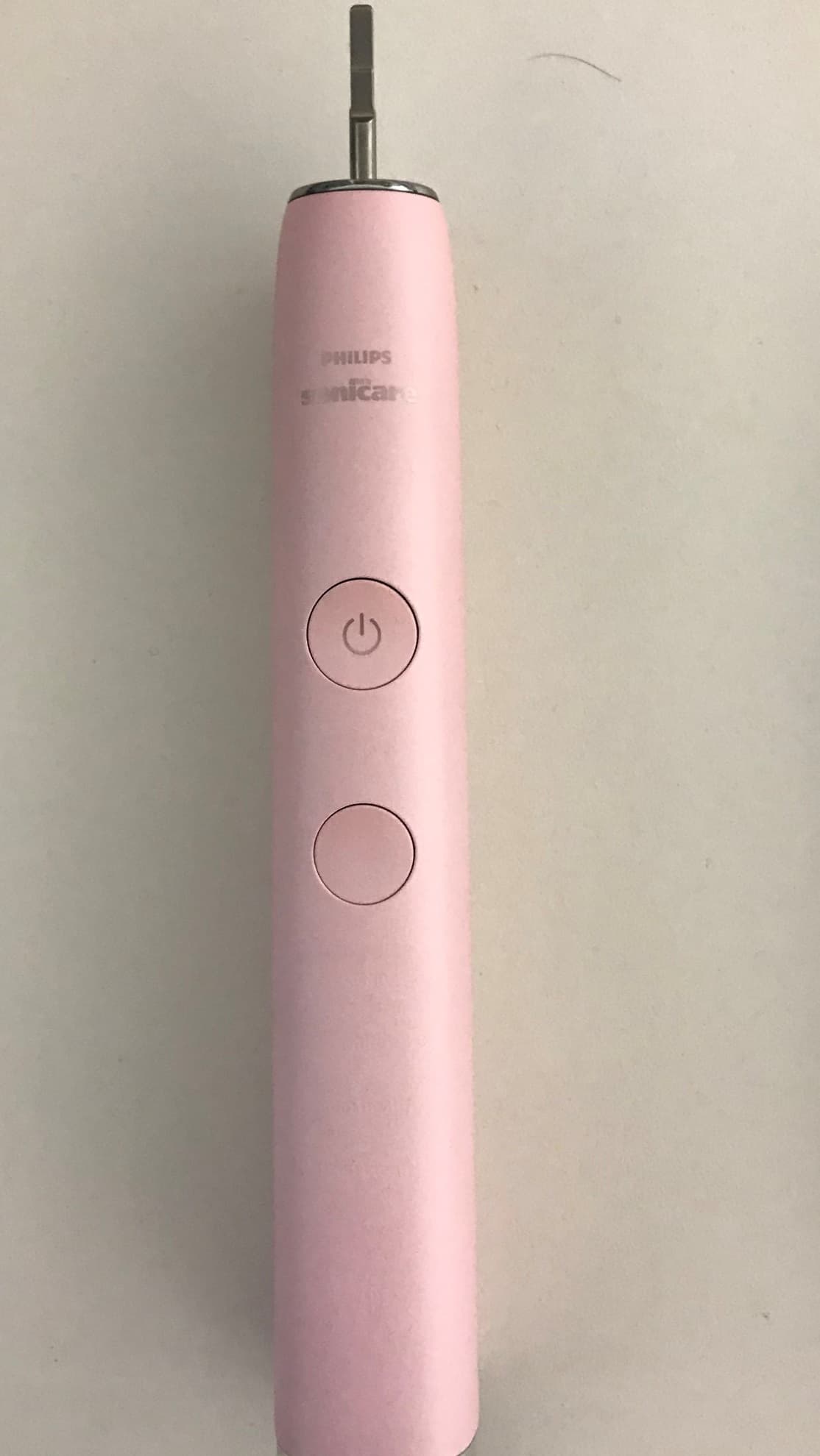
2ADZNHX991
Jun 15, 2020Power toothbrush
Equipment Class
DTS - Digital Transmission System