2AEIM-1783148B-Pillar Endpoint
Tesla, Inc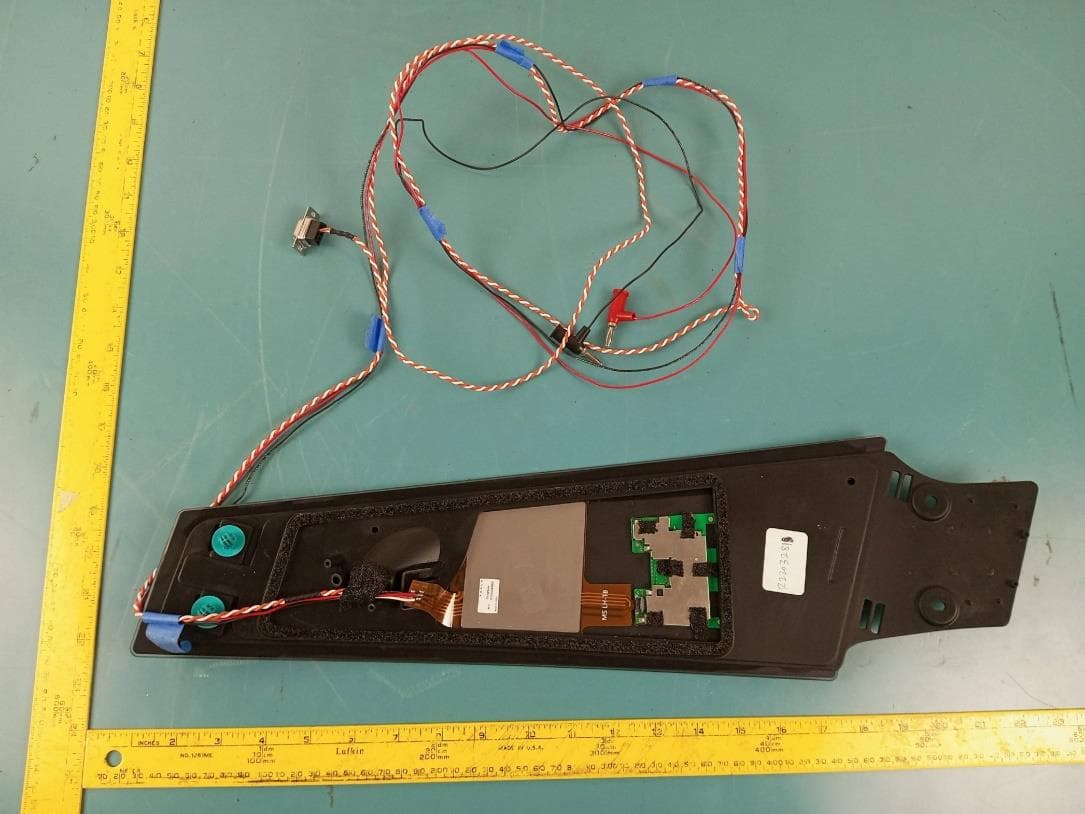
Click to zoom
Application Details
- Equipment Class
- UWB - Ultra Wideband Transmitter
- Date of Grant
- Aug 29, 2022
- Application Purpose
- Original Equipment
- Date of Application
- Jul 13, 2022
- Equipment Note
- B-Pillar Endpoint
- Frequency Range
- 6489.60000000 - 7987.20000000
- Company
- Tesla, Inc
- Country
- United States
Documents & Files
Document Text
Text extracted from the exhibit documents filed with the FCC. Open a document above to read the original.
Users Manual
Consumer Information 361 Vehicle opening and closing Three Types of Keys This vehicle supports three types of keys: • Authenticated phone - You can set up your personal smartphone to communicate with your vehicle using Bluetooth. Supports automatic locking and unlocking as well as several other functions using the Tesla mobile app. An authenticated phone is the preferred key because you never need to remove it from your pocket or purse. • Key card - Tesla provides a key card that communicates with your vehicle using short range radio-frequency identification (RFID) signals. The key card is used to "authenticate" your phone to work with your vehicle and to add or remove other key cards, phones, or key fobs. In situations where your authenticated phone has a dead battery, or is lost or stolen, use your key card to unlock, drive, and lock your vehicle • Key fob - An accessory sold separately, similar to a traditional key fob, that allows you to press buttons to open the front and rear trunks, and unlock, lock, and drive your vehicle. Your vehicle also have UWB function for passive entry function. The door handle will present when you approaching your vehicle while you carrying your keyfob. Your vehicle supports a total of 19 keys, which can include authenticated phones, key cards, and up to four key fobs. Caution: Remember to bring a key with you when you drive. Although you can drive your vehicle away from its key, you will be unable to power it back on after it powers off. Authenticated Phone Using your phone is the most convenient way to access your vehicle. As you approach, your phone's Bluetooth signal is detected and doors unlock when you press a door handle. Likewise, when you exit and walk away with the phone, doors automatically lock Before you can use a phone to access your vehicle, follow these steps to authenticate it: 1. Download the Tesla mobile app to your phone. 2. Log into the Tesla mobile app using your Tesla Account user name and password. Note: You must remain logged in to your Tesla Account to use your phone to access your vehicle. 3. Ensure that your phone's Bluetooth setting is turned on. Note: Your vehicle communicates with your phone using Bluetooth. To authenticate your phone or use it as a key, the phone must be powered on and Bluetooth must be enabled. Keep in mind that your phone must have enough battery power to run Bluetooth and that many phones disable Bluetooth when the battery is low. 4. Ensure that Allow Mobile Access (Controls > Safety & Security > Allow Mobile Access) is enabled. 5. In the Tesla mobile app, touch PHONE KEY then touch START to search for your vehicle. When your vehicle is detected, the mobile app asks you to tap your key card. 6. Tap the key card against the your vehicle card reader on the door pillar or center console. When your vehicle detects your key card, the mobile app confirms that your phone has been successfully authenticated. Touch DONE. If the key card is not successfully scanned within approximately 30 seconds, the mobile app displays an error message. Touch PHONE KEY on the app again to retry. To view a list of keys that can currently access your vehicle, or to remove a phone, touch Controls > Locks. Note: Authenticating your phone allows you to use it as a key to access your vehicle. To use the phone hands-free, access your phone's contacts, play media from it, etc., you must also pair and connect to it using the Bluetooth settings. Note: Your vehicle can connect to three phones simultaneously. Therefore, if more than one phone is detected and you want to use, or authenticate, a different phone, move the other connected phone(s) out of range or turn off its Bluetooth setting. Note: Unlike the mobile app, once a phone has been authenticated, it no longer requires an internet connection to communicate with your vehicle. Authenticated phones communicate with your vehicle using Bluetooth. Note: Although Bluetooth typically communicates over distances of up to approximately 9 meters, performance can vary based on the phone you are using, environmental interference, etc. Note: If multiple vehicles are linked to the Tesla Account, you must switch the mobile app to the vehicle that you want to access before you can use the phone as a key. Key fob If you have purchased the key fob accessory (available for purchase from Tesla stores or online at www.tesla.com/shop), you can quickly familiarize yourself with this key by thinking of it as a miniature version of your vehicle, with the Tesla badge representing the front. The key has three buttons that feel like softer areas on the surface. 1. Front trunk - Double-click to open the front trunk. 2. Lock/Unlock All - Single-click to lock doors and trunks (all doors and trunks must be closed). Double-click to unlock doors and trunks. 3. Trunk - Double-click to open the rear trunk. Hold down for one to two seconds to open the charge port door. Once inside, power up your vehicle by pressing the brake pedal within two minutes of pressing the unlock button on the key fob (see Starting and Powering Off on page 46). If you wait longer than two minutes, you must press the unlock button again, or place the key fob near the card reader located behind the cup holders on the center console. When your key fob is detected, the two minute authentication period restarts. When approaching or leaving your vehicle carrying the key fob, you do not need to point the key fob at your vehicle as you 362 OWNER'S MANUAL press a button, but you must be within operating range. Radio equipment on a similar frequency can affect the key. If this happens, move the key at least 30 cm away from other electronic devices (phone, laptop, etc). If the key fob does not work (for example, its battery is dead), you can touch it's flat side against the card reader on the driver's side door pillar (like the key card). Instructions for changing the battery are provided below. Note: Walk-Away Door Lock operates only when using an authe…
Text truncated - open the document above for the full version.
Cover Letter(s)
Tesla, Inc. 3500 Deer Creek Road, Palo Alto, CA 94304 p +650 681 5100 f +650 681 5101 Federal Communications Commission Office of Engineering & Technology Authorization and Evaluation Division 7435 Oakland Mills Road Columbia, MD 21046 Via Electronic Filing Date: April 28, 2021 Re: Authorized Personnel for Grantee Code 2AEIM To Whom It May Concern: I currently serve as Tesla, Inc’s (Tesla) grantee contact (Grantee Code 2AEIM) for Federal Communications Commission (FCC) equipment authorizations. As prescribed in KDB 852134 Authorized Policy Form 731, I authorize the following personnel to act on Tesla’s behalf with regard to all matters that relate to FCC equipment authorization (i.e., signing Form 731, attestation letters, and confidentiality request letters). These individuals also are authorized to assign additional persons to act on Tesla’s behalf as authorized agents. Authorized Personnel: • Peng Zhang • Cindy Li This authorization is valid until further written notice from any of Tesla’s authorized grantee contacts. Sincerely Yours, Sean Lui Sr. Staff Charging Compliance Engineer 3500 Deer Creek Road, Palo Alto, California US 94304 Phone: (650)681-5109 [email protected]
Cover Letter(s)
QA-FR-172-A FCC Confidential Authorization 2022-04-08 FEDERAL COMMUNICATIONS COMMISSIONS Authorization and Evaluation Division 7435 Oakland Mills Road Columbia, MD 21046 Subject: Confidentiality Request regarding application for certification of FCC ID: 2AEIM-1783148 In accordance with Sections 0.457 and 0.459 of the Commission’s Rules, Tesla, Inc hereby requests long-term confidential treatment of information accompanying this application as outlined below: • Block Diagram • Schematics • Operation Description As well as short-term confidential treatment of information accompanying this application as outlined below: • Internal Photos • User’s Manual • External Photos • Test Set-up Photos The above materials contain proprietary and confidential information not customarily released to the public. The public disclosure of these materials provides unjustified benefits to its competitors in the market. Sincerely, Client’s signature Cindy Li, Senior Certification Engineer 3500 Deer Creek Road, Palo Alto, CA 94304, USA
External Photos
Tesla, Inc. FCC ID: 2AEIM-1783148, IC: 20098-1783148 EUT External Photographs 1.1 EUT Front View 1.2 EUT Rear View NFC Antenna Tesla, Inc. FCC ID: 2AEIM-1783148, IC: 20098-1783148 1.3 EUT Left Side View 1.4 EUT Bottom View Tesla, Inc. FCC ID: 2AEIM-1783148, IC: 20098-1783148 1.5 EUT Right Side View 1.6 EUT Top View Tesla, Inc. FCC ID: 2AEIM-1783148, IC: 20098-1783148 1.7 EUT Microcontroller Top View 1.8 EUT Microcontroller Bottom View
ID Label/Location Info
Label and Label Location TESLA INC 特斯拉汽车(北京)有限公司 Model Number: 1783148 FCC ID: 2AEIM-1783148 IC: 20098-1783148 CMIIT ID: XXXXXXXXXX XXXXXXXXXXXXX This device complies with Part 15 of the FCC Rules. Operation is subject to the following two conditions: (1) this device may not cause harmful interference, and (2) this device much accept any interference received, including interference that may cause undesired operation. CAN ICES-003 (B)/NMB-003(B) 211-220406 第AC-19036号 TRA REGISTERER No: ERXXXXXXXX DEALER No: DA68835/17 R-R-Tsa-1783148
Internal Photos
Tesla, Inc. FCC ID: 2AEIM-1783148, IC: 20098-1783148 EUT Internal Photographs 1.1 EUT Internal Board Bottom 1.2 EUT Internal Board Top View BLE Antenna UWB Antenna Tesla, Inc. FCC ID: 2AEIM-1783148, IC: 20098-1783148 1.3 NFC Antenna
RF Exposure Info
Note: This test report was prepared for the customer shown above and for the device described herein. It may not be duplicated or used in part without prior written consent from Bay Area Compliance Laboratories Corp. This test report shall not be used by the customer to claim product certification, approval, or endorsement by A2LA or any agency of the United States Government or any foreign government. * This test report may contain data and test methods that are not covered by BACL’s scope of accreditation as of the test report date shown above. These items are marked within the test report text with an asterisk “*” FCC RF EXPOSURE ASSESSMENT REPORT For Tesla, Inc. 3500 Deer Creek Road, Palo Alto, CA 94304, USA FCC ID: 2AEIM-1783148 R e p o r t T y p e : O r i g i n a l R e p o r t P r o d u c t T y p e : A u t o m o t i v e P a r t Prepared By Christian McCaig RF Lead Engineer Report Number R2203281-04 Report Date 2022-06-22 Reviewed By Simon Ma RF Supervisor Bay Area Compliance Laboratories Corp. 1274 Anvilwood Avenue, Sunnyvale, CA 94089, USA Tel: (408) 732-9162, Fax: (408) 732 9164 Tesla, Inc. FCC ID: 2AEIM-1783148 Report Number: R2203281-04 Page 2 of 12 FCC RF Exposure Assessment Report TABLE OF CONTENTS 1 GENERAL DESCRIPTION ................................................................................................................................. 4 1.1 PRODUCT DESCRIPTION FOR UNIT UNDER TEST (UUT) .................................................................................... 4 1.2 MECHANICAL DESCRIPTION OF UUT ................................................................................................................. 4 1.3 OBJECTIVE ......................................................................................................................................................... 4 1.4 RELATED SUBMITTAL(S)/GRANT(S) ................................................................................................................... 4 1.5 TEST FACILITY REGISTRATIONS ........................................................................................................................ 4 1.6 TEST FACILITY ACCREDITATIONS ...................................................................................................................... 5 2 EUT TEST CONFIGURATION ........................................................................................................................... 7 2.1 JUSTIFICATION ................................................................................................................................................... 7 2.2 EUT EXERCISE SOFTWARE ................................................................................................................................ 7 2.3 EQUIPMENT MODIFICATIONS ............................................................................................................................. 8 2.4 SPECIAL EQUIPMENT ......................................................................................................................................... 8 2.5 REMOTE SUPPORT EQUIPMENT .......................................................................................................................... 8 2.6 POWER SUPPLY AND LINE FILTERS .................................................................................................................... 8 2.7 INTERFACE PORTS AND CABLING ...................................................................................................................... 8 3 RF EXPOSURE ASSESSMENT .......................................................................................................................... 9 3.1 APPLICABLE STANDARDS .................................................................................................................................. 9 3.2 MPE PREDICTION .............................................................................................................................................. 9 3.3 TEST RESULTS ................................................................................................................................................. 10 4 ANNEX A (NORMATIVE) - A2LA ELECTRICAL TESTING CERTIFICATE ......................................... 12 Tesla, Inc. FCC ID: 2AEIM-1783148 Report Number: R2203281-04 Page 3 of 12 FCC RF Exposure Assessment Report DOCUMENT REVISION HISTORY Revision Number Report Number Description of Revision Date of Revision 0 R2203281-04 Original Report 2022-06-22 Tesla, Inc. FCC ID: 2AEIM-1783148 Report Number: R2203281-04 Page 4 of 12 FCC RF Exposure Assessment Report 1 General Description 1.1 Product Description for Unit Under Test (UUT) This test report was prepared on behalf of Tesla, Inc., and their product model: 1783148, FCC ID: 2AEIM- 1783148; or the “EUT” as referred to in this report. The EUT is an automotive part (B Pillar Endpoint) with Ultra Wide-band (UWB) operating in 6489.6-7987.2 MHz, Bluetooth Low Energy, and NFC capabilities. 1.2 Mechanical Description of UUT 1783148 measures approximately 55 cm (Length) x 15.5 cm (Width) x 1 cm (High), and weighs approximately 0.6kg. The data gathered are from a typical production sample provided by the manufacturer with serial number: ED322025000037, assigned by Tesla, Inc. 1.3 Objective This report was prepared on behalf of Tesla, Inc in accordance with FCC §2.1091, Radiofrequency radiation exposure evaluation: mobile devices, and KDB 447498 D01 General RF Exposure Guidance v06. The objective was to determine the compliance of EUT with the FCC exposure rules. 1.4 Related Submittal(s)/Grant(s) FCC Part 15, Subpart F, Equipment Class: UWB with FCC ID: 2AEIM-1783148; IC: 20098-1783148 FCC Part 15, Subpart C, Equipment Class: DTS with FCC ID: 2AEIM-1783148; IC: 20098-1783148 FCC Part 15, Subpart C, Equipment Class: DXX with FCC ID: 2AEIM-1783148; IC: 20098-1783148 1.5 Test Facility Registrations BACLs test facilities that are used to perfo…
Text truncated - open the document above for the full version.
Test Report
Note: This test report is prepared for the customer shown above and for the device described herein. It may not be duplicated or used in part without prior written consent from Bay Area Compliance Laboratories Corp. This report must not be used by the customer to claim product certification, approval, or endorsement by A2LA*, NIST, or any agency of the Federal Government. * This report may contain data that are not covered by the A2LA accreditation and are marked with an asterisk “*” (Rev.2) FCC PART 15, SUBPART F ISEDC RSS-220, ISSUE 1, JULY 2018 TEST REPORT For Tesla, Inc. 3500 Deer Creek Road Palo Alto, CA 94304, USA R e p o r t T y p e : O r i g i n a l R e p o r t P r o d u c t T y p e : A u t o m o t i v e P a r t Prepared By Christian McCaig RF Lead Engineer Report Number R2203281-03 Report Date 2022-06-15 Reviewed By Simon Ma RF Supervisor Bay Area Compliance Laboratories Corp. 1274 Anvilwood Avenue, Sunnyvale, CA 94089, USA Tel: (408) 732-9162, Fax: (408) 732 9164 FCC ID: 2AEIM-1783148 IC: 20098-1783148 Tesla, Inc. FCC ID: 2AEIM-1783148, IC: 20098-1783148 Report Number: R2203281-03 Page 2 of 65 FCC Part 15F/ISEDC RSS-220 Test Report TABLE OF CONTENTS 1 General Description ..................................................................................................................................................... 4 1.1 Product Description for Equipment Under Test (EUT) ...................................................................................... 4 1.2 Mechanical Description of EUT ......................................................................................................................... 4 1.3 Objective ............................................................................................................................................................. 4 1.4 Related Submittal(s)/Grant(s) ............................................................................................................................. 4 1.5 Test Methodology ............................................................................................................................................... 4 1.6 Measurement Uncertainty ................................................................................................................................... 5 1.7 Test Facility Registrations .................................................................................................................................. 5 1.8 Test Facility Accreditations ................................................................................................................................ 5 2 System Test Configuration.......................................................................................................................................... 8 2.1 Justification ......................................................................................................................................................... 8 2.2 EUT Exercise Software....................................................................................................................................... 8 2.3 Equipment Modifications.................................................................................................................................... 9 2.4 Remote Support Equipment ................................................................................................................................ 9 2.5 Local Support Equipment ................................................................................................................................... 9 2.6 Interface Ports and Cabling ................................................................................................................................. 9 3 Summary of Test Results ............................................................................................................................................ 10 4 FCC §15.203 & ISEDC RSS-220 §5.1(b), RSS-Gen §6.8 - Antenna Requirements ............................................... 11 4.1 Applicable Standards ........................................................................................................................................ 11 4.2 Antenna Description ......................................................................................................................................... 12 5 FCC §15.209, §15.519(c), (d) & ISEDC RSS-220 §3.4, §5.3.1(d), (e), RSS-Gen §8.9, §8.10 - Spurious Radiated Emissions ........................................................................................................................................................................... 13 5.1 Applicable Standards ........................................................................................................................................ 13 5.2 Test Setup ......................................................................................................................................................... 16 5.3 Measurement Procedure.................................................................................................................................... 16 5.4 Corrected Amplitude and Margin Calculation .................................................................................................. 16 5.5 Test Setup Block Diagram ................................................................................................................................ 17 5.6 Test Equipment List and Details ....................................................................................................................... 20 5.7 Test Environmental Conditions ........................................................................................................................ 21 5.8 Test Results below 1 GHz measured at 3 meters .............................................................................................. 21 5.9 Te…
Text truncated - open the document above for the full version.
Test Setup Photos
Tesla, Inc FCC ID: 2AEIM-1783148, IC: 20098-1783148 EUT Test Setup Photographs 1.1. Front View EUT Test Setup at 3 Meters (Below 1GHz) 1.2. Rear View EUT Test Setup at 3 Meters (Below 1GHz) Tesla, Inc FCC ID: 2AEIM-1783148, IC: 20098-1783148 1.3. Front View EUT Test Setup at 3 Meters (1-18GHz) 1.4. Rear View EUT Test Setup at 3 Meters (1-18GHz) Tesla, Inc FCC ID: 2AEIM-1783148, IC: 20098-1783148 1.5. Front View EUT Test Setup at 1 Meter (1-18GHz) 1.6. Rear View EUT Test Setup at 1 Meter (1-18GHz) Tesla, Inc FCC ID: 2AEIM-1783148, IC: 20098-1783148 1.7. Front View EUT Test Setup at 1 Meter (18-26.5GHz) 1.8. Rear View EUT Test Setup at 1 Meter (18-26.5GHz) Tesla, Inc FCC ID: 2AEIM-1783148, IC: 20098-1783148 1.9. Front View EUT Test Setup at 1 Meter (26.5-40GHz) 1.10. Rear View EUT Test Setup at 1 Meter (26.5-40GHz)
Contact Information
Applicant
Sean Lui(International Compliance Engineer, Charging)
Test Firm
Bay Area Compliance Laboratories Corp.Lisa Tang
Technical Specifications
| # | Rule Parts | Frequency Range | Power Output |
|---|---|---|---|
| 1 | 15F | 6.49 GHz - 7.99 GHz | - |
Other Applications from Tesla, Inc
2AEIM-5443322
Jun 17, 2026Megacharger Handle
Equipment Class
DTS - Digital Transmission System2AEIM-WC8
Jun 02, 2026Wireless Phone Charger
Equipment Class
DXX - Part 15 Low Power Communication Device Transmitter2AEIM-2141065
Apr 13, 2026B Pillar Endpoint
Equipment Class
DTS - Digital Transmission System2AEIM-2167704
Apr 13, 2026B Pillar Endpoint
Equipment Class
DXX - Part 15 Low Power Communication Device Transmitter2AEIM-2145520
Apr 13, 2026Tuk Tuk Endpoint
Equipment Class
UWB - Ultra Wideband Transmitter