2AEX7-TWINS22PAXCESS Twins
Shenzhen Trendwoo Tech. Co.,Ltd.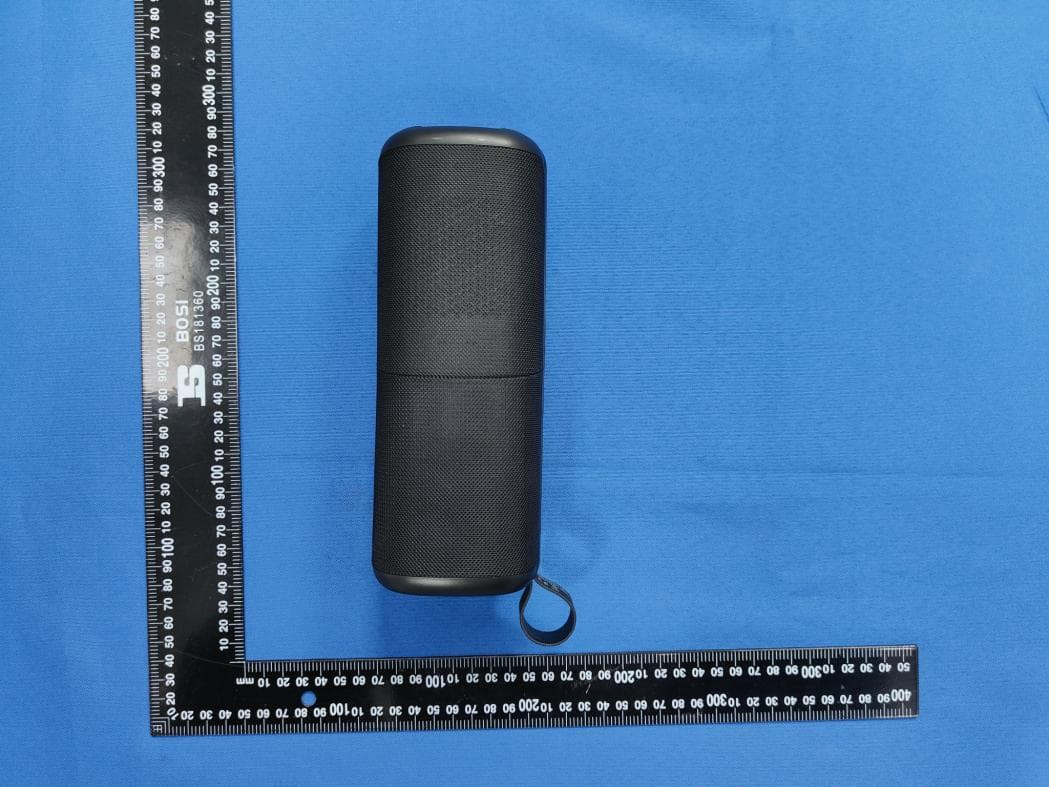
Click to zoom
Application Details
- Equipment Class
- DSS - Part 15 Spread Spectrum Transmitter
- Date of Grant
- Nov 06, 2022
- Application Purpose
- Original Equipment
- Date of Application
- Nov 06, 2022
- Equipment Note
- PAXCESS Twins
- Frequency Range
- 2402.00000000 - 2480.00000000
- Country
- China
Documents & Files
Document Text
Text extracted from the exhibit documents filed with the FCC. Open a document above to read the original.
Users Manual
POWER/MULTIFUNCTION BUTTON • Long press the power button on both top and bottom speakers for 2 seconds to power ON/OFF • Short press either power button to play/pause music • Short press either power button twice to disconnect Bluetooth • Short press either power button three times to disconnect the Pairing between the top and bottom speaker FOR PHONECALLS • Short press the top speaker’s power button to answer/end an incoming call • Short press the top speaker’s power button twice to reject a call UP & DOWN BUTTON • Short press the up button to turn the volume up • Short press the down button to turn the volume down • Short press the up and down button simultaneously to turn ON/OFF flashing white LED during music playing • Long press the up button to go to the next track • Long press the down button to go back to the previous track Note: Both speakers can be controlled mutually after paired. If the top and bottom speakers are not connected to each other, turn off the bluetooth on your device and then long press the up and down button simultaneously on both speakers for 3 seconds to connect quickly. STEP 1 Long press the power/multi-function button on both top and bottom speakers simultaneously for 2 seconds to power on. STEP 2 Find “PAXCESS TWINS” in your device’s bluetooth list and select it. STEP 3 The LED indicators on both speakers will stay white once the bluetooth is paired. You will hear a beep to indicate successful pairing. You can now play music. STEP 1 Lift the micro USB charging port cover on both the top and bottom speaker. STEP 2 Use the provided USB Y-cable. Plug the two smaller mirco USB connectors into both charging ports. STEP 3 Plug the other end of the USB Y-cable into a power adaptor (not provided) or a USB charging port. STEP 4 While the speakers are charging, the LED indicators will stay red. Once charging is complete, the LED indicator will power off. POWER/ MULTI-FUNCTION BUTTON DOWN BUTTON UP BUTTON UP BUTTON DOWN BUTTON MICRO USB CHARGING PORT TOP SPEAKER BOTTOM SPEAKER *This speaker supports mobile phones, tablets, PCs, etc. Service Email: [email protected] LED INDICATOR MICRO USB PORT INTERFACE INSTRUCTIONS LEDDescription WHITE FLASHINGBluetooth pairing, out of bluetooth range Bluetooth connected successfully Charging Low Battery Music Playing Fully Charged, Power Off WHITE ON RED ON RED FLASHING WHITE FLASHING LED OFF MADE IN CHINA Q: What kind of charger should we use for the speaker? A: Use the provided USB Y-cable. If unavailable, use any micro USB charger above 5V/0.8A Q: What if there is discontinuous sound when playing? A: The speaker can be normally used within 10 meter. If it is over 10 meters, there might be noise or discontinuous sound. Q: Why will the speaker shut down automatically when it is working ? A: When there is no bluetooth pairing for more than 10 minutes, the speaker will shut down automatically to reduce power consumption. Q: Why can’t the speaker connect to a previously paired device? A: First, remove the speaker's pairing name from the device’s bluetooth list and then short press the power button twice quickly to restart pairing mode. DEVICE: TWINS DEVICE: TWINS DEVICE: TWINSDEVICE: TWINSDEVICE: TWINS PORTABLE BLUETOOTH 2 IN 1 STEREO SPEAKER PAXCESS TWINS TECH SPECS PRODUCT NAMEPortable bluetooth 2 in 1 stereo speaker 1x Twins:2 Bluetooth Stereo Speaker System 1x Manual 1x Clip 1x USB Charging Cable 5.0 1500mAh x 2 14 Hours ( Depends on the music and volume ) 2-4 Hours 10W x 2 BLUETOOTH VERSION TwinsMODEL NAME BATTERY CAPACITY PLAY TIME CHARGING TIME DRIVER UNITS 5V 0.8A CHARGING CURRENT 206.5*78.5*78mm 860g PRODUCT SIZE PRODUCT WEIGHT FAQ INCLUDES Button FunctionsInstructions: Getting StartedInstructions: How to Charge Instructions: How to Split & Reconnect STEP 1 Place one hand on the top speaker and your other hand on the bottom speaker STEP 2 Simultaneously twist the top speaker counter clockwise and the bottom speaker clockwise STEP 3 Separate the speakers STEP 1 Place one hand on the top speaker and your other hand on the bottom speaker STEP 2 Align both the top and bottom speakers STEP 3 Simultaneously twist the top speaker clockwise and the bottom speaker counter clockwise TWINS FCC Statement This device complies with part 15 of the FCC rules. Operation is subject to the following two conditions: (1) this device may not cause harmful interference, and (2) this device must accept any interference received, including interference that may cause undesired operation. Changes or modifications not expressly approved by the party responsible for compliance could void the user's authority to operate the equipment. NOTE: This equipment has been tested and found to comply with the limits for a Class B digital device, pursuant to part 15 of the FCC Rules. These limits are designed to provide reasonable protection against harmful interference in a residential installation. This equipment generates uses and can radiate radio frequency energy and, if not installed and used in accordance with the instructions, may cause harmful interference to radio communications. However, there is no guarantee that interference will not occur in a particular installation. If this equipment does cause harmful interference to radio or television reception, which can be determined by turning the equipment off and on, the user is encouraged to try to correct the interference by one or more of the following measures: • Reorient or relocate the receiving antenna. • Increase the separation between the equipment and receiver. • Connect the equipment into an outlet on a circuit different from that to which the receiver is connected. • Consult the dealer or an experienced radio/TV technician for help. The device has been evaluated to meet general RF exposure requirement. The device can be used in portable exposure condition without restriction.
Cover Letter(s)
C5266091_X8_Ed.1 1/1 Letter of Authorization Company: Shenzhen Trendwoo Tech. Co.,Ltd. Address: Units 3202&3208, 32nd floor, Block C, Phase 2 Galaxy World, Minle community, Minzhi street, Longhua district, Shenzhen, China Product Name: PAXCESS Twins Model Number: PAXCESS Twins FCC Identifier: 2AEX7-TWINS22 We authorize LGAI Technological Center S.A., Ronda de la Font del Carme, s/n, 08193 Bellaterra, Spain, to act on our behalf on all matters concerning the above named equipment. Any individual within LGAI Technological Center S.A. is authorized to act on our behalf and take action on the application. We declare that authorize LGAI Technological Center S.A., Ronda de la Font del Carme, s/n, 08193 Bellaterra, Spain, is allowed to forward all information related to the approval project to the Federal Communication Commission and to discuss any issues concerning the approval application. Any and all acts carried out by LGAI Technological Center S.A. on our behalf shall have the same effect as acts of our own. Name: Sara Liao Date: 2022.11.03 Title: Manager Signature of applicant:
Cover Letter(s)
C5266091_X10_Ed.1 1/1 Shenzhen Trendwoo Tech. Co.,Ltd. Office of Engineering Technology Federal Communications Commission 7435 Oakland Mills Road Columbia, MD 21046 Date: 2022.11.03 Subject: Request for Confidentiality FCC ID: 2AEX7-TWINS22 To Whom It May Concern, Pursuant to the provisions of Sections 0.457 and 0.459 of Commission's rules (47CFR0.457, 0.459), we are requesting the Commission to withhold the following attachment(s) as confidential document from public disclosure. Exhibits Long-Term Confidentiality Short-Term Confidentiality ID Label/Location No No Attestation Statement No No External Photos No Block Diagram Schematics Test Report No No Test Setup Photos No User’s Manual Internal Photos Parts List / Tune Up RF Exposure Info Operational Description Cover Letter(s) No No SDR Software / Security Info No Above mentioned document contains detailed system and equipment description are considered as proprietary information in operation of the equipment. The public disclosure of above documents might be harmful to our company and would give competitor an unfair advantage in the market. It is our understanding that all measurement test reports, FCC ID label format and correspondent during certification review process cannot be granted as confidential documents and those information will be available for public review once the grant of equipment authorization is issued. C5266091_X10_Ed.1 1/1 Sincerely, Signature: Name: Sara Liao Title: Manager
External Photos
FCC ID: 2AEX7-TWINS22 Page 1 of 4 Report No.: CTL2209277021-WF External Photos of EUT FCC ID: 2AEX7-TWINS22 Page 2 of 4 Report No.: CTL2209277021-WF FCC ID: 2AEX7-TWINS22 Page 3 of 4 Report No.: CTL2209277021-WF FCC ID: 2AEX7-TWINS22 Page 4 of 4 Report No.: CTL2209277021-WF
ID Label/Location Info
FCC ID: 2AEX7-TWINS22 Page 1 of 1 Report No.: CTL2209277021-WF FCC-ID Label Information 1. Label location: PAXCESS Twins Model: PAXCESS Twins FCC ID: 2AEX7-TWINS22
Internal Photos
FCC ID: 2AEX7-TWINS22 Page 1 of 5 Report No.: CTL2209277021-WF Internal Photos of EUT FCC ID: 2AEX7-TWINS22 Page 2 of 5 Report No.: CTL2209277021-WF FCC ID: 2AEX7-TWINS22 Page 3 of 5 Report No.: CTL2209277021-WF Antenna FCC ID: 2AEX7-TWINS22 Page 4 of 5 Report No.: CTL2209277021-WF FCC ID: 2AEX7-TWINS22 Page 5 of 5 Report No.: CTL2209277021-WF
RF Exposure Info
FCC ID: 2AEX7-TWINS22 Page 1 of 1 Report No.: CTL2209277021-WF RF Exposure evaluation According to 447498 D01 General RF Exposure Guidance v06 The 1-g and 10-g SAR test exclusion thresholds for 100 MHz to 6 GHz at test separation distances ≤50 mm are determined by: [(max. power of channel, including tune-up tolerance, mW)/(min. test separation distance, mm)] ·[√f(GHz)] ≤3.0 for 1-g SAR and ≤7.5 for 10-g extremity SAR, where f(GHz) is the RF channel transmit frequency in GHz Power and distance are rounded to the nearest mW and mm before calculation The result is rounded to one decimal place for comparison For Bluetooth low Energy pt=-1.33dBm=0.7362mW at 2441MHz So (0.7362mW/5mm)x √2.441GHz = 0.2300<3 Then SAR evaluation is not required/
Test Report
V1.0 Page 1 of 52 Report No.: CTL2209277021-WF Test Data for Bluetooth Product Name: PAXCESS Twins Test Model: PAXCESS Twins 1. Bandwidth 1.1 OBW 1.1.1 Test Result Mode TX Type Frequency (MHz) Packet Type ANT 99% Occupied Bandwidth (MHz) Verdict Result GFSK SISO 2402 DH5 1 0.851 Pass 2441 DH5 1 0.854 Pass 2480 DH5 1 0.856 Pass Pi/4DQPSK SISO 2402 2DH5 1 1.189 Pass 2441 2DH5 1 1.189 Pass 2480 2DH5 1 1.191 Pass 8DPSK SISO 2402 3DH5 1 1.185 Pass 2441 3DH5 1 1.185 Pass 2480 3DH5 1 1.189 Pass V1.0 Page 2 of 52 Report No.: CTL2209277021-WF 1.1.2 Test Graph GFSK_DH5_LCH_2402MHz_Ant1_NTNV GFSK_DH5_MCH_2441MHz_Ant1_NTNV V1.0 Page 3 of 52 Report No.: CTL2209277021-WF GFSK_DH5_HCH_2480MHz_Ant1_NTNV Pi/4DQPSK_2DH5_LCH_2402MHz_Ant1_NTNV V1.0 Page 4 of 52 Report No.: CTL2209277021-WF Pi/4DQPSK_2DH5_MCH_2441MHz_Ant1_NTNV Pi/4DQPSK_2DH5_HCH_2480MHz_Ant1_NTNV V1.0 Page 5 of 52 Report No.: CTL2209277021-WF 8DPSK_3DH5_LCH_2402MHz_Ant1_NTNV 8DPSK_3DH5_MCH_2441MHz_Ant1_NTNV V1.0 Page 6 of 52 Report No.: CTL2209277021-WF 8DPSK_3DH5_HCH_2480MHz_Ant1_NTNV V1.0 Page 7 of 52 Report No.: CTL2209277021-WF 1.2 20dB BW 1.2.1 Test Result Mode TX Type Frequency (MHz) Packet Type ANT 20dB Bandwidth (MHz) Verdict Result GFSK SISO 2402 DH5 1 0.937 Pass 2441 DH5 1 0.937 Pass 2480 DH5 1 0.937 Pass Pi/4DQPSK SISO 2402 2DH5 1 1.339 Pass 2441 2DH5 1 1.339 Pass 2480 2DH5 1 1.343 Pass 8DPSK SISO 2402 3DH5 1 1.312 Pass 2441 3DH5 1 1.310 Pass 2480 3DH5 1 1.311 Pass V1.0 Page 8 of 52 Report No.: CTL2209277021-WF 1.2.2 Test Graph GFSK_DH5_LCH_2402MHz_Ant1_NTNV GFSK_DH5_MCH_2441MHz_Ant1_NTNV V1.0 Page 9 of 52 Report No.: CTL2209277021-WF GFSK_DH5_HCH_2480MHz_Ant1_NTNV Pi/4DQPSK_2DH5_LCH_2402MHz_Ant1_NTNV V1.0 Page 10 of 52 Report No.: CTL2209277021-WF Pi/4DQPSK_2DH5_MCH_2441MHz_Ant1_NTNV Pi/4DQPSK_2DH5_HCH_2480MHz_Ant1_NTNV V1.0 Page 11 of 52 Report No.: CTL2209277021-WF 8DPSK_3DH5_LCH_2402MHz_Ant1_NTNV 8DPSK_3DH5_MCH_2441MHz_Ant1_NTNV V1.0 Page 12 of 52 Report No.: CTL2209277021-WF 8DPSK_3DH5_HCH_2480MHz_Ant1_NTNV V1.0 Page 13 of 52 Report No.: CTL2209277021-WF 2. Maximum Conducted Output Power 2.1 Power 2.1.1 Test Result Mode TX Type Frequency (MHz) Packet Type Maximum Peak Conducted Output Power (dBm) Verdict ANT1 Limit GFSK SISO 2402 DH5 -5.89 <=30 Pass 2441 DH5 -4.59 <=30 Pass 2480 DH5 -4.45 <=30 Pass Pi/4DQPSK SISO 2402 2DH5 -3.17 <=20.97 Pass 2441 2DH5 -1.92 <=20.97 Pass 2480 2DH5 -2.00 <=20.97 Pass 8DPSK SISO 2402 3DH5 -2.65 <=20.97 Pass 2441 3DH5 -1.33 <=20.97 Pass 2480 3DH5 -1.44 <=20.97 Pass Note1: Antenna Gain: Ant1: 1.08dBi; V1.0 Page 14 of 52 Report No.: CTL2209277021-WF 2.1.2 Test Graph GFSK_DH5_LCH_2402MHz_Ant1_NTNV GFSK_DH5_MCH_2441MHz_Ant1_NTNV V1.0 Page 15 of 52 Report No.: CTL2209277021-WF GFSK_DH5_HCH_2480MHz_Ant1_NTNV Pi/4DQPSK_2DH5_LCH_2402MHz_Ant1_NTNV V1.0 Page 16 of 52 Report No.: CTL2209277021-WF Pi/4DQPSK_2DH5_MCH_2441MHz_Ant1_NTNV Pi/4DQPSK_2DH5_HCH_2480MHz_Ant1_NTNV V1.0 Page 17 of 52 Report No.: CTL2209277021-WF 8DPSK_3DH5_LCH_2402MHz_Ant1_NTNV 8DPSK_3DH5_MCH_2441MHz_Ant1_NTNV V1.0 Page 18 of 52 Report No.: CTL2209277021-WF 8DPSK_3DH5_HCH_2480MHz_Ant1_NTNV V1.0 Page 19 of 52 Report No.: CTL2209277021-WF 3. Carrier Frequency Separation 3.1 Ant1 3.1.1 Test Result Ant1 Mode TX Type Frequency (MHz) Packet Type Channel Separation (MHz) 20dB Bandwidth (MHz) Limit (MHz) Verdict GFSK SISO HOPP DH5 1.000 0.937 >=0.937 Pass Pi/4DQPSK SISO HOPP 2DH5 0.996 1.343 >=0.895 Pass 8DPSK SISO HOPP 3DH5 1.001 1.312 >=0.875 Pass V1.0 Page 20 of 52 Report No.: CTL2209277021-WF 3.1.2 Test Graph GFSK_DH5_HOPP_Ant1_NTNV Pi/4DQPSK_2DH5_HOPP_Ant1_NTNV V1.0 Page 21 of 52 Report No.: CTL2209277021-WF 8DPSK_3DH5_HOPP_Ant1_NTNV V1.0 Page 22 of 52 Report No.: CTL2209277021-WF 4. Number of Hopping Frequencies 4.1 HoppNum 4.1.1 Test Result Mode TX Type Frequency (MHz) Packet Type Num of Hopping Frequencies Verdict ANT1 Limit GFSK SISO HOPP DH5 79 >=15 Pass Pi/4DQPSK SISO HOPP 2DH5 79 >=15 Pass 8DPSK SISO HOPP 3DH5 79 >=15 Pass V1.0 Page 23 of 52 Report No.: CTL2209277021-WF 4.1.2 Test Graph GFSK_DH5_HOPP_Ant1_NTNV Pi/4DQPSK_2DH5_HOPP_Ant1_NTNV V1.0 Page 24 of 52 Report No.: CTL2209277021-WF 8DPSK_3DH5_HOPP_Ant1_NTNV V1.0 Page 25 of 52 Report No.: CTL2209277021-WF 5. Time of Occupancy (Dwell Time) 5.1 Ant1 5.1.1 Test Result Ant1 Mode TX Type Frequency (MHz) Packet Type Duration of Single Pulse (ms) Observation Period (s) Num of Pulse in Observation Period Dwell Time (ms) Limit (ms) Verdict GFSK SISO HOPP DH1 0.376 31.600 320 120.320 <=400 Pass DH3 1.650 31.600 160 264.000 <=400 Pass DH5 2.898 31.600 106 307.188 <=400 Pass Pi/4DQPSK SISO HOPP 2DH1 0.380 31.600 320 121.600 <=400 Pass 2DH3 1.682 31.600 160 269.120 <=400 Pass 2DH5 2.930 31.600 107 313.510 <=400 Pass 8DPSK SISO HOPP 3DH1 0.380 31.600 320 121.600 <=400 Pass 3DH3 1.648 31.600 160 263.680 <=400 Pass 3DH5 2.886 31.600 106 305.916 <=400 Pass V1.0 Page 26 of 52 Report No.: CTL2209277021-WF 5.1.2 Test Graph GFSK_DH1_HOPP_Ant1_NTNV GFSK_DH1_HOPP_Ant1_NTNV V1.0 Page 27 of 52 Report No.: CTL2209277021-WF GFSK_DH3_HOPP_Ant1_NTNV GFSK_DH3_HOPP_Ant1_NTNV V1.0 Page 28 of 52 Report No.: CTL2209277021-WF GFSK_DH5_HOPP_Ant1_NTNV GFSK_DH5_HOPP_Ant1_NTNV V1.0 Page 29 of 52 Report No.: CTL2209277021-WF Pi/4DQPSK_2DH1_HOPP_Ant1_NTNV Pi/4DQPSK_2DH1_HOPP_Ant1_NTNV V1.0 Page 30 of 52 Report No.: CTL2209277021-WF Pi/4DQPSK_2DH3_HOPP_Ant1_NTNV Pi/4DQPSK_2DH3_HOPP_Ant1_NTNV V1.0 Page 31 of 52 Report No.: CTL2209277021-WF Pi/4DQPSK_2DH5_HOPP_Ant1_NTNV Pi/4DQPSK_2DH5_HOPP_Ant1_NTNV V1.0 Page 32 of 52 Report No.: CTL2209277021-WF 8DPSK_3DH1_HOPP_Ant1_NTNV 8DPSK_3DH1_HOPP_Ant1_NTNV V1.0 Page 33 of 52 Report No.: CTL2209277021-WF 8DPSK_3DH3_HOPP_Ant1_NTNV 8DPSK_3DH3_HOPP_Ant1_NTNV V1.0 Page 34 of 52 Report No.: CTL2209277021-WF 8DPSK_3DH5_HOPP_Ant1_NTNV 8DPSK_3DH5_HOPP_Ant1_NTNV V1.0 Page 35 of 52 Report No.: CTL2209277021-WF 6. Unwanted Emissions In Non-restricted Frequency Bands 6.1 Ref 6.1.1 Test Result Mode TX Type Frequency (MHz) Packet Type ANT Level of Reference (dBm) GFSK SISO 2402 DH5 1 -5.74 2441 …
Text truncated - open the document above for the full version.
Test Report
Shenzhen CTL Testing Technology Co., Ltd. Tel: +86-755-89486194 E-mail: [email protected] TEST REPORT FCC PART 15.247 Report Reference No.: CTL2209277021-WF Compiled by: ( position+printed name+signature) Happy Guo (File administrators) Tested by: ( position+printed name+signature) Gray Gao (Test Engineer) Approved by: ( position+printed name+signature) Ivan Xie (Manager) Product Name ............................ : PAXCESS Twins Model/Type reference ................ : PAXCESS Twins List Model(s) ............................... : N/A Trade Mark .................................. : PAXCESS FCC ID ......................................... : 2AEX7-TWINS22 Applicant’s name ....................... : Shenzhen Trendwoo Tech. Co.,Ltd. Address of applicant ................. : Units 3202&3208, 32nd floor, Block C, Phase 2 Galaxy World, Minle community, Minzhi street, Longhua district, Shenzhen, China Test Firm ..................................... : Shenzhen CTL Testing Technology Co., Ltd. Address of Test Firm ................. : Floor 1-A, Baisha Technology Park, No.3011, Shahexi Road, Nanshan District, Shenzhen, China 518055 Test specification ....................... : Standard ...................................... : FCC Part 15.247: Operation within the bands 902-928 MHz, 2400-2483.5 MHz and 5725-5850 MHz. TRF Originator ............................. : Shenzhen CTL Testing Technology Co., Ltd. Master TRF .................................. : Dated 2011-01 Date of receipt of test item ........ : Sep.30, 2022 Date of Test Date ........................ : Sep.30, 2022- Oct.20, 2022 Date of Issue .............................. : Oct.21, 2022 Result .......................................... : Pass Shenzhen CTL Testing Technology Co., Ltd. All rights reserved. This publication may be reproduced in whole or in part for non-commercial purposes as long as the Shenzhen CTL Testing Technology Co., Ltd. is acknowledged as copyright owner and source of the material. Shenzhen CTL Testing Technology Co., Ltd. takes no responsibility for and will not assume liability for damages resulting from the reader's interpretation of the reproduced material due to its placement and context. V1.0 Page 2 of 40 Report No.: CTL2209277021-WF TEST REPORT Test Report No. : CTL2209277021-WF Oct.21, 2022 Date of issue Equipment under Test : PAXCESS Twins Sample No : CTL220927702-1-S001 Model /Type : PAXCESS Twins Listed Models : N/A Applicant : Shenzhen Trendwoo Tech. Co.,Ltd. Address : Units 3202&3208, 32nd floor, Block C, Phase 2 Galaxy World, Minle community, Minzhi street, Longhua district, Shenzhen, China Manufacturer : Shenzhen Trendwoo Tech. Co.,Ltd. Address : Units 3202&3208, 32nd floor, Block C, Phase 2 Galaxy World, Minle community, Minzhi street, Longhua district, Shenzhen, China Test result Pass * *In the configuration tested, the EUT complied with the standards specified page 5. The test results presented in this report relate only to the object tested. This report shall not be reproduced, except in full, without the written approval of the issuing testing laboratory. V1.0 Page 3 of 40 Report No.: CTL2209277021-WF ** Modified History ** Revisions Description Issued Data Report No. Remark Version 1.0 Initial Test Report Release 2022-10-21 CTL2209277021-WF Tracy Qi V1.0 Page 4 of 40 Report No.: CTL2209277021-WF Table of Contents Page 1. SUMMARY ............................................................................................................................................................... 5 1.1. TEST STANDARDS ..................................................................................................................................................... 5 1.2. TEST DESCRIPTION ........................................................................................................................................................ 5 1.3. TEST FACILITY .............................................................................................................................................................. 6 1.4. STATEMENT OF THE MEASUREMENT UNCERTAINTY ............................................................................................................... 6 1.5. SUPPORT EQUIPMENT LIST ............................................................................................................................................. 7 2. GENERAL INFORMATION .......................................................................................................................................... 8 2.1. ENVIRONMENTAL CONDITIONS ........................................................................................................................................ 8 2.2. GENERAL DESCRIPTION OF EUT ...................................................................................................................................... 8 2.3. DESCRIPTION OF TEST MODES AND TEST FREQUENCY .......................................................................................................... 9 2.4. EQUIPMENTS USED DURING THE TEST ............................................................................................................................ 10 2.5. RELATED SUBMITTAL(S) / GRANT (S) .............................................................................................................................. 10 2.6. MODIFICATIONS ......................................................................................................................................................... 10 3. TEST CONDITIONS AND RESULTS ............................................................................................................................ 11 3.1. CONDUCTED EMISSIONS TEST ....................................................................................................................................... 11 3.2. RADIATED EMISSIONS AND BAND EDGE ...................................................................…
Text truncated - open the document above for the full version.
Test Report
1 Specification for Taixu F-type Bluetooth Antenna 1. Introduction to antenna Bluetooth antenna is directly installed on PCB 2. Antenna profile 3. Antenna parameters The operating frequency of the Bluetooth antenna is 2400-2500MHz, which generates resonance. The following table shows the main parameters of the antenna Bluetooth built-in antenna Frequency(MHz) 2400 ~ 2500 MHz VSWR ≤ 1.92 Impedance 50 Ohm Nominal 2 Return Loss -10 dB Max Radiation Omni-directional Gain (Peak) 1.08dBi Polarization Linear, Vertical Admitted Power 2W Connector Tin 4. Antenna gain test report Spectrum Detector: PK Test Date : June 8, 2013 Test By: Andy Temperature : 28°C Test Result: PASS Humidity : 55 % Modulation: GFSK Frequency VNA Separation Read Separation Limit (MHz) E Total. dB(dB) 2400MHz 0.0403503 2410MHz 0.0886264 2420MHz 0.267381 2430MHz 0.193012 2440MHz 0.26366 2450MHz 0.0723139 2460MHz 0.36895 2470MHz 0.551525 2480MHz 0.640702 2490MHz 1.05232 2500MHz 1.08443 3 Pattern: PHI 0度 PHI 90度 4 THETA 90 度 Standing wave ratio diagram:
Test Setup Photos
FCC ID: 2AEX7-TWINS22 Page 1 of 2 Report No.: CTL2209277021-WF Test Setup Photos of the EUT FCC ID: 2AEX7-TWINS22 Page 2 of 2 Report No.: CTL2209277021-WF
Contact Information
Applicant
Sara Liao(Manager)
Technical Contact
Test Firm
Shenzhen CTL Testing Technology Co., Ltd.Tracy Qi
[email protected]86-755-89486194
Technical Specifications
| # | Rule Parts | Frequency Range | Power Output |
|---|---|---|---|
| 1 | 15C | 2.40 GHz - 2.48 GHz | 700.00 µW |
Other Applications from Shenzhen Trendwoo Tech. Co.,Ltd.
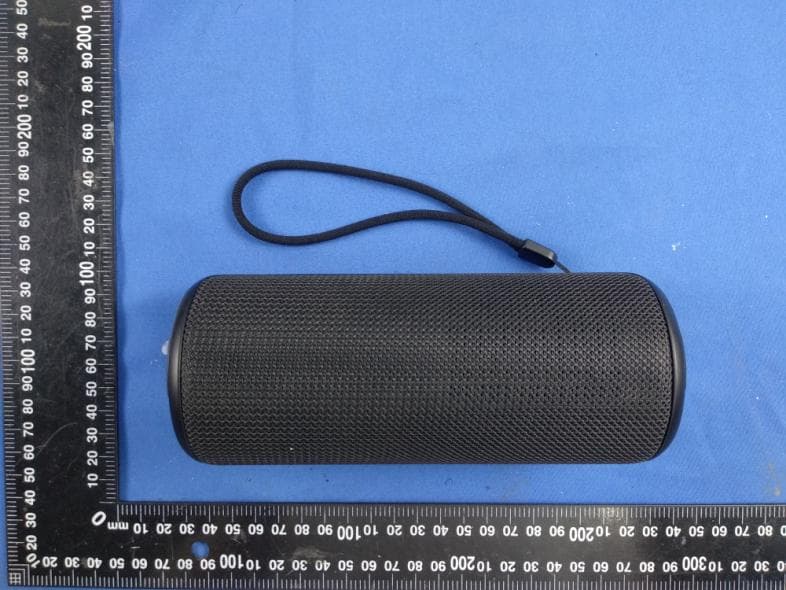
2AEX7-SX2BT
May 31, 2021Bluetooth speaker
Equipment Class
DSS - Part 15 Spread Spectrum Transmitter
2AEX7-TWINS
Jun 18, 2015Bluetooth Speaker
Equipment Class
DSS - Part 15 Spread Spectrum Transmitter