2AFMDKM29KM29PROF38Bluetooth FM transmitter
SHENZHEN SPRING TECHNOLOGY CO., LIMITED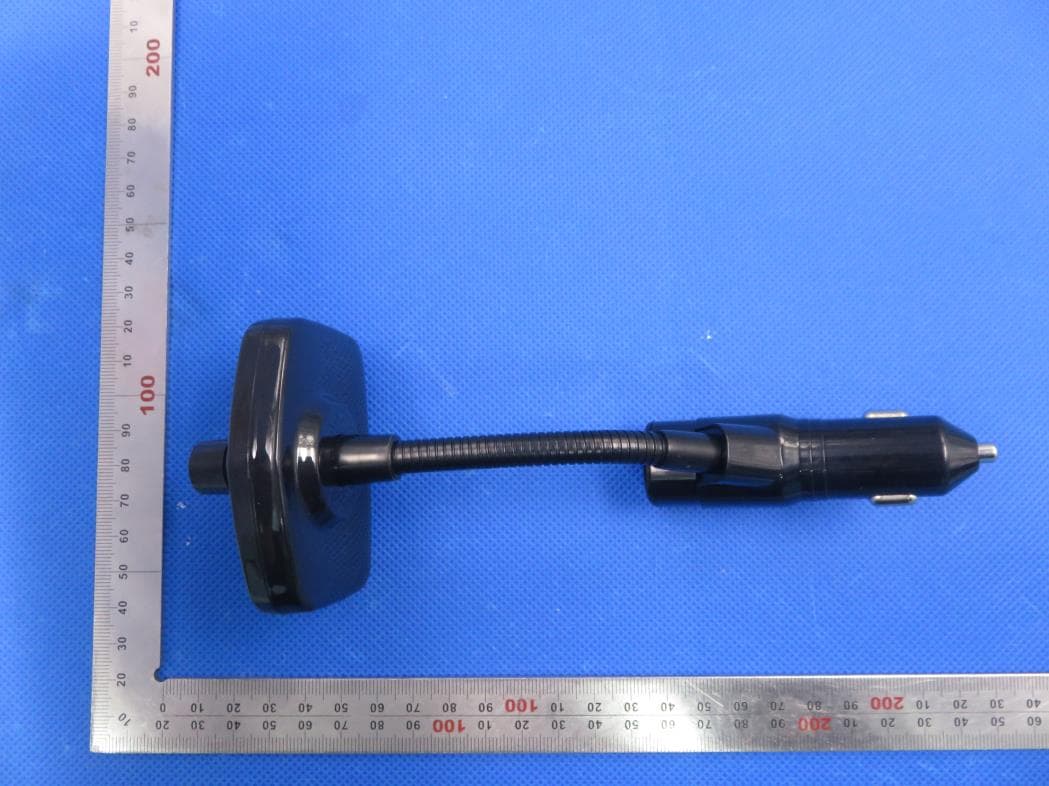
Click to zoom
Application Details
- Equipment Class
- DSS - Part 15 Spread Spectrum Transmitter
- Date of Grant
- Apr 15, 2020
- Application Purpose
- Original Equipment
- Date of Application
- Apr 15, 2020
- Equipment Note
- Bluetooth FM transmitter
- Frequency Range
- 2402.00000000 - 2480.00000000
- Country
- China
Documents & Files
Document Text
Text extracted from the exhibit documents filed with the FCC. Open a document above to read the original.
Users Manual
Auto Scan Bluetooth Car FM Transmitter USER GUIDE Please read this manual carefully before use. Product Description This device, lets you stream music and calls directly from your bluetooth device to your car FM stereo system. The built-in microphone provides you with an amazing hands-free function, it also features a USB and microSD card reader that let you steam your favorite MP3 and WMA tunes to your car’s stereo system. Dual USB port can quick charge your smart phone and other device at the same time. Specifications FM frequency range: 88.1~107.9MHz 76.0~90.0MHZ(Japanese market) Frequency stability:±10ppml Product input: 12-24V USB charge output: 5V/3A total (normal version) USB(QC3.0) output: 5V/2.4A 9V/2A 12V/1.5A (QC3.0 version) MicroSD slot and USB reader support music format: MP3,WMA MicroSD and USB flash disk(Max capacity): 32GB FM operating distance: about 5M Features Wirelessly transmit phone call from bluetooth mobile phone to the car FM stereo system; Switch to Hands-free mode automatically from music playing status when receiving calls; Supports music play back from USB and MicroSD card; Dual charge port, With voice prompts; 1.8’’ color monitor. Product Diagram ① Screen display ② Microphone ③ Line in/out ④ Micro SD card slot ⑤ Previous song/Rewind /Frequency down ⑥ Auto scan ⑦ Quick select ⑧ Next song/ Fast-forward / Frequency up ⑨ Menu key ⑩ Channel(frequency) button ⑪ Multi-function knob ⑫USB reader ⑬Charge USB 1 ⑭Charge USB 2 Operation Instruction FM Transmitter Set-up 1.Plug the FM transmitter into your vehicle’s cigarette lighter or power port, it will turn on automatically. 2.Tune your radio to an vacant FM frequency, then adjust this device to sync the same frequency(press channel button⑩ then rotate Multi-function knob). Note: For the best audio quality, please find a least interfered vacant frequency. TF Card and USB Flash Drive Insert your microSD card into microSD slot④ or insert USB flash drive into USB reader port⑫, it will play your MP3/WMA files automatically. Press Menu key⑨,rotate Multi-function knob⑪ and press to make sure,you can choose from several folder/play mode/EQ mode. Using Bluetooth Function Using bluetooth for the first time, you need to pair your mobile phone with this unit. Activate your mobile phone’s bluetooth function, then detect and pair with this unit (named as“FM38”). Bluetooth calling In the music playing mode, when there is an incoming call, this unit will automatically switch to telephone mode. 1.Please press the Multi-function knob⑪ to answer incoming call; press the Multi-function knob once again to hang up a call. 2.Please hold long press the Multi-function knob⑪ to reject an incoming call. Line-in Function Use the audio cable to connect MP3/MP4 players or another external device to the Line in port③” Line-out Function Use the audio cable via 3.5mm Line out port③, this unit can be used as a card reader. Using USB charge function When this unit powered from car lighter socket, connect the USB port ⑬or⑭ of this unit to your mobile phone with a special USB cable(not included),this unit will serve as mobile phone charger. Pay attention! The dual USB port build in the smart chip will divide the voltage based on the need of device automatically. If your choose the QC3.0 version please make sure your smart phone support quick charge, if not will charge at regular speed, original fast charging cable are also needed, the 3rd part cables may charge at slow speed. Playing mode switch Long press Multi-function knob⑪ for 2 seconds to switch the playing mode from Bluetooth, Micro SD and USB flash drive. Quick Guide Operation Guide On FM transmitter 1.Set frequency Press“CH”button⑩ then rotate Multi-function knob⑪ or press Frequency down button⑤ and Frequency up button⑧ 2.Quick select frequency Press“QS”button⑦, fast get to target frequency 3.Auto Scan Press“Auto”button⑥,automatically search for vacant frequency 4.Choose music Press“”button⑤:play the previous song Press“” ⑧button: play the next song 5.Music Rewind and Fast-forward Hold long press Rewind button⑤ and Fast-forward button⑧ 6.Play and Pause the music Press Multi-function knob⑪ 7.EQ mode switch ( in Micro SD and USB mode) Press Menu key⑨,rotate Multi-function knob⑪ and press this button make a choice.(NORMAL/CLASSICAL/POP/ROCK/JAZZ) 8.Play mode switch( in Micro SD and USB mode) Press Menu key⑨,rotate Multi-function knob⑪ and press this button make a choice.(REPEAT ALL/REPEAT ONE/RANDOM/REPEAT FOLDER) 9.Answer/hang up the call Press Multi-function button⑪ 10.Reject a call Hold long press Multi-function button⑪ 11.Adjust the volume Rotate Multi-function knob⑪ 12.Power off Hold long press“”button⑤ and“”button⑧ at the same time NOTE 1. The transmitter will connect to the pre-set phone automatically when turns on. (Keep mobile phone’s bluetooth activate). 2. For the best audio quality, please turn the volume of the cell phone and FM transmitter into the max level. 3. If the noisy is too loud, please try other FM frequency. 4.Never dismantle the product without due permission, otherwise it may nullify the warranty clause. NOTE: This equipment has been tested and found to comply with the limits for a Class B digital device, pursuant to part 15 of the FCC Rules. These limits are designed to provide reasonable protection against harmful interference in a residential installation. This equipment generates uses and can radiate radio frequency energy and, if not installed and used in accordance with the instructions, may cause harmful interference to radio communications. However, there is no guarantee that interference will not occur in a particular installation. If this equipment does cause harmful interference to radio or television reception, which can be determined by turning the equipment off and on, the user is encouraged to try to correct the interference by one or more of the following measures: - Reorient or relocate the receiving antenna. - Increase the separation between the equipment…
Text truncated - open the document above for the full version.
Cover Letter(s)
Apr. 03, 2020 Federal Communications Commission 445 12 th Street SW Washington, DC 20554 Subject: Limited Agency Agreement SHENZHEN SPRING TECHNOLOGY CO., LIMITED FCC ID: 2AFMDKM29KM29PROF38 To Whom It May Concern: We, SHENZHEN SPRING TECHNOLOGY CO., LIMITED hereby authorized Intertek Testing Services to act as our Agent for the purpose of preparing application for FCC ID number (2AFMDKM29KM29PROF38) under all applicable parts of the FCC rules and regulations. The effective date of this limited agency agreement is (2020-04-03). The Limited Agency Agreement expires until further notice, unless sooner terminated or extended by written notice to Intertek Testing Services and the Federal Communications Commission. This is to advise that we are in full compliance with the Anti-Drug Abuse Act. The applicant is not subject to a denial of federal benefits pursuant to Section 5301 of the Anti-Drug Act of 1988, 21 U.S.C. 862, and no party to the application is subject to a denial of federal benefits pursuant to that section. If you have any questions or comments, please do not hesitate to contact me. Sincerely, [Signature] SHENZHEN SPRING TECHNOLOGY CO., LIMITED Contact person: Jack Yin
Cover Letter(s)
Apr. 13, 2020 Federal Communication Commission Authorization and Evaluation Division FCC ID: 2AFMDKM29KM29PROF38 Re: Confidentiality Request Pursuant to Sections 0.457 and 0.459 of the Commission’s Rules, the applicant hereby requests confidential treatment of information applied this application as outlined below: 1: Block Diagram 2: Schematics 3: Operational Description The above materials contain trade secrets and proprietary information not customarily released to the public. The public disclosure of these matters might be harmful to the applicant and provide unjustified benefits to its competitors. The Applicant understands that pursuant to Rules 0.457, disclosure of this Application and all accompanying documentation will not be made before the date of the Grant for this application. Sincerely, SHENZHEN SPRING TECHNOLOGY CO., LIMITED Contact person: Jack Yin
External Photos
External Photos TOP VIEW OF EUT BOTTOM VIEW OF EUT FRONT VIEW OF EUT BACK VIEW OF EUT LEFT VIEW OF EUT RIGHT VIEW OF EUT VIEW OF EUT(PORT)-1 VIEW OF EUT(PORT)-2
ID Label/Location Info
FCC ID Label Location 120mm*8mm FCC ID: 2AFMDKM29KM29PROF38
Internal Photos
Internal Photos OPEN VIEW OF EUT INTERNAL VIEW OF EUT-1 INTERNAL VIEW OF EUT-2 FM Antenna connector INTERNAL VIEW OF EUT-3 INTERNAL VIEW OF EUT-4 BT Antenna INTERNAL VIEW OF EUT-5
RF Exposure Info
RF EXPOSURE EVALUATION 1. PRODUCT INFORMATION Product Description Bluetooth FM transmitter Model Name FM38, KM29, KM29Pro, FM38P, FM39, FM39P, FM40, FM43LP, FM46P, FM36, FM41, FM45, FM46, FM47, FM50, FM51, FM52, FM53, FM44, KM28, KM34, KM35 FCC ID 2AFMDKM29KM29PROF38 2. EVALUATION METHOD According to 447498 D01 General RF Exposure Guidance v05 The 1-g and 10-g SAR test exclusion thresholds for 100 MHz to 6 GHz at test separation distances ≤ 50 mm are determined by: [(max. power of channel, including tune-up tolerance, mW)/(min. test separation distance, mm)] ·[√f(GHz)] ≤ 3.0 for 1-g SAR and ≤ 7.5 for 10-g extremity SAR. Where f(GHz) is the RF channel transmit frequency in GHz Power and distance are rounded to the nearest mW and mm before calculation 3. CALCULATION P t = -0.175dBm=0.96mW The value of the Maximum output power P t is referred to the test report of the CFR47 §15.247. The result for RF exposure evaluation SAR=(0.96mW /5mm) .[√2.441GHz)]= 0.30<3.0 for 1-g SAR and ≤ 7.5 for 10-g extremity SAR. FM Pt=-49.23dBm=0.0000119mW The value of the Maximum output power P t is referred to the test report of the CFR39 §15.239 The result for RF exposure evaluation SAR=(0.0000119mW /5mm) .[√0.0881(GHz)]= 0.000000706<3.0 for 1-g SAR and ≤ 7.5 for 10-g extremity SAR. Simultaneous transmission between Bluetooth and FM transmitter: [(max. power of channel, including tune-up tolerance, mW) / (min. test separation distance, mm)]·[√f(GHz)/x] W/kg, for test separation distances ≤ 50 mm; where x = 7.5 for 1-g SAR and x = 18.75 for 10-g SAR. SAR=(0.3+0.000000706)/7.5=0.04W/kg<1.6W/kg 4. CONCLUSION The SAR evaluation is not required.
Test Report
Page 1 of 68 FCC Test Report Report No.: AGC08699200301FE03 FCC ID : 2AFMDKM29KM29PROF38 APPLICATION PURPOSE : Original Equipment PRODUCT DESIGNATION : Bluetooth FM transmitter BRAND NAME : Nulaxy, Tecboss, QPAU Pinci, TechRise, Technet LoHI, ZEEPORTE MODEL NAME : FM38, KM29, KM29Pro, FM38P, FM39, FM39P, FM40, FM43LP, FM46P, FM36, FM41, FM45, FM46, FM47, FM50, FM51, FM52, FM53, FM44, KM28, KM34, KM35 APPLICANT : SHENZHEN SPRING TECHNOLOGY CO., LIMITED DATE OF ISSUE : Mar. 27, 2020 STANDARD(S) : FCC Part 15.247 REPORT VERSION : V1.0 Attestation of Global Compliance (Shenzhen) Co., Ltd CAUTION: This report shall not be reproduced except in full without the written permission of the test laboratory and shall not be quoted out of context. Report No.: AGC08699200301FE03 Page 2 of 68 REPORT REVISE RECORD Report Version Revise Time Issued Date Valid Version Notes V1.0 / Mar. 27, 2020 Valid Initial Release Report No.: AGC08699200301FE03 Page 3 of 68 TABLE OF CONTENTS 1. VERIFICATION OF CONFORMITY ............................................................................................................... 5 2. GENERAL INFORMATION ............................................................................................................................ 6 2.1. PRODUCT DESCRIPTION ..................................................................................................................... 6 2.2. TABLE OF CARRIER FREQUENCYS ..................................................................................................... 6 2.3. RECEIVER INPUT BANDWIDTH ............................................................................................................ 7 2.4. EXAMPLE OF A HOPPING SEQUENCY IN DATA MODE ....................................................................... 7 2.5. EQUALLY AVERAGE USE OF FREQUENCIES AND BEHAVIOUR ........................................................ 7 2.6. RELATED SUBMITTAL(S) / GRANT (S) .................................................................................................. 8 2.7. TEST METHODOLOGY .......................................................................................................................... 8 2.8. SPECIAL ACCESSORIES ....................................................................................................................... 8 2.9. EQUIPMENT MODIFICATIONS .............................................................................................................. 8 3. MEASUREMENT UNCERTAINTY ................................................................................................................. 9 4. DESCRIPTION OF TEST MODES ............................................................................................................... 10 5. SYSTEM TEST CONFIGURATION .............................................................................................................. 11 5.1. CONFIGURATION OF EUT SYSTEM .................................................................................................... 11 5.2. EQUIPMENT USED IN TESTED SYSTEM ............................................................................................. 11 5.3. SUMMARY OF TEST RESULTS ............................................................................................................ 12 6. TEST FACILITY ........................................................................................................................................... 13 7. PEAK OUTPUT POWER ............................................................................................................................. 14 7.1. MEASUREMENT PROCEDURE ........................................................................................................... 14 7.2. TEST SET-UP (BLOCK DIAGRAM OF CONFIGURATION) ................................................................... 14 7.3. LIMITS AND MEASUREMENT RESULT ............................................................................................... 15 8. 20DB BANDWIDTH ..................................................................................................................................... 19 8.1. MEASUREMENT PROCEDURE ........................................................................................................... 21 8.2. TEST SET-UP (BLOCK DIAGRAM OF CONFIGURATION) ................................................................... 21 8.3. LIMITS AND MEASUREMENT RESULTS ............................................................................................. 21 9. CONDUCTED SPURIOUS EMISSION ........................................................................................................ 26 9.1. MEASUREMENT PROCEDURE ........................................................................................................... 28 9.2. TEST SET-UP (BLOCK DIAGRAM OF CONFIGURATION) ................................................................... 28 9.3. MEASUREMENT EQUIPMENT USED .................................................................................................. 28 9.4. LIMITS AND MEASUREMENT RESULT ............................................................................................... 28 Report No.: AGC08699200301FE03 Page 4 of 68 10. RADIATED EMISSION ............................................................................................................................... 36 10.1. MEASUREMENT PROCEDURE ......................................................................................................... 38 10.2. TEST SETUP ....................................................................................................................................... 40 10.3. LIMITS AND MEASUREMENT RESULT ............................................................................................. 41 10.4. TEST RESULT ....................................................................................................…
Text truncated - open the document above for the full version.
Test Report
Report No.: AGC08699200301FE03 Page 46 of 68 EUT Bluetooth FM transmitter Model Name FM38 Temperature 25°C Relative Humidity 55.4% Pressure 960hPa Test Voltage Normal Voltage Test Mode Mode 3 Antenna Horizontal FrequencyMeter ReadingFactorEmission LevelLimitsMargin (MHz)(dBμV)(dB)(dBμV/m)(dBμV/m)(dB) 4960.00049.460.2249.6874-24.32 peak 4960.00044.620.2244.8454-9.16 AVG 7440.00047.922.6450.5674-23.44 peak 7440.00043.082.6445.7254-8.28 AVG Remark: Factor = Antenna Factor + Cable Loss – Pre-amplifier. Value Type EUT Bluetooth FM transmitter Model Name FM38 Temperature 25°C Relative Humidity 55.4% Pressure 960hPa Test Voltage Normal Voltage Test Mode Mode 3 Antenna Vertical FrequencyMeter ReadingFactorEmission LevelLimitsMargin (MHz)(dBμV)(dB)(dBμV/m)(dBμV/m)(dB) 4960.00050.670.2250.8974-23.11 peak 4960.00045.420.2245.6454-8.36 AVG 7440.00048.372.6451.0174-22.99 peak 7440.00044.162.6446.854-7.2 AVG Remark: Factor = Antenna Factor + Cable Loss – Pre-amplifier. Value Type RESULT: PASS Note: Other emissions from 1G to 25 GHz are considered as ambient noise. No recording in the test report. Factor = Antenna Factor + Cable loss - Amplifier gain, Over=Measure-Limit. The “Factor” value can be calculated automatically by software of measurement system. All test modes had been tested. The GFSK modulation is the worst case and recorded in the report. Report No.: AGC08699200301FE03 Page 47 of 68 TEST RESULT FOR RESTRICTED BANDS REQUIREMENTS EUT Bluetooth FM transmitter Model Name FM38 Temperature 25°C Relative Humidity 55.4% Pressure 960hPa Test Voltage Normal Voltage Test Mode Mode 1 Antenna Horizontal PK AV RESULT: PASS Report No.: AGC08699200301FE03 Page 48 of 68 EUT Bluetooth FM transmitter Model Name FM38 Temperature 25°C Relative Humidity 55.4% Pressure 960hPa Test Voltage Normal Voltage Test Mode Mode 1 Antenna Vertical PK AV RESULT: PASS Report No.: AGC08699200301FE03 Page 49 of 68 EUT Bluetooth FM transmitter Model Name FM38 Temperature 25°C Relative Humidity 55.4% Pressure 960hPa Test Voltage Normal Voltage Test Mode Mode 3 Antenna Horizontal PK AV RESULT: PASS Report No.: AGC08699200301FE03 Page 50 of 68 EUT Bluetooth FM transmitter Model Name FM38 Temperature 25°C Relative Humidity 55.4% Pressure 960hPa Test Voltage Normal Voltage Test Mode Mode 3 Antenna Vertical PK AV RESULT: PASS Note: The factor had been edited in the “Input Correction” of the Spectrum Analyzer. So the Amplitude of test plots is equal to Reading level plus the Factor in dB. Use the A dB(μV) to represent the Amplitude. Use the F dB(μV/m) to represent the Field Strength. So A=F. All test modes had been pre-tested. The GFSK modulation is the worst case and recorded in the report. Report No.: AGC08699200301FE03 Page 51 of 68 11. NUMBER OF HOPPING FREQUENCY 11.1. MEASUREMENT PROCEDURE The EUT shall have its hopping function enabled. Use the following spectrum analyzer settings: 1. Span: The frequency band of operation. Depending on the number of channels the device supports, it may be necessary to divide the frequency range of operation across multiple spans, to allow the individual channels to be clearly seen. 2. RBW: To identify clearly the individual channels, set the RBW to less than 30% of the channel spacing or the 20 dB bandwidth, whichever is smaller. 3. VBW ≥ RBW. Sweep: Auto. Detector function: Peak. Trace: Max hold. 4. Allow the trace to stabilize. 11.2. TEST SETUP (BLOCK DIAGRAM OF CONFIGURATION) Same as described in section 8.2 11.3. MEASUREMENT EQUIPMENT USED The same as described in section 6 11.4. LIMITS AND MEASUREMENT RESULT TOTAL NO. OF HOPPING CHANNEL LIMIT (NO. OF CH) MEASUREMENT (NO. OF CH) RESULT >=15 79 PASS TEST PLOT FOR NO. OF TOTAL CHANNELS Note: The GFSK modulation is the worst case and recorded in the report. Report No.: AGC08699200301FE03 Page 52 of 68 12. TIME OF OCCUPANCY (DWELL TIME) 12.1. MEASUREMENT PROCEDURE The EUT shall have its hopping function enabled. Use the following spectrum analyzer settings: 1. Span: Zero span, centered on a hopping channel. 2. RBW shall be≤channel spacing and where possible RBW should be set >> 1 / T, where T is the expected dwell time per channel. 3. Sweep: As necessary to capture the entire dwell time per hopping channel; where possible use a video trigger and trigger delay so that the transmitted signal starts a little to the right of the start of the plot. The trigger level might need slight adjustment to prevent triggering when the system hops on an adjacent channel; a second plot might be needed with a longer sweep time to show two successive hops on a channel. 4. Detector function: Peak. Trace: Max hold. 5. Use the marker-delta function to determine the transmit time per hop. 6. Repeat the measurement using a longer sweep time to determine the number of hops over the period specified in the requirements. The sweep time shall be equal to, or less than, the period specified in the requirements. Determine the number of hops over the sweep time and calculate the total number of hops in the period specified in the requirements, using the following equation: (Number of hops in the period specified in the requirements) = (number of hops on spectrum analyzer) × (period specified in the requirements / analyzer sweep time) 7. The average time of occupancy is calculated from the transmit time per hop multiplied by the number of hops in the period specified in the requirements. 12.2. TEST SETUP (BLOCK DIAGRAM OF CONFIGURATION) Same as described in section 8.2 12.3. MEASUREMENT EQUIPMENT USED The same as described in section 6 12.4. LIMITS AND MEASUREMENT RESULT Channel Time of Pulse for DH5 (ms) Number of hops in the period specified in the requirements Sweep Time (ms) Limit (ms) Low 2.875 23*4 264.500 400 Middle 2.900 22*4 255.200 400 High 2.883 26*4 299.832 400 Note: The GFSK modulation is the worst case and recorded in the report. Report No.: AGC08699200301FE03 Page 53 of 68 TEST PLOT OF LOW CHANNEL Report No.: AGC08699200301FE03 Page 54 of 68 TEST PLOT OF MIDDLE …
Text truncated - open the document above for the full version.
Test Setup Photos
Test Setup Photos RADIATED EMISSION TEST SETUP BELOW 1GHZ RADIATED EMISSION TEST SETUP ABOVE 1GHZ CONDUCTED TEST SETUP
Contact Information
Applicant
Jack Yin(General Manager)
Technical Contact
Attestation of Global Compliance (Shenzhen) Co., LYimi Zhao
[email protected]86-755-29081977
2F.,No.2 Building, Huafeng No.1 Technical Industri · Shenzhen · China
Test Firm
Attestation of Global Compliance (Shenzhen) Co., LDoris Li
[email protected]+86-755-25234088
Technical Specifications
| # | Rule Parts | Frequency Range | Power Output |
|---|---|---|---|
| 1 | 15C | 2.40 GHz - 2.48 GHz | 960.00 µW |
Other Applications from SHENZHEN SPRING TECHNOLOGY CO., LIMITED
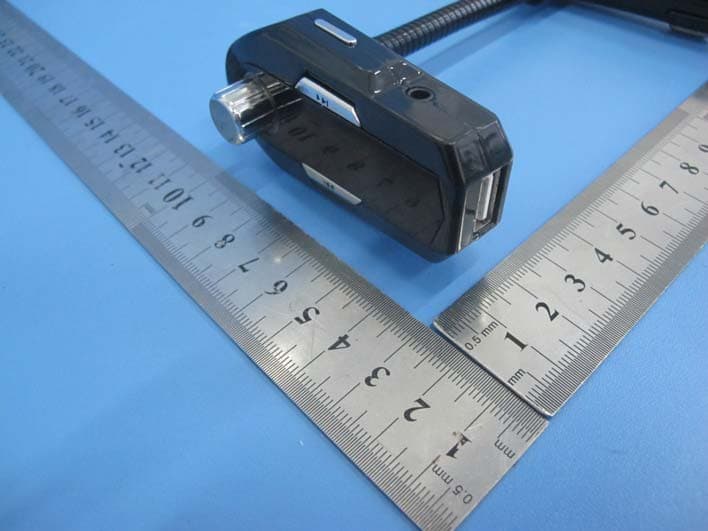
2AFMD-FM25
Aug 31, 2015Bluetooth FM Transmitter
Equipment Class
DSS - Part 15 Spread Spectrum Transmitter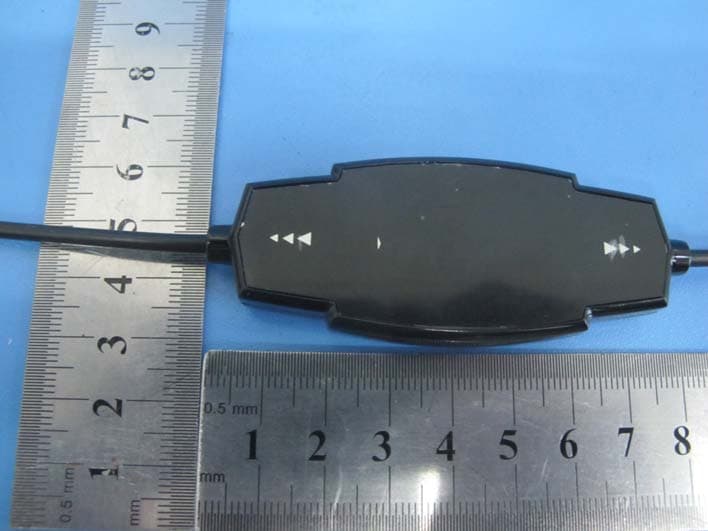
2AFMD-FM23
Aug 31, 2015FM Transmitter
Equipment Class
DXX - Part 15 Low Power Communication Device Transmitter