2AHI6IAEBT209TRUE WIRE-FREE EARBUDS
Shenzhen Ruijiahua Technology CO.,LTD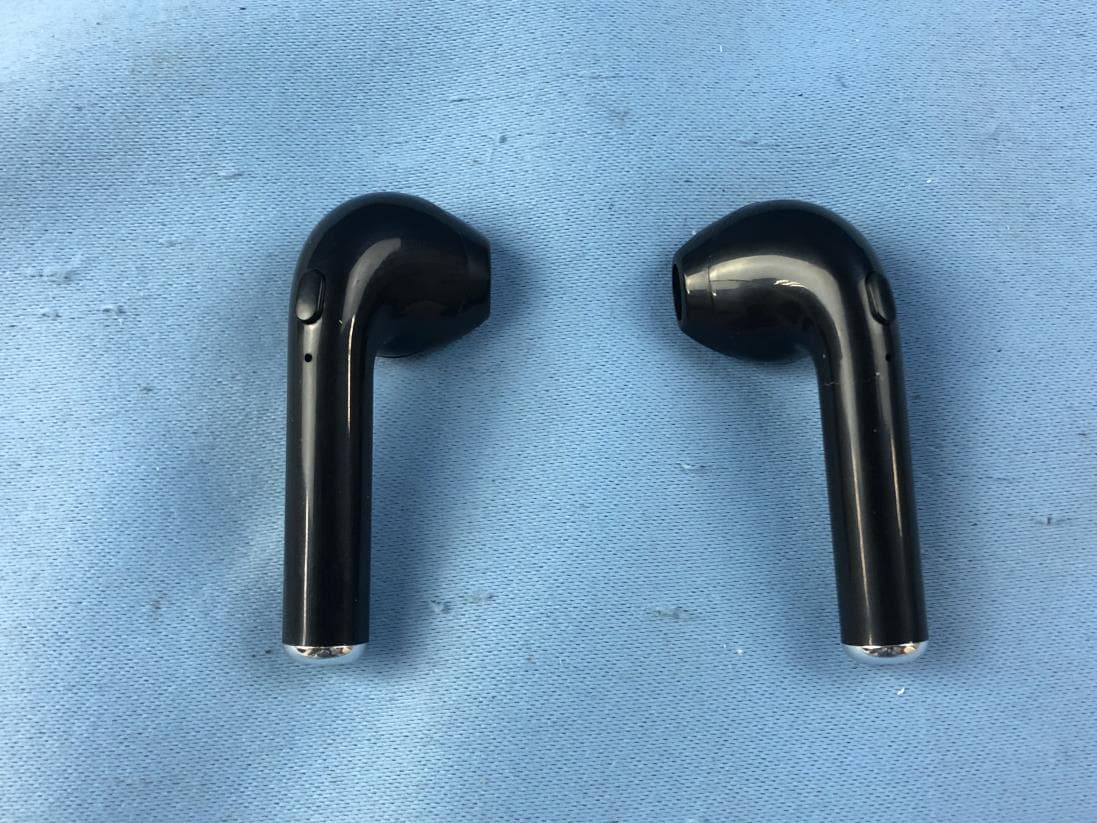
Click to zoom
Application Details
- Equipment Class
- DXX - Part 15 Low Power Communication Device Transmitter
- Date of Grant
- Apr 24, 2021
- Application Purpose
- Original Equipment
- Date of Application
- Apr 24, 2021
- Equipment Note
- TRUE WIRE-FREE EARBUDS
- Frequency Range
- 2402.00000000 - 2480.00000000
- Country
- China
Documents & Files
Document Text
Text extracted from the exhibit documents filed with the FCC. Open a document above to read the original.
Users Manual
Truly Wire-Free Earbuds User’s Guide for Model IAEBT209 v2758-01 Charger Power ON/OFF Main Function Button Press and hold to power ON. Press and hold to power OFF. Earbud Charging Contacts Charging the Earbuds 1. Open the cover and place the earbuds in their docking stations. Be sure to press down so the earbuds make contact with the charging contacts. 2. When charging, the indicator LEDs on the earbuds will turn red. When charging is complete, the indicators will turn blue. Charging the Case Using a Micro-USB to USB cable, connect to the USB port of a powered on computer or USB power adaptor (not included) to charge the case. Microphone Charger Battery Indicator LED Flashing red when charging. Red when charging is complete. Charger Power Indicator LED Blue when ON. NOTE: Each earbud must be powered on separately. Once they are linked, powering off one earbud will power off both. Earbud Indicator LED Red when charging. Blue when fully charged. Notes On Charging and Use • Each earbud must be powered on separately. • Once the earbuds are linked, powering off one earbud will power off both. • Placing the earbuds in the charging case will automatically power them off. • Removing the earbuds from the case will automatically power them on, link them, and connect to the last used Bluetooth device. The earbuds must have been linked and connected to a bluetooth device beforehand. LR IAEBT209-2758-03-IB-EN - FD - 19Apr2021.indd 14/19/2021 12:29:12 PM Customer Support Customer Service: 1-888-999-4215 | Email Support: prodinfo@ dpiinc.com | Email Parts: [email protected] For Warranty Information and the most up-to-date version of this User’s Guide, go to www.iLiveElectronics.com To download this User’s Guide in English, Spanish, or French, or to get answers to frequently asked questions, visit the support section at: www.iLiveElectronics.com Para descargar este Manual del Usuario en inglés, español y francés, o para obtener respuestas a preguntas frecuentes, visite la sección de apoyo en: www.iLiveElectronics.com Pour télécharger ce guide de l’utilisateur en anglais, espagnol ou français, ou pour obtenir des réponses à des questions fréquemment posées, consultez la rubrique d’assistance sur: www.iLiveElectronics.com Copyright © 2019 Digital Products International (DPI, Inc.) All other trademarks appearing herein are the property of their respective owners. Specifications are subject to change without notice. FCC Warnings WARNING: Changes or modifications to this unit not expressly approved by the party responsible for compliance could void the user’s authority to operate the equipment. NOTE: This equipment has been tested and found to comply with the limits for a Class B digital device, pursuant to Part 15 of the FCC Rules. These limits are designed to provide reasonable protection against harmful interference in a residential installation. This equipment generates, uses, and can radiate radio frequency energy and, if not installed and used in accordance with the instructions, may cause harmful interference to radio communications. However, there is no guarantee that interference will not occur in a particular installation. If this equipment does cause harmful interference to radio or television reception, which can be determined by turning the equipment off and on, the user is encouraged to try to correct the interference by one or more of the following measures: • Reorient or relocate the receiving antenna. • Increase the separation between the equipment and receiver. • Connect the equipment into an outlet on a circuit different from that to which the receiver is connected. • Consult the dealer or an experienced radio/TV technician for help. THIS DEVICE COMPLIES WITH PART 15 OF THE FCC RULES. OPERATION IS SUBJECT TO THE FOLLOWING TWO CONDITIONS: (1) THIS DEVICE MAY NOT CAUSE HARMFUL INTERFERENCE, AND (2) THIS DEVICE MUST ACCEPT ANY INTERFERENCE RECEIVED, INCLUDING INTERFERENCE THAT MAY CAUSE UNDESIRED OPERATION. Additional Warnings • WARNING: To prevent fire or shock hazards, do not expose this unit to rain or moisture. • WARNING : Where the mains plug or appliance coupler is used as the disconnect device, such disconnect device shall remain readily operable. • Lithium batteries, like all rechargeable batteries, are recyclable and should be recycled or disposed of according to state and local guidelines. They should never be disposed of in normal household waste, and they should never be incinerated, as they might explode. Contact your local government for disposal or recycling practices in your area. • This product meets and complies with all Federal regulations. • To avoid hearing damage, make sure that the volume on your music player is turned down before connecting your headphones. After placing headphones in/on your ears, gradually turn up the volume until you reach a comfortable listening level. Speakerphone 1. To accept a call, press the Function button, or use the controls on the connected phone. To end a call, press the Function button again. 2. To re-dial the last dialed number, press the Function button twice. Initial Linking of Earbuds & Pairing to a Bluetooth Device 1. To link the earbuds manually, press and hold the Function button on both earbuds until they start blinking blue and red. They will automatically pair with each other, when successfully linked, one of the earbud’s indicator LEDs will begin blinking blue and red. A voice prompt will also announce the connection. 2. With the earbuds linked, you can now connect to your Bluetooth device. The LED indicator on one of the earbuds will flashing blue and red, indicating it is ready to pair to a Bluetooth device. 3. On your Bluetooth device, access Bluetooth Settings and search for nearby devices. Select IAEBT209 when it is discovered. When successfully connected to your Bluetooth device, the LED indicator will slowly flash blue and a voice prompt will announce the connection. 4. Audio played through the connected Bluetooth dev…
Text truncated - open the document above for the full version.
Cover Letter(s)
Shenzhen Ruijiahua Technology CO.,LTD 2021.4.9 Federal Communications Commission 445 12 th Street SW Washington, DC 20554 Subject: Limited Agency Agreement Shenzhen Ruijiahua Technology CO.,LTD FCC ID: 2AHI6IAEBT209 To Whom It May Concern: We, Shenzhen Ruijiahua Technology CO.,LTD, hereby authorized Intertek Testing Services to act as our Agent for the purpose of preparing application for FCC ID number 2AHI6IAEBT209 under all applicable parts of the FCC rules and regulations. The effective date of this limited agency agreement is April 9, 2021. The Limited Agency Agreement expires on April 9, 2023, unless sooner terminated or extended by written notice to Intertek Testing Services and the Federal Communications Commission. This is to advise that we are in full compliance with the Anti-Drug Abuse Act. The applicant is not subject to a denial of federal benefits pursuant to Section 5301 of the Anti-Drug Act of 1988, 21 U.S.C. 862, and no party to the application is subject to a denial of federal benefits pursuant to that section. If you have any questions or comments, please do not hesitate to contact me. Sincerely, Peter Yuan CEO
Cover Letter(s)
1(2) Shenzhen Ruijiahua Technology CO.,LTD Attention: Certification reviewer RE: Request for Confidentiality FCC ID: 2AHI6IAEBT209 To Whom It May Concern: Permanent Confidentiality [Complete this section if permanent confidentiality is requested] Request to withhold permanently from public review certain portions of the application for equipment certification for the referenced FCC identifiers. This request for confidentiality is made pursuant to 47 CFR 0.457(d) and 0.459 of the FCC Rules. In particular, the following sections of the application are to be kept permanently confidential: [Select one or more of items below, as appropriate] Schematics Block Diagrams Operational Description Tune-up Procedure Parts List Internal Photos (see note) Users Manual (see note) Note 1: Internal Photos may be held confidential 1) if the circuit board or internal components are not accessible to users. For example, it is acceptable if the circuit board is enclosed in epoxy. 2) Also, it is acceptable if the device is not accessible to the public, for example, a device mounted on the top of a large tower (or in a fenced enclosure) such that it is only serviceable by professional designated technicians under a Non-Disclosure Agreement (NDA). All sales for these devices must be under a NDA restricting the disclosure of the propriety information, including internal photos. Users Manual may be held confidential only when the manual contains proprietary technical information intended for professional technicians obligated under a NDA. All sales and distribution of the user’s manual must be under a NDA that restricts the disclosure of the information. In the application cover letter requesting permanent confidentiality the following additional description and the NDA exhibit is required: 1. Describe in detail how internal photos and/or users manual information are controlled to prevent them from becoming public or disclosed to unauthorized persons. 2. Describe how public access is restricted for products serviceable by professional designated technicians. 3. A statement that all sales of the non-consumer device will be under a NDA to include third party sales and that the final user of the device is subject to the NDA. 4. Provide an example of the NDA between the grantee and a purchaser. The request for confidentiality must Note 2: For scanning receiver, the schematics, block diagrams, operational description, tune-up procedure, parts list and internal photos are always held permanently confidential. Short-term Confidentiality [Complete this section if short-term confidentiality is requested] Request to withhold from public review for a period of [please enter 1 to 180] days from the date of the Grant of Equipment Authorization and prior to marketing, certain portions of the application for equipment certification for the referenced FCC identifiers. This request for confidentiality is made pursuant to 47 CFR 0.457(d) and 0.459 of the FCC Rules. In particular, the following sections of the application are to be kept short-term confidential for a period above from the date of the grant [Select one or more of items below that are not selected in the list above, as appropriate] Schematics Block diagrams Operational Description Tune-up Procedure 2(2) Parts List Test Setup Photos External Photos Internal Photos Users Manual Rationale for request for confidentiality: We have invested considerable time and materials in research and development to produce the referenced product. Permanent confidentiality: Disclosure of the permanently confidential portions of this application to competitors would not only give them significant competitive advantages in developing similar products, but would also disclose successful implementation of unpublished, leading edge technology developed by us. Short-term confidentiality: Disclosure of the short-term confidential portions of this application during the period of importation and/or distribution would reveal key aspects of proprietary technology to competitors and diminish the value of our investment in research and development. If you have questions or need further information, please contact the undersigned. Sincerely, _________________ Peter Yuan CEO 2021.4.9
Internal Photos
Right Earbud Left Earbud
RF Exposure Info
INTERTEK TESTING SERVICES RF Exposure The equipment under test (EUT) is a TRULY WIRE-FREE EARBUDS with Bluetooth 5.1 (Single Mode EDR) function operating in 2402-2480MHz. The EUT is powered by DC 3.7V by rechargeable battery. For more detail information pls. refer to the user manual. Bluetooth Version: 5.1 (Single Mode EDR) Antenna Type: Integral antenna Modulation Type: GFSK, p/4-DQPSK, 8DPSK Antenna Gain: 1.5dBi Max The nominal conducted output power specified: -9.5 dBm (±3dB) The nominal radiated output power (e.i.r.p) specified: -8.0 dBm (±3dB) According to the KDB 447498: The maximun peak radiated emission for the EUT is 86.5dBμV/m at 3m in the frequency 2480MHz The EIRP = [(FS*D) ^2 / 30] mW = -8.73 dBm which is within the production variation. The minimum peak radiated emission for the EUT is 85.4dBμV/m at 3m in the frequency 2402MHz The EIRP = [(FS*D) ^2 / 30] mW = -9.83dBm which is within the production variation. The maximun conducted output power specified is -6.5 dBm = 0.224 mW The source- based time-averaging conducted output power = 0.224 * Duty factor mW (where Duty Factor≤1) = 0.224 mW The SAR Exclusion Threshold Level: = 3.0 * (min. test separation distance, mm) / sqrt(freq. in GHz) = 3.0 * 5 / sqrt (2.480) mW = 9.53 mW Since the source-based time-averaging conducted output power is well below the SAR low threshold level, so the EUT is considered to comply with SAR requirement without testing. FCC ID: 2AHI6IAEBT209
Test Report
Shenzhen Ruijiahua Technology CO.,LTD TEST REPORT SCOPE OF WORK FCC TESTING–IAEBT209W, IAEBT209B, IAEBT209RGD, IAEBT209BU REPORT NUMBER 210319013SZN-001 ISSUE DATE [REVISED DATE] April 8, 2021 [--------------------] PAGES 23 DOCUMENT CONTROL NUMBER FCC ID 249_C © 2017 INTERTEK Test Report Intertek Report No.: 210319013SZN-001 This report is for the exclusive use of Intertek's Client and is provided pursuant to the agreement between Intertek and its Client. Intertek's responsibility and liability are limited to the terms and conditions of the agreement. Intertek assumes no liability to any party, other than to the Client in accordance with the agreement, for any loss, expense or damage occasioned by the use of this report. Only the Client is authorized to permit copying or distribution of this report and then only in its entirety. Any use of the Intertek name or one of its marks for the sale or advertisement of the tested material, product or service must first be approved in writing by Intertek. The observations and test results in this report are relevant only to the sample tested. This report by itself does not imply that the material, product, or service is or has ever been under an Intertek certification program. Intertek Testing Services Shenzhen Ltd. Longhua Branch 101, 201, Building B, No. 308 Wuhe Avenue, Zhangkengjing Community, GuanHu Subdistrict, LongHua District, ShenZhen, P.R. China Tel: (86 755) 8601 6288 Fax: (86 755) 8601 6751 Version: 01-November-2017 Page: 1 of 23 FCC ID 249_C Shenzhen Ruijiahua Technology CO.,LTD Application For Certification FCC ID: 2AHI6IAEBT209 TRULY WIRE-FREE EARBUDS Model: IAEBT209W, IAEBT209B, IAEBT209RGD, IAEBT209BU Brand Name: iLIVE 2.4GHz Transceiver Report No.: 210319013SZN-001 We hereby certify that the sample of the above item is considered to comply with the requirements of FCC Part 15, Subpart C for Intentional Radiator, mention 47 CFR [10-1-19] Prepared and Checked by: Approved by: Jeff Liang Engineer Kidd Yang Technical Supervisor Date: April 8, 2021 Test Report Intertek Report No.: 210319013SZN-001 Version: 01-November-2017 Page: 2 of 23 FCC ID 249_C MEASUREMENT/TECHNICAL REPORT This report concerns (check one:) Original Grant X Class II Change Equipment Type: DXX - Part 15 Low Power Communication Device Transmitter Deferred grant requested per 47 CFR 0.457(d)(1)(ii)? Yes No X If yes, defer until: date Company Name agrees to notify the Commission by: date of the intended date of announcement of the product so that the grant can be issued on that date. Transition Rules Request per 15.37? Yes No X If no, assumed Part 15, Subpart C for intentional radiator − the new 47 CFR [10-1-19 Edition] provision. Report prepared by: Jeff Liang Intertek Testing Services Shenzhen Ltd. Longhua Branch 101, 201, Building B, No. 308 Wuhe Avenue, Zhangkengjing Community, GuanHu Subdistrict, LongHua District, ShenZhen, P.R. China Tel / Fax: 86-755-8614 0743/86-755-8601 6661 Test Report Intertek Report No.: 210319013SZN-001 Version: 01-November-2017 Page: 3 of 23 FCC ID 249_C Table of Contents 2.0 General Description ....................................................................................................... 5 2.2 Related Submittal(s) Grants ................................................................................................. 5 2.3 Test Methodology ................................................................................................................ 5 2.4 Test Facility .......................................................................................................................... 5 3.0 System Test Configuration ............................................................................................. 6 3.1 Justification .......................................................................................................................... 6 3.2 EUT Exercising Software ...................................................................................................... 6 3.3 Special Accessories .............................................................................................................. 6 3.4 Equipment Modification ...................................................................................................... 6 3.5 Measurement Uncertainty .................................................................................................. 7 3.6 Support Equipment List and Description ............................................................................. 7 4.0 Emission Results ............................................................................................................ 8 4.1 Radiated Test Results ........................................................................................................... 8 4.1.1 Field Strength Calculation ................................................................................................ 8 4.1.2 Radiated Emission Configuration Photograph ................................................................ 9 4.1.3 Radiated Emissions .......................................................................................................... 9 4.1.4 Transmitter Spurious Emissions (Radiated) ................................................................... 12 5.0 Equipment Photographs ............................................................................................... 16 6.0 Product Labelling .......................................................................................................... 16 7.0 Technical Specifications ................................................................................................ 16 8.0 Instruction Manual ....................................................................................................... 16 9.0 Miscellaneous Information ........................................................................................... 17 9.1 Bandedge Plot ..............................…
Text truncated - open the document above for the full version.
Test Setup Photos
The EUT and transmitting antenna was centered on the turntable The EUT and transmitting antenna was centered on the turntable
Contact Information
Applicant
Peter Yuan
Technical Contact
Intertek Testing Services Shenzhen Ltd. Longhua BrWilliam Chen
[email protected]86-755-8601 6288
101, 201, Building B, No. 308 Wuhe Avenue, Zhangke · Shenzhen · China
Non-Technical Contact
Intertek Testing Services Shenzhen Ltd. Longhua BrWilliam Chen
[email protected]86-755-8601 6288
Test Firm
Intertek Testing Services Shenzhen Ltd. Longhua BrHolly Ou
[email protected]+86 755 86140691
Technical Specifications
| # | Rule Parts | Frequency Range | Power Output |
|---|---|---|---|
| 1 | 15C | 2.40 GHz - 2.48 GHz | - |
Other Applications from Shenzhen Ruijiahua Technology CO.,LTD
2AHI6IAEBTO34
Jan 21, 2024Truly Wireless Open Ear Earbuds
Equipment Class
DSS - Part 15 Spread Spectrum Transmitter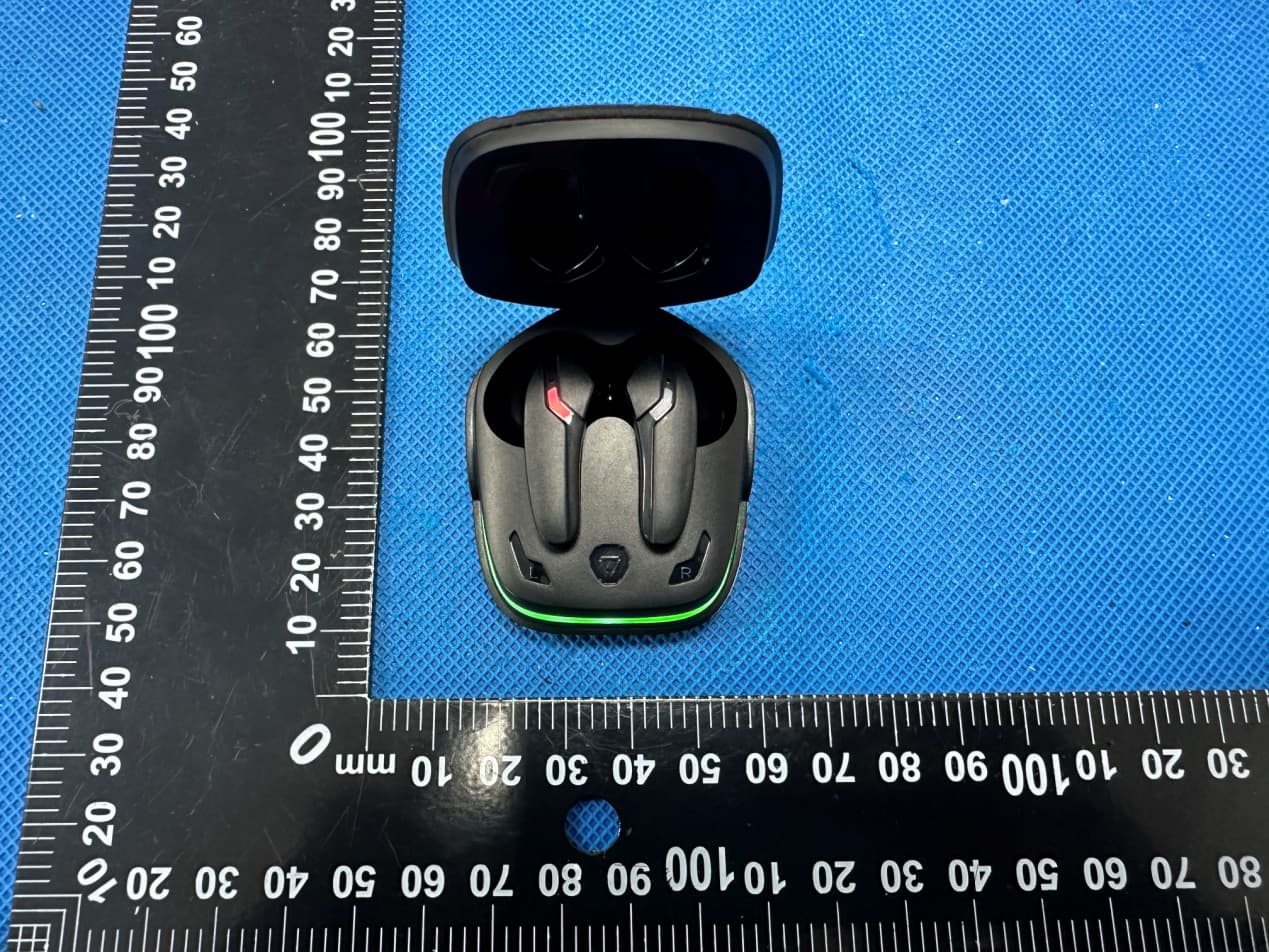
2AHI6IAEBTG424
Jan 16, 2024Truly wireless Gaming Earbuds with ENC
Equipment Class
DSS - Part 15 Spread Spectrum Transmitter
2AHI6192-540741
Jan 08, 2024wireless headset
Equipment Class
DSS - Part 15 Spread Spectrum Transmitter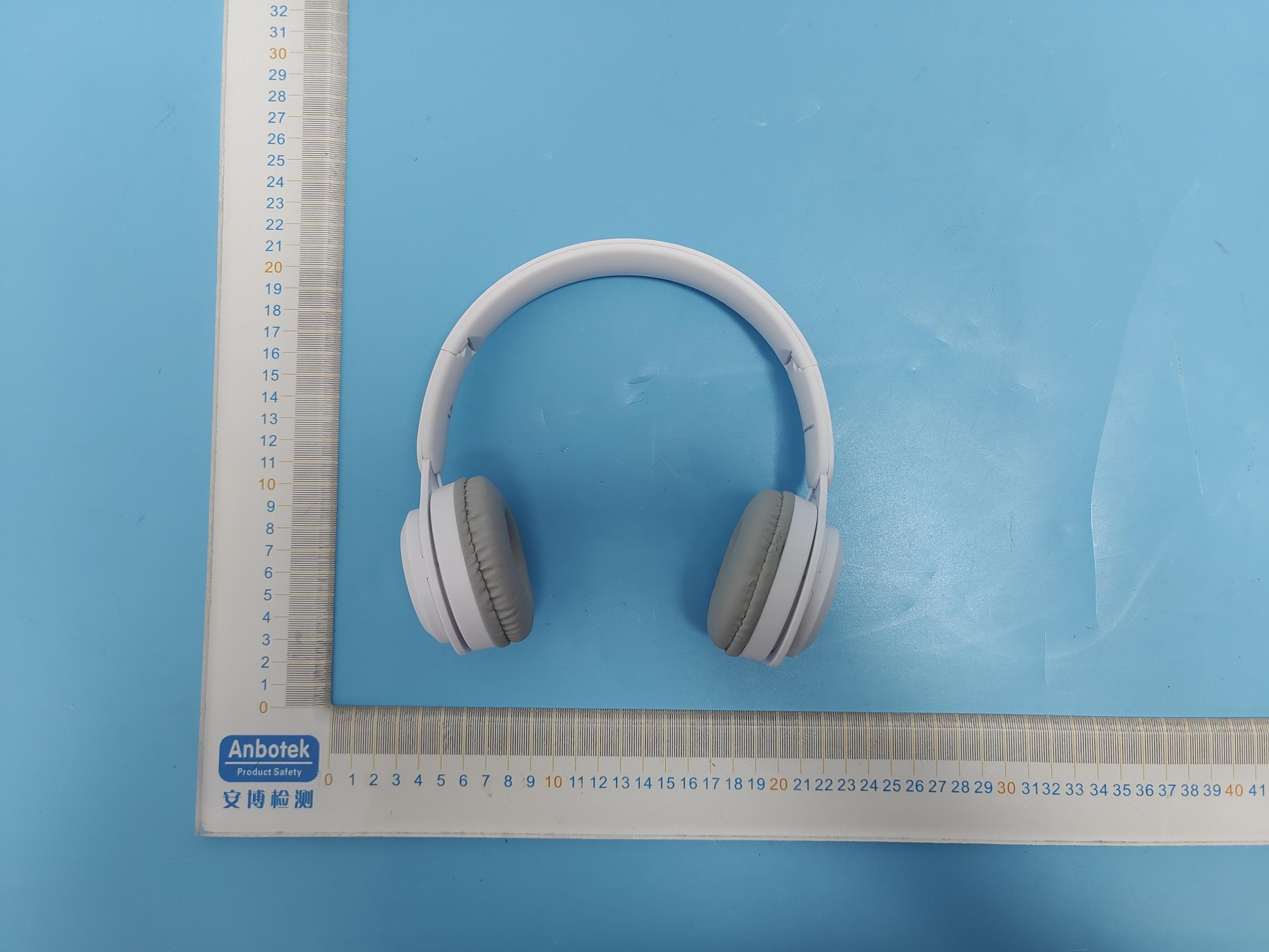
2AHI6NIAHB53
Aug 20, 2023Bluetooth Headphone
Equipment Class
DTS - Digital Transmission System
2AHI6NIAEBTN333
Aug 06, 2023Truly wireless active noise canceling earbud
Equipment Class
DSS - Part 15 Spread Spectrum Transmitter