2AHI6NIAEBTN312Truly Wireless Noise Canceling Earbuds
Shenzhen Ruijiahua Technology CO.,LTD
Click to zoom
Application Details
- Equipment Class
- DTS - Digital Transmission System
- Date of Grant
- Aug 24, 2021
- Application Purpose
- Original Equipment
- Date of Application
- Aug 24, 2021
- Equipment Note
- Truly Wireless Noise Canceling Earbuds
- Frequency Range
- 2402.00000000 - 2480.00000000
- Country
- China
Documents & Files
Document Text
Text extracted from the exhibit documents filed with the FCC. Open a document above to read the original.
Users Manual
Charging the Case Using a USB-C to USB cable (included), connect to the USB port of a powered on computer or USB power adaptor (not included) to charge the case. When the case is charging the Power & Battery Indicator LEDs will flash blue. When fully charged all LEDs will turn solid blue. Truly Wireless Noise Canceling Earbuds User’s Guide for Model IAEBTN312 v2851-01 Power & Battery Indicator LEDs The 4 Blue LEDs represent the amount of battery the case charger has. 1 LED=25% 2 LEDs=50% 3 LEDs=75% 4 LEDs=100% • Touch and hold to power ON/OFF. • Touch to play/pause music. • Touch to answer/end phone calls. • Touch and hold for 2 seconds to reject incoming calls. • Touch and hold for 2 seconds to activate voice assistant (LEFT). • Quickly tap twice to skip to next track (RIGHT). • Quickly tap twice to play previous tracks (LEFT). • Quickly tap 3 times to increase volume (RIGHT). • Quickly tap 3 times to decrease volume (LEFT). • Touch and hold for 3 seconds to switch modes between: Normal, Transparent and ANC (RIGHT). Charging Contacts Charging Contacts Charging the Earbuds 1. Open the cover and place the earbuds on the charging contacts. Be sure to match the left and right earbuds with the correct docking station in the case. 2. Earbud Indicator LEDs will turn red when charging. When fully charged, the LEDs will turn off. Earbud Indicator LED/Microphone Red when charging. Lights off when fully charged. Function Touch Pad Speakerphone • To accept or end a phone call, press the Function button. • You can also use the controls on the connected phone to handle phone functions. Charging Case & Auto-On Feature While the case power is ON: • Placing the earbuds in the charging case will automatically power them off and begin charging. • Removing the earbuds from the case will automatically power them on, link them, and connect to the last used Bluetooth device (earbuds must have been linked and connected to a Bluetooth device already). Pairing Bluetooth Note: When earbuds are powered on they automatically link and enter into pairing mode. You can power on a single earbud to use as a single unit if you wish. 1. With the earbuds linked, you can now connect to your Bluetooth device. The LED indicator on the right earbud will continue flashing blue and red, indicating it is ready to pair to a Bluetooth device. 2. On your Bluetooth device, access Bluetooth Settings and search for nearby devices. Select IAEBTN312 when it is discovered. When successfully connected to your Bluetooth device, the LED indicator on both of the earbuds will flash blue, slowly and a voice prompt will announce the Bluetooth connection. 3. Audio played through the connected Bluetooth device will now be heard through both earbuds. Use the controls on the connected device to play audio and adjust volume. PLEASE NOTE: Due to the nature of truly wireless earbuds, you may experience slight interruptions with your audio in areas with multiple 2.4Ghz bands or in high wireless traffic areas. Customer Support Customer Service: 1-888-999-4215 | Email Support: prodinfo@ dpiinc.com | Email Parts: [email protected] For Warranty Information and the most up-to-date version of this User’s Guide, go to www.iLiveElectronics.com To download this User’s Guide in English, Spanish, or French, or to get answers to frequently asked questions, visit the support section at: www.iLiveElectronics.com Para descargar este Manual del Usuario en inglés, español y francés, o para obtener respuestas a preguntas frecuentes, visite la sección de apoyo en: www.iLiveElectronics.com Pour télécharger ce guide de l’utilisateur en anglais, espagnol ou français, ou pour obtenir des réponses à des questions fréquemment posées, consultez la rubrique d’assistance sur: www.iLiveElectronics.com Copyright © 2020 Digital Products International (DPI, Inc.) All other trademarks appearing herein are the property of their respective owners. Specifications are subject to change without notice. FCC Warnings WARNING: Changes or modifications to this unit not expressly approved by the party responsible for compliance could void the user’s authority to operate the equipment. NOTE: This equipment has been tested and found to comply with the limits for a Class B digital device, pursuant to Part 15 of the FCC Rules. These limits are designed to provide reasonable protection against harmful interference in a residential installation. This equipment generates, uses, and can radiate radio frequency energy and, if not installed and used in accordance with the instructions, may cause harmful interference to radio communications. However, there is no guarantee that interference will not occur in a particular installation. If this equipment does cause harmful interference to radio or television reception, which can be determined by turning the equipment off and on, the user is encouraged to try to correct the interference by one or more of the following measures: • Reorient or relocate the receiving antenna. • Increase the separation between the equipment and receiver. • Connect the equipment into an outlet on a circuit different from that to which the receiver is connected. • Consult the dealer or an experienced radio/TV technician for help. Additional Warnings • WARNING: To prevent fire or shock hazards, do not expose this unit to rain or moisture. • WARNING : Where the mains plug or appliance coupler is used as the disconnect device, such disconnect device shall remain readily operable. • Lithium batteries, like all rechargeable batteries, are recyclable and should be recycled or disposed of according to state and local guidelines. They should never be disposed of in normal household waste, and they should never be incinerated, as they might explode. Contact your local government for disposal or recycling practices in your area. • This product meets and complies with all Federal regulations. • To avoid hearing damage, make sure that the volume on your music player is turned down before con…
Text truncated - open the document above for the full version.
Cover Letter(s)
Shenzhen Ruijiahua Technology CO.,LTD Agent Authorization Company: Shenzhen Ruijiahua Technology CO.,LTD Address:4F, Ruide Building, No.20 Jiuwei first Road,Hangcheng Street,Bao'an District,Shenzhen,China Product Name: Truly Wireless Noise Canceling Earbuds Model Number(s):IAEBTN312 IAEBTN312B, IAEBTN312W Product Description: Truly Wireless Noise Canceling Earbuds We authorize MiCOM Labs Inc., 575 Boulder Court, Pleasanton, California 94566, USA, to act on our behalf on all matters concerning the certification of above named equipment. We declare that MiCOM Labs Inc. is allowed to forward all information related to the approval and certification of equipment to the regulatory agencies as required and to discuss any issues concerning the approval application. Any and all acts carried out by MiCOM Labs on our behalf shall have the same effect as acts of our own. Signature: Date: 2021.08.23 Name: Peter Yuan Title: N/A Company: Shenzhen Ruijiahua Technology CO.,LTD
Cover Letter(s)
ShenzhenRuijiahuaTechnologyCO.,LTD OfficeofEngineeringTechnology FederalCommunicationsCommission 7435OaklandMillsRoad Columbia,MD21046 USA Date:2021.08.23 Subject;RequestforConfidentiality FCCID:2AHI6NIAEBTN312 ToWhomItMayConcern, PursuanttotheprovisionsoftheCommission’srulesTitle47Sections§0.457and§0.459,we arerequestingtheCommissiontowithholdthefollowingattachment(s)asconfidential documentsfrompublicdisclosureindefinitely. Thesedocumentscontaindetailedsystemandequipmentdescriptionsandareconsideredas proprietaryinformationinoperationoftheequipment.Thepublicdisclosureofthesedocuments mightbeharmfultoourcompanyandwouldgivecompetitorsanunfairadvantageinthemarket. SchematicDiagram BlockDiagram PartsList OperationalDescription Tune-upProcedure Inadditionaltoabovementioneddocuments,inordertocomplywiththemarketingregulations inTitle47CFR§2.803andtheimportationrulesinTitle47CFR§2.1204,whileensuringthat businesssensitiveinformationremainsconfidentialuntiltheactualmarketingofnewly authorizeddevices,werequestShortTermConfidentialityofthefollowingattachment(s); ExternalPhotos TestSetupPhotos InternalPhotos UserManual For45days,pursuanttoPublicNoticeDA04-1705. OR For180dayspursuanttoKDB726920D01. Itisourunderstandingthatallmeasurementtestreports,FCCIDlabelformatand correspondenceduringthecertificationreviewprocesscannotbegrantedasconfidential documentsandthisinformationwillbeavailableforpublicreviewoncethegrantofequipment authorizationisissued. Sincerely, Signature: Name: PeterYuan Title:N/A
Cover Letter(s)
Shenzhen Ruijiahua Technology CO.,LTD Model Difference Product description: Truly Wireless Noise Canceling Earbuds Model name: IAEBTN312 IAEBTN312B, IAEBTN312W Trade Name: iLIVE FCC ID:2AHI6NIAEBTN312 All the model are the same circuit and RF module, only for model name. Regards Sincerely Client’s signature: Client’s name / title : Peter Yuan (N/A) Contact information / address: 4F, Ruide Building, No.20 Jiuwei first Road, Hangcheng Street, Bao'an District, Shenzhen, China
External Photos
EUT PHOTO(External Photos)
ID Label/Location Info
Labelandlabellocation TrulyWirelessNoiseCancelingEarbuds FCCID:2AHI6NIAEBTN312
Internal Photos
EUT PHOTO(Internal Photos) BT ANT ※※※※※※※※※※ END OF REPORT
RF Exposure Info
FCC ID:2AHI6NIAEBTN312 RF Exposure Evaluation According to KDB 447498 and part 2.1093,Unless specifically required by the published RF exposure KDB procedures, standalone 1-g head or body and 10-g extremity SAR evaluation for general population exposure conditions, by measurement or numerical simulation, is not required when the corresponding SAR Test Exclusion Threshold condition(s), listed below, is (are) satisfied. For 100 MHz to 6 GHz and test separation distances ≤ 50 mm, the 1-g and 10-g SAR test exclusion thresholds are determined by the following: [(max. power of channel, including tune-up tolerance, mW) / (min. test separation distance, mm)] · [√f (GHz) ] ≤ 3.0 for 1-g SAR, and ≤ 7.5 for 10-g extremity SAR, where f (GHz) is the RF channel transmit frequency in GHz Power and distance are rounded to the nearest mW and mm before calculation The result is rounded to one decimal place for comparison Here, For Bluetooth Max Power(dBm) Max Power(mW) Frequency(MHz)Min. distance(mm)Calc. thresholdslimit 2.096 1.62 2402 5 0.50225 3.0 For BLE Max Power(dBm) Max Power(mW) Frequency(MHz)Min. distance(mm)Calc. thresholdslimit -1.25 0.75 2402 5 0.23244 3.0 So a SAR test is not required
Test Report
Project No.: ZKT-2108043921E-1 Page 1 of 39 FCC TEST REPORT FCC ID:2AHI6NIAEBTN312 Report Number. ................................ : ZKT-2108043921E-1 Date of Test ........................................Aug. 06, 2021 to Aug. 16, 2021 Date of issue .................................... : Aug. 16, 2021 Total number of pages ...................... 39 Test Result ..................................... : PASS Testing Laboratory. ........................... : Shenzhen ZKT Technology Co., Ltd. Address .......................................... : 1/F, No. 101, Building B, No. 6, Tangwei Community Industrial Avenue, Fuhai Street, Bao'an District, Shenzhen, China Applicant's name ............................ : Shenzhen Ruijiahua Technology CO.,LTD Address .......................................... : 4F, Ruide Building, No.20 Jiuwei first Road, Hangcheng Street, Bao'an District, Shenzhen, China Manufacturer's name ..................... : Shenzhen Ruijiahua Technology CO.,LTD Address .......................................... : 4F, Ruide Building, No.20 Jiuwei first Road, Hangcheng Street, Bao'an District, Shenzhen, China Test specification: Standard ........................................... : FCC CFR Title 47 Part 15 Subpart C Section 15.247 ANSI C63.10:2013 Test procedure ................................. : / Non-standard test method ............. : N/A Test Report Form No. .................... : TRF-EL-111_V0 Test Report Form(s) Originator .... : ZKT Testing Master TRF .................................... : Dated: 2020-01-06 This device described above has been tested by ZKT, and the test results show that the equipment under test (EUT) is in compliance with the FCC requirements. And it is applicable only to the tested sample identified in the report. This report shall not be reproduced except in full, without the written approval of ZKT, this document may be altered or revised by ZKT, personal only, and shall be noted in the revision of the document. Product name ................................... : Truly Wireless Noise Canceling Earbuds Trademark ...................................... : iLIVE Model/Type reference ...................... : IAEBTN312 IAEBTN312B, IAEBTN312W Ratings ............................................. : Input: DC 5V or DC 3.7V Battery Project No.: ZKT-2108043921E-1 Page 2 of 39 Testing procedure and testing location: Testing Laboratory ................................... : Shenzhen ZKT Technology Co., Ltd. Address ...................................................... :1/F, No. 101, Building B, No. 6, Tangwei Community Industrial Avenue, Fuhai Street, Bao'an District, Shenzhen, China Alen He Tested by (name + signature) .................... : Joe Liu Reviewer (name + signature) ..................... : Lake Xie Approved (name + signature) .................... : Project No.: ZKT-2108043921E-1 Page 3 of 39 Table of Contents Page 1.VERSION 5 2.SUMMARY OF TEST RESULTS 6 2.1 TEST FACILITY 7 2.2 MEASUREMENT UNCERTAINTY 7 3. GENERAL INFORMATION 8 3.1 GENERAL DESCRIPTION OF EUT 8 3.2 DESCRIPTION OF TEST MODES 9 3.3 BLOCK DIGRAM SHOWING THE CONFIGURATION OF SYSTEM TESTED 9 3.4 DESCRIPTION OF SUPPORT UNITS(CONDUCTED MODE) 10 3.5 EQUIPMENTS LIST FOR ALL TEST ITEMS 11 4. EMC EMISSION TEST 12 4.1 CONDUCTED EMISSION MEASUREMENT 12 4.1.1 1POWER LINE CONDUCTED EMISSION LIMITS 12 4.1.2 TEST PROCEDURE 12 4.1.3 DEVIATION FROM TEST STANDARD 12 4.1.4 TEST SETUP 13 4.1.5 EUT OPERATING CONDITIONS 13 4.1.6 TEST RESULTS 14 4.2 RADIATED EMISSION MEASUREMENT 16 4.2.1 RADIATED EMISSION LIMITS 16 4.2.2 TEST PROCEDURE 17 4.2.3 DEVIATION FROM TEST STANDARD 17 4.2.4 TEST SETUP 17 4.2.5 EUT OPERATING CONDITIONS 18 5.RADIATED BAND EMISSION MEASUREMENT 23 5.1 TEST REQUIREMENT: 23 5.2 TEST PROCEDURE 23 5.3 DEVIATION FROM TEST STANDARD 23 5.4 TEST SETUP 24 5.5 EUT OPERATING CONDITIONS 24 5.6 TEST RESULT 25 6.POWER SPECTRAL DENSITY TEST 26 6.1 APPLIED PROCEDURES / LIMIT 26 6.2 TEST PROCEDURE 26 6.3 DEVIATION FROM STANDARD 26 6.4 TEST SETUP 26 Project No.: ZKT-2108043921E-1 Page 4 of 39 Table of Contents Page 6.5 EUT OPERATION CONDITIONS 26 6.6 TEST RESULTS 27 7. CHANNEL BANDWIDTH 29 7.1 APPLIED PROCEDURES / LIMIT 29 7.2 TEST PROCEDURE 29 7.3 DEVIATION FROM STANDARD 29 7.4 TEST SETUP 29 7.5 EUT OPERATION CONDITIONS 29 7.6 TEST RESULTS 30 8.PEAK OUTPUT POWER TEST 32 8.1 APPLIED PROCEDURES / LIMIT 32 8.2 TEST PROCEDURE 32 8.3 DEVIATION FROM STANDARD 32 8.4 TEST SETUP 32 8.5 EUT OPERATION CONDITIONS 32 8.6 TEST RESULTS 33 9. CONDUCTED BAND EDGE AND SPURIOUS EMISSION 34 9.1 APPLICABLE STANDARD 34 9.2 TEST PROCEDURE 34 9.3 DEVIATION FROM STANDARD 34 9.4 TEST SETUP 34 9.5 EUT OPERATION CONDITIONS 34 10.ANTENNA REQUIREMENT 38 11. TEST SETUP PHOTO 39 12. EUT CONSTRUCTIONAL DETAILS 39 Project No.: ZKT-2108043921E-1 Page 5 of 39 1.VERSION Report No. Version Description Approved ZKT-2108043921E-1 Rev.01 Initial issue of report Aug. 16, 2021 Project No.: ZKT-2108043921E-1 Page 6 of 39 2. SUMMARY OF TEST RESULTS Test procedures according to the technical standards: FCC Part15 (15.247) , Subpart C Standard Section Test Item Judgment Remark FCC part 15.203/15.247 (c) Antenna requirement PASS FCC part 15.207 AC Power Line Conducted Emission PASS FCC part 15.247 (b)(3)Conducted Peak Output Power PASS FCC part 15.247 (a)(2)Channel Bandwidth& 99% OCB PASS FCC part 15.247 (e) Power Spectral Density PASS FCC part 15.247(d) Band Edge PASS FCC part 15.205/15.209 Spurious Emission PASS NOTE: (1)“N/A” denotes test is not applicable in this Test Report Project No.: ZKT-2108043921E-1 Page 7 of 39 2.1 TEST FACILITY Shenzhen ZKT Technology Co., Ltd. Add. : 1/F, No. 101, Building B, No. 6, Tangwei Community Industrial Avenue, Fuhai Street, Bao'an District, Shenzhen, China FCC Test Firm Registration Number: 692225 Designation Number: CN1299 IC Registered No.: 27033 2.2 MEASUREMENT UNCERTAINTY The reported uncertainty of measurement y ± U,where expended uncertainty U is based on a standard uncertainty multiplied by a coverage factor of k=2,p…
Text truncated - open the document above for the full version.
Test Setup Photos
EUT TEST PHOTO
Contact Information
Applicant
Peter Yuan
Technical Contact
Test Firm
Shenzhen ZKT Technology Co., Ltd.Lake Xie
[email protected]0086-13620010775
Technical Specifications
| # | Rule Parts | Frequency Range | Power Output |
|---|---|---|---|
| 1 | 15C | 2.40 GHz - 2.48 GHz | 750.00 µW |
Other Applications from Shenzhen Ruijiahua Technology CO.,LTD
2AHI6IAEBTO34
Jan 21, 2024Truly Wireless Open Ear Earbuds
Equipment Class
DSS - Part 15 Spread Spectrum Transmitter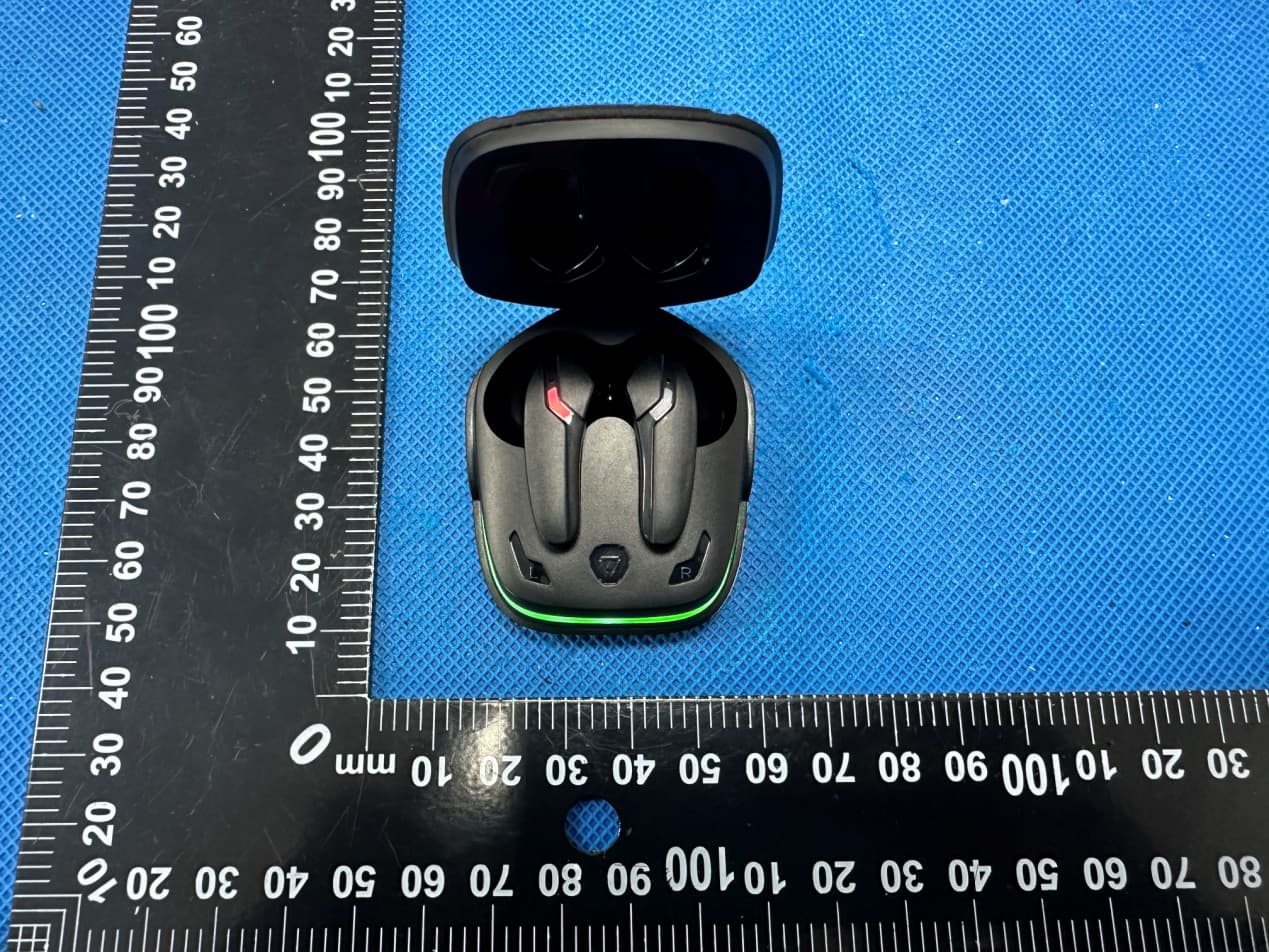
2AHI6IAEBTG424
Jan 16, 2024Truly wireless Gaming Earbuds with ENC
Equipment Class
DSS - Part 15 Spread Spectrum Transmitter
2AHI6192-540741
Jan 08, 2024wireless headset
Equipment Class
DSS - Part 15 Spread Spectrum Transmitter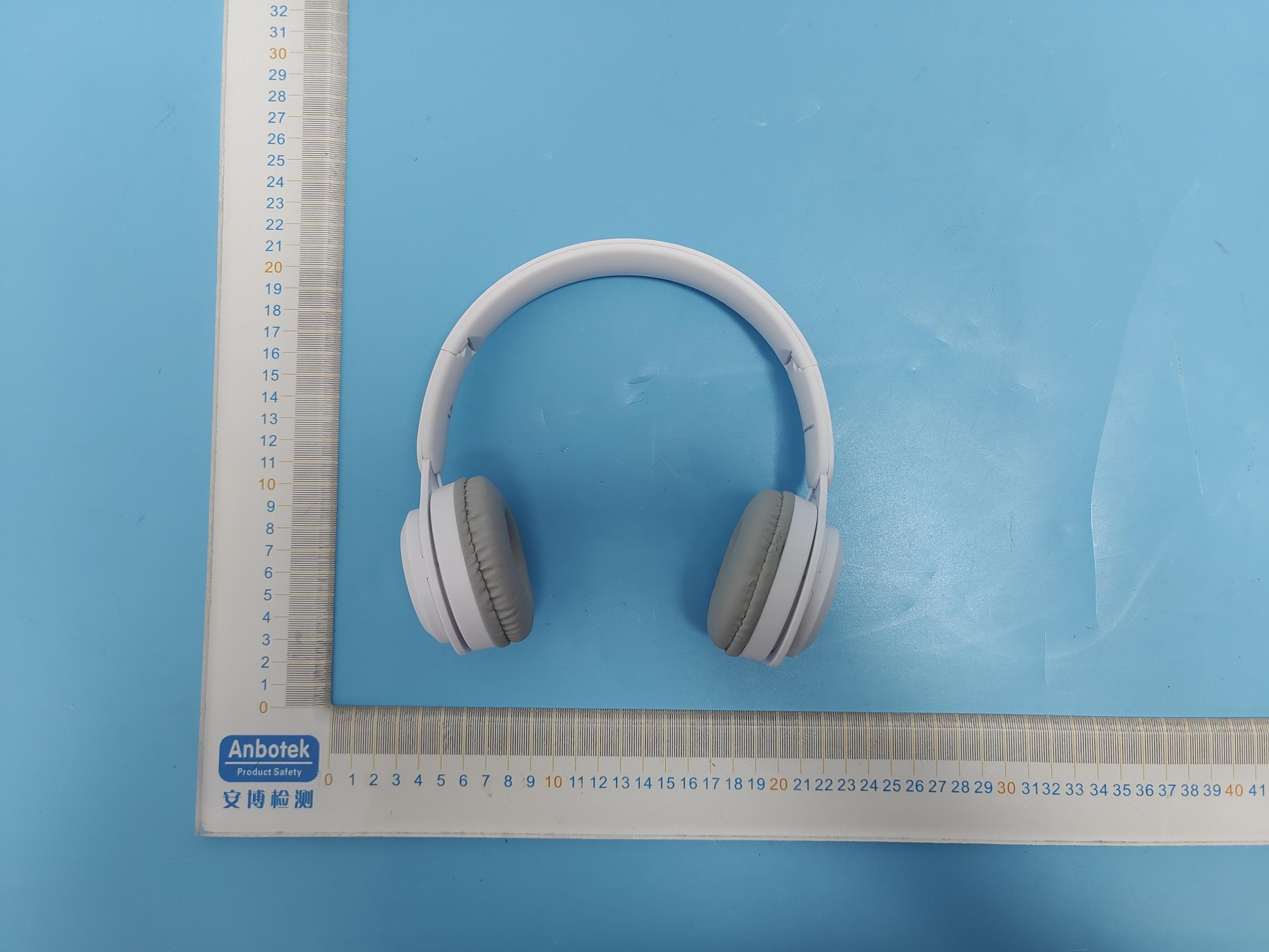
2AHI6NIAHB53
Aug 20, 2023Bluetooth Headphone
Equipment Class
DTS - Digital Transmission System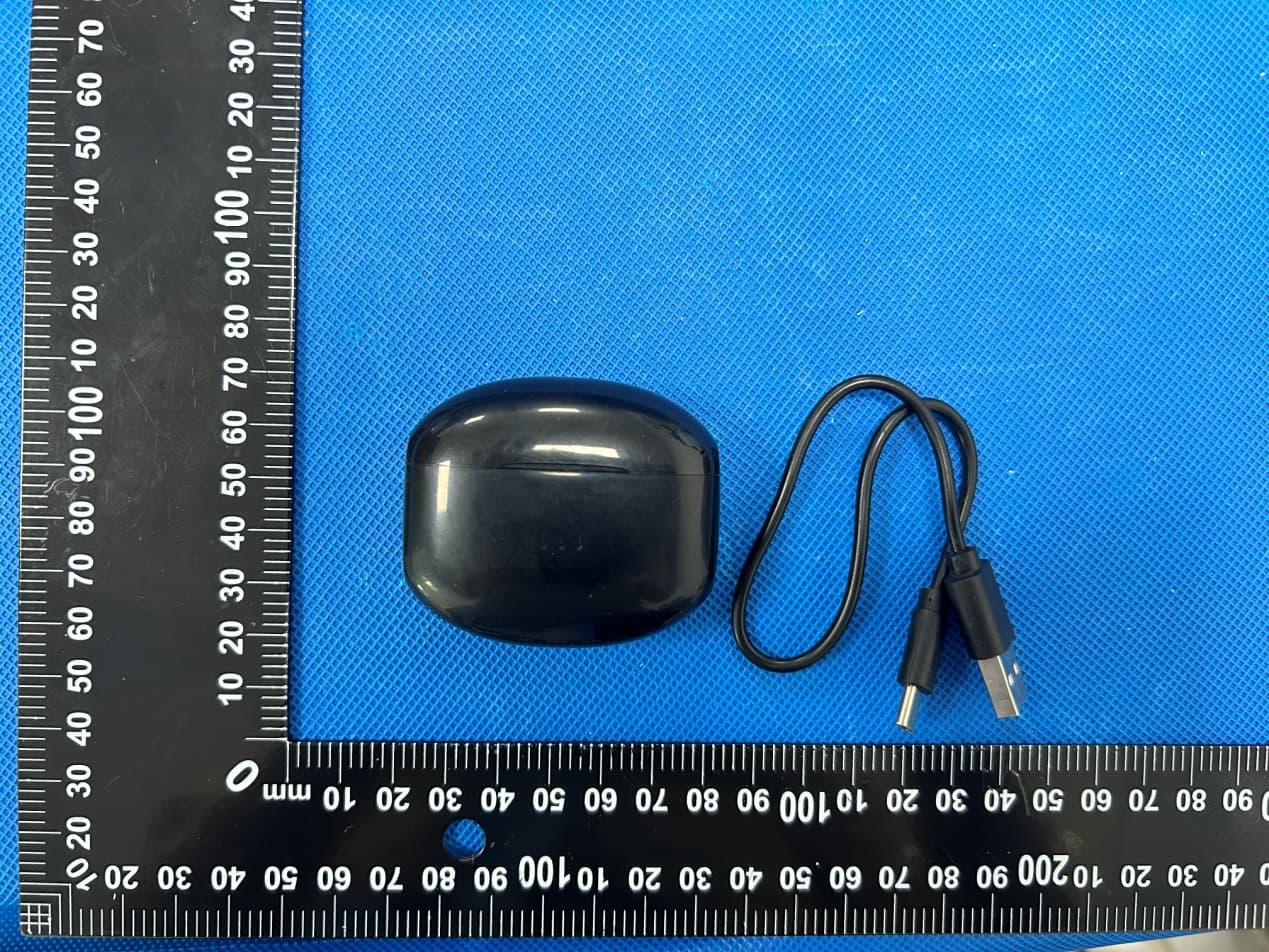
2AHI6NIAEBTN333
Aug 06, 2023Truly wireless active noise canceling earbud
Equipment Class
DSS - Part 15 Spread Spectrum Transmitter