2AN9S-ABX00162Arduino UNO Q
Arduino S.r.l.
Click to zoom
Application Details
- Equipment Class
- DSS - Part 15 Spread Spectrum Transmitter
- Date of Grant
- Dec 02, 2025
- Application Purpose
- Original Equipment
- Equipment Note
- Arduino UNO Q
- Frequency Range
- 2402.00000000 - 2480.00000000
- Company
- Arduino S.r.l.
- Country
- Italy
Documents & Files
Document Text
Text extracted from the exhibit documents filed with the FCC. Open a document above to read the original.
Users Manual
Arduino® UNO Q 1 / 31Arduino® UNO QModified: 01/10/2025 User Manual SKU: ABX00162-ABX00173 Description Arduino® UNO Q (hereafter UNO Q) is a single-board computer that combines the Qualcomm® Dragonwing™ QRB2210 Microprocessor (MPU), a quad-core Arm® Cortex®-A53 running Debian Linux OS, with the STMicroelectronics STM32U585 Microcontroller (MCU), an Arm® Cortex®-M33 running Arduino Core on Zephyr OS. The Linux system and the microcontroller communicate through Bridge, Arduino’s RPC (Remote Procedure Call) library. This allows Arduino sketches on the microcontroller to access Linux services for high-level tasks, while Linux applications can interact with microcontroller peripherals to handle real-time operations within the same project. UNO Q comes with embedded eMMC storage (options 16 GB, 32 GB) and LPDDR4X SDRAM (options 2 GB, 4 GB) to run Linux and your projects smoothly. It features dual-band Wi-Fi® 5 and Bluetooth® 5.1 for wireless connectivity, a USB- C® connector with power delivery input and video output, and Arduino-compatible headers for easy expansion with shields, carriers, and accessories. UNO Q integrates seamlessly with Arduino App Lab, enabling developers to combine Arduino sketches, Linux applications, and AI models in one environment. App Lab can run directly on the board or from a connected PC, offering ready-to-use examples, and the flexibility to create custom apps tailored to your projects. Arduino® UNO Q 2 / 31Arduino® UNO QModified: 01/10/2025 Target Areas Edge AI & ML, Robotics, Machine Vision, Smart Devices, Gaming, Home and Building Automation, Prototyping, Education Arduino® UNO Q 3 / 31Arduino® UNO QModified: 01/10/2025 5 6 6 6 6 7 8 9 10 10 11 11 12 12 13 14 15 15 15 16 16 17 19 21 21 21 22 23 24 25 25 26 26 CONTENTS 1 Application Examples 2 Features 2.1 UNO Q Variants 2.2 General Specifications Overview 2.2.1 Processing & Memory 2.2.2 Connectivity & Media 2.2.3 Expansion & Headers 2.3 Related Products 3 Ratings 3.1 Input Power 3.2 Recommended Operating Conditions 3.3 On-Board Voltage Rails 4 Functional Overview 4.1 Pinout 4.2 Power Supply 5 UI & Indicators 6 MPU & MCU 6.1 Application Processor (MPU) 6.2 Real-Time Microcontroller (MCU) 7 Inter-Processor Communication 8 Peripherals 8.1 JMISC (B1) (JMISC1) - Pin Map 8.2 JMEDIA (B2) (JMEDIA1) - Pin Map 8.3 Qwiic (A4) (QWIIC1) - Pin Map 8.4 JSPI (A5) (JSPI1) - Pin Map 8.5 JCTL (A1) (JCTL1) - Pin Map 8.6 JDIGITAL (A2) (JDIGITAL1) - Pin Map 8.7 JANALOG (A3) (JANALOG1) - Pin Map 9 High-Speed Peripherals 10 Device Operation 10.1 Getting Started - Arduino App Lab 10.2 Bricks 10.3 Hello World Example Arduino® UNO Q 4 / 31Arduino® UNO QModified: 01/10/2025 27 27 28 28 29 30 30 10.4 How to Check the App Is Running 10.5 User Button 10.6 Online Resources 11 Mechanical Information 12 Declaration of Conformity CE DoC (EU) 13 Declaration of Conformity to EU RoHS & REACH 191 11/26/2018 14 Conflict Minerals Declaration 15 FCC Caution Arduino® UNO Q 5 / 31Arduino® UNO QModified: 01/10/2025 1 Application Examples UNO Q combines an AI-capable Linux processor with a real-time microcontroller, delivering the best of high-level computing and deterministic control. Alongside this dual architecture, it supports a broad ecosystem of Arduino shields, carriers, Modulino® nodes, and third-party accessories, making it a flexible platform for diverse applications. Smart Consumer Devices: DIY smart cameras, interactive displays, or AR projects powered by dual cameras and GPU acceleration. Gaming: Retro console emulation, custom arcade cabinets, or enhanced gameplay with gesture-based controls, face tracking, and real-time feedback. Home & Building Automation: Smart doorbells with facial recognition, voice-controlled systems, and personalized climate hubs. Robotics: Autonomous delivery robots, gesture-following companions, and robotic arms with visual feedback, combining Linux vision with MCU-driven motor control. Prototyping: Rapid proof-of-concepts such as vision-based inspection tools, smart kiosks, or compact edge computers with built-in connectivity. Education: Teaching Linux, real-time programming, AI, and computer vision through project-based learning, from science experiments to interactive educational robots. Arduino® UNO Q 6 / 31Arduino® UNO QModified: 01/10/2025 2 Features 2.1 UNO Q Variants UNO Q is available in two variants: ABX00162: 2 GB RAM, 16 GB on-board storage ABX00173: 4 GB RAM, 32 GB on-board storage 2.2 General Specifications Overview 2.2.1 Processing & Memory Subsystem Details Main MPU - Qualcomm Dragonwing™ QRB2210 - System-on-Chip (SoC) (MPU) (SOC1): 4 × Arm Cortex-A53 @ 2.0 GHz, 64-bit - Adreno 702 GPU @ 845 MHz (3D graphics) - Dual ISPs: 13 MP + 13 MP or 25 MP @ 30 fps - Debian OS (upstream support) - I/O: USB 3.1 with Role-Switching Capabilities over USB Connector, SDIO 3.0, 4-lane MIPI-CSI-2 & 4-lane MIPI-DSI Real-time MCU - ST STM32U585 (MCU) (MCU1), Arm Cortex-M33 up to 160 MHz - Arduino Core on Zephyr OS - 2 MB Flash, 786 kB SRAM System Memory - eMMC 16 or 32 GB options (EMMC1) for OS/data - LPDDR4X 2GB or 4 GB options (single-rank, 32-bit) (DRAM1) The Qualcomm Dragonwing™ QRB2210 I/O operates at 1.8 V. The MPU drives the MIPI-CSI-2 camera and MIPI-DSI display interfaces on JMEDIA, and the 1.8 V MPU (SoC) GPIO and audio endpoints exposed on JMISC. JMISC is a mixed-voltage header that also carries 3.3 V MCU signals and analog audio alongside the 1.8 V MPU lines. DisplayPort Arduino® UNO Q 7 / 31Arduino® UNO QModified: 01/10/2025 video is provided by the on-board ANX7625, which converts the MPU's MIPI-DSI to DisplayPort Alt-Mode on USB-C. The STM32U585 manages ADC, PWM, CAN, the LED matrix, and the 3.3 V headers (JDIGITAL, JANALOG, JSPI, and Qwiic). 2.2.2 Connectivity & Media SubsystemDetails Wireless Module - WCBN3536A (Qualcomm WCN3980) (U2901) - Wi-Fi® 5 802.11a/b/g/n/ac (dual-band) + Bluetooth® 5.1 USB-C Port (JUSB1) - USB 3.1 with Role-Switching Capabilities - DisplayPort Alt-Mode via the ANX7625 DSI-to-DP b…
Text truncated - open the document above for the full version.
Users Manual
Arduino® UNO Q 10 / 31Arduino® UNO QModified: 01/10/2025 3 Ratings 3.1 Input Power UNO Q Input Methods SourceVoltage RangeMaximum Current Connector USB-C VBUS5 Vup to 3 A USB-C connector VIN (DC IN)7-24 V- JMEDIA, JANALOG (VIN) 5 V Pin5 Vup to 3 A JANALOG UNO Q supports dual power inputs: a USB-C port and a 7-24V DC input. Over USB Power Delivery, it requests only the 5 V / 3 A contract and does not request higher-voltage PD profiles. Use a supply and cable rated for 5 V at 3 A to avoid undervoltage during short activity peaks such as wireless bursts or display initialization. A regulated external 5 V DC source can also be used to supply power to the board via the 5 V pin on the JANALOG header. USB-C VBUS and the 5 V output of the 7-24 V buck are diode-OR combined onto the system 5 V bus (5V_SYS). From 5V_SYS, the design derives the 3.8 V pre-regulator node and, subsequently, the 3.3 V. The PMIC, powered by 5V_SYS, derives the 1.8V rail. Reverse-polarity protection: Verified with -24 V applied to DC IN. The operation is specified only with the correct polarity. Do not apply reverse voltage during normal use. Schottky OR path: Forward-voltage drop from the buck output to 5V_SYS was measured as follows (JANALOG VIN injection, Rigol DP832 supply in series, Keithley DMM6500 measurement, 8542B active load). Power dissipation is calculated as P = I × Vf. Arduino® UNO Q 11 / 31Arduino® UNO QModified: 01/10/2025 Load currentForward drop (Vf)Diode dissipation 1.0 A0.35 V0.35 W 1.5 A0.37 V0.56 W 2.0 A0.39 V0.78 W 3.2 Recommended Operating Conditions Use the limits below to size power sources, define rail tolerances, and plan thermal margin: ParameterSymbolMinimumTypicalMaximumUnit USB-C inputVBUS_USBC4.55.05.5V DC inputDC_IN7.0-24.0V 3.3 V system railPWR_3P3V3.13.33.5V Operating temperatureT_OP-10-60°C Minimum indicates the lowest continuous value for regular operation; brief dips can cause resets or link drops. Typical is the nominal design point. Maximum must not be exceeded. For DC_IN (7-24 V), select a supply that comfortably covers the 5 V load and use short cables to reduce voltage drop. The PWR_3P3V range reflects regulator tolerance and load. The temperature range refers to ambient air near the board, and operating near the limits can reduce available output current. 3.3 On-Board Voltage Rails Voltage RailOrigin / Regulator 5.0 V5V_SYSDiode OR of USB-C VBUS and 7-24 V buck output (both via Schottky rectifiers) 3.8 VPWR_3P8VStep-down (buck) from 5V_SYS 3.3 VPWR_3P3VStep-down (buck) from PWR_3P8V 1.8 VVREG_L15A_1P8VPM4125 LDO L15A from 5V_SYS Arduino® UNO Q 12 / 31Arduino® UNO QModified: 01/10/2025 4 Functional Overview 4.1 Pinout Arduino® UNO Q 13 / 31Arduino® UNO QModified: 01/10/2025 4.2 Power Supply UNO Q supports dual power inputs: a USB-C port and a 7-24V DC input. USB-C VBUS and the 5 V output of the 7-24 V buck are diode-OR combined onto the system 5 V bus (5V_SYS). 5V_SYS supplies the PM4125 PMIC (PMIC1) at USB_IN. The PMIC's L15A LDO provides the 1.8 V rail (VREG_L15A_1P8V) and powers the SoC I/O banks, ANX7625 DVDD18, Wi-Fi® digital logic, and the on-board level shifters. The 1.8 V rail is also available on JMISC. From 5V_SYS, a buck generates the PWR_3P8V (3.8 V) reserved for system design and future features. A second buck generates PWR_3P3V for the STM32U585, the ANX7625 (3.3 V rails), the Wi-Fi® 3.3 V domain, and the 3.3 V header pins. A protected P-channel MOSFET (Q2801) can source USB VBUS from 5V_SYS when the board operates as a USB host/OTG. The VCOIN powers only the real-time clock and does not power the Linux or MCU domains. Arduino UNO Q Power Tree Arduino® UNO Q 14 / 31Arduino® UNO QModified: 01/10/2025 5 UI & Indicators RGB LEDs (Linux-controlled): Two tri-color LEDs are driven by the Qualcomm Dragonwing™ QRB2210 application processor and exposed via /sys/class/leds/. RGB LED 1 (D27301): channels: red:user → GPIO_41, green:user → GPIO_42, blue:user → GPIO_60. RGB LED 2 (D27302): channels: red:panic → GPIO_39, green:wlan → GPIO_40, blue:bt → GPIO_47. PWM refresh is approximately 2 kHz to support smooth color transitions. RGB LEDs (MCU-controlled): Two tri-color LEDs are driven by the STM32U585. RGB LED 3 (D27401): LED3_R → PH10, LED3_G → PH11, LED3_B → PH12. RGB LED 4 (D27402): LED4_R → PH13, LED4_G → PH14, LED4_B → PH15. LED matrix (D27001..D27104): 8 × 13 monochrome blue LED matrix (104 pixels) driven by the STM32U585. It displays the boot logo for approximately 20–30 seconds during Linux startup. Accessing the matrix before startup completes may interfere with MCU operation. Power LED (D27201): Green indicator tied to the 3.3 V rail and illuminated whenever the board is powered. Arduino® UNO Q 15 / 31Arduino® UNO QModified: 01/10/2025 6 MPU & MCU An MPU (Microprocessor unit) is a high-performance application processor designed to run a full operating system and complex software. An MCU (Microcontroller unit) is a small, power-efficient controller focused on fast, precise timing for I/O and control. UNO Q combines both to pair OS-level compute with responsive, time-critical control on a single board board and communicate through Bridge, an RPC layer implemented on both sides. 6.1 Application Processor (MPU) Qualcomm® Dragonwing™ QRB2210 is a quad-core Arm® Cortex®-A53 running Debian Linux OS. Its I/O operates at 1.8 V and it handles the high-speed media and Type-C/PD policy. Voltage domain: 1.8 V for MPU (SoC) GPIO and high-speed interfaces Drives JMEDIA: MIPI-CSI-2 camera and MIPI-DSI display lanes Drives 1.8 V MPU GPIO and audio endpoints on JMISC (mixed-voltage header) USB-C: role switching and PD negotiation (requests 5 V / 3 A) DisplayPort output via on-board ANX7625 (converts MIPI-DSI to DP Alt-Mode) 6.2 Real-Time Microcontroller (MCU) STMicroelectronics® STM32U585 is an Arm® Cortex®-M33 running Arduino Core on Zephyr OS. It provides fast, precise timing for control tasks and 3.3 V I/O headers. Voltage domain: 3.3 V for GPIO and analog (VREF+ ≈ 3.3 V) Manages A…
Text truncated - open the document above for the full version.
Users Manual
Arduino® UNO Q 27 / 31Arduino® UNO QModified: 01/10/2025 10.4 How to Check the App Is Running Open the Console in App Lab. There are three tabs: Start-up: logs from the launch sequence, including MCU compilation and Linux deployment Main (Python®): output from the Python® application (print()) Sketch (Microcontroller): serial output from the Arduino sketch (Serial.println()) An App can launch successfully yet still have runtime issues. Check the Python® log for errors. If a sketch compilation error occurs, launch is aborted. 10.5 User Button UNO Q includes a user button (JBTN1) you can use for basic device control or custom actions from your App. UNO Q User Button Short press: reserved for user-defined actions (e.g., toggling an App feature). Support for custom short-press handling is under development. Long press (≥ 5 s): reboots the Linux system (MPU). This does not cut power to the board. Note: A long-press reboot restarts the Linux environment and may interrupt running Apps. Save work and ensure safe shutdown of external processes where applicable. The MCU continues running unless your firmware explicitly resets it. Arduino® UNO Q 28 / 31Arduino® UNO QModified: 01/10/2025 10.6 Online Resources Explore community projects on Project Hub [3], browse the Library Reference [4] for supported APIs, and find accessories such as Qwiic sensors, UNO Shield and carrier boards in the Arduino Store [5]. 11 Mechanical Information The board dimension measures 68.58 mm × 53.34 mm, with bottom-side parts kept below 2 mm so the board can stack onto carrier bases. The outline and hole pattern follows and are compatible with the UNO form factor. Arduino® UNO Q 29 / 31Arduino® UNO QModified: 01/10/2025 Certifications 12 Declaration of Conformity CE DoC (EU) English: We declare under our sole responsibility that the products above are in conformity with the essential requirements of the following EU Directives and therefore qualify for free movement within markets comprising the European Union (EU) and European Economic Area (EEA). French : Nous déclarons sous notre seule responsabilité que les produits indiqués ci-dessus sont conformes aux exigences essentielles des directives de l'Union européenne mentionnées ci-après, et qu'ils remplissent à ce titre les conditions permettant la libre circulation sur les marchés de l'Union européenne (UE) et de l'Espace économique européen (EEE). 13 Declaration of Conformity to EU RoHS & REACH 191 11/26/2018 Arduino boards are in compliance with Directive 2011/65/EU of the European Parliament and Directive 2015/863/EU of the Council of 4 June 2015 on the restriction of the use of certain hazardous substances in electrical and electronic equipment. SubstanceMaximum Limit (ppm) Lead (Pb)1000 Cadmium (Cd)100 Mercury (Hg)1000 Hexavalent Chromium (Cr6+)1000 Poly Brominated Biphenyls (PBB)1000 Poly Brominated Diphenyl ethers (PBDE)1000 Bis(2-Ethylhexyl) phthalate (DEHP)1000 Benzyl butyl phthalate (BBP)1000 Dibutyl phthalate (DBP)1000 Diisobutyl phthalate (DIBP)1000 Exemptions: No exemptions are claimed. Arduino boards are fully compliant with the related requirements of European Union Regulation (EC) 1907 /2006 concerning the Registration, Evaluation, Authorization and Restriction of Chemicals (REACH). We declare none of the SVHCs (https://echa.europa.eu/web/guest/candidate-list-table), the Candidate List of Substances of Very High Concern for authorization currently released by ECHA, is present in all products (and also package) in quantities totaling in a concentration equal or above 0.1%. To the best of our knowledge, we also declare that our products do not contain any of the substances listed on the "Authorization List" (Annex XIV of the REACH regulations) and Substances of Very High Concern (SVHC) in any significant amounts as specified by the Annex XVII of Candidate list published by ECHA (European Chemical Agency) 1907 /2006/EC. Arduino® UNO Q 30 / 31Arduino® UNO QModified: 01/10/2025 14 Conflict Minerals Declaration As a global supplier of electronic and electrical components, Arduino is aware of our obligations with regards to laws and regulations regarding Conflict Minerals, specifically the Dodd-Frank Wall Street Reform and Consumer Protection Act, Section 1502. Arduino does not directly source or process conflict minerals such as Tin, Tantalum, Tungsten, or Gold. Conflict minerals are contained in our products in the form of solder, or as a component in metal alloys. As part of our reasonable due diligence Arduino has contacted component suppliers within our supply chain to verify their continued compliance with the regulations. Based on the information received thus far we declare that our products contain Conflict Minerals sourced from conflict-free areas. 15 FCC Caution Any Changes or modifications not expressly approved by the party responsible for compliance could void the user’s authority to operate the equipment. This device complies with part 15 of the FCC Rules. Operation is subject to the following two conditions: (1) This device may not cause harmful interference (2) this device must accept any interference received, including interference that may cause undesired operation. FCC RF Radiation Exposure Statement: 1. This Transmitter must not be co-located or operating in conjunction with any other antenna or transmitter. 2. This equipment complies with RF radiation exposure limits set forth for an uncontrolled environment. 3. This equipment should be installed and operated with a minimum distance of 20 cm between the radiator & your body. English: User manuals for licence-exempt radio apparatus shall contain the following or equivalent notice in a conspicuous location in the user manual or alternatively on the device or both. This device complies with Industry Canada licence-exempt RSS standard(s). Operation is subject to the following two conditions: (1) this device may not cause interference (2) this device must accept any interference, including inter…
Text truncated - open the document above for the full version.
Attestation Statements
Applicant Declaration QSF27-14-04 Rev 1.3 March 4, 2025 Page 1 of 1 Original Issue: Jan. 4, 2021 SGS North America Inc. 620 Old Peachtree Road SUITE 100 Suwanee, Georgia 30024 United States Applicant Legal Business Name Arduino S.r.l. Address Via Andrea Appiani, 25, 20900 Monza (Italy) FRN 0026964965 Grantee Code 2AN9S FCC ID: 2AN9S-ABX00162 Authorized Contact Name Francesco Fabio Domenico Violante Contact Phone +390113157477 Contact Email [email protected] I, the undersigned, certify that I am an authorized signatory for the Applicant and therefore declare; a) in accordance with 47CFR2.911(d), all of the statements herein and the exhibits attached hereto are true and correct to the best of my knowledge and belief. b) in accepting a Grant of Equipment Authorization issued by a TCB, under the authority of the FCC, as a result of the representations made in this application, the Applicant is responsible for: (1) labeling the equipment with the exact FCC ID as specified in this application, (2) compliance statement labeling pursuant to the applicable rules, (3) compliance of the equipment with the applicable technical rules, c) if the Applicant is not the actual manufacturer of the equipment, appropriate arrangements have been made with the manufacturer to ensure that production units of this equipment will continue to comply with the FCC’s technical requirements. d) in accordance with 47 CFR 2.909 and KDB394321, the Applicant has read, understood and agrees to accept that they are the responsible party and agree to abide by their responsibilities as specified under 47 CFR 2.909 and KDB394321. e) in accordance with ISO 17065, FCC KDB641163, FCC KDB610077, KDB394321 and RSP-100, the Applicant has read, understood, accepts and agrees to abide by the post market surveillance requirements. (1) the Applicant understands, accepts and agrees that a sample may be requested for surveillance testing. (2) the Applicant shall make provisions to always have a production sample available upon request by SGS, FCC and/or ISED. (3) the Applicant shall, upon request by SGS, at the Applicant’s expense, provide a production sample of the requested product to SGS, FCC and/or ISED as instructed. The sample shall include all support devices, cables, software, accessories or other hardware or software required for evaluation, review, certification and audit surveillance of products certified by SGS. f) neither the Applicant nor any party to the application is subject to a denial of Federal benefits, that includes FCC benefits, pursuant to Section 5301 of the Anti-Drug Abuse Act of 1988, 21 U.S.C. §862 because of a conviction for possession or distribution of a controlled substance. See 47CFR 1.2002(b) for the definition of a “party” for these purposes. g) the Applicant has read, understood, accepts and agrees to abide by the SGS North America, Inc. terms and conditions as specified in the TCB Application Form 731 (QSF27-14-01). Link to CFRs: https://www.fcc.gov/wireless/bureau-divisions/technologies-systems-and-innovation-division/rules-regulations-title-47 Link to KDBs: https://apps.fcc.gov/oetcf/kdb/index.cfm Link to RSP-100: https://www.ic.gc.ca/eic/site/smt-gst.nsf/eng/sf01130.html Link to the Covered List: Covered List ☒ [Arduino S.r.l.] (“the applicant”) certifies that the equipment for which authorization is sought is not “covered” equipment prohibited from receiving an equipment authorization pursuant to section 2.903 of the FCC rules. ☒ [Arduino S.r.l.] (“the applicant”) certifies that, as of the date of the filing of the application, the applicant is not identified on the Covered list, established pursuant to §1.50002, as an entity producing “covered” equipment. ☒ [Arduino S.r.l.] (“the applicant”) certifies that the equipment for which authorization is sought does not contain cybersecurity and anti-virus software produced or provided by Kaspersky Lab, Inc. or any of its successors and assignees, including equipment with integrated Kaspersky Lab, Inc. (or any of its successors and assignees) cybersecurity or anti-virus software. Applicant Signature: Date: September 18, 2025 Print Name: Francesco Fabio Domenico Violante Title: Director / Legal Representative *NOTE: This declaration cannot be signed by an Agent, it shall be signed by an authorized person listed in the FCC database Docusign Envelope ID: 2E5C5E76-961B-48C7-BFA3-EFC2FA164162
Attestation Statements
(Letter Head) V01222025 Federal Communications Commission Authorization and Evaluation Division 7435 Oakland Mills Road Columbia, MD 21046 United States Date: September 18, 2025 Ref: Attestation Statement Part 2.911(d)(7) Filing FCC ID:2AN9S-ABX00162 Arduino S.r.l. certifies that, as of the dates of this application, Americas Compliance Consulting LLC dba iCertifi is our designated U.S. agent for service of process for the above referenced FCC ID. Arduino S.r.l. accepts to maintain an agent for no less than one year after the grantee has terminated all marketing and importation or the conclusion of any commission-related proceeding involving the equipment. iCertifi accepts, as of the date of the filing of the application, the obligation of the designated U.S. agent for service process for the above referenced FCC ID. Designated U.S. Agent Information: Name Americas Compliance consulting, LLC dba iCertifi FCC FRN 0033399411 Address 2445 NE Division Street, Suite 202 Bend, OR 97703 United States Contact Person Paul Preston Telephone +1-866-885-4575 Email [email protected] Sincerely, Company name Arduino S.r.l. Americas Compliance Consulting LLC dba iCertifi FRN0026964965 0033399411 Contact name Francesco Fabio Domenico Violante Paul Preston Title Director / Legal Representative President/CEO Signature Signature
Cover Letter(s)
Arduino S.r.l. Date: September 18, 2025 TO: Federal Communication Commission Equipment Authorization Branch 7435 Oakland Mills Road Columbia, MID 21046 Regarding FCC ID: 2AN9S-ABX00162 To whom it may concern: We, the undersigned, hereby authorize Jim Chang, SGS Taiwan Ltd. to act on our behalf in all manners relating to application for equipment authorization with respect to the FCC ID above, including signing of all documents relating to these matters. Any and all acts carried out by the agent on our behalf shall have the same effect as acts of our own. We, the undersigned, hereby certify that we are not subject to a denial of federal benefits, that includes FCC benefits, pursuant to Section 5301 of the Anti-Drug Abuse Act of 1988, 21 U.S.C. 862. Further, no party, as defined in 47 CFR 1.2002 (b), to the application is subject to denial of federal benefits, that includes FCC benefits. We also declare that the information provided to the FCC is true and correct to the best of our knowledge (47 CFR 2.911(d)) and we have been informed of the grantee responsibilities (47 CFR 2.909) with regard to certified equipment. This authorization is valid until further written notice from the applicant. Sincerely, Signature: ____________________ Printed Name /Title: Francesco Fabio Domenico Violante / Director - Legal Representative Company Name: Arduino S.r.l. Docusign Envelope ID: 2E5C5E76-961B-48C7-BFA3-EFC2FA164162
Cover Letter(s)
Arduino S.r.l. Date: November 21, 2025 Federal Communication Commission Equipment Authorization Branch 7435 Oakland Mills Road Columbia, MID 21046 REQUEST FOR CONFIDENTIALITY - FCC FCC ID: 2AN9S-ABX00162 Pursuant to Sections 0.457(d) and 0.459 of the Commission’s Rules and FCC Guidance document 726920, we hereby request permanent confidential treatment of exhibits identified as such in the table below and request they are permanently withheld from public review based on the documents containing trade secrets and proprietary information not customarily released to the public. The public disclosure of this information might be harmful to the applicant and provide unjustified benefits to its competitors. We also request short-term confidentiality on certain exhibits until the intended date of marketing as outlined below. We request the exhibits be withheld from public view for a period of (180) days. We attest marketing of the product will only commence after the period of short-term confidentiality expires, or if marketing is to commence before the requested number of days listed above, the grantee will inform the TCB to release the Short-Term Confidentiality information withheld on the FCC equipment authorization website. Exhibit Type of Confidentiality Requested Block Diagrams ☒ Permanent ☐ Short Term Operation Description ☒ Permanent ☐ Short Term Software defined radio & security info ☒ Permanent ------------------ Parts List & Placement/BOM ☐ Permanent ☐ Short Term Tune-Up Procedure ☐ Permanent ☐ Short Term Schematic Diagrams ☒ Permanent ☐ Short Term External Photos ------------------ ☐ Short Term Internal Photos ☐ Permanent* ☐ Short Term Test Setup Photos ------------------ ☐ Short Term User’s Manual ☐ Permanent* ☐ Short Term The asterisked items (*) require further information to be provided in this justification letter before permanent confidentiality will be extended to these exhibits. Please refer to FCC KDB 726920 D01 found at: https://apps.fcc.gov/oetcf/kdb/forms/FTSSearchResultPage.cfm?switch=P&id=41731 and review section II, 3) regarding specific information that must accompany these requests. Note: any documents held under the Short-Term confidentiality will automatically become public after the requested time if an appropriate extension request has not been received. Any exhibits (i.e., schematic diagrams) that may have already been requested to have “Permanent” confidentiality as shown above need not be repeated under Short-Term confidentiality request. Sincerely, Signed Printed name: Francesco Fabio Domenico Violante Title: Director / Legal Representative Company Name: Arduino S.r.l. Docusign Envelope ID: 94B73053-07DD-4E5D-8091-D145F81EA64A
External Photos
Unless otherwise stated the results shown in this test report refer only to the sample(s) tested and such sample(s) are retained for 90 days only. 除非另有說明,此報告結果僅對測試之樣品負責,同時此樣品僅保留90天。本報告未經本公司書面許可,不可部份複製。 This document is issued by the Company subject to its General Conditions of Service printed overleaf, available on request or accessible at http://www.sgs.com.tw/Terms-and-Conditions and for electronic format documents, subject to Terms and Conditions for Electronic Documents at http://www.sgs.com.tw/Terms-and-Conditions. Attention is drawn to the limitation of liability, indemnification and jurisdiction issues defined therein. Any holder of this document is advised that information contained hereon reflects the Company’s findings at the time of its intervention only and within the limits of Client’s instructions, if any. The Company’s sole responsibility is to its Client and this document does not exonerate parties to a transaction from exercising all their rights and obligations under the transaction documents. This document cannot be reproduced except in full, without prior written approval of the Company. Any unauthorized alteration, forgery or falsification of the content or appearance of this document is unlawful and offenders may be prosecuted to the fullest extent of the law. SGS Taiwan Ltd. No.134,Wu Kung Road, New Taipei Industrial Park, Wuku District, New Taipei City, Taiwan/新北市五股區新北產業園區五工路134號 台灣檢驗科技股份有限公司 t (886-2) 2299-3279 f (886-2) 2298-0488 www.sgs.com.tw Member of SGS Group Report No.: TERF2509003006~3010E2-P Page: 1 of 4 External Unless otherwise stated the results shown in this test report refer only to the sample(s) tested and such sample(s) are retained for 90 days only. 除非另有說明,此報告結果僅對測試之樣品負責,同時此樣品僅保留90天。本報告未經本公司書面許可,不可部份複製。 This document is issued by the Company subject to its General Conditions of Service printed overleaf, available on request or accessible at http://www.sgs.com.tw/Terms-and-Conditions and for electronic format documents, subject to Terms and Conditions for Electronic Documents at http://www.sgs.com.tw/Terms-and-Conditions. Attention is drawn to the …
Text truncated - open the document above for the full version.
Contact Information
Applicant
Francesco Fabio Domenico Violante(Chairman of the Board of Directors)
[email protected]Fax: -
Technical Contact
SGS Taiwan Ltd.Susan Lin
[email protected]Fax: 886222982698
No. 134, Wu Kung Rd., New Taipei Industrial Park · New Taipei City, 24803 · Taiwan
Test Firm
SGS Taiwan Ltd. Central RF LabRyan WANG
Technical Specifications
| # | Rule Parts | Frequency Range | Power Output |
|---|---|---|---|
| 1 | 15C | 2.40 GHz - 2.48 GHz | 9.00 mW |
Other Applications from Arduino S.r.l.
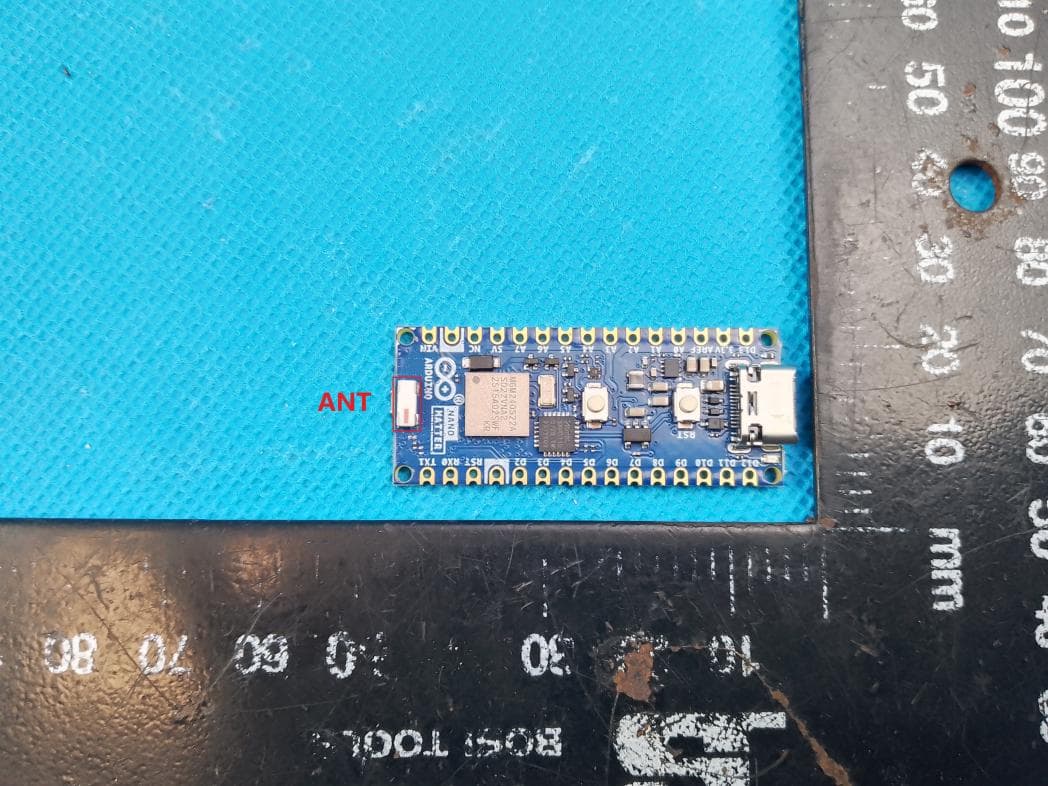
2AN9S-ABX00112
Mar 19, 2026Arduino Nano Matter, Arduino Nano Matter (with headers)
Equipment Class
DTS - Digital Transmission System2AN9S-ABX00051
Apr 14, 2024Nicla Vision
Equipment Class
DTS - Digital Transmission System
2AN9S-ABX00083
Mar 13, 2024Arduino Nano ESP32 with headers, Arduino Nano ESP32
Equipment Class
DTS - Digital Transmission System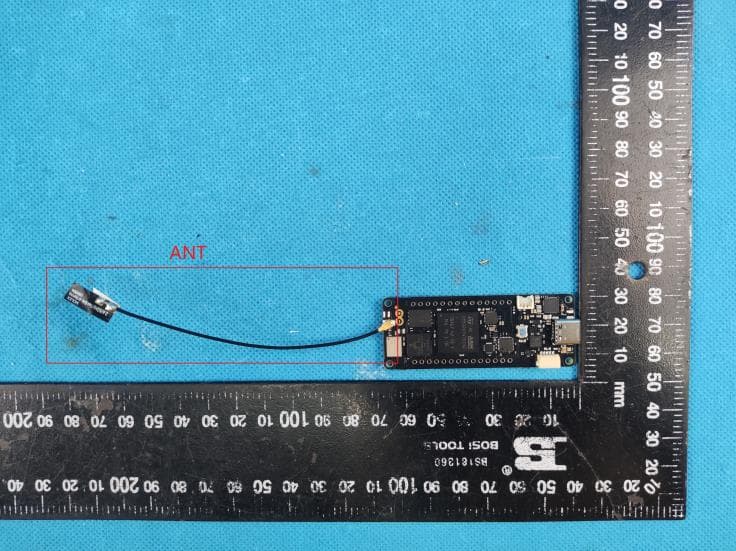
2AN9S-ABX00042
Dec 19, 2022Portenta H7
Equipment Class
DTS - Digital Transmission System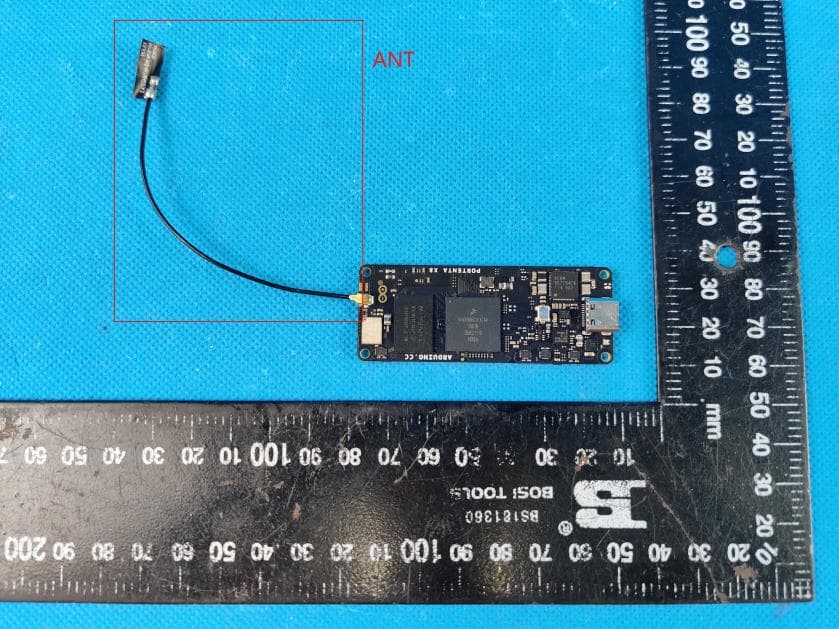
2AN9S-ABX00049
Dec 15, 2022Portenta X8
Equipment Class
DTS - Digital Transmission System