2AO23-212WGH01Wireless Gaming Headset
Chug, Inc.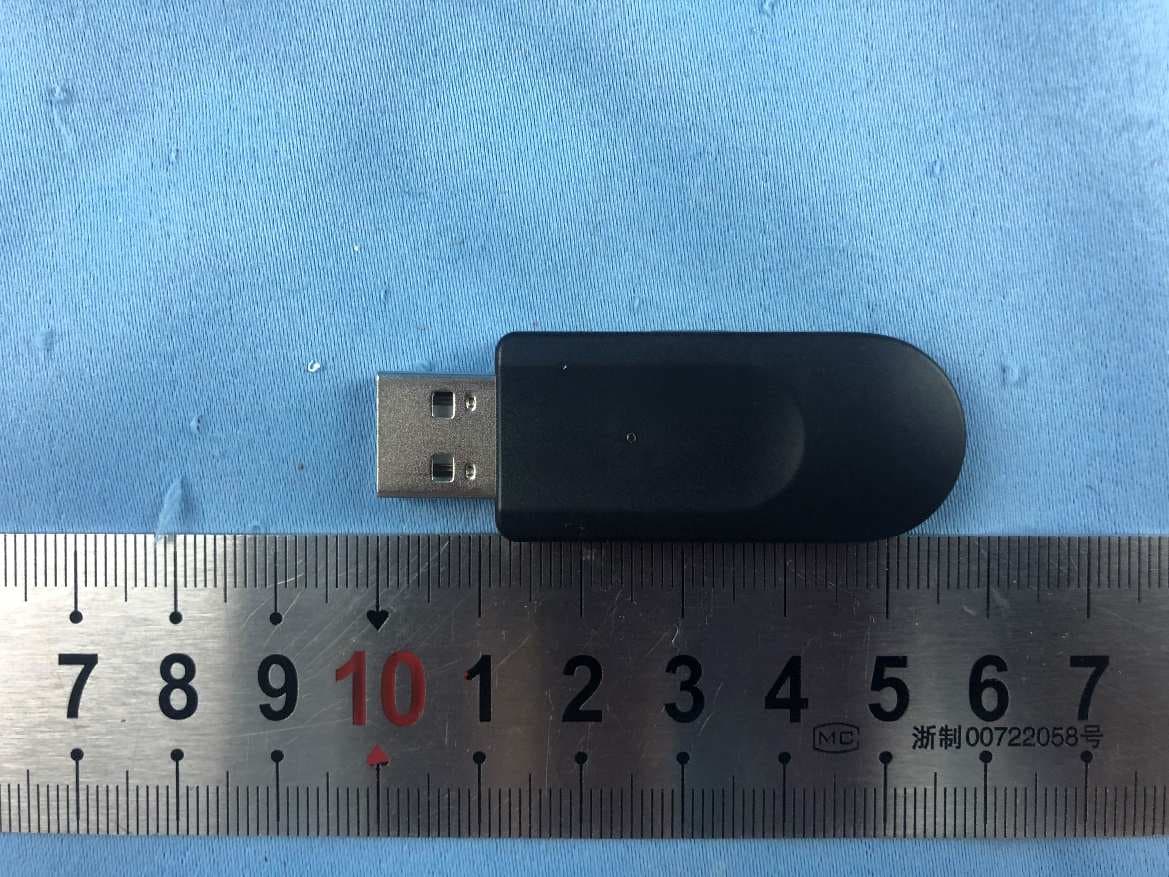
Click to zoom
Application Details
- Equipment Class
- DXX - Part 15 Low Power Communication Device Transmitter
- Date of Grant
- Sep 26, 2020
- Application Purpose
- Original Equipment
- Date of Application
- Sep 26, 2020
- Equipment Note
- Wireless Gaming Headset
- Frequency Range
- 2403.00000000 - 2478.00000000
- Company
- Chug, Inc.
- Country
- United States
Documents & Files
Document Text
Text extracted from the exhibit documents filed with the FCC. Open a document above to read the original.
Users Manual
P4074 1 3 2 4 5 6 Casque d’écoute sans fil PS4 • Branchez le récepteur 2,4 Ghz sur le port USB situé à l'avant de votre console. • L'oreillette sera automatiquement appariée au dongle. Pour allumer, maintenez ce bouton enfoncé pendant 3 secondes. • Entrez dans le menu des Paramètres > Appareils > Appareils audio. • Réglez le périphérique d'entrée et de sortie sur Casque USB. • Passez de « Sortie audio vers casque » à « Chat audio ». • Réglez le niveau de volume du casque sur le paramètre souhaité. • Sélectionnez le niveau du microphone et suivez les instructions pour régler les paramètres souhaités. Xbox • Branchez le câble auxiliaire de 3,5 mm fourni dans le casque et le contrôleur. PC • Branchez le récepteur 2,4 Ghz sur un port USB audio de votre PC. • L'oreillette sera automatiquement appariée au dongle. Pour allumer, maintenez ce bouton enfoncé pendant 3 secondes. • Réglez l'entrée et la sortie audio sur le périphérique connecté à l'USB. • Si vous rencontrez des difficultés dans un jeu, assurez-vous que dans les paramètres de contrôle du son de votre PC votre périphérique USB est sélectionné pour les communications par défaut. Nintendo Switch • Utilisation en mode filaire 1. Bouton Muet Appuyez rapidement pour active ou désactiver le son du micro. 2. ON/OFF Maintenez ce bouton pour mettre en marche/arrêter. L'oreillette sera automatiquement appariée au dongle. Pour allumer, maintenez ce bouton enfoncé pendant 3 secondes. Pour apparier, attendez 5 secondes. 3. Molette de volume Plus fort : V+ Moins fort : V- 4. Point de recharger Type-C 5. LED LED rouge lors du chargement, LED éteinte lorsque la batterie est complètement chargée. Synchronisation : la LED bleue clignote rapidement. Synchronisé : la LED bleue clignote toutes les 3 secondes. Non synchronisé : la LED bleue clignote tous les 1 secondes. 6. Auxiliaire dans le port Wireless Gaming Headset PS4 • Plug the 2.4Ghz receiver into the USB port located on the front of your console. • The headset will be automatically be paired to the dongle. To power on hold for 3 seconds. • Enter the settings menu > Devices > Audio Devices. • Set input and output device to USB Headset • Change “Audio Output to Headphones” to “Chat Audio”. • Set headphone volume level to your desired setting. Select the microphone level and follow the prompts to adjust your desired settings. Xbox • Plug in the provided 3.5mm AUX cable into the headset and controller. PC • Plug the 2.4Ghz receiver into an audio enabled USB port on your PC. •The headset will be automatically be paired to the dongle. To power on hold for 3 seconds. • Set audio input and output to USB connected device. • If you are having trouble in a game make sure that in your sound control settings on your PC that your USB device is selected for default communications Nintendo Switch • Use in wired mode 1. Mute Button Short Press to mute Mic or not. 2. ON/OFF Hold this button to power on/off. The headset will be automatically be paired to the dongle. To power on hold for 3 seconds. To enter pairing hold for 5 seconds. 3. Volume Roll Upward: V+ Downward: V- 4. Type-C charging point 5. LED Red LED when charging, LED off when charging full. Pairing: Blue LED blinks quickly Paired: Blue light will be constant when paired Unpaired: Blue LED blinks every 1S 6. Aux in Port Model: 212WGH01C Input: 5V 400mA MADE IN CHINA This device complies with Part 15 of the FCC Rules. Operation is subject to the following two conditions: (1) this device may not cause harmful interference, and (2) this device must accept any interference received, including interference that may cause undesired operation. Warning: Changes or modifications to this unit not expressly approved by the party responsible for compliance could void the user’s authority to operate the equipment. NOTE: This equipment has been tested and found to comply with the limits for a Class B digital device, pursuant to Part 15 of the FCC Rules. These limits are designed to provide reasonable protection against harmful interference in a residential installation. This equipment generates, uses and can radiate radio frequency energy and, if not installed and used in accordance with the instructions, may cause harmful interference to radio communications. However, there is no guarantee that interference will not occur in a particular installation. If this equipment does cause harmful interference to radio or television reception, which can be determined by turning the equipment off and on, the user is encouraged to try to correct the interference by one or more of the following measures: • Reorient or relocate the receiving antenna. • Increase the separation between the equipment and receiver. • Connect the equipment into an outlet on a circuit different from that to which the receiver is connected. • Consult the dealer or an experienced radio/TV technician for help. The device has been evaluated to meet general RF exposure requirements. The device can be used in portable exposure conditions without restriction. This device contains licence-exempt transmitter(s)/receiver(s) that comply with Innovation, Science and Economic Development Canada’s licence-exempt RSS(s). Operation is subject to the following two conditions: 1. This device may not cause interference. 2. This device must accept any interference, including interference that may cause undesired operation of the device. Chug Inc., 7157 Shady Oak Road, Eden Prairie, MN 55344 USA Phone/Téléphone: 888-778-5401 Modèle: 212WGH01C Entrée: 5V 400mA FABRIQUÉ CHINE Cet appareil est conforme à la section 15 de la Réglementation FCC. Son utilisation est sujette aux deux conditions suivantes: (1) cet appareil ne doit pas causer d’interférence nuisible et (2) cet appareil doit accepter toute interférence extérieure, y compris celle pouvant entraîner un mauvais fonctionnement. Attention : Les changements ou modifications non expressément approuvées par les autorités compétentes en matière de conformité peuvent priver l’…
Text truncated - open the document above for the full version.
Cover Letter(s)
Chug, Inc. September 21, 2020 Federal Communications Commission 445 12 th Street SW Washington, DC 20554 Subject: Limited Agency Agreement Chug, Inc. FCC ID: 2AO23-212WGH01 To Whom It May Concern: We, Chug, Inc., hereby authorized Intertek Testing Services to act as our Agent for the purpose of preparing application for FCC ID number 2AO23-212WGH01 under all applicable parts of the FCC rules and regulations. The effective date of this limited agency agreement is September 21, 2020. The Limited Agency Agreement expires on September 21, 2021, unless sooner terminated or extended by written notice to Intertek Testing Services and the Federal Communications Commission. This is to advise that we are in full compliance with the Anti-Drug Abuse Act. The applicant is not subject to a denial of federal benefits pursuant to Section 5301 of the Anti-Drug Act of 1988, 21 U.S.C. 862, and no party to the application is subject to a denial of federal benefits pursuant to that section. If you have any questions or comments, please do not hesitate to contact me. Sincerely, Michael Clemmer General manager
Cover Letter(s)
1(2) Chug, Inc. Attention: Certification reviewer RE: Request for Confidentiality FCC ID: 2AO23-212WGH01 To Whom It May Concern: Permanent Confidentiality [Complete this section if permanent confidentiality is requested] Request to withhold permanently from public review certain portions of the application for equipment certification for the referenced FCC identifiers. This request for confidentiality is made pursuant to 47 CFR 0.457(d) and 0.459 of the FCC Rules. In particular, the following sections of the application are to be kept permanently confidential: [Select one or more of items below, as appropriate] Schematics Block Diagrams Operational Description Tune-up Procedure Parts List Internal Photos (see note) Users Manual (see note) Note 1: Internal Photos may be held confidential 1) if the circuit board or internal components are not accessible to users. For example, it is acceptable if the circuit board is enclosed in epoxy. 2) Also, it is acceptable if the device is not accessible to the public, for example, a device mounted on the top of a large tower (or in a fenced enclosure) such that it is only serviceable by professional designated technicians under a Non-Disclosure Agreement (NDA). All sales for these devices must be under a NDA restricting the disclosure of the propriety information, including internal photos. Users Manual may be held confidential only when the manual contains proprietary technical information intended for professional technicians obligated under a NDA. All sales and distribution of the user’s manual must be under a NDA that restricts the disclosure of the information. In the application cover letter requesting permanent confidentiality the following additional description and the NDA exhibit is required: 1. Describe in detail how internal photos and/or users manual information are controlled to prevent them from becoming public or disclosed to unauthorized persons. 2. Describe how public access is restricted for products serviceable by professional designated technicians. 3. A statement that all sales of the non-consumer device will be under a NDA to include third party sales and that the final user of the device is subject to the NDA. 4. Provide an example of the NDA between the grantee and a purchaser. The request for confidentiality must Note 2: For scanning receiver, the schematics, block diagrams, operational description, tune-up procedure, parts list and internal photos are always held permanently confidential. Short-term Confidentiality [Complete this section if short-term confidentiality is requested] Request to withhold from public review for a period of [please enter 1 to 180] days from the date of the Grant of Equipment Authorization and prior to marketing, certain portions of the application for equipment certification for the referenced FCC identifiers. This request for confidentiality is made pursuant to 47 CFR 0.457(d) and 0.459 of the FCC Rules. In particular, the following sections of the application are to be kept short-term confidential for a period above from the date of the grant [Select one or more of items below that are not selected in the list above, as appropriate] Schematics Block diagrams Operational Description Tune-up Procedure 2(2) Parts List Test Setup Photos External Photos Internal Photos Users Manual Rationale for request for confidentiality: We have invested considerable time and materials in research and development to produce the referenced product. Permanent confidentiality: Disclosure of the permanently confidential portions of this application to competitors would not only give them significant competitive advantages in developing similar products, but would also disclose successful implementation of unpublished, leading edge technology developed by us. Short-term confidentiality: Disclosure of the short-term confidential portions of this application during the period of importation and/or distribution would reveal key aspects of proprietary technology to competitors and diminish the value of our investment in research and development. If you have questions or need further information, please contact the undersigned. Sincerely, _________________ Michael Clemmer General manager September 21, 2020
ID Label/Location Info
Model/Modèle: 212WGH01 IC: 26424-212WGH01 FCC ID: 2AO23-212WGH01
RF Exposure Info
INTERTEK TESTING SERVICES RF Exposure The equipment under test (EUT) is a Wireless Gaming Headset operating at 2.4G Band. The EUT is powered by DC 5V from USB port. For more detail information pls. refer to the user manual. Antenna Type: Integral antenna Modulation Type: GFSK Antenna Gain: 1.5dBi Max The nominal conducted output power specified: -17.5dBm (+/-1dB) The nominal radiated output power (e.i.r.p) specified: -16.0dBm (+/- 1dB) According to the KDB 447498: The maximum peak radiated emission for the EUT is 80.1dBμV/m at 3m in the frequency 2478MHz The EIRP = [(FS*D) ^2 / 30] mW = -15.13dBm which is within the production variation. The minimum peak radiated emission for the EUT is 78.6dBμV/m at 3m in the frequency 2403MHz The EIRP = [(FS*D) ^2 / 30] mW = -16.63dBm which is within the production variation. The maximum conducted output power specified is -16.5dBm = 0.02mW The source- based time-averaging conducted output power = 0.02 * Duty factor mW (where Duty Factor≤1) = 0.02mW The SAR Exclusion Threshold Level: = 3.0 * (min. test separation distance, mm) / sqrt(freq. in GHz) = 3.0 * 5 / sqrt (2.478) mW = 9.53 mW Since the source-based time-averaging conducted output power is well below the SAR low threshold level, so the EUT is considered to comply with SAR requirement without testing. FCC ID: 2AO23-212WGH01
Test Report
Chug, Inc. TEST REPORT SCOPE OF WORK FCC Testing–212WGH01 REPORT NUMBER 1561F846 ISSUE DATE [REVISED DATE] September 17, 2020 [--------------------] PAGES 26 DOCUMENT CONTROL NUMBER FCC ID 249_C © 2017 INTERTEK Test Report Intertek Report No.: 200831042SZN-002 This report is for the exclusive use of Intertek's Client and is provided pursuant to the agreement between Intertek and its Client. Intertek's responsibility and liability are limited to the terms and conditions of the agreement. Intertek assumes no liability to any party, other than to the Client in accordance with the agreement, for any loss, expense or damage occasioned by the use of this report. Only the Client is authorized to permit copying or distribution of this report and then only in its entirety. Any use of the Intertek name or one of its marks for the sale or advertisement of the tested material, product or service must first be approved in writing by Intertek. The observations and test results in this report are relevant only to the sample tested. This report by itself does not imply that the material, product, or service is or has ever been under an Intertek certification program. Intertek Testing Services Shenzhen Ltd. Longhua Branch 101, 201, Building B, No. 308 Wuhe Avenue, Zhangkengjing Community, GuanHu Subdistrict, LongHua District, ShenZhen, P.R. China Tel: (86 755) 8601 6288 Fax: (86 755) 8601 6751 Version: 01-November-2017 Page: 1 of 26 FCC ID 249_C Chug, Inc. Application For Certification FCC ID: 2AO23-212WGH01 Wireless Gaming Headset Model: 212WGH01 Brand Name: 2.4GHz Transceiver Report No.: 200831042SZN-002 We hereby certify that the sample of the above item is considered to comply with the requirements of FCC Part 15, Subpart C for Intentional Radiator, mention 47 CFR [10-1-19] Prepared and Checked by: Approved by: Jeff Liang Engineer Kidd Yang Technical Supervisor Date: September 17, 2020 Test Report Intertek Report No.: 200831042SZN-002 Version: 01-November-2017 Page: 2 of 26 FCC ID 249_C MEASUREMENT/TECHNICAL REPORT This report concerns (check one:) Original Grant X Class II Change Equipment Type: DXX - Part 15 Low Power Communication Device Transmitter Deferred grant requested per 47 CFR 0.457(d)(1)(ii)? Yes No X If yes, defer until: date Company Name agrees to notify the Commission by: date of the intended date of announcement of the product so that the grant can be issued on that date. Transition Rules Request per 15.37? Yes No X If no, assumed Part 15, Subpart C for intentional radiator − the new 47 CFR [10-1-19 Edition] provision. Report prepared by: Jeff Liang Intertek Testing Services Shenzhen Ltd. Longhua Branch 101, 201, Building B, No. 308 Wuhe Avenue, Zhangkengjing Community, GuanHu Subdistrict, LongHua District, ShenZhen, P.R. China Tel / Fax: 86-755-8614 0743/86-755-8601 6661 Test Report Intertek Report No.: 200831042SZN-002 Version: 01-November-2017 Page: 3 of 26 FCC ID 249_C Table of Contents 1.0 Summary of Test Result ................................................................................................. 4 2.0 General Description ...................................................................................................... 5 2.1 Product Description .................................................................................................... 5 2.2 Related Submittal(s) Grants ......................................................................................... 5 2.3 Test Methodology ...................................................................................................... 5 2.4 Test Facility ............................................................................................................... 5 3.0 System Test Configuration ............................................................................................. 6 3.1 Justification ............................................................................................................... 6 3.2 EUT Exercising Software .............................................................................................. 6 3.3 Special Accessories ..................................................................................................... 6 3.4 Equipment Modification .............................................................................................. 6 3.5 Measurement Uncertainty .......................................................................................... 7 3.6 Support Equipment List and Description ........................................................................ 7 4.0 Emission Results ........................................................................................................... 8 4.1 Radiated Test Results .................................................................................................. 8 4.1.1 Field Strength Calculation ......................................................................................... 8 4.1.2 Radiated Emission Configuration Photograph .............................................................. 9 4.1.3 Radiated Emissions .................................................................................................. 9 4.1.4 Transmitter Spurious Emissions ............................................................................... 12 4.2 Conducted Emission Configuration Photograph ............................................................ 16 4.2.1 Conducted Emission ............................................................................................... 16 5.0 Equipment Photographs .............................................................................................. 19 6.0 Product Labelling ........................................................................................................ 19 7.0 Technical Specifications ............................................................................................... 19 8.0 Instruction Manual ..............................…
Text truncated - open the document above for the full version.
Test Setup Photos
Below 1GHz Above 1GHz
Contact Information
Applicant
Michael Clemmer(general manager)
Technical Contact
Intertek Testing Services Shenzhen Ltd. Longhua BrWilliam Chen
[email protected](86 755) 8601 6288
101, 201, Building B, No. 308 Wuhe Avenue, Zhangke · Shenzhen · China
Non-Technical Contact
Intertek Testing Services Shenzhen Ltd. Longhua BrWilliam Chen
[email protected](86 755) 8601 6288
Test Firm
Intertek Testing Services Shenzhen Ltd. Longhua BrHolly Ou
[email protected]+86 755 86140691
Technical Specifications
| # | Rule Parts | Frequency Range | Power Output |
|---|---|---|---|
| 1 | 15C | 2.40 GHz - 2.48 GHz | - |
Other Applications from Chug, Inc.

2AO23-KSET3M
Aug 27, 2026Karaoke speaker Microphone
Equipment Class
DTS - Digital Transmission System
2AO23-KSET3
Aug 27, 2026Karaoke speaker
Equipment Class
DSS - Part 15 Spread Spectrum Transmitter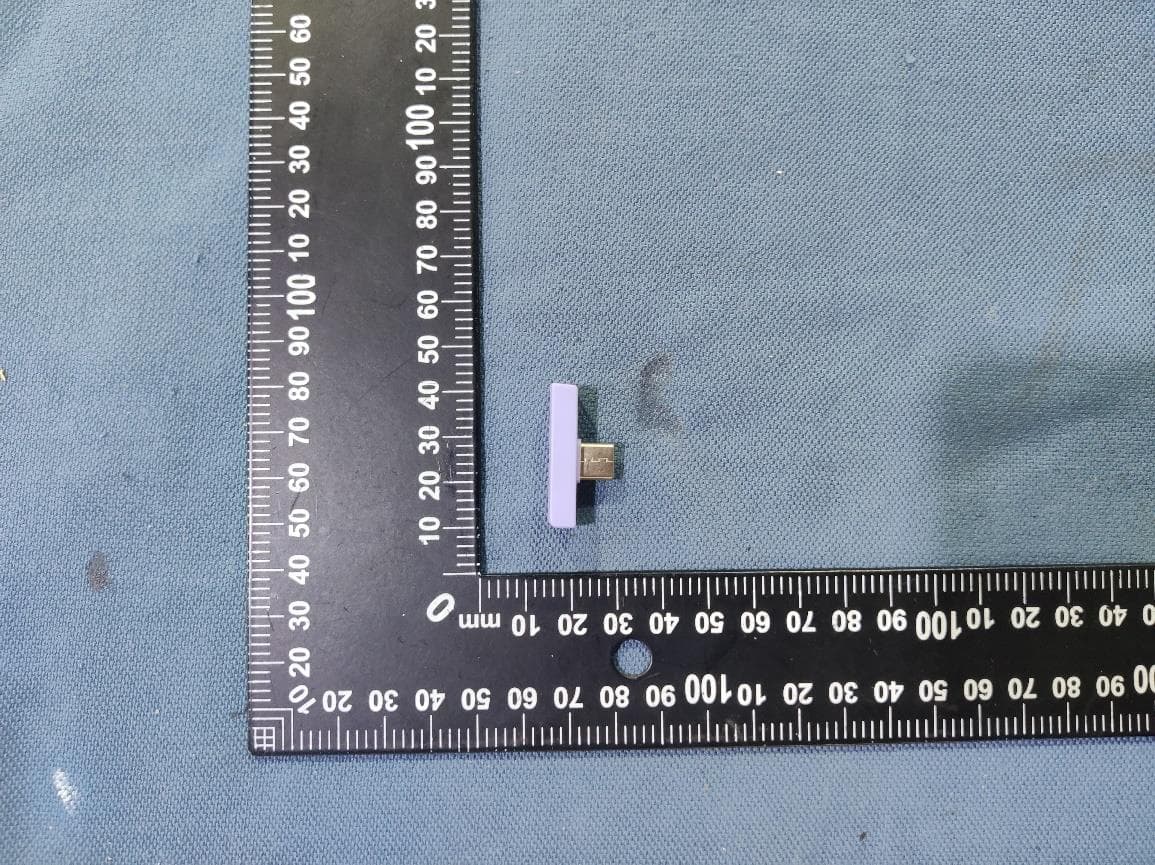
2AO23-WOE16R
Aug 21, 2026Dongle
Equipment Class
DSS - Part 15 Spread Spectrum Transmitter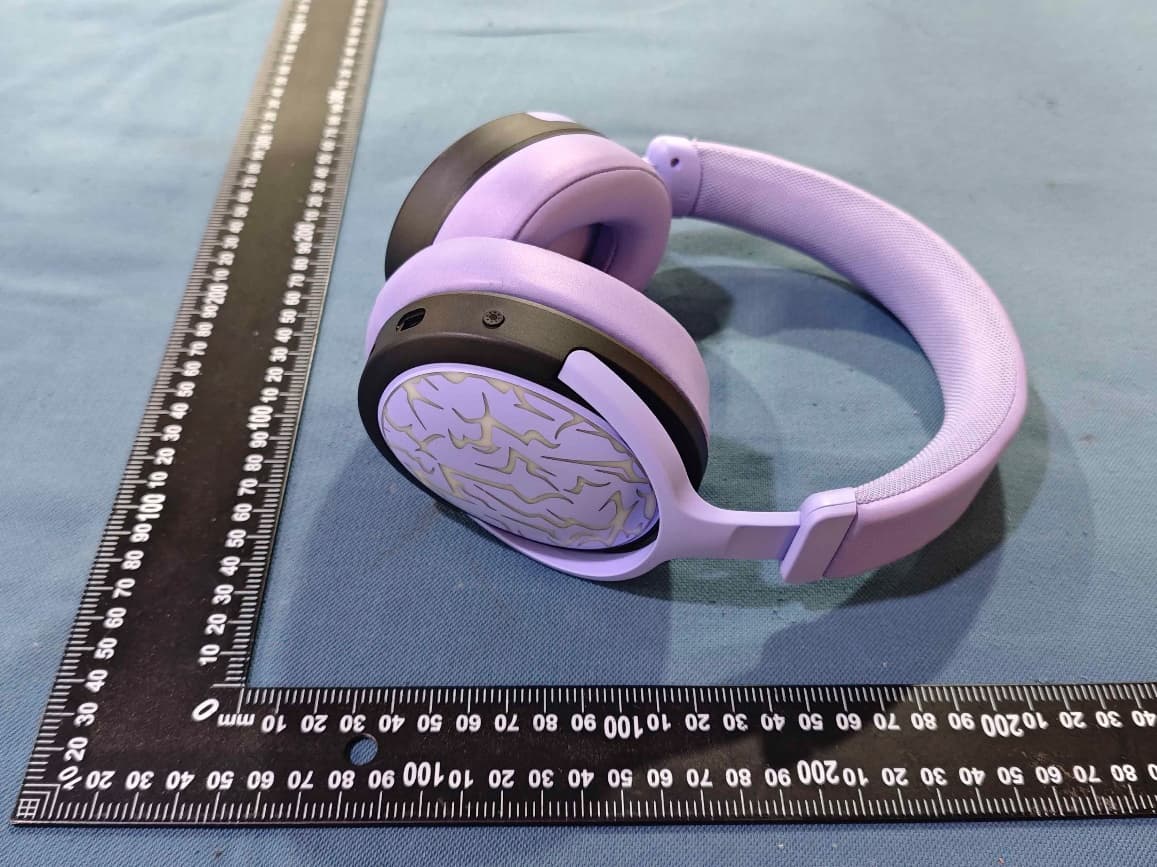
2AO23-WOE16
Aug 21, 2026WIRELESS OVER-EAR GAMING HEADSETING HEAD
Equipment Class
DSS - Part 15 Spread Spectrum Transmitter
2AO23-WT1
Aug 18, 2026Walkie Talkie
Equipment Class
FRF - Part 95 Family Radio Face Held Transmitter