2AWA4CDP-020-ADP
CHOWIS Co., Ltd.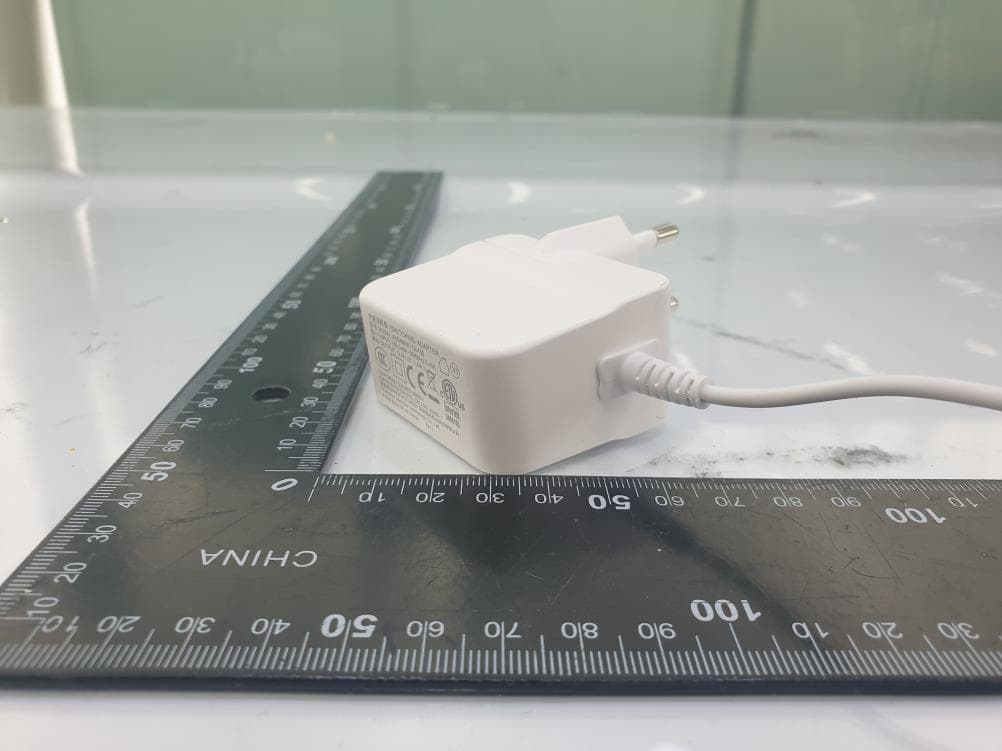
Click to zoom
Application Details
- Equipment Class
- DTS - Digital Transmission System
- Date of Grant
- Oct 30, 2020
- Application Purpose
- Original Equipment
- Date of Application
- Oct 30, 2020
- Equipment Note
- DP
- Frequency Range
- 2412.00000000 - 2462.00000000
- Company
- CHOWIS Co., Ltd.
- Country
- South Korea
Documents & Files
Document Text
Text extracted from the exhibit documents filed with the FCC. Open a document above to read the original.
Users Manual
Quick Start Guide Model Name: CDP‐020‐A ENG 1 Device Description and Specification Battry Indicator Moisture Sensor Measurement Mode Indicator Optical Unit Skin Mode/Focus Butto Capture Butto Charging Pin Serial Number Switch On/Off Power Supply Magnification Product size Product weight Analysis result Measurement Input: 100‐240V, 50‐60Hz Output: 12V,1‐2A x20 Handset: 15 * 6 * 7 (mm) Stand: 10.5 * 18.5 * 8 (mm) Handset: about 150g Stand: 515g Index per measurement (0–99) Moisture/Sebum, Pores, Spots, Impurities Wrinkles, Kerati 2 Turn On Device 1. Plug in USB cord to the dock to charge the handset. a. The Dp viso handset is on its docking. b. DC power socket located at the back side of docking c. The ba ery needs to be fully charged around 4 hours and the device needs to be turned off. d. Single full charging enables the device to be used for around 2 hours e. Docking‐ handset holder charges the handset. Power Adaptor Jack Power switch 2. Turn on device by switching On/Off bu on. Measurement Indicator will have blinking light. 3 Using App Connecting Dermobella Skin App and Diagnosis 1. Download and install “Dermobella Skin” on App Store for IOS or Google Play Store for Android. or scan QR code: 2. Input Optic Number on app 3. Connect with device via Wi‐Fi with default password DEFAULT PASSWORD: 1234567890 4. Skin app: Total diagnosis and Quick diagnosis Total Diagnosis shows a table of customer. Add, edit or delete customers, also see or compare results. Quick Diagnosis don’t need full customer information. Only needs: Gender > Age > Skin color group Inside the Dermobella Skin App are 3 buttons on the upper right corner of the screen. 1. Wi‐Fi bu on for internet connection vailable. 2. Settings b on for setting tions of the App 3. Power bu on to shut down or restart device. 4 How to Measure Dermobella Skin Measurement 1. Dermobella Skin has 3 programs to select. a. Total Program covers all measurments: Moisture/Sebum, Pore, Spots, Impuri es, Wrinkles, Kerati b. Personalized Program covers only customized and selected measurement the user wants to have. c. Moisture Program measures in‐depth analysis of the skin moisture 2. How to measure moisture: a. Tap on the Tap screen b. Tap T‐Zone on the screen c. Put the Moisture sensor on the Forehead and press the Capture bu on on the Handset d. Do the same for U‐zone. 3. How to measure Sebum a. Dab Sebum T‐zone to forehead b. Dab Sebum U‐zone to lower cheek c. Tap on the screen d. Tap T‐zone and take image on the sebum e. Tap U‐zone and take image on the sebum How to Measure Keratin 1. Peel off transparent film and press the tape on the skin for 6 seconds. 2. Capture Image of keratin fi m as shown below: 5 How to Measure How to Capture Images 1. Ensure that the camera fully and lightly touches the skin, as shown below: 2. Make sure when taking images, camera is focused. As shown below: Sample shots: Wrinkle Pore Impuritie 6 How to Analyze Results After Measurement 1. Analyzing Diagnosis after all measurements a. Analyze one by one or Analyze all. 2. Show all results a. Compare, Analyze or show 3D view b. 3D view only applies to Pore and Wrinkle 3. Full results a. Tap bu on to show results b. “Results” bu on is on the upper right corner c. Full results will show graphs of all measurements 4. The minimum distance that consumers use the product is 15 mm or more. (15 mm or more distance from the antenna). ‐ FCC §15.21 Information to user. The users manual or instruction manual for an intention l or unintention l radiator shall cau on the user that changes or modification not expressly approved by the party responsible for compliance could void the user's authority to operate the equipment. In cases where the manual is provided only in a form other than paper, such as on a computer disk or over the Internet, the information required by this section may be included in the manual in that alternati e form, provided the user can reasonably be expected to have the capability to access information in that form. ‐ FCC §15.105 Information to the user. (b) For a Class B digital device or peripheral, the instruction furnished the user shall include the following or similar statement, placed in a prominent location in the text of the manual: Note: This equipment has been tested and found to comply with the limits for a Class B digital device, pursuant to part 15 of the FCC Rules. These limits are designed to provide reasonable protection against harmful interference in a residentia installation This equipment generates, uses and can radiate radio frequency energy and, if not installed and used in accordance with the instruction , may cause harmful interference to radio communication . However, there is no guarantee that interference will not occur in a particul r installation If this equipment does cause harmful interference to radio or television reception, which can be determined by turning the equipment off and on, the user is encouraged to try to correct the interference by one or more of the following measures: —Reorient or relocate the receiving antenna. —Increase the separation between the equipment and receiver. —Connect the equipment into an outlet on a circuit different from that to which the receiver is connected. —Consult the dealer or an experienced radio/TV technician for help. ‐ FCC Notice : 1.1 Liability for illegal acts Anyone who uses this product for illegal purposes shall be liable and he or she shall be held responsible for all and any consequences. 1.2 FCC licensing informatio Federal Communication Commission statement NOTE: Change or modification not expressly approved by the party responsible for compliance could void the user’s authority to operate the equipment. NOTE: This equipment has been tested and found to comply with the limits for a Class B digital device, pursuant to Part 15 of the FCC Rules. These limits are designed to provide reasonable protection against harmful interference in a residentia installation This equipment genera…
Text truncated - open the document above for the full version.
Cover Letter(s)
CHOWIS CO LTD A-1301-2, 184, Jungbu-daero, Giheung-gu, Yongin-si, Gyeonggi-do, Republic of Korea(17095) Te l . + 8 2 31-706-7950 / Fax. +82 31-708-7950 Declaration of Similarity Federal Communication Commission Equipment Authorization Division, Application Processing Branch 7435 Oakland Mills Road Columbia, MD 21048 Date: 10 December, 2020 Dear Sir, We, CHOWIS CO LTD hereby declare that we have a product named as DP (Model number: CDP-020-A , FCC ID: 2AWA4CDP-020-A) was tested by KCTL Inc. Meanwhile, for our marketing purpose, we would like to list a series models (CDP-050-A, dermoPrime, dpViso, dpHarris, dermobella) on reports and certificate. The basic and derivative models(CDP-050-A) are electrically identical except of the camera module. The basic and derivative models(dermoPrime, dpViso, dPHarris, dermobella) are electrically identical except of the model name. If you have any questions, please feel free to contact me at the address shown below. Sincerely, Signature: Name / Title: Choi Won Suk / President E mail:
Cover Letter(s)
CHOWIS CO LTD A-1301-2, 184, Jungbu-daero, Giheung-gu, Yongin-si, Gyeonggi-do, Republic of Korea(17095) Date: October 20, 2020 Federal Communications Commission 7435 Oakland Mills Road Columbia MD 21046 c.c. UL Verification Services Certification Division 47173 Benicia Street Fremont, CA 94538, USA To whom it may concern: I, the undersigned, hereby authorize Ms. Chloe Lee / Manager of KCTL Inc. and hereafter referred to as KCTL to act on our behalf in all manners relating to application for equipment authorization, including signing of all documents relating to these matters. Any and all acts carried out by Ms. Chloe Lee / Manager of KCTL Inc. on our behalf shall have the same effect as acts of our own. I, the undersigned, hereby certify that we are not subject to a denial of federal benefits, that includes FCC benefits, pursuant to Section 5301 of the Anti-Drug Abuse Act of 1988, 21 U.S.C. 853(a). In authorizing KCTL as our agent, we still recognize that we are responsible to: a) comply with the relevant provisions of the certification program; b) make all necessary arrangements for the conduct of the evaluation, including provision for examining documentation and access to all areas, records (including internal audit reports) and personnel for the purposes of evaluation (e.g. testing, inspection, assessment, surveillance, reassessment) and resolution of complaints; c) make claims regarding certification only in respect of the scope for which certification has been granted; d) do not use our product certification in such a manner as to bring the Certification Division into disrepute and not make any statement regarding our product certification which the Certification Division may consider misleading or unauthorized; e) upon suspension or cancellation of certification, discontinue use of all advertising matter that contains any reference thereto and return any certification documents as required by the Certification Division; f) use certification only to indicate the products are certified as being in conformity with specified standards; g) endeavor to ensure that no certificate or report nor any part thereof is used in a misleading manner; h) ensure that any reference to our product certification in communication media such as documents, brochures or advertising, complies with the requirements of the Certification Division; i) keep a record of all complaints made known to the us relating to the product’s compliance with requirements of the relevant standard and to make these records available to the Certification Division when requested; j) take appropriate action with respect to such complaints and any deficiencies found in products or services that affect compliance with the requirements for certification; k) document the actions taken. This authorization is valid until further written notice from the applicant. Sincerely Yours, Choi Won Suk / President
Cover Letter(s)
CHOWIS CO LTD A-1301-2, 184, Jungbu-daero, Giheung-gu, Yongin-si, Gyeonggi-do, Republic of Korea(17095) CONFIDENTIALITY REQUEST Federal Communication Commission Equipment Authorization Division, Application Processing Branch 7435 Oakland Mills Road Columbia, MD 21048 October 20, 2020 TO WHOM IT MAY CONCERN Pursuant to Paragraphs §0.457 and 0.459 of the Commission’s Rules (47 C.F.R.) and Section §552(b)(4) of the Freedom of Information Act, CHOWIS CO LTD requests confidentiality for the following products: FCC ID Number Product Title/Model 2AWA4CDP-020-A DP / CDP-020-A The following exhibits contain trade secrets and proprietary information that could be of benefit to our competitors regarding the design of our product. This material is not customarily available to the general public and we request that it be withheld from public inspection. We request that the following information submitted be held permanent confidential treatment. Permanent Confidential Request -. Schematics -. Block Diagram -. Operational Description -. Antenna specification We also hereby request Short-Term Confidentiality for 180 days after the grant as outlined in Public Notice DA 04-1705. This provision will give temporary confidentiality of commercially sensitive information prior to product release. Short-Term Confidential Request -. External Photos -. Internal Photos -. Test set-up photo -. User Manual If you have any questions, please feel free to contact me at the address shown below. Sincerely, Choi Won Suk / President
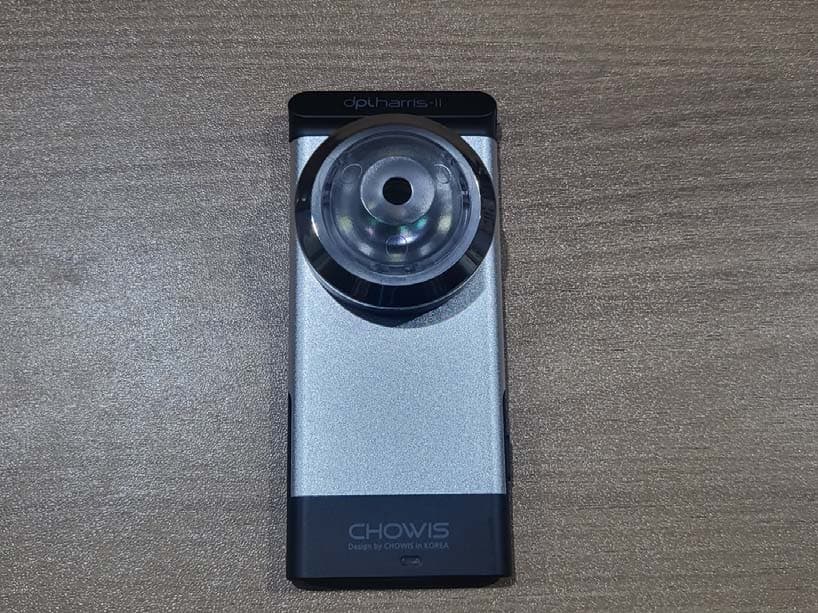
External Photos
http://www.kctl.co.kr This test report shall not be reproduced, except in full, without the written approval External photos of EUT http://www.kctl.co.kr This test report shall not be reproduced, except in full, without the written approval http://www.kctl.co.kr This test report shall not be reproduced, except in full, without the written approval http://www.kctl.co.kr This test report shall not be reproduced, except in full, without the written approval http://www.kctl.co.kr This test report shall not be reproduced, except in full, without the written approval http://www.kctl.co.kr This test report shall not be reproduced, except in full, without the written approval http://www.kctl.co.kr This test report shall not be reproduced, except in full, without the written approval http://www.kctl.co.kr This test report shall not be reproduced, except in full, without the written approval
ID Label/Location Info
<Label design and location> Label <Multiple Model> Front of product Rear of product Label <Multiple Model> Front of product Rear of product Label
Internal Photos
http://www.kctl.co.kr This test report shall not be reproduced, except in full, without the written approval Internal photos of EUT http://www.kctl.co.kr This test report shall not be reproduced, except in full, without the written approval http://www.kctl.co.kr This test report shall not be reproduced, except in full, without the written approval http://www.kctl.co.kr This test report shall not be reproduced, except in full, without the written approval http://www.kctl.co.kr This test report shall not be reproduced, except in full, without the written approval http://www.kctl.co.kr This test report shall not be reproduced, except in full, without the written approval http://www.kctl.co.kr This test report shall not be reproduced, except in full, without the written approval http://www.kctl.co.kr This test report shall not be reproduced, except in full, without the written approval WIFI Ant
RF Exposure Info
http://www.kctl.co.kr This test report shall not be reproduced, except in full, without the written approval * RF Exposure 1. Regulation According to the KDB 447498 D01 V06, the following RF exposure evaluation shall to demonstrate RF exposure compliance. Unless specifically required by the published RF exposure KDB procedures, standalone 1-g head or body and 10-g extremity SAR evaluation for general population exposure conditions, by measurement or numerical simulation, is not required when the corresponding SAR Test Exclusion Threshold condition(s), listed below, is (are) satisfied. These test exclusion conditions are based on source-based time-averaged maximum conducted output power of the RF channel requiring evaluation, adjusted for tune-up tolerance, and the minimum test separation distance required for the exposure conditions. The minimum test separation distance defined in 4.1 f) is determined by the smallest distance from the antenna and radiating structures or outer surface of the device, according to the host form factor, exposure conditions and platform requirements, to any part of the body or extremity of a user or bystander. To qualify for SAR test exclusion, the test separation distances applied must be fully explained and justified, typically in the SAR measurement or SAR analysis report, by the operating configurations and exposure conditions of the transmitter and applicable host platform requirements, according to the required published RF exposure KDB procedures. When no other RF exposure testing or reporting are required, a statement of justification and compliance must be included in the equipment approval, in lieu of the SAR report, to qualify for SAR test exclusion. When required, the device specific conditions described in the other published RF exposure KDB procedures must be satisfied before applying these SAR test exclusion provisions; for example, handheld PTT two-way radios, handsets, laptops and tablets, etc. a) For 100 ㎒ to 6 ㎓ and test separation distances ≤ 50 ㎜, the 1-g and 10-g SAR test exclusion thresholds are determined by the following: [(max. power of channel, including tune-up tolerance, ㎽) / (min. test separation distance, ㎜)] · [√f(㎓)] ≤ 3.0 for 1-g SAR, and ≤ 7.5 for 10-g extremity SAR,30 where ● f(㎓) is the RF channel transmit frequency in ㎓ ● Power and distance are rounded to the nearest ㎽ and mm before calculation ● The result is rounded to one decimal place for comparison ● The values 3.0 and 7.5 are referred to as numeric thresholds in step b) below The test exclusions are applicable only when the minimum test separation distance is ≤ 50 ㎜, and for transmission frequencies between 100 ㎒ and 6 ㎓. When the minimum test separation distance is < 5 ㎜, a distance of 5 ㎜ according to 4.1 f) is applied to determine SAR test exclusion. b) For 100 ㎒ to 6 ㎓ and test separation distances > 50 ㎜, the 1-g and 10-g SAR test exclusion thresholds are determined by the following (also illustrated in Appendix B): 1) {[Power allowed at numeric threshold for 50 ㎜ in step a)] + [(test separation distance – 50 ㎜)·(f(㎒)/150)]} ㎽, for 100 ㎒ to 1500 ㎒ 2) {[Power allowed at numeric threshold for 50 ㎜ in step a)] + [(test separation distance – 50 ㎜)·10]} ㎽, for > 1500 ㎒ and ≤ 6 ㎓ c) For frequencies below 100 ㎒, the following may be considered for SAR test exclusion (also illustrated http://www.kctl.co.kr This test report shall not be reproduced, except in full, without the written approval in Appendix C): 1) For test separation distances > 50 ㎜ and < 200 ㎜, the power threshold at the corresponding test separation distance at 100 ㎒ in step b) is multiplied by [1 + log(100/f(㎒))] 2) For test separation distances ≤ 50 ㎜, the power threshold determined by the equation in c) 1) for 50 ㎜ and 100 ㎒ is multiplied by ½ 3) SAR measurement procedures are not established below 100 ㎒. When SAR test exclusion cannot be applied, a KDB inquiry is required to determine SAR evaluation requirements for any SAR test results below 100 ㎒ to be acceptable. http://www.kctl.co.kr This test report shall not be reproduced, except in full, without the written approval 2. Result 2-1. Calculation Result of RF Exposure Mode Max. tune-up Power [㏈m] Conducted output power [㎽/] Min. test separation distance [㎜] SAR test exclusion thresholds ≤ 7.5 for 10-g SAR WIFI 13.50 22.39 5.00 7.03 Note: 1. SAR test exclusion thresholds = [(Max. Power of Channel, Including Tune-Up Tolerance/(Min. Test Separation Distance, mm)] · [√f(GHz)] WIFI = [(22.39)/(5)] · [√2.462] = 7.03 3. Target power and tolerance, Max tuneup power Mode Target power [㏈m] Tolerance [㏈] Max tuneup power [㏈m] Average Power [㏈m] WIFI 802.11b_ 2 412 ㎒ 12.50 ±1.00 13.50 12.21 WIFI 802.11b_ 2 437 ㎒ 12.50 ±1.00 13.50 12.91 WIFI 802.11b_ 2 462 ㎒ 12.50 ±1.00 13.50 13.00 WIFI 802.11g_ 2 412 ㎒ 8.00 ±1.00 9.00 8.15 WIFI 802.11g_ 2 417 ㎒ 10.00 ±1.00 11.00 10.55 WIFI 802.11g_ 2 437 ㎒ 10.00 ±1.00 11.00 10.79 WIFI 802.11g_ 2 457 ㎒ 10.00 ±1.00 11.00 10.90 WIFI 802.11g_ 2 462 ㎒ 8.50 ±1.00 9.50 8.94 WIFI 802.11n HT20_ 2 412 ㎒ 9.50 ±1.00 10.50 9.70 WIFI 802.11n HT20_ 2 417 ㎒ 12.00 ±1.00 13.00 12.21 WIFI 802.11n HT20_ 2 437 ㎒ 12.00 ±1.00 13.00 12.48 WIFI 802.11n HT20_ 2 457 ㎒ 12.00 ±1.00 13.00 12.55 WIFI 802.11n HT20_ 2 462 ㎒ 10.00 ±1.00 11.00 10.47 4. RF Exposure Compliance Issue Therefore, EUT is not required the SAR Evaluation.
RF Exposure Info
http://www.kctl.co.kr This test report shall not be reproduced, except in full, without the written approval * RF Exposure 1. Regulation According to the KDB 447498 D01 V06, the following RF exposure evaluation shall to demonstrate RF exposure compliance. Unless specifically required by the published RF exposure KDB procedures, standalone 1-g head or body and 10-g extremity SAR evaluation for general population exposure conditions, by measurement or numerical simulation, is not required when the corresponding SAR Test Exclusion Threshold condition(s), listed below, is (are) satisfied. These test exclusion conditions are based on source-based time-averaged maximum conducted output power of the RF channel requiring evaluation, adjusted for tune-up tolerance, and the minimum test separation distance required for the exposure conditions. The minimum test separation distance defined in 4.1 f) is determined by the smallest distance from the antenna and radiating structures or outer surface of the device, according to the host form factor, exposure conditions and platform requirements, to any part of the body or extremity of a user or bystander. To qualify for SAR test exclusion, the test separation distances applied must be fully explained and justified, typically in the SAR measurement or SAR analysis report, by the operating configurations and exposure conditions of the transmitter and applicable host platform requirements, according to the required published RF exposure KDB procedures. When no other RF exposure testing or reporting are required, a statement of justification and compliance must be included in the equipment approval, in lieu of the SAR report, to qualify for SAR test exclusion. When required, the device specific conditions described in the other published RF exposure KDB procedures must be satisfied before applying these SAR test exclusion provisions; for example, handheld PTT two-way radios, handsets, laptops and tablets, etc. a) For 100 ㎒ to 6 ㎓ and test separation distances ≤ 50 ㎜, the 1-g and 10-g SAR test exclusion thresholds are determined by the following: [(max. power of channel, including tune-up tolerance, ㎽) / (min. test separation distance, ㎜)] ꞏ [√f(㎓)] ≤ 3.0 for 1-g SAR, and ≤ 7.5 for 10-g extremity SAR,30 where ● f(㎓) is the RF channel transmit frequency in ㎓ ● Power and distance are rounded to the nearest ㎽ and mm before calculation ● The result is rounded to one decimal place for comparison ● The values 3.0 and 7.5 are referred to as numeric thresholds in step b) below The test exclusions are applicable only when the minimum test separation distance is ≤ 50 ㎜, and for transmission frequencies between 100 ㎒ and 6 ㎓. When the minimum test separation distance is < 5 ㎜, a distance of 5 ㎜ according to 4.1 f) is applied to determine SAR test exclusion. b) For 100 ㎒ to 6 ㎓ and test separation distances > 50 ㎜, the 1-g and 10-g SAR test exclusion thresholds are determined by the following (also illustrated in Appendix B): 1) {[Power allowed at numeric threshold for 50 ㎜ in step a)] + [(test separation distance – 50 ㎜)ꞏ(f(㎒)/150)]} ㎽, for 100 ㎒ to 1500 ㎒ 2) {[Power allowed at numeric threshold for 50 ㎜ in step a)] + [(test separation distance – 50 ㎜)ꞏ10]} ㎽, for > 1500 ㎒ and ≤ 6 ㎓ c) For frequencies below 100 ㎒, the following may be considered for SAR test exclusion (also illustrated http://www.kctl.co.kr This test report shall not be reproduced, except in full, without the written approval in Appendix C): 1) For test separation distances > 50 ㎜ and < 200 ㎜, the power threshold at the corresponding test separation distance at 100 ㎒ in step b) is multiplied by [1 + log(100/f(㎒))] 2) For test separation distances ≤ 50 ㎜, the power threshold determined by the equation in c) 1) for 50 ㎜ and 100 ㎒ is multiplied by ½ 3) SAR measurement procedures are not established below 100 ㎒. When SAR test exclusion cannot be applied, a KDB inquiry is required to determine SAR evaluation requirements for any SAR test results below 100 ㎒ to be acceptable. http://www.kctl.co.kr This test report shall not be reproduced, except in full, without the written approval 2. Result 2-1. Calculation Result of RF Exposure Mode Max. tune-up Power [㏈m] Conducted output power [㎽/] Min. test separation distance [㎜] SAR test exclusion thresholds ≤ 3.0 for 1-g SAR WIFI 13.50 22.39 15.00 2.34 Note: 1. SAR test exclusion thresholds = [(Max. Power of Channel, Including Tune-Up Tolerance/(Min. Test Separation Distance, mm)] · [√f(GHz)] WIFI = [(22.39)/(15)] · [√2.462] =2.34 3. Target power and tolerance, Max tuneup power Mode Target power [㏈m] Tolerance [㏈] Max tuneup power [㏈m] Average Power [㏈m] WIFI 802.11b_ 2 412 ㎒ 12.50 ±1.00 13.50 12.21 WIFI 802.11b_ 2 437 ㎒ 12.50 ±1.00 13.50 12.91 WIFI 802.11b_ 2 462 ㎒ 12.50 ±1.00 13.50 13.00 WIFI 802.11g_ 2 412 ㎒ 8.00 ±1.00 9.00 8.15 WIFI 802.11g_ 2 417 ㎒ 10.00 ±1.00 11.00 10.55 WIFI 802.11g_ 2 437 ㎒ 10.00 ±1.00 11.00 10.79 WIFI 802.11g_ 2 457 ㎒ 10.00 ±1.00 11.00 10.90 WIFI 802.11g_ 2 462 ㎒ 8.50 ±1.00 9.50 8.94 WIFI 802.11n HT20_ 2 412 ㎒ 9.50 ±1.00 10.50 9.70 WIFI 802.11n HT20_ 2 417 ㎒ 12.00 ±1.00 13.00 12.21 WIFI 802.11n HT20_ 2 437 ㎒ 12.00 ±1.00 13.00 12.48 WIFI 802.11n HT20_ 2 457 ㎒ 12.00 ±1.00 13.00 12.55 WIFI 802.11n HT20_ 2 462 ㎒ 10.00 ±1.00 11.00 10.47 4. RF Exposure Compliance Issue Therefore, EUT is not required the SAR Evaluation.
Test Report
verify No.577522539122 KCTL Inc. 65, Sinwon-ro, Yeongtong-gu, Suwon-si, Gyeonggi-do, 16677, Korea TEL: 82-31-285-0894 FAX: 82-505-299-8311 www.kctl.co.kr Report No.: KR20-SRF0270-C Page (2) of (63) KCTL-TIR001-003/3 KP20-04191 REPORT REVISION HISTORY Date Revision Page No 2020-10-20 Originally issued - 2020-10-23 Updated 5,12,14,15,16,17,19, 20,21,22,29,30,31, 32,33,34,37,38,41, 42,47,48,51,52,56, 57,58,59,60 2020-10-27 Updated 4 2020-10-29 Updated 7 This report shall not be reproduced except in full, without the written approval of KCTL Inc. This document may be altered or revised by KCTL Inc. personnel only, and shall be noted in the revision section of the document. Any alteration of this document not carried out by KCTL Inc. will constitute fraud and shall nullify the document. This test report is a general report that does not use the KOLAS accreditation mark and is not related to KS Q ISO/IEC 17025 and KOLAS accreditation. Note. The report No. KR20-SRF0270-B is superseded by the report No. KR20-SRF0270-C. General remarks for test reports Nothing significant to report. KCTL Inc. 65, Sinwon-ro, Yeongtong-gu, Suwon-si, Gyeonggi-do, 16677, Korea TEL: 82-31-285-0894 FAX: 82-505-299-8311 www.kctl.co.kr Report No.: KR20-SRF0270-C Page (3) of (63) This test report shall not be reproduced, except in full, without the written approval KCTL-TIR001-003/3 KP20-04191 CONTENTS 1. General information ...................................................................................................... 4 2. Device information ........................................................................................................ 4 2.1. Accessory information ............................................................................................ 4 2.2. Information about derivative model ......................................................................... 4 2.3. Frequency/channel operations ................................................................................ 5 2.4. RF power setting in TEST SW .................................................................................. 5 2.5. Duty Cycle Factor ................................................................................................... 6 3. Antenna requirement .................................................................................................... 7 4. Summary of tests .......................................................................................................... 7 5. Measurement uncertainty ............................................................................................. 8 6. Measurement results explanation example .................................................................. 9 7. Test results ................................................................................................................. 10 7.1. Maximum Peak Output Power .............................................................................. 10 7.2. Peak Power Spectral Density ............................................................................... 13 7.3. 6 dB Bandwidth(DTS Channel Bandwidth) ........................................................... 18 7.4. Spurious Emission, Band Edge and Restricted bands .......................................... 23 7.5. Conducted Spurious Emission .............................................................................. 55 7.6. AC Conducted emission ....................................................................................... 61 8. Measurement equipment ............................................................................................ 63 KCTL Inc. 65, Sinwon-ro, Yeongtong-gu, Suwon-si, Gyeonggi-do, 16677, Korea TEL: 82-31-285-0894 FAX: 82-505-299-8311 www.kctl.co.kr Report No.: KR20-SRF0270-C Page (4) of (63) This test report shall not be reproduced, except in full, without the written approval KCTL-TIR001-003/3 KP20-04191 1. General information Client : CHOWIS CO LTD Address : A-1301-2, 184, Jungbu-daero, Giheung-gu, Yongin-si, Gyeonggi-do, Republic of Korea(17095) Manufacturer : CHOWIS CO LTD Address : A-1301-2, 184, Jungbu-daero, Giheung-gu, Yongin-si, Gyeonggi-do, Republic of Korea(17095) Laboratory : KCTL Inc. Address : 65, Sinwon-ro, Yeongtong-gu, Suwon-si, Gyeonggi-do, 16677, Korea Accreditations : FCC Site Designation No: KR0040, FCC Site Registration No: 687132 VCCI Registration No. : R-20080, G-20078, C-20059, T-20056 Industry Canada Registration No. : 8035A KOLAS No.: KT231 2. Device information Equipment under test : DP Model : CDP-020-A Derivative model : CDP-050-A , dermoPrime, dpViso, dPHarris, dermobella Modulation technique WIFI(802.11b/g/n_HT20)_DSSS Power source : DC 12 V Antenna specification : PIFA antenna Antenna gain : 4.16 ㏈i Software version : 1.0 Hardware version : 1.0 Operation temperature : -20 °C ~ 50 °C Test device serial No. : N/A Frequency range & Number of channels 2 412 ㎒ ~ 2 462 ㎒ : WIFI(802.11b/g/n_HT20)_11 ch 2.1. Accessory information Equipment Manufacturer Model Serial No. Power source Switching Adapter Shenzhen Aquilstar Technology Co.,Ltd. ASSA65W- 120100 N/A Input: 100-240V, 50/60㎐ 0.45 A Output: 12V/1A 2.2. Information about derivative model The difference between basic model and derivative models is: Based on the base model, derivative model has the following differences - CDP-050-A: camera lens difference. - dermoPrime, dpViso, dPHarris, dermobella: Model Rename. KCTL Inc. 65, Sinwon-ro, Yeongtong-gu, Suwon-si, Gyeonggi-do, 16677, Korea TEL: 82-31-285-0894 FAX: 82-505-299-8311 www.kctl.co.kr Report No.: KR20-SRF0270-C Page (5) of (63) This test report shall not be reproduced, except in full, without the written approval KCTL-TIR001-003/3 KP20-04191 2.3. Frequency/channel operations This device contains the following capabilities: WIFI(802.11b/g/n_HT20) Ch. Frequency …
Text truncated - open the document above for the full version.
Contact Information
Applicant
Choi Won Suk
Test Firm
Eurofins KCTL Co., Ltd.Sung-su Lim
Technical Specifications
| # | Rule Parts | Frequency Range | Power Output |
|---|---|---|---|
| 1 | 15C | 2.41 GHz - 2.46 GHz | 120.00 mW |
Other Applications from CHOWIS Co., Ltd.
2AWA4CMA2-030
Apr 11, 2023Mobile Skin/Hair Analyzer
Equipment Class
DTS - Digital Transmission System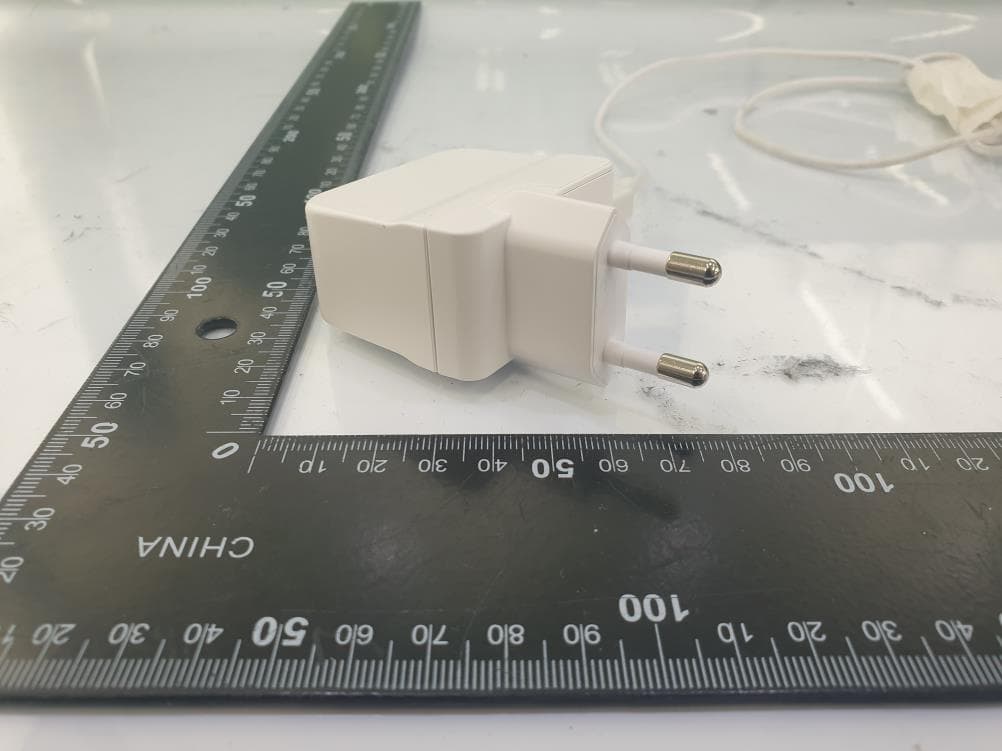
Oct 30, 2020
Equipment Class
DTS - Digital Transmission System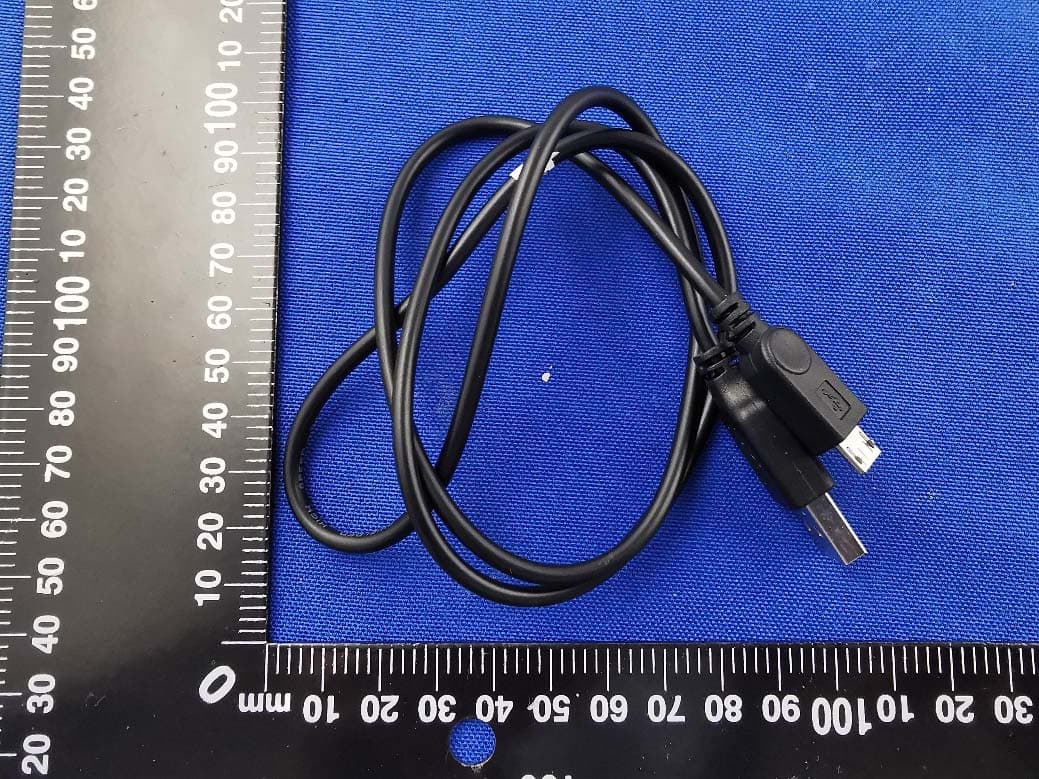
2AWA4CMA-1030
Jul 07, 2020Mobile skin/hair/scalp analyzer
Equipment Class
DTS - Digital Transmission System