FCCID.CO- FCC ID Database
HomeCompaniesEquipment ClassesSearch

© 2026 FCC ID Database. All rights reserved.

AboutContactData sourced from FCC public records
  1. Home/
  2. Head Electronics BV/
  3. 2AXRUP190201

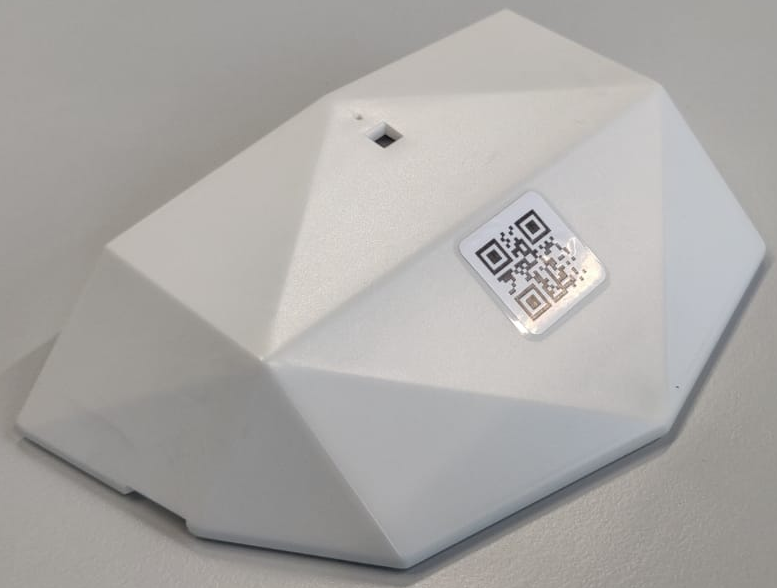
2AXRUP190201Wireless room occupancy and climate sensor

Head Electronics BV
Wireless room occupancy and climate sensor - FCC ID 2AXRUP190201 - Head Electronics BV
Click to zoom

Application Details

Equipment Class
DTS - Digital Transmission System
Date of Grant
Apr 18, 2021
Application Purpose
Original Equipment
Date of Application
Apr 14, 2021
Equipment Note
Wireless room occupancy and climate sensor
Frequency Range
902.00000000 - 928.00000000
Company
Head Electronics BV
Country
Netherlands

Documents & Files

Select a file to view

Users Manual

↗

Block Diagram

↗

Cover Letter(s)

↗

External Photos

↗

ID Label/Location Info

↗
↗

Internal Photos

↗

Operational Description

↗

RF Exposure Info

↗

Test Report

↗

Test Setup Photos

↗

Document Text

Text extracted from the exhibit documents filed with the FCC. Open a document above to read the original.

Users Manual

V04 2021 MANUAL Desksense P190201, P190202, P190203 Head Electronics • Ambachtsweg 17 • 2222 AH KATWIJK • Phone: +31(0)714029154 • www.head.nl 1 Contents Introduction ................................................................................................................................................... 2 Important information .................................................................................................................................... 3 Read this manual before attempting to install the device! .......................................................................... 3 Declaration of conformity ........................................................................................................................... 3 Compliance ............................................................................................................................................... 3 Power output and operating frequency ...................................................................................................... 3 LoRaWAN ................................................................................................................................................. 3 Batteries .................................................................................................................................................... 3 Environment .............................................................................................................................................. 3 Features ........................................................................................................................................................ 4 Occupancy ................................................................................................................................................ 4 Battery powered ........................................................................................................................................ 4 Over the Air (OTA) configurations .............................................................................................................. 4 Remote Monitoring .................................................................................................................................... 4 General information ....................................................................................................................................... 5 Battery replacement ................................................................................................................................... 5 Security ..................................................................................................................................................... 5 Privacy....................................................................................................................................................... 5 Detection Area ........................................................................................................................................... 6 Sitting and standing desks ..................................................................................................................... 6 Technical specifications ................................................................................................................................ 7 Ordering information ..................................................................................................................................... 8 Model overview .......................................................................................................................................... 8 Legal Note ..................................................................................................................................................... 9 ISED Statement ............................................................................................................................................ 9 Copyright statement ...................................................................................................................................... 9 Contact information ....................................................................................................................................... 9 Head Electronics • Ambachtsweg 17 • 2222 AH KATWIJK • Phone: +31(0)714029154 • www.head.nl 2 Introduction An intelligent sensor solution to monitor desk occupancy. The Desksense sensor is a battery-powered device designed to be long-lasting and easily deployable using LoRaWAN wireless networks. The device’s intelligent software determines desk occupancy based on PIR sensor data. Desksense’s Intelligence allows you to operate the fleet of sensors at a low cost. The sensor transmits presence information instead of continuous motion data this transmission scheme reduces the time on the air. Therefore, power consumption is minimized resulting in a longer battery life. This also enables the sensor to require low storage bandwidth. The built-in intelligence prevents false-positive errors enabling very precise desk occupancy sensing. Smooth surface design prevents the user from bumping against the sensor. The streamlined shape of the sensor prevents it from being knocked off during usage. The Desksense can be used in conjunction with a private LoRaWAN network and a custom backend. Therefore, there is no recuring fee or mandatory subscription. Head Electronics • Ambachtsweg 17 • 2222 AH KATWIJK • Phone: +31(0)714029154 • www.head.nl 3 Important information Read this manual before attempting to install the device! Failure to observe recommendations included in this manual may be dangerous or cause a violation of the law. The manufacturer, Head Electronics B.V. will not be held responsible for any loss or damage resulting from not following the instructions of operating manual. Declaration of conformity Hereby, the manufacturer d…

Text truncated - open the document above for the full version.

Block Diagram

I2C (100KHz) [1] LoRa & MCU module (32MHz TCXO) (32.768KHz XTAL) Antenna (Fc = 890MHz) (BW = 40MHz) Status indicator LED [Red] 1.8 to 3.2V Batteries (2 x AA 1.5V) EEPROM VBAT VBAT Measurement Project: Desksense Client: Capgemini Author: Tom Klijn Project number: PXXXXXX Revision: V01 Date: 11-06-2020 Block diagram: Desksense [1] Transmit center frequency is variant dependent: Center frequency is 868MHz for Europe and 915MHz for USA Motion sensor

Cover Letter(s)

FCC, Request for non-disclosure Date: 21-Nov-2018 RF_501, Issue 8 Page 1 of 1 Company Name: Head Electronics BV Address: Ambachtsweg 17 City: Katwijk Country: Netherlands To: Telefication B.V., Dept. FCC TCB Edisonstraat 12A 6902 PK ZEVENAAR The Netherlands Subject: Request for confidentiality FCC ID: 2AXRUP190201 Reference number: ###### Dear FCC TCB, 1. Long-Term Confidentiality Pursuant to 47 CFR Section 0.459(a) & (b), we hereby requests non-disclosure and confidential treatment of the following materials submitted in support of FCC certification application: Bill(s) of Material Block Diagrams Operational Description Schematic Diagrams Tune-up Procedure Above materials contain secrets, proprietary and technical information, which would customarily be guarded from competitors under 47 CFR, section 0.457(d)(2). Disclosure or publication or any portion of this company confidential material to other parties could cause substantial competitive harm and provide unjustified benefits for competitors. 2. Short-Term Confidentiality (STC) Pursuant to Public Notice DA 04-1705 of the Commission’s policy, in order to comply with the marketing regulations in 47 CFR §2.803 and the importation rules in 47 CFR §2.1204, applicant hereby requests Short-Term Confidential treatment of the following materials (See notes below): Internal Photos User’s Manual Test Set-up Photos External Photos Justification: Date: 25-03-2021 Name and signature of applicant: Tom Klijn (HEAD Electronics b.v.) Notes: 1) A document or type of document can only have ONE type of confidentiality! 2) Short-Term confidentiality is in principle for 45 days from date of grant; it can be extended max 3 times (total time 180 days max.)! The planned date should stated in the RF731 application form. 3) FCC must be informed when marketing begins earlier. 4) Release takes place automatically thus extension must be requested in time. Telefication does not remind you of this! 5) Request for extension or for release must be received by Telefication at least 7 days before date of actual marketing or before expiration of the STC period

Operational Description

FCC / ISED Transmission information Both devices “Officesense 2” and “Desksense” share the same transmitter and network stack, the transmission specification are identical. Modulation / Operating frequency and datarate information: The modulation type used is called LoRa. This is a Frequency-Hopping, Spread-Spectrum (FHSS) modulation. And functions as the physical/datalink network layers. On top of this the LoRaWAN network stack is implemented functioning as the network transport and session layers (The network stack used is developed and tested by Semtech according to the LoRawan specifications 1.0.3). These documents contain a detailed description of the modulation used, operating frequency en data rate. For more information refer to attachments: “lorawan1.0.3.pdf” “lorawan1.0.3 Regional parameters.pdf” For USA and Canada, the devices are hardcoded to use the “US902-928MHz ISM Band” LoRaWAN configuration, refer to section 2.5 of “lorawan1.0.3 Regional parameters.pdf” for more information. Example: Antenna information: “Officesense 2” Model ID Model/variant/region Notes P191114 Officesense_2_Comfort_USA Same HWID for Canada P191115 Officesense_2_Presence_USA Same HWID for Canada *The RF-sections of the PCB for both models are identical. The “Officesense 2” employs a planar (PCB-antenna) inverted-F antenna. The antenna is part of the PCB and cannot be changed or disconnected from the transmitter. “Desksense” The “Desksense” uses a planar (PCB-antenna) meandering monopole antenna. The antenna is part of the PCB and cannot be changed or disconnected from the transmitter. Model ID Model/region Notes P190202 Desksense_US Same HWID for Canada

RF Exposure Info

Page 1 of 5 FCC SAR Exclusion Report Product name : Desksense Applicant : Head Electronics B.V. FCC ID : 2AXRUP190201 Test report No. : 200801041 005 FCC RF exposure V2.0 Report number: 200801041 005 FCC RF exposure V2.0 Page 1 of 5 Laboratory information Accreditation Telefication complies with the accreditation criteria for test laboratories as laid down in ISO/IEC 17025:2017. The accreditation covers the quality system of the laboratory as well as the specific activities as described in the authorized annex bearing the accreditation number L021 and is granted on 30 November 1990 by the Dutch Council For Accreditation (RvA: Raad voor Accreditatie). Telefication is designated by the FCC as an Accredited Test Firm for compliance testing of equipment subject to Certification under Parts 15 & 18. The Designation number is: NL0001. Telefication is a Wireless Device Testing laboratory recognized by Innovation, Science and Economic Development Canada to test to Canadian radio equipment requirements. Telefication is a registered Conformity Assessment body (CA B) under the Japan-EC MRA (Agreement on Mutual Recognition between Japan and the European Community). The registration number is: 201. Documentation The test report must always be reproduced in full; reproduction of an excerpt only is subject to written approval of the testing laboratory. The documentation of the testing performed on the tested devices is archived for 10 years at Telefication Netherlands. Testing Location Test Site Telefication BV Test Site location Wilmersdorf 50 7327 AC Apeldoorn The Netherlands Tel. +3188998 3393 Report number: 200801041 005 FCC RF exposure V2.0 Page 2 of 5 Revision History Version Date Remarks By V0.50 07-12-2020 First draft version RT V1.00 23-02-2021 Initial release version PvW V2.0 08-04-2021 Updated FCC ID PvW Report number: 200801041 005 FCC RF exposure V2.0 Page 3 of 5 Table of Contents Revision History .............................................................................................................................................. 2 1 General Description ................................................................................................................................. 4 1.1 Applicant ................................................................................................................................................ 4 1.2 Manufacturer ........................................................................................................................................ 4 1.3 Tested Equipment Under Test (EUT) ..................................................................................................... 4 1.4 SAR Measurement Evaluation ............................................................................................................... 5 1.4.1 Maximum Output Power ................................................................................................................... 5 1.4.2 SAR Testing Exclusions ...................................................................................................................... 5 1.5 Summary ................................................................................................................................................ 5 Report number: 200801041 005 FCC RF exposure V2.0 Page 4 of 5 1 General Description 1.1 Applicant Client name: Head Electronics B.V Address: Ambachtsweg 17 Katwijk NETHERLANDS Zip code: 2222 AH Telephone: +31 (0)6 25237695 E-mail: [email protected] Contact name: Tom Klijn 1.2 Manufacturer Manufacturer name: Head Electronics B.V. Address: Ambachtsweg 17 Katwijk NETHERLANDS Zip code: 2222 AH Telephone: +31 (0)6 25237695 E-mail: [email protected] Contact name: Tom Klijn 1.3 Tested Equipment Under Test (EUT) Product name: Desksense Brand name: Head Electronics B.V. Product type: Wireless battery powered desk occupancy sensor FCC ID: 2AXRUP190201 IC ID: 26960-DESKSENSE Model: P190201-1900001 Software version: V2.0 Hardware version: V07 Date of receipt 10-11-2020 Tests started: 23-11-2020 Report number: 200801041 005 FCC RF exposure V2.0 Page 5 of 5 1.4 SAR Measurement Evaluation 1.4.1 Maximum Output Power The maximum radiated power including tune-up tolerance is shown as below. Mode Max output power LoRa 12.92 dBm* * from Telefication report 200801041 004. 1.4.2 SAR Testing Exclusions According to KDB 447498 D01, the SAR test exclusion condition is based on source-based time- averaged maximum conducted output power, adjusted for tune-up tolerance, and the minimum test separation distance required for the exposure conditions. The SAR exclusion threshold is determined by the following formula. 1. For the test separation distance <= 50 mm When the minimum test separation distance is < 5 mm, a distance of 5 mm is applied to determine SAR test exclusion. 2. For the test separation distance > 50 mm, and the frequency at 100 MHz to 1500 MHz 3. For the test separation distance > 50 mm, and the frequency at > 1500 MHz to 6 GHz Mode Max. Tune- up Power (dBm) Max. Tune- up Power (mW) Ant. to Surface (mm) Calculated Result Require SAR Testing? LoRa 12.92 19.588 10 1.86 No Note: 1. When separation distance <= 50 mm and the calculated result shown in above table is <= 3.0, the SAR testing exclusion is applied. 2. When separation distance > 50 mm and the device output power is less than the calculated result (power threshold, mW) shown in above table, the SAR testing exclusion is applied. 1.5 Summary Since the SAR testing for all device orientations apply SAR test exclusion per KDB 447498, SAR testing for this device is not required.

Test Report

FCC and IC Test report for parts 15.109, 15.209, 15.247, RSS-247, RSS-Gen Product name : DeskSense Applicant : Head Electronics B.V. FCC ID : 2AXRUP190201 IC ID : 26960-DESKSENSE Test report No. : 200801041 004 Ver 2.0 Report number: 200801041 004 Ver 2.0 Page 1 of 28 Laboratory information Accreditation Telefication complies with the accreditation criteria for test laboratories as laid down in ISO/IEC 17025:2017. The accreditation covers the quality system of the laboratory as well as the specific activities as described in the authorized annex bearing the accreditation number L021 and is granted on 30 November 1990 by the Dutch Council For Accreditation (RvA: Raad voor Accreditatie). Telefication is designated by the FCC as an Accredited Test Firm for compliance testing of equipment subject to Certification under Parts 15 & 18. The Designation number is: NL0001. Telefication is a Wireless Device Testing laboratory recognized by Innovation, Science and Economic Development Canada to test to Canadian radio equipment requirements. Telefication is a registered Conformity Assessment body (CAB) under the Japan-EC MRA (Agreement on Mutual Recognition between Japan and the European Community). The registration number is: 201. Documentation The test report must always be reproduced in full; reproduction of an excerpt only is subject to written approval of the testing laboratory. The documentation of the testing performed on the tested devices is archived for 10 years at Telefication Netherlands. Testing Location Test Site Telefication BV Test Site location Wilmersdorf 50 7327 AC Apeldoorn The Netherlands Tel. +3188998 3393 Test Site FCC NL0001 Report number: 200801041 004 Ver 2.0 Page 2 of 28 Revision History Version Date Remarks By v0.50 14-12-2020 First draft R.T V1.0 23-02-2021 Initial release version PvW V2.0 18-03-2021 Expanded frequency range to cover full LoRa application Added additional RF measurements to cover delta in module test report PvW Report number: 200801041 004 Ver 2.0 Page 3 of 28 Table of Contents Revision History .............................................................................................................................................. 2 Summary of Test results .................................................................................................................................. 5 1 General Description ................................................................................................................................. 6 1.1 Applicant ................................................................................................................................................ 6 1.2 Manufacturer ........................................................................................................................................ 6 1.3 Tested Equipment Under Test (EUT) ..................................................................................................... 6 1.4 Product specifications of Equipment under test ................................................................................... 7 1.5 Environmental conditions...................................................................................................................... 7 1.6 Measurement standards ....................................................................................................................... 7 1.7 Applicable standards ............................................................................................................................. 7 1.8 Observation and remarks ...................................................................................................................... 7 1.9 Conclusions ............................................................................................................................................ 8 2 Test configuration of the Equipment Under Test ..................................................................................... 9 2.1 Test mode .............................................................................................................................................. 9 2.2 Test setups ............................................................................................................................................. 9 2.3 Equipment used in the test configuration ........................................................................................... 10 2.4 Sample calculations ............................................................................................................................. 10 3 Test results ............................................................................................................................................ 11 3.1 Radiated spurious emissions ............................................................................................................... 11 3.1.1 Limit ................................................................................................................................................. 11 3.1.2 Measurement instruments ............................................................................................................. 11 3.1.3 Test setup ........................................................................................................................................ 11 3.1.4 Test procedure ................................................................................................................................ 11 3.1.5 Measurement Uncertainty .............................................................................................................. 11 3.1.6 Results of radiated spurious emissions measurements .................................................................. 12 3.1.7 Plots of the Radiated Spurious Emissions Measurement ................................................................ 13 3.2 Output Power Measurement .............................…

Text truncated - open the document above for the full version.

Test Setup Photos

Page 1 of 3 Test Setup Photo Module Product name : DeskSense FCC ID : 2AXRUP190201 IC ID : 26960-DESKSENSE Test report No. 200801041 Test report No. 200801041 Page 1 of 3 Contents 1 Test Setup Photos .................................................................................................................................... 2 1.1 Radiated emissions measurement 9 kHz – 30 MHz ............................................................................... 2 1.2 Radiated emissions measurement 30 – 1000 MHz ............................................................................... 2 1.3 Radiated emissions measurement 1 – 18 GHz ...................................................................................... 3 Test report No. 200801041 Page 2 of 3 1 Test Setup Photos 1.1 Radiated emissions measurement 9 kHz – 30 MHz 1.2 Radiated emissions measurement 30 – 1000 MHz Test report No. 200801041 Page 3 of 3 1.3 Radiated emissions measurement 1 – 18 GHz

Contact Information

Applicant

Tom Klijn(ing.)
[email protected]0714029154Fax: +31 (0)71 - 40 30 09

Technical Contact

Head Electronics BVTom Klijn
[email protected]31 (0)6 25237695

Ambachtsweg 17 · Netherlands

Non-Technical Contact

Head Electronics BVRene Huiskens
[email protected]31 (0)71 8001011

Test Firm

Kiwa Nederland B.V.Willem Jong
[email protected]+31 889983621

Technical Specifications

#Rule PartsFrequency RangePower Output
115C902 MHz - 928 MHz20.00 mW
Confidentiality
Long Term
Grant Notes
Power output listed is conducted. This is a portable device. The device must not be co-located or operating in conjunction with any other antenna or transmitter. End-users must be provided with transmitter operating conditions for satisfying RF exposure compliance.

Other Applications from Head Electronics BV
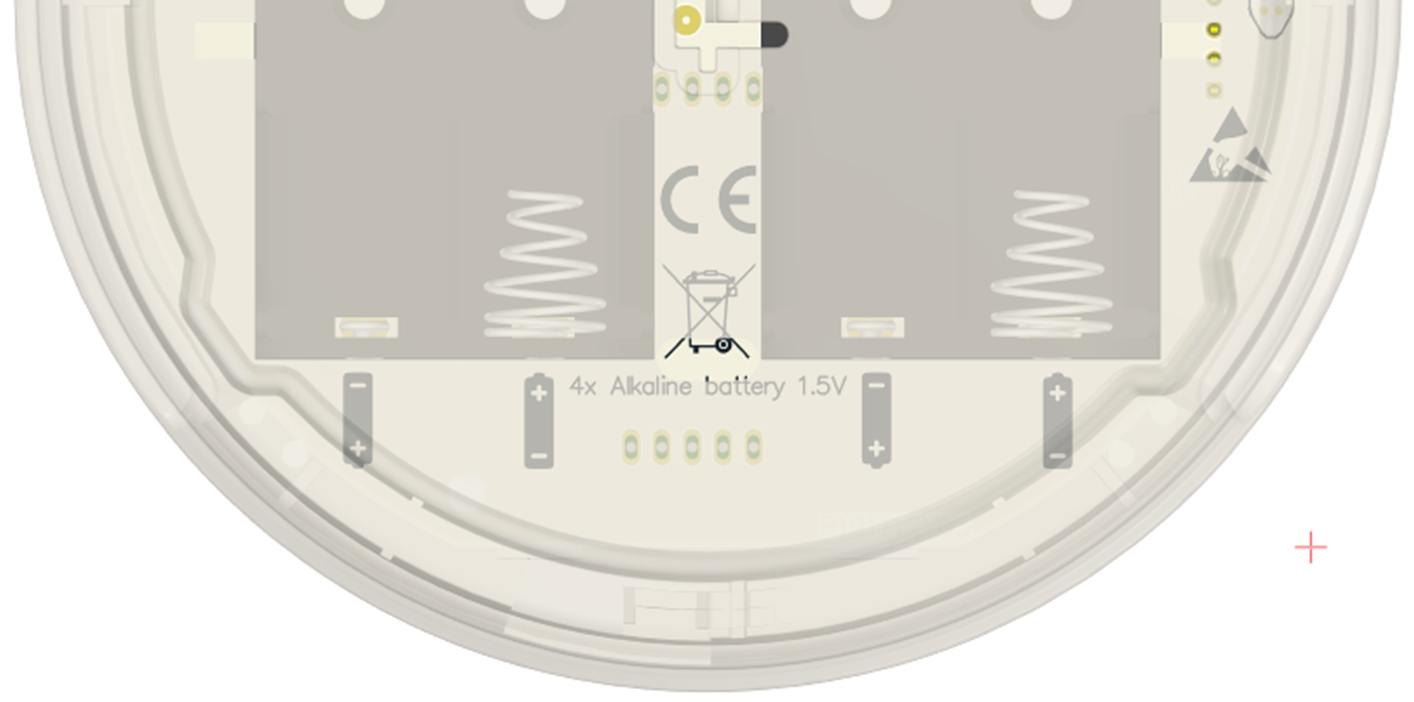
Wireless room occupancy and climate sensor - FCC ID 2AXRUP191114 - Head Electronics BV
2AXRUP191114

Wireless room occupancy and climate sensor

May 03, 2021

Equipment Class

DTS - Digital Transmission System