A3LSMN9208Mobile Phone
Samsung Electronics Co Ltd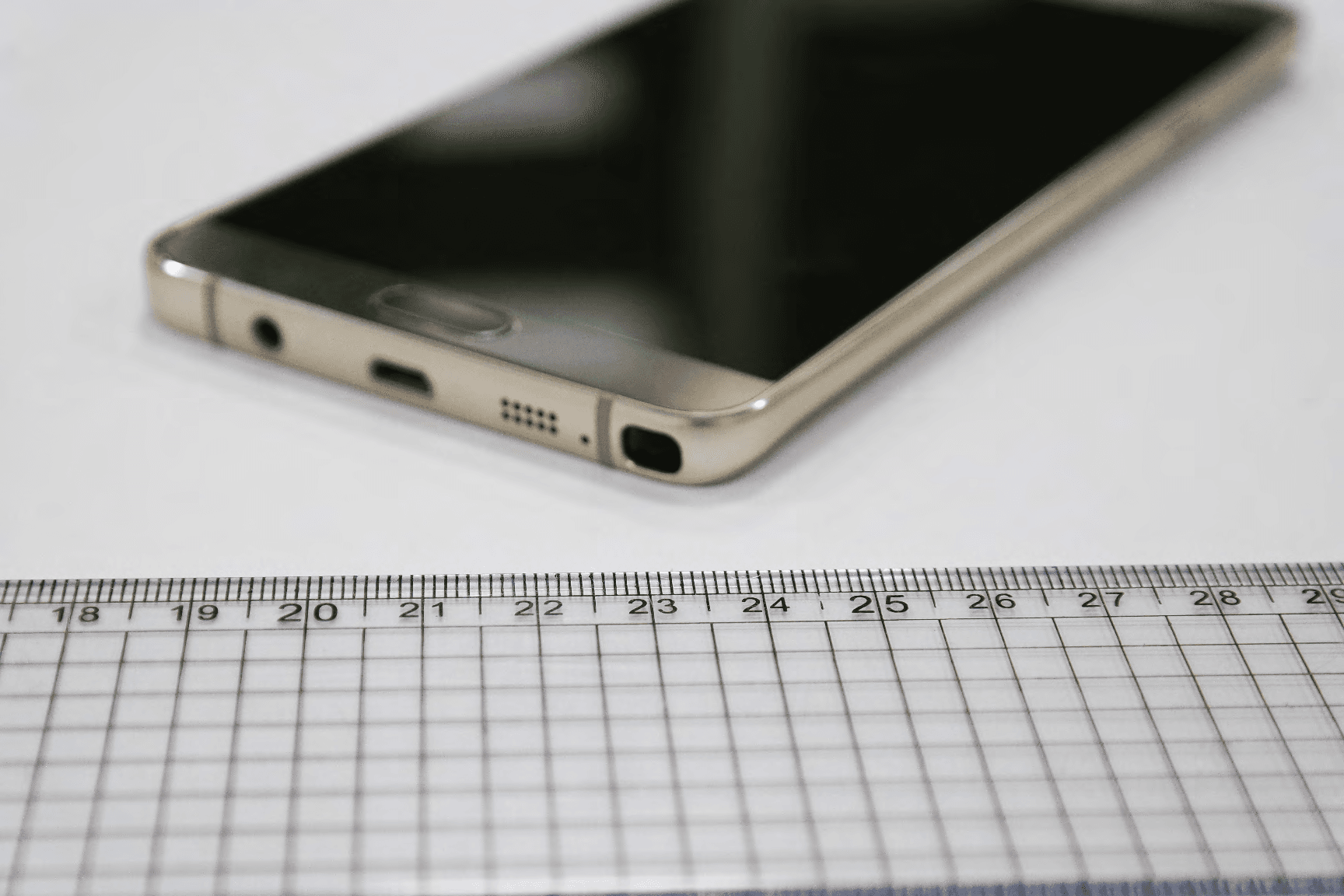
Click to zoom
Application Details
- Equipment Class
- DTS - Digital Transmission System
- Date of Grant
- Aug 19, 2015
- Application Purpose
- Original Equipment
- Date of Application
- Jul 16, 2015
- Equipment Note
- Mobile Phone
- Frequency Range
- 2412.00000000 - 2462.00000000
- Company
- Samsung Electronics Co Ltd
- Country
- United States
Documents & Files
Document Text
Text extracted from the exhibit documents filed with the FCC. Open a document above to read the original.
Users Manual
User manual SM-N9208 Important safety precautions Failure to comply with the following precautions may be dangerous or illegal. Copyright information ● Bluetooth is a registered trademark of the Bluetooth SIG, Inc. worldwide. ● Java TM is a trademark or registered trademark of Sun Microsystems, Inc. ● Picsel and Picsel Viewer TM are trademarks of Picsel Technologies, Inc. Drive safely at all times Do not use a hand-held phone while driving. Park your vehicle first. Switch off the phone when refueling Do not use the phone at a refueling point (service station) or near fuels or chemicals. Switch off in an aircraft Wireless phones can cause interference. Using them in an aircraft is both illegal and dangerous. Switch off the phone near all medical equipment Hospitals or health care facilities may be using equipment that could be sensitive to external radio frequency energy. Follow any regulations or rules in force. Interference All wireless phones may be subject to interference, which could affect their performance. Be aware of special regulations Meet any special regulations in force in any area and always switch off your phone whenever it is forbidden to use it, or when it may cause interference or danger. Water resistance Your phone is not water-resistant. Keep it dry. Sensible use Use only in the normal position (held to your ear). Avoid unnecessary contact with the antenna when the phone is switched on. Emergency calls Key in the emergency number for your present location, then press [ ]. Keep your phone away from small children Keep the phone and all its parts, including accessories, out of the reach of small children. Accessories and batteries Use only Samsung-approved batteries and accessories, such as headsets and PC data cables. Use of any unauthorized accessories could damage you or your phone and may be dangerous. Qualified service Only qualified service personnel may repair your phone. For more detailed safety information, see "Health and safety information" on page 20. • The phone could explode if the battery is replaced with an incorrect type. • Dispose of used batteries according to the manufacturer’s instructions. Excessive exposure to sound at high volumes can cause hearing damage. Always turn the volume down before plugging the earphones into an audio source and use only the minimum volume setting necessary to hear your conversation or music. Un Make s • Phon e • Adapt • Stereo • User’ Suit for e You ca • Multi a • Trave • Car ch • PC da • Portab • Portab • Music • Blueto Ge First s Insta 1. Plug 2. Plug 3. When adap 4. Rem Low When t • a war • the b a • the em If the ba battery npac sure you ha e ter o headset s manual table Adapter each country n obtain the adapter el charger harger ata cable ble battery ble PC data c controller ooth mono/ et st steps to all and c the adapte the adapte n the phone pter from the ove the ada battery the battery ning tone s attery low m mpty batter attery level . ck ave each ite r or Charger, y in use. e following kit a cable / stereo hea tarte operate charge t er into the p er into a sta e is comple e power ou apter from indicat is low: sounds, message dis ry icon [ becomes t em , certified acc accessorie adset kit ed your ph the pho phone. andard AC w etely charge utlet. the phone. or splays, and ] blinks. too low, the cording to th es for your one ne wall outlet. ed (the batt d e phone au e relevant sa phone from tery icon st utomatically afety standar m your local tops blinkin y turns off. rd, will be pro l Samsung ng), unplug Recharg e ovided dealer. the e your Keys and display Buttons Function Power • Press and hold to turn the device on or off. • Press and hold for more than 7 seconds to reset the device if it has fatal errors or hang-ups, or freezes. • Press to lock or unlock the device. The device goes into lock mode when the touch screen turns off. Menu • Tap to open a list of options available for the current screen. • Tap and hold on the Home screen to launch Google application. Home • Press to return to the Home screen. • Press twice to launch S Voice application. • Press and hold to open the list of recent applications. Back • Tap to return to the previous screen. Volume • Press to adjust the device volume. Overview of menu functions To access Menu mode, press [Settings] in ldle mode. Call log Samsung Link Local Phone Group Play Navigation Contacts S Health Downloads Messaging S Voice Optical Reader S Memo Messenger Gmail Samsung Apps S Translator Play Books WatchON Email Play Movies & TV Camera Shopping & wallet Chrome Gallery App Guide Maps Story Album Music Google Samsung service Video Voice Search Help Internet YouTube Calculator Clock Talk Voice Recorder S Planner Google+ Dictionary Settings Play Store My Files Google Settings Solve problems Help and personal needs To save the time and expense of an unnecessary service call, perform the simple checks in this section before contacting a service professional. When you switch on your phone, the following messages may appear: “Insert USIM card” • Be sure that the USIM card is correctly installed. “Phone locked Enter password” • The automatic locking function has been enabled. You must enter the phone's password before you can use the phone. “Enter PIN1” • You are using your phone for the first time. You must enter the PIN1 supplied with the USIM card. • The PIN1 Check feature is enabled. Every time the phone is switched on, the PIN1 has to be entered. To disable this feature, use the PIN check menu. “Enter PUK” • The PIN1 code has been entered incorrectly three times in succession, and the phone is now blocked. Enter the PUK1 supplied by your service provider. “No Service” “Network Failure,” or “Not Done” displays • The network connection has been lost. You may be in a weak signal area. Move and try again. • You are trying to access an option for which you have no subscription with your service provider. Contact the service provider for further details. You have entered a nu…
Text truncated - open the document above for the full version.
Cover Letter(s)
July 3, 2015 Federal Communications Commission 7435 Oakland Mills Road Columbia MD 21046 Subject: Request for Confidentiality FCC ID: A3LSMN9208 To Whom It May Concern: Pursuant to the provisions of Sections 0.457 and 0.459 of the Commission’s rules (47 CFR §§ 0.457, 0.459), we are requesting the Commission to withhold the following attachments as confidential document from public disclosure indefinitely. Schematics Block Diagram Operational Description Antenna Specification Parts List Tune-Up Procedure UNII device SW security statement Above mentioned document contains detailed system and equipment description are considered as proprietary information in operation of the equipment. The public disclosure of above documents might be harmful to our company and would give competitor an unfair advantage in the market. In additional to above mentioned documents, pursuant to Public Notice DA 04-1705 of the Commission’s policy, in order to comply with the marketing regulations in 47 CFR §2.803 and the importation rules in 47 CFR §2.1204, while ensuring that business sensitive information remains confidential until the actual marketing of newly authorized devices. We are requesting the commission to grant short-term confidentiality request on the following attachments until 180 days External Photos Internal Photos Test Setup Photos User Manual It is our understanding that all measurement test reports, FCC ID label format and correspondence during certification review process cannot be granted as confidential documents and such information will be available for public review once the grant of equipment authorization is issued. Best Regards CHANHO, YOUN General Manager Samsung Electronics CO. LTD TEL: +1-973-808-6362 E-mail: [email protected]
Cover Letter(s)
Date: May 4, 2015 UL Korea, Ltd. Suwon Laboratory 218 Maeyeong-ro, Yeongtong-gu, Suwon-si, Gyeonggi-do, 443-823, Korea To whom it may concern: I, the undersigned, hereby authorize UL Korea, Ltd. Suwon Laboratory, to act on our behalf in all manners relating to application for equipment authorization, including signing of all documents relating to these matters. Any and all acts carried out by UL Korea, Ltd. Suwon Laboratory on our behalf shall have the same effect as acts of our own. In authorizing UL Korea as our agent, we still recognize that we are responsible to: a) comply with the relevant provisions of the certification program; b) make all necessary arrangements for the conduct of the evaluation, including provision for examining documentation and access to all areas, records (including internal audit reports) and personnel for the purposes of evaluation (e.g. testing, inspection, assessment, surveillance, reassessment) and resolution of complaints; c) make claims regarding certification only in respect of the scope for which certification has been granted; d) do not use our product certification in such a manner as to bring the Certification Division into disrepute and not make any statement regarding our product certification which the Certification Division may consider misleading or unauthorized; e) upon suspension or cancellation of certification, discontinue use of all advertising matter that contains any reference thereto and return any certification documents as required by the Certification Division; f) use certification only to indicate the products are certified as being in conformity with specified standards; g) endeavor to ensure that no certificate or report nor any part thereof is used in a misleading manner; h) ensure that any reference to our product certification in communication media such as documents, brochures or advertising, complies with the requirements of the Certification Division; i) keep a record of all complaints made known to the us relating to the product’s compliance with requirements of the relevant standard and to make these records available to the Certification Division when requested; j) take appropriate action with respect to such complaints and any deficiencies found in products or services that affect compliance with the requirements for certification; k) document the actions taken. l) the undersigned, hereby certify that we are not subject to a denial of federal benefits, that includes FCC benefits, pursuant to Section 5301 of the Anti-Drug Abuse Act of 1988, 21 U.S.C. 853(a) This authorization is valid until further written notice from the applicant. Sincerely Yours CHANHO, YOUN General Manager Samsung Electronics CO. LTD TEL: +1-973-808-6362 E-mail: [email protected]
ID Label/Location Info
A. Information to be displayed 1. The information that will be displayed on the e-label and information that will remain in the user manual is shown below: Informationon E-labelIn Manual FCC ID numberYesYes DoC logoNot applicableNot applicable 15.19 statement (“This devicecomplies with part 15 of the FCC Rules. Operation is subject to the following two conditions: (1) This device may not cause harmful interference, and (2) this device must accept any interference received, including interference that may cause undesired operation.”) -Yes Class A / B Digital Device user manual statements 1 -Yes DoC declaration 1 Not applicableNot applicable Caution to the user that changes or modifications not expressly approved by the party responsible for compliance could void the user's authority to operate the equipment 1 -Yes Describe any other FCC regulatory information included in e-label 1 NoneNot applicable 1 If the e-label includes information typically included in the manual then the e-label shall clearly differentiate between information required to be on the device’s surface and information required to be in the manual–refer to 784748 D02 e labelling v01section II D 3(b) Images of the e-label screen are provided below: B. Access to the required information on the e-label 1. Users are able to access the information in no more than three steps in a device’s menu. The actual steps are: From the home screen : a) Click on Apps b) Click on Settings c) Select about device No special access codes or permissions are required to go through the above steps beyond entering a user- defined password to protect against unauthorized access to the device. 2. The information is stored on the device, no special accessories or supplemental plug-ins(e.g.,a SIM/USIM card) arerequired to access the information. 3. Users are provided specific instructions on how to access the information. The information is provided in the C. Labeling for Importation and Purchasing Products utilizing e-labels are required to have a physical label on the product at the time of importation, marketing and sales. For devices imported in bulk and not packaged individually, a removable adhesive label or, for devices in protective bags, a label on the bags is acceptable for this purpose. Any removable label shall be of a type intended to survive normal shipping and handling and must only be removed by the customer after purchase. For devices imported already in individual packages ready forsale, the information may alternatively be provided on the package. It shall contain: 1. The FCC ID and/or the DoC logo (if applicable); and 2. Any other information required by specific rule to be provided on the surface of the product unless such information is permitted to be included in the User’s manual or other packaging inserts. >> This model's FCC ID will be found on the package and manuals. D. Other considerations 1. The above information must be programmed by the responsible partyand the information must be secured in such a manner that third-parties cannot modify it. →The FCC ID and other information are programmed by S/W team of Samsung and secured in such amanner that third-parties cannot modify it. 2. All the applicable regulatory information required on the packaging or user instructions must be provided according to the rules even if it is displayed electronically. For example, hearing aid compatibility (HAC) ratings for the phones as specified in 47 C.F.R. § 20.19. →The other information can be found in the user manual.
RF Exposure Info
Head Tissue Simulating Liquids Head Tissue Parameters according to IEEE Std 1528-2013 / IEC 62209 / FCC KDB 865664 D01 Narrow- Band Solutions (±5% tolerance) Product HSL300V2 HSL450V2 HSL750V2 HSL900V2 HSL1450V2 HSL1750V2 HSL1800V2 HSL1900V2 HSL1950V2 HSL2450V2 Test Frequency (MHz) 300 450 750 835, 900 1450, 1500, 1640 1750 1800, 1900 1900 1950, 2000 2450, 2600 Main Ingredients Water, Sugar Water, Sugar Water, Sugar Water, Sugar Water, DGBE Water, DGBE Water, DGBE Water, DGBE Water, DGBE Water, DGBE Broad- Band Solutions (±5% tolerance) Product HBBL30-250V3 HBBL1350-1850V3 HBBL1550-1950V3 HBBL1900-3800V3 HBBL3500-5800V5 Test Frequency (MHz) 30-250 1400-1800 1750-1900 1950-3000 3500-5800 Main Ingredients Water, Tween Water, Tween Water, Tween Water, Tween Water, Oil Body Tissue Simulating Liquids Body Tissue (Muscle) Parameters according to FCC KDB 865664 D01 Narrow- Band Solutions (±5% tolerance) Product MSL300V2 MSL450V2 MSL750V2 MSL900V2 MSL1450V2 MSL1750V2 MSL1800V2 MSL1900V2 MSL1950V2 MSL2450V2 Test Frequency (MHz) 300 400, 450 750 835, 900 1450, 1500, 1640 1750 1800, 1900 1900 1950, 2100 2450, 2600 Main Ingredients Water, Sugar Water, Sugar Water, Sugar Water, Sugar Water, DGBE Water, DGBE Water, DGBE Water, DGBE Water, DGBE Water, DGBE Broad- Band Solutions (±5% tolerance) Product MBBL130-250V3 MBBL1350-1850V3 MBBL1550-1950V3 MBBL1900-3800V3 MBBL3500-5800V5 Test Frequency (MHz) 130-250 1350-1800 1550-1850 1950-3800 3500-5800 Main Ingredients Water, Tween Water, Tween Water, Tween Water, Tween Water, Oil
RF Exposure Info
TL-637 SAR EVALUATION REPORT FCC 47 CFR § 2.1093 IEEE Std 1528-2013 For GSM/WCDMA/LTE Phone + Bluetooth, DTS/UNII a/b/g/n/ac, ANT+, NFC FCC ID: A3LSMN9208 Model Name: SM-N9208 Report Number: 15K21213-S1B Issue Date: 8/18/2015 Prepared for SAMSUNG ELECTRONICS CO., LTD. 129 SAMSUNG-RO, YEONGTONG-GU, SUWON-SI, GYEONGGI-DO, 443-742, KOREA Prepared by UL Korea, Ltd. Suwon Laboratory 218 Maeyeong-ro, Yeongtong-gu, Suwon-si, Gyeonggi-do, 443-823, Korea TEL: (031) 337-9902 FAX: (031) 213-5433 Report No.: 15K21213-S1B Issue Date: 8/18/2015 Page 2 of 76 UL Korea, Ltd. Suwon Laboratory Doc. No.: 1.0 This report shall not be reproduced except in full, without the written approval of UL Korea, Ltd. Revision History Rev. Date Revisions Revised By - 7/13/2015 Initial Issue Justin Park A 8/08/2015 Sec 9.3.1: Add LTE Band 41 CA Output Power Result Sec 10.14: U-NII SISO Mode SAR Result Sec 12: Updated Simultaneous Transmission SAR Analysis Justin Park B 8/18/2015 Sec 10.14: Add WLAN Extremity SAR Result Justin Park Report No.: 15K21213-S1B Issue Date: 8/18/2015 Page 3 of 76 UL Korea, Ltd. Suwon Laboratory Doc. No.: 1.0 This report shall not be reproduced except in full, without the written approval of UL Korea, Ltd. Table of Contents 1. Attestation of Test Results ......................................................................................................... 5 2. Test Specification, Methods and Procedures ............................................................................ 6 3. Facilities and Accreditation ........................................................................................................ 6 4. SAR Measurement System & Test Equipment .......................................................................... 7 4.1. SAR Measurement System ........................................................................................................ 7 4.2. SAR Scan Procedures ............................................................................................................... 8 4.3. Test Equipment ........................................................................................................................ 10 5. Measurement Uncertainty ......................................................................................................... 11 6. Device Under Test (DUT) Information ...................................................................................... 12 6.1. DUT Description ...................................................................................................................... 12 6.2. Wireless Technologies ............................................................................................................. 12 6.3. Nominal and Maximum Output Power ...................................................................................... 13 6.4. General LTE SAR Test and Reporting Considerations ............................................................. 14 6.5. LTE (TDD) Considerations ....................................................................................................... 16 7. RF Exposure Conditions (Test Configurations) ...................................................................... 17 8. Dielectric Property Measurements & System Check .............................................................. 18 8.1. Dielectric Property Measurements ........................................................................................... 18 8.2. System Check.......................................................................................................................... 24 9. Conducted Output Power Measurements ................................................................................ 28 9.1. GSM ........................................................................................................................................ 28 9.2. W-CDMA ................................................................................................................................. 30 9.3. LTE .......................................................................................................................................... 35 9.3.1. LTE Rel. 10 Carrier Aggregation ....................................................................................... 52 9.4. Wi-Fi 2.4GHz (DTS Band) ....................................................................................................... 53 9.5. Wi-Fi 5GHz (U-NII Bands)........................................................................................................ 54 9.6. Bluetooth ................................................................................................................................. 57 10. Measured and Reported (Scaled) SAR Results ....................................................................... 58 10.1. GSM850 ............................................................................................................................... 60 10.2. GSM1900 ............................................................................................................................. 60 10.3. W-CDMA Band V ................................................................................................................. 60 10.4. W-CDMA Band II .................................................................................................................. 61 10.5. LTE Band 2 (20MHz Bandwidth) .......................................................................................... 61 10.6. LTE Band 4 (20MHz Bandwidth) .......................................................................................... 61 Report No.: 15K21213-S1B Issue Date: 8/18/2015 Page 4 of 76 UL Korea, Ltd. Suwon Laboratory Doc. No.: 1.0 This report shall not be reproduced except in full, without the written approval of UL Korea, Ltd. 10.7. LTE Band 5 (10MHz Bandwidth) .........................................................................…
Text truncated - open the document above for the full version.
RF Exposure Info
Plot No. 1 Test Laboratory: UL Korea Ltd. Suwon Laboratory Date: 2015-06-28 GSM 850_Head Frequency: 836.6 MHz; Duty Cycle: 1:2.60016; Room Ambient Temperature: 24.0C; Liquid Temperature: 23.0C Medium parameters used (interpolated): f = 836.6 MHz; σ = 0.913 S/m; ε r = 42.22; ρ = 1000 kg/m 3 DASY5 Configuration: - Area Scan Setting: Find Secondary Maximum Within: 2.0 dB and with a peak SAR value greater than 0.0012W/kg - Electronics: DAE4 Sn1447; Calibrated: 2014-08-25 - Probe: EX3DV4 - SN7313; ConvF(9.73, 9.73, 9.73); Calibrated: 2014-08-27; - Sensor-Surface: 2mm (Mechanical Surface Detection) - Phantom: SAM (20deg probe tilt) with CRP v5.0(Right); Type: QD000P40CD; Serial: TP:1846 RHS/Touch_GPRS 3 slots_ch 190/Area Scan (8x13x1): Measurement grid: dx=15mm, dy=15mm Maximum value of SAR (measured) = 0.120 W/kg RHS/Touch_GPRS 3 slots_ch 190/Zoom Scan (5x5x7)/Cube 0: Measurement grid: dx=8mm, dy=8mm, dz=5mm Reference Value = 3.198 V/m; Power Drift = 0.03 dB Peak SAR (extrapolated) = 0.128 W/kg SAR(1 g) = 0.105 W/kg; SAR(10 g) = 0.081 W/kg Maximum value of SAR (measured) = 0.118 W/kg 0 dB = 0.118 W/kg = -9.28 dBW/kg Plot No. 2 Test Laboratory: UL Korea Ltd. Suwon Laboratory Date: 2015-06-28 GSM 850_Body Frequency: 836.6 MHz; Duty Cycle: 1:2.60016; Room Ambient Temperature: 24.0C; Liquid Temperature: 23.0C Medium parameters used (interpolated): f = 836.6 MHz; σ = 1.02 S/m; ε r = 53.286; ρ = 1000 kg/m 3 DASY5 Configuration: - Area Scan Setting: Find Secondary Maximum Within: 2.0 dB and with a peak SAR value greater than 0.0012W/kg - Electronics: DAE4 Sn1468; Calibrated: 2015-01-12 - Probe: EX3DV4 - SN7330; ConvF(9.35, 9.35, 9.35); Calibrated: 2015-02-12; - Sensor-Surface: 2mm (Mechanical Surface Detection) - Phantom: Triple Flat Phantom 5.1C; Type: QD 000 P51 CA; Serial: 1170 Front/GPRS 3 slots_ch 190 10mm/Area Scan (8x15x1): Measurement grid: dx=15mm, dy=15mm Maximum value of SAR (measured) = 0.575 W/kg Front/GPRS 3 slots_ch 190 10mm/Zoom Scan (5x5x7)/Cube 0: Measurement grid: dx=8mm, dy=8mm, dz=5mm Reference Value = 23.77 V/m; Power Drift = -0.04 dB Peak SAR (extrapolated) = 0.696 W/kg SAR(1 g) = 0.419 W/kg; SAR(10 g) = 0.244 W/kg Maximum value of SAR (measured) = 0.547 W/kg Front/GPRS 3 slots_ch 190 10mm/Zoom Scan 2 (5x5x7)/Cube 0: Measurement grid: dx=8mm, dy=8mm, dz=5mm Reference Value = 23.77 V/m; Power Drift = -0.04 dB Peak SAR (extrapolated) = 0.502 W/kg SAR(1 g) = 0.341 W/kg; SAR(10 g) = 0.230 W/kg Maximum value of SAR (measured) = 0.418 W/kg 0 dB = 0.418 W/kg = -3.79 dBW/kg Plot No. 3 Test Laboratory: UL Korea Ltd. Suwon Laboratory Date: 2015-06-29 GSM 1900_Head Frequency: 1880 MHz; Duty Cycle: 1:2.60016; Room Ambient Temperature: 24.0C; Liquid Temperature: 23.0C Medium parameters used: f = 1880 MHz; σ = 1.43 S/m; ε r = 39.24; ρ = 1000 kg/m 3 DASY5 Configuration: - Area Scan Setting: Find Secondary Maximum Within: 2.0 dB and with a peak SAR value greater than 0.0012W/kg - Electronics: DAE4 Sn1447; Calibrated: 2014-08-25 - Probe: EX3DV4 - SN7313; ConvF(7.87, 7.87, 7.87); Calibrated: 2014-08-27; - Sensor-Surface: 2mm (Mechanical Surface Detection) - Phantom: SAM (20deg probe tilt) with CRP v5.0(Middle); Type: QD000P40CD; Serial: TP:1847 LHS 2 2 2/Touch_GPRS 3 slots_ch 661/Area Scan (8x13x1): Measurement grid: dx=15mm, dy=15mm Maximum value of SAR (measured) = 0.0713 W/kg LHS 2 2 2/Touch_GPRS 3 slots_ch 661/Zoom Scan (5x5x7)/Cube 0: Measurement grid: dx=8mm, dy=8mm, dz=5mm Reference Value = 7.009 V/m; Power Drift = -0.14 dB Peak SAR (extrapolated) = 0.0970 W/kg SAR(1 g) = 0.062 W/kg; SAR(10 g) = 0.038 W/kg Maximum value of SAR (measured) = 0.0804 W/kg 0 dB = 0.0804 W/kg = -10.95 dBW/kg Plot No. 4 Test Laboratory: UL Korea Ltd. Suwon Laboratory Date: 2015-06-27 GSM 1900_Body Frequency: 1880 MHz; Duty Cycle: 1:2.60016; Room Ambient Temperature: 24.0C; Liquid Temperature: 23.0C Medium parameters used: f = 1880 MHz; σ = 1.564 S/m; ε r = 53.354; ρ = 1000 kg/m 3 DASY5 Configuration: - Area Scan Setting: Find Secondary Maximum Within: 2.0 dB and with a peak SAR value greater than 0.0012W/kg - Electronics: DAE4 Sn1446; Calibrated: 2014-08-27 - Probe: EX3DV4 - SN7323; ConvF(7.77, 7.77, 7.77); Calibrated: 2014-12-05; - Sensor-Surface: 2mm (Mechanical Surface Detection) - Phantom: ELI Phantom v5.0; Type: QDOVA002AA; Serial: TP:2001 Rear/GPRS 3 slots_ch 661 10mm/Area Scan (8x14x1): Measurement grid: dx=15mm, dy=15mm Maximum value of SAR (measured) = 1.32 W/kg Rear/GPRS 3 slots_ch 661 10mm/Zoom Scan (5x5x7)/Cube 0: Measurement grid: dx=8mm, dy=8mm, dz=5mm Reference Value = 29.58 V/m; Power Drift = 0.05 dB Peak SAR (extrapolated) = 1.66 W/kg SAR(1 g) = 0.941 W/kg; SAR(10 g) = 0.474 W/kg Maximum value of SAR (measured) = 1.37 W/kg 0 dB = 1.37 W/kg = 1.37 dBW/kg Plot No. 5 Test Laboratory: UL Korea Ltd. Suwon Laboratory Date: 2015-06-28 WCDMA Band V_Head Frequency: 836.6 MHz; Duty Cycle: 1:1; Room Ambient Temperature: 24.0C; Liquid Temperature: 23.0C Medium parameters used (interpolated): f = 836.6 MHz; σ = 0.913 S/m; ε r = 42.22; ρ = 1000 kg/m 3 DASY5 Configuration: - Area Scan Setting: Find Secondary Maximum Within: 2.0 dB and with a peak SAR value greater than 0.0012W/kg - Electronics: DAE4 Sn1447; Calibrated: 2014-08-25 - Probe: EX3DV4 - SN7313; ConvF(9.73, 9.73, 9.73); Calibrated: 2014-08-27; - Sensor-Surface: 2mm (Mechanical Surface Detection) - Phantom: SAM (20deg probe tilt) with CRP v5.0(Right); Type: QD000P40CD; Serial: TP:1846 RHS/Touch_RMC Rel .99_ch 4183/Area Scan (8x13x1): Measurement grid: dx=15mm, dy=15mm. Maximum value of SAR (measured) = 0.0694 W/kg RHS/Touch_RMC Rel .99_ch 4183/Zoom Scan (5x5x7)/Cube 0: Measurement grid: dx=8mm, dy=8mm, dz=5mm Reference Value = 2.112 V/m; Power Drift = -0.00 dB Peak SAR (extrapolated) = 0.0750 W/kg SAR(1 g) = 0.060 W/kg; SAR(10 g) = 0.046 W/kg. Maximum value of SAR (measured) = 0.0682 W/kg 0 dB = 0.0682 W/kg = -11.66 dBW/kg Plot No. 6 Test Laboratory: UL Korea Ltd. Suwon Laboratory Date: 2015-06-29 WCDMA Band V_Body Frequency: 836.6 MHz; Dut…
Text truncated - open the document above for the full version.
RF Exposure Info
Plot No. 1 Test Laboratory: UL Korea Ltd. Suwon Laboratory Date: 2015-06-27 20150627_SystemPerformanceCheck-D835V2 SN 4d174 Frequency: 835 MHz; Duty Cycle: 1:1; Room Ambient Temperature: 24.0C; Liquid Temperature: 23.0C Medium parameters used: f = 835 MHz; σ = 1.018 S/m; ε r = 53.301; ρ = 1000 kg/m 3 DASY5 Configuration: - Area Scan Setting: Find Secondary Maximum Within: 2.0 dB and with a peak SAR value greater than 0.0012W/kg - Electronics: DAE4 Sn1468; Calibrated: 2015-01-12 - Probe: EX3DV4 - SN7330; ConvF(9.35, 9.35, 9.35); Calibrated: 2015-02-12; - Sensor-Surface: 2mm (Mechanical Surface Detection) - Phantom: Triple Flat Phantom 5.1C; Type: QD 000 P51 CA; Serial: 1170 Body/Pin=100 mW/Area Scan (7x13x1): Measurement grid: dx=15mm, dy=15mm Maximum value of SAR (measured) = 1.30 W/kg Body/Pin=100 mW/Zoom Scan (7x7x7)/Cube 0: Measurement grid: dx=5mm, dy=5mm, dz=5mm Reference Value = 36.82 V/m; Power Drift = -0.01 dB Peak SAR (extrapolated) = 1.53 W/kg SAR(1 g) = 1.04 W/kg; SAR(10 g) = 0.688 W/kg Maximum value of SAR (measured) = 1.31 W/kg 0 dB = 1.31 W/kg = 1.17 dBW/kg Plot No. 2 Test Laboratory: UL Korea Ltd. Suwon Laboratory Date: 2015-06-27 20150627_SystemPerformanceCheck-D835V2 SN 4d174 Frequency: 835 MHz; Duty Cycle: 1:1 Body/Pin=100 mW/Z Scan (1x1x21): Measurement grid: dx=20mm, dy=20mm, dz=5mm Maximum value of SAR (measured) = 1.30 W/kg Plot No. 3 Test Laboratory: UL Korea Ltd. Suwon Laboratory Date: 2015-07-10 20150710_SystemPerformanceCheck-D2450V2 SN 939 Frequency: 2450 MHz; Duty Cycle: 1:1; Room Ambient Temperature: 24.0C; Liquid Temperature: 23.0C Medium parameters used: f = 2450 MHz; σ = 1.852 S/m; ε r = 38.207; ρ = 1000 kg/m 3 DASY5 Configuration: - Area Scan Setting: Find Secondary Maximum Within: 2.0 dB and with a peak SAR value greater than 0.0012W/kg - Electronics: DAE4 Sn1468; Calibrated: 2015-01-12 - Probe: EX3DV4 - SN7330; ConvF(7.21, 7.21, 7.21); Calibrated: 2015-02-12; - Sensor-Surface: 4mm (Mechanical Surface Detection) - Phantom: SAM (20deg probe tilt) with CRP v5.0(Right); Type: QD000P40CD; Serial: TP:1877 Head/Pin=100 mW 2/Area Scan (7x7x1): Measurement grid: dx=15mm, dy=15mm Maximum value of SAR (measured) = 4.91 W/kg Head/Pin=100 mW 2/Zoom Scan (7x7x7) (7x7x7)/Cube 0: Measurement grid: dx=5mm, dy=5mm, dz=5mm Reference Value = 58.66 V/m; Power Drift = 0.09 dB Peak SAR (extrapolated) = 10.7 W/kg SAR(1 g) = 4.99 W/kg; SA…
Text truncated - open the document above for the full version.
Contact Information
Applicant
Jenni Chun(General Manager)
Test Firm
UL Korea, Ltd. Suwon LaboratoryCY Choi
[email protected]82313379910
Technical Specifications
| # | Rule Parts | Frequency Range | Power Output |
|---|---|---|---|
| 2 | 15C | 2.41 GHz - 2.46 GHz | 35.50 mW |
Other Applications from Samsung Electronics Co Ltd
A3LSMS741B
Aug 05, 2026Portable Handset
Equipment Class
6VL - 15E 6 GHZ Very Low Power DeviceA3LSMX940
Jul 31, 2026BT,BLE Tablet DTS,UNII a,b,g,n,ac,ax,be and digitizer
Equipment Class
DTS - Digital Transmission SystemA3LSMS741U
Jul 30, 2026Portable Handset
Equipment Class
6CD - 15E 6 GHz Low Power Dual ClientA3LSMX840
Jul 27, 2026BT,BLE Tablet DTS,UNII a,b,g,n,ac,ax and Digitizer
Equipment Class
DSS - Part 15 Spread Spectrum TransmitterA3LSMX848U
Jul 27, 2026WCDMA, LTE, 5G NR Tablet BT,BLE, DTS,UNII a b g n ac ax and Digitizer
Equipment Class
JBP - Part 15 Class B Computing Device Peripheral