A3LSPHA800Tri-Mode Dual-Band Analog/ PCS Phone (AMPS/CDMA)
Samsung Electronics Co Ltd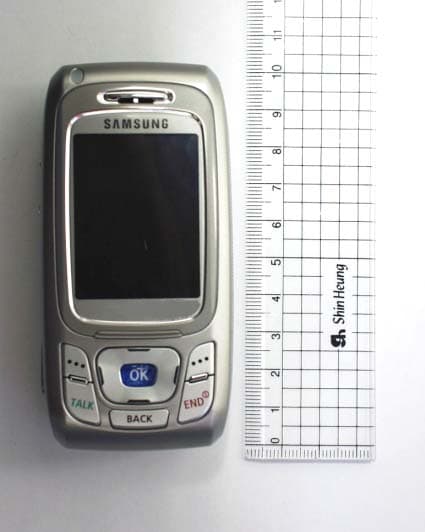
Click to zoom
Application Details
- Equipment Class
- PCE - PCS Licensed Transmitter held to ear
- Date of Grant
- Jan 17, 2005
- Application Purpose
- Original Equipment
- Date of Application
- Jan 17, 2005
- Equipment Note
- Tri-Mode Dual-Band Analog/ PCS Phone (AMPS/CDMA)
- Frequency Range
- 1851.25000000 - 1908.75000000
- Company
- Samsung Electronics Co Ltd
- Country
- United States
Documents & Files
Document Text
Text extracted from the exhibit documents filed with the FCC. Open a document above to read the original.
Users Manual
DIGITAL CELLULAR TELEPHONE SPH-A800 User’s Manual Printed in Korea Code No. : GH68-00000A English. 2004/11. Rev.1.0 World Wide Web http://www.samsungmobile.com ELECTRONICS Please read this manual before operating your phone, and keep it for future reference . Important Safety Precautions Read these guidelines before using your wireless phone. Failure to comply with them may be dangerous or illegal. Road Safety at All Times Do not use a hand-held phone while driving; park the vehicle first. Switching Off When Refueling Do not use the phone at a refueling point (service station) or near fuels or chemicals. Switching Off in Aircraft Wireless phones can cause interference. Using them in aircraft is both illegal and dangerous. Switching Off in Hospitals Switch off your phone near medical equipment. Follow any regulations or rules in force. Interference All wireless phones may be subject to interference, which could affect their performance. Special Regulations Meet any special regulations in force in any area and always switch off your phone whenever it is forbidden to use it, or when it may cause interference or danger (in a hospital for example). 1 YOUR PHONE Key Descriptions ................................................................................... 5 Display ................................................................................................ 6 Built-in Antenna..................................................................................... 8 Unpacking ............................................................................................. 8 GETTING STARTED Charging a Battery .................................................................................9 Switching the Phone On/Off ................................................................ 11 CALL FUNCTIONS Making a Call ......................................................................................12 Answering a Call .................................................................................. 17 In-Call Options .................................................................................... 18 Using Caller ID .................................................................................... 19 Viewing Missed Calls ........................................................................... 20 Three-Way Calling ............................................................................... 21 Call Waiting ........................................................................................ 22 Call Forwarding ....................................................................................22 Adjusting the Volume ........................................................................... 23 ENTERING TEXT Changing Text Input Mode ................................................................... 24 T9 Mode .............................................................................................. 25 Alpha Mode ..........................................................................................26 Symbol Mode ...................................................................................... 28 Number Mode ..................................................................................... 28 Table of Contents Sensible Use Use only in the normal position (held to the ear). Avoid unnecessary contact with the antenna when the phone is switched on. Emergency Call Ensure the phone is switched on and in service. Key in the emergency number for your present location, then press TALK. If certain feature are in use, deactivate those features before you can make an emergency call. Give all the necessary information as accurately as possible. Do not cut off the call until given permission to do so. Water Resistance Your phone is not water-resistance. Keep it dry. Accessories and Batteries Use only Samsung-approved accessories and batteries. Qualified Service Only qualified service personnel may install or repair your phone. For more detailed safety information, see “Health and Safety Information” on page 65. 23 USING THE MENUS Accessing a Menu Functions by Scrolling .............................................. 29 Accessing a Menu Functions by Using its Shortcut.................................. 30 Your Phone’s Main Menu .................................................................... 31 CALL HISTORY Outgoing Calls(MENU 1-1) ........................................................... 34 Incoming Calls (MENU 1-2) ........................................................... 35 Missed Calls (MENU 1-3) ............................................................... 35 All Recent (MENU 1-4)................................................................... 36 CONTACTS Find (MENU 2-1)........................................................................... 37 Add New Entry (MENU 2-2)........................................................ 39 My Phone # (MENU 2-3)................................................................ 41 Speed Dial #s (MENU 2-4).............................................................. 41 Group (MENU 2-5)....................................................................... 42 Services (MENU 2-6)...................................................................... 42 MESSAGING Send Message (MENU3-1).............................................................. 43 Text Message (MENU 3-2)............................................................... 43 Picture Mail (MENU 3-3)................................................................. 44 Instant Msg (MENU 3-4)................................................................. 44 Email (MENU 3-5).......................................................................... 44 Voicemail (MENU 3-6).................................................................... 44 Settings (MENU 3-7)....................................................................... 44 PICTURES VIDEO Camera(MENU 4-1)..............…
Text truncated - open the document above for the full version.
Attestation Statements
January 3, 2005 Federal Communications Commission Authorization and Evaluation Div. Equipment Authorization Branch 7435 Oakland Mills Road Columbia, MD 21046 In re: Samsung Electronics Co., Ltd. FCC ID.: A3LSPHA800 Request for Confidentiality To Whom It May Concern: In accordance with 0.459 of CFR 47, Samsung Electronics Co., Ltd. requests confidentiality for the Block Diagram, Schematics, Parts list, Tune-up Procedure, Operational and Circuit Description of the attached test report. These documents contain detailed system and equipment descriptions and related information about the product, which Samsung Electronics Co., Ltd. considers to be proprietary, confidential, and a custom design and otherwise, would not release to the general public. Since this design is a basis from which future technological products will evolve, Samsung feels that this information would be of benefit to its competitors, and that the disclosure of the information in these documents would give our competitors an unfair advantage in the market. Sincerely, Wallace Oh Engineering Manager Samsun Samsung Electronics America January 3, 2005 Federal Communications Commission Authorization and Evaluation Div. Equipment Authorization Branch 7435 Oakland Mills Road Columbia, MD 21046 In re: Samsung Electronics Co., Ltd. FCC ID: A3LSPHA800 Request for Short-Term Confidentiality To Whom It May Concern: In accordance with 0.457 and 0.459 of CFR 47, Samsung Electronics Co., Ltd. requests short-term confidentiality for the test setup photos, external photos, internal photos, and user’s manual of the attached test report. These documents contain detailed system and equipment descriptions and related information about the product, which Samsung Electronics Co., Ltd. considers to be proprietary, confidential, and a custom design and otherwise, would not release to the general public. Since this design is a basis from which future technological products will evolve, Samsung feels that this information would be of benefit to its competitors, and that the disclosure of the information in these documents would give our competitors an unfair advantage in the market. Sincerely, Wallace Oh Engineering Manager Samsun Samsung Electronics America January 3, 2005 Federal Communications Commission Authorization and Evaluation Div. Equipment Authorization Branch 7435 Oakland Mills Road Columbia, MD 2 1046 In re: Samsung Electronics Co., Ltd. FCC ID: A3LSPHA800 To Whom It May Concern: We hereby certify that this transmit and'receive equipment (FCC ID: A3LSPHA800 for tri-mode mobile station cellular use is capable of compliance with the TMIA -95-B Mobile Station-Base Station Compatibility Standards for Dual -Mode Spread Spectrum Systems, December 1998. Furthermore, we certify compliance to ANSUTWEIA-553- A-1 999, Mobile Station-Land Station Compatibility Specification. Sincerely, Wallace Oh Engineering Manager Samsun Samsung Electronics America January 3, 2005 Federal Communications Commission Equipment Approval Services 7435 Oakland Mills Road Columbia, MD 21046 SUBJECT: FCC E911 REQUIREMENTS PER §22.921 Gentlemen: Samsung Electronics Co., Ltd. hereby certifies that the analog cellular telephone (FCC ID: A3LSPHA800), using the Automatic A/B Roaming — Intelligent Retry method, meets the E911 requirements specified in Section 22.921 of the FCC Rules. This procedure recognizes when a “9-1-1” call is made and, at such time, will override any programming in the mobile unit that determines the handling of a non-911 call and permit the call to be handled by other analog carriers. Should you have any questions or comments concerning the above, please contact the undersigned.
External Photos
© 2004 SAMSUNG ELECTRONICS Co., Ltd. SAMSUNG FCC ID: A3LSPHA800 Tri-Mode Dual-Band Analog/ PCS Phone(AMPS/CDMA) © 2004 SAMSUNG ELECTRONICS Co., Ltd. SAMSUNG FCC ID: A3LSPHA800 Tri-Mode Dual-Band Analog/ PCS Phone(AMPS/CDMA) © 2004 SAMSUNG ELECTRONICS Co., Ltd. SAMSUNG FCC ID: A3LSPHA800 Tri-Mode Dual-Band Analog/ PCS Phone(AMPS/CDMA) © 2004 SAMSUNG ELECTRONICS Co., Ltd. SAMSUNG FCC ID: A3LSPHA800 Tri-Mode Dual-Band Analog/ PCS Phone(AMPS/CDMA) © 2004 SAMSUNG ELECTRONICS Co., Ltd. SAMSUNG FCC ID: A3LSPHA800 Tri-Mode Dual-Band Analog/ PCS Phone(AMPS/CDMA)
Internal Photos
© 2004 SAMSUNG ELECTRONICS Co., Ltd. SAMSUNG FCC ID: A3LSPHA800 Tri-Mode Dual-Band Analog/ PCS Phone(AMPS/CDMA) © 2004 SAMSUNG ELECTRONICS Co., Ltd. SAMSUNG FCC ID: A3LSPHA800 Tri-Mode Dual-Band Analog/ PCS Phone(AMPS/CDMA)
RF Exposure Info
1 of 36 SAMSUNG ELECTRONICS Co., Ltd., Regulatory Compliance Team IT R&D Center 416, Maetan-3dong, Yeongtong-gu, Suwon-si, Gyeonggi-do, Korea 442-742 TEST REPORT ON SAR Model Tested: SPH-A800 FCC ID (Requested): A3LSPHA800 Job No: FB-070 Report No: FB-070-S1 Date issued: Dec. 31, 2004 – Abstract – This document reports on SAR Tests carried out in accordance with FCC/OET Bulletin 65, Supplement C(July 2001). Prepared By Date EH JUNG – Test Engineer Checked By Date JH CHOI - Manager Authorized By Date JK CHOI – Senior Manager Report Number : FB-070-S1 2 of 36 Contents 1. General Information.............................................................................................3 2. Description of Device...........................................................................................3 3. Description of Test Equipment..............................................................................4 3.1 SAR Measurement Setup.........................................................................................4 3.2 DASY4 E-Field Probe.............................................................................................5 3.3 SAM Phantom.....................................................................................................6 3.4 Brain & Muscle Simulating Mixture Characterization....................................................7 3.5 Device Holder for transmitters.................................................................................8 3.6 Validation Dipole...................................................................................................8 3.7 Equipment Calibration.............................................................................................9 4. SAR Measurement Procedure.............................................................................10 5. Description of test position..............................................................................11 5.1 SAM Phantom Shape............................................................................................11 5.2 Cheek/Touch Position............................................................................................11 5.3 Ear/Tilt 15 Position..............................................................................................13 5.4 Body/Leather Configuration.....................................................................................14 6. Measurement Uncertainty...................................................................................16 7. System Verification............................................................................................18 7.1 Tissue Verification.................................................................................................18 7.2 Test System Validation...........................................................................................18 8. SAR Measurement Results.................................................................................19 8.1 Measurement Results(AMPS Right Head SAR-Touch).................................................20 8.2 Measurement Results(AMPS Right Head SAR-Tilt).........................................................21 8.3 Measurement Results(AMPS Left Head SAR-Touch)....................................................22 8.4 Measurement Results(AMPS Left Head SAR-Tilt)........................................................23 8.5 Measurement Results(CELLULAR CDMA Right Head SAR-Touch).................................24 8.6 Measurement Results(CELLULAR CDMA Right Head SAR-Tilt).....................................25 8.7 Measurement Results(CELLULAR CDMA Left Head SAR-Touch)...................................26 8.8 Measurement Results(CELLULAR CDMA Left Head SAR-Tilt).......................................27 8.9 Measurement Results(PCS CDMA Right Head SAR-Touch)..........................................28 8.10 Measurement Results(PCS CDMA Right Head SAR-Tilt).............................................29 8.11 Measurement Results(PCS CDMA Left Head SAR-Touch).............................................30 8.12 Measurement Results(PCS CDMA Left Head SAR-Tilt)...............................................31 8.13 Measurement Results(AMPS Body SAR w/o holster).................................................32 8.14 Measurement Results(CELLULAR CDMA Body SAR w/o Holster)..................................33 8.15 Measurement Results(PCS CDMA Body SAR w/o Holster).........................................34 9. Conclusion.......................................................................................................35 10. Reference.......................................................................................................36 Report Number : FB-070-S1 3 of 36 1. GENERAL INFORMATION Test Sample : Tri-Mode Dual-Band Analog/ PCS Phone (AMPS/CDMA) Model Number : SPH-A800 Serial Number : Identical prototype (S/N : # FB-070-A) Manufacturer : SAMSUNG ELECTRONICS Co., Ltd. Contact : HK KIM, Engineer Phone : +82-31-279-8466 Fax : +82-31-279-6323 Test Standard : §2.1093; FCC/OET Bulletin 65, Supplement C(July 2001) FCC Classification : Licensed Portable Transmitter Held to Ear (PCE) Test Dates : Dec. 20, 2004 ~ Dec. 23, 2004 Tested for : FCC/TCB Certification 2. DESCRIPTION OF DEVICE Tx Freq. Range : 824.04 – 848.97 MHz (AMPS) 824.70 – 848.31 MHz (CDMA) 1851.25 – 1908.75 MHz (PCS CDMA) Rx Freq. Range : 869.04 – 893.97 MHz (AMPS) 869.70 – 893.31 MHz (CDMA) 1931.25 – 1988.75 MHz (PCS CDMA) Max. RF Output Power : 0.468 W ERP AMPS (26.70dBm) 0.433 W ERP CDMA (26.36dBm) 0.592 W EIRP PCS (27.72dBm) Antenna Manufacturer : PARTRON Model No.: SPH-A800 Antenna Dimensions : Length = [Intenna] Report Number : FB-070-S1 4 of 36 3. DESCRIPTION OF TEST EQUIPMENT 3.1 SAR Measurement Setup Robotic System Measurements are performed using the DASY4 automated dosimetric assessment system. Which is made by Schmid & Partner Engineering AG (SPEAG) in Zurich, Switzerla…
Text truncated - open the document above for the full version.
RF Exposure Info
SAMSUNG FCC ID : A3LSPHA800 -- 835MHz AMPS Head SAR DUT: SPH-A800(Down); Serial: FB-070-A Program Name: SPH-A800 AMPS Right (Slide Down, Job No.: FB-070) Procedure Name: Cheek/Touch, Ch.0799, Ant.Intenna, Bat.Standard Procedure Notes: Meas.Tissue Temp(celsius)-21.6;Test Date-20/Dec/[OET Bulletin 65-Supplement C, July 2001] Communication System: AMPS; Frequency: 848.97 MHz;Duty Cycle: 1:1 Medium parameters used: f = 848.97 MHz; σ = 0.89 mho/m; ε r = 41.4; ρ = 1000 kg/m 3 Phantom section: Right Section DASY4 Configuration: - Probe: ET3DV6 - SN1551; ConvF(6.54, 6.54, 6.54); Calibrated: 2004-04-27 - Sensor-Surface: 4mm (Mechanical And Optical Surface Detection) - Electronics: DAE3 Sn486; Calibrated: 2004-08-23 - Phantom: SAM 835/900 MHz; Type: SAM; Serial: TP-1141 - Measurement SW: DASY4, V4.4 Build 3; Postprocessing SW: SEMCAD, V1.8 Build 130 Cheek/Touch, Ch.0799, Ant.Intenna, Bat.Standard/Area Scan (51x71x1): Measurement grid: dx=20mm, dy=20mm Maximum value of SAR (interpolated) = 1.49 mW/g Cheek/Touch, Ch.0799, Ant.Intenna, Bat.Standard/Zoom Scan (5x5x7)/Cube 0: Measurement grid: dx=8mm, dy=8mm, dz=5mm Reference Value = 35.5 V/m; Power Drift = -0.2 dB Peak SAR (extrapolated) = 1.64 W/kg SAR(1 g) = 1.3 mW/g Maximum value of SAR (measured) = 1.37 mW/g 0 dB = 1.37mW/g SAMSUNG FCC ID : A3LSPHA800 -- 835MHz AMPS Head SAR DUT: SPH-A800(Down); Serial: FB-070-A Program Name: SPH-A800 AMPS Right (Slide Down, Job No.: FB-070) Procedure Name: Ear/Tilt, Ch.0799, Ant.Intenna, Bat.Standard Procedure Notes: Meas.Tissue Temp(celsius)-21.6;Test Date-20/Dec/[OET Bulletin 65-Supplement C, July 2001] Communication System: AMPS; Frequency: 848.97 MHz;Duty Cycle: 1:1 Medium parameters used: f = 848.97 MHz; σ = 0.89 mho/m; ε r = 41.4; ρ = 1000 kg/m 3 Phantom section: Right Section DASY4 Configuration: - Probe: ET3DV6 - SN1551; ConvF(6.54, 6.54, 6.54); Calibrated: 2004-04-27 - Sensor-Surface: 4mm (Mechanical And Optical Surface Detection) - Electronics: DAE3 Sn486; Calibrated: 2004-08-23 - Phantom: SAM 835/900 MHz; Type: SAM; Serial: TP-1141 - Measurement SW: DASY4, V4.4 Build 3; Postprocessing SW: SEMCAD, V1.8 Build 130 Ear/Tilt, Ch.0799, Ant.Intenna, Bat.Standard/Area Scan (51x71x1): Measurement grid: dx=20mm, dy=20mm Maximum value of SAR (interpolated) = 1.06 mW/g Ear/Tilt, Ch.0799, Ant.Intenna, Bat.Standard/Zoom Scan (5x5x7)/Cube 0: Measurement grid: dx=8mm, dy=8mm, dz=5mm Reference Value = 32.7 V/m; Power Drift = -0.0 dB Peak SAR (extrapolated) = 1.19 W/kg SAR(1 g) = 0.874 mW/g Maximum value of SAR (measured) = 0.930 mW/g 0 dB = 0.930mW/g SAMSUNG FCC ID : A3LSPHA800 -- 835MHz AMPS Head SAR DUT: SPH-A800(Down); Serial: FB-070-A Program Name: SPH-A800 AMPS Left (Slide Down, Job No.: FB-070) Procedure Name: Cheek/Touch, Ch.0799, Ant.Intenna, Bat.Standard Procedure Notes: Meas.Tissue Temp(celsius)-21.6;Test Date-20/Dec/[OET Bulletin 65-Supplement C, July 2001] Communication System: AMPS; Frequency: 848.97 MHz;Duty Cycle: 1:1 Medium parameters used: f = 848.97 MHz; σ = 0.89 mho/m; ε r = 41.4; ρ = 1000 kg/m 3 Phantom section: Left Section DASY4 Configuration: - Probe: ET3DV6 - SN1551; ConvF(6.54, 6.54, 6.54); Calibrated: 2004-04-27 - Sensor-Surface: 4mm (Mechanical And Optical Surface Detection) - Electronics: DAE3 Sn486; Calibrated: 2004-08-23 - Phantom: SAM 835/900 MHz; Type: SAM; Serial: TP-1141 - Measurement SW: DASY4, V4.4 Build 3; Postprocessing SW: SEMCAD, V1.8 Build 130 Cheek/Touch, Ch.0799, Ant.Intenna, Bat.Standard/Area Scan (51x71x1): Measurement grid: dx=20mm, dy=20mm Maximum value of SAR (interpolated) = 1.6 mW/g Cheek/Touch, Ch.0799, Ant.Intenna, Bat.Standard/Zoom Scan (5x5x7)/Cube 0: Measurement grid: dx=8mm, dy=8mm, dz=5mm Reference Value = 34.8 V/m; Power Drift = -0.1 dB Peak SAR (extrapolated) = 1.82 W/kg SAR(1 g) = 1.42 mW/g Maximum value of SAR (measured) = 1.49 mW/g 0 dB = 1.49mW/g SAMSUNG FCC ID : A3LSPHA800 -- 835MHz AMPS Head SAR DUT: SPH-A800(Down); Serial: FB-070-A Program Name: SPH-A800 AMPS Left (Slide Down, Job No.: FB-070) Procedure Name: Ear/Tilt, Ch.0799, Ant.Intenna, Bat.Standard Procedure Notes: Meas.Tissue Temp(celsius)-21.6;Test Date-20/Dec/[OET Bulletin 65-Supplement C, July 2001] Communication System: AMPS; Frequency: 848.97 MHz;Duty Cycle: 1:1 Medium parameters used: f = 848.97 MHz; σ = 0.89 mho/m; ε r = 41.4; ρ = 1000 kg/m 3 Phantom section: Left Section DASY4 Configuration: - Probe: ET3DV6 - SN1551; ConvF(6.54, 6.54, 6.54); Calibrated: 2004-04-27 - Sensor-Surface: 4mm (Mechanical And Optical Surface Detection) - Electronics: DAE3 Sn486; Calibrated: 2004-08-23 - Phantom: SAM 835/900 MHz; Type: SAM; Serial: TP-1141 - Measurement SW: DASY4, V4.4 Build 3; Postprocessing SW: SEMCAD, V1.8 Build 130 Ear/Tilt, Ch.0799, Ant.Intenna, Bat.Standard/Area Scan (51x71x1): Measurement grid: dx=20mm, dy=20mm Maximum value of SAR (interpolated) = 1.16 mW/g Ear/Tilt, Ch.0799, Ant.Intenna, Bat.Standard/Zoom Scan (5x5x7)/Cube 0: Measurement grid: dx=8mm, dy=8mm, dz=5mm Reference Value = 33.8 V/m; Power Drift = -0.1 dB Peak SAR (extrapolated) = 1.4 W/kg SAR(1 g) = 0.937 mW/g Maximum value of SAR (measured) = 0.990 mW/g 0 dB = 0.990mW/g SAMSUNG FCC ID : A3LSPHA800 -- 835MHz CDMA Head SAR DUT: SPH-A800(Down); Serial: FB-070-A Program Name: SPH-A800 CDMA Right (Slide Down, Job No.: FB-070) Procedure Name: Cheek/Touch, Ch.0777, Ant.Intenna, Bat.Standard Procedure Notes: Meas.Tissue Temp(celsius)-21.0;Test Date-21/Dec/[OET Bulletin 65-Supplement C, July 2001] Communication System: CDMA; Frequency: 848.31 MHz;Duty Cycle: 1:1 Medium parameters used: f = 848.31 MHz; σ = 0.89 mho/m; ε r = 41.3; ρ = 1000 kg/m 3 Phantom section: Right Section DASY4 Configuration: - Probe: ET3DV6 - SN1551; ConvF(6.54, 6.54, 6.54); Calibrated: 2004-04-27 - Sensor-Surface: 4mm (Mechanical And Optical Surface Detection) - Electronics: DAE3 Sn486; Calibrated: 2004-08-23 - Phantom: SAM 835/900 MHz; Type: SAM; Serial: TP-1141 - Measurement SW: DASY4, V4.4 Build 3; Postprocessing SW: SEMCAD, V1.8 Build 130 Cheek/Touch, Ch.0777, A…
Text truncated - open the document above for the full version.
RF Exposure Info
835MHz Brain Dipole Validation DUT: Dipole 835 MHz; Serial: 451 Program Name: 835MHz Diploe Validation 2004.12.20 Procedure Name: 835MHz @ 250mW Procedure Notes: Meas.Tissue Temp(celsius)-21.5;Test Date-20/Dec/2004 Communication System: CW; Frequency: 835 MHz;Duty Cycle: 1:1 Medium parameters used: f = 835 MHz; σ = 0.89 mho/m; ε r = 41.4; ρ = 1000 kg/m 3 Phantom section: Flat Section DASY4 Configuration: - Probe: ET3DV6 - SN1551; ConvF(6.54, 6.54, 6.54); Calibrated: 2004-04-27 - Sensor-Surface: 4mm (Mechanical And Optical Surface Detection) - Electronics: DAE3 Sn486; Calibrated: 2004-08-23 - Phantom: SAM 835/900 MHz; Type: SAM; Serial: TP-1141 - Measurement SW: DASY4, V4.4 Build 3; Postprocessing SW: SEMCAD, V1.8 Build 130 835MHz @ 250mW/Area Scan (51x51x1): Measurement grid: dx=20mm, dy=20mm Maximum value of SAR (interpolated) = 2.69 mW/g 835MHz @ 250mW/Zoom Scan (5x5x7)/Cube 0: Measurement grid: dx=5mm, dy=5mm, dz=5mm Reference Value = 56.2 V/m; Power Drift = -0.0 dB Peak SAR (extrapolated) = 3.63 W/kg SAR(1 g) = 2.45 mW/g Maximum value of SAR (measured) = 2.66 mW/g 0 dB = 2.66mW/g 835MHz Brain Dipole Validation DUT: Dipole 835 MHz; Serial: 451 Program Name: 835MHz Diploe Validation 2004.12.21 Procedure Name: 835MHz @ 250mW 2 Procedure Notes: Meas.Tissue Temp(celsius)-21.0;Test Date-21/Dec/2004 Communication System: CW; Frequency: 835 MHz;Duty Cycle: 1:1 Medium parameters used: f = 835 MHz; σ = 0.89 mho/m; ε r = 41.3; ρ = 1000 kg/m 3 Phantom section: Flat Section DASY4 Configuration: - Probe: ET3DV6 - SN1551; ConvF(6.54, 6.54, 6.54); Calibrated: 2004-04-27 - Sensor-Surface: 4mm (Mechanical And Optical Surface Detection) - Electronics: DAE3 Sn486; Calibrated: 2004-08-23 - Phantom: SAM 835/900 MHz; Type: SAM; Serial: TP-1141 - Measurement SW: DASY4, V4.4 Build 3; Postprocessing SW: SEMCAD, V1.8 Build 130 835MHz @ 250mW 2/Area Scan (51x51x1): Measurement grid: dx=20mm, dy=20mm Maximum value of SAR (interpolated) = 2.69 mW/g 835MHz @ 250mW 2/Zoom Scan (5x5x7)/Cube 0: Measurement grid: dx=5mm, dy=5mm, dz=5mm Reference Value = 55.8 V/m; Power Drift = -0.0 dB Peak SAR (extrapolated) = 3.74 W/kg SAR(1 g) = 2.49 mW/g Maximum value of SAR (measured) = 2.7 mW/g 0 dB = 2.7mW/g 1900MHz Brain Dipole Validation DUT: Dipole 1900 MHz; Serial: 548 Program Name: 1900 Dipole Validation 2004.12.22 Procedure Name: 1900MHz @250mW Procedure Notes: Meas.Tissue Temp(celsius)-21.3;Test Date-22/Dec/2004 Communication System: CW; Frequency: 1900 MHz;Duty Cycle: 1:1 Medium parameters used: f = 1900 MHz; σ = 1.4 mho/m; ε r = 38.5; ρ = 1000 kg/m 3 Phantom section: Flat Section DASY4 Configuration: - Probe: ET3DV6 - SN1551; ConvF(5, 5, 5); Calibrated: 2004-04-27 - Sensor-Surface: 4mm (Mechanical And Optical Surface Detection) - Electronics: DAE3 Sn486; Calibrated: 2004-08-23 - Phantom: SAM 1800/1900 MHz; Type: SAM; Serial: TP-1143 - Measurement SW: DASY4, V4.4 Build 3; Postprocessing SW: SEMCAD, V1.8 Build 130 1900MHz @250mW/Area Scan (51x51x1): Measurement grid: dx=20mm, dy=20mm Maximum value of SAR (interpolated) = 15.5 mW/g 1900MHz @250mW/Zoom Scan (5x5x7)/Cube 0: Measurement grid: dx=8mm, dy=8mm, dz=5mm Reference Value = 93.2 V/m; Power Drift = -0.1 dB Peak SAR (extrapolated) = 17.1 W/kg SAR(1 g) = 10.2 mW/g Maximum value of SAR (measured) = 11.4 mW/g 0 dB = 11.4mW/g
RF Exposure Info
© 2004 SAMSUNG ELECTRONICS Co., Ltd. SAMSUNG FCC ID: A3LSPHA800 Tri-Mode Dual-Band Analog/ PCS Phone(AMPS/CDMA) © 2004 SAMSUNG ELECTRONICS Co., Ltd. SAMSUNG FCC ID: A3LSPHA800 Tri-Mode Dual-Band Analog/ PCS Phone(AMPS/CDMA) © 2004 SAMSUNG ELECTRONICS Co., Ltd. SAMSUNG FCC ID: A3LSPHA800 Tri-Mode Dual-Band Analog/ PCS Phone(AMPS/CDMA) © 2004 SAMSUNG ELECTRONICS Co., Ltd. SAMSUNG FCC ID: A3LSPHA800 Tri-Mode Dual-Band Analog/ PCS Phone(AMPS/CDMA) © 2004 SAMSUNG ELECTRONICS Co., Ltd. SAMSUNG FCC ID: A3LSPHA800 Tri-Mode Dual-Band Analog/ PCS Phone(AMPS/CDMA) © 2004 SAMSUNG ELECTRONICS Co., Ltd. SAMSUNG FCC ID: A3LSPHA800 Tri-Mode Dual-Band Analog/ PCS Phone(AMPS/CDMA) © 2004 SAMSUNG ELECTRONICS Co., Ltd. SAMSUNG FCC ID: A3LSPHA800 Tri-Mode Dual-Band Analog/ PCS Phone(AMPS/CDMA) © 2004 SAMSUNG ELECTRONICS Co., Ltd. SAMSUNG FCC ID: A3LSPHA800 Tri-Mode Dual-Band Analog/ PCS Phone(AMPS/CDMA) © 2004 SAMSUNG ELECTRONICS Co., Ltd. SAMSUNG FCC ID: A3LSPHA800 Tri-Mode Dual-Band Analog/ PCS Phone(AMPS/CDMA) © 2004 SAMSUNG ELECTRONICS Co., Ltd. SAMSUNG FCC ID: A3LSPHA800 Tri-Mode Dual-Band Analog/ PCS Phone(AMPS/CDMA) © 2004 SAMSUNG ELECTRONICS Co., Ltd. SAMSUNG FCC ID: A3LSPHA800 Tri-Mode Dual-Band Analog/ PCS Phone(AMPS/CDMA) © 2004 SAMSUNG ELECTRONICS Co., Ltd. SAMSUNG FCC ID: A3LSPHA800 Tri-Mode Dual-Band Analog/ PCS Phone(AMPS/CDMA) © 2004 SAMSUNG ELECTRONICS Co., Ltd. SAMSUNG FCC ID: A3LSPHA800 Tri-Mode Dual-Band Analog/ PCS Phone(AMPS/CDMA) © 2004 SAMSUNG ELECTRONICS Co., Ltd. SAMSUNG FCC ID: A3LSPHA800 Tri-Mode Dual-Band Analog/ PCS Phone(AMPS/CDMA) © 2004 SAMSUNG ELECTRONICS Co., Ltd. SAMSUNG FCC ID: A3LSPHA800 Tri-Mode Dual-Band Analog/ PCS Phone(AMPS/CDMA) © 2004 SAMSUNG ELECTRONICS Co., Ltd. SAMSUNG FCC ID: A3LSPHA800 Tri-Mode Dual-Band Analog/ PCS Phone(AMPS/CDMA) © 2004 SAMSUNG ELECTRONICS Co., Ltd. SAMSUNG FCC ID: A3LSPHA800 Tri-Mode Dual-Band Analog/ PCS Phone(AMPS/CDMA) © 2004 SAMSUNG ELECTRONICS Co., Ltd. SAMSUNG FCC ID: A3LSPHA800 Tri-Mode Dual-Band Analog/ PCS Phone(AMPS/CDMA) © 2004 SAMSUNG ELECTRONICS Co., Ltd. SAMSUNG FCC ID: A3LSPHA800 Tri-Mode Dual-Band Analog/ PCS Phone(AMPS/CDMA) © 2004 SAMSUNG ELECTRONICS Co., Ltd. SAMSUNG FCC ID: A3LSPHA800 Tri-Mode Dual-Band Analog/ PCS Phone(AMPS/CDMA)
Test Report
SAMSUNG ELECTRONICS Co., Ltd., Regulatory Compliance Group IT R&D Center 416, Maetan-3Dong, Youngtong-Gu, Suwon-city, Gyeonggi-Do, Korea 442-600 FCC CFR47 PART 22 & 24 SUBPART CERTIFICATION REPORT Model Tested: SPH-A800 FCC ID (Requested): A3LSPHA800 Report No: FB-070-R1 Job No: FB-070 Date issued: Jan. 03, 2005 - Abstract – All measurement reported herein accordance with FCC Rules, 47CFR Part2, Part22, Part24. Prepared By Date SS LEE – Test Engineer Checked By Date JH CHOI - Engineer Authorized By Date JK CHOI – Senior Manager © Copyright SAMSUNG Electronics 2004 2005.01.03 2005.01.03 2005.01.03 Report Number : FB-070-R1 TABLE OF CONTENT MEASUREMENT REPORT Page 1. FCC Certification Information 3 1.1 2.1033 General Information 3 2. INTRODUCTION 4 2.1 General 4 3. MEASURING INSTRUMENT CALIBRATION 5 4. TEST EQUIPMENT LIST 6 5. DESCRIPTION OF TESTS 7 5.1 Effective Radiated Power/Equivalent Isotropic Radiated Power 7 5.2 Radiated Spurious & Harmonic Emission 8 5.3 Occupied Bandwidth 10 5.4 Spurious and Harmonic Emissions at Antenna Terminal 10 5.4.1 Occupied Bandwidth Emission Limits 10 5.4.2 Conducted Spurious Emission 11 5.5 Frequency Stability / Temperature Variation 12 6. TEST DATA 13 6.1 Effective Radiated Power(E.R.P.) 13 6.2 Equivalent Isotropic Radiated Power(E.I.R.P.) 14 6.3 Cellular CDMA Radiated Spurious & Harmonic Measurement 15 6.4 PCS CDMA Radiated Spurious & Harmonic Measurement 16 6.5 CDMA Radiated Spurious & Harmonic Conversion Table 17 6.6 PCS Radiated Spurious & Harmonic Conversion Table 18 6.7 Frequency Stability 19 6.7.1 CDMA Frequency Stability Table 19 6.7.2 PCS Frequency Stability Table 20 6.7.3 CDMA Frequency Stability Graph 21 6.7.4 PCS Frequency Stability Graph 23 7.SAMPLE CALCULATION 25 7.1 Emission Designator 8. CONCLUSION 26 9. TEST PLOTS 27 Report Number : FB-070-R1 MEASUREMENT REPORT 1. FCC Certification Information The following information is in accordance with FCC Rules, 47CFR Part2, Subpart J, Sections 2.1033 – 2.1055. 2.1033 General…
Text truncated - open the document above for the full version.
Contact Information
Applicant
Jenni Chun(General Manager)
Technical Contact
PCTEST Engineering Lab., Inc.Randy Ortanez
[email protected]410-290-6652
6660-B Dobbin Road · Columbia, Maryland · United States
Test Firm
SAMSUNG ELECTRONICS CO., LTD.No Cheon Park
Technical Specifications
| # | Rule Parts | Frequency Range | Power Output | Emission | Tolerance |
|---|---|---|---|---|---|
| 4 | 24E | 1.85 GHz - 1.91 GHz | 592.00 mW | 1M25F9W | 2.5 ppm |
Other Applications from Samsung Electronics Co Ltd
A3LSMS741B
Aug 05, 2026Portable Handset
Equipment Class
6VL - 15E 6 GHZ Very Low Power DeviceA3LSMX940
Jul 31, 2026BT,BLE Tablet DTS,UNII a,b,g,n,ac,ax,be and digitizer
Equipment Class
DTS - Digital Transmission SystemA3LSMS741U
Jul 30, 2026Portable Handset
Equipment Class
6CD - 15E 6 GHz Low Power Dual ClientA3LSMX840
Jul 27, 2026BT,BLE Tablet DTS,UNII a,b,g,n,ac,ax and Digitizer
Equipment Class
DSS - Part 15 Spread Spectrum TransmitterA3LSMX848U
Jul 27, 2026WCDMA, LTE, 5G NR Tablet BT,BLE, DTS,UNII a b g n ac ax and Digitizer
Equipment Class
JBP - Part 15 Class B Computing Device Peripheral