A98-FQM6833Digital Portable Cellular Telephone
NEC Corporation of America
Click to zoom
Application Details
- Equipment Class
- JBP - Part 15 Class B Computing Device Peripheral
- Date of Grant
- Feb 17, 2013
- Application Purpose
- Original Equipment
- Date of Application
- Feb 17, 2013
- Equipment Note
- Digital Portable Cellular Telephone
- Company
- NEC Corporation of America
- Country
- United States
Documents & Files
Document Text
Text extracted from the exhibit documents filed with the FCC. Open a document above to read the original.
Users Manual
1 NOTE "Menu key" ▶ "Add wait" ( ; ) / " Add 2-sec pause" ( , ) to enter a push signal (pause). ■ Emergency call Emergency callPhone number Police emergency110 Fire brigade/Ambulance emergency 119 Maritime distress call118 Making/Receiving Calls Making a call 1 From the application list screen, "Phone" 2 "Dial" • Tap "Favorites" to display contacts saved to Phonebook. 3 Enter the phone number • If you enter a wrong number, tap to delete the number. ■ Set Caller ID notification manually ▶ "Menu key" ▶ "Caller ID notification" ▶ "Notify"/"Not notify" • You can set to notify/not notify your number by entering "186"/"184" before entering the number. * Effective for that call only. ■ Using Koe-no-Takuhaibin ▶ "Koe-Taku" 4 "" 5 When the call is finished, "" Calling 2 The terminal supports "Emergency Location Report". Calls made to emergency service organizations (e.g. by dialing 110, 119 or 118) disclose information on the caller's location to the organization receiving the call. Emergency service organizations may not identify the correct location depending on the caller’s location and the receiving condition. The location information and phone number are not disclosed when, before each individual call made, "184" or another blocking prefix is dialed first. If the information is deemed necessary for the protection of life, etc., this information may be acquired by the organization being called. Locations/timing planned for adoption of this feature vary according to the status of the preparations by the relevant emergency service organizations. When calling 110, 119 or 118 from the terminal, first say you are calling from a mobile phone, give your number, and state your location clearly, because the police or fire department may call you back for confirmation. Also, do not move around when making the call. Do not turn off the power immediately after ending the call, but leave it turned on for ten minutes or so, so that you can receive a call. Depending on the area you are calling from, you may not be connected with the nearest police or fire department, etc. NOTE When you have locked the screen, you can make an emergency call without drawing screen unlock pattern and entering the Lock Number for each screen. On each screen, tap "Emergency call". The "Emergency Dialer" screen appears; you can make phone calls only to the emergency phone numbers. In Japan, the 110, 119, and 118 emergency numbers cannot be dialed when the miniUIM is not set to it, from the PIN1 code entry screen, during PIN code lock, PUK lock activated, or Encryption is set. Making an international call (WORLD CALL) WORLD CALL is an international phone service that can be used from DOCOMO mobile phones. Customers who have subscribed to the FOMA service would also have automatically subscribed to "WORLD CALL" at the same time (excepting those who have declined it). For details on WORLD CALL, refer to DOCOMO "International Services website". 1 From the application list screen, "Phone" 2 "Dial" 3 Touch and hold "0" • A plus sign "+" appears. 3 4 Enter the country code ▶ enter the area code (city code) ▶ enter the recipient's mobile phone number ▶ " " NOTE If the area code begins with "0", omit "0". However, "0" may be required for calling some countries or areas, such as Italy. Receiving a call 1 When a call is received, "Activate" ▶ "Accept" ■ Turn off the ring tone and the vibrator. ▶ "Volume key up"/"Volume key down" ■ Declining a call ▶ "Activate" ▶ "Reject" ■ Reject call with SMS ▶ "Activate" ▶ "Reject call with SMS" ▶ tap a message. • The selected message is sent to the other person as SMS. ■ Putting an incoming call on hold ▶ "Menu key" ▶ "On hold" • The call is connected and immediately placed on hold. ■ Record message ▶ "Menu key" ▶ "Record message" 2 When the call is finished, "" NOTE If you decline an incoming call when Voice Mail service or Call Forwarding service are set to Activate, the call is forwarded to the Voice Mail service center or the designated forwarding number. 1 Before a phone model is available for sale to the public, it must be tested and certified to the FCC that it does not exceed the limit established by the U.S. government-adopted requirement for safe exposure. The tests are performed on position and locations (for example, at the ear and worn on the body) as required by FCC for each model. The highest SAR value for this model phone as reported to the FCC when tested for use at the ear is x.xx W/kg, and when worn on the body, is x.xx W/kg. (Body-worn measurements differ among phone models, depending upon available accessories and FCC requirements). While there may be differences between the SAR levels of various phones and at various positions, they all meet the U.S. government requirement. The FCC has granted an Equipment Authorization for this model phone with all reported SAR levels evaluated as in compliance with the FCC RF exposure guidelines. SAR information on this model phone is on file with the FCC and can be found under the Display Grant section at http://www.fcc.gov/oet/ea/fccid after search on FCC ID A98-FQM6833. For body worn operation, this phone has been tested and meets the FCC RF exposure guidelines.** Please use an accessory designated for this product or an accessory which contains no metal and which positions the handset a minimum of 1.5 cm from the body. Radio Frequency (RF) Signals THIS MODEL PHONE MEETS THE U.S. GOVERNMENT'S REQUIREMENTS FOR EXPOSURE TO RADIO WAVES. Your wireless phone contains a radio transmitter and receiver. Your phone is designed and manufactured not to exceed the emission limits for exposure to radio frequency (RF) energy set by the Federal Communications Commission of the U.S. Government. These limits are part of comprehensive guidelines and establish permitted levels of RF energy for the general population. The guidelines are based on standards that were developed by independent scientific organizations through periodic and thorough ev…
Text truncated - open the document above for the full version.
External Photos
Front Rear Top Bottom Right Left
ID Label/Location Info
IMEI Label Layout NEC CASIO MOBILE COMMUNICATIONS Confidential Color WLAN Mark MAC Address Applicant / Manufacturer Japan country of origin Japanese Accreditation Mark Serial Number Serial Number Barcode Year / Month of Manufacture Market name FCC ID Label Placement Rear View of the phone Label placement Place for battery
Internal Photos
Antenna for WLAN/Bluetooth Antenna for PCS/GSM850/US850 Top with shield Top without shield Bottom with shield Bottom without shield
Test Report
Test report No. : 4786001719H-C-R1 Page : 1 of 20 Issued date : January 23, 2013 Issued date : January 30, 2013 FCC ID : A98-FQM6833 UL Japan, Inc. Head Office EMC Lab. 4383-326 Asama-cho, Ise-shi, Mie-ken 516-0021 JAPAN Telephone : +81 596 24 8116 Facsimile : +81 596 24 8124 EMI TEST REPORT Test Report No. : 4786001719H-C-R1 Applicant : NEC Corporation of America Type of Equipment : Digital Portable Cellular Telephone Model No. : KMP7R4H1-6A FCC ID : A98-FQM6833 Test standard : FCC Part 15 Subpart B: 2012 Class B Test Result : Complied Date of test: December 18, 2012 Representative test engineer: Tomotaka Sasagawa Engineer of WiSE Japan, UL Verification Service Approved by: Takahiro Hatakeda Leader of WiSE Japan, UL Verification Service 1. This test report shall not be reproduced in full or partial, without the written approval of UL Japan, Inc. 2. The results in this report apply only to the sample tested. 3. This sample tested is in compliance with the limits of the above regulation. 4. The test results in this test report are traceable to the national or international standards. 5. This test report must not be used by the customer to claim product certification, approval, or endorsement by NVLAP, NIST, or any agency of the Federal Government. 6. This report is a revised version of 4786001719H-C. 4786001719H-C is replaced with this report. 13-EM-F0429 NVLAP LAB CODE: 200572-0 This laboratory is accredited by the NVLAP LAB CODE 200572-0, U.S.A. The tests reported herein have been performed in accordance with its terms of accreditation. *As for the range of Accreditation in NVLAP, you may refer to the WEB address, http://www.ul.com/japan/jpn/pages/services/emc/about/ma rk1/index.jsp#nvlap Test report No. : 4786001719H-C-R1 Page : 2 of 20 Issued date : January 23, 2013 Issued date : January 30, 2013 FCC ID : A98-FQM6833 UL Japan, Inc. Head Office EMC Lab. 4383-326 Asama-cho, Ise-shi, Mie-ken 516-0021 JAPAN Telephone : +81 596 24 8116 Facsimile : +81 596 24 8124 REVISION HISTORY Original Test Report No.: 4786001719H-C Revision Test report No. Date Page revised Contents - (Original) 4786001719H-C January 23, 2013 - - 1 4786001719H-C-R1 January 30, 2013 P4 Section2.2 Modification of Maximum clock frequency 1 4786001719H-C-R1 January 30, 2013 P13 Section 6.3 Modify frequency range 1 4786001719H-C-R1 January 30, 2013 P16 Modify frequency range of chart Test report No. : 4786001719H-C-R1 Page : 3 of 20 Issued date : January 23, 2013 Issued date : January 30, 2013 FCC ID : A98-FQM6833 UL Japan, Inc. Head Office EMC Lab. 4383-326 Asama-cho, Ise-shi, Mie-ken 516-0021 JAPAN Telephone : +81 596 24 8116 Facsimile : +81 596 24 8124 CONTENTS PAGE SECTION 1: Customer information .......................................................................................4 SECTION 2: Equipment under test (E.U.T.) .........................................................................4 SECTION 3: Test specification, procedures & results ..........................................................7 SECTION 4: Operation of E.U.T. during testing ................................................................10 SECTION 5: Conducted Emission ........................................................................................12 SECTION 6: Radiated Emission ...........................................................................................13 APPENDIX 1: Data of EMI test ............................................................................................14 Conducted Emission .................................................................................................................... 14 Radiated Emission ....................................................................................................................... 15 APPENDIX 2: Test instruments ............................................................................................17 APPENDIX 3: Photographs of test setup..............................................................................18 Conducted Emission .................................................................................................................... 18 Radiated Emission ....................................................................................................................... 19 Worst Case Position (Horizontal: Y-axis(open)/ Vertical:Y-axis(open)) ................................ 20 Test report No. : 4786001719H-C-R1 Page : 4 of 20 Issued date : January 23, 2013 Issued date : January 30, 2013 FCC ID : A98-FQM6833 UL Japan, Inc. Head Office EMC Lab. 4383-326 Asama-cho, Ise-shi, Mie-ken 516-0021 JAPAN Telephone : +81 596 24 8116 Facsimile : +81 596 24 8124 SECTION 1: Customer information Company Name : NEC Corporation of America Address : Radio Communications Systems Division 6535N. State Highway 161, Irving, TX 75039-2402 USA Telephone Number : +1 214 262 4241 Facsimile Number : +1 214 262 4225 Contact Person : Sanjay Wadhwa SECTION 2: Equipment under test (E.U.T.) 2.1 Identification of E.U.T. Type of Equipment : Digital Portable Cellular Telephone Model No. : KMP7R4H1-6A Serial No. : Refer to Section 4, Clause 4.2 Rating : DC 3.8V (DC 3.4 - 4.2V) Receipt Date of Sample : December 10, 2012 Country of Mass-production: Japan Condition of EUT : Production prototype Modification of EUT : No Modification by the test lab 2.2 Product description Model No: KMP7R4H1-6A, (referred to as the EUT in this report), is the Digital Portable Cellular Telephone. Maximum frequency generated or used by the EUT: 1.5GHz Test report No. : 4786001719H-C-R1 Page : 5 of 20 Issued date : January 23, 2013 Issued date : January 30, 2013 FCC ID : A98-FQM6833 UL Japan, Inc. Head Office EMC Lab. 4383-326 Asama-cho, Ise-shi, Mie-ken 516-0021 JAPAN Telephone : +81 596 24 8116 Facsimile : +81 596 24 8124 Radio Specification [1/2] Bluetooth (Ver.2.1 + EDR) Equipment Type Transceiver Frequency of Operation 2402-2480MHz Type of Modulation FHSS Bandwidth & Channel spacing …
Text truncated - open the document above for the full version.
Test Setup Photos
Test report No. : 4786001719H-C-R1 Page : 18 of 20 Issued date : January 23, 2013 Issued date : January 30, 2013 FCC ID : A98-FQM6833 UL Japan, Inc. Head Office EMC Lab. 4383-326 Asama-cho, Ise-shi, Mie-ken 516-0021 JAPAN Telephone : +81 596 24 8116 Facsimile : +81 596 24 8124 APPENDIX 3: Photographs of test setup Conducted Emission Photo 1 Photo 2 Test report No. : 4786001719H-C-R1 Page : 19 of 20 Issued date : January 23, 2013 Issued date : January 30, 2013 FCC ID : A98-FQM6833 UL Japan, Inc. Head Office EMC Lab. 4383-326 Asama-cho, Ise-shi, Mie-ken 516-0021 JAPAN Telephone : +81 596 24 8116 Facsimile : +81 596 24 8124 Radiated Emission Photo 1 Photo 2 Test report No. : 4786001719H-C-R1 Page : 20 of 20 Issued date : January 23, 2013 Issued date : January 30, 2013 FCC ID : A98-FQM6833 UL Japan, Inc. Head Office EMC Lab. 4383-326 Asama-cho, Ise-shi, Mie-ken 516-0021 JAPAN Telephone : +81 596 24 8116 Facsimile : +81 596 24 8124 Worst Case Position (Horizontal: Y-axis(open)/ Vertical:Y-axis(open)) X-axis X-axis(open) Y-axis Y-axis(open) Z-axis Z-axis(open) End of Report
Contact Information
Applicant
Sanjay Wadhwa(Senior Manager)
Technical Contact
UL Japan, Inc.Takahiro Hatakeda
[email protected]81-596-24-8116
4383-326 Asama-cho, Ise-shi · Mie-ken · Japan
Test Firm
UL Japan, Inc. Head office EMC Lab.Tetsuya Hashimoto
Technical Specifications
| # | Rule Parts | Frequency Range | Power Output |
|---|---|---|---|
| 1 | 15B | - | - |
Other Applications from NEC Corporation of America

A98-MDD1075
Oct 16, 2013Cellular WCDMA and PCS GSM Phone with RFID
Equipment Class
JBP - Part 15 Class B Computing Device Peripheral
A98-MER7671
Jun 09, 2013Cellular WCDMA and PCS GSM Phone with WLAN and RFID
Equipment Class
DTS - Digital Transmission System
A98-HDN2538
Apr 24, 2013Cellular/ PCS GSM and Cellular WCDMA Phone with WLAN, Bluetooth and RFID
Equipment Class
DSS - Part 15 Spread Spectrum Transmitter
A98-RSZ3446
Jan 01, 2013GSM/EGPRS/WCDMA/LTE MOBILE PHONE
Equipment Class
DSS - Part 15 Spread Spectrum Transmitter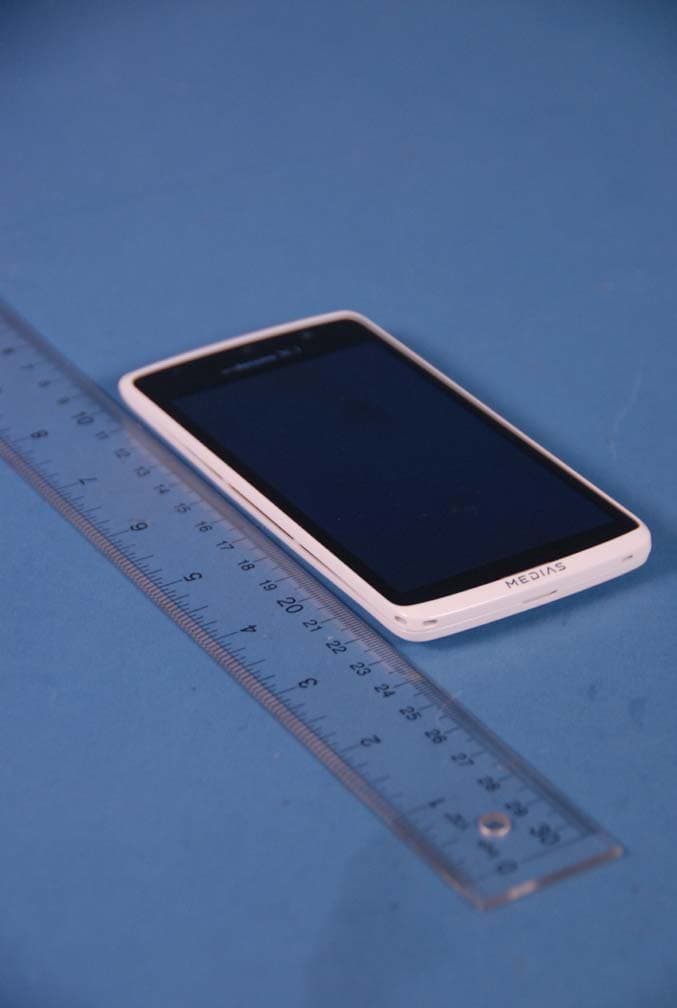
A98-EKO8545
Dec 26, 2012Cellular/ PCS GSM and Cellular WCDMA Phone with WLAN, Bluetooth and RFID
Equipment Class
JBP - Part 15 Class B Computing Device Peripheral