ACJ932AT2001Wireless Charger for mobile phone
Panasonic Corporation of North America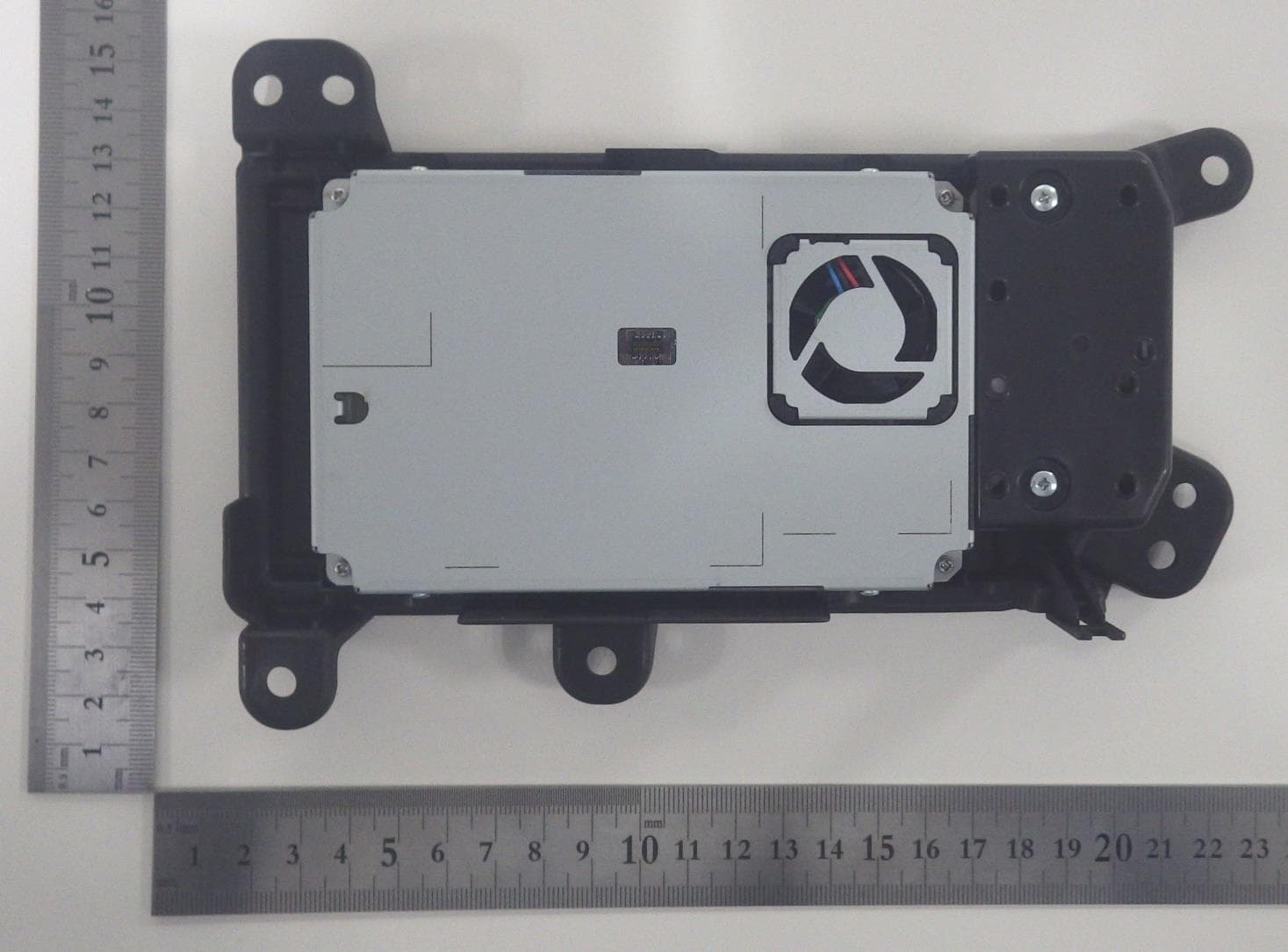
Click to zoom
Application Details
- Equipment Class
- DCD - Part 15 Low Power Transmitter Below 1705 kHz
- Date of Grant
- Jun 17, 2020
- Application Purpose
- Original Equipment
- Date of Application
- Jun 17, 2020
- Equipment Note
- Wireless Charger for mobile phone
- Frequency Range
- 0.12651500 - 0.12854900
- Country
- United States
Documents & Files
Document Text
Text extracted from the exhibit documents filed with the FCC. Open a document above to read the original.
Users Manual
Wireless charger user’s manual A portable device can be charged by just placing “qi” standard wireless charge compatible portable devices according to the Wireless Power Consortium, such as portable phones, smart phones, etc., on the charge area. This function can not be used with portable devices that are larger than the charging area. Also, depending on the portable device, it may not operate as normal. Please read the operation manual for portable devices to be used. ■The “qi” symbol The “qi” symbol is a trademark of the Wireless Power Consortium. ■Namefor all parts (1) Power supply switch (2) Operation indicator light (3) Charge area ■Using the wireless charger Press the supply switch (1) of the wireless charger. Each press the power supply switch (1) it on/off. When turned the hybrid system off, the state of the power supply for wireless charger is memorized. Place the charging side of the portable device (etc. mobile phone) down. When charging, the operation indicator light (2) (orange) comes on. If charging is not occurring, try placing the portable device as close to the center of the charging area as possible. When charging is complete, the operation indicator light (2) (green) comes on. Recharging function ・When charging is compatible and after a fixed timed in the charge suspension state, charging restarts. ・Whenthe portable device is moved, charging is stopped for a moment and then it restarts. ■Lighting conditions of operation indicator light *Depending on the portable device, there are cases where the operation Indicator light will continue being. Operation indicator lightConditions Turning off When the wireless charger power supply is off. On standby (charging possible state) When charging is complete. * Green (comes on) When placing the portable device on the charging area (detecting the portable device) Charging Orange (comes on) (1) (2) (3) Since this device is always used with vehicle, it is not sold to general end users separately.Therefore there is no user manual of this device by alone. The following statements must be described on the user manual of the vehicle; [For FCC] This device complies with part 15 and part 18 of the FCC Rules. Operation is subject to the following two conditions: (1) This device may not cause harmful interference, and (2) this device must accept any interference received, including interference that may cause undesired operation. FCC CAUTION: Changes or modifications not expressly approved by the party responsible for compliance could void the user’s authority to operate the equipment. This equipment has been tested and found to comply with the limits for a wireless power charger, pursuant to part 18 of the FCC Rules. This equipment generates, uses and can radiate radio frequency energy and, if not installed and used in accordance with the instructions, may cause harmful interference to radio communications. However, there is no guarantee that interference will not occur in a particular installation. If this equipment does cause harmful interference to radio communications, which can be determined by turning the equipment off and on, the user is encouraged to try to correct the interference by one or more of the following measures: -Reorient or relocate the receiving antenna. -Increase the separation between the equipment and receiver. -Connect the equipment into an outlet on a circuit different from that to which the receiver is connected. This equipment complies with FCC radiation exposure limits set forth for an uncontrolled environment and meets the FCC radio frequency (RF) Exposure Guidelines. This equipment should be installed and operated keeping the radiator at least 20cm or more away from person’s body. The contact information for maintenance is described in the car manual by the manufacturer of the car in which this wireless charger is installed.
Cover Letter(s)
Panasonic Corporation of North America Two Riverfront Plaza, 9 th Floor, Newark, NJ 07102-5490 Tel/Fax: 201-348-7760 / [email protected] Ben Botros, Manager – Regulatory & Compliance Panasonic Corporation of North America FCC Agent Authorization Letter May 25, 2020 PAS-20-F005A UL Japan, Inc. 4383-326 Asama-cho, Ise-shi, Mie 516-0021 Japan Re: Original Certification for Wireless Charger, Model AT2001 under FCC ID: ACJ932AT2001 - FCC Part 15C To Whom It May Concern: Please be advised Panasonic Corporation of North America hereby authorizes Rie Fujiwara of Consumer Technology Division, UL Japan, Inc. (“UL”) to act on our behalf for this single filing and for a period of one year from the date of this letter. Any and all acts carried out by UL on our behalf shall have the same effect as acts of our own. We certify that we are not subject to denial of federal benefits, which includes FCC benefits, pursuant to Section 5301 of the Anti-Drug Abuse ACT of 1988, 21 U.S.C. 862. Further, no party, as defined in 47 CFR 1.2002(b), to the application is subject to denial of federal benefits, that includes FCC benefits. Further, this application for equipment authorization has not been submitted to another TCB for Certification. Equipment Name: Wireless Charger Frequency of operation: 120 KHz – 130 KHz Please advise the undersigned should you have any questions or comments. Authorized by , Ben Botros Manager – Regulatory & Compliance Panasonic Corporation of North America
Cover Letter(s)
Panasonic Corporation of North America Two Riverfront Plaza, 9 th Floor, Newark, NJ 07102-5490 Tel/Fax: 201-348-7760 / [email protected] Ben Botros, Manager – Regulatory & Compliance Panasonic Corporation of North America Request for Permanent Confidentiality May 25, 2020 PAS-20-F005A UL Japan, Inc. 4383-326 Asama-cho, Ise-shi, Mie 516-0021 Japan Re: Original Certification for Wireless Charger, Model AT2001 under FCC ID: ACJ932AT2001 - FCC Part 15C To Whom It May Concern: In accordance with provisions of Sections 0.457 and 0.459 of the Commission’s Rules and Section 552(b)(4) of the Freedom of Information Act, we request permanent confidentiality for the below indicated exhibits. These exhibits contain proprietary, confidential and/or trade secret materials, which would not be routinely made available for public inspection. • Schematic Diagrams • Block Diagram • Theorty of Operation Thank you for your attention to this matter. Authorized by, Ben Botros Manager – Regulatory & Compliance Panasonic Corporation of North America
External Photos
Confidential External Photo External Photo Confidential External Photo Confidential External Photo Confidential External Photo Confidential
ID Label/Location Info
Wireless Charger Label position
Internal Photos
Confidential Internal Photo CN101 Wireless module Confidential Wireless module Photo Photo-1. A-Side Photo-2. B-Side Internal Photo Confidential Internal Photo Primary Coil Connect to CN101 from Primary Coil
Test Report
Test report No. : 13226969H-B-R1 Page : 1 of 54 Issued date : June 11, 2020 FCC ID : ACJ932AT2001 UL Japan, Inc. Ise EMC Lab. 4383-326 Asama-cho, Ise-shi, Mie-ken 516-0021 JAPAN Telephone : +81 596 24 8999 Facsimile : +81 596 24 8124 Report Cover Page - 13-EM-F0429 Issue # 16.0 RADIO TEST REPORT Test Report No. : 13226969H-B-R1 Applicant : Panasonic Corporation Type of EUT : Wireless Charger Model Number of EUT : AT2001 FCC ID : ACJ932AT2001 Test regulation : FCC Part 15 Subpart C: 2020 Test Result : Complied (Refer to SECTION 3.2) 1. This test report shall not be reproduced in full or partial, without the written approval of UL Japan, Inc. 2. The results in this report apply only to the sample tested. 3. This sample tested is in compliance with above regulation. 4. The test results in this report are traceable to the national or international standards. 5. This test report covers Radio technical requirements. It does not cover administrative issues such as Manual or non-Radio test related Requirements. (if applicable) 6. The all test items in this test report are conducted by UL Japan, Inc. Ise EMC Lab. 7. This test report must not be used by the customer to claim product certification, approval, or endorsemen t by NVLAP, NIST, or any agency of the U.S. Government. 8. The information provided from the customer for this report is identified in SECTION 1. 9. This report is a revised version of 13226969H-B. 13226969H-B is replaced with this report. Date of test: April 1 to May 17, 2020 Representative test engineer: Tomohisa Nakagawa Engineer Consumer Technology Division Approved by: Tsubasa Takayama Leader Consumer Technology Division This report contains data that are not covered by the NVLAP accreditation. There is no testing item of "Non-accreditation". This laboratory is accredited by the NVLAP LAB CODE 200572-0, U.S.A. The tests reported herein have been performed in accordance with its terms of accreditation. *As for the range of Accreditation in NVLAP, you may refer to the WEB address, http://japan.ul.com/resources/emc_accredited/ Test report No. : 13226969H-B-R1 Page : 2 of 54 Issued date : June 11, 2020 FCC ID : ACJ932AT2001 UL Japan, Inc. Ise EMC Lab. 4383-326 Asama-cho, Ise-shi, Mie-ken 516-0021 JAPAN Telephone : +81 596 24 8999 Facsimile : +81 596 24 8124 REVISION HISTORY Original Test Report No.: 13226969H-B Revision Test report No. Date Page revised Contents - (Ori ginal) 13226969H-B May 25, 2020 - - 1 13226969H-B-R1 June 11, 2020 P.5 Correction of Operating Frequency in Radio Specification of Clause 2.2; From 127.5 kHz To 120.3 kHz / 127.0 kHz / 127.5 kHz / 126.515 kHz to 128.549 kHz 1 13226969H-B-R1 June 11, 2020 P.5 Deletion of Frequency Band from Radio Specification of Clause 2.2. 1 13226969H-B-R1 June 11, 2020 P.6 Correction of the FCC Part 15.31 (e) description in Section 3.2; from This test was performed with the New Battery (DC 12 V) and the constant voltage was supplied to this EUT during the tests. Therefore, this EUT complies with the requirement. to This EUT constantly provides the stable voltage to RF part through the regulator regardless of input voltage. Therefore, this EUT complies with the requirement. Test report No. : 13226969H-B-R1 Page : 3 of 54 Issued date : June 11, 2020 FCC ID : ACJ932AT2001 UL Japan, Inc. Ise EMC Lab. 4383-326 Asama-cho, Ise-shi, Mie-ken 516-0021 JAPAN Telephone : +81 596 24 8999 Facsimile : +81 596 24 8124 Reference: Abbreviations (Including words undescribed in this report) A2LA The American Association for Laboratory Accreditation MCS Modulation and Coding Scheme AC Alternating Current MRA Mutual Recognition Arrangement AFH Adaptive Frequency Hopping N/A Not Applicable AM Amplitude Modulation NIST National Institute of Standards and Technology Amp, AMP Amplifier NS No signal detect. ANSI American National Standards Institute NSA Normalized Site Attenuation Ant, ANT Antenna NVLAP National Voluntary Laboratory Accreditation Program AP Access Point OBW Occupied Band Width ASK Amplitude Shift Keying OFDM Orthogonal Frequency Division Multiplexing Atten., ATT Attenuator P/M Power meter AV Average PCB Printed Circuit Board BPSK Binary Phase-Shift Keying PER Packet Error Rate BR Bluetooth Basic Rate PHY Physical Layer BT Bluetooth PK Peak BT LE Bluetooth Low Energy PN Pseudo random Noise BW BandWidth PRBS Pseudo-Random Bit Sequence Cal Int Calibration Interval PSD Power Spectral Density CCK Complementary Code Keying QAM Quadrature Amplitude Modulation Ch., CH Channel QP Quasi-Peak CISPR Comite International Special des Perturbations Radioelectriques QPSK Quadri-Phase Shift Keying CW Continuous Wave RBW Resolution Band Width DBPSK Differential BPSK RDS Radio Data System DC Direct Current RE Radio Equipment D-factor Distance factor RF Radio Frequency DFS Dynamic Frequency Selection RMS Root Mean Square DQPSK Differential QPSK RSS Radio Standards Specifications DSSS Direct Sequence Spread Spectrum Rx Receiving EDR Enhanced Data Rate SA, S/A Spectrum Analyzer EIRP, e.i.r.p. Equivalent Isotropically Radiated Power SG Signal Generator EMC ElectroMagnetic Compatibility SVSWR Site-Voltage Standing Wave Ratio EMI ElectroMagnetic Interference TR Test Receiver EN European Norm Tx Transmitting ERP, e.r.p. Effective Radiated Power VBW Video BandWidth EU European Union Vert. Vertical EUT Equipment Under Test WLAN Wireless LAN Fac. Factor FCC Federal Communications Commission FHSS Frequency Hopping Spread Spectrum FM Frequency Modulation Freq. Frequency FSK Frequency Shift Keying GFSK Gaussian Frequency-Shift Keying GNSS Global Navigation Satellite System GPS Global Positioning System Hori. Horizontal ICES Interference-Causing Equipment Standard IEC International Electrotechnical Commission IEEE Institute of Electrical and Electronics Engineers IF Intermediate Frequency ILAC International Laboratory Accreditation Conference ISED Innovation, Science and Economic Development Canada ISO International Organization for Standardization JAB Japan Accreditation…
Text truncated - open the document above for the full version.
Test Setup Photos
Test report No. : 13226969H-B-R1 Page : 52 of 54 Issued date : June 11, 2020 FCC ID : ACJ932AT2001 UL Japan, Inc. Ise EMC Lab. 4383-326 Asama-cho, Ise-shi, Mie-ken 516-0021 JAPAN Telephone : +81 596 24 8999 Facsimile : +81 596 24 8124 APPENDIX 3: Photographs of test setup Radiated Emission (Mode 1 to 3) Photo 1 Photo 2 Test report No. : 13226969H-B-R1 Page : 53 of 54 Issued date : June 11, 2020 FCC ID : ACJ932AT2001 UL Japan, Inc. Ise EMC Lab. 4383-326 Asama-cho, Ise-shi, Mie-ken 516-0021 JAPAN Telephone : +81 596 24 8999 Facsimile : +81 596 24 8124 Radiated Emission (Mode 4 to 11) Photo 1 Photo 2 Test report No. : 13226969H-B-R1 Page : 54 of 54 Issued date : June 11, 2020 FCC ID : ACJ932AT2001 UL Japan, Inc. Ise EMC Lab. 4383-326 Asama-cho, Ise-shi, Mie-ken 516-0021 JAPAN Telephone : +81 596 24 8999 Facsimile : +81 596 24 8124 Worst Case Position Below 30 MHz: Z-axis Above 30 MHz (Horizontal: X-axis / Vertical: X-axis) X-axis X-axis Y-axis Y-axis Z-axis Z-axis End of Report
Contact Information
Applicant
Ben Botros(Project Manager)
Technical Contact
UL Japan, Inc.Tsubasa Takayama
[email protected]81-596-24-8999
4383-326 Asama-cho, Ise-shi · Mie-ken · Japan
Test Firm
UL Japan, Inc.Masamichi Ishii
Technical Specifications
| # | Rule Parts | Frequency Range | Power Output |
|---|---|---|---|
| 4 | 15C | 0.126515 MHz - 0.128549 MHz | - |
Other Applications from Panasonic Corporation of North America
ACJ-EAH-A1000
Aug 19, 2026Digital Wireless Stereo Headphones
Equipment Class
DSS - Part 15 Spread Spectrum TransmitterACJ9TGFZVNF3G1
Jun 16, 2026Contactless Smart Card Reader
Equipment Class
DXX - Part 15 Low Power Communication Device Transmitter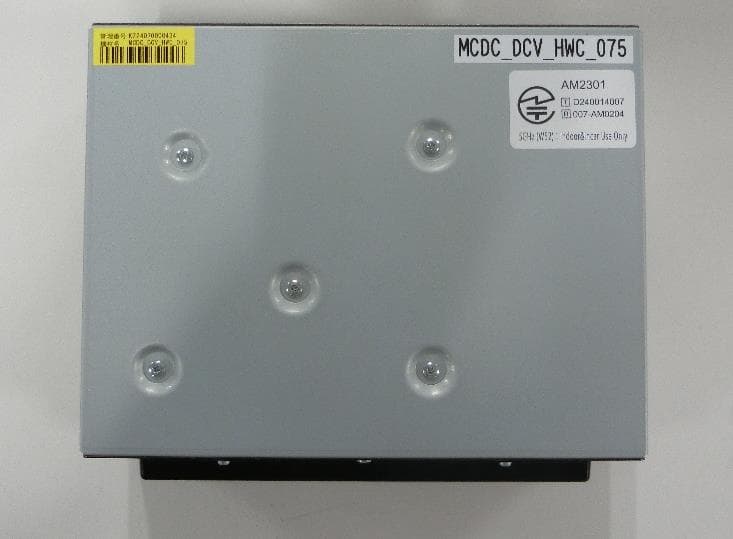
ACJ932AM2301
Jan 29, 2025Car AV Control Unit for CDC
Equipment Class
DTS - Digital Transmission SystemACJ96NKX-TGEA60B
Aug 13, 2024DECT Handset
Equipment Class
PUE - Part 15 Unlicensed PCS portable Tx held to earACJ96NKX-TGE630B
Aug 12, 2024DECT Base Unit
Equipment Class
PUB - Part 15 Unlicensed PCS Base Station