ACJ96NKX-HNS102DECT 6.0 Wireless Motion Sensor
Panasonic Corporation of North America
Click to zoom
Application Details
- Equipment Class
- PUB - Part 15 Unlicensed PCS Base Station
- Date of Grant
- Jun 25, 2014
- Application Purpose
- Original Equipment
- Date of Application
- Jun 25, 2014
- Equipment Note
- DECT 6.0 Wireless Motion Sensor
- Frequency Range
- 1921.53600000 - 1928.44800000
- Country
- United States
Documents & Files
Document Text
Text extracted from the exhibit documents filed with the FCC. Open a document above to read the original.
Users Manual
Installation Guide Wireless Motion Sensor Model No. KX-HNS102 Thank you for purchasing a Panasonic product. Please read this document before using the unit and save it for future reference. For assistance, visit our Web site: http://www.panasonic.com/help for customers in the U.S.A. or Puerto Rico. For your safety To prevent severe injury and loss of life/ property, read this section carefully before using the product to ensure proper and safe operation of your product. WARNING Installation RWh en opening holes in walls for installation or wiring, or when securing the power cable, make sure you do not damage existing wiring and ductwork. Operating safeguards RDo not disassemble the product. RNever put metal objects inside the product. If metal objects enter the product, turn off the circuit breaker and contact an authorized service center. RDo not place the product in a microwave or on an electromagnetic cooking appliance. There is a risk of overheating, smoke, fire, and rupturing. Medical RC o nsult the manufacturer of any personal medical devices, such as pacemakers or hearing aids, to determine if they are adequately shielded from external RF (radio frequency) energy. DECT features operate between 1.92 GHz and 1.93 GHz with a peak transmission power of 115 mW. Wi-Fi features operate between 2.412 GHz and 2.462 GHz with a peak transmission po wer of 100 mW. RDo not use the product in health care facilities if any regulations posted in the area instruct you not to do so. Hospitals or health care facilities may be using equipment that could be sensitive to external RF energy. CAUTION Installation and location RD o not place credit cards or other objects sensitive to magnetic fields near the magnet. The magnetic field could cause the object to be come unusable. Battery RDo not mix old and new batteries. RDo not open or mutilate the batteries. Released electrolyte from the batteries is corrosive and may cause burns or injury to the eyes or skin. The electrolyte is toxic and may be harmful if swallowed. RExercise care when handling the batteries. Do not allow conductive materials such as rings, bracelets, or keys to touch the batteries, otherwise a short circuit may cause the batteries and/or the conductive material to overheat and cause burns. RDo not recharge, apply heat, disassemble, or place in fire. RDo not touch metal or other objects to the battery terminals. RIf electrolyte leaks from the battery, do not touch the electrolyte or allow it to come into contact with the eyes. Electrolyte that has leaked from a battery can cause blindness if it 2 For assistance, please visit http://www.panasonic.com/help Installation enters the eyes. If electrolyte enters th e eyes, do not rub the eyes. Flush them with clean water immediately and seek medical attention. RKeep out of the reach of small children. There is a risk of swallowing. If the battery is swallowed, seek medical attention immediately. RRemove the battery if it becomes unusable. There is a risk of leakage, overheating, and rupture. Do not attempt to use a battery if it is leaking. RDo not intentionally pour water on the battery or allow it to get wet. There is a risk of fire and smoke. If the battery becomes wet, remove it immediately and contact an authorized service center. RInsert the terminals of the battery correctly. There is a risk of overheating, burns, and electrolyte leakage if the battery is inserted incorrectly. Important safety in structions When using your product, basic safety precautions should always be followed to reduce the risk of fire, electric shock, and injury to persons, including the following: 1. Do not use this product near water for example, near a bathtub, washbowl, kitchen sink, or laundry tub, in a wet basement or near a swimming pool. SAVE THESE INSTRUCTIONS For b est performance Base unit location/avoiding noise Th e base unit and other compatible Panasonic units use radio waves to communicate with each other. Environment RKe ep the product away from electrical noise generating devices, such as fluorescent lamps and motors. RThe product should be kept free from excessive smoke, dust, high temperature, and vibration. RThe product should not be exposed to direct sunlight. RDo not place heavy objects on top of the product. RThe product should be kept away from heat sources such as heaters, kitchen stoves, etc. It should not be placed in rooms where the temperature is less than 0 °C (32 °F) or greater than 40 °C (104 °F). Damp basements should also be avoided. Routine care RWi pe the outer surface of the product with a soft moist cloth. RDo not use benzine, thinner, or any abrasive powder. For assistance, please visit http://www.panasonic.com/help 3 Installation Notice: • This product is designed for use in the United States of America. Sale or use of this product in other countries may violate local laws. • Cet appareil est conçu pour être utilisé aux États-Unis d’Amérique. La vente ou l’emploi de cet appareil dans certains autres pays peut constituer une infraction à la législation locale. • Este producto está diseñado para usarse en los Estados Unidos de América. La venta o el empleo de este producto en ciertos países puede constituir violación de la legislación local. • ҁౢࠔࣁऍ୯٬ҔԶǶऩӧځд ୯ৎᎍ୧٬܈ҔǴёૈၴϸӦݤ Ƕٯ • ┠ࢆ⏝ࡢ࡛᪥ᮏᅜእࠊࡣ〇ရࡢࡇ ᪥ᮏᅜෆࠊࡾ࠾࡚ࢀࡉタィ࡚ࡋⓗ ᚑࠋࡍࡲࡾ࡞ἲᚊ㐪ࡣ⏝ࡢ࡛ ࡣ࡚࠸࠾᪥ᮏᅜෆࡣ࡛ᙜ♫ࠊ࡚ࡗ ⮴ࡣࢫ࣮ࣅࢧࡢ࡞ಟ⌮࡚ࡋཎ๎ ࠋࡍࡲࡡࡋ 4 For assistance, please visit http://www.panasonic.com/help Installation FCC and other in formation This device complies with Part 15 of the FCC Rules. Operation is subject to the following two conditions: (1) This device may not cause harmful interference, and (2) this device must accept any interference received, including interference that may cause undesired operation. Privacy of communications may not be ensured when using this phone. CAUTION: Any changes or modifications not expressly approved by the party responsible for compliance could void the user’s authority to operate this device. NOTE: This e…
Text truncated - open the document above for the full version.
Cover Letter(s)
EXHIBIT A STATEMENT OF SECURITY CODE This cordless telephone system has more than 1,000 billion combinations that are provided by the following means: • Provided with 128 bits for security codes. • When shipped from the factory, the security code is decided by the manufacture. It is memorized in a memory IC. • Base and Motion Sensor know each other’s security code information.
Cover Letter(s)
Panasonic Corporation of North America Two Riverfront Plaza, 9 th Floor, Newark, NJ 07102-5490 Tel/Fax: 201-348-7758 / [email protected] Richard Mullen, Group Manager Product Safety and Compliance Department Power of Attorney May 28, 2014 PCTP-14-F029 Federal Communication Commission Equipment Authorization Division / Application Processing Branch 7435 Oakland Mills Road Columbia, Maryland 21046 To whom it may concern; Panasonic Corporation of North America hereby authorizes Nemko AS to act on our behalf in all matters relating to the preparation of TCB Certification application for the below described product, which are in compliance with FCC Part 15D. Any and all acts carried out by Nemko AS on our behalf shall have the same effects as acts of our own for a period of one year from the date of this letter. Type Filing: Original Application for DECT Wireless Motion Sensor, Model KX-HNS102 1 Product Classification: Part 15 Unlicensed PCS Transceiver in Motion Sensor FCC ID Handset Unit ACJ96NKX-HNS102 FCC Rule Part: FCC Part 15, Subpart D Frequency Range: 1921.536 ~ 1928.448 MHz Responsible Panasonic Corporation of North America Applicant & Grantee: Two Riverfront Plaza, 9 th Floor, Newark, NJ 07102-5490 Responsible Manufacturer: Panasonic System Networks Co., Ltd. Sincerely yours, Richard Mullen Richard Mullen Group Manager Panasonic Corporation of North America Product Safety and Compliance Department 1 DECT Wireless Motion Sensor may be marketed with DECT Base, which will be Part 15D certified under the following FCC ID: ACJ96NKX-HNB600. Panasonic Corporation of North America Two Riverfront Plaza, 9 th Floor, Newark, NJ 07102-5490 Tel/Fax: 201-348-7758 / [email protected] Richard Mullen, Group Manager Product Safety and Compliance Department Request for Confidentiality May 28, 2014 PCTP-14-F029 Federal Communication Commission Equipment Authorization Division Application Processing Branch 7435 Oakland Mills Road Columbia, Maryland 21046 To whom it may concern; Type Filing: Original Application for DECT Wireless Motion Sensor 2 Model Numbers: KX-HNS102 Product Description: Part 15 Unlicensed PCS Transceiver in Motion Sensor FCC ID: ACJ96NKX-HNS102 In accordance with provisions of Sections 0.457 and 0.459 of the Commission’s Rules and Section 552(b)(4) of the Freedom of Information Act, we request permanent confidentiality for exhibits, which contain: (1) Antenna Construction; (2) Description of Electrical Circuitry; (3) Schematic Diagrams of Base Unit and RF Unit; and (4) Base Unit Block Diagram. The transmitter is not user adjustable and does not have a Tune-Up Procedure. These exhibits contain proprietary, confidential and trade secrets material, which would not be routinely made available for public inspection. In accordance with FCC Public DA 04-1705, we request forty-five day short-term confidentiality, starting from the from the issuance of equipment authorization date, for exhibits, which contain: (1) External Photographs of Base Unit and RF Unit; (2) Internal Photographs of Base Unit and RF Unit; (3) Test Setup Photographs; and (4) User Manual. These exhibits contain pre-market information, which could give our competitors unfair advantage should this information be released before this product is actually introduced into the common marketplace. Sincerely yours, Richard Mullen Richard Mullen Group Manager Panasonic Corporation of North America Product Safety and Compliance Department 2 DECT Wireless Motion Sensor may be marketed with DECT Base, which will be Part 15D certified under the following FCC ID: ACJ96NKX-HNB600.
Cover Letter(s)
FCC Part 15D – Compliance Information pctp-14-f029 (fcc part_15d-compliance_information)8-Dec-2006 page 1 (4) rev.1.4 EUT AND PRODUCT INFORMATION Type of Equipment UPCS (DECT 6.0) Applicant Name Panasonic Corporation of North America Responsible Mfr Name Panasonic System Networks Co., Ltd. Communication system Business Unit Address 1-62, 4-chome, Minoshima, Hakata-ku, Fukuoka 812-8531, Japan Contact Kazunori Ata FP PP EUT Type/System FCC ID ACJ96NKX-HNB600 (IC:216A- KXHNA600) ACJ96NKX-HNS102 (IC:216A-KXHNS102) Model name KX-HNB600 KX-HNS102 HW Version PNLB2370xx PNLB2381xx SW Version SW401 SW401 Max antenna Gain (dBi) 0dBi 0dBi Can the EUT be Initiating Device YES YES Does the EUT transmit signaling channels YES YES Max number of slots in use simultaneously 1 slot 1 slot Test standard: FCC part 15D Other: Industry Canada RSS-213, Issue 2 Frequency Band 1921.536 – 1928.448 MHz # of RF Channels 5 Frame Period 10 ms Max. Burst length 417us / duplex channel Min. Burst Length 417us / signaling channel # of Logical Channels 60 (12 duplex channels per RF carrier) Operating Mode Simplex Duplex FCC Part 15D – Compliance Information pctp-14-f029 (fcc part_15d-compliance_information)8-Dec-2006 page 2 (4) rev.1.4 ANTENNAS Base (FP) Antenna Type Internal External 1 Wire Antenna 2 Pattern Antenna 3 Wire Antenna 4 Pattern Antenna Does RX and TX use the same antenna(s)? Yes No Motion Sensor(PP) Antenna Type Internal External 1 Pattern Antenna 2 Does RX and TX use the same antenna(s)? Yes No ANTENNA DIVERSITY Antenna Diversity Supported TX RX Base (FP) 1 2 3 4 Motion Sensor (PP) 1 2 VOLTAGE AND TEMPERATURE RANGES VOLTAGES FP PP Nominal Voltage 120V AC 3.0V DC Cut-Off Voltage (if applicable) - - - POWER SOURCE Type Manufacturer Base or Repeater PNLV236 (AC Adaptor) Panasonic Motion Sensor (PP) AA LR6(Alkalin Battery) x 2 Panasonic Data Connections PSTN (Base) Others (please specify) .... FCC Part 15D – Compliance Information pctp-14-f029 (fcc part_15d-compliance_information)8-Dec-2006 page 3 (4) rev.1.4 ANCILLARY EQUIPMENT Description Type Manufacturer HOST DEVICE Description Type Manufacturer ADDITIONAL INFORMATION FCC Part 15D – Compliance Information pctp-14-f029 (fcc part_15d-compliance_information)8-Dec-2006 page 4 (4) rev.1.4 MANUFACTURERS DECLARATIONS FCC part 15.323 (c)(5) No device or group of co-operating devices located within 1m of each other shall during any frame period occupy more than 6 MHz of aggregate bandwidth, or alternatively, more than one third of the time and spectrum windows defined by the system. Applicant Agrees Yes No FCC part 15.323 (c)(10) The applicant hereby declares that the system in this application does use the criteria of (c)(10) of this section. Applicant Agrees Yes No FCC part 15.323 (c)(11) The applicant hereby declares that system in this application does not use the criteria of (c)(11) of this section. Applicant Agrees Yes No FCC part 15.323 (c)(12) The provisions of (c)(10) or (c)(11) of this section shall not be used to extend the range of spectrum occupied over space or time for the purpose of denying fair access to spectrum to other devices. Applicant Agrees Yes No FCC part 15.307 (b) The Applicant is a participating member of UTAM, Inc. and will provide an affidavit from UTAM, Inc. certifying this. Confirmed By Applicant Yes No ADDITIONAL REMARKS: > DECLARED BY: May 28, 2014 Richard Mullen Richard Mullen
External Photos
EXTERNAL PHOTOGRAPHS KX-HNS102 Top View Bottom View
ID Label/Location Info
EXHIBIT B MARKINGS Motion Sensor: The motion sensor provides with the following marking, or equivalent. This device complies with Part 15 of the FCC rules. Operation is subject to the following two conditions: (1) This device may not cause harmful interference, and (2) this device must accept any interference received, including interference that may cause undesired operation. Privacy of communications may not be ensured when using this phone. NOTE: Above markings are shown under the battery cover of the motion sensor.
Internal Photos
INTERNAL PHOTOGRAPHS Internal View Main Board RF Portion
RF Exposure Info
FCC ID: ACJ96NKX-HNC600 MPE Calculation for FCC Uncontrolled Environment Formula from page 18 of OET Bulletin 65, Edition 97 -01 where: S = power density P = power input to the antennaG = power gain of the antenna in the direction of i nterest relative to an isotropic radiator R = distance to the center of radiation of the ante nna Source Based Time Averaged Duty Cycle is 100% in ca lculation below Maximum peak output power at antenna input terminal : 16.20 (dBm) Maximum peak output power at antenna input terminal : 0.042 (W) Maximum antenna gain: 0.00 (dBi) Maximum antenna gain: 1.000 (numeric) Prediction distance: 20 (cm) Prediction frequency: 1925 (MHz) Time Averaged Duty Cycle 100 % MPE limit for uncontrolled exposure at prediction f requency: 10.00 (W/m^2) Power density at prediction frequency: 0.0083 (mW/cm^2) Power density at prediction frequency: 0.083 (W/m^2) Maximum allowable antenna gain: 20.81 (dBi) Margin of Compliance: 20.81 (dB) 2 4 R PG S π =
Test Report
Report No. 258223-8 Template version: B Nemko Norway Nemko AS, Instituttveien 6, P.O. Box 96 Kjeller, 2007 Kjeller, Norway TEL +47 22 96 03 30 FAX +47 22 96 05 50 EMAIL [email protected] ENTERPRISE NUMBER NO974404532 nemko.com/no Test Report Product UPCS Transceiver in Motion Sensor Name and address of the applicant Panasonic Corporation of North America Name and address of the manufacturer Panasonic System Networks Co., Ltd. 1-62, 4-chome, Minoshima, Hakata-ku Fukuoka 812-8531, Japan Model KX-HNS102 Rating 3.0 V DC (Primary Batteries, 2xAA Alkaline cells) Trademark Panasonic Serial number / Additional information DECT 6.0 Tested according to FCC Part 15, subpart D Isochronous UPCS Device, 1920 – 1930 MHz Industry Canada RSS 213, Issue 2 2 GHz License-exempt Personal Communications Service Devices (LE-PCS) Order number 258223 Tested in period 2014.05.07 to 2014.05.14 Issue date 2014.05.26 Name and address of the testing laboratory Instituttveien 6 Kjeller, Norway FCC No: 994405 IC OATS: 2040D-1 TEL: (+47) 22 96 03 30 FAX: (+47) 22 96 05 50 Prepared by [Frode Sveinsen] Approved by [G.Suhanthakumar] This report shall not be reproduced except in full without the written approval of Nemko. Opinions and interpretations expressed within this report are not part of the current accreditation. This report was originally distributed electronically with digital signatures. For more information contact Nemko. TEST REPORT FCC part 15D Report no.: 258223-8 FCC ID: ACJ96NKX-HNS102 Nemko Norway, Instituttveien 6, Kjeller, Norway Page 2 (45) CONTENTS 1 INFORMATION ................................................................................................................................. 3 1.1 Tested Item........................................................................................................................................ 3 1.2 Description of Tested Device ............................................................................................................. 3 1.3 Exposure Evaluation .......................................................................................................................... 3 1.4 Test Environment .............................................................................................................................. 4 1.5 Test Engineer(s) ................................................................................................................................ 4 1.6 Test Equipment ................................................................................................................................. 4 1.7 Other Comments ............................................................................................................................... 4 2 TEST REPORT SUMMARY .............................................................................................................. 5 2.1 General .............................................................................................................................................. 5 2.2 Test Summary ................................................................................................................................... 6 3 TEST RESULTS ................................................................................................................................ 7 3.1 Coordination with fixed microwave .................................................................................................... 7 3.2 Digital Modulation Techniques .......................................................................................................... 7 3.3 Labeling Requirements ..................................................................................................................... 7 3.4 Antenna Requirement........................................................................................................................ 8 3.5 Channel Frequencies ........................................................................................................................ 8 3.6 Automatic Discontinuation of Transmission ...................................................................................... 9 3.7 Peak Power Output ......................................................................................................................... 10 3.8 Emission Bandwidth B ..................................................................................................................... 13 3.9 Power Spectral Density ................................................................................................................... 16 3.10 In-Band Unwanted Emissions, Conducted ...................................................................................... 19 3.11 Out-of-band Emissions, Conducted................................................................................................. 21 3.12 Carrier Frequency Stability .............................................................................................................. 27 3.13 Frame Repetition Stability ............................................................................................................... 28 3.14 Frame Period and Jitter ................................................................................................................... 28 3.15 Monitoring Threshold, Least Interfered Channel ............................................................................. 30 3.16 Threshold Monitoring Bandwidth ..................................................................................................... 32 3.17 Reaction Time and Monitoring Interval ............................................................................................ 33 3.18 Time and Spectrum Window Access Procedure ............................................................................. 35 3.19 Acknowledgements and Transmission Duration ...........................................................…
Text truncated - open the document above for the full version.
Test Setup Photos
FCC ID: ACJ96NKX-HNS102 Project no.: 258223 Page 1 of 1 PHOTOS OF TEST SET-UP – KX-HNS102 Conducted Test
Contact Information
Applicant
Ben Botros(Manager - Regulatory & Compliance)
Test Firm
Nemko ASFrode Sveinsen
Technical Specifications
| # | Rule Parts | Frequency Range | Power Output |
|---|---|---|---|
| 1 | 15D | 1.92 GHz - 1.93 GHz | 41.00 mW |
Other Applications from Panasonic Corporation of North America
ACJ-EAH-A1000
Aug 19, 2026Digital Wireless Stereo Headphones
Equipment Class
DSS - Part 15 Spread Spectrum TransmitterACJ9TGFZVNF3G1
Jun 16, 2026Contactless Smart Card Reader
Equipment Class
DXX - Part 15 Low Power Communication Device Transmitter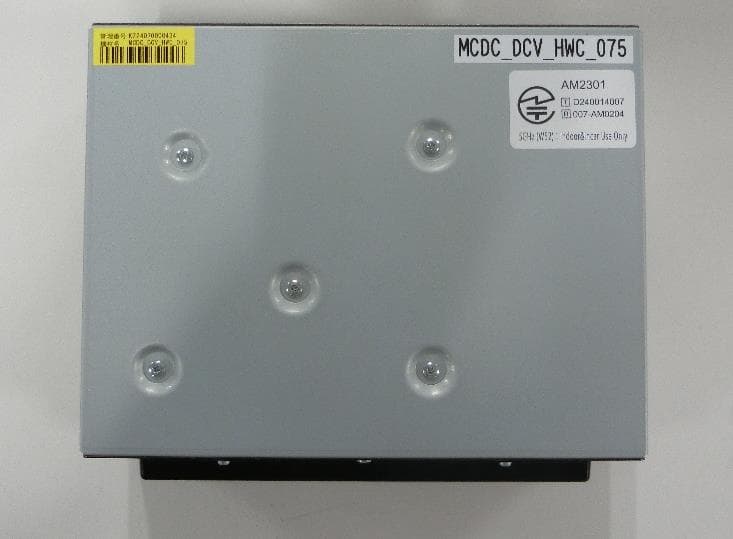
ACJ932AM2301
Jan 29, 2025Car AV Control Unit for CDC
Equipment Class
DTS - Digital Transmission SystemACJ96NKX-TGEA60B
Aug 13, 2024DECT Handset
Equipment Class
PUE - Part 15 Unlicensed PCS portable Tx held to earACJ96NKX-TGE630B
Aug 12, 2024DECT Base Unit
Equipment Class
PUB - Part 15 Unlicensed PCS Base Station