ACJ96NKX-PRXA10DECT 6.0 Handset with Wi-Fi and BT
Panasonic Corporation of North America
Click to zoom
Application Details
- Equipment Class
- DTS - Digital Transmission System
- Date of Grant
- Jan 02, 2014
- Application Purpose
- Original Equipment
- Date of Application
- Jan 02, 2014
- Equipment Note
- DECT 6.0 Handset with Wi-Fi and BT
- Frequency Range
- 2412.00000000 - 2462.00000000
- Country
- United States
Documents & Files
Document Text
Text extracted from the exhibit documents filed with the FCC. Open a document above to read the original.
Users Manual
Installation Manual Additional Digital Cordless Handset Model No. KX-PRXA10 Thank you for purchasing a Panasonic product. This unit is an additional handset compatible with the following series of Panasonic Digital Cordless Phone: - KX-PRX120 (KX-PRXA10) (The corresponding models are subject to change without notice.) You must register this handset with your base unit before it can be used. This document describes only the steps needed to register and begin using the handset. Please read the base unit ’s documentation for further details. Please read this document before using the unit and save it for future reference. For assistance, visit our Web site: http://www.panasonic.com/help for customers in the U.S.A. or Puerto Rico. Printed in China PNQX6195ZA CC1213YK0 (E) PRXA10_IM_(en-en)_1122_ver.020.pdf 12013/11/22 14:50:51 Supplied accessories Accessory item/Order numberQuantity Charger/PNLC1049ZW1 AC adaptor/PNLV226KZ1 Rechargeable battery/KX-PRA10EX1 Handset cover * 1 /M81101016740 1 *1 The handset cover comes attached to the handset. N ote: RPlease read the base unit’s documentation for additional/replacement accessories. Preparing the charger n KX-PRXA10 AInsert the AC adaptor plug to the unit until you h ear a click. A B BConnect the AC adaptor to the power outlet. Note: RU se only the supplied Panasonic AC adaptor PNLV226KZ. RThe AC adaptor must remain connected at all times. (It is normal for the adaptor to feel warm during use.) Preparing the handset Inserting microSD card and the battery A microSD card (not supplied) allows you to expand the handset’s storage capabilities. Important: RUse only the supplied battery. For replacement, use only the Panasonic rechargeable battery noted on page 2. 2 For assistance, please visit http://www.panasonic.com/help Installation PRXA10_IM_(en-en)_1122_ver.020.pdf 22013/11/22 14:50:51 RW hen removing the battery, make sure you turn off the handset first. RTo avoid loss of data or malfunction, do not damage, carelessly handle, or short-circuit the gold-colored contacts of the microSD card. 1 Remove the handset’s cover. 2 Open the microSD card cover by s liding it toward the nearest side of the handset (A) and then lifting up (B). A B 3 Insert the microSD card with the g old-colored contacts facing down, close the microSD cover (A), and then gently slide the cover toward the opposite side of the handset (B). B A 4 Insert the battery (A) and lower it into the handset (B). A B 5 Attach the cover. Note: RI f the battery is fully charged, but the operating time seems to be shorter, clean the charge contacts of the handset and charger with a dry cloth and charge again. For assistance, please visit http://www.panasonic.com/help 3 Installation PRXA10_IM_(en-en)_1122_ver.020.pdf 32013/11/22 14:50:51 Charging the handset Charge the handset for about 5 hours before initial use. The charge indicator (A) lights while the handset is charging and turns off when the handset is fully charged. Important: RIf the handset is placed into the charger while talking on the phone, the call is not disconnected. A or A Place the handset into the charger.Connect a USB cable (not s upplied) directly to the handset. Turning on the handset T o turn the handset on, press and hold the power button on the top of the handset. Setup wizard The first time you turn on the handset, the setup wizard prompts you to configure initial settings such as the display language. Follow the on-screen instructions to configure the handset. Registration dialog While using the setup wizard, a dialog may be displayed prompting you to press the M N on the base unit for 5 seconds. Follow the on-screen instructions to register the handset to the base unit. When registration is complete, continue to follow the setup wizard. Registering the handset to the base unit I f the handset is not registered, the registration dialog (page 4) is displayed. Follow the on-screen instructions to register the handset to the base unit. If you cancel this dialog, you can display it again by tapping [Landline] in the home screen or app list, and then tapping [Landline settings] a [Initial settings]. 4 For assistance, please visit http://www.panasonic.com/help Installation PRXA10_IM_(en-en)_1122_ver.020.pdf 42013/11/22 14:50:51 For your safety To prevent severe injury and loss of life/property, read this section carefully before using the product to ensure proper and safe operation of your product. WARNING Power connection RC ompletely insert the AC adaptor/power plug into the power outlet. Failure to do so may cause electric shock and/or excessive heat resulting in a fire. RRegularly remove any dust, etc. from the AC adaptor/power plug by pulling it from the power outlet, then wiping with a dry cloth. Accumulated dust may cause an insulation defect from moisture, etc. resulting in a fire. RUnplug the product from power outlets if it emits smoke, an abnormal smell, or makes an unusual noise. These conditions can cause fire or electric shock. Confirm that smoke has stopped emitting and contact us at www.panasonic.com/ contactinfo Installation RT his product is not water-resistant. To prevent the risk of fire or electrical shock, do not expose the product to rain or any type of moisture. RDo not place or use this product near automatically controlled devices such as automatic doors and fire alarms. Radio waves emitted from this product may cause such devices to malfunction resulting in an accident. RKeep all accessories, including the microSD card, out of the reach of children to prevent swallowing. Operating safeguards RT o prevent possible hearing damage, do not listen at high volume levels for long periods. CAUTION Installation and location RT he AC adaptor is used as the main disconnect device. Ensure that the AC outlet is installed near the product and is easily accessible. For assistance, please visit http://www.panasonic.com/help 5 Installation PRXA10_IM_(en-en)_1122_ver.020.pdf 52013/11/22 14:50:51 Battery RUse only…
Text truncated - open the document above for the full version.
Cover Letter(s)
EXHIBIT A STATEMENT OF SECURITY CODE This cordless telephone system has more than 1,000 billion combinations that are provided by the following means: Provided with 128 bits for security codes. When shipped from the factory, the security code is decided by the manufacture. It is memorized in a memory IC. Base and Handset knows each other’s security code information.
Cover Letter(s)
Panasonic Corporation of North America Two Riverfront Plaza, 9 th Floor, Newark, NJ 07102-5490 Tel/Fax: 201-348-7758 / [email protected] Richard Mullen, Group Manager Product Safety and Compliance Division Power of Attorney December 5, 2013 PCTP-14-F002 Federal Communication Commission Equipment Authorization Division / Application Processing Branch 7435 Oakland Mills Road Columbia, Maryland 21046 To whom it may concern; We, the undersigned, Panasonic Corporation of North America, hereby authorizes Nemko AS to act on our behalf in all matters relating to the preparation of TCB Certification application for the below described product in compliance with FCC Part 15C and D. Any and all acts carried out by Nemko AS on our behalf shall have the same effects as acts of our own for a period of one year from the date of this letter. Type Filing: Original Application for 1.9 GHz DECT Cordless Telephone Handset Station 1 Product Description: Handset Station contains BT (2.0 EDR) Wi-Fi and DECT Transmitters FCC ID: ACJ96NKX-PRXA10 Type Equipment for BT: Frequency Hopping Spread Spectrum / FHSS FCC Rule Part: FCC Part 15, Subpart C, Section 15.247 Frequency Range: 2402~ 2480 MHz Number Channels: 78 Channels Type Equipment for Wi-Fi: Digital Transmission System / DTS FCC Rule Part: FCC Part 15, Subpart C, Section 15.247 Frequency Range: 2412~ 2462 MHz Number Channels: 11 Channels Type Equipment for DECT: Isochronous UPCS Handset (PUE) FCC Rule Part: FCC Part 15, Subpart D Frequency Range: 1921.536 ~ 1928.448 Number Channels: 5 RF Channels / 5x12 = 60 TDMA Duplex Channels RF Exposure: Portable / SAR (zero spacing between antenna and head/body is acceptable) Responsible Panasonic Corporation of North America Applicant & Grantee: Two Riverfront Plaza, 9 th Floor, Newark, NJ 07102-5490 Responsible Manufacturer: Panasonic System Networks Co., Ltd. Sincerely yours, Richard Mullen Richard Mullen Group Manager Panasonic Corporation of North America Product Safety and Compliance Division 1 Handset will be used with Base Station, which will be separately certified under FCC ID: ACJ96NKX-PRX120. Panasonic Corporation of North America Two Riverfront Plaza, 9 th Floor, Newark, NJ 07102-5490 Tel/Fax: 201-348-7758 / [email protected] Richard Mullen, Group Manager Product Safety and Compliance Division Request for Confidentiality December 5, 2013 PCTP-14-F002 Federal Communication Commission Equipment Authorization Division Application Processing Branch 7435 Oakland Mills Road Columbia, Maryland 21046 To whom it may concern; Type Filing: Original Application for 1.9 GHz DECT Cordless Telephone Handset Station Product Description: Handset Station contains BT (2.0 EDR) Wi-Fi and DECT Transmitters FCC ID: ACJ96NKX-PRXA10 In accordance with provisions of Sections 0.457 and 0.459 of the Commission’s Rules and Section 552(b)(4) of the Freedom of Information Act, we request permanent confidentiality for exhibits, which contain: (1) Antenna Construction; (2) Description of Electrical Circuitry; (3) Schematic Diagrams of Base Unit and RF Unit; and (4) Base Unit Block Diagram. The transmitter is not user adjustable and does not have a Tune-Up Procedure. These exhibits contain proprietary, confidential and trade secrets material, which would not be routinely made available for public inspection. In accordance with FCC Public DA 04-1705, we request forty-five day short-term confidentiality, starting from the from the issuance of equipment authorization date, for exhibits, which contain: (1) External Photographs of Base Unit and RF Unit; (2) Internal Photographs of Base Unit and RF Unit; (3) Test Setup Photographs; and (4) User Manual. These exhibits contain pre-market information, which could give our competitors unfair advantage should this information be released before this product is actually introduced into the common marketplace. Sincerely yours, Richard Mullen Richard Mullen Group Manager Panasonic Corporation of North America Product Safety and Compliance Division
External Photos
EXTERNAL PHOTOGRAPHS KX-PRXA10 Top View Bottom View
ID Label/Location Info
EXHIBIT B MARKINGS Portable Unit: FCC ID Label (Nameplate) The marking will be shown on the battery compartment of the portable unit.
Internal Photos
INTERNAL PHOTOGRAPHS Internal View Internal View 2 RF portion without cover Bottom View
Internal Photos
INTERNAL PHOTOGRAPHS Internal View RF portion without cover Internal View 2
RF Exposure Info
The Testcenter facility ‘Dosimetric Test Lab’ within IMST GmbH is accredited by the German National ‘Deutsche Akkreditierungsstelle GmbH (DAkkS)’ for testing according to the scope as listed in the accreditation certificate: D-PL-12139-01-01. SAR_Report_Nemko_60320_6130411_FCC_DECT_WiFi_KX-PRXA10_CalData Appendix for the Report Dosimetric Assessment of the Portable Device KX-PRXA10 from Panasonic (FCC ID: ACJ96NKX-PRXA10) (IC: 216A-KXPRXA10) According to the FCC Requirements Calibration Data December 04, 2013 IMST GmbH Carl-Friedrich-Gauß-Str. 2 D-47475 Kamp-Lintfort Customer Panasonic System Networks Co., Ltd. 1 - 62, 4 - chome Minoshima, Hakata, Fukuoka 812-8531 Japan SAR_Report_FCC_DECT_1900_1.2.doc/25.11.2011/AR The Testcenter facility ‘Dosimetric Test Lab’ within IMST GmbH is accredited by the German National ‘Deutsche Akkreditierungsstelle GmbH (DAkkS)’ for testing according to the scope as listed in the accreditation certificate: D-PL-12139-01-01. Cal_D1900V2_SN5d051_Sep2013_V2 Page 1 of 7 Calibration Certificate Certificate No: Cal_D1900V2_SN5d051_Sep2013_V2 Object: D1900V2 SN: 5d051 Date of Calibration: September 25, 2013 Next Calibration: September 2015 Object Condition: In Tolerance Calibration Equipment used: Test Equipment Serial Number Last calibration Calibrated by Next calibration Powermeter E4416A GB41050414 Nov 12 Rohde&Schwarz (262487-D-K-15012- 01-00-2012-11) Nov 14 Power Sensor E9301H US40010212 Nov 12 Rohde&Schwarz (262492-D-K-15012- 01-00-2012-11) Nov 14 Powermeter E4417A GB41050441 Nov 12 Rohde&Schwarz (262488-D-K-15012- 01-00-2012-11) Nov 14 Power Sensor E9301A MY41495584 Nov 12 Rohde&Schwarz (262489-D-K-15012- 01-00-2012-11) Nov 14 Network Analyzer E5071C MY46103220 Jul 13 Rohde&Schwarz (11-300285997) Jul 15 Reference Probe EX3DV4 SN 3536 Sep 12 SPEAG (EX3-3536_Sep12) Sep 13 DAE3 SN 335 Feb 13 SPEAG (DAE3-335_Feb13) Feb 14 Cal_D1900V2_SN5d051_Sep2013_V2 Page 2 of 7 Calibration is performed according the following standards: IEEE 1528-2003 "IEEE Recommended Practice for Determining the Peak Spatial - Averaged Specific Absorption Rate (SAR) in the Human Head from Wireless Communication Devices: Measurement Technique", December 2003 IEC 62209-1 "Procedure to measure the Specific Absorption Rate (SAR) for hand - held devices used in close proximity to the ear (frequency range of 300 MHz to 3GHz)", February 2005 IEC 62209-2 "Evaluation of Human Exposure to Radio Frequency Fields from Handheld and Body-Mounted Wireless Communication Devices in the Frequency Range of 30 MHz to 6 GHz: Human models, Instrumentation, and Procedures ", Part 2: “Procedure to determine the Specific Absorption Rate (SAR) for including accessories and multiple transmitters” Edition 1.0, 2010-01 Additional Documentation: DASY 4/5 System Handbook prepared by: reviewed by: Alexander Rahn André van den Bosch test engineer quality assurance engineer 08 Cal_D1900V2_SN5d051_Sep2013_V2 Page 3 of 7 Measurement Conditions DASY Version: Dasy 4; V4.7 Phantom: SAM Phantom 1059 Distance Dipole Center – TSL: 10mm With spacer Area Scan resolution dx, dy = 10mm Zoom Scan resolution dx, dy, dz = 5mm Frequency: 1900 MHz ± 1MHz Head TSL Parameters Temperature Permittivity Conductivity Nominal Head TSL Parameters 22.0 40.00 1.40 Measured Head TSL Parameters 21.8 41.4 ± 6% 1.43 S/m ± 6% SAR Result with Head TSL Averaged over 1g SAR measured 250 mW input power 9.80 mW/g SAR normalized normalized to 1W 39.20 mW/g SAR for nominal Head TSL parameters normalized to 1W 39.01 mW/g ± 16.5 % (k=2) Averaged over 10g SAR measured 250 mW input power 4.93 mW/g SAR normalized normalized to 1W 19.72 mW/g SAR for nominal Head TSL parameters normalized to 1W 19.66 mW/g ± 16.5 % (k=2) Cal_D1900V2_SN5d051_Sep2013_V2 Page 4 of 7 Body TSL Parameters Temperature Permittivity Conductivity Nominal Body TSL Parameters 22.0 53.30 1.52 Measured Body TSL Parameters 21.7 55.00 ± 6% 1.51 S/m ± 6% SAR Result with Body TSL Averaged over 1g SAR measured 250 mW input power 9.53 mW/g SAR normalized normalized to 1W 38.12 mW/g SAR for nominal Body TSL parameters normalized to 1W 38.54 mW/g ± 16.5 % (k=2) Averaged over 10g SAR measured 250 mW input power 4.85 mW/g SAR normalized normalized to 1W 19.40 mW/g SAR for nominal Body TSL parameters normalized to 1W 19.54 mW/g ± 16.5 % (k=2) General Antenna Parameters Antenna Parameters with Head TSL Impedance, transformed to feed point 47.6 Ω + 0.21 jΩ Return Loss -32.05 dB Antenna Parameter with Body TSL Impedance, transformed to feed point 52.4 Ω – 0.83 jΩ Return Loss -32.06 dB After long term use with 100W radiated power, only a slight warming of the dipole near the feed point can be measured. The dipole is made of standard semigrid coaxial cable. The center conductor of the feeding line is directly connected to the second arm of the dipole. The antenna is therefore short-circuited for DC signals. Additional EUT Data Manufactured by: SPEAG Manufactured on: May, 2004 Cal_D1900V2_SN5d051_Sep2013_V2 Page 5 of 7 SAR Result with Head TSL Test Laboratory: IMST GmbH, DASY Blue (I); File Name: 250913_b_3536.da4 DUT: Dipole 1900 MHz SN: 5d051; Type: D1900V2; Serial: D1900V2 - SN5d051 Program Name: System Performance Check at 1900 MHz Communication System: CW; Frequency: 1900 MHz;Duty Cycle: 1:1 Medium parameters used: f = 1900 MHz; σ = 1.43 mho/m; ε r = 41.4; ρ = 1000 kg/m 3 Phantom section: Flat Section DASY4 Configuration: - Probe: EX3DV4 - SN3536; ConvF(8.41, 8.41, 8.41); Calibrated: 24.09.2012 - Sensor-Surface: 4mm (Mechanical Surface Detection) - Electronics: DAE3 Sn335; Calibrated: 18.02.2013 - Phantom: SAM Glycol 1176; Type: Speag; Serial: 1176 - Measurement SW: DASY4, V4.7 Build 80; Postprocessing SW: SEMCAD, V1.8 Build 186 d=10mm, Pin=250mW/Area Scan (7x7x1): Measurement grid: dx=10mm, dy=10mm Maximum value of SAR (measured) = 10.8 mW/g d=10mm, Pin=250mW/Zoom Scan (7x7x7)/Cube 0: Measurement grid: dx=5mm, dy=5mm, dz=5mm Reference Value = 87.1 V/m; Power Drift = -0.014 dB Peak SAR (extrapolated) = 19.2 W/k…
Text truncated - open the document above for the full version.
RF Exposure Info
The Testcenter facility ‘Dosimetric Test Lab’ within IMST GmbH is accredited by the German National ‘Deutsche Akkreditierungsstelle GmbH (DAkkS)’ for testing according to the scope as listed in the accreditation certificate: D-PL-12139-01-01. SAR_Report_Nemko_60320_6130411_FCC_DECT_WiFi_KX-PRXA10_Confidential_V4 Page 1 of 40 Report Dosimetric Assessment of the Portable Device KX-PRXA10 (FCC ID: ACJ96NKX-PRXA10) (IC: 216A-KXPRXA10) According to the FCC Requirements December 03, 2013 IMST GmbH Carl-Friedrich-Gauß-Str. 2 D-47475 Kamp-Lintfort Customer Panasonic System Networks Co., Ltd. 1 - 62, 4 - chome Minoshima, Hakata, Fukuoka 812-8531 Japan This revised version supersedes all previous versions. The test results only relate to the items tested. This report shall not be reproduced except in full without the written approval of the testing laboratory. This version supersedes all previous versions of this report. SAR_Report_Nemko_60320_6130411_FCC_DECT_WiFi_KX-PRXA10_Confidential_V4 Page 2 of 40 Dasy_Report_FCC_DECT_1900_Head_Body_1.0/10.07.2013/AvB Executive Summary The KX-PRXA10 is a new cordless phone (Portable Device) from Panasonic operating in the 1920 MHz and 2400 MHz frequency range. The device has two integrated antennas and work in US DECT, IEEE 802.11 b/g/n and Bluetooth standards. Since Bluetooth and IEEE 802.11 b/g/n share one antenna, simultaneous transmission in these modes is not avaidable. The objective of the measurements done by IMST was the dosimetric assessment of one device in a worst case setup in head and body worn configuration. Since there was a special test software available, SAR tests in DECT and IEEE 802.11 b/g/n are conducted with a specific channel, bandwidth and maximum output power during the measurement. Based on the KDB 648474 [KDB 648474] measurements with Bluetooth are not required since the output power is below the threshold for Bluetooth. The examinations have been carried out with the dosimetric assessment system „DASY4“. The measurements were made according to the 47 CFR § 2.1093 [47CFR] for evaluating compliance of mobile and portable devices with FCC limits for human exposure (general population) to radiofrequency emissions and IEEE 1528-2003 [IEEE1528-2003]. Additional information and guidelines given by the following FCC documents were used: SAR Measurement Requirements for 100 MHz to 6 GHz [KDB 865664 D01 v01r01] Mobile and Portable Devices RF Exposure Procedures and Equipment Authorization Policies [KDB 447498 D01 v05r01] SAR Measurement Procedures for 802.11 a/b/g Transmitters [KDB 248227] All measurements have been performed in accordance to the recommendations given by SPEAG. SAR_Report_Nemko_60320_6130411_FCC_DECT_WiFi_KX-PRXA10_Confidential_V4 Page 3 of 40 Dasy_Report_FCC_DECT_1900_Head_Body_1.0/10.07.2013/AvB Compliance Statement The Panasonic KX-PRXA10 cordless phone (FCC ID: ACJ96NKX-PRXA10; IC: 216A-KXPRXA10) is in compliance with the following standards for uncontrolled exposure: 47 CFR § 2.1093 [47CFR] IEEE Std. C95.1 - 1999 [C95.1-1999], IEEE Std. C95.3 - 2002 [C95.3-2002], IEEE 1528-2003 [IEEE 1528-2003], The latest version of all relevant FCC OET KDB Procedures The phone was tested in addition to the head positions in the following body worn configurations: Display towards the phantom, distance 0 mm Display towards the ground, distance 0 mm The maximum results of SAR for the KX-PRXA10 are as follows: WORST CASE SAR RESULTS Phantom Configuration Highest SAR 1g for DECT [W/kg] Highest SAR 1g for WiFi [W/kg] Estimated SAR for BT [W/kg] Combined Reported SAR 1g [W/kg] SAR Limit [W/kg] HEAD Right Cheek 0.027 0.162 0.189 1.6 PASS BODY Pos. 2 0.043 0.662 0.705 1.6 PASS prepared by: ........................................ reviewed by: ..................................... Alexander Rahn André van den Bosch test engineer quality assurance engineer SAR_Report_Nemko_60320_6130411_FCC_DECT_WiFi_KX-PRXA10_Confidential_V4 Page 4 of 40 Dasy_Report_FCC_DECT_1900_Head_Body_1.0/10.07.2013/AvB Table of Contents SUBJECT OF INVESTIGATION ................................................................................................................... 5 1 FCC EXPOSURE CRITERIA ............................................................................................................... 5 1.1 DISTINCTION BETWEEN EXPOSED POPULATION, DURATION OF EXPOSURE AND FREQUENCIES ........... 6 1.2 DISTINCTION BETWEEN MAXIMUM PERMISSIBLE EXPOSURE AND SAR LIMITS .................................... 6 2 THE FCC MEASUREMENT PROCEDURE ......................................................................................... 7 2.1 GENERAL REQUIREMENTS .............................................................................................................. 7 2.2 DEVICE OPERATING NEXT TO A PERSON’S EAR ................................................................................ 7 2.2.1 PHANTOM REQUIREMENTS ......................................................................................................... 7 2.2.2 TEST POSITIONS ........................................................................................................................ 7 2.2.3 TEST TO BE PERFORMED ............................................................................................................ 9 3 BODY-WORN CONFIGURATIONS ................................................................................................... 10 3.1 POC (PTT) POSITION ................................................................................................................... 11 3.2 PHANTOM REQUIREMENTS ............................................................................................................ 11 3.3 TEST TO BE PERFORMED .............................................................................................................. 11 3.4 ADDITIONAL INFORMATION FOR 802.11 A/B/G TRANSMITTERS ......................................................... …
Text truncated - open the document above for the full version.
RF Exposure Info
The Testcenter facility ‘Dosimetric Test Lab’ within IMST GmbH is accredited by the German National ‘Deutsche Akkreditierungsstelle GmbH (DAkkS)’ for testing according to the scope as listed in the accreditation certificate: D-PL-12139-01-01. SAR_Report_Nemko_60320_6130411_FCC_DECT_WiFi_KX-PRXA10_Plots_V2 Page 1 of 32 Appendix for the Report Dosimetric Assessment of the Portable Device KX-PRXA10 (FCC ID: ACJ96NKX-PRXA10) (IC: 216A-KXPRXA10) According to the FCC Requirements SAR Distribution Plots December 06, 2013 IMST GmbH Carl-Friedrich-Gauß-Str. 2 D-47475 Kamp-Lintfort Customer Panasonic System Networks Co., Ltd. 1 - 62, 4 - chome Minoshima, Hakata, Fukuoka 812-8531 Japan This revised version supersedes all previous versions. The test results only relate to the items tested. This report shall not be reproduced except in full without the written approval of the testing laboratory. This version supersedes all previous versions of this report. SAR_Report_Nemko_60320_6130411_FCC_DECT_WiFi_KX-PRXA10_Plots_V2 Page 2 of 32 dasy_report_fcc_DECT_1900_plots_1.0.doc/110.05.2006/ABo Table of Contents 1 SAR DISTRIBUTION PLOTS ......................................................................................................................... 3 1.1 DECT HEAD MEASUREMENT .................................................................................................................... 3 1.2 IEEE 802.11 B HEAD MEASUREMENT ...................................................................................................... 7 1.3 IEEE 802.11 G HEAD MEASUREMENT ................................................................................................... 11 1.4 IEEE 802.11 N HEAD MEASUREMENT .................................................................................................... 15 1.5 DECT BODY MEASUREMENT .................................................................................................................. 22 1.6 IEEE 802.11 B BODY MEASUREMENT .................................................................................................... 24 1.7 IEEE 802.11 G BODY MEASUREMENT ................................................................................................... 26 1.8 IEEE 802.11 N BODY MEASUREMENT ................................................................................................... 28 SAR_Report_Nemko_60320_6130411_FCC_DECT_WiFi_KX-PRXA10_Plots_V2 Page 3 of 32 dasy_report_fcc_DECT_1900_plots_1.0.doc/110.05.2006/ABo 1 SAR Distribution Plots 1.1 DECT Head Measurement Test Laboratory: Imst GmbH, DASY Yellow (II); File Name: PRXA10_yplm_1.da4 DUT: Panasonic; Type: KX-PRXA10; Serial: 3GBQA001016 Program Name: DECT Communication System: DECT US; Frequency: 1924.99 MHz;Duty Cycle: 1:24 Medium parameters used: f = 1924.99 MHz; σ = 1.41 mho/m; ε r = 40.9; ρ = 1000 kg/m 3 Phantom section: Left Section DASY4 Configuration: - Probe: ET3DV6R - SN1669; ConvF(5.05, 5.05, 5.05); Calibrated: 19.02.2013 - Sensor-Surface: 4mm (Mechanical Surface Detection) - Electronics: DAE4 Sn631; Calibrated: 23.09.2013 - Phantom: SAM Glycol 1340; Type: QD 000 P40 CB; Serial: TP-1340 - Measurement SW: DASY4, V4.7 Build 80; Postprocessing SW: SEMCAD, V1.8 Build 186 Cheek Left/Area Scan (8x11x1): Measurement grid: dx=15mm, dy=15mm Maximum value of SAR (measured) = 0.013 mW/g Cheek Left/Zoom Scan (7x7x7)/Cube 0: Measurement grid: dx=5mm, dy=5mm, dz=5mm Reference Value = 2.93 V/m; Power Drift = 0.081 dB Peak SAR (extrapolated) = 0.022 W/kg SAR(1 g) = 0.013 mW/g; SAR(10 g) = 0.00799 mW/g Maximum value of SAR (measured) = 0.014 mW/g Fig. 1: SAR distribution for DECT US, channel 2, cheek position, left side of head (December 02, 2013). SAR_Report_Nemko_60320_6130411_FCC_DECT_WiFi_KX-PRXA10_Plots_V2 Page 4 of 32 dasy_report_fcc_DECT_1900_plots_1.0.doc/110.05.2006/ABo Test Laboratory: Imst GmbH, DASY Yellow (II); File Name: PRXA10_yplm_2.da4 DUT: Panasonic; Type: KX-PRXA10; Serial: 3GBQA001016 Program Name: DECT Communication System: DECT US; Frequency: 1924.99 MHz;Duty Cycle: 1:24 Medium parameters used: f = 1924.99 MHz; σ = 1.41 mho/m; ε r = 40.9; ρ = 1000 kg/m 3 Phantom section: Left Section DASY4 Configuration: - Probe: ET3DV6R - SN1669; ConvF(5.05, 5.05, 5.05); Calibrated: 19.02.2013 - Sensor-Surface: 4mm (Mechanical Surface Detection) - Electronics: DAE4 Sn631; Calibrated: 23.09.2013 - Phantom: SAM Glycol 1340; Type: QD 000 P40 CB; Serial: TP-1340 - Measurement SW: DASY4, V4.7 Build 80; Postprocessing SW: SEMCAD, V1.8 Build 186 Tilted Left/Area Scan (8x11x1): Measurement grid: dx=15mm, dy=15mm Maximum value of SAR (measured) = 0.018 mW/g Tilted Left/Zoom Scan (7x7x7)/Cube 0: Measurement grid: dx=5mm, dy=5mm, dz=5mm Reference Value = 3.63 V/m; Power Drift = -0.060 dB Peak SAR (extrapolated) = 0.027 W/kg SAR(1 g) = 0.016 mW/g; SAR(10 g) = 0.00964 mW/g Fig. 2: SAR distribution for DECT US, channel 2, tilted position, left side of head (December 02, 2013). SAR_Report_Nemko_60320_6130411_FCC_DECT_WiFi_KX-PRXA10_Plots_V2 Page 5 of 32 dasy_report_fcc_DECT_1900_plots_1.0.doc/110.05.2006/ABo Test Laboratory: Imst GmbH, DASY Yellow (II); File Name: PRXA10_yprm_1.da4 DUT: Panasonic; Type: KX-PRXA10; Serial: 3GBQA001016 Program Name: DECT Communication System: DECT US; Frequency: 1924.99 MHz;Duty Cycle: 1:24 Medium parameters used: f = 1924.99 MHz; σ = 1.41 mho/m; ε r = 40.9; ρ = 1000 kg/m 3 Phantom section: Right Section DASY4 Configuration: - Probe: ET3DV6R - SN1669; ConvF(4.89, 4.89, 4.89); Calibrated: 19.02.2013 - Sensor-Surface: 4mm (Mechanical Surface Detection) - Electronics: DAE4 Sn631; Calibrated: 23.09.2013 - Phantom: SAM Glycol 1340; Type: QD 000 P40 CB; Serial: TP-1340 - Measurement SW: DASY4, V4.7 Build 80; Postprocessing SW: SEMCAD, V1.8 Build 186 Cheek Right/Area Scan (8x11x1): Measurement grid: dx=15mm, dy=15mm Maximum value of SAR (measured) = 0.027 mW/g Cheek Right/Zoom Scan (7x7x7)/Cube 0: Measurement grid: dx=5mm, dy=5mm, dz=5mm Reference Value = 3.10 V/m; Power D…
Text truncated - open the document above for the full version.
Test Report
Report No. 247284-1 Template version: B Nemko Norway Nemko AS, Instituttveien 6, P.O. Box 96 Kjeller, 2027 Kjeller, Norway TEL +47 22 96 03 30 FAX +47 22 96 05 50 EMAIL [email protected] ENTERPRISE NUMBER NO974404532 nemko.com/no Test Report Product UPCS Handset with WLAN and Bluetooth Name and address of the applicant Panasonic Corporation of North America Name and address of the manufacturer Panasonic System Networks Co., Ltd. 1-62, 4-chome, Minoshima, Hakata-ku Fukuoka 812-8531, Japan Model KX-PRXA10 Rating 3.7V DC (Li-Ion Secondary Battery) Trademark Panasonic Serial number / Additional information IEEE 802.11b/g/n (HT20 and HT40) Tested according to FCC Part 15.247 Frequency Hopping Transmitters / Digital Transmission Systems Industry Canada RSS-210, Issue 8 Low Power Licence-Exempt Radiocommunications Devices Order number 247284 Tested in period 2013.11.05 to 2013.11.18 and 2013.12.02 to 2013.12.04 and 2013.12.20 Issue date 2013.12.20 Name and address of the testing laboratory Instituttveien 6 Kjeller, Norway FCC No: 994405 IC OATS: 2040D-1 TEL: (+47) 22 96 03 30 FAX: (+47) 22 96 05 50 Prepared by [G.Suhanthakumar] Approved by [Frode Sveinsen] This report shall not be reproduced except in full without the written approval o…
Text truncated - open the document above for the full version.
Contact Information
Applicant
Ben Botros(Manager - Regulatory & Compliance)
Test Firm
Nemko ASFrode Sveinsen
Technical Specifications
| # | Rule Parts | Frequency Range | Power Output |
|---|---|---|---|
| 1 | 15C | 2.41 GHz - 2.46 GHz | 129.00 mW |
Other Applications from Panasonic Corporation of North America
ACJ-EAH-A1000
Aug 19, 2026Digital Wireless Stereo Headphones
Equipment Class
DSS - Part 15 Spread Spectrum TransmitterACJ9TGFZVNF3G1
Jun 16, 2026Contactless Smart Card Reader
Equipment Class
DXX - Part 15 Low Power Communication Device Transmitter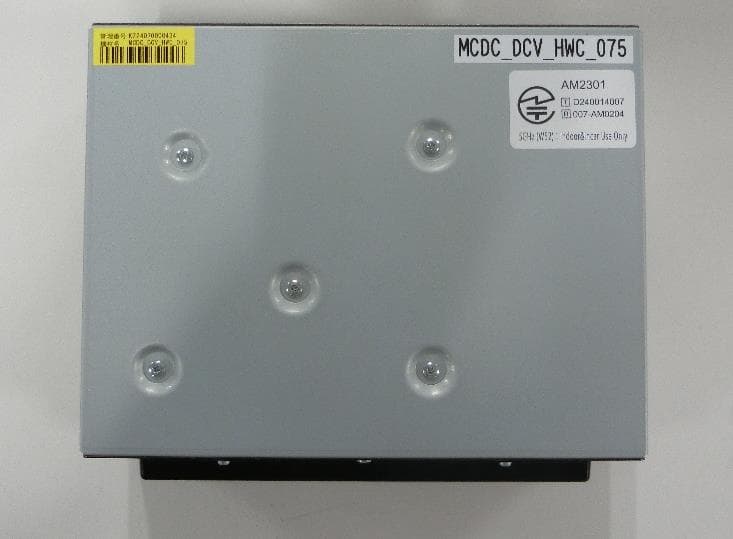
ACJ932AM2301
Jan 29, 2025Car AV Control Unit for CDC
Equipment Class
DTS - Digital Transmission SystemACJ96NKX-TGEA60B
Aug 13, 2024DECT Handset
Equipment Class
PUE - Part 15 Unlicensed PCS portable Tx held to earACJ96NKX-TGE630B
Aug 12, 2024DECT Base Unit
Equipment Class
PUB - Part 15 Unlicensed PCS Base Station