ACJ96NKX-TG8231Cordless Telephone Base
Panasonic Corporation of North America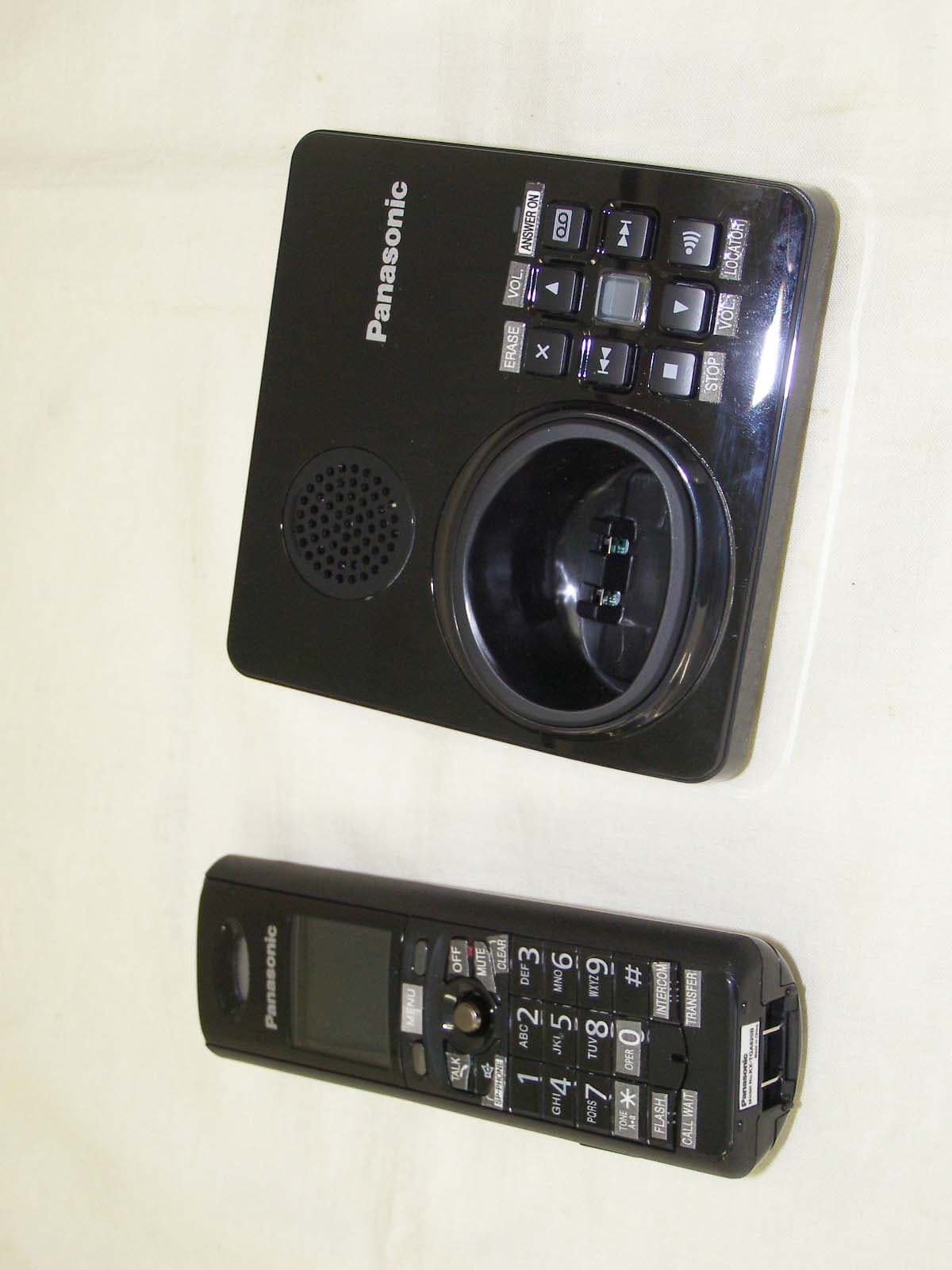
Click to zoom
Application Details
- Equipment Class
- PUB - Part 15 Unlicensed PCS Base Station
- Date of Grant
- Jun 11, 2007
- Application Purpose
- Original Equipment
- Date of Application
- Jun 11, 2007
- Equipment Note
- Cordless Telephone Base
- Frequency Range
- 1921.53600000 - 1928.44800000
- Country
- United States
Documents & Files
Document Text
Text extracted from the exhibit documents filed with the FCC. Open a document above to read the original.
Users Manual
This unit is compatible with Caller ID. To use this feature, you must subscribe to the appropriate service offered by your telephone service provider. Please read these Operating Instructions before using the unit and save for future reference. For assistance, visit our website: http://www.panasonic.com/help for customers in the U.S.A. or Puerto Rico. Charge the handset batteries for 7 hours before initial use. Operating Instructions Expandable Digital Cordless Answering System Model No. KX-TG8231 with 2 Handsets Model No. KX-TG8232 KX-TG8231 TG823X_Shinsei.book Page 1 Monday, April 23, 2007 6:03 PM Temporary Confidential 2For assistance, please visit http://www.panasonic.com/help Important safety instructions When using the product, basic safety precautions should always be followed to reduce the risk of fire, electric shock, or personal injury. 1. Read all instructions carefully. 2. Follow all warnings and instructions marked on the product. 3. Unplug the product from power outlets before cleaning. Do not use liquid or aerosol cleaners. Use a moist cloth for cleaning. 4. Do not use the product near water, for example near a bathtub, wash bowl, kitchen sink, etc. 5. Place the product securely on a stable surface. Serious damage and/or injury may result if the product falls. 6. Do not cover slots and openings on the product. They are provided for ventilation and protection against overheating. Never place the product near radiators, or in a place where proper ventilation is not provided. 7. Use only the power source marked on the product. If you are not sure of the type of power supplied to your home, consult your dealer or local power company. 8. Do not place objects on the power cord. Install the product where no one can step or trip on the cord. 9. Do not overload power outlets and extension cords. This can result in the risk of fire or electric shock. 10. Never push any objects through slots in the product. This may result in the risk of fire or electric shock. Never spill any liquid on the product. 11. To reduce the risk of electric shock, do not disassemble the product. Take the product to an authorized service center when service is required. Opening or removing covers may expose you to dangerous voltages or other risks. Incorrect reassembly can cause electric shock when the product is subsequently used. 12. Unplug the product from power outlets and take to an authorized service center when the following conditions occur: A. When the power cord is damaged or frayed. B. If liquid has been spilled into the product. C. If the product has been exposed to rain or water. D. If the product does not work normally by following the operating instructions. Adjust only controls covered by the operating instructions. Improper adjustment may require extensive work by an authorized service center. E. If the product has been dropped or physically damaged. F. If the product exhibits a distinct change in performance. 13. During thunderstorms, avoid using telephones except cordless types. There may be a remote risk of an electric shock from lightning. 14. Do not use the product to report a gas leak, when in the vicinity of the leak. SAVE THESE INSTRUCTIONS TG823X_Shinsei.book Page 2 Monday, April 23, 2007 6:03 PM Temporary Confidential For assistance, please visit http://www.panasonic.com/help3 WARNING: LTo prevent the risk of fire or electrical shock, do not expose the product to rain or any type of moisture. LUnplug the product from power outlets if it emits smoke, an abnormal smell, or makes an unusual noise. These conditions can cause fire or electric shock. Confirm that smoke has stopped emitting and contact the Panasonic Call Center at 1-800-211- PANA (1-800-211-7262). LDo not spill liquids (detergents, cleansers, etc.) onto the telephone line cord plug, or allow it to become wet at all. This may cause a fire. If the telephone line cord plug becomes wet, immediately pull it from the telephone wall jack, and do not use. LDo not place or use this product near automatically controlled devices such as automatic doors and fire alarms. Radio waves emitted from this product may cause such devices to malfunction resulting in an accident. LCompletely insert the AC adaptor/ power plug into the power outlet. Failure to do so may cause electric shock and/or excessive heat resulting in a fire. LRegularly remove any dust, etc. from the AC adaptor/power plug by pulling it from the power outlet, then wiping with a dry cloth. Accumulated dust may cause an insulation defect from moisture, etc. resulting in a fire. CAUTION: Installation LNever install telephone wiring during a lightning storm. LNever install telephone line jacks in wet locations unless the jack is specifically designed for wet locations. LNever touch uninsulated telephone wires or terminals unless the telephone line has been disconnected at the network interface. LUse caution when installing or modifying telephone lines. LDo not touch the plug with wet hands. LThe AC adaptor is used as the main disconnect device. Ensure that the AC outlet is installed near the product and is easily accessible. Battery To reduce the risk of fire or injury to persons, read and follow these instructions. LUse only the battery(ies) specified. LDo not mix old and new battery(ies). LDo not dispose of the battery(ies) in a fire. They may explode. Check with local waste management codes for special disposal instructions. LDo not open or mutilate the battery(ies) . Released electrolyte is corrosive and may cause burns or injury to the eyes or skin. The electrolyte may be toxic if swallowed. LExercise care when handling the battery(ies). Do not allow conductive materials such as rings, bracelets or keys to touch the battery(ies), otherwise a short circuit may cause the battery(ies) and/or the conductive material to overheat and cause burns. LCharge the battery(ies) provided with or identified for use with this product only in accordance with the instructions and limitatio…
Text truncated - open the document above for the full version.
Cover Letter(s)
Panasonic Corporation of North America One Panasonic Way 4B-8 Secaucus, NJ 07094 Tel: 201-348-7765 / Fax: 201-392-4564 [email protected] ERICA MARTINEZ RF Engineer Product Safety and Compliance Division Power of Attorney June 5, 2007 PCZ-07-F002 Federal Communication Commission Equipment Authorization Division / Application Processing Branch 7435 Oakland Mills Road Columbia, Maryland 21046 To whom it may concern; We, the undersigned, Panasonic Corporation of North America, hereby authorizes Nemko to act on our behalf in all matters relating to the preparation of TCB Certification application for the below described product in compliance with FCC Part 15D. Any and all acts carried out by Nemko on our behalf shall have the same effects as acts of our own for a period of one year. Type Equipment: Isochronous UPCS Base Station Product Name: 1920~1930 MHz Digital Cordless Telephone System FCC ID Base Unit ACJ96NKX-TG8231 Applicant & Grantee: Panasonic Corporation of North America One Panasonic Way, Secaucus, NJ 07094 FRN Number: 0003762242 Responsible Manufacturer: Panasonic Communications Co., Ltd. Responsible Sales Company: Panasonic Consumer Electronics Company Sincerely yours, Erica Martinez Erica Martinez RF Engineer Panasonic Corporation of North America Product Safety and Compliance Division
External Photos
EXTERNAL PHOTOGRAPHS KX-TG8231 Temporary Confidential Rear View Temporary Confidential Bottom View Temporary Confidential
ID Label/Location Info
EXHIBIT B MARKINGS Base Unit: The base unit provides with the following marking, or equivalent. This device complies with Part 15 of the FCC rules. Operation is subject to the following two conditions: (1) This device may not cause harmful interference, and (2) this device must accept any interference received, including interference that may cause undesired operation. Privacy of communications may not be ensured when using this phone. NOTE: Above markings are shown on bottom of the base unit.
Internal Photos
INTERNAL PHOTOGRAPHS Internal View Temporary Confidential P.C. Board Temporary Confidential P.C. Board (Metal Cover Open) Temporary Confidential
RF Exposure Info
Prediction of MPE limit at a given distance Equation from page 18 of OET Bulletin 65, Edition 9 7-01 where: S = power density P = power input to the antennaG = power gain of the antenna in the direction of i nterest relative to an isotropic radiator R = distance to the center of radiation of the ante nna Valid for frequencies from 30 to 100.000 MHz Maximum peak output power at antenna input terminal : 20.00 (dBm) Maximum peak output power at antenna input terminal : 100 (mW) Antenna gain(typical): 3.00 (dBi) Maximum antenna gain: 1.995262315 (numeric) Prediction distance: 20 (cm) Prediction frequency: 1925 (MHz) MPE limit for uncontrolled exposure at prediction f requency: 1.00 (mW/cm^2) Power density at prediction frequency: 0.039694 (mW/cm^2) Maximum allowable antenna gain: 17.01 (dBi) Margin of Compliance: 14.01 (dB) 2 4 R PG S π =
Test Report
Nemko AS, Gaustadalléen 30, P.O.Box 73 Blindern, NO-0314 Oslo Norway T +47 22 96 03 30 F +47 22 96 05 50 Enterprise number NO974404532 Visiting address: Nemko Comlab, Gåsevikveien 8, P.O.Box 96, NO-2027 Kjeller Norway T +47 64 84 57 00 F +47 64 84 57 05 Test report no. : 86535-3 Item tested : KX-TG8231 Type of equipment : UPCS Base FCC ID : ACJ96NKX-TG8231 Client : Panasonic Communication Co., Ltd. FCC Part 15, subpart D Isochronous UPCS Device 1920 - 1930 MHz Industry Canada RSS-213, Issue 2 2 GHz Licence-exempt Personal Communications Service Devices (LE-PCS) 8 June 2007 Authorized by : .......................... .................... Egil Hauger Technical Verificator TEST REPORT FCC part 15D Project no.: 86535 FCC ID: ACJ96NKX-TG8231 Nemko Comlab, N-2027 Kjeller Page 2 (58) CONTENTS 1 GENERAL INFORMATION ............................................................................................................... 3 1.1 Testhouse Info ................................................................................................................................... 3 1.2 Client Information............................................................................................................................... 3 1.3 Manufacturer (if other than client) ...................................................................................................... 3 2 TEST INFORMATION ....................................................................................................................... 4 2.1 Tested Item........................................................................................................................................ 4 2.2 Test Environment............................................................................................................................... 5 2.3 Test Period ........................................................................................................................................ 5 2.4 Test Engineer(s) ................................................................................................................................ 5 2.5 Test Equipment.................................................................................................................................. 5 2.6 Other Comments ............................................................................................................................... 5 3 TEST REPORT SUMMARY .............................................................................................................. 6 3.1 General .............................................................................................................................................. 6 3.2 Test Summary ................................................................................................................................... 7 4 TEST RESULTS................................................................................................................................ 8 4.1 Power Line Conducted Emissions ..................................................................................................... 8 4.2 Coordination with fixed microwave................................................................................................... 13 4.3 Digital Modulation Techniques......................................................................................................... 13 4.4 Labelling Requirements ................................................................................................................... 13 4.5 Antenna Requirement ...................................................................................................................... 14 4.6 Channel Frequencies....................................................................................................................... 14 4.7 Automatic Discontinuation of Transmission ..................................................................................... 15 4.8 Peak Power Output.......................................................................................................................... 16 4.9 Emission Bandwidth B..................................................................................................................... 19 4.10 Power Spectral Density.................................................................................................................... 22 4.11 In-Band Unwanted Emissions, Conducted....................................................................................... 25 4.12 Out-of-band Emissions, Conducted ................................................................................................. 27 4.13 Carrier Frequency Stability .............................................................................................................. 33 4.14 Frame Repetition Stability................................................................................................................ 34 4.15 Frame Period and Jitter ................................................................................................................... 34 4.16 Monitoring Threshold, Least Interfered Channel .............................................................................. 37 4.17 Threshold Monitoring Bandwidth ..................................................................................................... 39 4.18 Reaction Time and Monitoring Interval ............................................................................................ 40 4.19 Time and Spectrum Window Access Procedure .............................................................................. 42 4.20 Acknowledgements and Transmission Duration .............................................................................. 44 4.21 Dual Access Criteria Check ............................................................................................................. 45 4.22 Alternat…
Text truncated - open the document above for the full version.
Test Setup Photos
FCC ID: ACJ96NKX-TG8231 Project no.: 84442 Page 1 of 2 PHOTOS OF TEST SET-UP Radiated Emissions Test 200 - 1000 MHz FCC ID: ACJ96NKX-TG8231 Project no.: 84442 Page 2 of 2 Power-Line Conducted Emissions Test
Contact Information
Applicant
Ben Botros(Manager - Regulatory & Compliance)
Technical Contact
Panasonic Corporation of North AmericaErica Martinez
[email protected]201 348-7765
One Panasonic Way · Secaucus, New Jersey · United States
Test Firm
Nemko ASFrode Sveinsen
Technical Specifications
| # | Rule Parts | Frequency Range | Power Output |
|---|---|---|---|
| 1 | 15D | 1.92 GHz - 1.93 GHz | 100.00 mW |
Other Applications from Panasonic Corporation of North America
ACJ-EAH-A1000
Aug 19, 2026Digital Wireless Stereo Headphones
Equipment Class
DSS - Part 15 Spread Spectrum TransmitterACJ9TGFZVNF3G1
Jun 16, 2026Contactless Smart Card Reader
Equipment Class
DXX - Part 15 Low Power Communication Device Transmitter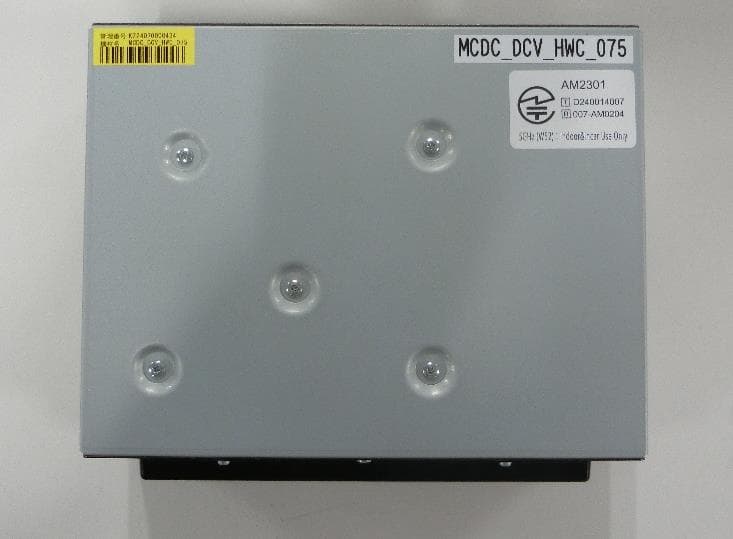
ACJ932AM2301
Jan 29, 2025Car AV Control Unit for CDC
Equipment Class
DTS - Digital Transmission SystemACJ96NKX-TGEA60B
Aug 13, 2024DECT Handset
Equipment Class
PUE - Part 15 Unlicensed PCS portable Tx held to earACJ96NKX-TGE630B
Aug 12, 2024DECT Base Unit
Equipment Class
PUB - Part 15 Unlicensed PCS Base Station