ACJ9TGCF-189CF-18 Personal Computer with WLAN+CDMA
Panasonic Corporation of North America
Click to zoom
Application Details
- Equipment Class
- DTS - Digital Transmission System
- Date of Grant
- Aug 29, 2004
- Application Purpose
- Original Equipment
- Date of Application
- Jul 05, 2004
- Equipment Note
- CF-18 Personal Computer with WLAN+CDMA
- Frequency Range
- 2412.00000000 - 2462.00000000
- Country
- United States
Documents & Files
Document Text
Text extracted from the exhibit documents filed with the FCC. Open a document above to read the original.
Users Manual
78 Wireless LAN If you use a wireless LAN, you can use a network without cable connections. CAUTIONz Communication is performed through the wireless LAN antenna (A). Do not block the antenna area with your hand or otherwise interfere with the passage of the radio signals. z Do not use the Fast User Switching function. The wireless LAN cannot be used. NOTEz The communication speeds and distances differ depending on the devices that support the wireless LAN, the installation environment and other ambient conditions. z One characteristic of radio waves is that th eir transmission rate tends to drop as the communication distance increases. It is recommended that the devices supporting the wireless LAN be used in close vicinity to each other. z The rate may drop while a microwave oven is being used. Do not use wireless LAN on airpl anes, in hospitals, or in other locations where wireless LAN signa ls may affect the operation of devices in the vicinity. z If you intend to use the computer in the environments described above, turn the wireless LAN off using the following method: A Double-click or on the taskbar. B Select your wireless LAN adaptor and select [General]. C Select [Off] for [Switch radio]. D Select [OK].The icon will turn to . • Do not select [Disable] using wit h the right button located on the taskbar. Precautions 79 Wireless LAN NOTEz You can assign the function for turning the wireless LAN on or off to one of the tablet buttons. ( Î page 12 ) To prevent theft of dat a or unauthorized access to the hard disk via a wireless LAN. z If you plan to use wireless LAN functions, we recommend that you do so only after making the appropriate security settings, such as for data encryption. We recommend turning the wireless LAN off when it is not used or out of range ( Î page 78 ). z If you leave the wireless LAN on, the battery's operating time is shortened. To use the wireless LAN, set the profile using the following procedure.The settings will vary for diff erent network environments de pending on the network system being used. For more details, a sk your system administrator or the person in charge of the network. CAUTIONz Set profiles for each user using the following procedure. 1 Double-click on the taskbar. 2 Select your wireless LAN adap ter and select [General]. 3 Select [On] for [Switch radio]. 4 Select [Networks] and select [Add]. The Settings 80 Wireless LAN 5 Enter the profile name and network name (SSID), and then make other necessary changes, then select [Next]. 6 Make necessary changes and select [Finish].z For security, we recommend that you enable encryption (WEP). If you enable WEP, enable encryption on the access point side as well. (The setting described below is only an example. For the other settings, ask your system administrator or the person in charge of the network.) A Select [64-bit] or [128-bit] from [Encryption Level]. B Select [Use pass phrase] or [Use hex key], and input the pass phrase or key.In the case of ASCII character: [64-bit (5 characters)] [128-bit (13 characters)] . In the case of hexadecimal: [64-bit (10 digits)] [128-bit (26 digits)]. • Set the same values for the computer side and the access point side.• When using an access point for which "128-bit" can be set (some access points display "104-bit"), we recommend setting data encryption to "128-bit" to prevent unauthorized decryption. 7 Select the profile you have set and select [Connect]. z If the setting of the profile that is currently connected is changed, the new setting will not be enabled until you select the profile and then select [Connect]. 8 Select [OK]. Open the Intel PROSet using either of the following procedures.z Select [start] - [All Programs] - [Intel Network Adapters] - [Intel(R) PROSet for Wireless]. z Double-click or on the taskbar to check the communication status. For more information about how to use the Intel PROSet, refer to [Help] in the menu bar. If the function fails to operate correctly Read the operating instructions for the access point carefully and check the settings. Check the Communication Status 81 Wireless LAN The access point fails to be displayed in [Available Networks] z Select [Networks], then select the profile you are using, and select [Advanced]. [Connect to ad hoc networks only] may have been selected in [Connection preference]. In this case, select [Connect to infrastructure and ad hoc networks]. z This computer uses channels 1 through 11 *1 . Check the channel being used by the access point. *1 In the case of wireless communications, the frequency band being used can be divided into segments, so that different communications can be conducted on each band segment. A "Channel" refers to the individual frequency bandwidth divisions. The access point cannot be accessed z The network key setting may not conform to the access point.Check the network key setting of the access point and, if necessary, set it again correctly. z Depending on the access point and settings, access may not be accepted unless the computer's MAC address is registered beforehand. In this case, check the computer's MAC address using the following procedure and register it according to the operating instructions of the access point. A Display [Command Prompt].Select [start] - [All Programs] - [Accessories] - [Command Prompt]. B Input [ipconfig /all], and press Enter . C Make a note of the 12-digit string of alphanumerics displayed on the wireless LAN's "Physical Address" line. Then input [exit], and press Enter . The IP address of the access point is wrong z Following the operating instructions of the access point, set the IP address of the access point again correctly.
Users Manual
KYL-SUM02252004 User Manual for Toughbook with integrated SB555 CDMA modem KYL-SUM02252004 Important Notice Due to the nature of wireless communications, transmission and reception of data can never be guaranteed. Data may be delayed, corrupted (i.e., have errors) or be totally lost. Although significant delays or losses of data are rare when wireless devices are used in a normal manner with a well-constructed network, the Panasonic Toughbook computer with integrated Sierra Wireless SB555 OEM CDMA modem should not be used in situations where failure to transmit or receive data could result in damage of any kind to the user or any other party, including but not limited to personal injury, death, or loss of property. Matsushita Electric Industrial Co., Ltd. accepts no responsibility for damages of any kind resulting from delays or errors in data transmitted or received using the Panasonic Toughbook computer, or for failure of the Panasonic Toughbook computer to transmit or receive such data. Safety and Hazards Do not operate the integrated Sierra Wireless SB555 CDMA modem in areas where blasting is in progress, where explosive atmospheres may be present, near medical equipment, near life support equipment, or any equipment which may be susceptible to any form of radio interference. In such areas, the integrated CDMA modem MUST BE POWERED OFF. The integrated CDMA modem can transmit signals that could interfere with this equipment. Do not operate the integrated CDMA modem in any aircraft, whether the aircraft is on the ground or in flight. In aircraft, the integrated Sierra Wireless SB555 CDMA modem MUST BE POWERED OFF. Note: Some airlines may permit the use of cellular phones while the aircraft is on the ground and the door is open. Sierra Wireless modems may be used at this time. Disclaimers No part of this manual may be reproduced in any form without the prior written permission of Matsushita Electric Industrial Co., Ltd.. No patent liability is assumed with respect to the use of the information contained herein. Some of the illustrations included with the text may differ slightly in shape from the actual items in order to make the explanation easier to understand. Computers, computer devices, and manuals are subject to change without notice. Matsushita Electric Industrial Co., Ltd. assumes no liability for damage incurred directly or indirectly from errors, omissions, or discrepancies between the computer and the manuals. Trademarks - Panasonic is registered trademark of Matsushita Electric Industrial Co., Ltd.. - Sierra Wireless, the Sierra Wireless logo, and Watcher are trademarks of Sierra Wireless, Inc. - Windows® is a registered trademark of Microsoft Corporation. - Qualcomm® is a registered trademark of Qualcomm Incorporated. - InstallShield® is a registered trademark and service mark of InstallShield Corporation. - Other trademarks are the property of the respective owners. Copyright ©2004 Matsushita Electric Industrial Co., Ltd.. All rights reserved. i KYL-SUM02252004 Table of Contents Introduction ................................................................................... 1 Getting Started ................................................................................... 2 Installation ................................................................................... 3 Activation ................................................................................... 5 Using Watcher TM ................................................................................... 6 LED Indicators and Modem Specifications ................................................... 8 ii KYL-SUM02252004 1: Introduction The Sierra Wireless SB555 OEM CDMA modem is an embedded wireless modem for cellular and North American PCS networks. It enhances the functionality of your Toughbook by adding high speed wireless data service. The SB555 modem functions as a wireless network card. It allows you to connect to the Internet, send and receive e-mail, and connect to a corporate network, without the need of a network cable or phone line. The SB555 modem is designed to provide a wide range of capabilities using CDMA network technology. Implementation of these features will depend on the particular service provider and account features you have chosen. Some features described in this manual may not be supported by your service provider or may not be available with your network account. Contact your service provider for details of the services and accounts available. CDMA2000 1X services The Sierra Wireless SB555 modem operates over a type of wireless network called CDMA (Code Division Multiple Access). CDMA technology provides a variety of connectivity features, depending on your service provider and account: • Express Network SM high-speed packet data, sometimes known as 1xRTT, this supports Internet connections with data rates up to 153.6 kbps (downlink) and 76.8 kbps (uplink). Actual speed will depend on the network. • Circuit switched (dial-up) data, using the earlier CDMA IS-95 specification, supports data connections to any dial-in service at rates up to 14.4 kbps. • Quick 2 Net SM , provides a simplified way to dial into an Internet connection (using circuit switched data) where Express Network (1X) packet service is not available. (available with Verizon Wireless) • SMS (Short Message Service), allows you to send and receive short text messages using the SB555 modem. A CDMA service provider account Companies that operate CDMA networks and provide access to these networks are called service providers. You must have an account with a CDMA service provider to use the SB555 modem. Each SB555 has been provisioned at the factory for use with a particular service provider. This sets the SB555modem to use particular radio channels and enable services specific for that provider. The process of setting up your account is called activation. Activation involves action by the service provider and configuration of…
Text truncated - open the document above for the full version.
Users Manual
Personal Computer Supplementary Instructions for CDMA This Supplementary Instructions manual points out cases where the operation of the computer will differ from that in the Operating Instructions. ® Model No.CF-18 Series Names and Functions of Parts Except the followings, refer to the Operating Instructions. Antenna LED Indicators ( User Manual for Toughbook with integrated SB555 CDMA modem)
Users Manual
Operation Starting Up/Shutting Down ............................17 Touch Pad (Basic Operation).............................20 Touchscreen (Basic Operation)..........................21 Operating in Tablet Mode ..............................22 Reference Manual .........................................24 Useful Information .........................................25 OPERATING INSTRUCTIONS Personal Computer Appendix LIMITED USE LICENSE AGREEMENT ........36 Hard Disk Backup Function .............................38 Hard Disk Data Erase Utility ..........................42 Specifications ................................................43 LIMITED WARRANTY ...................................45 Troubleshooting List of Error Codes ........................................28 Dealing with Problems (Summary)..................29 Reinstalling Software ....................................34 Getting Started Read Me First..................................................3 Names and Functions of Parts ........................8 First-time Operation ......................................12 Contents [Additional Manual] Reference Manual This manual can be accessed on your computer. Refer to page 24 on how to access the Reference Manual. Reference Manual •Read Me First •Key Combinations Reference Manual •Tablet Buttons •Touch Pad •Touchscreen •Software keyboard •Panasonic Hand Writing •Display Rotation •Standby/Hibernation Functions •Security Measures •Computing on the Road •Battery Power •PC Cards •RAM Module •Port Replicator •External Display •USB Devices •Modem •LAN •Wireless LAN •Hard Disk Drive •Setup Utility •Icon Enlarger •LED Indicators Reference Manual •Technical Information •DMI Viewer •List of Error Codes •Dealing with Problems (Advanced) Appendix Getting Started Operation Troubleshooting Model No. CF-18 Series XP Please read these instructions carefully before using this product and save this manual for future use. 2 Getting Started Introduction Thank you for purchasing the Panasonic computer. Read the operating instructions thoroughly for proper operation of your new computer. Illustrations and Terminology in this Manual Copyright This manual is copyrighted by Matsushita Electric Industrial Co., Ltd. with all rights reserved. No part of this manual may be reproduced in any form without the prior written permission of Matsushita Electric Industrial Co., Ltd. No patent liability is assumed with respect to the use of the information contained herein. ©2004 Matsushita Electric Industrial Co., Ltd. All Rights Reserved. Disclaimer Computer specifications and manuals are subject to change without notice. Matsushita Electric Industrial Co., Ltd. assumes no liability for damage incurred directly or indirectly from errors, omissions or discrepancies between the computer and the manuals. Trademarks Microsoft, Windows and the Windows logo are registered trademarks of Microsoft Corporation of the United States and/or other countries. Intel, Pentium and PROSet are either registered trademarks or trademarks of Intel Corporation. Adobe ® and Acrobat ® are either registered trademarks or trademarks of Adobe Systems Incorporated in the United States and/or other countries. Panasonic is a registered trademark of Matsushita Electric Industrial Co., Ltd. Names of products, brands, etc., appearing in this manual are trademarks or registered trademarks of their respective owner companies. NOTE:NOTE provides a useful fact or helpful information. CAUTION:CAUTION indicates a condition that may result in minor or moderate injury. Enter :This illustration means to press the [Enter] key. Fn + F5 :This illustration means to press and hold the [Fn] key, then press the [F5] key. [start]-[Run]:This illustration means to click [start], then to click [Run]. (For some applications, you may need to double-click.) :Where to go for referred information. :This illustration means to refer to the Reference Manual, which is available on your computer. Refer to page 24 on how to access this manual. Some of the illustrations in this manual may differ slightly in shape from the actual items in order to make the explana- tion easier to understand. The “CD/DVD drive” is a description about drives, such as DVD-ROM, CD-ROM, CD-R/RW, and DVD-ROM & CD- R/RW drives. In this manual, descriptions are given using illustrations not featuring the hand strap for convenience of explanation. If the user has logged on without administrator authority, some functions may not be executable, and some screens may be not displayed as shown in this manual. If this happens, log on with the administrator authority to enable these functions. Confirm the latest information on optional products in catalogs, etc. In this manual, “Microsoft ® Windows ® XP Professional” is indicated as “Windows” or “Windows XP”. *For the Model No., insert the 12 digit number (for example, CF-18DHAZXKM) located on the bottom of the computer. Customer's Record Serial No. or Date of Purchase Model No.* Code No. Dealer's Name Dealer's Address 3 Getting Started Read Me First Federal Communications Commission Radio Frequency Interference Statement Note: This equipment has been tested and found to comply with the limits for a Class B digital device, pursuant to Part 15 of the FCC Rules. These limits are designed to provide reasonable protection against harmful interference in a residential installation. This equipment generates, uses and can radiate radio frequency energy and, if not installed and used in accordance with the instructions, may cause harmful interference to radio communications. However, there is no guarantee that interference will not occur in a particular installation. If this equipment does cause harmful interference to radio or television reception, which can be determined by turning the equipment off and on, the user is encouraged to try to correct the interference by one or more of the following measures: Reorient or relocate the receiving antenna. Increase the separation betwee…
Text truncated - open the document above for the full version.
External Photos
<CF-18 WLANb+g & CDMA model photo> 1) CF-18 Top/Front View Top View Front View
ID Label/Location Info
<CF-18 WLANb+g & CDMA model’s Label Description> 1) FCCID Label 2) FCC DoC Logo FCC ID: ACJ9TGCF-189 This device complies with Part 15 of the FCC Rules. Operation is subject to the following two conditions. (1) this device may not cause harmful interference, and (2) this device must accept any interference received, including interference that may cause undesired operation. FCC DoC LABEL FCC ID LABEL
Internal Photos
<CF-18 WLANb+g & CDMA model photo> 1) CF-18 Top/Front View Top View Front View 2) WLAN Card position WLAN Card Position 3 ) WLAN exterior photo WLAN Top View WLAN Bottom View 4) WLAN interior photo WLAN inside Top View WLAN inside Bottom View 5) CDMA(SB555) module position CDMA Module (SB555) ** Non-shield metal 6) CDMA Module photo SB555 Module Top View SB555 module Bottom View SB555 Module Interior Top View SB555 Module Interior Bottom View 7) Antenna position WLAN Left antenna (Send & Receive) WLAN Right Antenna (Receive only) WLAN Right Antenna (receive only) WLAN Left Antenna (send & receive) Antenna Magnified View Antenna cover open view CDMA Antenna Position (Pattern Antenna) 8) Antenna Specification WLAN Right Antenna: Pattern Antenna (Inverted F type: 1.42dBi max) WLAN Left Antenna: Pattern Antenna (Inverted F type: 2.59dBi max) CDMA Antenna: Pattern Antenna (Inverted-F type: 2.15dBi max)
RF Exposure Info
ADDENDUM External antenna cannot exceed recommended maximum antenna gain as described below. Maximum External Antenna Gain Module Band Gain (dBi) WLAN 2.4GHz 12.5 Cellular 3.75 GPRS PCS 4.15 Cellular 13.35 CDMA PCS 11.5
RF Exposure Info
PCTEST ENGINEERING LABORATORY, INC. 6660 – B Dobbin Road • Columbia, MD 21045 • USA Telephone 410.290.6652 / Fax 410.290.6654 http://www.pctestlab.com (email: [email protected]) CERTIFICATE OF COMPLIANCE (SAR EVALUATION) PCTEST SAR TEST REPORT FCC Measurement Report Reviewed by: Quality Manager SAR Filename: SAR.240206074.ACJ Test Dates: Feb. 19-26, 2004 EUT Type: Toughbook w/ Intel WLAN and Sierra Wireless CDMA module FCC ID: ACJ9TGCF-189 Page 1 of 22 © 2004 PCTEST Engineering Laboratory, Inc. APPLICANT NAME & ADDRESS: DATE & LOCATION OF TESTING: Matsushita Electric Industrial Co., Ltd. Dates of Tests: February 13, 2004 1006 Oaza Kadoma, Kadoma, Test Report S/N: SAR.240206074.ACJ Osaka, 571 JAPAN Test Site: PCTEST Lab, Columbia, MD USA Project Number: ITPD-04-F027A FCC ID: ACJ9TGCF-189 APPLICANT NAME: Matsushita Electric Industrial Co., Ltd. EUT Type: Toughbook w/ Intel WLAN Module FCC ID: PD9WM3B2200BG and Sierra Wireless CDMA Radio FCC ID: N7NSB555 Tx Frequency: 824.70 – 848.31 MHz (CDMA) / 1851.25 - 1908.75 MHz (PCS) Rx Frequency: 824.70 – 848.31 MHz (CDMA) / 1851.25 – 1908.75 MHz (PCS) Max. RF Output Power: 0.224 W CDMA (23.5 dBm) Conducted 0.224 W PCS (23.5 dBm) Conducted Max. SAR Measurement: 0.04 W/kg CDMA Body Lap SAR; 0.06 W/kg PCS Body Lap SAR Trade Name/Model(s): CF-18mk2 FCC Rule Part(s): §2.1093; FCC/OET Bulletin 65 Supplement C [July 2001] Application Type: Certification Test Device Serial No.: Identical Prototype [S/N: 4AKYA20526] This wireless portable device has been shown to be capable of compliance for localized specific absorption rate (SAR) for uncontrolled environment/general population exposure limits specified in ANSI/IEEE Std. C95.1-1992 and had been tested in accordance with the measurement procedures specified in FCC/OET Bulletin 65 Supplement C (2001). Industry Canada RSS-102 and IEEE Std. 1528 (Aug. 2003). I attest to the accuracy of data. All measurements reported herein were performed by me or were made under my supervision and are correct to the best of my knowledge and belief. I assume full responsibility for the completeness of these measurements and vouch for the qualifications of all persons taking them. PCTEST certifies that no party to this application has been denied the FCC benefits pursuant to Section 5301 of the Anti-Drug Abuse Act of 1988, 21 U.S.C. 862. PCTEST SAR TEST REPORT FCC Measurement Report Reviewed by: Quality Manager SAR Filename: SAR.240206074.ACJ Test Dates: Feb. 19-26, 2004 EUT Type: Toughbook w/ Intel WLAN and Sierra Wireless CDMA module FCC ID: ACJ9TGCF-189 Page 2 of 22 © 2004 PCTEST Engineering Laboratory, Inc. TABLE OF CONTENTS 1. INTRODUCTION / SAR DEFINITION.................................................................................3 2. SAR MEASUREMENT SETUP.............................................................................................4 3. ALIDX-500 E-FIELD PROBE SYSTEM..................................................................................5 4. PROBE CALIBRATION PROCESS.......................................................................................6 5. PHANTOM & EQUIVALENT TISSUES................................................................................7 6. TEST SYSTEM SPECIFICATIONS.........................................................................................8 7. DOSIMETRIC ASSESSMENT & PHANTOM SPECS...............................................................9 8. ANSI/IEEE C95.1 - 1992 RF EXPOSURE LIMITS.................................................................10 9. MEASUREMENT UNCERTAINTIES...................................................................................11 10. SAR TEST DATA SUMMARY...........................................................................................12 11. SAR TEST EQUIPMENT...................................................................................................13 12. CONCLUSION...............................................................................................................14 13. REFERENCES..................................................................................................................15 EXHIBIT A. SYSTEM VERIFICATION.......................................................................................16 EXHIBIT A. SAR DATA SUMMARY.........................................................................................17 PCTEST SAR TEST REPORT FCC Measurement Report Reviewed by: Quality Manager SAR Filename: SAR.240206074.ACJ Test Dates: Feb. 19-26, 2004 EUT Type: Toughbook w/ Intel WLAN and Sierra Wireless CDMA module FCC ID: ACJ9TGCF-189 Page 3 of 22 © 2004 PCTEST Engineering Laboratory, Inc. 1. INTRODUCTION / SAR DEFINITION The FCC has adopted the guidelines for evaluating the environmental effects of radiofrequency radiation in ET Docket 93-62 on Aug. 6, 1996 to protect the public and workers from the potential hazards of RF emissions due to FCC-regulated portable devices.[1] The safety limits used for the environmental evaluation measurements are based on the criteria published by the American National Standards Institute (ANSI) for localized specific absorption rate (SAR) in IEEE/ANSI C95.1-1992 Standard for Safety Levels with Respect to Human Exposure to Radio Frequency Electromagnetic Fields, 3 kHz to 300 GHz. (c) 1992 by the Institute of Electrical and Electronics Engineers, Inc., New York, New York 10017.[2] The measurement procedure described in IEEE/ANSI C95.3-1992 Recommended Practice for the Measurement of Potentially Hazardous Electromagnetic Fields - RF and Microwave[3] is used for guidance in measuring SAR due to the RF radiation exposure from the Equipment Under Test (EUT). These criteria for SAR evaluation are similar to those recommended by the National Council on Radiation Protection and Measurements (NCRP) in Biological Effects and Exposure Criteria for Radiofrequency Electromagnetic Fields,” NCRP Report No. 86 (c) NCRP, 1986, Bethesda, MD 20814.[6] SAR i…
Text truncated - open the document above for the full version.
RF Exposure Info
Panasonic FCC ID: ACJ9TGCF-189 EUT Photographs © 2004 PCTEST Lab. Toughbook w/ Sierra OEM Radio, WLAN Model: CF-18mk2 Panasonic FCC ID: ACJ9TGCF-189 EUT Photographs © 2004 PCTEST Lab. Toughbook w/ Sierra OEM Radio, WLAN Model: CF-18mk2 Panasonic FCC ID: ACJ9TGCF-189 EUT Photographs © 2004 PCTEST Lab. Toughbook w/ Sierra OEM Radio, WLAN Model: CF-18mk2
Test Report
Test report No. : 24HE0350-HO Page : 1 of 29 Issued date : May 28, 2004 UL Apex Co., Ltd. Head Office EMC Lab. 4383-326 Asama-cho, Ise-shi, Mie-ken 516-0021 JAPAN Telephone : +81 596 24 8116 Facsimile : +81 596 24 8124 MF060b(10.04.03) EMI TEST REPORT Test Report No. : 24HE0350-HO Applicant : Matsushita Electric Industrial Co., Ltd. Type of Equipment : Personal Computer Model No. : CF-18 (IEEE802.11b/g, CDMA, Bluetooth) Test standard : FCC Part 15 Subpart B : 2003 Class B Test Result : Complied 1. This test report shall not be reproduced in full or partial, without the written approval of UL Apex Co., Ltd. 2. The results in this report apply only to the sample tested. 3. This equipment is in compliance with above regulation. We hereby certify that the data contain a true representation of the EMC profile. 4. The test results in this report are traceable to the national or international standards. 5. This test report does not constitute an endorsement by NIST/NVLAP or U.S. Government. Date of test: May14 and 15, 2004 Tested by: ______________________________ Mitsuru Fujimura EMC Service Approved by : ______________________________ Naoki Sakamoto Group Leader of EMC Service This laboratory is accredited by the NIST/NVLAP, U.S.A. The tests reported herein have been performed in accordance with its terms of accreditation. Lab code: 200572-0 Test report No. : 24HE0350-HO Page : 2 of 29 Issued date : May 28, 2004 UL Apex Co., Ltd. Head Office EMC Lab. 4383-326 Asama-cho, Ise-shi, Mie-ken 516-0021 JAPAN Telephone : +81 596 24 8116 Facsimile : +81 596 24 8124 MF060b(10.04.03) CONTENTS PAGE SECTION 1: Client information...................................................................................................... 3 SECTION 2: Equipment under test (E.U.T.) ................................................................................. 3 SECTION 3: Test specification, procedures & results .................................................................. 5 SECTION 4: Operation of E.U.T. during testing........................................................................... 7 SECTION 5: Conducted Emission ................................................................................................ 11 SECTION 6: Radiated Emission ...................................................................................................12 APPENDIX 1: Photographs of test setup...................................................................................... 13 Conducted Emission ............................................................................................................ 13 Radiated Emission ...............................................................................................................14 APPENDIX 2: Test instruments .................................................................................................... 15 APPENDIX 3: Test Data of EMI ...................................................................................................16 Conducted emission .............................................................................................................16 Radiated emission ................................................................................................................ 22 Test report No. : 24HE0350-HO Page : 3 of 29 Issued date : May 28, 2004 UL Apex Co., Ltd. Head Office EMC Lab. 4383-326 Asama-cho, Ise-shi, Mie-ken 516-0021 JAPAN Telephone : +81 596 24 8116 Facsimile : +81 596 24 8124 MF060b(10.04.03) SECTION 1: Client information Company Name : Matsushita Electric Industrial Co., Ltd. Brand Name : Panasonic Address : 1-10-12 Yagumohigashi-machi Moriguchi Osaka 570-0021 Japan Telephone Number : +81 6 6907 4050 Facsimile Number : +81 6 6907 4043 Contact Person : Seiichi Inagaki SECTION 2: Equipment under test (E.U.T.) 2.1 Identification of E.U.T. Type of Equipment : Personal Computer Model No. : CF-18 (IEEE802.11b/…
Text truncated - open the document above for the full version.
Contact Information
Applicant
Ben Botros(Project Manager)
Test Firm
PCTEST Engineering Laboratory, Inc.Randy Ortanez
Technical Specifications
| # | Rule Parts | Frequency Range | Power Output |
|---|---|---|---|
| 1 | 15C | 2.41 GHz - 2.46 GHz | 56.40 mW |
Other Applications from Panasonic Corporation of North America
ACJ-EAH-A1000
Aug 19, 2026Digital Wireless Stereo Headphones
Equipment Class
DSS - Part 15 Spread Spectrum TransmitterACJ9TGFZVNF3G1
Jun 16, 2026Contactless Smart Card Reader
Equipment Class
DXX - Part 15 Low Power Communication Device Transmitter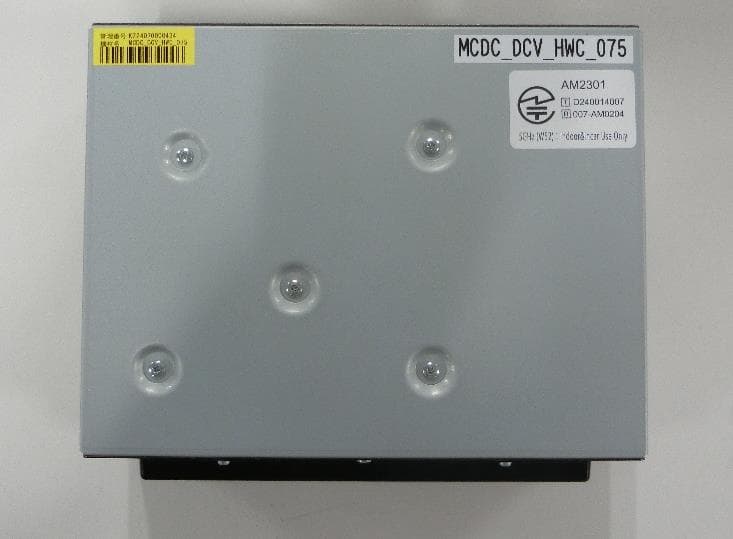
ACJ932AM2301
Jan 29, 2025Car AV Control Unit for CDC
Equipment Class
DTS - Digital Transmission SystemACJ96NKX-TGEA60B
Aug 13, 2024DECT Handset
Equipment Class
PUE - Part 15 Unlicensed PCS portable Tx held to earACJ96NKX-TGE630B
Aug 12, 2024DECT Base Unit
Equipment Class
PUB - Part 15 Unlicensed PCS Base Station