ACJ9TGCF-189ACF-18mk4 Family
Panasonic Corporation of North America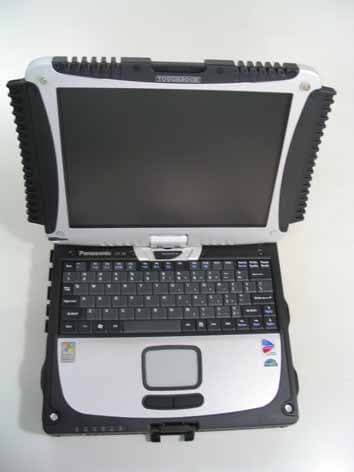
Click to zoom
Application Details
- Equipment Class
- NII - Unlicensed National Information Infrastructure TX
- Date of Grant
- Apr 25, 2006
- Application Purpose
- Original Equipment
- Date of Application
- Feb 09, 2006
- Equipment Note
- CF-18mk4 Family
- Frequency Range
- 5260.00000000 - 5320.00000000
- Country
- United States
Documents & Files
Document Text
Text extracted from the exhibit documents filed with the FCC. Open a document above to read the original.
Users Manual
This manual contains supplementary instructions regarding the use of the computer. It explains the cases where the operation of the computer differs from that in the Operating Instructions. Your computer is equipped with Wireless LAN enabling you to communicate using radio frequencies. Supplementary Instructions for Wireless LAN FCC Radio Frequency Interference Requirements This product is restricted to indoor use due to its operation in the 5.15 to 5.25 GHz frequency range. FCC requires this product to be used indoors for the frequency range 5.15 to 5.25 GHz to reduce the potential for harmful interference to co-channel Mobile Satellite systems. High power radars are allocated as primary users of the 5.25 to 5.35 GHz and 5.65 to 5.85 GHz bands. These radar stations can cause interference with and /or damage this product. Specifications Data transfer rates Standards supported Transmission method Wireless channels used RF frequency band IEEE802.11a: 54/48/36/24/18/12/9/6Mbps (automatically switched) IEEE802.11g: 54/48/36/24/18/12/9/6Mbps (automatically switched) IEEE802.11b: 11/5.5/2/1 Mbps IEEE802.11a/IEEE802.11g/IEEE802.11b OFDM system, DSSS system IEEE802.11a: Channels 36 to 64, 149 to 165 IEEE802.11b/IEEE802.11g: Channels 1 to 11 IEEE802.11a: 5.18~5.32GHz, 5.745~5.825GHz IEEE802.11g/IEEE802.11b: 2412~2462MHz 3 Wireless LAN If you use a wireless LAN, you can use a network without cable connections. CAUTIONz Communication is performed through the wireless LAN antenna. Do not block the antenna area with your hand or otherwise interfere with the passage of the radio signals. NOTEz The communication speeds and distances differ depending on the devices that support the wireless LAN, the installation environment and other ambient conditions. z One characteristic of radio waves is that th eir transmission rate tends to drop as the communication distance increases. It is recommended that the devices supporting the wireless LAN be used in close vicinity to each other. z The rate may drop while a microwave oven is being used. Windows XP z Do not use the Fast User Switching function. Do not use wireless LAN on airpl anes, in hospitals, or in other locations where wireless LAN signa ls may affect the operation of devices in the vicinity. z If you intend to use the computer in the environments described above, turn the wireless LAN off using the following method: 1 Double-click or on the taskbar. 2 Select your wireless LAN adaptor and select [General]. 3 Select [Off] for [Switch radio]. 4 Select [OK].The icon will turn to . Precautions 4 Wireless LAN To prevent theft of dat a or unauthorized access to the hard disk via a wireless LAN. z If you plan to use wireless LAN functions, we recommend that you do so only after making the appropriate security settings, such as for data encryption. We recommend turning the wireless LAN off when it is not used or out of range. z If you leave the wireless LAN on, the battery's operating time is shortened. To use the wireless LAN, set the profile using the following procedure.The settings will vary for diff erent network environments de pending on the network system being used. For more details, a sk your system administrator or the person in charge of the network. CAUTIONz Set profiles for each user using the following procedure. NOTE Windows XP z If [Windows XP is currently configured to manage the Intel(R) PRO/Wireless LAN adaptor.] is displayed, select [Yes]. Windows 2000 z After setting the profile, delete the profile displayed at the time of purchase (profile name: Default). 1 Double-click on the taskbar. 2 Select your wireless LAN adap ter and select [General]. 3 Select [On] for [Switch radio]. The Settings 5 Wireless LAN 4 Select [Networks] and select [Add]. 5 Enter the profile name and network name (SSID), and then make other necessary changes, then select [Next]. 6 Make necessary changes and select [Finish]. 7 Select [OK]. NOTEz About WLAN Security ClientWLAN Security Client is an implementation of the client side of the IEEE 802.1X-Port Based Network Access Control protocol. • Since the WLAN Security Client has alre ady started when is displayed on the taskbar, do not double-start it. If is not displayed, start up the WLAN Security Client in the following menu.Windows XP Select [Start] - [All Programs] - [Int el] - [WLAN Security Client Manager]. Windows 2000Select [Start] - [Programs] - [Intel] - [WLAN Security Client Manager]. • For more information about how to use the WLAN Security Client, refer to [Help] in the menu bar or;Windows XP Select [Getting Started Guide] or [User's Guide] in [Start] - [All Programs] - [Intel].Windows 2000Select [Getting Started Guide] or [User's Guide] in [Start] - [Programs] - [Intel]. Select or on the taskbar to check the communication status.For more information about how to use the Intel PROSet, refer to [Help] in the menu bar. Check the Communication Status 6 Wireless LAN If the function fails to operate correctly Read the operating instructions for the access point carefully and check the settings. The access point fails to be displayed in [Available Networks] z Select the profile you are using, and select [Advanced] in [Networks]. [Connect to ad hoc networks only] may have been selected in [Connection preference]. In this case, select [Connect to infrastructure and ad hoc networks]. z This computer uses channels 1 through 11 *1 . Check the channel being used. *1 In the case of wireless communications, the frequency band being used can be divided into segments, so that different communications can be conducted on each band segment. A "Channel" refers to the individual frequency bandwidth divisions. The access point cannot be accessed z The network key setting may not conform to the access point.Check the network key setting of the access point and, if necessary, set it again correctly. z Depending on the access point and settings, access may not be accepted unless the computer's MAC address is registered b…
Text truncated - open the document above for the full version.
Attestation Statements
Panasonic Corporation of America Three Panasonic Way 4B-8 Secaucus, NJ 07094 Tel: 201-48-758 / Fax: 201-92-4564 [email protected] RICHARD MULLEN Group Manager Product Safety and Compliance Division February 21, 2006 ITPD-05-F038A: BT Part 15C / DSS / EA721037 ITPD-05-F038B: WLAN Part 15C / DTS / EA363076 ITPD-05-F038C: WLAN Part 15E / NII / EA234521 ITPD-05-F038D: HSDPA Parts 22H, 24E / PCB / EA843052 To: Linda Elliott / FCC Equipment Authorization Branch From: Richard Mullen / Panasonic FCC ID: ACJ9TGCF-189A CRN: 30453, 30454, 30455, 30456 731 Confirm: EA721037, EA363076, EA234521, EA843052 Date of Email: February 17, 2006 Subject: Panasonic Notebook Computer Model CF-18mk4 Family with Alps BT, Intel WLAN and Novatel HSDPA Dear Linda Elliott: This is in reference to your four email messages regarding the subject matter and its required four FCC fee checks. Please be advised on February 21, 2006 the four FCC Form 159 and associated four FCC fee checks were mailed to Mellon Bank at Lockbox 358315. This should be be to confirm within the next few days. Sincerely yours, Richard Mullen Richard Mullen Group Manager
Cover Letter(s)
Panasonic Corporation of America Three Panasonic Way 4B-8 Secaucus, NJ 07094 Tel: 201-48-758 / Fax: 201-92-4564 [email protected] RICHARD MULLEN Group Manager Product Safety and Compliance Division February 10, 2006 ITPD-05-F038A: BT Part 15C / DSS / EA721037 ITPD-05-F038B: WLAN Part 15C / DTS / EA363076 ITPD-05-F038C: WLAN Part 15E / NII / EA234521 ITPD-05-F038D: HSDPA Parts 22H, 24E / PCB / EA843052 Federal Communications Commission 7435 Oakland Mills Road Columbia, MD 21046 USA Subject: Authority to Act as FCC Agent for Panasonic Notebook Computer Model CF-18mk4 Family with Alps BT, Intel WLAN and Novatel HSDPA / FCC Certification for FCC ID: ACJ9TGCF-189A To Whom It May Concern: On behalf of Panasonic Corp. of North America, we herby authorize PCTEST Engineering Laboratory, Inc., to act on our behalf in matters relating to FCC equipment authorization, including the signing of documents relating to these matters. Any and all acts carried out by PCTEST on our behalf shall have the same effect as acts of our own. This project represents Portable Notebook Computer Model CF-18mk4 Family with CPU type Pentium-M-1.2 GHz to be marketed under FCC ID: ACJ9TGCF-189A. This product will be marketed with the following three transmitters: 1. Alps Blue Tooth Blue Module and Daughter Board, Model UGXZ5 with operation within 2402~2480 MHz at 18.8 mW. 2. Intel WLAN (a+b+g), Model WM3B2915ABG with Part 15C operation within 2412~2462 at 233 mW and 5745~5825 MHz at 103 mW; and Part 15E operation within low band 5180~5240 at 55 mW and high band 5260~5320 MHz at 125 mW. 3. Novatel HSDPA (Quad Band GPRS/EDGE & UMTS), Model EU730 with Part 22H operation within 824.2~848.8 MHz at 1.49 watts ERP and 826.4~846.6 MHz at 0.086 watts ERP; and Part 24E operation within 1850.2~1909.8 MHz at 0.936 watts EIRP and 1852.4 ~1907.6 MHz at 0.217 watts EIRP. The max various configuration worse-case SAR measurements with 1.5 cm LCD side panel extenders and zero air spacing were: 1. 0.611 W/kg GSM850 Body SAR; 0.350 W/kg GSM 1900 Body SAR 2. 0.230 W/kg WCDMA Body SAR; 0.236 W/kg PCS WCDMA Body SAR 3. 0.217 W/kg 802.11b Body SAR; 0.115 W/kg 802.11g Body SAR 4. 0.841 W/kg 802.11a (5300 MHz) Body SAR 5. 0.401 W/kg 802.11a (5800 MHz) Body SAR 6. 0.061 W/kg Bluetooth (2450 MHz) Body SAR This PC contains the following Inverted-F type transmitter antennas: (1) BT Inverter-F type with 3.36 dBi antenna gain; (2) WLAN Main TX/RX and Aux TX/RX Inverted-F type with 1.42 dBi and 2.59 dBi antenna gain; and (3) Novatel Inverter-F type with 2.15dBi antenna gain. The PC’s main User Manual gives all FCC required notices and warning, including general RF Exposure Warning and notice about NII operation for indoor use only. In accordance with provisions of Section 0.457(d) of the Commission’s Rules and Section 552(b)(4) of the Freedom of Information Act, we request permanent confidentiality for transmitter’s exhibits which contain Operation Description, Parts Lists & Tune-Up Procedure, Block Diagram and Schematic Diagram. The BT and WLAN transmitters are not user adjustable and do not have a Tune- Up Procedure. These exhibits contain proprietary, confidential and trade secrets material, which would not be routinely made available for public inspection. Also, in accordance with FCC Public DA 04-1705, we request short-term confidentiality for exhibits which contain External Photographs, Internal Photographs and User Manual. These exhibits contain pre-market information, which could give our competitors unfair advantage should this information be released before this product is actually introduced into the common marketplace. Sincerely yours, Richard Mullen Richard Mullen Group Manager
Cover Letter(s)
April 17, 2006 Federal Communications Commission Equipment Approval Services 7435 Oakland Mills Road Columbia, MD 21046 Attn: Mr. Steven Dayhoff SUBJECT: Panasonic Corporation of North America FCC ID: ACJ9TGCF-189A 731 Confirmation No.: EA234521 Correspondence Reference No.: 30572 Request for Tech. Info.: 03/23/2006 Dear Steven: Transmitted herewith, on behalf of Panasonic Corporation of North America is an amendment provided in response to the request for technical information dated March 23, 2006. 1. Please find attached Tune Up Procedure which mentions the user adjustments. 2. Noted. 3. Please find attached Operational Description in response to Questions 3. A – I. We trust this information is sufficient to resolve FCC questions in this application. If you have any further questions, please do not hesitate to contact us. cc: Richard Mullen; Panasonic Corporation of North America
External Photos
<CF-18 WLANa+b+g & Bluetooth & HSDPA model photo> 1) CF-18 Top/Front View Top View Front View
ID Label/Location Info
<CF-18 WLANa+b+g & BlueTooth & HSDPA model’s Label Description> 1) FCCID Label 2) FCC DoC Logo FCC ID: ACJ9TGCF-189A This device complies with Part 15 of the FCC Rules. Operation is subject to the following two conditions. (1) this device may not cause harmful interference, and (2) this device must accept any interference received, including interference that may cause undesired operation. FCC DoC LABEL FCC ID LABEL
Internal Photos
2) Bluetooth module position Upside down 3) Bluetooth Module exterior photo Top View of Daughter Board with BlueTooth Module Bottom View of Daughter Board with BlueTooth Module 4) Bluetooth Module Interior photo Bluetooth Module without shield Bottom View of BlueTooth Module 5) WLAN Card position WLAN Card Position 6) WLAN exterior photo WLAN Top View WLAN Bottom View 7) WLAN interior photo WLAN inside Top View WLAN inside Bottom View 8) HSDPA module position HSDPA Card Position 9) HSDPA Module photo HSDPA Module Top View HSDPA module Bottom View HSDPA Module Interior Top View HSDPA Module Interior Bottom View 10) Antenna position LCD left Side View Bluetooth TX/RX Antenna Bluetooth Antenna LCD Left Side View WLAN Main TX/RX Antenna WLAN Main TX/RX Antenna LCD Right Side View WLAN Aux TX/RX Antenna WLAN Aux TX/RX Antenna Antenna Magnified View Antenna cover open view HSDPA Antenna Position (Pattern Antenna) 11) Antenna Specification WLAN Main TX/RX Antenna: Pattern Antenna (Inverted F type: 1.42dBi max) WLAN Aux TX/RX Antenna: Pattern Antenna (Inverted F type: 2.59dBi max) Bluetooth Antenna: Pattern Antenna (Inverted F type: 3.36dBi max) HSDPA Antenna: Pattern Antenna (Inverted-F type: 2.15dBi max) Note) WLAN Main/Aux Antenna is diversity Antenna.
RF Exposure Info
PCTEST ENGINEERING LABORATORY, INC. 6660 – B Dobbin Road • Columbia, MD 21045 • USA Telephone 410.290.6652 / Fax 410.290.6654 http://www.pctestlab.com (email: [email protected]) CERTIFICATE OF COMPLIANCE (SAR EVALUATION) PCTEST SAR REPORT FCC CERTIFICATION Reviewed by: Quality Manager SAR Filename: 0512280871 Test Dates: January 4-13, 2006 Phone Type: Panasonic Notebook PC w/ WLAN, UNII, HSDPA and Bluetooth FCC ID: ACJ9TGCF-189A Page 1 of 53 © 2006 PCTEST Engineering Laboratory, Inc APPLICANT NAME & ADDRESS: DATE & LOCATION OF TESTING: Panasonic Corporation of North America Dates of Tests: January 4 – 13, 2006 One Panasonic Way, 4B-8 Test Report S/N: 0512280871 Secaucus, NJ 07094 Test Site: PCTEST Lab, Columbia MD Project No.: ITPD-04-F038A FCC ID: ACJ9TGCF-189A APPLICANT: Matsushita Electric Industrial Co., Ltd. EUT Type: Notebook PC w/ WLAN, UNII, HSDPA and Bluetooth Tx/Rx Frequency: 2412 – 2462 MHz (DSSS/OFDM)/ 2402 – 2480 MHz (DSS) 5180 – 5320 MHz / 5745 – 5825 MHz (OFDM) 824.20 – 848.80 MHz (GSM)/1850.20 – 1909.80 MHz (PCS GSM) 826.40 – 846.60 MHz (WCDMA)/ 1852.40 – 1907.60 MHz (PCS WCDMA) Max. RF Output Power: 23.67 dBm Peak Conducted (2.4 GHz DSSS/OFDM); 12.75 dBm Peak Conducted (2.4 GHz DSS); 20.14 dBm Peak Conducted (5.8 GHz OFDM); 20.96 dBm Peak Conducted (5.2 GHz OFDM); 1.490 W ERP GSM 850 (31.733 dBm); 0.936 W EIRP GSM 1900 (29.711 dBm); 0.086 W ERP WCDMA (19.353 dBm); 0.217 W EIRP WCDMA1900 (23.361 dBm) Max. SAR Measurement: 0.611 W/kg GSM850 Body SAR; 0.350 W/kg GSM 1900 Body SAR; 0.230 W/kg WCDMA Body SAR; 0.236 W/kg PCS WCDMA Body SAR; 0.217 W/kg 802.11b Body SAR; 0.115 W/kg 802.11g Body SAR; 0.841 W/kg 802.11a (5300 MHz) Body SAR; 0.401 W/kg 802.11a (5800 MHz) Body SAR; 0.061 W/kg Bluetooth (2450 MHz) Body SAR Trade Name/Model(s): CF-18mk4 FCC Classification(s): Digital Transmission System (DTS) Unlicensed National Information Infrastructure (NII) Licensed Portable Transmitter Held to Ear (PCE) FCC Rule Part(s): §2.1093; FCC/OET Bulletin 65 Supplement C [July 2001] Application Type: Certification Test Device Serial No.: identical prototype [S/N: #5KKSB50328] This wireless portable device has been shown to be capable of compliance for localized specific absorption rate (SAR) for uncontrolled environment/general population exposure limits specified in ANSI/IEEE Std. C95.1-1992 and had been tested in accordance with the measurement procedures specified in FCC/OET Bulletin 65 Supplement C (2001) and IEEE Std. 1528 - 2003. I attest to the accuracy of data. All measurements reported herein were performed by me or were made under my supervision and are correct to the best of my knowledge and belief. I assume full responsibility for the completeness of these measurements and vouch for the qualifications of all persons taking them. Grant Conditions: Output power listed is Conducted. SAR compliance for body-worn operating configuration is based on a separation distance of 0.0 cm between the bottom of the unit and the body of the user. End-users must be informed of the body-worn operating configurations for satisfying RF exposure compliance. PCTEST certifies that no party to this application has been denied the FCC benefits pursuant to Section 5301 of the Anti-Drug Abuse Act of 1988, 21 U.S.C. 862. PCTEST SAR REPORT FCC CERTIFICATION Reviewed by: Quality Manager SAR Filename: 0512280871 Test Dates: January 4-13, 2006 Phone Type: Panasonic Notebook PC w/ WLAN, UNII, HSDPA and Bluetooth FCC ID: ACJ9TGCF-189A Page 2 of 53 © 2006 PCTEST Engineering Laboratory, Inc TABLE OF CONTENTS 1. INTRODUCTION / SAR DEFINITION......................................................................................3 2. SAR MEASUREMENT SETUP.................................................................................................4 3. DASY4 E-FIELD PROBE SYSTEM.............................................................................................5 4. Probe Calibration Process........................................................................................................6 5. PHANTOM & EQUIVALENT TISSUES......................................................................................7 6. TEST SYSTEM SPECIFICATIONS.............................................................................................8 7. DOSIMETRIC ASSESSMENT & PHANTOM SPECS.......................................................................9 8. DEFINITION OF REFERENCE POINTS...................................................................................10 9. TEST CONFIGURATION POSITIONS.....................................................................................11 10. ANSI/IEEE C95.1 - 1992 RF EXPOSURE LIMITS.......................................................................12 11. MEASUREMENT UNCERTAINTIES...................................................................................13-14 12. SYSTEM VERIFICATION.................................................................................................15-16 13. SAR TEST DATA SUMMARY................................................................................................17 14. SAR DATA SUMMARY...................................................................................................18-35 15. SAR TEST EQUIPMENT......................................................................................................36 16. CONCLUSION.................................................................................................................52 17. REFERENCES...................................................................................................................53 PCTEST SAR REPORT FCC CERTIFICATION Reviewed by: Quality Manager SAR Filename: 0512280871 Test Dates: January 4-13, 2006 Phone Type: Panasonic Notebook PC w/ WLAN, UNII, HSDPA and Bluetooth FCC ID: ACJ9TGCF-189A Page 3 of 53 © 2006 PCTEST Engineering Laboratory, Inc 1. INTRODUCTION / SAR DEFINITION The FCC has adopted the guidelines for evaluating …
Text truncated - open the document above for the full version.
RF Exposure Info
APPENDIX A: SAR TEST DATA PCTEST ENGINEERING LABORATORY, INC. DUT: CF -18; Type: Notebook PC with WLANa+b+g & Bluetooth & HSDPA; SN: 5KKSB50328 Communication System: GSM 850 GPRS; 2 Tx slots; Frequency: 836.6 MHz;Duty Cycle: 1:4.15 Medium: 835 Muscle ( σ = 0.99 mho/m, ε r = 54.73, ρ = 1000 kg/m 3 ) Phantom section: Flat Section; Space: 0.0cm from DUT to Flat Phantom Test Date: 01-09-2006; Ambient Temp: 23.5°C; Tissue Temp: 21.6°C Probe: EX3DV4 - SN3561; ConvF(7.9, 7.9, 7.9); Calibrated: 8/24/2005 Sensor-Surface: 3mm (Mechanical Surface Detection) Electronics: DAE4 Sn649; Calibrated: 9/13/2005 Phantom: SAM Main; Type: SAM 4.0; Serial: TP:1197 Measurement SW: DASY4, V4.6 Build 19; Postprocessing SW: SEMCAD, V1.8 Build 159 Bystander position, LCD Open, Ch.190 Area Scan (5x17x1): Measurement grid: dx=15mm, dy=15mm Zoom Scan (5x5x7)/Cube 0: Measurement grid: dx=8mm, dy=8mm, dz=5mm Reference Value = 10.2 V/m Peak SAR (extrapolated) = 0.791 W/kg SAR(1 g)= 0.515 mW/g; SAR(10 g) = 0.322 mW/g 0 dB = 0.612mW/g PCTEST ENGINEERING LABORATORY, INC. DUT: CF -18; Type: Notebook PC with WLANAa+b+g & Bluetooth & HSDPA; SN: 5KKSB50328 Communication System: GSM 850 GPRS; 2 Tx slots; Frequency: 836.6 MHz;Duty Cycle: 1:4.15 Medium: 835 Muscle ( σ = 0.99 mho/m, ε r = 54.73, ρ = 1000 kg/m 3 ) Phantom section: Flat Section; Space: 0.0cm from DUT to Flat Phantom Test Date: 01-09-2006; Ambient Temp: 23.5°C; Tissue Temp: 21.6°C Probe: EX3DV4 - SN3561; ConvF(7.9, 7.9, 7.9); Calibrated: 8/24/2005 Sensor-Surface: 3mm (Mechanical Surface Detection) Electronics: DAE4 Sn649; Calibrated: 9/13/2005 Phantom: SAM Main; Type: SAM 4.0; Serial: TP:1197 Measurement SW: DASY4, V4.6 Build 19; Postprocessing SW: SEMCAD, V1.8 Build 159 Tablet Position, LCD Flip, Ch.190, w/ WLAN 802.11b, Ch.06, 5.5mbps Area Scan (7x17x1): Measurement grid: dx=15mm, dy=15mm Zoom Scan (5x5x7)/Cube 0: Measurement grid: dx=8mm, dy=8mm, dz=5mm Reference Value = 10.3 V/m Peak SAR (extrapolated) = 0.952 W/kg SAR(1 g) = 0.611 mW/g; SAR(10 g) = 0.385 mW/g 0 dB = 0.730mW/g PCTEST ENGINEERING LABORATORY, INC. DUT: CF -18; Type: Notebook PC with WLANa+b+g & Bluetooth & HSDPA; SN: 5KKSB50328 Communication System: GSM 850 GPRS; 2 Tx slots; Frequency: 836.6 MHz;Duty Cycle: 1:4.15 Medium: 835 Muscle ( σ = 0.99 mho/m, ε r = 54.73, ρ = 1000 kg/m 3 ) Phantom section: Flat Section; Space: 0.0cm from DUT to Flat Phantom Test Date: 01-09-2006; Ambient Temp: 23.5°C; Tissue Temp: 21.6°C Probe: EX3DV4 - SN3561; ConvF(7.9, 7.9, 7.9); Calibrated: 8/24/2005 Sensor-Surface: 3mm (Mechanical Surface Detection) Electronics: DAE4 Sn649; Calibrated: 9/13/2005 Phantom: SAM Main; Type: SAM 4.0; Serial: TP:1197 Measurement SW: DASY4, V4.6 Build 19; Postprocessing SW: SEMCAD, V1.8 Build 159 Laptop Position, LCD Flip, Ch.190 Area Scan (7x17x1): Measurement grid: dx=15mm, dy=15mm Zoom Scan (5x5x7)/Cube 0: Measurement grid: dx=8mm, dy=8mm, dz=5mm Reference Value = 5.01 V/m Peak SAR (extrapolated) = 0.224 W/kg SAR(1 g) = 0.146 mW/g; SAR(10 g) = 0.096 mW/g 0 dB = 0.173mW/g PCTEST ENGINEERING LABORATORY, INC. DUT: CF - 18; Type: Notebook PC with WLANa+b+g & Bluetooth 7 HSDPA; SN: 5KKSB50328 Communication System: GSM1900 GPRS; Frequency: 1880 MHz;Duty Cycle: 1:4.15 Medium: 1900 Muscle ( σ = 1.57 mho/m, ε r = 52.8, ρ = 1000 kg/m 3 ) Phantom section: Flat Section; Space: 0.0cm from DUT to Flat Phantom Test Date: 01-09-2006; Ambient Temp: 23.5°C; Tissue Temp: 21.6°C Probe: EX3DV4 - SN3561; ConvF(6.48, 6.48, 6.48); Calibrated: 8/24/2005 Sensor-Surface: 3mm (Mechanical Surface Detection) Electronics: DAE4 Sn649; Calibrated: 9/13/2005 Phantom: SAM Sub; Type: SAM 4.0; Serial: TP:1357 Measurement SW: DASY4, V4.6 Build 19; Postprocessing SW: SEMCAD, V1.8 Build 159 Bystander position, LCD Open, Ch.661, w/ WLAN 802.11b, Ch.06, 5.5mbps Area Scan (5x17x1): Measurement grid: dx=15mm, dy=15mm Zoom Scan (5x5x7)/Cube 0: Measurement grid: dx=8mm, dy=8mm, dz=5mm Reference Value = 9.20 V/m Peak SAR (extrapolated) = 0.596 W/kg SAR(1 g) = 0.350 mW/g; SAR(10 g) = 0.194 mW/g 0 dB = 0.429mW/g PCTEST ENGINEERING LABORATORY, INC. DUT: CF -18; Type: Notebook PC with WLANa+b+g & Bluetooth & HSDPA; SN: 5KKSB50328 Communication System: GSM1900 GPRS; Frequency: 1880 MHz;Duty Cycle: 1:4.15 Medium: 1900 Muscle ( σ = 1.57 mho/m, ε r = 52.8, ρ = 1000 kg/m 3 ) Phantom section: Flat Section; Space: 0.0cm from DUT to Flat Phantom Test Date: 01-09-2006; Ambient Temp: 23.5°C; Tissue Temp: 21.6°C Probe: EX3DV4 - SN3561; ConvF(6.48, 6.48, 6.48); Calibrated: 8/24/2005 Sensor-Surface: 3mm (Mechanical Surface Detection) Electronics: DAE4 Sn649; Calibrated: 9/13/2005 Phantom: SAM Sub; Type: SAM 4.0; Serial: TP:1357 Measurement SW: DASY4, V4.6 Build 19; Postprocessing SW: SEMCAD, V1.8 Build 159 Tablet Position, LCD Flip, Ch.661, w/ WLAN 802.11b, Ch.06, 5.5mbps Area Scan (7x17x1): Measurement grid: dx=15mm, dy=15mm Zoom Scan (5x5x7)/Cube 0: Measurement grid: dx=8mm, dy=8mm, dz=5mm Reference Value = 6.28 V/m Peak SAR (extrapolated) = 0.590 W/kg SAR(1 g) = 0.343 mW/g; SAR(10 g) = 0.192 mW/g 0 dB = 0.420mW/g PCTEST ENGINEERING LABORATORY, INC. DUT: CF -18; Type: Notebook PC with WLANa+b+g & Bluetooth & HSDPA; SN: 5KKSB50328 Communication System: GSM1900 GPRS; Frequency: 1880 MHz;Duty Cycle: 1:4.15 Medium: 1900 Muscle ( σ = 1.57 mho/m, ε r = 52.8, ρ = 1000 kg/m 3 ) Phantom section: Flat Section; Space: 0.0cm from DUT to Flat Phantom Test Date: 01-09-2006; Ambient Temp: 23.5°C; Tissue Temp: 21.6°C Probe: EX3DV4 - SN3561; ConvF(6.48, 6.48, 6.48); Calibrated: 8/24/2005 Sensor-Surface: 3mm (Mechanical Surface Detection) Electronics: DAE4 Sn649; Calibrated: 9/13/2005 Phantom: SAM Sub; Type: SAM 4.0; Serial: TP:1357 Measurement SW: DASY4, V4.6 Build 19; Postprocessing SW: SEMCAD, V1.8 Build 159 Laptop Position, LCD Flip, Ch.661 Area Scan (7x17x1): Measurement grid: dx=15mm, dy=15mm Zoom Scan (5x5x7)/Cube 0: Measurement grid: dx=8mm, dy=8mm, dz=5mm Reference Value = 1.94 V/m Peak SAR (extrapolated) = 0.089 W/kg SAR(1 g) = 0.051 mW/g; SAR(10 g) = 0.029 m…
Text truncated - open the document above for the full version.
Test Report
CONFIDENTIAL PROPERTY OF PCTEST UNLICENSED NATIONAL INFORMATION INFRASTRUCTURE (NII), FCC RULE PART 15.407 PCTEST ENGINEERING LABORATORY, INC. 6660 – B Dobbin Road • Columbia, MD 21045 • USA Telephone 410.290.6652 / Fax 410.290.6654 http://www.pctestlab.com (email: [email protected]) CERTIFICATE OF COMPLIANCE MANUFACTURER NAME & ADDRESS: DATE & LOCATION OF TESTING: Panasonic Corporation of North America Date(s) of Tests: January 17-20, 2006 One Panasonic Way, 4B-8 Test Report S/N: 0512280868 Secaucus, NJ 07094 Test Site: PCTEST Lab, Columbia, MD Project Number: ITPD-05-F038A FCC ID: ACJ9TGCF-189A APPLICANT: Panasonic Corporation of North America SUMMARY: Model No.: CF-18mk4 Equipment EUT Type: Notebook PC w/ Intel WLAN and EVDO Max. Output Power: 17.36 dBm (Peak) Conducted (Low Band) 20.96 dBm (Peak) Conducted (High Band) Frequency Range: 5180 – 5240 MHz (Low Band) 5260 – 5320 MHz (High Band) FCC Classification: Unlicensed National Information Infrastructure (NII) FCC Rule Part(s): Parts 15.407; ANSI C-63.4-2001 This equipment has been shown to be capable of compliance with the applicable technical standards as indicated in the measurement report and was tested in accordance with the measurement procedures specified in ANSI C-63.4-2001. If the EUT contains any additional embedded transmitters, then those transmitters were active during all tests. The JBC portion of this EUT is covered in the DOC report. Radiated data was taken with the highest gain antenna. I authorize and attest to the accuracy of data. All measurements reported herein were performed by me or were made under my supervision and are correct to the best of my knowledge and belief. I assume full responsibility for the completeness of these measurements and vouch for the qualifications of all persons taking them. PCTEST certifies that no party to this application has been denied the FCC benefits pursuant to Section 5301 of the Anti-Drug Abuse Act of 1988, 21 U.S.C. 862. CONFIDENTIAL PROPERTY OF PCTEST UNLICENSED NATIONAL INFORMATION INFRASTRUCTURE (NII), FCC RULE PART 15.407 Page i © 2006 PCTEST Engineering Laboratory, Inc. TABLE OF CONTENTS ATTESTATION STATEMENTS.............................................................................................................................1 FCC PART 15 E MEASUREMENT REPORT COVER PAGE.............................................................................2 1.0 INTRODUCTION..................................................................................................................3 1.1 EVALUATION PROCEDURE.......................................................................................................................................3 1.2 SCOPE................................................................................................................................................................3 1.3 PCTEST TEST LOCATION.........................................................................................................................................3 2.0 PRODUCT INFORMATION.......................................................................................................4 2.1 EQUIPMENT DESCRIPTION.......................................................................................................................................4 2.2 ENCLOSURE.........................................................................................................................................................4 2.3 EMI SUPPRESSION DEVICE(S)/MODIFICATIONS..............................................................................................................4 3.0 DESCRIPTION OF TEST...........................................................................................................5 3.1 CONDUCTED EMISSIONS.........................................................................................................................................5 3.2 RADIATED EMISSIONS..............................................................................................................................................6 4.0 ANTENNA REQUIREMENTS......................................................................................................7 5.0 TEST EQUIPMENT CALIBRATION DATA.......................................................................................8 6.1 CONCLUSION...................................................................................................................…
Text truncated - open the document above for the full version.
Contact Information
Applicant
Ben Botros(Manager - Regulatory & Compliance)
Test Firm
PCTEST Engineering Laboratory, Inc.Randy Ortanez
Technical Specifications
| # | Rule Parts | Frequency Range | Power Output |
|---|---|---|---|
| 2 | 15E | 5.26 GHz - 5.32 GHz | 125.00 mW |
Other Applications from Panasonic Corporation of North America
ACJ-EAH-A1000
Aug 19, 2026Digital Wireless Stereo Headphones
Equipment Class
DSS - Part 15 Spread Spectrum TransmitterACJ9TGFZVNF3G1
Jun 16, 2026Contactless Smart Card Reader
Equipment Class
DXX - Part 15 Low Power Communication Device Transmitter
ACJ932AM2301
Jan 29, 2025Car AV Control Unit for CDC
Equipment Class
DTS - Digital Transmission SystemACJ96NKX-TGEA60B
Aug 13, 2024DECT Handset
Equipment Class
PUE - Part 15 Unlicensed PCS portable Tx held to earACJ96NKX-TGE630B
Aug 12, 2024DECT Base Unit
Equipment Class
PUB - Part 15 Unlicensed PCS Base Station