ACJ9TGCF-734CF-73 Personal Computer with WLAN+GPRS
Panasonic Corporation of North America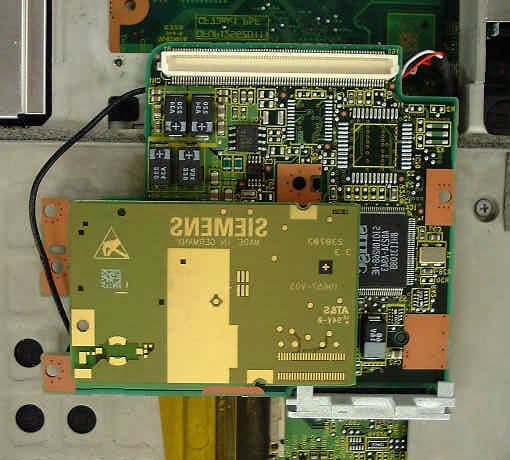
Click to zoom
Application Details
- Equipment Class
- PCB - PCS Licensed Transmitter
- Date of Grant
- Jul 01, 2004
- Application Purpose
- Original Equipment
- Date of Application
- Mar 02, 2004
- Equipment Note
- CF-73 Personal Computer with WLAN+GPRS
- Frequency Range
- 1850.20000000 - 1909.80000000
- Country
- United States
Documents & Files
Document Text
Text extracted from the exhibit documents filed with the FCC. Open a document above to read the original.
Users Manual
1 This manual contains supplementary instructions regarding the use of the computer. It ex- plains the cases where the operation of the computer differs from that in the Operating Instructions. Your computer is equipped with GSM/GPRS enabling you to communicate using radio frequencies. Contents Precautions .................................................................. 2 Names and Functions of Parts ................................... 5 Installing/Removing a SIM Card ................................. 7 Installing the Software................................................. 8 Appendix.................................................................... 13 Specifications ............................................................ 14 Supplementary Instructions for GSM/GPRS ® NOTE:NOTE provides a useful fact or helpful information. CAUTION:CAUTION indicates a condition that may result in minor or moder- ate injury. Windows 2000: Information for Microsoft ® Windows ® 2000 Professional users. Windows XP: Information for Microsoft ® Windows ® XP Professional users. [Start] - [Run]:This illustration means to click [Start], then to click [Run]. (For some applications, you may need to double-click.) About the abbreviations in this manual, refer to the table on page 13. Windows 2000 screens are used in this manual when no specific OS notes are re- quired. Illustrations and Terminology in this Manual 2 The following safety precautions must be observed during all phases of the operation, us- age, service or repair of any Personal Computer or Handheld Computer incorporating GSM/ GPRS modem. Manufacturers of the cellular terminal are advised to convey the following safety information to users and operating personnel and to incorporate these guidelines into all manuals supplied with the product. Failure to comply with these precautions violates safety standards of design, manufacture and intended use of the product. Panasonic as- sumes no liability for customer failure to comply with these precautions. When in a hospital or other health care facility, observe the restrictions on the use of mobiles. Switch Personal Computer or Handheld Computer incorporating GSM/ GPRS modem off, if instructed to do so by the guidelines posted in sensitive areas. Medical equipment may be sensitive to RF energy. The operation of cardiac pacemakers, other implanted medical equipment and hearing aids can be affected by interference from Personal Computer or Handheld Computer incorporating GSM/GPRS modem placed close to the device. If in doubt about potential danger, contact the physician or the manufacturer of the device to verify that the equipment is properly shielded. Pacemaker patients are advised to keep their Personal Computer or Handheld Computer incorporating GSM/GPRS modem away from the pacemaker, while it is on. Switch off Personal Computer or Handheld Computer incorporating GSM/GPRS modem before boarding an aircraft. Make sure it cannot be switched on inadvertently. The operation of wireless appliances in an aircraft is forbidden to prevent interference with communications systems. Failure to observe these instructions may lead to the suspension or denial of cellular services to the offender, legal action, or both. Do not operate Personal Computer or Handheld Computer incorporating GSM/ GPRS modem in the presence of flammable gases or fumes. Switch off the cellu- lar terminal when you are near petrol stations, fuel depots, chemical plants or where blasting operations are in progress. Operation of any electrical equipment in potentially explosive atmospheres can constitute a safety hazard. Your Personal Computer or Handheld Computer incorporating GSM/GPRS mo- dem receives and transmits radio frequency energy while switched on. Remember that interference can occur if it is used close to TV sets, radios, computers or inad- equately shielded equipment. Follow any special regulations and always switch off Personal Computer or Handheld Computer incorporating GSM/GPRS modem wher- ever forbidden, or when you suspect that it may cause interference or danger. Road safety comes first! Do not use a Personal Computer or Handheld Computer incorporating GSM/GPRS modem while driving a vehicle. Do not place the com- puter with GSM/GPRS modem in an area where it could cause personal injury to the driver or passengers. It is recommended to stow the unit in the boot or secure stowage area while driving. Safety Precautions Precautions 3 Do not place the computer with GSM/GPRS modem in an area over an air bag or in the vicinity where an air bag may deploy. Air bags inflate with great force and if the computer with GSM/GPRS modem is placed in the air bag deployment area may be propelled with great force and cause serious injury to occupants of the vehicle. IMPORTANT! Personal Computer or Handheld Computer incorporating GSM/GPRS modem operate using radio signals and cellular networks cannot be guaranteed to con- nect in all conditions. Therefore, you should never rely solely upon any wireless device for essential communications, for example emergency calls. Remember, in order to make or receive calls, Personal Computer or Handheld Computer incorporating GSM/GPRS modem must be switched on and in a ser- vice area with adequate cellular signal strength. Some networks do not allow for emergency calls if certain network services or phone features are in use (e.g. lock functions, fixed dialing etc.). You may need to deactivate those features before you can make an emergency call. Some networks require that a valid SIM card be properly inserted in Personal Computer or Handheld Computer incorporating GSM/GPRS modem. 4 Precautions For U.S.A. Federal Communications Commission Radio Frequency Interference Statement Note: This equipment has been tested and found to comply with the limits for a Class B digital device, pursuant to Part 15 of the FCC Rules. These limits are designed to provide reasonable protection against harmful interference in a…
Text truncated - open the document above for the full version.
Users Manual
OPERATING INSTRUCTIONS Personal Computer ® Appendix LIMITED USE LICENSE AGREEMENT........29 Hard Disk Data Erase Utility..........................31 WinDVD™.....................................................32 Names and Functions of Parts ......................34 Specifications................................................36 LIMITED WARRANTY...................................38 Troubleshooting List of Error Codes.........................................21 Dealing with Problems (Summary).......................23 Reinstalling Software....................................27 Operation Starting Up/Shutting Down............................16 Touch Pad.....................................................19 Reference Manual.........................................20 Getting Started Read Me First..................................................3 First-time Operation......................................11 Contents [Additional Manual] Reference Manual This manual can be accessed on your computer. Refer to page 20 on how to access the Reference Manual. Reference Manual •Read Me First•LED Indicators •Key Combinations Reference Manual •Touch Pad •Touchscreen* •Standby/Hibernation Functions •Security Measures •Computing on the Road •Battery Power •Multimedia Pocket •CD Drive •PC Cards •RAM Module •Port Replicator •Printer •External Display •USB Devices •Modem •LAN •Wireless LAN •Hard Disk Drive •Setup Utility *Only for models with touchscreen Reference Manual •Technical Information •DMI Viewer •List of Error Codes •Dealing with Problems (Advanced) Model No. CF-73 Series 2000 Please read these instructions carefully before using this product and save this manual for future use. XP Getting Started Appendix Operation Troubleshooting 2 Getting Started Introduction Thank you for purchasing the Panasonic computer. Read the operating instructions thoroughly for proper operation of your new computer. Illustrations and Terminology in this Manual Copyright This manual is copyrighted by Matsushita Electric Industrial Co., Ltd. with all rights reserved. No part of this manual may be reproduced in any form without the prior written permission of Matsushita Electric Industrial Co., Ltd. No patent liability is assumed with respect to the use of the information contained herein. ©2003 Matsushita Electric Industrial Co., Ltd. All Rights Reserved. Disclaimer Computer specifications and manuals are subject to change without notice. Matsushita Electric Industrial Co., Ltd. assumes no liability for damage incurred directly or indirectly from errors, omissions or discrepancies between the computer and the manuals. Trademarks Microsoft, Windows, Windows NT and the Windows logo are registered trademarks of Microsoft Corporation of the United States and/or other countries. Intel, Pentium and SpeedStep are either registered trademarks or trademarks of Intel Corporation. Adobe ® and Acrobat ® are either registered trademarks or trademarks of Adobe Systems Incorporated in the United States and/or other countries. WinDVD™ is a trademark of InterVideo, Inc. Panasonic is a registered trademark of Matsushita Electric Industrial Co., Ltd. NOTE:NOTE provides a useful fact or helpful information. CAUTION:CAUTION indicates a condition that may result in minor or moderate injury. WARNING:WARNING indicates a hazard that may result in moderate or serious injury. Windows 2000: Information for Microsoft ® Windows ® 2000 Professional users. Windows XP: Information for Microsoft ® Windows ® XP Professional users. Enter :This illustration means to press the [Enter] key. Fn + F5 :This illustration means to press and hold the [Fn] key, then press the [F5] key. [Start] - [Run]:This illustration means to click [Start], then to click [Run]. (For some applications, you may need to double-click.) :Where to go for referred information. :This illustration means to refer to the Reference Manual, which is available on your computer. Refer to page 20 on how to access this manual. Windows 2000 screens are used in this manual when no specific OS notes are required. Some of the illustrations in this manual may differ slightly in shape from the actual items in order to make the explanation easier to understand. Circular media such as DVD-ROM and CD-ROM are described as “discs”. The following drives are described as “CD drive”. DVD-ROM drive, DVD-ROM & CD-R/RW drive This manual covers two types of models, as distinguished by the type of display (models with touchscreen and models without touchscreen). If the user has logged on without the administrator authority, some functions may not be executable, and some screens may not be displayed as shown in this manual. If this happens, log on with the administrator authority to enable these functions. Confirm the latest information on optional products in catalogs, etc. Customer’s Record Serial No. or Date of Purchase Model No. * Code No. Dealer’s Name Dealer’s Address * For the Model No., insert the 12 digit number (for example, CF-73E3KVXDM) located on the bottom of the computer. 3 Getting Started Read Me First Federal Communications Commission Radio Frequency Interference Statement Note: This equipment has been tested and found to comply with the limits for a Class B digital device, pursuant to Part 15 of the FCC Rules. These limits are designed to provide reasonable protection against harmful interference in a residential installation. This equipment generates, uses and can radiate radio frequency energy and, if not installed and used in accordance with the instructions, may cause harmful interference to radio communications. However, there is no guarantee that interference will not occur in a particular installation. If this equipment does cause harmful interference to radio or television reception, which can be determined by turning the equipment off and on, the user is encouraged to try to correct the interference by one or more of the following measures: Reorient or relocate the receiving antenna. Increase…
Text truncated - open the document above for the full version.
External Photos
<CF-73 WLANb+g & GPRS model photo> 1) CF-73 Top/Front View Top View Front View 2) GPRS module position Magnified View Upside Down GPRS(MC46) Module
ID Label/Location Info
<CF-73 WLANb+g & GPRS model’s Label Description> 1) FCCID Label 2) FCC DoC Logo FCC ID: ACJ9TGCF-734 This device complies with Part 15 of the FCC Rules. Operation is subject to the following two conditions. (1) this device may not cause harmful interference, and (2) this device must accept any interference received, including interference that may cause undesired operation. FCC DoC LABEL FCC ID LABEL
Internal Photos
2) GPRS module position Magnified View Upside Down GPRS(MC46) Module 3) GPRS Module photo MC46 Module Label Final Design MC46 Module Top View Note: Above Module Label is not final. MC46 Module Interior View MC46 Module Bottom View 4) WLAN Card position Magnified View WLAN Card Position 5) WLAN exterior photo WLAN Top View WLAN Bottom View 6) WLAN interior photo WLAN inside Top View WLAN inside Bottom View 7) Antenna position & Magnified photo (WLAN) Receive only Antenna View Send & Receive Antenna View Receive only WLAN Antenna Send & Receive WLAN Antenna 8) Antenna position & Magnified photo (GPRS) Magnified View GPRS whip Antenna 9) Antenna Specification WLAN Send & Receive Antenna: (Inverted F type: 3.66dBi max) WLAN Receive only Antenna: (Inverted F type: 3.26dBi max) GPRS Antenna: (Monopole whip type: 0.68dBi max)
RF Exposure Info
PCTEST ENGINEERING LABORATORY, INC. 6660 – B Dobbin Road • Columbia, MD 21045 • USA Telephone 410.290.6652 / Fax 410.290.6654 http://www.pctestlab.com (email: [email protected]) CERTIFICATE OF COMPLIANCE (SAR EVALUATION) PCTEST SAR TEST REPORT FCC CERTIFICATION Reviewed by: Quality Manager SAR Filename: SAR.240206092.ACJ Test Dates: Feb. 18, 2003 EUT Type: Panasonic Toughbook w/ Siemens GPRS Module & Intel WLAN FCC ID: ACJ9TGCF-734 Page 1 of 25 © 2004 PCTEST Engineering Laboratory, Inc. APPLICANT NAME & ADDRESS: DATE & LOCATION OF TESTING: Matsushita Electric Industrial Co., Ltd. Dates of Tests: February 18, 2004 1006 Oaza Kadoma, Kadoma, Test Report S/N: SAR.240206092.ACJ Osaka, 571 JAPAN Test Site: PCTEST Lab, Columbia, MD USA Project Number: ITPD-04-F010A FCC ID: ACJ9TGCF-734 APPLICANT NAME: Matsushita Electric Industrial Co., Ltd. EUT Type: Panasonic Toughbook CF-73mk3 w/ Siemens MC46 Dual-Band GPRS Module FCC ID: QIPMC46 and Intel Centrino WLAN FCC ID: PD9WM3B2200BG Tx Frequency: 824.20 – 848.80 MHz (GPRS) / 1851.20 – 1909.80 MHz (PCS GPRS) Rx Frequency: 869.20 – 893.80 MHz (GPRS) / 1931.20 – 1988.80 MHz (PCS GPRS) Max. RF Output Power: 1.995 W GPRS (33.00 dBm) Conducted 0.933 W PCS GPRS (30.00 dBm) Conducted 0.056 W (WLAN WM3B2200BG) Max. SAR Measurement: 0.29 W/kg GPRS Body Lap SAR; 0.69 W/kg GPRS Top SAR; 0.10 W/kg PCS GPRS Body Lap SAR; 0.34 W/kg PCS GPRS Top SAR Trade Name/Model(s): CF-73mk3 FCC Rule Part(s): §2.1093; FCC/OET Bulletin 65 Supplement C [July 2001] Application Type: Certification Test Device Serial No.: Identical Prototype [S/N: 3GKYA00020] This wireless portable device has been shown to be capable of compliance for localized specific absorption rate (SAR) for uncontrolled environment/general population exposure limits specified in ANSI/IEEE Std. C95.1-1992 and had been tested in accordance with the measurement procedures specified in FCC/OET Bulletin 65 Supplement C (2001) and IEEE Std. P1528 D1.2 (April 2003). I attest to the accuracy of data. All measurements reported herein were performed by me or were made under my supervision and are correct to the best of my knowledge and belief. I assume full responsibility for the completeness of these measurements and vouch for the qualifications of all persons taking them. PCTEST certifies that no party to this application has been denied the FCC benefits pursuant to Section 5301 of the Anti-Drug Abuse Act of 1988, 21 U.S.C. 862. PCTEST SAR TEST REPORT FCC CERTIFICATION Reviewed by: Quality Manager SAR Filename: SAR.240206092.ACJ Test Dates: Feb. 18, 2003 EUT Type: Panasonic Toughbook w/ Siemens GPRS Module & Intel WLAN FCC ID: ACJ9TGCF-734 Page 2 of 25 © 2004 PCTEST Engineering Laboratory, Inc. TABLE OF CONTENTS 1. INTRODUCTION / SAR DEFINITION.................................................................................3 2. SAR MEASUREMENT SETUP..............................................................................................4 3. ALIDX-500 E-FIELD PROBE SYSTEM..................................................................................5 4. PROBE CALIBRATION PROCESS.......................................................................................6 5. PHANTOM & EQUIVALENT TISSUES.................................................................................7 6. TEST SYSTEM SPECIFICATIONS.........................................................................................8 7. DOSIMETRIC ASSESSMENT & PHANTOM SPECS................................................................9 8. TEST CONFIGURATION POSITION.................................................................................10 9. ANSI/IEEE C95.1 - 1992 RF EXPOSURE LIMITS.................................................................11 10. MEASUREMENT UNCERTAINTIES...................................................................................12 11. SAR TEST DATA SUMMARY............................................................................................13 12. SAR TEST EQUIPMENT...................................................................................................14 13. CONCLUSION...............................................................................................................15 14. REFERENCES..................................................................................................................16 EXHIBIT A. SYSTEM VERIFICATION.......................................................................................17 EXHIBIT A. SAR DATA SUMMARY.........................................................................................18 EXHIBIT B. SAR TEST DATA...................................................................................................22 EXHIBIT C. SAR TEST SETUP PHOTOGRAPHS.......................................................................23 EXHIBIT D. DIPOLE VERIFICATION......................................................................................24 EXHIBIT E. PROBE CALIBRATION........................................................................................25 PCTEST SAR TEST REPORT FCC CERTIFICATION Reviewed by: Quality Manager SAR Filename: SAR.240206092.ACJ Test Dates: Feb. 18, 2003 EUT Type: Panasonic Toughbook w/ Siemens GPRS Module & Intel WLAN FCC ID: ACJ9TGCF-734 Page 3 of 25 © 2004 PCTEST Engineering Laboratory, Inc. 1. INTRODUCTION / SAR DEFINITION The FCC has adopted the guidelines for evaluating the environmental effects of radiofrequency radiation in ET Docket 93-62 on Aug. 6, 1996 to protect the public and workers from the potential hazards of RF emissions due to FCC-regulated portable devices.[1] The safety limits used for the environmental evaluation measurements are based on the criteria published by the American National Standards Institute (ANSI) for localized specific absorption rate (SAR) in IEEE/ANSI C95.1-1992 Standard for Safety Levels with Respect to Human Exposure to Radio Frequency Electromagnetic Fields, 3 kHz to …
Text truncated - open the document above for the full version.
RF Exposure Info
Panasonic FCC ID: ACJ9TGCF-734 EUT Photographs © 2004 PCTEST Lab. Notebook PC w/ WLAN & Siemen GPRS Module Model: CF-73mk3 Panasonic FCC ID: ACJ9TGCF-734 EUT Photographs © 2004 PCTEST Lab. Notebook PC w/ WLAN & Siemen GPRS Module Model: CF-73mk3 Panasonic FCC ID: ACJ9TGCF-734 EUT Photographs © 2004 PCTEST Lab. Notebook PC w/ WLAN & Siemen GPRS Module Model: CF-73mk3 Panasonic FCC ID: ACJ9TGCF-734 EUT Photographs © 2004 PCTEST Lab. Notebook PC w/ WLAN & Siemen GPRS Module Model: CF-73mk3 Panasonic FCC ID: ACJ9TGCF-734 EUT Photographs © 2004 PCTEST Lab. Notebook PC w/ WLAN & Siemen GPRS Module Model: CF-73mk3 Panasonic FCC ID: ACJ9TGCF-734 EUT Photographs © 2004 PCTEST Lab. Notebook PC w/ WLAN & Siemen GPRS Module Model: CF-73mk3
RF Exposure Info
© 2004 PCTEST PCS Band: © 2004 PCTEST Cellular Band:
Test Report
PCTEST PT. 22/24 REPORT FCC MEASUREMENT REPORT Reviewed By: Quality Manager Test Report S/N: 22/24.240206093.ACJ Test Dates: FEB. 18, 2004 EUT Type: Panasonic Toughbook w/ Siemens GPRS Module & Intel WLAN FCC ID: ACJ9TGCF-734 Page 1 of 25 © 2004 PCTEST ENGINEERING LABORATORY, INC. G PCTEST Engineering Laboratory, Inc. 6660-B Dobbin Road • Columbia, MD 21045 • U.S.A. TEL (410) 290-6652 • FAX (410) 290-6654 http://www.pctestlab.com CERTIFICATE OF COMPLIANCE FCC Part 24 & 22 Certification Matsushita Electric Industrial Co., Ltd. Dates of Tests: February 18, 2004 1006 Oaza Kadoma, Kadoma Test Report S/N: 22/24.240206093.ACJ Osaka, 571 JAPAN Test Site: PCTEST Lab, Columbia MD Project No.: ITPD-04-F010A FCC ID ACJ9TGCF-734 APPLICANT Matsushita Electric Industrial Co., Ltd. Classification: Licensed Portable Transmitter Worn on Body (PCT) FCC Rule Part(s): §24(E), §22H; §2 EUT Type: Panasonic Toughbook CF-73mk3 w/ Siemens MC46 Dual-Band GPRS Module FCC ID: QIPMC46 and Intel Centrino WLAN FCC ID: PD9WM3B2200BG Model: CF-73mk3 Tx Frequency Range: 824.20 – 848.80MHz (GPRS) / 1851.20MHz – 1909.80MHz (PCS GPRS) Rx Frequency Range: 869.20 – 893.80MHz (GPRS) / 1931.20MHz – 1989.80MHz (PCS GPRS) Max. RF Output Power: 1.359 W ERP GPRS (31.333 dBm) / 1.192 W EIRP PCS GPRS (25.751 dBm) Max. SAR Measurement: 0.29 W/kg GPRS Body Lap SAR; 0.69 W/kg GPRS Top SAR; 0.10 W/kg PCS GPRS Body Lap SAR; 0.34 W/kg PCS GPRS Top SAR Emission Designator(s): 300KGXW (GSM) Test Device Serial No. Identical Prototype [S/N: 3GKYA00020 ] Installed Options: WLAN Bluetooth Dual-Band GPRS Module Other This equipment has been shown to be capable of compliance with the applicable technical standards as indicated in the measurement report and was tested in accordance with the measurement procedures specified in §2.947. I attest to the accuracy of data. All measurements reported herein were performed by me or were made under my supervision and are correct to the best of my knowledge and belief. I assume full responsibility for the completeness of these measurements and vouch for the qualifications of all persons taking them. PCTEST certifies that no party to this application has been denied the FCC benefits pursuant to Section 5301 of the Anti-Drug Abuse Act of 1988, 21 U.S.C. 862. PCTEST PT. 22/24 REPORT FCC MEASUREMENT REPORT Reviewed By: Quality Manager Test Report S/N: 22/24.240206093.ACJ Test Dates: FEB. 18, 2004 EUT Type: Panasonic Toughbook w/ Siemens GPRS Module & Intel WLAN FCC ID: ACJ9TGCF-734 Page 2 of 25 © 2004 PCTEST ENGINEERING LABORATORY, INC. TABLE OF CONTENTS ATTACHMENT A: COVER LETTER(S) ATTACHMENT B: ATTESTATION STATEMENT(S) ATTACHMENT C: TEST REPORT 1.1 SCOPE 3 2.1 INTRODUCTION 4 3.1 INSERTS 5 4.1 DESCRIPTION OF TESTS 6-9 5.1 EFFECTIVE RADIATED POWER OUTPUT 10 6.1 EQUIVALENT ISOTROPIC RADIATED POWER 11 7.1 RADIATED MEASUREMENTS 12-17 8.1 FREQUENCY STABILITY 18-21 9.1 PLOTS OF EMISSIONS 22 10.1 LIST OF TEST EQUIPMENT 23 11.1 SAMPLE CALCULATIONS 24 12.1 CONCLUSION 25 ATTACHMENT D: TEST PLOTS ATTACHMENT E: FCC ID LABEL / LOCATION ATTACHMENT F: TEST SETUP PHOTOGRAPHS ATTACHMENT G: EXTERNAL PHOTOGRAPHS ATTACHMENT H: INTERNAL PHOTOGRAPHS ATTACHMENT I: BLOCK DIAGRAM(S) ATTACHMENT J: SCHEMATIC DIAGRAM(S) ATTACHMENT K: OPERATIONAL / CIRCUIT DESCRIPTION ATTACHMENT L: PARTS LIST/TUNE UP PROCEDURE ATTACHMENT M: USER’S MANUAL ATTACHMENT N: SAR MEASUREMENT REPORT ATTACHMENT O: SAR TEST DATA ATTACHMENT P: SAR TEST SETUP PHOTOGRAPHS ATTACHMENT Q: DIPOLE VALIDATION ATTACHMENT R: PROBE CALIBRATION PCTEST PT. 22/24 REPORT FCC MEASUREMENT REPORT Reviewed By: Quality Manager Test Report S/N: 22/24.240206093.ACJ Test Dates: FEB. 18, 2004 EUT Type: Panasonic Toughbook w/ Siemens GPRS Module & Intel WLAN FCC ID: ACJ9TGCF-734 Page 3 of 25 © 2004 PCTEST ENGINEERING LABORATORY, INC. MEASUREMENT REPORT 1.1 Scope Measurement and determination of electromagnetic emissions (EME) of radio frequency devices including intentional and/or unintentional radiators for compliance with the technical rules and regulations of the Federal Communications Commission. §2.1033 General Information Applicant Name: Matsushita Electric Industrial Co., Ltd. Address: 1006 Oaza Kadoma, Kadoma Oaza, 571 JAPAN • FCC ID: ACJ9TGCF-734 • Quantity: Quantity production is planned • Emission Designators: 300KGXW (GPRS) • Tx Freq. Range: 824.20 – 848.80 MHz (GPRS) 1850.20 – 1909.80 MHz (PCS GPRS) • Rx Freq. Range: 869.20 – 893.80 MHz (GPRS) 1931.20– 1989.80 MHz (PCS GPRS) • Max. Power Rating: 1.359 W ERP GPRS (31.333 dBm) 1.192 W EIRP PCS GPRS (25.751 dBm) • FCC Classification(s): Licensed Portable Transmitter Worn on Body (PCT) • Equipment (EUT) Type: Panasonic Toughbook CF-73mk3 w/ Siemens MC46 Dual-Band GPRS Module FCC ID: QIPMC46 and Intel Centrino WLAN FCC ID: PD9WM3B2200BG • Modulation(s): GPRS • Frequency Tolerance: ± 0.00025% (2.5 ppm) • FCC Rule Part(s): § 24(E), §22H • Dates of Tests: February 18, 2004 • Place of Tests: PCTEST Lab, Columbia, MD U.S.A. • Test Report S/N: 22/24.240206093.ACJ • Project No.: ITPD-04-F010A PCTEST PT. 22/24 REPORT FCC MEASUREMENT REPORT Reviewed By: Quality Manager Test Report S/N: 22/24.240206093.ACJ Test Dates: FEB. 18, 2004 EUT Type: Panasonic Toughbook w/ Siemens GPRS Module & Intel WLAN FCC ID: ACJ9TGCF-734 Page 4 of 25 © 2004 PCTEST ENGINEERING LABORATORY, INC. 2.1 INTRODUCTION These measurement tests were conducted at PCTEST Engineering Laboratory, Inc. facility in New Concept Business Park, Guilford Industrial Park, Columbia, Maryland. The site address is 6660-B Dobbin Road, Columbia, MD 21045. The test site is one of the highest points in the Columbia area with an elevation of 390 feet above mean sea level. The site coordinates are 39° 11'15" N latitude and 76° 49'38" W longitude. The facility is 1.5 miles North of the FCC laboratory, and the ambient signal and ambient signal strength are approximately equal to those of the FCC laboratory. There are no FM or TV transmitters within 15 miles of the site. The detailed description…
Text truncated - open the document above for the full version.
Test Report
CETECOM ICT Services GmbH Radio Satellite Communication Untertürkheimer Straße 6-10 . D-66117 SaarbrückenTelefon: +49 (0)681 598-9100Telefax: -9075 RSC11issue test report consist of 90 PagesPage 1 (90) BLUETOOTH TM is a trademark owned by Bluetooth SIG, Inc. and licensed to CETECOM Recognized by the Federal Communications Commission FCC–Identification Number: 90462 TCB ID: DE 001 Accredited by the German Accreditation Council DAR–Registration Number TTI–P–G 166/98 Independent ETSI compliance test house ETSI Accredited Bluetooth™ Test Facility (BQTF) Test report no.: 2_3350-01-01/03 FCC Part 24/22/15 MC-46 FCC ID: QIPMC46 IC: 267W-MC46 CETECOM – ICT Services GmbH Untertürkheimerstr. 6-10 66117 Saarbrücken, Germany Telephone: + 49 (0) 681 / 598-0 Fax: + 49 (0) 681 / 9075 CETECOM ICT Services GmbH Test report no.: 2_3350-01-01/03Issue Date: 2003-08-01Page 2 (90) Table of Contents 1 General information 1.1 Notes 1.2 Testing laboratory 1.3 Details of applicant 1.4 Application details 1.5 Test item 1.6 Test standards 2 Technical test 2.1 Summary of test results 2.2 Test report 1 General information 1.1 Notes The test results of this test report relate exclusively to the test item specified in 1.5. The CETECOM ICT Services GmbH does not assume responsibility for any conclusions and generalizations drawn from the test results with regard to other specimens or samples of the type of the equipment represented by the test item. The test report may only be reproduced or published in full. Reproduction or publication of extracts from the report requires the prior written approval of the CETECOM ICT Services GmbH. 1.2Testing laboratory CETECOM ICT Services GmbH Untertürkheimer Straße 6 - 10 66117 Saarbrücken Germany Telefone: + 49 681 598 - 9100 Telefax : + 49 681 598 - 9075 E-mail: [email protected] Internet: www.cetecom-ict.de Accredited testing laboratory The Test laboratory (area of testing) is accredited according to DIN EN ISO/IEC 17025. DAR registration number: TTI-P-G-166/98 Listed by: Federal Communications Commission (FCC) Identification/Registration No : 90462 Accredited Bluetooth TM Test Facility (BQTF) BLUETOOTH TM is a trademark owned by Bluetooth SIG, Inc. and licensed to CETECOM CETECOM ICT Services GmbH Test report no.: 2_3350-01-01/03Issue Date: 2003-08-01Page 3 (90) 1.3Details of applicant Name : Siemens AG Street : Siemensdamm 50 City : D-13629 Berlin Country : Germany Telephone : +49 (0)30 386-0 Telefax : +49 (0)30 386-366-56 Contact : Mr. Hussein Halawi Telephone : +49 (0)30 386-302-11 e-mail: [email protected] 1.4Application details Date of receipt of application : 2003-07-28 Date of receipt of test item : 2003-07-30 Date of test : 2003-07-30/31 1.5Test item Type of equipment : Triple Band GSM Module (PCS 850/1800/1900 MHz) Type designation:MC-46 Manufacturer:applicant Street: City: Country: Serial numbers:IMEI : 00499900.254170.0 Additional information: : Frequency:1850.2 – 1909.8 MHz and 824.2 – 848.8 MHz Type of modulation:300KGXW / 300KG7W Number of channels :300 (PCS1900) and 125 (PCS850) Antenna:Integral antenna Power supply:3,7V DC Li-ion Battery Output power GSM 850:cond.: 33.00 dBm Peak , ERP: 24.80 dBm (Burst); EIRP: 26.90 dBm (Burst) Output power GSM 1900 :cond: 29.7dBm Peak, ERP : 28.50dBm(Burst), EIRP: 30.6 dBm (Burst) Type of equipment:Temperature range : -30°C - +60°C FCC – ID:QIPMC46 IC :267W-MC46 Hardware:S30880-S8320-A100-1 (B2.9) Software:Release 3 (SV96) 1.6Test standards: FCC Part 24, 22 FCC Part 15 CETECOM ICT Services GmbH Test report no.: 2_3350-01-01/03Issue Date: 2003-08-01Page 4 (90) 2 Technical test For Part 24/22 we use the substitution method ( TIA/EIA 603). All measurements in this report are done in GSM mode. Device is able to transmit data in GPRS mode also. But because the current measurements are…
Text truncated - open the document above for the full version.
Contact Information
Applicant
Ben Botros(Project Manager)
Technical Contact
Matsushita Electric Corp of AmericaRichard Mullen
[email protected](201) 348-7758
One Panasonic Way, 4B-8 · Secaucus, New Jersey · United States
Test Firm
PCTEST Engineering Laboratory, Inc.Randy Ortanez
Technical Specifications
| # | Rule Parts | Frequency Range | Power Output | Emission | Tolerance |
|---|---|---|---|---|---|
| 2 | 24E | 1.85 GHz - 1.91 GHz | 933.00 mW | 300KGXW | 0.03 ppm |
Other Applications from Panasonic Corporation of North America
ACJ-EAH-A1000
Aug 19, 2026Digital Wireless Stereo Headphones
Equipment Class
DSS - Part 15 Spread Spectrum TransmitterACJ9TGFZVNF3G1
Jun 16, 2026Contactless Smart Card Reader
Equipment Class
DXX - Part 15 Low Power Communication Device Transmitter
ACJ932AM2301
Jan 29, 2025Car AV Control Unit for CDC
Equipment Class
DTS - Digital Transmission SystemACJ96NKX-TGEA60B
Aug 13, 2024DECT Handset
Equipment Class
PUE - Part 15 Unlicensed PCS portable Tx held to earACJ96NKX-TGE630B
Aug 12, 2024DECT Base Unit
Equipment Class
PUB - Part 15 Unlicensed PCS Base Station