ACJ9TGCF-Y51Toughbook Computer Model CF-Y5 Family
Panasonic Corporation of North America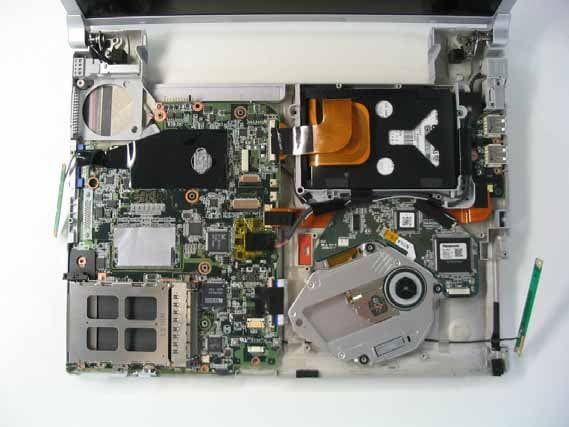
Click to zoom
Application Details
- Equipment Class
- PCB - PCS Licensed Transmitter
- Date of Grant
- Dec 06, 2006
- Application Purpose
- Original Equipment
- Date of Application
- Oct 17, 2006
- Equipment Note
- Toughbook Computer Model CF-Y5 Family
- Frequency Range
- 1851.25000000 - 1908.75000000
- Country
- United States
Documents & Files
Document Text
Text extracted from the exhibit documents filed with the FCC. Open a document above to read the original.
Users Manual
Please read these instructions carefully before using this product and save this manual for future use. Contents Getting Started Useful Information Troubleshooting Getting Started Useful Information Troubleshooting Appendix Appendix OPERATING INSTRUCTIONS Personal Computer Model No. CF-Y5 series Introduction.................................................2 Read Me First..............................................3 Description of Parts.....................................10 First-time Operation.....................................12 On-screen Manual.......................................15 Handling and Maintenance.............................16 Expanding Memory......................................18 Hard Disk Backup Function (Recover Pro)...........20 Hard Disk Data Erase Utility...........................22 Reinstalling Software....................................23 Troubleshooting (Basic)/Error Code/Message.......25 Hardware Diagnostics...................................29 LIMITED USE LICENSE AGREEMENT..............31 Contrat de licence d’usage limité......................32 Specifications............................................33 For more information about the com- puter, you can refer to the on-screen manual. To access the on-screen manual Îpage 15 “On-screen Manual” For your technical support office, refer to “LIMITED WARRANTY.” 2 Getting Started Useful Information Troubleshooting Appendix Introduction Thank you for purchasing this Panasonic computer. For optimum performance and safety, please read these instruc- tions carefully. Terms and illustrations in these instructions zSome illustrations are simplified to help your understanding and may look different from the actual unit. zIf you do not log on as an administrator, you cannot use some functions or cannot display some screens. zRefer for the latest information about optional products to the catalogs, etc. zIn these instructions, the names and terms are referred as follows. • “Microsoft ® Windows ® XP Professional Service Pack 2 with Advanced Security Technologies” as “Windows” or “Windows XP” • “WinDVD™ 5 (OEM Version)” as “WinDVD” • “B’s Recorder GOLD8 BASIC” as “B’s Recorder” • “B’s CLiP 6” as “B’s CLiP” zThe display modes are referred as follows. ( ) indicates the terms in [Intel ® Graphics Media Accelerator Driver for mobile] screen. To display the screen, select [start] - [Control Panel] - [Other Control Panel Options] - [Intel(R) GMA Driver for Mobile]. • Internal LCD (Notebook): The computer’s display • External display (Monitor): External display • Simultaneous display (Intel ® Dual Display Clone): The same screen is displayed on the internal LCD and the external display. • Extended desktop: The extended working area across the internal LCD and the external display. Copyright This manual is copyrighted by Matsushita Electric Industrial Co., Ltd. with all rights reserved. No part of this manual may be reproduced in any form without the prior written permission of Matsushita Electric Industrial Co., Ltd. No patent liability is assumed with respect to the use of the information contained herein. © 2006 Matsushita Electric Industrial Co., Ltd. All Rights Reserved. Disclaimer Computer specifications and manuals are subject to change without notice. Matsushita Electric Industrial Co., Ltd. assumes no liability for damage incurred directly or indirectly from errors, omissions or discrepancies between the com- puter and the manuals. Trademarks Microsoft ® , Windows ® and the Windows logo are registered trademarks of Microsoft Corporation of the United States and/or other countries. Intel, Core, Centrino and PROSet are either registered trademarks or trademarks of Intel Corporation. SD Logo is a trademark. Adobe, the Adobe logo and Adobe Reader are either registered trademarks or trademarks of Adobe Systems Incorpo- rated in the United States and/or other countries. WinDVD™ is a trademark of InterVideo, Inc. Panasonic ® is a registered trademark of Matsushita Electric Industrial Co., Ltd. Names of products, brands, etc., appearing in this manual are trademarks or registered trademarks of their respective own companies. :Conditions that may result in minor or moderate injury. :Useful and helpful information. Enter :Press [Enter] key. Fn + F5 :Press and hold [Fn] key, and then press [F5] key. [start] - [Run] : Click [start], and then click [Run]. Î :Page in these Operating Instructions. Î :Reference to the on-screen manuals. CAUTION NOTE 3 Getting Started Useful Information Troubleshooting Appendix Read Me First Federal Communications Commission Radio Fre- quency Interference Statement Note: This equipment has been tested and found to com- ply with the limits for a Class B digital device, pursuant to Part 15 of the FCC Rules. These limits are designed to provide reasonable protection against harmful interfer- ence in a residential installation. This equipment gener- ates, uses and can radiate radio frequency energy and, if not installed and used in accordance with the instructions, may cause harmful interference to radio communications. However, there is no guarantee that interference will not occur in a particular installation. If this equipment does cause harmful interference to radio or television recep- tion, which can be determined by turning the equipment off and on, the user is encouraged to try to correct the interference by one or more of the following measures: zReorient or relocate the receiving antenna. zIncrease the separation between the equipment and receiver. zConnect the equipment into an outlet on a circuit differ- ent from that to which the receiver is connected. zConsult the Panasonic Service Center or an experi- enced radio/TV technician for help. Warning To assure continued compliance, use only shielded inter- face cables when connecting to a computer or peripheral. Also, any changes or modifications not expressly approved by the party responsible for compliance could void the user’s authority to …
Text truncated - open the document above for the full version.
Attestation Statements
Sierra Wireless America, Inc 2290 Cosmos Ct. Carlsbad CA, 92009 Tel. 760-476-8700 Fax 760-476-8701 CONFIDENTIALITY LETTER DATE: 09 January , 2005 Federal Communications Commission Equipment Authorization Branch 7435 Oakland Mills Road Columbia, MD 21046 Re: Sierra Wireless FCC ID: N7N-EM5625D FCC Part 22 and 24 Certification Request for Confidentiality Gentlemen: In accordance with 0.459 of CFR 47, Sierra Wireless hereby requests confidentiality of the Block Diagrams, Schematics, Theory of Operation, Antenna Specifications, Parts List, Product Specification, and Tune-up Procedure attachments for the subject application. These documents contain detailed system and equipment description and related information about the product in which Sierra Wireless considers to be proprietary, confidential, and a custom design and, otherwise, would not release to the general public. Since this design is a basis from which future technological products will evolve, Sierra Wireless considers that this information would be of benefit to its competitors, and that the disclosure of the information in these documents would give competitors an unfair advantage in the market. Sincerely, Jean-Philippe Kielsznia Director, Hardware Design Team Carlsbad Research & Development Sierra Wireless America, Inc.
Cover Letter(s)
Panasonic Corporation of North America One Panasonic Way 4B-8 Secaucus, NJ 07094 Tel: 201-348-7758 / Fax: 201-392-4564 [email protected] RICHARD MULLEN Group Manager Product Safety and Compliance Division October 18, 2006 ITPD-06-F022A: BT Part 15C / DSS / EA506709 ITPD-06-F022B: WLAN Part 15C / DTS / EA497840 ITPD-06-F022C: UNII Part 15E / NII / EA829454 ITPD-06-F022D: EVDO Parts 22H, 24E / PCB / EA220636 Federal Communications Commission 7435 Oakland Mills Road Columbia, MD 21046 USA Subject: Authority to Act as FCC Agent for Panasonic Toughbook Computer Model CF-Y5 Family with Taiyo Bluetooth, Intel WLAN(a+b+g) and Sierra EVDO / FCC Certification for FCC ID: ACJ9TGCF-Y51 To Whom It May Concern: On behalf of Panasonic Corp. of North America, we herby authorize PCTEST Engineering Laboratory, Inc., to act on our behalf in matters relating to FCC equipment authorization, including the signing of documents relating to these matters. Any and all acts carried out by PCTEST on our behalf shall have the same effect as acts of our own. This project represents Portable Toughbook Computer, Model CF-Y5 Family with Intel Core Duo 1.06 GHz to be marketed under FCC ID: ACJ9TGCF-Y51. Under this filing, the Intel WLAN's Part 15E Unlicensed National Information Infrastructure’s 5260~5320 MHz high band has been disabled. The U-NII feature will not be enabled until after a FCC certified access point becomes available on the marketplace to enable performance of DFS tests to be performed on this end-product, which operates in only the client mode without ad-hoc and peer-to-peer capabilities. The DFS tests will be performed on 5.15~5.25 GHz U-NII frequency band and filed under a Class II Permissive Change application. This product will be marketed with the following co-located transmitters: (1) Taiyo Yuden Bluetooth, Model EYS1CSMX (Taiyo Yuden has no FCC ID): FCC Rule Part Type Freq Range (MHz) Output Watts Part 15C DSS 2402~2480 0.0191 (2) Intel WLAN (a+b+g), Model WM3945ABG (Intel FCC ID: PD9WM3945ABG) FCC Rule Part Type Freq Range (MHz) Output Watts Part 15C 802.11(b) 2412~2462 0.0266 Part 15C 802.11(g) 2412~2462 0.0294 Part 15C 802.11(a) 5745~5825 0.0265 Part 15E 802.11(a) Low Band 5180~5240 0.0204 (3) Sierra EVDO, Model MC5720 (Sierra FCC ID: N7N-MC5720) FCC Rule Part Type Freq Range (MHz) Output Watts Emission Designator Part 22H EVDO 824.70~848.31 0.300 W ERP 1M26F9W Part 24E PCS CDMA 1851.25~1908.75 0.354 W EIRP 1M27F9W The highest reported SAR values were as follows: 0.285 W/kg 802.11b Body SAR / 0.262 W/kg 802.11g Body SAR 0.190 W/kg 802.11a (5.2 GHz) Body SAR 0.255 W/kg 802.11a (5.8 GHz) Body SAR 0.158 W/kg 802.11a Bluetooth Body SAR Panasonic Corporation of North America One Panasonic Way 4B-8 Secaucus, NJ 07094 Tel: 201-348-7758 / Fax: 201-392-4564 [email protected] RICHARD MULLEN Group Manager Product Safety and Compliance Division This PC contains the following Inverted-F type transmitter antennas: (1) BT TX/RX antenna located in keyboard with 4.38 dBi antenna gain; (2) WLAN Main TX/RX and Aux TX/RX antennas located in keyboard with 4.17 dBi and 4.64 dBi antenna gains; and (3) EVDO Main TX/RX antennas located in LCD panel with 2.50 dBi and Aux Rx only antenna. The PC’s main User Manual gives all FCC required notices and warning, including RF Exposure Warning. In accordance with provisions of Section 0.457(d) of the Commission’s Rules and Section 552(b)(4) of the Freedom of Information Act, we request permanent confidentiality for transmitter’s exhibits, which contain Operation Description, Parts Lists & Tune-Up Procedure, Block Diagram and Schematic Diagram. The BT and WLAN transmitters are not user adjustable and do not have a Tune-Up Procedure. These exhibits contain proprietary, confidential and trade secrets material, which would not be routinely made available for public inspection. Also, in accordance with FCC Public DA 04-1705, we request short-term confidentiality for exhibits, which contain External Photographs, Internal Photographs, Test Setup Photographs and the User Manual. These exhibits contain pre-market information, which could give our competitors unfair advantage should this information be released before this product is actually introduced into the common marketplace. Sincerely yours, Richard Mullen Richard Mullen Group Manager
External Photos
CF-Y5 Antenna and Module Position WLAN Main TX/RX Antenna WLAN Aux TX/RX Antenna BlueTooth TX/RX Antenna WLAN Module (Reverse side of PWB) BlueTooth Module (Reverse side of PWB) EVDO Main TX/RX Antenna EVDO Aux RX only Antenna EVDO Module
External Photos
< CF-Y5 WLANabg BlueTooth & EVDO model photo> 1. Front View
ID Label/Location Info
<CF-Y5 WLANa+b+g & BlueTooth & EVDO model’s Label Description> 1) FCCID Label 2) FCC DoC Logo FCC ID: ACJ9TGCF-Y51 This device complies with Part 15 of the FCC Rules. Operation is subject to the following two conditions. (1) this device may not cause harmful interference, and (2) this device must accept any interference received, including interference that may cause undesired operation. FCC DoC LABELFCC ID LABEL
Internal Photos
2. Module Position WLAN Module (Reverse side of PWB) BlueTooth Module (Reverse side of PWB) EVDO Module 3. Module Photo 1) WLAN WLAN Exterior Top View WLAN Exterior Bottom View WLAN inside Top View WLAN inside Bottom View 2) BlueTooth BlueTooth Card Top View BlueTooth Card Bottom View BlueTooth Module inside Top View BlueTooth Module inside Bottom View FCCID:WM3945ABG 3) EVDO Photo EVDO Top View EVDO Bottom View EVDO Inside Top View EVDO Inside Bottom View 4. Antenna Position WLAN Aux TX/RX Antenna BlueTooth TX/RX Antenna WLAN Main TX/RX Antenna EVDO Main TX/RX Antenna EVDO Aux RX only Antenna WLAN Main TX/RX Antenna WLAN AUX TX/RX Antenna BlueTooth TX/RX Antenna EVDO Main TX/RX Antenna EVDO AUX RX only Antenna 5) Antenna Specification WLAN Main TX/RX Antenna: Pattern Antenna (Inverted F type: 4.17dBi max) WLAN Aux TX/RX Antenna: Pattern Antenna (Inverted F type: 4.64dBi max) Bluetooth TX/RX Antenna: Pattern Antenna (Inverted F type: 4.38dBi max) EVDO Main TX/RX Antenna: Pattern Antenna (Inverted-F type: 2.50dBi max) EVDO Aux RX only Antenna: Pattern Antenna (Inverted-F type)
RF Exposure Info
APPENDIX A: SAR TEST DATA PCTEST ENGINEERING LABORATORY, INC. DUT: Panasonic CF-Y5; Type: Notebook PC w/ WLAN abg +EVDO +Bluetooth ; SN: 6GKSA00231 Communication System: IEEE 802.11b; Frequency: 2437 MHz;Duty Cycle: 1:1 Medium: 2450 Muscle ( σ = 1.91 mho/m, ε r = 51.0, ρ = 1000 kg/m 3 ) Phantom section: Flat Section Test Date: 09 -07-2006; Ambient Temp: 23.2° C; Tissue Temp: 21.3 °C Probe: EX3DV4 - SN3589; ConvF(6.37, 6.37, 6.37); Calibrated: 7/14/2006 Sensor-Surface: 3mm (Mechanical Surface Detection) Electronics: DAE4 Sn649; Calibrated: 9/13/2005 Phantom: SAM Main; Type: SAM 4.0; Serial: TP:1197 Measurement SW: DASY4, V4.7 Build 44; Postprocessing SW: SEMCAD, V1.8 Build 171 Mode: IEEE 802.11b, Laptop Position, Ch.06, 2Mbps, Main Antenna Area Scan (7x20x1): Measurement grid: dx=15mm, dy=15mm Zoom Scan (5x5x7)/Cube 0: Measurement grid: dx=8mm, dy=8mm, dz=5mm Reference Value = 1.19 V/m Peak SAR (extrapolated) = 0.269 W/kg SAR(1 g) = 0.138 mW/g; SAR(10 g) = 0.069 mW/g 0 dB = 0.172mW/g PCTEST ENGINEERING LABORATORY, INC. DUT: Panasonic CF-Y5; Type: Notebook PC w/ WLAN abg + EVDO + Bluetooth; SN: 6GKSA00231 Communication System: IEEE 802.11b; Frequency: 2437 MHz;Duty Cycle: 1:1 Medium: 2450 Muscle ( σ = 1.91 mho/m, ε r = 51.0, ρ = 1000 kg/m 3 ) Phantom section: Flat Section; Space: 1.0 cm from DUT to Flat Phantom Test Date: 09 -07-2006; Ambient Temp: 23.2° C; Tissue Temp: 21.3 °C Probe: EX3DV4 - SN3589; ConvF(6.37, 6.37, 6.37); Calibrated: 7/14/2006 Sensor-Surface: 3mm (Mechanical Surface Detection) Electronics: DAE4 Sn649; Calibrated: 9/13/2005 Phantom: SAM Main; Type: SAM 4.0; Serial: TP:1197 Measurement SW: DASY4, V4.7 Build 44; Postprocessing SW: SEMCAD, V1.8 Build 171 Mode: IEEE 802.11b, Bystander Position, Ch.06, 2Mbps, Main Antenna Area Scan (5x20x1): Measurement grid: dx=15mm, dy=15mm Zoom Scan (5x5x7)/Cube 0: Measurement grid: dx=8mm, dy=8mm, dz=5mm Reference Value = 1.78 V/m Peak SAR (extrapolated) = 0.586 W/kg SAR(1 g) = 0.285 mW/g; SAR(10 g) = 0.131 mW/g 0 dB = 0.378mW/g PCTEST ENGINEERING LABORATORY, INC. DUT: Panasonic CF-Y5; Type: Notebook PC w/ WLAN abg + EVDO + Bluetooth; SN: 6GKSA00231 Communication System: IEEE 802.11g; Frequency: 2437 MHz;Duty Cycle: 1:1 Medium: 2450 Muscle ( σ = 1.91 mho/m, ε r = 51.0, ρ = 1000 kg/m 3 ) Phantom section: Flat Section Test Date: 09 -07-2006; Ambient Temp: 23.2° C; Tissue Temp: 21.3°C Probe: EX3DV4 - SN3589; ConvF(6.37, 6.37, 6.37); Calibrated: 7/14/2006 Sensor-Surface: 3mm (Mechanical Surface Detection) Electronics: DAE4 Sn649; Calibrated: 9/13/2005 Phantom: SAM Main; Type: SAM 4.0; Serial: TP:1197 Measurement SW: DASY4, V4.7 Build 44; Postprocessing SW: SEMCAD, V1.8 Build 171 Mode: IEEE 802.11g, Laptop Position, Ch.06, 9Mbps, Main Antenna Area Scan (7x20x1): Measurement grid: dx=15mm, dy=15mm Zoom Scan (5x5x7)/Cube 0: Measurement grid: dx=8mm, dy=8mm, dz=5mm Reference Value = 1.17 V/m Peak SAR (extrapolated) = 0.257 W/kg SAR(1 g) = 0.131 mW/g; SAR(10 g) = 0.064 mW/g 0 dB = 0.167mW/g PCTEST ENGINEERING LABORATORY, INC. DUT: Panasonic CF-Y5; Type: Notebook PC w/ WLAN abg + EVDO + Bluetooth; SN: 6GKSA00231 Communication System: IEEE 802.11g; Frequency: 2437 MHz;Duty Cycle: 1:1 Medium: 2450 Muscle ( σ = 1.91 mho/m, ε r = 51.0, ρ = 1000 kg/m 3 ) Phantom section: Flat Section; Space: 1.0 cm from DUT to Flat Phantom Test Date: 09 -07-2006; Ambient Temp: 23.2° C; Tissue Temp: 21.3°C Probe: EX3DV4 - SN3589; ConvF(6.37, 6.37, 6.37); Calibrated: 7/14/2006 Sensor-Surface: 3mm (Mechanical Surface Detection) Electronics: DAE4 Sn649; Calibrated: 9/13/2005 Phantom: SAM Main; Type: SAM 4.0; Serial: TP:1197 Measurement SW: DASY4, V4.7 Build 44; Postprocessing SW: SEMCAD, V1.8 Build 171 Mode: IEEE 802.11g, Bystander Position, Ch.06, 9Mbps, Main Antenna Area Scan (5x20x1): Measurement grid: dx=15mm, dy=15mm Zoom Scan (5x5x7)/Cube 0: Measurement grid: dx=8mm, dy=8mm, dz=5mm Reference Value = 2.76 V/m Peak SAR (extrapolated) = 0.530 W/kg SAR(1 g) = 0.262 mW/g; SAR(10 g) = 0.122 mW/g 0 dB = 0.351mW/g PCTEST ENGINEERING LABORATORY, INC. DUT: Panasonic CF-Y5; Type: Laptop PC w/ WLAN abg + EVDO + Bluetooth; SN: 6GKSA00231 Communication System: Bluetooth; Frequency: 2441 MHz;Duty Cycle: 1:1 Medium: 2450 Muscle ( σ = 1.91 mho/m, ε r = 51.0, ρ = 1000 kg/m 3 ) Phantom section: Flat Section Test Date: 09 -07-2006; Ambient Temp: 23.2° C; Tissue Temp: 21.3°C Probe: EX3DV4 - SN3589; ConvF(6.37, 6.37, 6.37); Calibrated: 7/14/2006 Sensor-Surface: 3mm (Mechanical Surface Detection) Electronics: DAE4 Sn649; Calibrated: 9/13/2005 Phantom: SAM Main; Type: SAM 4.0; Serial: TP:1197 Measurement SW: DASY4, V4.7 Build 44; Postprocessing SW: SEMCAD, V1.8 Build 171 Mode: Bluetooth, Laptop Position, Ch.39, 2441 MHz Area Scan (7x20x1): Measurement grid: dx=15mm, dy=15mm Zoom Scan (5x5x7)/Cube 0: Measurement grid: dx=8mm, dy=8mm, dz=5mm Reference Value = 1.11 V/m Peak SAR (extrapolated) = 0.169 W/kg SAR(1 g) = 0.086 mW/g; SAR(10 g) = 0.042 mW/g 0 dB = 0.108mW/g PCTEST ENGINEERING LABORATORY, INC. DUT: Panasonic CF-Y5; Type:Notebook PC w/ WLAN abg + EvDO + Bluetooth; SN: 6GKSA00231 Communication System: Bluetooth; Frequency: 2441 MHz;Duty Cycle: 1:1 Medium: 2450 Muscle ( σ = 1.91 mho/m, ε r = 51.0, ρ = 1000 kg/m 3 ) Phantom section: Flat Section; Space: 1.0 cm from DUT to Flat Phantom Test Date: 09 -07-2006; Ambient Temp: 23.2° C; Tissue Temp: 21.3°C Probe: EX3DV4 - SN3589; ConvF(6.37, 6.37, 6.37); Calibrated: 7/14/2006 Sensor-Surface: 3mm (Mechanical Surface Detection) Electronics: DAE4 Sn649; Calibrated: 9/13/2005 Phantom: SAM Main; Type: SAM 4.0; Serial: TP:1197 Measurement SW: DASY4, V4.7 Build 44; Postprocessing SW: SEMCAD, V1.8 Build 171 Mode: Bluetooth, Bystander Position, Ch.39, 2441MHz. Area Scan (5x20x1): Measurement grid: dx=15mm, dy=15mm Zoom Scan (5x5x7)/Cube 0: Measurement grid: dx=8mm, dy=8mm, dz=5mm Reference Value = 1.91 V/m Peak SAR (extrapolated) = 0.306 W/kg SAR(1 g) = 0.158 mW/g; SAR(10 g) = 0.067 mW/g 0 dB = 0.218mW/g PCTEST ENGINEERING LABORATORY, INC. DUT: Panasoni…
Text truncated - open the document above for the full version.
RF Exposure Info
Reviewed by: FCC ID: ACJ9TGCF-Y51 CERTIFICATION REPORT Quality Manager SAR Filename: Test Dates: EUT Type: 0608220715 09/07/2006 - 09/9/2006 & 10/11/2006 Toughbook Model: CF-19 Page 1 of 24 © 2006 PCTEST Engineering Laboratory, Inc. v 3.2 Applicant Name: Date of Testing: Panasonic Corporation of North America 09/07/2006 - 09/9/2006 & 10/11/2006 One Pnasonic Way, 4B-8 Test Site/Location: Secaucus, NJ 07094 PCTEST Lab, Columbia, MD, USA Test Report Serial No.: 0608220715 FCC ID: ACJ9TGCF-Y51 APPLICANT: PANASONIC CORPORATION OF NORTH AMERICA EUT Type: Toughbook Model: CF-Y5 Application Type: Certification FCC Rule Part(s): §2.1093; FCC/OET Bulletin 65 Supplement C [July 2001] FCC Classification: FCC Part 15 Frequency Hopping Spread Spectrum Transceiver (DSS) Digital Transmission System (DTS) Model(s): CF-Y5 Tx Frequency: 2412 - 2462MHz (DSS/OFDM) / 5745 - 5825MHz (OFDM) 824.70 - 848.31 MHz (Cellular CDMA)/1851.25 - 1908.75 MHz (PCS CDMA) Conducted Power: 14.25 dBm Conducted (a) 14.68 dBm Conducted (b) 14.24 dBm Conducted (g) 0.289 W Cellular CDMA (EVDO) (24.609 dBm)/ 0.344 W PCS CDMA (EVDO) (25.366 dBm) 19.099 mW (12.81 dBm) Bluetooth Conducted 13.09 dBm Conducted (UNII Low Band) Max. SAR Measurement: 0.285 W/kg 802.11b Body SAR / 0.262 W/kg 802.11g Body SAR 0.190 W/kg 802.11a (5.2 MHz) Body SAR/ 0.255 W/kg 802.11a (5.8 MHz) Body SAR/ 0.158 W/kg Bluetooth Body SAR Test Device Serial No.: Pre-Production [S/N: N/A] This wireless portable device has been shown to be capable of compliance for localized specific absorption rate (SAR) for uncontrolled environment/general population exposure limits specified in ANSI/IEEE Std. C95.1-2005 and had been tested in accordance with the measurement procedures specified in FCC/OET Bulletin 65 Supplement C (2001) and IEEE Std. 1528-2003. I attest to the accuracy of data. All measurements reported herein were performed by me or were made under my supervision and are correct to the best of my knowledge and belief. I assume full responsibility for the completeness of these measurements and vouch for the qualifications of all persons taking them. Grant Conditions: . SAR compliance for body-worn operating configuration is based on a separation distance of 1.5 cm between the bottom of the unit and the body of the user. End-users must be informed of the body-worn operating requirements for satisfying RF exposure compliance. PCTEST certifies that no party to this application has been denied the FCC benefits pursuant to Section 5301 of the Anti-Drug Abuse Act of 1988, 21 U.S.C. 862. PCTEST ENGINEERING LABORATORY, INC. 6660-B Dobbin Road, Columbia, MD 21045 USA Tel. 410.290.6652 / Fax 410.290.6554 http://www.pctestlab.com CERTIFICATE OF COMPLIANCE (SAR EVALUATION) Reviewed by: FCC ID: ACJ9TGCF-Y51 CERTIFICATION REPORT Quality Manager SAR Filename: Test Dates: EUT Type: 0608220715 09/07/2006 - 09/9/2006 & 10/11/2006 Toughbook Model: CF-19 Page 2 of 24 © 2006 PCTEST Engineering Laboratory, Inc. v 3.2 TABLE OF CONTENTS 1 INTRODUCTION ............................................................................................................................. 3 2 TEST SITE LOCATION ................................................................................................................... 4 3 SAR MEASUREMENT SETUP ....................................................................................................... 5 4 DASY E-FIELD PROBE SYSTEM .................................................................................................. 7 5 PROBE CALIBRATION PROCESS ................................................................................................ 8 6 PHANTOM AND EQUIVALENT TISSUES...................................................................................... 9 7 DOSIMETRIC ASSESSMENT & PHANTOM SPECS................................................................... 10 8 DEFINITION OF REFERENCE POINTS ...................................................................................... 11 9 TEST CONFIGURATION POSITIONS ......................................................................................... 12 10 ANSI/IEEE C95.1-2005 RF EXPOSURE LIMITS......................................................................... 13 11 MEASUREMENT UNCERTAINTIES ............................................................................................ 14 12 SYSTEM VERIFICATION.............................................................................................................. 15 13 SAR DATA SUMMARY ................................................................................................................. 16 14 EQUIPMENT LIST......................................................................................................................... 21 15 CONCLUSION............................................................................................................................... 22 16 REFERENCES .............................................................................................................................. 23 Reviewed by: FCC ID: ACJ9TGCF-Y51 CERTIFICATION REPORT Quality Manager SAR Filename: Test Dates: EUT Type: 0608220715 09/07/2006 - 09/9/2006 & 10/11/2006 Toughbook Model: CF-19 Page 3 of 24 © 2006 PCTEST Engineering Laboratory, Inc. v 3.2 1 INTRODUCTION The FCC has adopted the guidelines for evaluating the environmental effects of radio frequency (RF) radiation in ET Docket 93-62 on Aug. 6, 1996 to protect the public and workers from the potential hazards of RF emissions due to FCC-regulated portable devices.[1] The safety limits used for the environmental evaluation measurements are based on the criteria published by the American National Standards Institute (ANSI) for localized specific absorption rate (SAR) in IEEE/ANSI C95.1-2005 Standard for Safety Levels with Respect to Human Exposure to Radio Frequency Electromagnetic Fields, 3 kHz to 300 GHz. (c) 1992 by the Institute of Electrical and Electroni…
Text truncated - open the document above for the full version.
Test Report
Reviewed by: FCC ID: ACJ9TGCF-Y51 FCC Pt. 22/24 CDMA (EvDO) MEASUREMENT REPORT Quality Manager Test Report S/N: Test Dates: EUT Type: 0608220714 October 3 - 4, 2006 Toughbook Model: CF-Y5 Page 1 of 28 © 2006 PCTEST Engineering Laboratory, Inc. Ver. 3.73 Applicant Name: Date of Testing: Panasonic Corporation of North America October 3 - 4, 2006 One Panasonic Way, 4B-8 Test Site/Location: Secaucus, NJ 07094 PCTEST Lab., Columbia, MD, USA United States Test Report Serial No.: 0608220714 FCC ID: ACJ9TGCF-Y51 APPLICANT: PANASONIC CORPORATION OF NORTH AMERICA Application Type: Certification FCC Classification: PCS Licensed Transmitter (PCB) FCC Rule Part(s): §2; §22(H), §24(E) EUT Type: Toughbook Model: CF-Y5 Model(s): CF-Y5 Tx Frequency Range: 824.70 - 848.31MHz (Cell. CDMA) / 1851.25 - 1908.75MHz (PCS CDMA) Rx Frequency Range: 869.70 - 893.31MHz (Cell. CDMA) / 1931.25 - 1988.75MHz (PCS CDMA) Max. RF Output Power: 0.300 W ERP Cell. CDMA (EvDO) (24.766 dBm) / 0.354 W EIRP PCS CDMA (EvDO) (25.489 dBm) Emission Designator(s): 1M26F9W (CDMA EvDO) / 1M27F9W (PCS EvDO) Test Device Serial No.: identical prototype [S/N: 6GKSA00231R] This equipment has been shown to be capable of compliance with the applicable technical standards as indicated in the measurement report and was tested in accordance with the measurement procedures specified in §2.947. I attest to the accuracy of data. All measurements reported herein were performed by me or were made under my supervision and are correct to the best of my knowledge and belief. I assume full responsibility for the completeness of these measurements and vouch for the qualifications of all persons taking them. Grant Conditions: Power output listed is ERP for Part 22 and EIRP for Part 24 . End-users must be informed of the body-worn operating requirements for satisfying RF exposure compliance. PCTEST certifies that no party to this application has been denied the FCC benefits pursuant to Section 5301 of the Anti-Drug Abuse Act of 1988, 21 U.S.C. 862. PCTEST ENGINEERING LABORATORY, INC. 6660-B Dobbin Road, Columbia, MD 21045 USA Tel. 410.290.6652 / Fax 410.290.6554 http://www.pctestlab.com CERTIFICATE OF COMPLIANCE FCC Part 22 & 24 Certification Reviewed by: FCC ID: ACJ9TGCF-Y51 FCC Pt. 22/24 CDMA (EvDO) MEASUREMENT REPORT Quality Manager Test Report S/N: Test Dates: EUT Type: 0608220714 October 3 - 4, 2006 Toughbook Model: CF-Y5 Page 2 of 28 © 2006 PCTEST Engineering Laboratory, Inc. Ver. 3.73 TABLE OF CONTENTS FCC PART 22 & 24 MEASUREMENT REPORT...........................................................................3 1.0 INTRODUCTION ..............................................................................................................................4 1.1 MEASUREMENT PROCEDURE .............................................................................................................................. 4 1.2 SCOPE ...................................................................................................................................................................... 4 1.3 TESTING FACILITY .................................................................................................................................................. 4 2.0 PRODUCT INFORMATION..............................................................................................................5 2.1 EQUIPMENT DESCRIPTION ................................................................................................................................... 5 2.2 EMI SUPPRESSION DEVICE(S)/MODIFICATIONS ................................................................................................ 5 3.0 DESCRIPTION OF TESTS ..............................................................................................................6 3.1 OCCUPIED BANDWIDTH EMISSION LIMITS ......................................................................................................... 6 3.2 CELLULAR - BASE FREQUENCY BLOCKS ............................................................................................................ 6 3.3 CELLULAR - MOBILE FREQUENCY BLOCKS ........................................................................................................ 6 3.4 PCS - BASE FREQUENCY BLOCKS ....................................................................................................................... 7 3.5 PCS - MOBILE FREQUENCY BLOCKS ................................................................................................................…
Text truncated - open the document above for the full version.
Contact Information
Applicant
Ben Botros(Manager - Regulatory & Compliance)
Test Firm
PCTEST Engineering Laboratory, Inc.Randy Ortanez
Technical Specifications
| # | Rule Parts | Frequency Range | Power Output | Emission | Tolerance |
|---|---|---|---|---|---|
| 2 | 24E | 1.85 GHz - 1.91 GHz | 354.00 mW | 1M27F9W | 2 ppm |
Other Applications from Panasonic Corporation of North America
ACJ-EAH-A1000
Aug 19, 2026Digital Wireless Stereo Headphones
Equipment Class
DSS - Part 15 Spread Spectrum TransmitterACJ9TGFZVNF3G1
Jun 16, 2026Contactless Smart Card Reader
Equipment Class
DXX - Part 15 Low Power Communication Device Transmitter
ACJ932AM2301
Jan 29, 2025Car AV Control Unit for CDC
Equipment Class
DTS - Digital Transmission SystemACJ96NKX-TGEA60B
Aug 13, 2024DECT Handset
Equipment Class
PUE - Part 15 Unlicensed PCS portable Tx held to earACJ96NKX-TGE630B
Aug 12, 2024DECT Base Unit
Equipment Class
PUB - Part 15 Unlicensed PCS Base Station