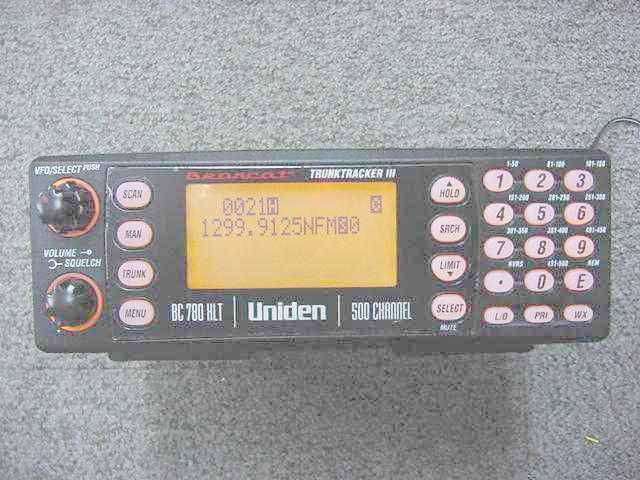
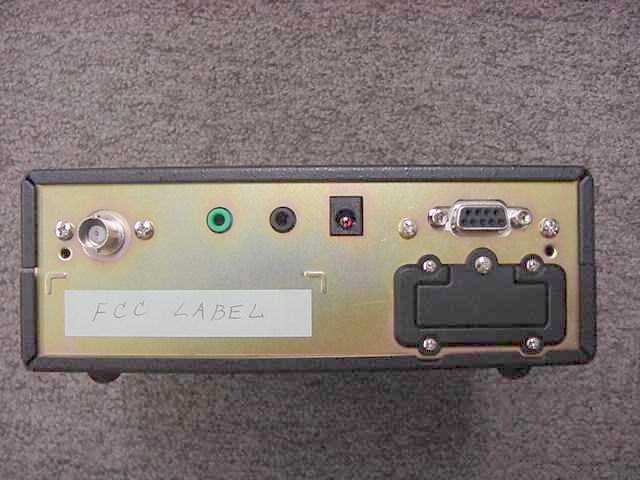
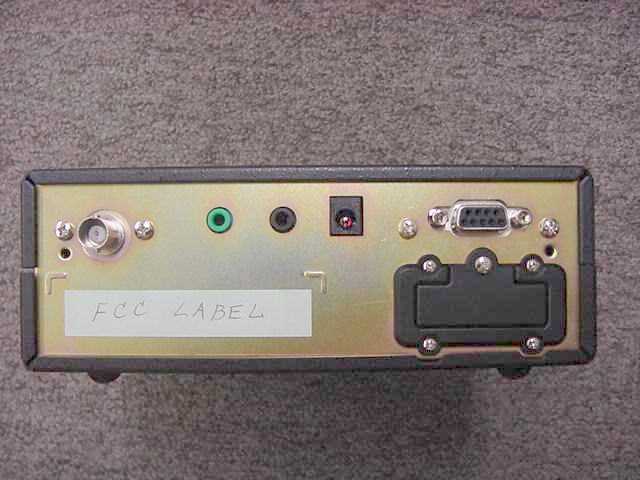
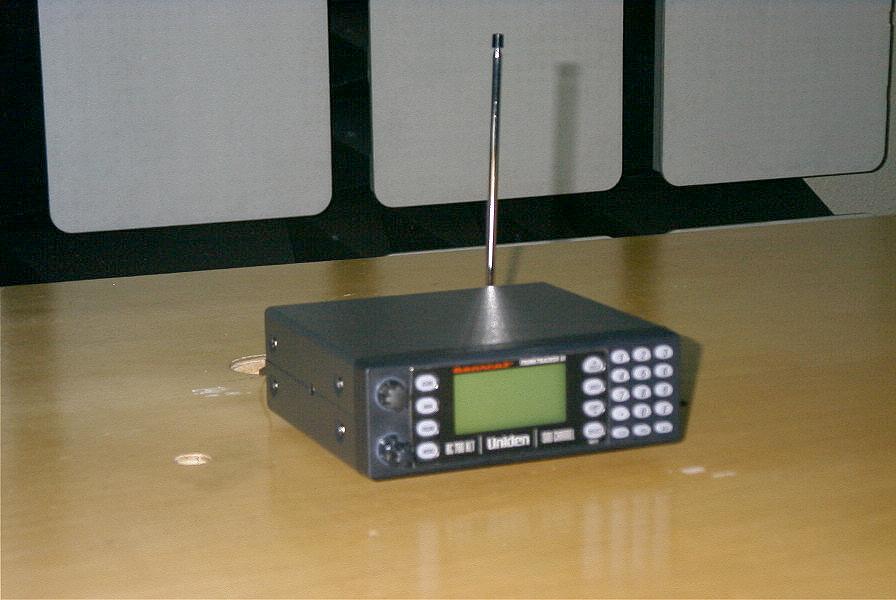
AMWUB316Trunk Tracking Digital Capable Scanner
Uniden America Corporation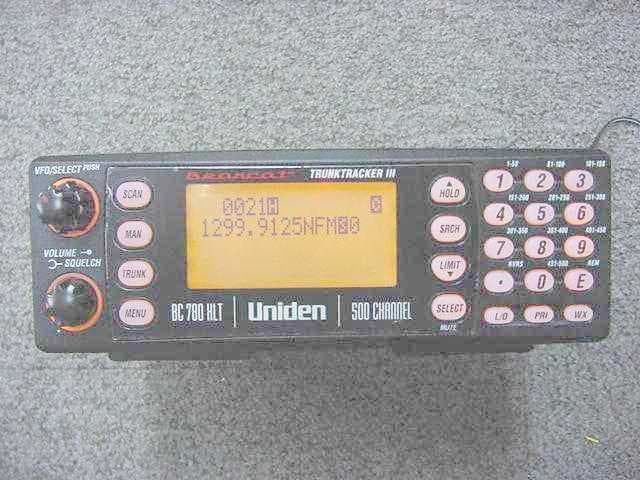
Click to zoom
Application Details
- Equipment Class
- CSR - Scanning Receiver
- Date of Grant
- Aug 21, 2002
- Application Purpose
- Original Equipment
- Date of Application
- Aug 01, 2002
- Equipment Note
- Trunk Tracking Digital Capable Scanner
- Frequency Range
- 1240.00000000 - 1300.00000000
- Company
- Uniden America Corporation
- Country
- United States
Documents & Files
Document Text
Text extracted from the exhibit documents filed with the FCC. Open a document above to read the original.
Users Manual
BandFrequency RangeModeStep No.(MHz)(kHz) 15162.0000 - 173.9875FM12.5 16174.0000 - 215.9500WFM50 17216.0000 - 224.9950FM5 18225.0000 - 399.9500AM50 19400.0000 - 405.9875NFM12.5 20406.0000 - 419.9875NFM12.5 21420.0000 - 449.9875NFM12.5 22450.0000 - 469.9875NFM12.5 23470.0000 - 512.0000NFM12.5 24806.0000 - 823.9875NFM12.5 25849.0125 - 868.9875NFM12.5 26894.0125 - 956.0000NFM12.5 271240.0000 - 1300.0000NFM12.5 BandFrequency RangeModeStep No.(MHz)(kHz) 125.0000 - 26.9600AM5 226.9650 - 27.4050AM5 327.4100 - 27.9950AM5 428.0000 - 29.6900FM10 529.7000 - 49.9900FM10 650.0000 - 53.9900FM10 754.0000 - 71.9500WFM50 872.0000 - 75.9950FM5 976.0000 - 87.9500WFM50 1088.0000 - 107.9000WFM100 11108.0000 - 136.9750AM25 12137.0000 - 143.9950FM5 13144.0000 - 147.9950FM5 14148.0000 - 161.9950FM5 Introduction The BC780XLT is a state-of-the-art radio with TrunkTracking™ and automatic scanning capabilities. It can store frequencies such as police, fire/emergency, marine, railroad, air, amateur, and other communications into 10 banks of 50 channels each. Use your new scanner to monitor: • Police and Fire Departments (including rescue and paramedics) • VHF High Band, UHF, 800/900 MHz Trunked Public Safety Systems • Trunking for Motorola, EDACS and LTR Systems • NOAA Weather Broadcasts • Business/Industrial Radio • Utilities • Marine and Amateur (ham radio) Bands • Air Band • And much more... The chart below identifies the scanner band numbers, the frequency range, the modulation mode and the default step size settings. 1 Important Notice •This scanning radio has been manufactured so that it will not tune radio frequencies assigned by the FCC for cellular telephone usage. The Electronic Communications Privacy Act of 1986, as amended, makes it a federal crime to intentionally intercept cellular or cordless telephone transmissions or to market this radio when altered to receive them. •The installation, possession, or use of this scanning radio in a motor vehicle may be prohibited, regulated, or require a permit in certain states, cities, and/or local jurisdictions. Your local law enforcement officials should be able to provide you with information regarding the laws in your community. •Changes or modifications to this product not expressly approved by Uniden, or operation of this product in any way other than as detailed by this Operating Guide. These violations could void your authority to operate this product. •The screen displays used in this manual are representations of what might appear when you use your scanner. 2 Terminology What is Scanning? Unlike standard AM or FM radio stations, most two-way communications do not transmit continuously. The BC780XLT scans the channels you program until it finds an active frequency. Scanning stops on an active frequency and remains on that channel as long as the transmission continues. When the transmission ends, the scanning cycle resumes until another transmission is received. What is Searching? The BC780XLT can search each of its 27 bands to find active frequencies. This is different from scanning because you are searching for frequencies that have not been programmed into your scanner. The scanner automatically chooses between two speeds while searching. Turbo Search, can search the VHF FM bands at up to 300 channels per second. What is Trunk Tracking? Conventional scanning is a simple concept. You enter a radio frequency in your scanner’s memory which is used by someone you want to monitor. For example, the police in your area may broadcast on 460.500 MHz, the fire department on 154.445 MHz, the highway department on 37.900 MHz, etc. So when your scanner stops on a frequency, you usually know who it is, and more importantly, you can stop on a channel and listen to an entire conversation. This type of scanning is easy and fun. As the demand for public communications has increased, many public radio users don't have enough frequencies to meet their needs, and this has created a serious problem. Trunking radio systems solve this problem. In a trunked radio system, which contains up to 28 different frequencies, radio users are divided into groups, often called talkgroups, and these talkgroups are assigned specific IDs. When someone in a talkgroup uses their radio, a brief burst of data is broadcasted before each transmission. The trunking system computer uses this data to temporarily assign each radio in a talkgroup to an available frequency. If the group using a frequency stops broadcasting or pauses between replies for a few seconds, they are removed from the frequency so another talkgroup can use it. Sharing of the available public service frequencies, or trunking, allows cities, counties, or other agencies to accommodate hundreds of users with relatively few frequencies. Following a conversation on a trunked system using a scanner is difficult, if not impossible. Because when there's a short break during the conversation you're monitoring, it’s possible that the talkgroup will be assigned to a completely different frequency in the trunked system. This type of scanning is difficult and frustrating. 3 TrunkTrack™changes this! Not only does your new BC780XLT scan channels like a conventional scanner, it actually follows the users of a trunked radio system. Once you know a talkgroups ID, you won’t miss any of the action. If you're a new scanner enthusiast, you may want to read the first part of this manual and use your scanner in conventional mode before you begin trunk tracking. Understanding scanning fundamentals and its terminology will make trunk tracking much easier. A glossary of other commonly used terms is provided in the back. (Refer to the "Glossary of Terms" section.) But if you're already an experienced scanner operator, you may want to skip to Trunked System on page 36. 4 Feature Highlights •Trunk Tracking– Follow UHF High Band UHF 800/900MHz trunked public safety and public service systems just as if conventional two-way communications were used. • Multi-Tra…
Text truncated - open the document above for the full version.
Contact Information
Applicant
Paul Roby
Test Firm
Uniden CorporationKeizo Fujiwara
81-3-5543-2875
Technical Specifications
| # | Rule Parts | Frequency Range | Power Output |
|---|---|---|---|
| 6 | 15B | 1.24 GHz - 1.30 GHz | - |
Other Applications from Uniden America Corporation
AMWUA2405
Apr 15, 2026RADAR DETECTOR
Equipment Class
JBP - Part 15 Class B Computing Device PeripheralAMWUA2406
Apr 15, 2026RADAR DETECTOR
Equipment Class
JBP - Part 15 Class B Computing Device PeripheralAMWUA2402
Jul 23, 2024RADAR DETECTOR
Equipment Class
CRD - Part 15 Radar Detector
AMWUA2404
Feb 17, 2024Wi-Fi Bluetooth Combo Module
Equipment Class
DTS - Digital Transmission System
AMWUA2301
Feb 15, 2023RADAR DETECTOR
Equipment Class
CRD - Part 15 Radar Detector