AMWUU3602.4 GHz Wireless Microphone
Uniden America Corporation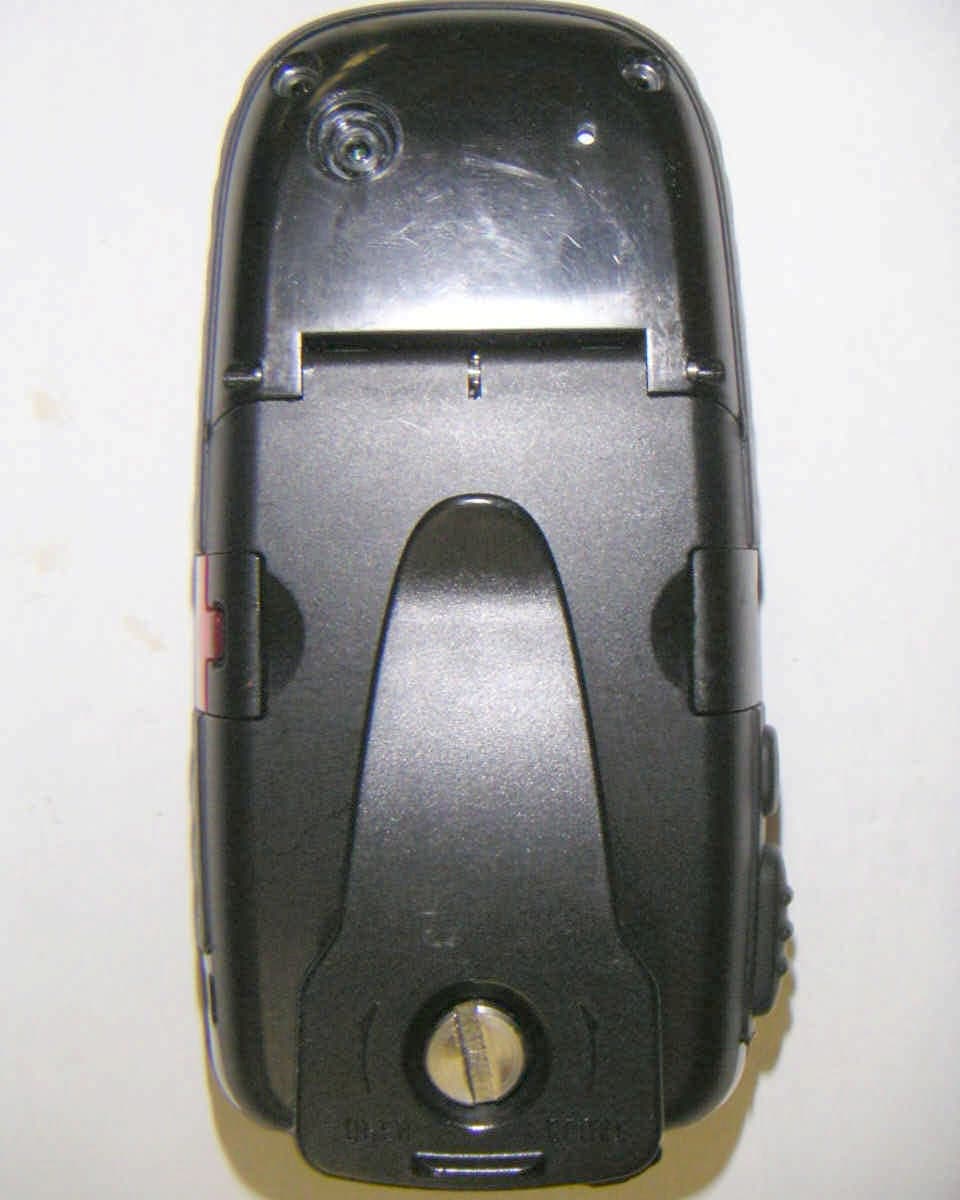
Click to zoom
Application Details
- Equipment Class
- DTS - Digital Transmission System
- Date of Grant
- Mar 21, 2005
- Application Purpose
- Original Equipment
- Date of Application
- Mar 21, 2005
- Equipment Note
- 2.4 GHz Wireless Microphone
- Frequency Range
- 2407.42400000 - 2477.05600000
- Company
- Uniden America Corporation
- Country
- United States
Documents & Files
Document Text
Text extracted from the exhibit documents filed with the FCC. Open a document above to read the original.
Users Manual
Wireless Handheld Access Microphone Owner’s Manual WHAMx4 WHAMx4 Paper OMNEW.fm Page 1 Thursday, January 27, 2005 2:34 PM FCC Information 2 FCC Information This device complies with Part 15 of the FCC Rules. Operation is subject to the following two conditions: (1) This device may not cause harmful interference. (2) This device must accept any interference received, including interference that may cause undesired operation. Important: Changes or modifications to this unit not expressly approved by Uniden could void your authority to operate this unit. FCC RF Exposure Information Warning! Read this information before using the radio. In August 1996 the Federal Communications Commission (FCC) of the United States with its action in Report and Order FCC 96-326 adopted an updated safety standard for human exposure to radio frequency electromagnetic energy emitted by FCC regulated transmitters. Those guidelines are consistent with the safety standard previously set by both U.S. and international standards bodies. The design of the radio complies with the FCC guidelines and these international standards. Warning! It is up to the user to properly operate this radio transmitter to insure safe operation. Please adhere to the following: Use only the supplied or an approved antenna. Unauthorized antennas, modifications, or attachments could impair call quality, damage the radio, or result in violation of FCC regulations. FCC Information WHAMx4 Paper OMNEW.fm Page 2 Thursday, January 27, 2005 2:34 PM FCC Information 3 Do not use the radio with a damaged antenna. If a damaged antenna comes into contact with the skin, a minor burn may result. Please contact your local dealer for a replacement antenna. Body-Worn Operation This device was tested for typical body-worn operations using the supplied belt-clip. To maintain compliance with FCC RF exposure requirements, Body-worn operations are restricted to the supplied belt-clip. For hand-held operation, the radio should be held 1 inch from the user’s face. The use of accessories that do not satisfy these requirements may not comply with FCC RF exposure requirements and should be avoided. For more information about RF exposure, please visit the FCC web site at www.fcc.gov. WHAMx4 Paper OMNEW.fm Page 3 Thursday, January 27, 2005 2:34 PM Contents 4 Contents Introduction 7 Understanding Your Microphone 9 About This Manual 9 How The Microphone’s Controls Appear in This Man- ual 9 Setting Up the Microphone 10 Charging the Battery 10 A Look at the Microphone 11 A Look at the Display 14 Operation 16 Turning the Microphone On and Off 16 Adjusting the Volume 16 Adjusting the Squelch/ Checking the Battery Level 16 Using Triple Watch 17 Using WX/Alert 18 Using STEP/SCAN 18 Using MEM/UIC 19 Using Select/SCRAM 20 Using HAIL/INTERCOM 20 Using LIGHT/LOC 21 Using Distress 22 Using MENU/H/L 22 Using DSC Call 22 Using Standby 26 Using Call Waiting 27 Using Fog Horn 29 Setting Up the Microphone 30 Using the Directory 31 Adjusting the Local Time 33 Turning Daylight Saving On or Off 33 Programming a FIPS Code 33 Using Auto Channel Switch 34 Contents WHAMx4 Paper OMNEW.fm Page 4 Thursday, January 27, 2005 2:34 PM Contents 5 Using Position Reply 35 Using a Group MMSI 35 Using the Scrambler 36 Exiting a Menu 36 Setting Up the System 37 Adjusting the Contrast 37 Adjusting the Key Beep 38 DSC Alarm Level 38 Adjusting the WX Alarm Level 39 Using Self Test 39 Adjusting the VOX Sensitivity Level 40 Using Handset Paging 40 Care and Maintenance 41 Specifications 42 Appendix 43 Reference Information 43 Three Year Limited Warranty 46 WHAMx4 Paper OMNEW.fm Page 5 Thursday, January 27, 2005 2:34 PM Introduction 6 Introduction Your Uniden WHAMx4 2.4 GHz Wireless Microphone is the next generation in wireless handheld microphones, and is compatible with new Uniden Marine radios. It combines state-of-the-art technology with rugged durability and ease of use. The microphone's all solid-state design and conservatively-rated components and materials make it an ideal choice for harsh marine environments. The microphone's large display and backlit control buttons make it easy to use even in extreme lighting and weather conditions.You can use up to four WHAMx4 microphones with the same marine radio. You should read the rest of this Operating Guide thoroughly to acquaint yourself with all of your microphone's features and functions. Save your receipt as proof-of-purchase in case you ever need to have warranty service on the microphone. Features, specifications, and availability of optional accessories are all subject to change without notice. Note: Your microphone meets the stringent JIS7 waterproof specification. This means that the micro- phone can be submerged to a depth of 1 meter for up to 30 minutes without incurring damage. Introduction WHAMx4 Paper OMNEW.fm Page 6 Thursday, January 27, 2005 2:34 PM Introduction 7 Introduction Intercom Input - You can use the microphone to control a radio from almost anywhere aboard your vessel, and each WHAM x 4 user can communicate with each other. You can also use the radio's intercom function to communicate with each WHAM x 4 user. You can use the microphone to call handset-to-handset, handset to radio, handset to multiple stations including the radio, handset to second radio, and radio to individual, group, or all handsets. You can even use a second base radio as an intercom VOX - You can connect and use a VOX microphone with the microphone. Outrange Alert - The microphone alerts you if you are moving out of its range. Auto Handset Registration - The microphone automatically registers itself with your radio. Handset Paging - You can send a tone to the microphone, to make it easier to find it you it gets lost. Display Backlight/Key Light Adjustment - You can adjust the brightness of the display and the keys on the microphone to make them easier to see in extreme conditions. Key Beep Volume Adjustment - You can adjust the volume of the tone you hear when you …
Text truncated - open the document above for the full version.
Cover Letter(s)
REQUEST FOR CONFIDENTIALITY March 17, 2005 To: Federal Communications Commission Equipment Authorization Branch Laboratory Division Office of Engineering and Technology 7435 Oakland Mills Road Columbia, Maryland 21046 Subject: Data for FCC Certification Applicant: Uniden America Corporation 181 N. Country Club Road, P.O. Box 580 Lake City, South Carolina 29560 TYPE OF EQUIPMENT: Remote Marine VHF Microphone - Part 15.247 FCC IDENTIFIER: AMWUU360 Dear Sir or Madam: Some of the material included in this application contains trade secrets and proprietary information not customarily released to the public. Because public disclosure of the material might be harmful to the applicant and provide unjustified benefits to its competitors, it is requested that the following be withheld from public disclosure: Circuit Description Schematic Diagrams Block Diagrams Trade secrets and proprietary information can be held confidential. Therefore, we wish to invoke the act under the provisions of 47CFR, Sections 0.457(d) and 0.459. Please contact the undersigned if you have any questions or need any further information. Regards, James R. Haynes Vice President, Engineering and Regulatory Affairs
ID Label/Location Info
Digital Transmitter System (DTS), FCC Rule Part 15.247 PCTEST LAB TEST REPORT 15.247 FCC Measurement Report Reviewed by: Quality Manager Filename: 0502220129 Test Dates: Feb. 28, 2005 EUT Type: 2.4 GHz Wireless Microphone FCC ID: AMWUU360 Page 18 of 24 © 2005 PCTEST Engineering Laboratory, Inc. CONFIDENTIAL PROPERTY OF PCTEST EXHIBIT B – Labeling Requirements Sample Label & Location New Labeling Requirements Per 2.1074 & 15.19; Docket 95-19 The sample label shown below shall be permanently affixed at a conspicuous location on the device; instruction manual or pamphlet supplied to the user and be readily visible to the purchaser at the time of purchase. However, when the device is so small wherein placement of the label with specified statement is not practical, only the trade name, FCC ID, and the FCC logo must be displayed on the device per Section 15.19 (b)(2). Digital Transmitter System (DTS), FCC Rule Part 15.247 PCTEST LAB TEST REPORT 15.247 FCC Measurement Report Reviewed by: Quality Manager Filename: 0502220129 Test Dates: Feb. 28, 2005 EUT Type: 2.4 GHz Wireless Microphone FCC ID: AMWUU360 Page 19 of 24 © 2005 PCTEST Engineering Laboratory, Inc. CONFIDENTIAL PROPERTY OF PCTEST EXHIBIT B – Labeling Requirements (Cont.) Sample Label & Location FCC ID Label
RF Exposure Info
PCTEST ENGINEERING LABORATORY, INC. 6660 – B Dobbin Road • Columbia, MD 21045 • USA Telephone 410.290.6652 / Fax 410.290.6654 http://www.pctestlab.com (email: [email protected]) CERTIFICATE OF COMPLIANCE (SAR EVALUATION) PCTEST SAR REPORT FCC CERTIFICATION Reviewed by: Quality Manager SAR Filename: 0502220130 Test Dates: Feb. 28, 2005 Phone Type: 2.4 GHz Wireless Microphone FCC ID: AMWUU360 Page 1 of 22 © 2005 PCTEST Engineering Laboratory, Inc APPLICANT NAME & ADDRESS: DATE & LOCATION OF TESTING: UNIDEN Corporation Dates of Tests: Feb. 28, 2005 2-12-7 Hatchobori, Chuo-ku Test Report S/N: 0502220130 Tokyo, JAPAN 104-8512 Test Site: PCTEST Lab, Columbia MD FCC ID: AMWUU360 APPLICANT: UNIDEN CORPORATION EUT Type: 2.4 GHz Wireless Microphone Tx Frequency: 2407.424 – 2477.056 MHz Rx Frequency: 2407.424 – 2477.056 MHz Max. RF Output Power: 13.68 dBm Peak Conducted Max. SAR Measurement: 0.043 W/kg Body SAR; 0.113 W/kg Face SAR Trade Name/Model(s): WHAM (xx) FCC Classification: Part 15 Digital Transmission System (DTS) FCC Rule Part(s): §2.1093; FCC/OET Bulletin 65 Supplement C [July 2001] Application Type: Certification Test Device Serial No.: identical prototype [S/N: #4] This wireless portable device has been shown to be capable of compliance for localized specific absorption rate (SAR) for uncontrolled environment/general population exposure limits specified in ANSI/IEEE Std. C95.1-1992 and had been tested in accordance with the measurement procedures specified in FCC/OET Bulletin 65 Supplement C (2001) and IEEE Std. 1528 - 2003. I attest to the accuracy of data. All measurements reported herein were performed by me or were made under my supervision and are correct to the best of my knowledge and belief. I assume full responsibility for the completeness of these measurements and vouch for the qualifications of all persons taking them. Grant Conditions: Output power is conducted. This device has been tested for SAR compliance for body-worn operation. SAR compliance for body-worn operating configurations is limited to the specific belt-clip tested for this filing. End-users must be informed of the body-worn operating requirements for satisfying RF exposure compliance. PCTEST certifies that no party to this application has been denied the FCC benefits pursuant to Section 5301 of the Anti- Drug Abuse Act of 1988, 21 U.S.C. 862. PCTEST SAR REPORT FCC CERTIFICATION Reviewed by: Quality Manager SAR Filename: 0502220130 Test Dates: Feb. 28, 2005 Phone Type: 2.4 GHz Wireless Microphone FCC ID: AMWUU360 Page 2 of 22 © 2005 PCTEST Engineering Laboratory, Inc TABLE OF CONTENTS 1. INTRODUCTION / SAR DEFINITION.................................................................................3 2. SAR MEASUREMENT SETUP.............................................................................................4 3. DASY4 E-FIELD PROBE SYSTEM........................................................................................5 4. PROBE CALIBRATION PROCESS.......................................................................................6 5. PHANTOM & EQUIVALENT TISSUES................................................................................7 6. TEST SYSTEM SPECIFICATIONS.........................................................................................8 7. DOSIMETRIC ASSESSMENT & PHANTOM SPECS...............................................................9 8. DEFINITION OF REFERENCE POINTS..............................................................................10 9. TEST CONFIGURATION POSITIONS...............................................................................11 10. ANSI/IEEE C95.1 - 1992 RF EXPOSURE LIMITS................................................................. 14 11. MEASUREMENT UNCERTAINTIES...................................................................................15 12. SYSTEM VERIFICATION.................................................................................................. 16 13. SAR TEST DATA SUMMARY .......................................................................................17-19 15. SAR TEST EQUIPMENT............................................................................................20 16. CONCLUSION...............................................................................................................21 17. REFERENCES..................................................................................................................22 PCTEST SAR REPORT FCC CERTIFICATION Reviewed by: Quality Manager SAR Filename: 0502220130 Test Dates: Feb. 28, 2005 Phone Type: 2.4 GHz Wireless Microphone FCC ID: AMWUU360 Page 3 of 22 © 2005 PCTEST Engineering Laboratory, Inc 1. INTRODUCTION / SAR DEFINITION The FCC has adopted the guidelines for evaluating the environmental effects of radiofrequency radiation in ET Docket 93-62 on Aug. 6, 1996 to protect the public and workers from the potential hazards of RF emissions due to FCC-regulated portable devices.[1] The safety limits used for the environmental evaluation measurements are based on the criteria published by the American National Standards Institute (ANSI) for localized specific absorption rate (SAR) in IEEE/ANSI C95.1-1992 Standard for Safety Levels with Respect to Human Exposure to Radio Frequency Electromagnetic Fields, 3 kHz to 300 GHz. (c) 1992 by the Institute of Electrical and Electronics Engineers, Inc., New York, New York 10017.[2] The measurement procedure described in IEEE/ANSI C95.3-1992 Recommended Practice for the Measurement of Potentially Hazardous Electromagnetic Fields - RF and Microwave[3] is used for guidance in measuring SAR due to the RF radiation exposure from the Equipment Under Test (EUT). These criteria for SAR evaluation are similar to those recommended by the National Council on Radiation Protection and Measurements (NCRP) in Biological Effects and Exposure Criteria for Radiofrequency Electromagnetic Fields,” NCRP Report No. 86 (c) NCRP, 1…
Text truncated - open the document above for the full version.
RF Exposure Info
Uniden FCC ID: AMWUU360 EUT Photographs © 2005 PCTEST Lab. 2.4 GHz Wireless Microphone Model: WHAM (xx) Uniden FCC ID: AMWUU360 EUT Photographs © 2005 PCTEST Lab. 2.4 GHz Wireless Microphone Model: WHAM (xx) Uniden FCC ID: AMWUU360 EUT Photographs © 2005 PCTEST Lab. 2.4 GHz Wireless Microphone Model: WHAM (xx) Uniden FCC ID: AMWUU360 EUT Photographs © 2005 PCTEST Lab. 2.4 GHz Wireless Microphone Model: WHAM (xx) Uniden FCC ID: AMWUU360 EUT Photographs © 2005 PCTEST Lab. 2.4 GHz Wireless Microphone Model: WHAM (xx) Uniden FCC ID: AMWUU360 EUT Photographs © 2005 PCTEST Lab. 2.4 GHz Wireless Microphone Model: WHAM (xx)
Test Report
© 2004 PCTEST Engineering Laboratory, Inc. PCTEST ENGINEERING LABORATORY, INC. 6660 – B Dobbin Road • Columbia, MD 21045 • USA Telephone 410.290.6652 / Fax 410.290.6654 http://www.pctestlab.com (email: [email protected]) CERTIFICATE OF COMPLIANCE MANUFACTURER NAME & ADDRESS: DATE & LOCATION OF TESTING: UNIDEN Corporation Date(s) of Tests: February 28, 2005 2-12-7 Hatchobori, Chuo-ku Test Report S/N: 0502220129 Tokyo, JAPAN 104-8512 Test Site: PCTEST Lab, Columbia, MD FCC ID: AMWUU360 APPLICANT: UNIDEN CORPORATION SUMMARY: Model No.: WHAM (XX) Equipment EUT Type: 2.4 GHz Wireless Microphone Max. Output Power: 13.68 dBm Peak Conducted Frequency Range: 2407.424 – 2477.056 MHz FCC Classification: FCC Part 15 Digital Transmission System (DTS) FCC Rule Part(s): Parts 15.247; ANSI C-63.4-2001 Test Device Serial No.: S/N: (Prototype) This equipment has been shown to be capable of compliance with the applicable technical standards as indicated in the measurement report and was tested in accordance with the measurement procedures specified in ANSI C-63.4- 2001. If the EUT contains any additional embedded transmitters, then those transmitters were active during all tests. Grant Conditions: Output power is conducted. This device has been tested for SAR compliance for body-worn operation. SAR compliance for body-worn operating configurations is limited to the specific belt-clips tested for this filing. End-users must be informed of the operating requirements for satisfying body-worn RF exposure compliance. I authorize and attest to the accuracy of data. All measurements reported herein were performed by me or were made under my supervision and are correct to the best of my knowledge and belief. I assume full responsibility for the completeness of these measurements and vouch for the qualifications of all persons taking them. PCTEST certifies that no party to this application has been denied the FCC benefits pursuant to Section 5301 of the Anti- Drug Abuse Act of 1988, 21 U.S.C. 862. Digital Transmitter System (DTS), FCC Rule Part 15.247 PCTEST LAB TEST REPORT 15.247 FCC Measurement Report Reviewed by: Quality Manager Filename: 0502220129 Test Dates: Feb. 28, 2005 EUT Type: 2.4 GHz Wireless Microphone FCC ID: AMWUU360 Page i of i © 2005 PCTEST Engineering Laboratory, Inc. CONFIDENTIAL PROPERTY OF PCTEST TABLE OF CONTENTS ATTESTATION STATEMENTS.............................................................................................................................1 FCC PART 15.247 MEASUREMENT REPORT COVER PAGE...........................................................................................2 1.0 INTRODUCTION.......................................................................................................................................................3 1.1 EVALUATION PROCEDURE.......................................................................................................................................................................................................3 1.2 SCOPE................................................................................................................................................................................................................................................3 1.3 PCTEST TEST LOCATION............................................................................................................................................................................................................3 2.0 PRODUCT INFORMATION......................................................................................................................................4 2.1 EQUIPMENT DESCRIPTION........................................................................................................................................................................................................4 2.2 ENCLOSURE....................................................................................................................................................................................................................................4 2.3 EMI SUPPRESSION DEVICE(S)/MODIFICATIONS................................................................................................................................................................4 3.0 DESCRIPTION OF TEST............................................................................................................................................5 3.1 CONDUCTED EMISSIONS..........................................................................................................................................................................................................5 3.2 RADIATED EMISSIONS.................................................................................................................................................................................................................6 4.0 ANTENNA REQUIREMENTS.....................................................................................................................................7 5.0 TEST EQUIPMENT CALIBRATION DATA...............................................................................................................8 EXHIBIT A. SUMMARY OF TEST RESULTS.......................................................................................................................9 EXHIBIT A. 6dB BANDWIDTH MEASUREMENTS (802.11b/g).........................................................................................10 EXHIBIT A. POWER SPECTRAL DENSITY (802.11b/g).......................................................................................................11 EXHIBIT A. RADIATED FUNDAMENTAL & HARMONIC MEASUREMENTS...................................................................13-15 EXHIBIT A. RADIATED SPURIOUS MEASUREMENTS......................................................................................................16 …
Text truncated - open the document above for the full version.
Test Setup Photos
Uniden FCC ID: AMWUU360 EUT Photographs © 2005 PCTEST Lab. 2.4 GHz Wireless Microphone Model: WHAM (xx) Uniden FCC ID: AMWUU360 EUT Photographs © 2005 PCTEST Lab. 2.4 GHz Wireless Microphone Model: WHAM (xx) Uniden FCC ID: AMWUU360 EUT Photographs © 2005 PCTEST Lab. 2.4 GHz Wireless Microphone Model: WHAM (xx) Uniden FCC ID: AMWUU360 EUT Photographs © 2005 PCTEST Lab. 2.4 GHz Wireless Microphone Model: WHAM (xx)
Contact Information
Applicant
Paul Roby
Technical Contact
PCTEST Engineering Lab., Inc.Randy Ortanez
[email protected]410-290-6652
6660-B Dobbin Road · Columbia, Maryland · United States
Test Firm
PCTEST Engineering Laboratory, Inc.Randy Ortanez
Technical Specifications
| # | Rule Parts | Frequency Range | Power Output |
|---|---|---|---|
| 1 | 15C | 2.41 GHz - 2.48 GHz | 23.00 mW |
Other Applications from Uniden America Corporation
AMWUA2405
Apr 15, 2026RADAR DETECTOR
Equipment Class
JBP - Part 15 Class B Computing Device PeripheralAMWUA2406
Apr 15, 2026RADAR DETECTOR
Equipment Class
JBP - Part 15 Class B Computing Device PeripheralAMWUA2402
Jul 23, 2024RADAR DETECTOR
Equipment Class
CRD - Part 15 Radar Detector
AMWUA2404
Feb 17, 2024Wi-Fi Bluetooth Combo Module
Equipment Class
DTS - Digital Transmission System
AMWUA2301
Feb 15, 2023RADAR DETECTOR
Equipment Class
CRD - Part 15 Radar Detector