APYHRO00056Cellular Transceiver
Sharp Corporation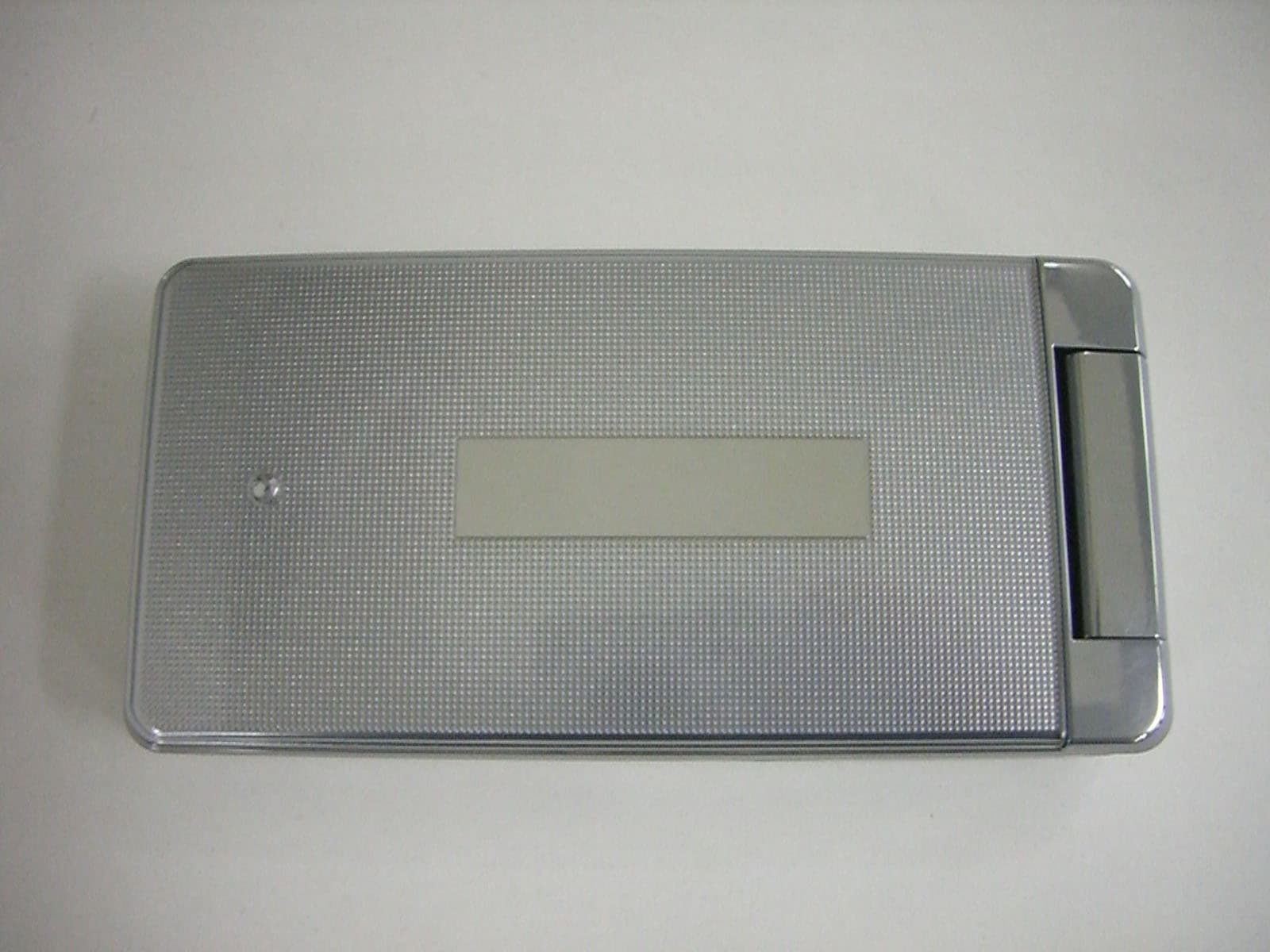
Click to zoom
Application Details
- Equipment Class
- PCE - PCS Licensed Transmitter held to ear
- Date of Grant
- Jun 12, 2007
- Application Purpose
- Original Equipment
- Date of Application
- Jun 12, 2007
- Equipment Note
- Cellular Transceiver
- Frequency Range
- 1850.20000000 - 1909.80000000
- Company
- Sharp Corporation
- Country
- Japan
Documents & Files
Document Text
Text extracted from the exhibit documents filed with the FCC. Open a document above to read the original.
Users Manual
20-1 20-120-1 20 Abridged English Manual Accessories .............................. 20-2Using This Manual ................... 20-3Function & Feature Preview ... 20-4Safety Precautions .................. 20-6General Notes ........................ 20-12USIM Card .............................. 20-15 ■ Inserting & Removing USIM Card ... 20-15 ■ USIM PINs ........................ 20-16 Security Codes ....................... 20-17 ■ Handset Code ................. 20-17 ■ Center Access Code ...... 20-17 ■ Network Password .......... 20-17 Handset Parts & Functions .... 20-18 ■ Handset ............................ 20-18 ■ Display Indicators ...........20-20 ■ External Display Indicators ... 20-21 ■ Charging Battery .............20-22 ■ Inserting & Removing Battery ...20-23 ■ Charging (Use Specified Charger Only) ...20-24 Getting Started .......................20-25 ■ Handset Power On/Off ...20-25 ■ English Display ...............20-25 ■ My Phone Number ..........20-25 ■ Setting Clock ...................20-25 ■ Network Services ............20-25 Basic Handset Operations .....20-26 ■ Initiating a Voice Call .....20-26 ■ Answering a Voice Call ...20-26 ■ Initiating a Video Call .....20-26 ■ Answering a Video Call ...20-27 ■ Redial ...............................20-27 ■ Calling from Received Calls ...20-27 ■ Manner Mode ..................20-27 ■ Forwarding a Call ...........20-27 ■ Answer Phone & Voicemail ...20-28 Basic Functions ...................... 20-29 ■ Text Entry .........................20-29 ■ Phone Book .....................20-30 ■ Mobile Camera ................ 20-31 ■ Messaging ....................... 20-31 ■ Yahoo! Keitai ...................20-32 ■ Total Charges & Call Time ...20-32 Software Update .................... 20-33Function List ........................... 20-35Specifications ........................ 20-37Customer Service .................. 20-38 For more information about handset operations and functions, please go to the SOFTBANK MOBILE Corp. Website (http://www.softbank.jp) for the full manual* or dial 157 from a SoftBank handset for Customer Service. *Please note that the full manual may not be available in English at time of purchase. In this case, call Customer Service or check SoftBank Mobile Website again at a later date. J420_insatsu.book 1ページ 2007年5月24日 木曜日 午後12時56分 20-2 Abridged English Manual 20 Accessories ■ Lithium-ion Battery (Type 1) (SHBBB1) ■ AC Charger (SHCAA1) ■ Utility Software (CD-ROM)* ★ * Utility Software updates/upgrades may become available on the SOFTBANK MOBILE Corp. Website (http://www.softbank.jp) without prior notification. Please check for the newest versions of Utility Software and download as required. ★ Complimentary sample not available for purchase. Note X Supplied Utility Software is designed exclusively for 814SH and 815SH. Tip X . For accessory-related information, please contact SoftBank Customer Center, General Information ( P.20-38 ). . Handset takes microSD TM Memory Card (not included). Purchase one to use Memory Card functions. . In this manual, microSD TM Memory Card is referred to as "Memory Card." J420_insatsu.book 2ページ 2007年5月24日 木曜日 午後12時56分 20-3 Abridged English Manual 20 In this manual, most operations are described with SoftBank 814SH open in Standby. Sample screen shots, etc. are provided for reference only. Actual handset windows, menus, etc. may differ in appearance.Indicated in this manual as shown below.Select menu items, move cursor and scroll, etc. In this manual, Multi Selector operations are indicated as shown to the right.Basic Multi Selector Operations , e : Press a or b , f : Press c or d , g : Press a , b , c or d Indicated in this manual as shown below.Activate/cancel Manner mode, adjust volume, etc.When "(Japanese)" appears in a Function & Feature Preview title ( P.20-4 & P.20-5 ), Japanese ability is required to use full range of the function or service. Using This Manual Keypad KeysMulti Selector 123456789(0# A B " ! &$ ' db c Ç a Å % Side KeysJapanese Functions & Services Volume/Zoom Key E F Circle Talk Key H D Multi Job/Manner Key J420_insatsu.book 3ページ 2007年5月24日 木曜日 午後12時56分 20-4 Abridged English Manual 20 Memory Card is required for items with gray background. Function & Feature Preview PC Site Browser View PC-based websites on the handset directly, and access info on-the-go without using a PC. Circle Talk Press and hold one key to speak to up to ten parties simultaneously via this Walkie-Talkie type service. S! Town (Japanese) Select an avatar to enter 3D virtual town via this online communication application. S! Loop (Japanese) A SoftBank Mobile handset communication service. e-Book/Document Viewer Read e-Books, and e-Book dictionaries or documents (PDF files, etc.) on handset. USIM Card For use only with USIM Card-compatible SoftBank handsets; contains vital user information. Manner Mode Press a single key to mute ringer and activate Answer Phone automatically. Simple Menu Select a simplified menu, ideal for users who use only basic handset functions. Phone Book Save up to 750 entries; add up to five phone numbers/five mail addresses to each. S! Address Book (SAB) Back up Phone Book via Server; synchronize Phone Book/SAB to reflect changes. Video Call Place or receive video calls: send live video or previously saved still image during calls. Camera Capture still/video images shot with the 2.0 megapixel handset camera; send images via S! Mail. Media Player Play downloaded music and video images as well as those recorded/captured on handset. Data Folder Access handset image and sound files from here; files are organized by file type. microSD™ Memory Card Save files to Memory Card to expand handset memory or back up your handset files. Display Change Wallpaper, System Graphics, Fonts, et cetera to customize handset interface. Display Language Change Phone Settings to make handset user interface appear in either English or Japanese. Custom Screen Load uni-themed Wallpaper, Indicators, ringtones, and mo…
Text truncated - open the document above for the full version.
Cover Letter(s)
Model Description FCC ID : APYHRO00056 Model Name : 814SH (Development Code: Lady’s Unicorn, Internal Name: JN-J420) Type of Emission : 246KGXW Brand Name : SoftBank by Sharp Type of Equipment : WCDMA & Tri-band (900/1800/1900) GSM Dual mode Mobile Phone / Bluetooth Enable Specification Items WCDMA : TX 1922.6 to 1977.4MHz RX 2112.6 to 2167.4MHz 900MHz : Tx 880.2 to 914.8MHz Rx 925.2 to 959.8MHz 1800MHz : Tx 1710.2 to 1784.8MHz Rx 1805.2 to 1879.8MHz 1900MHz : Tx 1850.2 to 1909.8MHz Rx 1930.2 to 1989.8MHz (WCDMA & GSM900/1800MHz Band do not operate in USA) Frequency Band Bluetooth : TX 2402MHz to 2480MHz RX 2402MHz to 2480MHz Tx Power (Mobile Phone) WCDMA 24dBm +1dB/-3dB 900MHz 33dBm2dB 1800MHz 30dBm±2dB 1900MHz 30dBm±2dB Tx Power (Bluetooth) Class2, Nominal 0dBm (Max +4dBm / min -6dBm) Type of Modulation (Mobile Phone) WCDMA : G1A, G1B, G1C, G1D, G1E, G1F, G1X, G7W GSM : GXW Bluetooth : GFSK Transmission Technology WCDMA : DS/CDMA, FDD GSM : FDMA/TDMA Bluetooth : FHSS Voice Codec WCDMA : AMR GSM : EFR/ FR GPRS Class B, Class 10 (Total 5slots, TX: max 2 / RX: max 4) Antenna (Mobile & Bluetooth) Integrated Antenna: Reversed Mono-pole L-Type SIM Plug-in 3V SIM card slot Display Main LCD 2.4”, 262,144color TFT(ASV), 640x480(VGA) with Backlight Sub EL Monochrome, 96(W)39(H) Camera (Main) C-MOS 2.0M pixel Resolution (Sub) C-MOS 110,000 pixel WAP Browser ACCESS Net front Battery/Talk time Capacity 800mAh Battery Type Rechargeable Lithium-Ion Battery Standby time 300h MAIN SPECIFICATION Talk time 230min(WCDMA) / 230min(GSM) Dimensions Target size 49(W) x 98.8(D) x 18.2 (H) mm (Close position) Target weight 110g Key Layout Soft key1, Soft key2, Navigation key, Center key, Custom key, 0-9mumeric key, Send/End key, *,# and 4 side key Bar code (JAN/QR) Scan / Decode , Encode (make a image file) Bluetooth Ver 2.0(Headset/Handsfree/Dial up/Object push) External Interface IrDA Ver 1.4 SD microSD SD Audio Ver 1.0 Stereo Headset Connector For Stereo Headset(10 pins) MCPC connector For USB Cable or PC Link cable or AC Charger SIM Card terminal 1slot SD card terminal For microSD card [1 slot] External Interface Connector Integrated charger circuit The terminals of charging are for using a cradle. LCD Remote Controller Optional Accessories STEREO Headphone Optional Accessories USB Cable Optional Accessories AC Charger Input AC 100 to 240V , Output DC 5.2V / 650mA Accessories Battery Lithium-Ion, DC 3.7V / 800mAh
RF Exposure Info
JAPAN QUALITY ASSURANCE ORGANIZATION Page 1 of 23 Technical document No. 23763-0601 JQA File No. : KL80070040 Issue Date : May 18, 2007 TEST REPORT (SAR EVALUATION) APPLICANT : Sharp Corporation, Communication Systems Group ADDRESS : 2-13-1, Iida, Hachihonmatsu, Higashi-Hiroshima City, Hiroshima, 739-0192, Japan PRODUCTS : WCDMA & Tri-band GSM Dual mode Mobile Phone / Bluetooth Enable MODEL NO. : 814SH SERIAL NO. : 004401/11/066010/3 FCC ID : APYHRO00056 TEST STANDARD : FCC/OET Bulletin 65 Supplement C (Edition 01-01) TESTING LOCATION : Japan Quality Assurance Organization KITA-KANSAI Testing Center 1-7-7, Ishimaru, Minoh-shi, Osaka 562-0027, Japan TEST RESULTS : Passed DATE OF TEST : May 2, 2007 - May 7, 2007 This report must not used by the client to claim product endorsement by NVLAP or Yuichi Fukumoto NIST or any agency of the U.S. Government. Manager Japan Quality Assurance Organization KITA-KANSAI Testing Center Testing Dept. EMC Division NVLAP LAB CODE 200191-0 1-7-7, Ishimaru, Minoh-shi, Osaka 562-0027, Japan ● The measurement values stated in Test Report was made with traceable to National Institute of Advanced Industrial Science and Technology (AIST) of Japan, National Institute of Information and Communications Technology (NICT) of Japan , and Laboratory for EMF and Microwave Electronics at the Swiss Federal Institute of Technology (ETH) in Zürich, Switzerland. ● The applicable standard, testing condition and testing method which were used for the tests are based on the request of the applicant. ● The test results presented in this report relate only to the offered test sample. ● The contents of this test report cannot be used for the purposes, such as advertisement for consumers. ● This test report shall not be reproduced except in full without the written approval of JQA. JAPAN QUALITY ASSURANCE ORGANIZATION JQA File No. : KL80070040 Issue Date : May 18, 2007 Model No. : 814SH FCC ID : APYHRO00056 Standard : FCC/OET Bulletin 65 Supplement C (Edition 01-01) Page 2 of 23 Technical document No. 23763-0601 TABLE OF CONTENTS Page Documentation ................................................................................................................................................. 3 1 Test Regulation.....................................................................................................................................3 2 Test Location.........................................................................................................................................3 3 Recognition of Test Laboratory............................................................................................................3 4 Description of the Equipment Under Test..........................................................................................4 5 Measurement System Diagram............................................................................................................5 6 System Components..............................................................................................................................6 7 Measurement Process...........................................................................................................................8 8 Measurement Uncertainties.................................................................................................................9 9 Equipment Under Test Modification.................................................................................................10 10 Responsible Party................................................................................................................................10 11 Deviation from Standard....................................................................................................................10 12 Test Results.........................................................................................................................................11 13 Summary..............................................................................................................................................12 14 Test Arrangement...............................................................................................................................13 15 Equipment Under Test Tune-Up Procedures....................................................................................15 Appendix A: Test Data ................................................................................................................................... 17 A.1 Tissue Verification..............................................................................................................................17 A.2 System Validation...............................................................................................................................18 A.3 SAR Measurement Data.....................................................................................................................19 Appendix B: Test Instruments....................................................................................................................... 22 Appendix C: Attachments .............................................................................................................................. 23 DEFINITIONS FOR ABBREVIATION AND SYMBOLS USED IN THIS TEST REPORT “EUT” means Equipment Under the Test. “N/A” means that Not Applicable. “N/T” means that Not Tested. - indicates that the listed condition, standard or equipment is applicable for this report. - indicates that the listed condition, standard or equipment is not applicable for this report. JAPAN QUALITY ASSURANCE ORGANIZATION JQA File No. : KL80070040 Issue Date : May 18, 2007 Model No. : 814SH FCC ID : APYHRO00056 Standard : FCC/OET Bulletin 65 Supplement C (Edition 01-01) Page 3 of 23 Technical document No. 23763-0601 Documentation 1 Test Regulation Applied Standard : FCC/OET Bulletin 65 Supplement C (Edition …
Text truncated - open the document above for the full version.
RF Exposure Info
Attachment 1 – System Validation Plots JAPAN QUALITY ASSURANCE ORGANIZATION Date/Time: 2007/05/02 9:26:42 Test Laboratory: JAPAN QUALITY ASSURANCE ORGANIZATION System Validation DUT: Dipole 1800 MHz; Type: D1800V2; Serial: 2d038 Communication System: CW; Frequency: 1800 MHz;Duty Cycle: 1:1 Medium: HSL1800 Medium parameters used: f = 1800 MHz; σ = 1.35 mho/m; ε r = 38.6; ρ = 1000 kg/m 3 Phantom section: Flat Section Measurement Standard: DASY4 (High Precision Assessment) DASY4 Configuration: zProbe: ET3DV6 - SN1679; ConvF(5.22, 5.22, 5.22); Calibrated: 2006/11/16 zSensor-Surface: 4mm (Mechanical And Optical Surface Detection) zElectronics: DAE3 Sn508; Calibrated: 2006/11/09 zPhantom: SAM 1200; Type: QD 000 P40 CA; Serial: 1200 zMeasurement SW: DASY4, V4.7 Build 44; Postprocessing SW: SEMCAD, V1.8 Build 171 Antenna Input Power 250 mW/Area Scan (5x5x1): Measurement grid: dx=20mm, dy=20mm Maximum value of SAR (measured) = 10.8 mW/g Antenna Input Power 250 mW/Zoom Scan (5x5x7)/Cube 0: Measurement grid: dx=8mm, dy=8mm, dz=5mm Reference Value = 94.3 V/m; Power Drift = -0.005 dB Peak SAR (extrapolated) = 15.7 W/kg SAR(1 g) = 9.43 mW/g; SAR(10 g) = 5.12 mW/g Maximum value of SAR (measured) = 10.6 mW/g 0 dB = 10.6mW/g JAPAN QUALITY ASSURANCE ORGANIZATION Date/Time: 2007/05/07 10:11:01 Test Laboratory: JAPAN QUALITY ASSURANCE ORGANIZATION System Validation DUT: Dipole 1800 MHz; Type: D1800V2; Serial: 2d038 Communication System: CW; Frequency: 1800 MHz;Duty Cycle: 1:1 Medium: M1800 Medium parameters used: f = 1800 MHz; σ = 1.47 mho/m; ε r = 52.3; ρ = 1000 kg/m 3 Phantom section: Flat Section Measurement Standard: DASY4 (High Precision Assessment) DASY4 Configuration: zProbe: ET3DV6 - SN1679; ConvF(4.61, 4.61, 4.61); Calibrated: 2006/11/16 zSensor-Surface: 4mm (Mechanical And Optical Surface Detection) zElectronics: DAE3 Sn508; Calibrated: 2006/11/09 zPhantom: SAM 1200; Type: QD 000 P40 CA; Serial: 1200 zMeasurement SW: DASY4, V4.7 Build 44; Postprocessing SW: SEMCAD, V1.8 Build 171 Antenna Input Power 250 mW/Area Scan (5x5x1): Measurement grid: dx=20mm, dy=20mm Maximum value of SAR (measured) = 11.1 mW/g Antenna Input Power 250 mW/Zoom Scan (5x5x7)/Cube 0: Measurement grid: dx=8mm, dy=8mm, dz=5mm Reference Value = 93.8 V/m; Power Drift = -0.019 dB Peak SAR (extrapolated) = 15.6 W/kg SAR(1 g) = 9.78 mW/g; SAR(10 g) = 5.37 mW/g Maximum value of SAR (measured) = 11.0 mW/g 0 dB = 11.0mW/g JAPAN QUALITY ASSURANCE ORGANIZATION
RF Exposure Info
Attachment 2 – SAR Test Plots JAPAN QUALITY ASSURANCE ORGANIZATION Date/Time: 2007/05/02 14:53:35 Test Laboratory: JAPAN QUALITY ASSURANCE ORGANIZATION Left Head, Cheek/Touch 512ch (1850.20MHz) DUT: WCDMA & Tri-band GSM Dual mode Mobile Phone / Bluetooth Enable; Type: 814SH; Serial: 004401/11/066010/3 Communication System: GSM 1900; Frequency: 1850.2 MHz;Duty Cycle: 1:8.3 Medium: HSL1900 Medium parameters used: f = 1850.2 MHz; σ = 1.41 mho/m; ε r = 38.1; ρ = 1000 kg/m 3 Phantom section: Left Section Measurement Standard: DASY4 (High Precision Assessment) DASY4 Configuration: zProbe: ET3DV6 - SN1679; ConvF(5.22, 5.22, 5.22); Calibrated: 2006/11/16 zSensor-Surface: 4mm (Mechanical And Optical Surface Detection) zElectronics: DAE3 Sn508; Calibrated: 2006/11/09 zPhantom: SAM 1200; Type: QD 000 P40 CA; Serial: 1200 zMeasurement SW: DASY4, V4.7 Build 44; Postprocessing SW: SEMCAD, V1.8 Build 171 Cheek/Touch Position/Area Scan (11x6x1): Measurement grid: dx=15mm, dy=15mm Maximum value of SAR (measured) = 0.672 mW/g Cheek/Touch Position/Zoom Scan (5x5x7)/Cube 0: Measurement grid: dx=8mm, dy=8mm, dz=5mm Reference Value = 5.71 V/m; Power Drift = -0.030 dB Peak SAR (extrapolated) = 0.887 W/kg SAR(1 g) = 0.607 mW/g; SAR(10 g) = 0.367 mW/g Maximum value of SAR (measured) = 0.681 mW/g 0 dB = 0.681mW/g JAPAN QUALITY ASSURANCE ORGANIZATION Date/Time: 2007/05/02 14:22:40 Test Laboratory: JAPAN QUALITY ASSURANCE ORGANIZATION Left Head, Cheek/Touch 661ch (1880.00MHz) DUT: WCDMA & Tri-band GSM Dual mode Mobile Phone / Bluetooth Enable; Type: 814SH; Serial: 004401/11/066010/3 Communication System: GSM 1900; Frequency: 1880 MHz;Duty Cycle: 1:8.3 Medium: HSL1900 Medium parameters used: f = 1880 MHz; σ = 1.41 mho/m; ε r = 38.1; ρ = 1000 kg/m 3 Phantom section: Left Section Measurement Standard: DASY4 (High Precision Assessment) DASY4 Configuration: zProbe: ET3DV6 - SN1679; ConvF(5.22, 5.22, 5.22); Calibrated: 2006/11/16 zSensor-Surface: 4mm (Mechanical And Optical Surface Detection) zElectronics: DAE3 Sn508; Calibrated: 2006/11/09 zPhantom: SAM 1200; Type: QD 000 P40 CA; Serial: 1200 zMeasurement SW: DASY4, V4.7 Build 44; Postprocessing SW: SEMCAD, V1.8 Build 171 Cheek/Touch Position/Area Scan (11x6x1): Measurement grid: dx=15mm, dy=15mm Maximum value of SAR (measured) = 0.741 mW/g Cheek/Touch Position/Zoom Scan (5x5x7)/Cube 0: Measurement grid: dx=8mm, dy=8mm, dz=5mm Reference Value = 5.98 V/m; Power Drift = -0.074 dB Peak SAR (extrapolated) = 0.988 W/kg SAR(1 g) = 0.670 mW/g; SAR(10 g) = 0.406 mW/g Maximum value of SAR (measured) = 0.747 mW/g 0 dB = 0.747mW/g JAPAN QUALITY ASSURANCE ORGANIZATION Date/Time: 2007/05/02 14:37:59 Test Laboratory: JAPAN QUALITY ASSURANCE ORGANIZATION Left Head, Cheek/Touch 810ch (1909.80MHz) DUT: WCDMA & Tri-band GSM Dual mode Mobile Phone / Bluetooth Enable; Type: 814SH; Serial: 004401/11/066010/3 Communication System: GSM 1900; Frequency: 1909.8 MHz;Duty Cycle: 1:8.3 Medium: HSL1900 Medium parameters used: f = 1909.8 MHz; σ = 1.41 mho/m; ε r = 38.1; ρ = 1000 kg/m 3 Phantom section: Left Section Measurement Standard: DASY4 (High Precision Assessment) DASY4 Configuration: zProbe: ET3DV6 - SN1679; ConvF(5.22, 5.22, 5.22); Calibrated: 2006/11/16 zSensor-Surface: 4mm (Mechanical And Optical Surface Detection) zElectronics: DAE3 Sn508; Calibrated: 2006/11/09 zPhantom: SAM 1200; Type: QD 000 P40 CA; Serial: 1200 zMeasurement SW: DASY4, V4.7 Build 44; Postprocessing SW: SEMCAD, V1.8 Build 171 Cheek/Touch Position/Area Scan (11x6x1): Measurement grid: dx=15mm, dy=15mm Maximum value of SAR (measured) = 0.862 mW/g Cheek/Touch Position/Zoom Scan (5x5x7)/Cube 0: Measurement grid: dx=8mm, dy=8mm, dz=5mm Reference Value = 6.37 V/m; Power Drift = 0.000 dB Peak SAR (extrapolated) = 1.16 W/kg SAR(1 g) = 0.774 mW/g; SAR(10 g) = 0.468 mW/g Maximum value of SAR (measured) = 0.843 mW/g 0 dB = 0.843mW/g JAPAN QUALITY ASSURANCE ORGANIZATION Date/Time: 2007/05/02 14:49:59 Test Laboratory: JAPAN QUALITY ASSURANCE ORGANIZATION Left Head, Cheek/Touch 810ch (1909.80MHz) DUT: WCDMA & Tri-band GSM Dual mode Mobile Phone / Bluetooth Enable; Type: 814SH; Serial: 004401/11/066010/3 Communication System: GSM 1900; Frequency: 1909.8 MHz;Duty Cycle: 1:8.3 Medium: HSL1900 Medium parameters used: f = 1909.8 MHz; σ = 1.41 mho/m; ε r = 38.1; ρ = 1000 kg/m 3 Phantom section: Left Section Measurement Standard: DASY4 (High Precision Assessment) DASY4 Configuration: zProbe: ET3DV6 - SN1679; ConvF(5.22, 5.22, 5.22); Calibrated: 2006/11/16 zSensor-Surface: 4mm (Mechanical And Optical Surface Detection) zElectronics: DAE3 Sn508; Calibrated: 2006/11/09 zPhantom: SAM 1200; Type: QD 000 P40 CA; Serial: 1200 zMeasurement SW: DASY4, V4.7 Build 44; Postprocessing SW: SEMCAD, V1.8 Build 171 Cheek/Touch Position/Z Scan (1x1x33): Measurement grid: dx=20mm, dy=20mm, dz=5mm Maximum value of SAR (measured) = 0.839 mW/g JAPAN QUALITY ASSURANCE ORGANIZATION Date/Time: 2007/05/02 17:10:48 Test Laboratory: JAPAN QUALITY ASSURANCE ORGANIZATION Left Head, Cheek/Touch 810ch (1909.80MHz) co-located with Bluetooth DUT: WCDMA & Tri-band GSM Dual mode Mobile Phone / Bluetooth Enable; Type: 814SH; Serial: 004401/11/066010/3 Communication System: GSM 1900; Frequency: 1909.8 MHz;Duty Cycle: 1:8.3 Medium: HSL1900 Medium parameters used: f = 1909.8 MHz; σ = 1.41 mho/m; ε r = 38.1; ρ = 1000 kg/m 3 Phantom section: Left Section Measurement Standard: DASY4 (High Precision Assessment) DASY4 Configuration: zProbe: ET3DV6 - SN1679; ConvF(5.22, 5.22, 5.22); Calibrated: 2006/11/16 zSensor-Surface: 4mm (Mechanical And Optical Surface Detection) zElectronics: DAE3 Sn508; Calibrated: 2006/11/09 zPhantom: SAM 1200; Type: QD 000 P40 CA; Serial: 1200 zMeasurement SW: DASY4, V4.7 Build 44; Postprocessing SW: SEMCAD, V1.8 Build 171 Cheek/Touch Position/Area Scan (11x6x1): Measurement grid: dx=15mm, dy=15mm Maximum value of SAR (measured) = 0.830 mW/g Cheek/Touch Position/Zoom Scan (5x5x7)/Cube 0: Measurement grid: dx=8mm, dy=8mm, dz=5mm Reference Value = 6.25 V/m; Powe…
Text truncated - open the document above for the full version.
RF Exposure Info
JAPAN QUALITY ASSURANCE ORGANIZATION Attachment 3 – Dosimetric E-Field Probe – ET3DV6, S/N: 1679 Calibration Data
RF Exposure Info
JAPAN QUALITY ASSURANCE ORGANIZATION Attachment 4 – System Validation Dipole – D1800V2, S/N: 2d038 Calibration Data
Test Report
JAPAN QUALITY ASSURANCE ORGANIZATION Page 1 of 46 JQA File No. : KL80070041 Issue Date : May 18, 2007 TEST REPORT APPLICANT : Sharp Corporation, Communication Systems Group ADDRESS : 2-13-1, Iida Hachihonmatsu, Higashihiroshima-city, Hiroshima 739-0192, JAPAN PRODUCTS : WCDMA & Tri-band GSM Dual mode Mobile Phone / Bluetooth Enable MODEL NO. : 814SH SERIAL NO. : 004401/11/066020/2 FCC ID : APYHRO00056 TEST STANDARD : CFR 47 FCC Rules and Regulations Part 24 TESTING LOCATION : Japan Quality Assurance Organization KITA-KANSAI Testing Center 1-7-7, Ishimaru, Minoh-shi, Osaka 562-0027, Japan TEST RESULTS : Passed DATE OF TEST : May 1, 2007 - May 8, 2007 This report must not used by the client to claim product endorsement by NVLAP or Yuichi Fukumoto NIST or any agency of the U.S. Government. Manager Japan Quality Assurance Organization KITA-KANSAI Testing Center Testing Dept. EMC Division NVLAP LAB CODE 200191-0 1-7-7, Ishimaru, Minoh-shi, Osaka 562-0027, Japan ● The measurement values stated in Test Report was made with traceable to National Institute of Advanced Industrial Science and Technology (AIST) of Japan and National Institute of Information and Communications Technology (NICT) of Japan. ● The applicable standard, testing condition and testing method which were used for the tests are based on the request of the applicant. ● The test results presented in this report relate only to the offered test sample. ● The contents of this test report cannot be used for the purposes, such as advertisement for consumers. ● This test report shall not be reproduced except in full without the written approval of JQA. JAPAN QUALITY ASSURANCE ORGANIZATION JQA File No. : KL80070041 Issue Date : May 18, 2007 Model No. : 814SH FCC ID : APYHRO00056 Regulation : CFR 47 FCC Rules and Regulations Part 24 Page 2 of 46 TABLE OF CONTENTS Page Documentation ................................................................................................................................................. 3 1 Test Regulation......................................................................................................................................3 2 Test Location..........................................................................................................................................3 3 Recognition of Test Laboratory.............................................................................................................3 4 Description of the Equipment Under Test...........................................................................................4 5 Test Condition........................................................................................................................................5 6 Preliminary Test and Test Setup.........................................................................................................7 7 Equipment Under Test Modification..................................................................................................16 8 Responsible Party................................................................................................................................16 9 Deviation from Standard.....................................................................................................................16 10 Test Results..........................................................................................................................................17 11 Summary..............................................................................................................................................20 12 Operating Condition............................................................................................................................21 13 Test Configuration...............................................................................................................................21 14 Equipment Under Test Arrangement (Drawings)............................................................................22 15 Equipment Under Test Arrangement (Photographs).......................................................................23 Appendix A: Test Data ................................................................................................................................... 26 A.1 RF Output Power (§2.1046)................................................................................................................26 A.2 Modulation Characteristics (§2.1047)................................................................................................28 A.3 Occupied Bandwidth (§2.1049)...........................................................................................................28 A.4 Spurious Emissions at Antenna Terminals (§2.1051).......................................................................30 A.5 Band-Edge Emission(§2.1051)............................................................................................................38 A.6 Field Strength of Spurious Radiation (§2.1053)................................................................................40 A.7 Frequency Stability (§2.1055).............................................................................................................42 Appendix B: Test Instruments....................................................................................................................... 43 DEFINITIONS FOR ABBREVIATION AND SYMBOLS USED IN THIS TEST REPORT “EUT” means Equipment Under the Test. “N/A” means that Not Applicable. “N/T” means that Not Tested. - indicates that the listed condition, standard or equipment is applicable for this report. - indicates that the listed condition, standard or equipment is not applicable for this report. JAPAN QUALITY ASSURANCE ORGANIZATION JQA File No. : KL80070041 Issue Date : May 18, 2007 Model No. : 814SH FCC ID : APYHRO00056 Regulation : CFR 47 FCC Rules and Regulations Part 24 Pag…
Text truncated - open the document above for the full version.
Test Setup Photos
JAPAN QUALITY ASSURANCE ORGANIZATION JQA File No. : KL80070041 Issue Date : May 18, 2007 Model No. : 814SH FCC ID : APYHRO00056 Regulation : CFR 47 FCC Rules and Regulations Part 24 Page 23 of 46 15 Equipment Under Test Arrangement (Photographs) 15.1 Radiated Emission – Horizontal Polarization – – Vertical Polarization – Photograph present configuration with maximum emission JAPAN QUALITY ASSURANCE ORGANIZATION JQA File No. : KL80070041 Issue Date : May 18, 2007 Model No. : 814SH FCC ID : APYHRO00056 Regulation : CFR 47 FCC Rules and Regulations Part 24 Page 24 of 46 15.2 Radiated Emission at three orthogonal axis – X-axis – – Y-axis – JAPAN QUALITY ASSURANCE ORGANIZATION JQA File No. : KL80070041 Issue Date : May 18, 2007 Model No. : 814SH FCC ID : APYHRO00056 Regulation : CFR 47 FCC Rules and Regulations Part 24 Page 25 of 46 – Z-axis –
Test Setup Photos
JAPAN QUALITY ASSURANCE ORGANIZATI…
Text truncated - open the document above for the full version.
Contact Information
Applicant
Taihei Ohtsuka(Division Manager, ESG & Q promotion div.)
Test Firm
UL Japan, Inc. Yokowa EMC Lab.Masamichi Ishii
Technical Specifications
| # | Rule Parts | Frequency Range | Power Output | Emission | Tolerance |
|---|---|---|---|---|---|
| 1 | 24E | 1.85 GHz - 1.91 GHz | 1.202 W | 246KGXW | 2.5000000000 ppm |
Other Applications from Sharp Corporation
APYHRO00343
Aug 17, 2026Smartphone
Equipment Class
DTS - Digital Transmission SystemAPYHRO00342
Jul 29, 2026Smart phone
Equipment Class
DXX - Part 15 Low Power Communication Device TransmitterAPYHRO00341
May 28, 2026Smart phone
Equipment Class
DTS - Digital Transmission SystemAPYHRO00340
Dec 01, 2025BT remote control
Equipment Class
DTS - Digital Transmission SystemAPYHRO00339
Sep 17, 2025Smart phone
Equipment Class
NII - Unlicensed National Information Infrastructure TX