APYHRO00120Cellular Phone
Sharp Corporation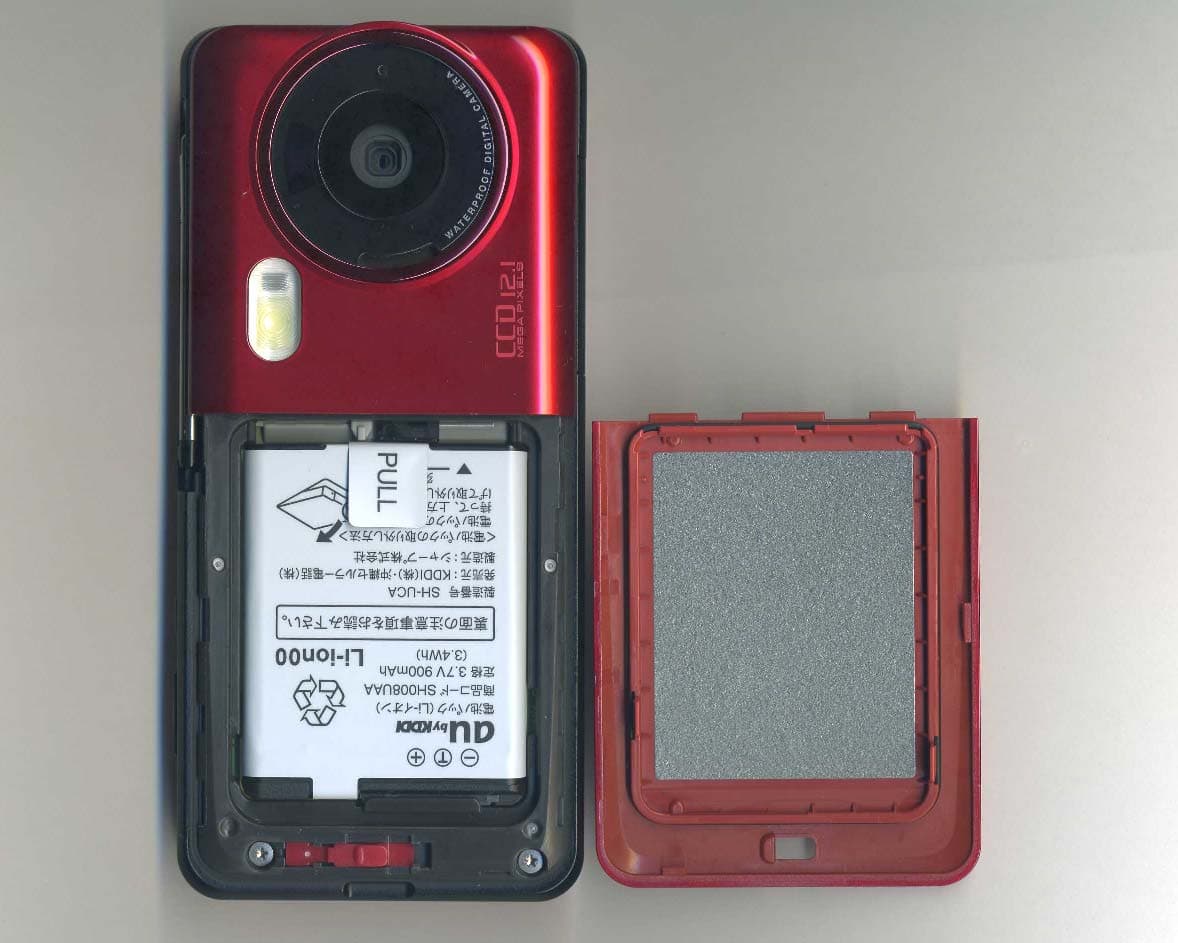
Click to zoom
Application Details
- Equipment Class
- TNE - Licensed Non-Broadcast Transmitter Held to Ear
- Date of Grant
- Apr 11, 2010
- Application Purpose
- Original Equipment
- Date of Application
- Apr 11, 2010
- Equipment Note
- Cellular Phone
- Frequency Range
- 824.70000000 - 848.37000000
- Company
- Sharp Corporation
- Country
- Japan
Documents & Files
Document Text
Text extracted from the exhibit documents filed with the FCC. Open a document above to read the original.
Users Manual
~~~ English Simple Manual Turning Power On and Off Turning Power On Hold down F for at least a few seconds. Turning Power Off Hold down F for at least a few seconds. Switching the Screen to English From the stand-by screen: Press c. z Press 3. z Press 6. z Press 2. Checking Your Own Phone Number and E-mail Address From the stand-by screen: Press c. z Press 0. Making and Answering a Call Making a Call From the stand-by screen: Enter the phone number you want to call. z Press N. To end a call: Press F. Light sensor Display Cursor key Address book key Mail/Character key Talk key Number keys Microphone Center key Application key EZ key Clear/Memo key Power/End key Camera lens Internal antennas Television antenna Earpiece Quick key Direct/Veil View key Mobile light/flash Internal au IC-Card Side key (Up) Side shutter key Battery pack/cover microSD memory card slot Side key (Down) Speaker Infrared port Charging terminals Side manner/clear key Strap eyelet Sub display External connection jack/cover Internal antennas Charging/Incoming indicator FeliCa mark c280_j_torisetsu.book 492 ページ 2010年3月17日 水曜日 午後11時22分 ~~~ Answering a Call When the phone starts ringing, press N. To adjust the earpiece volume during a call: Use j. Storing and Recalling Address Book Entries Storing an Entry From the stand-by screen: Hold down & for at least one second. z Use j to select the item you want to edit. z Press c (Select). z Enter the data. z Press % (Reg). Recalling an Entry From the stand-by screen: Press & to display the Address Book screen. z Use s to select the tab for the record you want to recall. z Use j to select the name of the record. z Press c (Detail) to view the record in detail. Using the Camera (Movie and Snapshot) Recording a Movie Clip From the stand-by screen: Press c. z Use a to select “CAMERA”. z Press c (Select). z Select “Movie”. z Press c (Select). z Press c (Record) to start recording. z Press c (Stop) to stop recording. z Press c (Save) to store the movie. Press & () (Pause) during recording to pause recording. Press & () in the Movie mode to change to the Photo mode. Taking a Snapshot From the stand-by screen: Press c. z Use a to select “CAMERA”. z Press c (Select). z Select “Photo”. z Press c (Select). z Press c (Shoot) to take a snapshot. z Press c (Save) to store the photo. Press & () in the Photo mode to change to the Movie mode. Making an International Call Ex: To call 212-123- in the USA Other Handy Features Setting the Manner Mode From the stand-by screen: Hold down ( for at least one second. Repeat the above operation to disable the Manner Mode. Setting the Answer Memo (Voice Recording) From the stand-by screen: Hold down C for at least one second. Repeat the above operation to disable the Answer Memo. 001010 z 1 z 212 Area code International access codeCountry code (USA) z123z zN Number you want to call For inquiries, please contact au Customer Service Center (General Information) If you are calling from a landline phone: (toll free) If you are calling from an au mobile phone: (toll free) c280_j_torisetsu.book 493 ページ 2010年3月17日 水曜日 午後11時22分
External Photos
Model Name: CDMA SH008 Photo (External) FCC ID: APYHRO00120 1/4 Model Name: CDMA SH008 Photo (External) FCC ID: APYHRO00120 2/4 Model Name: CDMA SH008 Photo (External) FCC ID: APYHRO00120 3/4 Model Name: CDMA SH008 Photo (External) FCC ID: APYHRO00120 4/4
Internal Photos
Model Name: CDMA SH008 Photo (Internal) FCC ID: APYHRO00120 1/8 Model Name: CDMA SH008 Photo (Internal) FCC ID: APYHRO00120 2/8 Model Name: CDMA SH008 Photo (Internal) FCC ID: APYHRO00120 3/8 Model Name: CDMA SH008 Photo (Internal) FCC ID: APYHRO00120 4/8 Model Name: CDMA SH008 Photo (Internal) FCC ID: APYHRO00120 5/8 Model Name: CDMA SH008 Photo (Internal) FCC ID: APYHRO00120 6/8 Model Name: CDMA SH008 Photo (Internal) FCC ID: APYHRO00120 7/8 Model Name: CDMA SH008 Photo (Internal) FCC ID: APYHRO00120 8/8
Internal Photos
Model Name: CDMA SH008 Photo (Antennas) FCC ID: APYHRO00120 Distance between CDMA Main antenna and Bluetooth antenna 83 mm Sub Antenna (Receive Only) CDMA Main TX Antenna (CDMA 800M) Bluetooth Antenna 1/1
RF Exposure Info
JAPAN QUALITY ASSURANCE ORGANIZATION Attachment 1 – System Validation Plots JAPAN QUALITY ASSURANCE ORGANIZATION JAPAN QUALITY ASSURANCE ORGANIZATION Date/Time: 2010/03/02 14:42:36 Test Laboratory: JAPAN QUALITY ASSURANCE ORGANIZATION System Validation (Head 835 MHz) DUT: Dipole 835 MHz; Type: D835V2; Serial: 4d081 Communication System: CW; Frequency: 835 MHz;Duty Cycle: 1:1 Medium: HSL900 Medium parameters used: f = 835 MHz; σ = 0.869 mho/m; ε r = 41; ρ = 1000 kg/m 3 Phantom section: Flat Section Measurement Standard: DASY4 (High Precision Assessment) DASY4 Configuration: zProbe: ET3DV6 - SN1679; ConvF(6.63, 6.63, 6.63); Calibrated: 2009/12/14 zSensor-Surface: 4mm (Mechanical And Optical Surface Detection) zElectronics: DAE3 Sn508; Calibrated: 2009/11/09 zPhantom: SAM 1200; Type: QD 000 P40 CA; Serial: 1200 zMeasurement SW: DASY4, V4.7 Build 80; Postprocessing SW: SEMCAD, V1.8 Build 184 Antenna Input Power 250 mW/Area Scan (5x5x1): Measurement grid: dx=20mm, dy=20mm Maximum value of SAR (measured) = 2.60 mW/g Antenna Input Power 250 mW/Zoom Scan (5x5x7)/Cube 0: Measurement grid: dx=8mm, dy=8mm, dz=5mm Reference Value = 57.0 V/m; Power Drift = -0.023 dB Peak SAR (extrapolated) = 3.61 W/kg SAR(1 g) = 2.44 mW/g; SAR(10 g) = 1.59 mW/g Maximum value of SAR (measured) = 2.65 mW/g 0 dB = 2.65mW/g JAPAN QUALITY ASSURANCE ORGANIZATION JAPAN QUALITY ASSURANCE ORGANIZATION Date/Time: 2010/03/03 9:55:53 Test Laboratory: JAPAN QUALITY ASSURANCE ORGANIZATION System Validation (Body 835 MHz) DUT: Dipole 835 MHz; Type: D835V2; Serial: 4d081 Communication System: CW; Frequency: 835 MHz;Duty Cycle: 1:1 Medium: M900 Medium parameters used: f = 835 MHz; σ = 0.937 mho/m; ε r = 53.8; ρ = 1000 kg/m 3 Phantom section: Flat Section Measurement Standard: DASY4 (High Precision Assessment) DASY4 Configuration: zProbe: ET3DV6 - SN1679; ConvF(6.31, 6.31, 6.31); Calibrated: 2009/12/14 zSensor-Surface: 4mm (Mechanical And Optical Surface Detection) zElectronics: DAE3 Sn508; Calibrated: 2009/11/09 zPhantom: SAM 1200; Type: QD 000 P40 CA; Serial: 1200 zMeasurement SW: DASY4, V4.7 Build 80; Postprocessing SW: SEMCAD, V1.8 Build 184 Antenna Input Power 250 mW/Area Scan (5x5x1): Measurement grid: dx=20mm, dy=20mm Maximum value of SAR (measured) = 2.62 mW/g Antenna Input Power 250 mW/Zoom Scan (5x5x7)/Cube 0: Measurement grid: dx=8mm, dy=8mm, dz=5mm Reference Value = 55.1 V/m; Power Drift = -0.003 dB Peak SAR (extrapolated) = 3.35 W/kg SAR(1 g) = 2.4 mW/g; SAR(10 g) = 1.6 mW/g Maximum value of SAR (measured) = 2.60 mW/g 0 dB = 2.60mW/g JAPAN QUALITY ASSURANCE ORGANIZATION JAPAN QUALITY ASSURANCE ORGANIZATION Attachment 2 – SAR Test Plots JAPAN QUALITY ASSURANCE ORGANIZATION JAPAN QUALITY ASSURANCE ORGANIZATION Date/Time: 2010/03/02 17:45:48 Test Laboratory: JAPAN QUALITY ASSURANCE ORGANIZATION Left Head, Cheek/Touch 1013ch (824.70MHz) DUT: Cellular Phone; Type: CDMA SH008; Serial: SSHDU000511 Communication System: CDMA2000 Cellular; Frequency: 824.7 MHz;Duty Cycle: 1:1 Medium: HSL900 Medium parameters used: f = 824.7 MHz; σ = 0.86 mho/m; ε r = 41.2; ρ = 1000 kg/m 3 Phantom section: Left Section Measurement Standard: DASY4 (High Precision Assessment) DASY4 Configuration: zProbe: ET3DV6 - SN1679; ConvF(6.63, 6.63, 6.63); Calibrated: 2009/12/14 zSensor-Surface: 4mm (Mechanical And Optical Surface Detection) zElectronics: DAE3 Sn508; Calibrated: 2009/11/09 zPhantom: SAM 1200; Type: QD 000 P40 CA; Serial: 1200 zMeasurement SW: DASY4, V4.7 Build 80; Postprocessing SW: SEMCAD, V1.8 Build 184 Cheek/Touch Position/Area Scan (11x6x1): Measurement grid: dx=15mm, dy=15mm Maximum value of SAR (measured) = 0.399 mW/g Cheek/Touch Position/Zoom Scan (5x5x7)/Cube 0: Measurement grid: dx=8mm, dy=8mm, dz=5mm Reference Value = 21.4 V/m; Power Drift = -0.083 dB Peak SAR (extrapolated) = 0.480 W/kg SAR(1 g) = 0.366 mW/g; SAR(10 g) = 0.268 mW/g Maximum value of SAR (measured) = 0.389 mW/g 0 dB = 0.389mW/g JAPAN QUALITY ASSURANCE ORGANIZATION JAPAN QUALITY ASSURANCE ORGANIZATION Date/Time: 2010/03/02 15:35:07 Test Laboratory: JAPAN QUALITY ASSURANCE ORGANIZATION Left Head, Cheek/Touch 384ch (836.52MHz) DUT: Cellular Phone; Type: CDMA SH008; Serial: SSHDU000511 Communication System: CDMA2000 Cellular; Frequency: 836.52 MHz;Duty Cycle: 1:1 Medium: HSL900 Medium parameters used: f = 836.52 MHz; σ = 0.869 mho/m; ε r = 41; ρ = 1000 kg/m 3 Phantom section: Left Section Measurement Standard: DASY4 (High Precision Assessment) DASY4 Configuration: zProbe: ET3DV6 - SN1679; ConvF(6.63, 6.63, 6.63); Calibrated: 2009/12/14 zSensor-Surface: 4mm (Mechanical And Optical Surface Detection) zElectronics: DAE3 Sn508; Calibrated: 2009/11/09 zPhantom: SAM 1200; Type: QD 000 P40 CA; Serial: 1200 zMeasurement SW: DASY4, V4.7 Build 80; Postprocessing SW: SEMCAD, V1.8 Build 184 Cheek/Touch Position/Area Scan (11x6x1): Measurement grid: dx=15mm, dy=15mm Maximum value of SAR (measured) = 0.419 mW/g Cheek/Touch Position/Zoom Scan (5x5x7)/Cube 0: Measurement grid: dx=8mm, dy=8mm, dz=5mm Reference Value = 22.1 V/m; Power Drift = -0.052 dB Peak SAR (extrapolated) = 0.590 W/kg SAR(1 g) = 0.395 mW/g; SAR(10 g) = 0.282 mW/g Maximum value of SAR (measured) = 0.422 mW/g 0 dB = 0.422mW/g JAPAN QUALITY ASSURANCE ORGANIZATION JAPAN QUALITY ASSURANCE ORGANIZATION Date/Time: 2010/03/02 15:46:57 Test Laboratory: JAPAN QUALITY ASSURANCE ORGANIZATION Left Head, Cheek/Touch 384ch (836.52MHz) DUT: Cellular Phone; Type: CDMA SH008; Serial: SSHDU000511 Communication System: CDMA2000 Cellular; Frequency: 836.52 MHz;Duty Cycle: 1:1 Medium: HSL900 Medium parameters used: f = 836.52 MHz; σ = 0.869 mho/m; ε r = 41; ρ = 1000 kg/m 3 Phantom section: Left Section Measurement Standard: DASY4 (High Precision Assessment) DASY4 Configuration: zProbe: ET3DV6 - SN1679; ConvF(6.63, 6.63, 6.63); Calibrated: 2009/12/14 zSensor-Surface: 4mm (Mechanical And Optical Surface Detection) zElectronics: DAE3 Sn508; Calibrated: 2009/11/09 zPhantom: SAM 1200; Type: QD 000 P40 CA; Serial: 1200 zMeasurement SW: DASY4, V4.7…
Text truncated - open the document above for the full version.
RF Exposure Info
JAPAN QUALITY ASSURANCE ORGANIZATION Page 1 of 23 Technical document No. 23163-0701 JQA File No. : KL80090564 Issue Date : March 24, 2010 TEST REPORT (SAR EVALUATION) APPLICANT : Sharp Corporation, Communication Systems Group ADDRESS : 2-13-1, Iida, Hachihonmatsu, Higashi-Hiroshima City, Hiroshima, 739-0192, Japan PRODUCTS : Cellular Phone MODEL NO. : CDMA SH008 SERIAL NO. : SSHDU000511 FCC ID : APYHRO00120 TEST STANDARD : FCC/OET Bulletin 65 Supplement C (Edition 01-01) TESTING LOCATION : Japan Quality Assurance Organization KITA-KANSAI Testing Center 1-7-7, Ishimaru, Minoh-shi, Osaka 562-0027, Japan TEST RESULTS : Passed DATE OF TEST : March 2 ~ 3, 2010 This report must not used by the client to claim product endorsement by NVLAP or Junichi Wakamatsu NIST or any agency of the U.S. Government. Manager Japan Quality Assurance Organization KITA-KANSAI Testing Center Testing Dept. EMC Division NVLAP LAB CODE 200191-0 1-7-7, Ishimaru, Minoh-shi, Osaka 562-0027, Japan ● The measurement values stated in Test Report was made with traceable to National Institute of Advanced Industrial Science and Technology (AIST) of Japan, National Institute of Information and Communications Technology (NICT) of Japan , and Laboratory for EMF and Microwave Electronics at the Swiss Federal Institute of Technology (ETH) in Zürich, Switzerland. ● The applicable standard, testing condition and testing method which were used for the tests are based on the request of the applicant. ● The test results presented in this report relate only to the offered test sample. ● The contents of this test report cannot be used for the purposes, such as advertisement for consumers. ● This test report shall not be reproduced except in full without the written approval of JQA. JAPAN QUALITY ASSURANCE ORGANIZATION JQA File No. : KL80090564 Issue Date : March 24, 2010 Model No. : CDMA SH008 FCC ID : APYHRO00120 Standard : FCC/OET Bulletin 65 Supplement C (Edition 01-01) Page 2 of 23 Technical document No. 23163-0701 TABLE OF CONTENTS Page Documentation ................................................................................................................................................. 3 1 Test Regulation......................................................................................................................................3 2 Test Location..........................................................................................................................................3 3 Recognition of Test Laboratory.............................................................................................................3 4 Description of the Equipment Under Test...........................................................................................4 5 Measurement System Diagram............................................................................................................5 6 System Components..............................................................................................................................6 7 Measurement Process............................................................................................................................8 8 Measurement Uncertainties.................................................................................................................9 9 Equipment Under Test Modification..................................................................................................10 10 Responsible Party................................................................................................................................10 11 Deviation from Standard.....................................................................................................................10 12 Test Results..........................................................................................................................................11 13 Summary..............................................................................................................................................12 14 Test Arrangement................................................................................................................................13 15 Procedures used to Establish Test Signal..........................................................................................15 Appendix A: Test Data ................................................................................................................................... 16 Appendix B: Test Instruments....................................................................................................................... 22 Appendix C: Attachments .............................................................................................................................. 23 DEFINITIONS FOR ABBREVIATION AND SYMBOLS USED IN THIS TEST REPORT EUT : Equipment Under Test EMC : Electromagnetic Compatibility AE : Associated Equipment EMI : Electromagnetic Interference N/A : Not Applicable EMS : Electromagnetic Susceptibility N/T : Not Tested SAR : Specific Absorption Rate - indicates that the listed condition, standard or equipment is applicable for this report. - indicates that the listed condition, standard or equipment is not applicable for this report. JAPAN QUALITY ASSURANCE ORGANIZATION JQA File No. : KL80090564 Issue Date : March 24, 2010 Model No. : CDMA SH008 FCC ID : APYHRO00120 Standard : FCC/OET Bulletin 65 Supplement C (Edition 01-01) Page 3 of 23 Technical document No. 23163-0701 Documentation 1 Test Regulation Applied Standard : FCC/OET Bulletin 65 Supplement C (Edition 01-01) Evaluating Compliance with FCC Guidelines for Human Exposure to Radio- frequency Electromagnetic Fields Additional Information for Evaluating Compliance of Mobile and Portable Devices with FCC Limits for Human Exposure to Radiofrequency Emissions Test Procedure : FCC/OET Bulletin 65 Supplement C (Edition 01-01) IEEE Std.1528–2003 KD…
Text truncated - open the document above for the full version.
Test Report
Page 1 of 43 JQA File No. : KL80090565 Issue Date : March 24, 2010 TEST REPORT APPLICANT : Sharp Corporation, Communication Systems Group ADDRESS : 2-13-1, Iida Hachihonmatsu, Higashi-Hiroshima City, Hiroshima, 739-0192, JAPAN PRODUCTS : Cellular Phone MODEL NO. : CDMA SH008 SERIAL NO. : SSHDU000514 FCC ID : APYHRO00120 TEST STANDARD : CFR 47 FCC Rules and Regulations Part 22 TESTING LOCATION : Japan Quality Assurance Organization KITA-KANSAI Testing Center 1-7-7, Ishimaru, Minoh-shi, Osaka 562-0027, Japan TEST RESULTS : Passed DATE OF TEST : March 2, 2010 - March 9, 2010 This report must not used by the client to claim product endorsement by NVLAP or Junichi Wakamatsu NIST or any agency of the U.S. Government. Manager Japan Quality Assurance Organization KITA-KANSAI Testing Center Testing Dept. EMC Division NVLAP LAB CODE 200191-0 1-7-7, Ishimaru, Minoh-shi, Osaka 562-0027, Japan ● The measurement values stated in Test Report was made with traceable to National Institute of Advanced Industrial Science and Technology (AIST) of Japan and National Institute of Information and Communications Technology (NICT) of Japan. ● The applicable standard, testing condition and testing method which were used for the tests are based on the request of the applicant. ● The test results presented in this report relate only to the offered test sample. ● The contents of this test report cannot be used for the purposes, such as advertisement for consumers. ● This test report shall not be reproduced except in full without the written approval of JQA. JAPAN QUALITY ASSURANCE ORGANIZATION JQA File No. : KL80090565 Issue Date : March 24, 2010 Model No. : CDMA SH008 FCC ID : APYHRO00120 Regulation : CFR 47 FCC Rules and Regulations Part 22 Page 2 of 43 TABLE OF CONTENTS Page Documentation ................................................................................................................................................. 3 1 Test Regulation......................................................................................................................................3 2 Test Location..........................................................................................................................................3 3 Recognition of Test Laboratory.............................................................................................................3 4 Description of the Equipment Under Test...........................................................................................4 5 Test Condition........................................................................................................................................5 6 Preliminary Test and Test Setup.........................................................................................................7 7 Equipment Under Test Modification..................................................................................................16 8 Responsible Party................................................................................................................................16 9 Deviation from Standard.....................................................................................................................16 10 Test Results..........................................................................................................................................17 11 Summary..............................................................................................................................................20 12 Operating Condition............................................................................................................................21 13 Test Configuration...............................................................................................................................21 14 Equipment Under Test Arrangement (Drawings)............................................................................22 Appendix A: Test Data ................................................................................................................................... 23 Appendix B: Test Arrangement (Photographs) ............................................................................................. 40 Appendix C: Test Instruments....................................................................................................................... 42 DEFINITIONS FOR ABBREVIATION AND SYMBOLS USED IN THIS TEST REPORT EUT : Equipment Under TestEMC : Electromagnetic Compatibility AE : Associated Equipment EMI : Electromagnetic Interference N/A : Not Applicable EMS : Electromagnetic Susceptibility N/T : Not Tested - indicates that the listed condition, standard or equipment is applicable for this report. - indicates that the listed condition, standard or equipment is not applicable for this report. JAPAN QUALITY ASSURANCE ORGANIZATION JQA File No. : KL80090565 Issue Date : March 24, 2010 Model No. : CDMA SH008 FCC ID : APYHRO00120 Regulation : CFR 47 FCC Rules and Regulations Part 22 Page 3 of 43 Documentation 1 Test Regulation Applied Standard : CFR 47 FCC Rules and Regulations Part 22 Subpart H – Cellular Radiotelephone Service Test Requirements : CFR 47 FCC Rules and Regulations Part 2 §2.1046, §2.1047, §2.1049, §2.1051, §2.1053, §2.1055 and §2.1057 Test Procedure : ANSI C63.4–2003, TIA/EIA–603-C-2004 2 Test Location KITA-KANSAI Testing Center 1-7-7, Ishimaru, Minoh-shi, Osaka 562-0027, Japan KAMEOKA EMC Branch 9-1, Ozaki, Inukanno, Nishibetsuin-cho, Kameoka-shi, Kyoto 621-0126, Japan 3 Recognition of Test Laboratory JQA KITA-KANSAI Testing Center Testing Department EMC Division is accredited under ISO/IEC 17025 by following accreditation bodies and the test facility of Testing Division is registered by the following bodies. VLAC Code : VLAC-001-2 (Effective through : April 3, 2010) NVLAP Lab Code : 200191-0 (Effective through : June 30, 2010) BSMI Recognition No. : SL2-IS-E-6006, SL2-I…
Text truncated - open the document above for the full version.
Test Setup Photos
JQA File No. : KL80090565 Issue Date : March 24, 2010 Model No. : CDMA SH008 FCC ID : APYHRO00120 Regulation : CFR 47 FCC Rules and Regulations Part 22 Page 40 of 43 Appendix B: Test Arrangement (Photographs) Radiated Emission – X-axis – – Y-axis – JAPAN QUALITY ASSURANCE ORGANIZATION JQA File No. : KL80090565 Issue Date : March 24, 2010 Model No. : CDMA SH008 FCC ID : APYHRO00120 Regulation : CFR 47 FCC Rules and Regulations Part 22 Page 41 of 43 – Z-axis – Photograph present configuration with maximum emission The EUT position of the maximum emission at Horizontal Polarization is X-axis. The EUT position of the maximum emission at Vertical Polarization is Z-axis. JAPAN QUALITY ASSURANCE ORGANIZATION
Test Setup Photos
JAPAN QUALITY ASSURANCE ORGANIZATION JQA File No. : KL80090564 Issue Date : March 24, 2010 Model No. : CDMA SH008 FCC ID : APYHRO00120 Standard : FCC/OET Bulletin 65 Supplement C (Edition 01-01) Page 18 of 23 Technical document No. 23163-0701 A.3 SAR Measurement Data A.3.1 Left Head Cheek/Touch Position Ear/Tilt Position CDMA Cellular (Duty Cycle: 100 %, Crest Factor: 1) Date : March 2, 2010 Frequency Test Position Channel MHz Tx Power [dBm] Power Drift [dB] Limit [mW/g] SAR (1g) [mW/g] Tissue Temp. [°C] 1013 824.70 23.60 -0.083 0.366 22.0 384 836.52 23.69 -0.052 0.395 22.0 Cheek/Touch 779 848.37 23.60 -0.191 1.6 0.368 22.0 1013 824.70 -- -- ** -- 384 836.52 23.69 -0.101 0.249 22.0 Ear/Tilt 779 848.37 -- -- 1.6 ** -- NOTES : 1. Depth of Liquid : 15.0 cm 2. Transmitter power was measured at the antenna-conducted terminal. 3. SAR for head exposure configurations is measured in RC3 with the EUT configured to transmit at full rate using Loopback Service Option SO55. 4. The SAR result marked at ** is optional, because the SAR measured at the middle channel for that configuration is at least 3.0 dB lower than the SAR limit. 5. Please refer to attachment for the result presentation in plot format. JAPAN QUALITY ASSURANCE ORGANIZATION JQA File No. : KL80090564 Issue Date : March 24, 2010 Model No. : CDMA SH008 FCC ID : APYHRO00120 Standard : FCC/OET Bulletin 65 Supplement C (Edition 01-01) Page 19 of 23 Technical document No. 23163-0701 A.3.2 Right Head Cheek/Touch Position Ear/Tilt Position CDMA Cellular (Duty Cycle: 100 %, Crest Factor: 1) Date : March 2, 2010 Frequency Test Position Channel MHz Tx Power [dBm] Power Drift [dB] Limit [mW/g] SAR (1g) [mW/g] Tissue Temp. [°C] 1013 824.70 -- -- ** -- 384 836.52 23.69 -0.114 0.355 22.0 Cheek/Touch 779 848.37 -- -- 1.6 ** -- 1013 824.70 -- -- ** -- 384 836.52 23.69 -0.034 0.236 22.0 Ear/Tilt 779 848.37 -- -- 1.6 ** -- NOTES : 1. Depth of Liquid : 15.0 cm 2. Transmitter power was measured at the antenna-conducted terminal. 3. SAR for head exposure configurations is measured in RC3 with the EUT configured to transmit at full rate using Loopback Service Option SO55. 4. The SAR result marked at ** is optional, because the SAR measured at the middle channel for that configuration is at least 3.0 dB lower than the SAR limit. 5. Please refer to attachment for the result presentation in plot format. JAPAN QUALITY ASSURANCE ORGANIZATION JQA File No. : KL80090564 Issue Date : March 24, 2010 Model No. : CDMA SH008 FCC ID : APYHRO00120 Standard : FCC/OET Bulletin 65 Supplement C (Edition 01-01) Page 20 of 23 Technical document No. 23163-0701 A.3.3 Body-worn Position – close style CDMA Cellular (Duty Cycle: 100 %, Crest Factor: 1) Date : March 3, 2010 Frequency Separation Distance Channel MHz Tx Power [dBm] Power Drift [dB] Limit [mW/g] SAR (1g) [mW/g] Tissue Temp. [°C] 1013 824.70 -- -- -- 22.0 384 836.52 23.68 -0.101 0.482 22.0 1.5 cm 779 848.37 -- -- 1.6 -- 22.0 NOTES : 1. Depth of Liquid : 15.0 cm 2. Transmitter power was measured at the antenna-conducted terminal. 3. SAR for body exposure configurations is measured in RC3 with the EUT configured using TDSO / SO32, to transmit at full rate on FCH with all other code channels disabled. 4. The earphone wire connected to the EUT to simulate hand-free operation in a body-worn configuration. 5. Please refer to attachment for the result presentation in plot format. 1.5cm JAPAN QUALITY ASSURANCE ORGANIZATION JQA File No. : KL80090564 Issue Date : March 24, 2010 Model No. : CDMA SH008 FCC ID : APYHRO00120 Standard : FCC/OET Bulletin 65 Supplement C (Edition 01-01) Page 21 of 23 Technical document No. 23163-0701 A.3.4 Body-worn Position – viewer style CDMA Cellular (Duty Cycle: 100 %, Crest Factor: 1) Date : March 3, 2010 Frequency Separation Distance Channel MHz Tx Power [dBm] Power Drift [dB] Limit [mW/g] SAR (1g) [mW/g] Tissue Temp. [°C] 1013 824.70 23.59 -0.124 0.533 22.0 384 836.52 23.68 -0.018 0.538 22.0 1.5 cm 779 848.37 23.58 0.127 1.6 0.430 22.0 NOTES : 1. Depth of Liquid : 15.0 cm 2. Transmitter power was measured at the antenna-conducted terminal. 3. SAR for body exposure configurations is measured in RC3 with the EUT configured using TDSO / SO32, to transmit at full rate on FCH with all other code channels disabled. 4. The earphone wire connected to the EUT to simulate hand-free operation in a body-worn configuration. 5. Please refer to attachment for the result presentation in plot format. 1.5cm
Contact Information
Applicant
Taihei Ohtsuka(Deputy Division Manager, ESG & Q promotion unit)
Technical Contact
Sharp Electronics CorporationSteve Petruska
[email protected]201-529-9689
Sharp Plaza · Mahwah, New Jersey · United States
Non-Technical Contact
Sharp Electronics CorporationSteve Petruska
[email protected]201-529-9689
Test Firm
Japan Qlty. Assur. Org. Kitakansai Testing CenterHiroyuki Nakamura
Technical Specifications
| # | Rule Parts | Frequency Range | Power Output | Emission | Tolerance |
|---|---|---|---|---|---|
| 1 | 22H | 824.7 MHz - 848.37 MHz | 851.00 mW | 1M29F9W | 2.5000000000 ppm |
Other Applications from Sharp Corporation
APYHRO00343
Aug 17, 2026Smartphone
Equipment Class
DTS - Digital Transmission SystemAPYHRO00342
Jul 29, 2026Smart phone
Equipment Class
DXX - Part 15 Low Power Communication Device TransmitterAPYHRO00341
May 28, 2026Smart phone
Equipment Class
DTS - Digital Transmission SystemAPYHRO00340
Dec 01, 2025BT remote control
Equipment Class
DTS - Digital Transmission SystemAPYHRO00339
Sep 17, 2025Smart phone
Equipment Class
NII - Unlicensed National Information Infrastructure TX