APYHRO00225Smart Phone
Sharp Corporation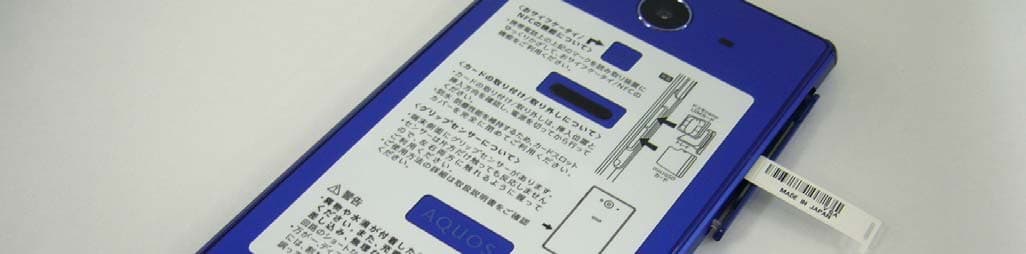
Click to zoom
Application Details
- Equipment Class
- PCE - PCS Licensed Transmitter held to ear
- Date of Grant
- Sep 23, 2015
- Application Purpose
- Original Equipment
- Date of Application
- Sep 23, 2015
- Equipment Note
- Smart Phone
- Frequency Range
- 1850.20000000 - 1909.80000000
- Company
- Sharp Corporation
- Country
- Japan
Documents & Files
Document Text
Text extracted from the exhibit documents filed with the FCC. Open a document above to read the original.
Users Manual
Don’t forget your mobile phone... or your manners! When using your mobile phone in a public place, don’t forget to show common courtesy and consideration for others around you. Sales: Manufacturer: SHARP Corporation For loss, theft, malfunction, and inquiries while overseas (24-hour reception) ■From DOCOMO mobile phones ■From land-line phones <Universal number> International call access code for the country you stay -81-3-6832-6600 * (toll free) * You are charged a call fee to Japan when calling from a land-line phone, etc. ※ If you use SH-01H, you should dial the number +81-3-6832-6600 (to enter “+”, touch and hold “0”). Universal number international prefix -8000120-0151 * * You might be charged a domestic call fee according to the call rate for the country you stay. ※ For international call access codes for major countries and universal number international prefix, refer to DOCOMO website. ● If you lose your handset or have it stolen, immediately take the steps necessary for suspending the use of the handset. ● If the handset you purchased is damaged, bring your handset to a repair counter specified by DOCOMO after returning to Japan. Repairs (Business hours: 24 hours (open all year round)) (No prefix) 113 (toll free) ■From DOCOMO mobile phones (In Japanese only) ■From land-line phones (In Japanese only) ※ Unavailable from part of IP phones. 0120-800-000 (toll free) ※ Unavailable from land-line phones, etc. General Inquiries <docomo Information Center> (Business hours: 9:00 a.m. to 8:00 p.m.) 0120-005-250 (toll free) ※ Service available in: English, Portuguese, Chinese, Spanish. ※ Unavailable from part of IP phones. (Business hours: 9:00 a.m. to 8:00 p.m. (open all year round)) (No prefix) 151 (toll free) ■From DOCOMO mobile phones (In Japanese only) ※ Unavailable from land-line phones, etc. ※ Unavailable from part of IP phones. 0120-800-000 (toll free) ■From land-line phones (In Japanese only) ● Please confirm the phone number before you dial. ● For Applications or Repairs and After-Sales Service, please contact the above-mentioned information center or the docomo Shop etc. near you on the NTT DOCOMO website. NTT DOCOMO website https://www.nttdocomo.co.jp/english/ INSTRUCTION MANUAL SH-01H ’15.● (1st Edition) 15● YI*** 1 ’15.● SH-01H_E_01.fm [0/12]~~~~~ ~~~~~ ~~~~~ ~~~~~ ~~~~~ Introduction Thank you for purchasing “SH-01H”. Be sure to read this manual before and during use to ensure proper operation. For optional parts (sold separately) compatible with the handset, refer to the DOCOMO website. (https://www.nttdocomo.co.jp/product/option/) (in Japanese only) Checking operation method Quick Start Guide (Basic package) (in Japanese only) This guide describes operations of basic functions. User's Manual (App of the handset) (in Japanese only) This manual describes detailed guidance and operations of functions. In the home screen, [R]/[Instruction Manual] User's Manual (in PDF format) This manual describes detailed guidance and operations of functions. Download from the DOCOMO website (https://www.nttdocomo.co.jp/english/support/ trouble/manual/download/index.html) ※The URL and contents are subject to change without prior notice. The screens and illustrations in this manual are shown as examples. The actual screens and illustrations may differ. The explanations in this manual are based on the case when the home app is docomo LIVE UX and the setting of kisekae is [Blue]. If you change the home app, operation procedures etc. may be different from the explanations of this manual. Note that “SH-01H” is referred to as “handset” in this manual. This manual refers to microSD Card, microSDHC Card or microSDXC Card as “microSD Card” or “microSD”. Reproduction of this manual in part or in whole without prior permission is prohibited. The contents of this manual are subject to change without prior notice. Basic package SH-01H (includes warranty) TV/Mobacas antenna cable SH01 Quick Start Guide (in Japanese only) Notes on usage (in Japanese only) SH-01H_E.book 0 ページ 2015年9月15日 火曜日 午後1時26分 4 Contents/Precautions SH-01H_E_01.fm [4/12] Before use, read these “Precautions” carefully and use your handset properly. Keep this manual in a safe place for future reference. These precautions contain information intended to prevent bodily injury to the user and to surrounding people, as well as damage to property, and must be observed at all times. The following symbols indicate the different degrees of injury or damage that may occur if information provided is not observed and the handset is used improperly. The following symbols indicate specific directions. “Precautions” is explained in the following six sections. Handling the handset, adapters, docomo nano UIM card and TV/ Mobacas antenna cable (general). . . . . . . . . . . . . . . . . . . . . P. 4 Handling the handset . . . . . . . . . . . . . . . . . . . . . . . . . . . . . . P. 5 Handling adapters . . . . . . . . . . . . . . . . . . . . . . . . . . . . . . . . . P. 6 Handling docomo nano UIM card . . . . . . . . . . . . . . . . . . . . . P. 7 Handling near electronic medical equipment . . . . . . . . . . . . P. 7 Material list . . . . . . . . . . . . . . . . . . . . . . . . . . . . . . . . . . . . . . P. 7 Precautions (ALWAYS FOLLOW THESE DIRECTIONS) Danger This symbol indicates that “death or serious bodily injury may directly and immediately result from improper use”. Warning This symbol indicates that “death or serious bodily injury may result from improper use”. Caution This symbol indicates that “minor injury and/or property damage may result from improper use”. Indicates a prohibited action. Indicates not to handle the device with wet hands. Indicates not to disassemble the device. Indicates that instructions specified are compulsory (must be followed). Indicates not to use the device near water or get it wet. Indicates that the power cord must be unplugged from the outlet. Handling the handset, adapters, docomo nano UIM card and TV/Mobacas antenna …
Text truncated - open the document above for the full version.
External Photos
Photo (External) FCC ID: APYHRO00225 1 / 31 / 3 Photo (External) FCC ID: APYHRO00225 2 / 32 / 3 Photo (External) FCC ID: APYHRO00225 138.4 3 / 3 73.473.4 3 / 3
ID Label/Location Info
FCC ID Location (On the display) STEP1 FCC ID : APYHRO00225 Home position The display is home position. In the desktop window, slid down from the status bar. Tap the Settings icon (red frame part) STEP2 Tap “ 端末情報 (= About phone ) ”” Tap 端末情報 (= About phone ) The display after the STEP1 and scroll down. STEP3 FCC ID: APYHRO00225 Model Name Tap “ 認証 (=Authentication )” FCC ID: APYHRO00225 The display after the STEP2. Manufacture
ID Label/Location Info
○ Location on the display The FCC ID can be displayed via the About phone & the Authentication under the Settings menu. FCC ID: APYHRO00225 FCC ID Location (On the display and the package) ○ Location on the individual package ① ① ① ② ① LCD display side Back cover side Manufacture :Model Name : ①③② FCC ID : APYHRO00225 ③ ② ①
ID Label/Location Info
E‐labeling information as in KDB784748 D02 APYHRO00225 UL e‐labeling (FCC) template.docx _Ver,; 02June 2015 A. Information to be displayed 1. The information that will be displayed on the e-label and information that will remain in the user manual is shown below: Information on E-label In Manual FCC ID number Yes DoC logo N/A 15.19 statement (“This device complies with part 15 of the FCC Rules. Operation is subject to the following two conditions: (1) This device may not cause harmful interference, and (2) this device must accept any interference received, including interference that may cause undesired operation.”) -> Yes Class A / B Digital Device user manual statements 1 -> Yes DoC declaration 1 N/A N/A Caution to the user that changes or modifications not expressly approved by the party responsible for compliance could void the user's authority to operate the equipment 1 -> Yes Describe any other FCC regulatory information included in e-label 1 N/A 1 If the e-label includes information typically included in the manual then the e-label shall clearly differentiate between information required to be on the device’s surface and information required to be in the manual – refer to 784748 D02 e labelling v01 section II D 3(b) Images of the e-label screen are provided below: Please refer to the “08_FCC-ID_Location” document. And the Part15B(JBP) is included in the FCC ID certification. B. Access to the required information on the e-label 1. Users are able to access the information in no more than three steps in a device’s menu. The actual steps are: Please refer to the “03_Declaration FCC ID label visibility” document regarding the detail (displayed in Japanese mode). Users need to operate only three steps as below 1. Tap the “Settings” icon in the status bar. 2. Tap the “About phone” in the “Settings” menu. 3. Tap the “Authentication” in the “About phone” menu. No special access codes or permissions are required to go through the above steps beyond entering a user- defined password to protect against unauthorized access to the device. 2. The information is stored on the device, no special accessories or supplemental plug-ins (e.g., a SIM/USIM card) are required to access the information. 3. Users are provided specific instructions on how to access the information. The information is provided in the page 97 of “12_UserManual_draft” document. C. Labeling for Importation and Purchasing Products utilizing e-labels are required to have a physical label on the product at the time of importation, marketing and sales. For devices imported in bulk and not packaged individually, a removable adhesive E‐labeling information as in KDB784748 D02 APYHRO00225 UL e‐labeling (FCC) template.docx _Ver,; 02June 2015 label or, for devices in protective bags, a label on the bags is acceptable for this purpose. Any removable label shall be of a type intended to survive normal shipping and handling and must only be removed by the customer after purchase. For devices imported already in individual packages ready for sale, the information may alternatively be provided on the package. It shall contain: 1. The FCC ID and/or the DoC logo (if applicable); and 2. Any other information required by specific rule to be provided on the surface of the product unless such information is permitted to be included in the User’s manual or other packaging inserts. Please refer to the “8_FCC-ID_Location” document. The FCC ID is displayed on the individual packages ready for sale. D. Other considerations 1. The above information must be programmed by the responsible party and the information must be secured in such a manner that third-parties cannot modify it. The users/third-parties cannot modify FCC ID information in the phone and FCC ID information is pre- programmed by SHARP. 2. All the applicable regulatory information required on the packaging or user instructions must be provided according to the rules even if it is displayed electronically. For example, hearing aid compatibility (HAC) ratings for the phones as specified in 47 C.F.R. § 20.19. The information required by the applicable FCC rule exists in the user manual.
Internal Photos
Photo (Internal) FCC ID: APYHRO00225 ANT‐0 WLAN/BT Cellular Sub‐Antenna (ANT‐1) 1 / 4 ANT0 WLAN/BT NFC ANT‐1 WLAN Cellular Main‐Antenna (ANT‐0) Cellular Main‐Antenna (ANT‐0) 1 / 4 Photo (Internal) FCC ID: APYHRO00225 2 / 42 / 4 Photo (Internal) FCC ID: APYHRO00225 3 / 43 / 4 Photo (Internal) FCC ID: APYHRO00225 4 / 44 / 4
RF Exposure Info
Page 1 of 48 Technical document No. 23163-1501 JQA File No. :KL80150336 Issue Date :September 10, 2015 TEST REPORT (SAR EVALUATION) Applicant:Sharp Corporation, Communication Systems Division Address:2-13-1, Iida, Hachihonmatsu, Higashi-Hiroshima City, Hiroshima, 739-0192, Japan Products:Smart Phone Model No.:SH-01H Serial No.:004401115521516 FCC ID:APYHRO00225 Test Standard:FCC Rules and Regulations Title 47 CFR Part 2 Test Results: Passed Date of Test:August 22 ~ September 6, 2015 Kousei Shibata Manager Japan Quality Assurance Organization KITA-KANSAI Testing Center SAITO EMC Branch 7-3-10, Saito-asagi, Ibaraki-shi, Osaka 567-0085, Japan ● The measurement values stated in Test Report was made with traceable to National Institute of Advanced Industrial Science and Technology (AIST) of Japan, National Institute of Information and Communications Technology (NICT) of Japan , and Laboratory for EMF and Microwave Electronics at the Swiss Federal Institute of Technology (ETH) in Zürich, Switzerland. ● The applicable standard, testing condition and testing method which were used for the tests are based on the request of the applicant. ● The test results presented in this report relate only to the offered test sample. ● The contents of this test report cannot be used for the purposes, such as advertisement for consumers. ● This test report shall not be reproduced except in full without the written approval of JQA. ● VLAC does not approve, certify or warrant the product by this test report. VLAC-001-2 JAPAN QUALITY ASSURANCE ORGANIZATION JQA File No. : KL80150336Issue Date : September 10, 2015 Model No.: SH-01HFCC ID: APYHRO00225 Standard: FCC Rules and Regulations Title 47 CFR Part 2 Page 2 of 48 Technical document No. 23163-1501 TABLE OF CONTENTS Page 1Description of the Device Under Test (DUT).................................................................................. 3 2Summary of Test Results................................................................................................................ 6 3Test Procedure................................................................................................................................. 7 4Test Location................................................................................................................................... 7 5Recognition of Test Laboratory....................................................................................................... 7 6Measurement System Diagram....................................................................................................... 8 7System Components........................................................................................................................ 9 8Measurement Process.....................................................................................................................12 9Measurement Uncertainties...........................................................................................................13 10Test Arrangement..........................................................................................................................15 11Tissue Verification..........................................................................................................................19 12System Performance Check............................................................................................................23 13RF Output Power Measurements...................................................................................................25 14SAR Measurements........................................................................................................................32 15Test Setup Photographs.................................................................................................................42 16Test Instruments............................................................................................................................47 17Appendix.........................................................................................................................................48 JAPAN QUALITY ASSURANCE ORGANIZATION JQA File No. : KL80150336Issue Date : September 10, 2015 Model No.: SH-01HFCC ID: APYHRO00225 Standard: FCC Rules and Regulations Title 47 CFR Part 2 Page 3 of 48 Technical document No. 23163-1501 1Description of the Device Under Test (DUT) 1.1General Information 1.Manufacturer:Sharp Corporation, Communication Systems Division 2-13-1, Iida, Hachihonmatsu, Higashi-Hiroshima City, Hiroshima, 739-0192, Japan 2.Products:Smart Phone 3.Model No.:SH-01H 4.Serial No.:004401115521516 5.Product Type:Pre-production 6.Date of Manufacture:July, 2015 7.Transmitting Frequency:GSM 850 (824 MHz – 849 MHz) PCS 1900 (1850 MHz – 1910 MHz) W-CDMA Band V (824 MHz – 849 MHz) WLAN 2.4 GHz (DTS : 2412 MHz – 2462 MHz) WLAN 5 GHz (U-NII 1 : 5150 MHz – 5250 MHz) WLAN 5 GHz (U-NII 2A : 5250 MHz – 5350 MHz) WLAN 5 GHz (U-NII 2C : 5470 MHz – 5725 MHz) Bluetooth (2402 MHz – 2480 MHz) 8.Battery Option:Lithium-ion Battery Pack LIS1613SPPC(SY6) (3100mAh) 9.Power Rating:4.0VDC 10.DUT Grounding:None 11.Device Category:Portable Device (§2.1093) 12.Exposure Category:General Population/Uncontrolled Exposure 13.FCC Rule Part(s):22(H), 24(E), 15.247, 15.407 14.DUT Authorization:Certification 15.Received Date of DUT:August 21, 2015 JAPAN QUALITY ASSURANCE ORGANIZATION JQA File No. : KL80150336Issue Date : September 10, 2015 Model No.: SH-01HFCC ID: APYHRO00225 Standard: FCC Rules and Regulations Title 47 CFR Part 2 Page 4 of 48 Technical document No. 23163-1501 1.2Wireless Technologies Air InterfaceDescription GSM Frequency band(s)850, 1900 Operating mode GSM (GMSK) GPRS (GMSK) GPRS Multi-Slot ClassClass 12 – Four Up VoIPSupported DTM (Dual Transfer Mode)Not supported W-CDMA Frequency band(s)Band V Operating mode UMTS Rel.99 (Voice & Data) HSDPA Rel.8 HSUPA Rel.8 VoIPSupported WLAN (DTS) Frequency band(s)2.4 GHz Ope…
Text truncated - open the document above for the full version.
RF Exposure Info
Appendix 1 – System Performance Check Plots Date: 8/22/2015 Test Laboratory: JAPAN QUALITY ASSURANCE ORGANIZATION System Performance Check DUT: Dipole 835 MHz; Type: D835V2; Serial: 4d104 Frequency: 835 MHz;Duty Cycle: 1:1 Room Ambient Temperature: 24.0°C; Liquid Temperature: 23.0°C Medium parameters used: f = 835 MHz; σ = 0.925 S/m; ε r = 42.459; ρ = 1000 kg/m 3 DASY5 Configuration: - Probe: EX3DV4 - SN3745; ConvF(8.78, 8.78, 8.78); Calibrated: 4/24/2015; - Sensor-Surface: 2mm (Mechanical Surface Detection) - Electronics: DAE4 Sn508; Calibrated: 11/7/2014 - Phantom: SAM v4.0 SN1194; Type: QD000P40CA; Serial: TP 1194 - Measurement SW: DASY52, Version 52.8 (8); SEMCAD X Version 14.6.10 (7331) Dipole/Input 250 mW/Area Scan (9x9x1): Measurement grid: dx=10mm, dy=10mm Maximum value of SAR (measured) = 3.09 W/kg Dipole/Input 250 mW/Zoom Scan (5x5x7)/Cube 0: Measurement grid: dx=8mm, dy=8mm, dz=5mm Reference Value = 59.11 V/m; Power Drift = 0.01 dB Peak SAR (extrapolated) = 3.63 W/kg SAR(1 g) = 2.44 W/kg; SAR(10 g) = 1.59 W/kg Maximum value of SAR (measured) = 3.10 W/kg 0 dB = 3.10 W/kg = 4.91 dBW/kg Date: 8/23/2015 Test Laboratory: JAPAN QUALITY ASSURANCE ORGANIZATION System Performance Check DUT: Dipole 835 MHz; Type: D835V2; Serial: 4d104 Frequency: 835 MHz;Duty Cycle: 1:1 Room Ambient Temperature: 24.0°C; Liquid Temperature: 23.0°C Medium parameters used: f = 835 MHz; σ = 0.921 S/m; ε r = 42.387; ρ = 1000 kg/m 3 DASY5 Configuration: - Probe: EX3DV4 - SN3745; ConvF(8.78, 8.78, 8.78); Calibrated: 4/24/2015; - Sensor-Surface: 2mm (Mechanical Surface Detection) - Electronics: DAE4 Sn508; Calibrated: 11/7/2014 - Phantom: SAM v4.0 SN1194; Type: QD000P40CA; Serial: TP 1194 - Measurement SW: DASY52, Version 52.8 (8); SEMCAD X Version 14.6.10 (7331) Dipole/Input 250 mW/Area Scan (9x9x1): Measurement grid: dx=10mm, dy=10mm Maximum value of SAR (measured) = 3.08 W/kg Dipole/Input 250 mW/Zoom Scan (5x5x7)/Cube 0: Measurement grid: dx=8mm, dy=8mm, dz=5mm Reference Value = 59.05 V/m; Power Drift = -0.00 dB Peak SAR (extrapolated) = 3.61 W/kg SAR(1 g) = 2.42 W/kg; SAR(10 g) = 1.59 W/kg Maximum value of SAR (measured) = 3.07 W/kg 0 dB = 3.07 W/kg = 4.87 dBW/kg Date: 8/23/2015 Test Laboratory: JAPAN QUALITY ASSURANCE ORGANIZATION System Performance Check DUT: Dipole 835 MHz; Type: D835V2; Serial: 4d104 Frequency: 835 MHz;Duty Cycle: 1:1 Room Ambient Temperature: 24.0°C; Liquid Temperature: 23.0°C Medium parameters used: f = 835 MHz; σ = 0.99 S/m; ε r = 55.419; ρ = 1000 kg/m 3 DASY5 Configuration: - Probe: EX3DV4 - SN3745; ConvF(8.81, 8.81, 8.81); Calibrated: 4/24/2015; - Sensor-Surface: 2mm (Mechanical Surface Detection) - Electronics: DAE4 Sn508; Calibrated: 11/7/2014 - Phantom: SAM v4.0 SN1194; Type: QD000P40CA; Serial: TP 1194 - Measurement SW: DASY52, Version 52.8 (8); SEMCAD X Version 14.6.10 (7331) Dipole/Input 250 mW/Area Scan (9x9x1): Measurement grid: dx=10mm, dy=10mm Maximum value of SAR (measured) = 3.12 W/kg Dipole/Input 250 mW/Zoom Scan (5x5x7)/Cube 0: Measurement grid: dx=8mm, dy=8mm, dz=5mm Reference Value = 57.69 V/m; Power Drift = -0.00 dB Peak SAR (extrapolated) = 3.69 W/kg SAR(1 g) = 2.51 W/kg; SAR(10 g) = 1.66 W/kg Maximum value of SAR (measured) = 3.17 W/kg 0 dB = 3.17 W/kg = 5.01 dBW/kg Date: 8/26/2015 Test Laboratory: JAPAN QUALITY ASSURANCE ORGANIZATION System Performance Check DUT: Dipole 1900 MHz; Type: D1900V2; Serial: 5d129 Frequency: 1900 MHz;Duty Cycle: 1:1 Room Ambient Temperature: 24.0°C; Liquid Temperature: 23.0°C Medium parameters used: f = 1900 MHz; σ = 1.535 S/m; ε r = 52.816; ρ = 1000 kg/m 3 DASY5 Configuration: - Probe: EX3DV4 - SN3745; ConvF(6.99, 6.99, 6.99); Calibrated: 4/24/2015; - Sensor-Surface: 2mm (Mechanical Surface Detection) - Electronics: DAE4 Sn508; Calibrated: 11/7/2014 - Phantom: SAM v4.0 SN1194; Type: QD000P40CA; Serial: TP 1194 - Measurement SW: DASY52, Version 52.8 (8); SEMCAD X Version 14.6.10 (7331) Dipole/Input 250 mW/Area Scan (9x9x1): Measurement grid: dx=10mm, dy=10mm Maximum value of SAR (measured) = 14.8 W/kg Dipole/Input 250 mW/Zoom Scan (5x5x7)/Cube 0: Measurement grid: dx=8mm, dy=8mm, dz=5mm Reference Value = 99.78 V/m; Power Drift = -0.01 dB Peak SAR (extrapolated) = 18.8 W/kg SAR(1 g) = 10.5 W/kg; SAR(10 g) = 5.51 W/kg Maximum value of SAR (measured) = 15.0 W/kg 0 dB = 15.0 W/kg = 11.76 dBW/kg Date: 8/27/2015 Test Laboratory: JAPAN QUALITY ASSURANCE ORGANIZATION System Performance Check DUT: Dipole 1900 MHz; Type: D1900V2; Serial: 5d129 Frequency: 1900 MHz;Duty Cycle: 1:1 Room Ambient Temperature: 24.0°C; Liquid Temperature: 23.0°C Medium parameters used: f = 1900 MHz; σ = 1.398 S/m; ε r = 40.665; ρ = 1000 kg/m 3 DASY5 Configuration: - Probe: EX3DV4 - SN3745; ConvF(7.29, 7.29, 7.29); Calibrated: 4/24/2015; - Sensor-Surface: 2mm (Mechanical Surface Detection) - Electronics: DAE4 Sn508; Calibrated: 11/7/2014 - Phantom: SAM v4.0 SN1194; Type: QD000P40CA; Serial: TP 1194 - Measurement SW: DASY52, Version 52.8 (8); SEMCAD X Version 14.6.10 (7331) Dipole/Input 250 mW/Area Scan (9x9x1): Measurement grid: dx=10mm, dy=10mm Maximum value of SAR (measured) = 14.7 W/kg Dipole/Input 250 mW/Zoom Scan (5x5x7)/Cube 0: Measurement grid: dx=8mm, dy=8mm, dz=5mm Reference Value = 103.8 V/m; Power Drift = -0.00 dB Peak SAR (extrapolated) = 18.6 W/kg SAR(1 g) = 10.2 W/kg; SAR(10 g) = 5.32 W/kg Maximum value of SAR (measured) = 14.6 W/kg 0 dB = 14.6 W/kg = 11.64 dBW/kg Date: 8/31/2015 Test Laboratory: JAPAN QUALITY ASSURANCE ORGANIZATION System Performance Check DUT: Dipole 5 GHz; Type: D5GHzV2; Serial: 1092 Frequency: 5250 MHz;Duty Cycle: 1:1 Room Ambient Temperature: 24.0°C; Liquid Temperature: 23.0°C Medium parameters used: f = 5250 MHz; σ = 4.598 S/m; ε r = 36.178; ρ = 1000 kg/m 3 DASY5 Configuration: - Probe: EX3DV4 - SN7321; ConvF(5.16, 5.16, 5.16); Calibrated: 8/18/2015; - Sensor-Surface: 2mm (Mechanical Surface Detection) - Electronics: DAE4 Sn508; Calibrated: 11/7/2014 - Phantom: SAM v4.0 SN1194; Type: QD000P40CA; Serial: TP 1194 - Measurement SW: DASY…
Text truncated - open the document above for the full version.
RF Exposure Info
Appendix 2 – Highest SAR Test Plots Date: 8/22/2015 Test Laboratory: JAPAN QUALITY ASSURANCE ORGANIZATION 189ch / GSM 850 - GPRS 4slots DUT: Smart Phone; Type: SH-01H; Serial: 004401115521516 Frequency: 836.4 MHz;Duty Cycle: 1:2.08018 Room Ambient Temperature: 24.0°C; Liquid Temperature: 23.0°C Medium parameters used (interpolated): f = 836.4 MHz; σ = 0.926 S/m; ε r = 42.446; ρ = 1000 kg/m 3 DASY5 Configuration: - Probe: EX3DV4 - SN3745; ConvF(8.78, 8.78, 8.78); Calibrated: 4/24/2015; - Sensor-Surface: 2mm (Mechanical Surface Detection) - Electronics: DAE4 Sn508; Calibrated: 11/7/2014 - Phantom: SAM v4.0 SN1194; Type: QD000P40CA; Serial: TP 1194 - Measurement SW: DASY52, Version 52.8 (8); SEMCAD X Version 14.6.10 (7331) Head/Left Touched/Area Scan (11x8x1): Measurement grid: dx=15mm, dy=15mm Info: Interpolated medium parameters used for SAR evaluation. Maximum value of SAR (measured) = 0.230 W/kg Head/Left Touched/Zoom Scan (5x5x7)/Cube 0: Measurement grid: dx=8mm, dy=8mm, dz=5mm Reference Value = 15.67 V/m; Power Drift = -0.03 dB Peak SAR (extrapolated) = 0.249 W/kg SAR(1 g) = 0.200 W/kg; SAR(10 g) = 0.157 W/kg Info: Interpolated medium parameters used for SAR evaluation. Maximum value of SAR (measured) = 0.227 W/kg 0 dB = 0.227 W/kg = -6.44 dBW/kg Plot No.1 Date: 8/23/2015 Test Laboratory: JAPAN QUALITY ASSURANCE ORGANIZATION 189ch / GSM 850 - GPRS 4slots DUT: Smart Phone; Type: SH-01H; Serial: 004401115521516 Frequency: 836.4 MHz;Duty Cycle: 1:2.08018 Room Ambient Temperature: 24.0°C; Liquid Temperature: 23.0°C Medium parameters used (interpolated): f = 836.4 MHz; σ = 0.991 S/m; ε r = 55.409; ρ = 1000 kg/m 3 DASY5 Configuration: - Probe: EX3DV4 - SN3745; ConvF(8.81, 8.81, 8.81); Calibrated: 4/24/2015; - Sensor-Surface: 2mm (Mechanical Surface Detection) - Electronics: DAE4 Sn508; Calibrated: 11/7/2014 - Phantom: SAM v4.0 SN1194; Type: QD000P40CA; Serial: TP 1194 - Measurement SW: DASY52, Version 52.8 (8); SEMCAD X Version 14.6.10 (7331) Body/Rear/Area Scan (8x13x1): Measurement grid: dx=15mm, dy=15mm Info: Interpolated medium parameters used for SAR evaluation. Maximum value of SAR (measured) = 0.355 W/kg Body/Rear/Zoom Scan (5x5x7)/Cube 0: Measurement grid: dx=8mm, dy=8mm, dz=5mm Reference Value = 17.72 V/m; Power Drift = -0.01 dB Peak SAR (extrapolated) = 0.393 W/kg SAR(1 g) = 0.306 W/kg; SAR(10 g) = 0.229 W/kg Info: Interpolated medium parameters used for SAR evaluation. Maximum value of SAR (measured) = 0.353 W/kg 0 dB = 0.353 W/kg = -4.52 dBW/kg Plot No.2 Date: 8/27/2015 Test Laboratory: JAPAN QUALITY ASSURANCE ORGANIZATION 661ch / PCS 1900 - GPRS 4slots DUT: Smart Phone; Type: SH-01H; Serial: 004401115521516 Frequency: 1880 MHz;Duty Cycle: 1:2.08018 Room Ambient Temperature: 24.0°C; Liquid Temperature: 23.0°C Medium parameters used: f = 1880 MHz; σ = 1.376 S/m; ε r = 40.755; ρ = 1000 kg/m 3 DASY5 Configuration: - Probe: EX3DV4 - SN3745; ConvF(7.29, 7.29, 7.29); Calibrated: 4/24/2015; - Sensor-Surface: 2mm (Mechanical Surface Detection) - Electronics: DAE4 Sn508; Calibrated: 11/7/2014 - Phantom: SAM v4.0 SN1194; Type: QD000P40CA; Serial: TP 1194 - Measurement SW: DASY52, Version 52.8 (8); SEMCAD X Version 14.6.10 (7331) Head/Right Touched/Area Scan (11x8x1): Measurement grid: dx=15mm, dy=15mm Maximum value of SAR (measured) = 0.353 W/kg Head/Right Touched/Zoom Scan (5x5x7)/Cube 0: Measurement grid: dx=8mm, dy=8mm, dz=5mm Reference Value = 11.54 V/m; Power Drift = 0.03 dB Peak SAR (extrapolated) = 0.445 W/kg SAR(1 g) = 0.297 W/kg; SAR(10 g) = 0.182 W/kg Maximum value of SAR (measured) = 0.358 W/kg 0 dB = 0.358 W/kg = -4.46 dBW/kg Plot No.3 Date: 8/26/2015 Test Laboratory: JAPAN QUALITY ASSURANCE ORGANIZATION 661ch / PCS 1900 - GPRS 4slots DUT: Smart Phone; Type: SH-01H; Serial: 004401115521516 Frequency: 1880 MHz;Duty Cycle: 1:2.08018 Room Ambient Temperature: 24.0°C; Liquid Temperature: 23.0°C Medium parameters used: f = 1880 MHz; σ = 1.514 S/m; ε r = 52.893; ρ = 1000 kg/m 3 DASY5 Configuration: - Probe: EX3DV4 - SN3745; ConvF(6.99, 6.99, 6.99); Calibrated: 4/24/2015; - Sensor-Surface: 2mm (Mechanical Surface Detection) - Electronics: DAE4 Sn508; Calibrated: 11/7/2014 - Phantom: SAM v4.0 SN1194; Type: QD000P40CA; Serial: TP 1194 - Measurement SW: DASY52, Version 52.8 (8); SEMCAD X Version 14.6.10 (7331) Body/Rear/Area Scan (8x13x1): Measurement grid: dx=15mm, dy=15mm Maximum value of SAR (measured) = 0.389 W/kg Body/Rear/Zoom Scan (5x5x7)/Cube 0: Measurement grid: dx=8mm, dy=8mm, dz=5mm Reference Value = 12.67 V/m; Power Drift = -0.03 dB Peak SAR (extrapolated) = 0.472 W/kg SAR(1 g) = 0.318 W/kg; SAR(10 g) = 0.199 W/kg Maximum value of SAR (measured) = 0.398 W/kg 0 dB = 0.398 W/kg = -4.00 dBW/kg Plot No.4 Date: 8/22/2015 Test Laboratory: JAPAN QUALITY ASSURANCE ORGANIZATION 4182ch / W-CDMA Band V (Main ANT) DUT: Smart Phone; Type: SH-01H; Serial: 004401115521516 Frequency: 836.4 MHz;Duty Cycle: 1:1 Room Ambient Temperature: 24.0°C; Liquid Temperature: 23.0°C Medium parameters used (interpolated): f = 836.4 MHz; σ = 0.926 S/m; ε r = 42.446; ρ = 1000 kg/m 3 DASY5 Configuration: - Probe: EX3DV4 - SN3745; ConvF(8.78, 8.78, 8.78); Calibrated: 4/24/2015; - Sensor-Surface: 2mm (Mechanical Surface Detection) - Electronics: DAE4 Sn508; Calibrated: 11/7/2014 - Phantom: SAM v4.0 SN1194; Type: QD000P40CA; Serial: TP 1194 - Measurement SW: DASY52, Version 52.8 (8); SEMCAD X Version 14.6.10 (7331) Head/Right Touched/Area Scan (11x8x1): Measurement grid: dx=15mm, dy=15mm Info: Interpolated medium parameters used for SAR evaluation. Maximum value of SAR (measured) = 0.210 W/kg Head/Right Touched/Zoom Scan (5x6x7)/Cube 0: Measurement grid: dx=8mm, dy=8mm, dz=5mm Reference Value = 15.39 V/m; Power Drift = 0.03 dB Peak SAR (extrapolated) = 0.242 W/kg SAR(1 g) = 0.196 W/kg; SAR(10 g) = 0.152 W/kg Info: Interpolated medium parameters used for SAR evaluation. Maximum value of SAR (measured) = 0.221 W/kg 0 dB = 0.221 W/kg = -6.56 dBW/kg Plot No.5 Date: 8/23/2015 Test Laboratory: JAPAN QUALITY ASSURANCE…
Text truncated - open the document above for the full version.
RF Exposure Info
Appendix 3 – Dosimetric E-Field Probe Calibration Data
RF Exposure Info
Appendix 4 – System Validation Dipole Calibration Data
Test Report
Page 1 of 45 Technical document No. 23199-1501 JQA File No. :KL80150337 Issue Date :September 15, 2015 T E S T R E P O R T Applicant:Sharp Corporation, Communication Systems Division Address:2-13-1, Iida Hachihonmatsu, Higashi-Hiroshima City, Hiroshima, 739-0192, Japan Products:Smart Phone Model No.:SH-01H Serial No.:004401115521631 004401115521664 FCC ID:APYHRO00225 Test Standard:CFR 47 FCC Rules and Regulations Part 22 Test Results: Passed Date of Test:August 24 ~ September 8, 2015 Kousei Sh…
Text truncated - open the document above for the full version.
Contact Information
Applicant
Taihei Ohtsuka(Deputy Division Manager, ESG & Q promotion unit)
Technical Contact
Sharp Electronics CorporationSteve Petruska
[email protected]201-529-9689
Sharp Plaza · Mahwah, New Jersey
Non-Technical Contact
Sharp Electronics CorporationSteve Petruska
[email protected]201-529-9689
Test Firm
Japan Qlty. Assur. Org. Kitakansai Testing CenterHiroyuki Nakamura
Technical Specifications
| # | Rule Parts | Frequency Range | Power Output | Emission | Tolerance |
|---|---|---|---|---|---|
| 3 | 24E | 1.85 GHz - 1.91 GHz | 1.202 W | 245KGXW | 2.5 ppm |
Other Applications from Sharp Corporation
APYHRO00343
Aug 17, 2026Smartphone
Equipment Class
DTS - Digital Transmission SystemAPYHRO00342
Jul 29, 2026Smart phone
Equipment Class
DXX - Part 15 Low Power Communication Device TransmitterAPYHRO00341
May 28, 2026Smart phone
Equipment Class
DTS - Digital Transmission SystemAPYHRO00340
Dec 01, 2025BT remote control
Equipment Class
DTS - Digital Transmission SystemAPYHRO00339
Sep 17, 2025Smart phone
Equipment Class
NII - Unlicensed National Information Infrastructure TX