APYHRO00231Cellular Phone
Sharp Corporation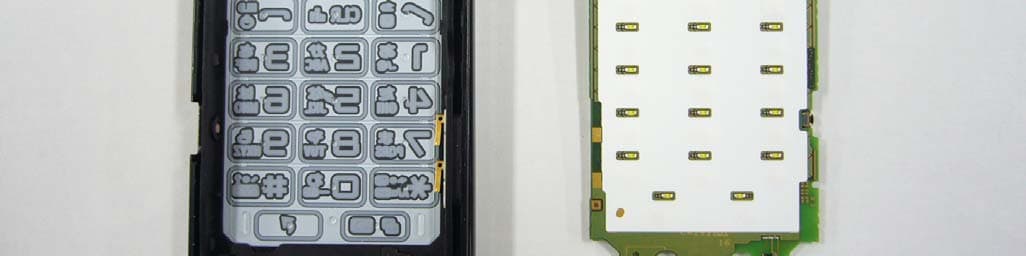
Click to zoom
Application Details
- Equipment Class
- DSS - Part 15 Spread Spectrum Transmitter
- Date of Grant
- Jan 26, 2016
- Application Purpose
- Original Equipment
- Date of Application
- Jan 26, 2016
- Equipment Note
- Cellular Phone
- Frequency Range
- 2402.00000000 - 2480.00000000
- Company
- Sharp Corporation
- Country
- Japan
Documents & Files
Document Text
Text extracted from the exhibit documents filed with the FCC. Open a document above to read the original.
Users Manual
SH-03H INSTRUCTION MANUAL ’16.2 Don’t forget your mobile phone... or your manners! When using your mobile phone in a public place, don’t forget to show common courtesy and consideration for others around you. Sales: Manufacturer: SHARP Corporation For loss, theft, malfunction, and inquiries while overseas (24-hour reception) From DOCOMO mobile phones From land-line phones <Universal number> International call access code for the country you stay -81-3-6832-6600 * (toll free) * You are charged a call fee to Japan when calling from a land-line phone, etc. If you use SH-03H, you should dial the number +81-3-6832-6600 (to enter “+”, press and hold “0”). Universal number international prefix -8000120-0151 * * You might be charged a domestic call fee according to the call rate for the country you stay. For international call access codes for major countries and universal number international prefix, refer to DOCOMO International Services website. If you lose your handset or have it stolen, immediately take the steps necessary for suspending the use of the handset. If the handset you purchased is damaged, bring your handset to a repair counter specified by DOCOMO after returning to Japan. Repairs (Business hours: 24 hours (open all year round)) (No prefix) 113 (toll free) From DOCOMO mobile phones (In Japanese only) From land-line phones (In Japanese only) Unavailable from part of IP phones. 0120-800-000 (toll free) Unavailable from land-line phones, etc. General Inquiries <docomo Information Center> (Business hours: 9:00 a.m. to 8:00 p.m.) 0120-005-250 (toll free) Service available in: English, Portuguese, Chinese, Spanish. Unavailable from part of IP phones. (Business hours: 9:00 a.m. to 8:00 p.m. (open all year round)) (No prefix) 151 (toll free) From DOCOMO mobile phones (In Japanese only) Unavailable from land-line phones, etc. Unavailable from part of IP phones. 0120-800-000 (toll free) From land-line phones (In Japanese only) Please confirm the phone number before you dial. For Applications or Repairs and After-Sales Service, please contact the above-mentioned information center or the docomo Shop etc. near you on the NTT DOCOMO website. NTT DOCOMO website https://www.nttdocomo.co.jp/english/ 1 16B YI ** ’16.2 (1st Edition) Introduction Thank you for purchasing "SH-03H". Be sure to read this manual before and during use to ensure proper operation. zThe screens and illustrations in this manual are shown as examples. The actual screens and illustrations may differ. zKey illustrations in this manual differ from the actual design of the keys. zNote that "SH-03H" is referred to as "handset" in this manual. zThis manual refers to microSD Card or microSDHC Card as "microSD Card" or "microSD". zReproduction of this manual in part or in whole without prior permission is prohibited. zThe contents of this manual are subject to change without prior notice. zFor optional parts (sold separately) compatible with the handset, refer to the DOCOMO website. https://www.nttdocomo.co.jp/product/option/ (in Japanese only) Checking operation method Quick Start Guide (Basic package) (in Japanese only) This guide describes operations of basic functions. Instruction Manual (App of the handset) (in Japanese only) This manual describes detailed guidance and operations of functions. In the standby screen, z /[Tools]/[Instruction Manual] Instruction Manual (in PDF format) This manual describes detailed guidance and operations of functions. Download from the DOCOMO website https://www.nttdocomo.co.jp/english/support/trouble/ manual/download/index.html *The URL and contents are subject to change without prior notice. Basic package SH-03H (includes warranty) Back Cover SH75Battery Pack SH43 Desktop Holder SH48Quick Start Guide (in Japanese only) Contents/Precautions 3 zBefore use, read these "Precautions" carefully and use your handset properly. Keep this manual in a safe place for future reference. zThese precautions contain information intended to prevent bodily injury to the user and to surrounding people, as well as damage to property, and must be observed at all times. The following symbols indicate the different degrees of injury or damage that may occur if information provided is not observed and the handset is used improperly. The following symbols indicate specific directions. "Precautions" is explained in the following seven sections. zHandling the handset, battery pack, adapters, desktop holder and docomo nano UIM card (general) . . . . . . . . . . . . . . . . . . . . . . P.3 zHandling the handset . . . . . . . . . . . . . . . . . . . . . . . . . . . . . . . P.4 zHandling the battery pack . . . . . . . . . . . . . . . . . . . . . . . . . . . . P.5 zHandling adapters or the desktop holder . . . . . . . . . . . . . . . . P.5 zHandling docomo nano UIM card . . . . . . . . . . . . . . . . . . . . . . P.6 zHandling near electronic medical equipment . . . . . . . . . . . . . P.6 zMaterial list . . . . . . . . . . . . . . . . . . . . . . . . . . . . . . . . . . . . . . . P.7 Handling the handset, battery pack, adapters, desktop holder and docomo nano UIM card (general) Danger Do not use, store or leave the equipment in locations subject to high temperatures or accumulation of heat (near a fire or heating unit, in a kotatsu or bedding, under direct sunlight, inside a vehicle on a hot day, etc.). May cause fires, burns, bodily injury, electric shock, etc. Do not place the equipment inside cooking appliances such as microwave ovens or pressure cookers. May cause fires, burns, bodily injury, electric shock, etc. Do not attempt to disassemble or modify the equipment. May cause fires, burns, bodily injury, electric shock, etc. Do not get the equipment wet with liquids such as water (drinking water, sweat, seawater, pet urine, etc.). May cause fires, burns, bodily injury, electric shock, etc. Refer to the following for details on waterproofness. nP.9 "Waterproof/Dustproof" Do not allow liquids (water, drinking water, pet u…
Text truncated - open the document above for the full version.
Users Manual
Appendix/Index 79 Others zUnder the MPEG-4 Visual Patent Portfolio License, customers have licensed permission for the following use of this product to engage in non-profit personal use. Other uses are not permitted. ■Encoding MPEG-4 standard video (henceforth referred to as MPEG-4 video). ■Decoding an MPEG-4 video that a customer not engaged in personal commercial activities has encoded. ■Decoding an MPEG-4 video obtained from a licensed provider. For details on other intended uses, contact MPEG LA, LLC. zThis product is licensed under the MPEG-4 Systems Patent Portfolio License for encoding in compliance with the MPEG-4 Systems Standard. An additional license and payment of royalties are necessary in the following cases. ■Data stored or replicated in physical media which is paid for on a title by title basis. ■Data which is paid for on a title by title basis and is transmitted to an end user for permanent storage and/or use. Such additional license may be obtained from MPEG LA, LLC. Contact MPEG LA, LLC for additional details. zThis product is licensed under the AVC patent portfolio license for the personal and noncommercial use of a consumer to (i) encode video in compliance with the AVC standard (henceforth referred to as AVC video) and/or (ii) decode AVC video that was encoded by a consumer engaged in a personal and noncommercial activity and/or was obtained from a video provider licensed to provide AVC video. No license is granted or shall be implied for any other use. Additional information may be obtained from MPEG LA, L.L.C. See http://www.mpegla.com. zThis product is licensed under the VC-1 Patent Portfolio License for the personal and noncommercial use of a consumer to (i) encode video in compliance with the VC-1 standard (henceforth referred to as VC-1 video) and/or (ii) decode VC-1 video that was encoded by a consumer engaged in a personal and noncommercial activity and/or was obtained from a video provider licensed to provide VC-1 video. No license is granted or shall be implied for any other use. Additional information may be obtained from MPEG LA, L.L.C. See http://www.mpegla.com. zThe abbreviations of operating systems (Japanese versions) below are used in this manual. ■Windows 8.1 stands for Microsoft ® Windows ® 8.1, Microsoft ® Windows ® 8.1 Pro and Microsoft ® Windows ® 8.1 Enterprise. ■Windows 8 stands for Microsoft ® Windows ® 8, Microsoft ® Windows ® 8 Pro and Microsoft ® Windows ® 8 Enterprise. ■Windows 7 stands for Microsoft ® Windows ® 7 (Starter, Home Basic, Home Premium, Professional, Enterprise and Ultimate). ■Windows Vista stands for Windows Vista ® (Home Basic, Home Premium, Business, Enterprise and Ultimate). zThe Bluetooth word mark and logos are owned by the Bluetooth SIG, INC. and any use of such marks by NTT DOCOMO, INC. is under license. Other trademarks and trade names are those of their respective owners. zGoogle, Google logo, Android, Google Search and Google Search logo are trademarks of Google Inc. Open source software zThis product includes software based on GNU General Public License (GPL), GNU Lesser General Public License (LGPL) and other licenses. For details on licenses of related software, in the standby screen, z /[Settings]/[Other settings]/[Device info]/[Legal information] /[Open source licenses]. zSource codes of software based on GPL, LGPL and Mozilla Public License (MPL) can be referred to on the following website for free. For details, refer to the following website. https://sh-dev.sharp.co.jp/android/modules/oss/ (in Japanese only) zThe handset can unlock the SIM lock. Unlock the SIM lock to use non-DOCOMO SIM cards. zSome services, functions, etc. may be unavailable. DOCOMO shall not guarantee any operation of the handset. zFor details on unlocking SIM lock, refer to the DOCOMO website. 1 Insert non-DOCOMO SIM card 2 Turn the power on 3 Enter the SIM unlock code 4 [Unlock]/t Unlocking SIM lock
ID Label/Location Info
Spec Label and Location FCC ID : APYHRO00231 ○Spec Label Vendor: Model No. ① Approval Number of JATE ② Certification Number of TELEC ③ Barcode of IMEI ④ IMEI (Production Serial Number) ⑤ Production Year & Month ⑥ Color Model No. ⑤⑥ Manufacturer/Applicant: SHARP Co. Caution:About theuse in aircrafts FCC ID: APYHRO00231 ○Location Manufacturer/Applicant: SHARP Co. Caution: About the use in aircrafts, please obey the instructions of airline. Don't remove this label. FCC ID label is bottom of the battery case.
Internal Photos
Photo (Internal) FCC ID: APYHRO00231 1 / 41 / 4 Photo (Internal) FCC ID: APYHRO00231 2 / 42 / 4 Photo (Internal) FCC ID: APYHRO00231 3 / 43 / 4 Photo (Internal) FCC ID: APYHRO00231 4 / 44 / 4
RF Exposure Info
Page 1 of 33 Technical document No. 23163-1501 JQA File No. :KL80150650 Issue Date :January 14, 2016 TEST REPORT (SAR EVALUATION) Applicant:Sharp Corporation, Consumer Electronics Company, Communication Systems Division Address:2-13-1, Iida, Hachihonmatsu, Higashi-Hiroshima City, Hiroshima, 739-0192, Japan Products:Cellular Phone Model No.:SH-03H Serial No.:004401115680460 FCC ID:APYHRO00231 Test Standard:FCC Rules and Regulations Title 47 CFR Part 2 Test Results: Passed Date of Test:December 24 ~ 25, 2015 Kousei Shibata Manager Japan Quality Assurance Organization KITA-KANSAI Testing Center SAITO EMC Branch 7-3-10, Saito-asagi, Ibaraki-shi, Osaka 567-0085, Japan ● The measurement values stated in Test Report was made with traceable to National Institute of Advanced Industrial Science and Technology (AIST) of Japan, National Institute of Information and Communications Technology (NICT) of Japan , and Laboratory for EMF and Microwave Electronics at the Swiss Federal Institute of Technology (ETH) in Zürich, Switzerland. ● The applicable standard, testing condition and testing method which were used for the tests are based on the request of the applicant. ● The test results presented in this report relate only to the offered test sample. ● The contents of this test report cannot be used for the purposes, such as advertisement for consumers. ● This test report shall not be reproduced except in full without the written approval of JQA. ● VLAC does not approve, certify or warrant the product by this test report. VLAC-001-2 JAPAN QUALITY ASSURANCE ORGANIZATION JQA File No. : KL80150650Issue Date : January 14, 2016 Model No.: SH-03HFCC ID: APYHRO00231 Standard: FCC Rules and Regulations Title 47 CFR Part 2 Page 2 of 33 Technical document No. 23163-1501 TABLE OF CONTENTS Page 1Description of the Device Under Test (DUT).................................................................................. 3 2Summary of Test Results................................................................................................................ 5 3Test Procedure................................................................................................................................. 6 4Test Location................................................................................................................................... 6 5Recognition of Test Laboratory....................................................................................................... 6 6Measurement System Diagram....................................................................................................... 7 7System Components........................................................................................................................ 8 8Measurement Process.....................................................................................................................11 9Measurement Uncertainties...........................................................................................................12 10Test Arrangement..........................................................................................................................14 11Tissue Verification..........................................................................................................................17 12System Performance Check............................................................................................................20 13RF Output Power Measurements...................................................................................................22 14SAR Measurements........................................................................................................................25 15Test Setup Photographs.................................................................................................................29 16Test Instruments............................................................................................................................32 17Appendix.........................................................................................................................................33 JAPAN QUALITY ASSURANCE ORGANIZATION JQA File No. : KL80150650Issue Date : January 14, 2016 Model No.: SH-03HFCC ID: APYHRO00231 Standard: FCC Rules and Regulations Title 47 CFR Part 2 Page 3 of 33 Technical document No. 23163-1501 1Description of the Device Under Test (DUT) 1.1General Information 1.Manufacturer:Sharp Corporation, Consumer Electronics Company, Communication Systems Division 2-13-1, Iida, Hachihonmatsu, Higashi-Hiroshima City, Hiroshima, 739-0192, Japan 2.Products:Cellular Phone 3.Model No.:SH-03H 4.Serial No.:004401115680460 5.Product Type:Pre-production 6.Date of Manufacture:December, 2015 7.Transmitting Frequency:W-CDMA Band V (824 MHz – 849 MHz) Bluetooth (2402 MHz – 2480 MHz) 8.Battery Option:Lithium-ion Battery Pack SH43 (1410mAh) 9.Power Rating:4.0VDC 10.DUT Grounding:None 11.Device Category:Portable Device (§2.1093) 12.Exposure Category:General Population/Uncontrolled Exposure 13.FCC Rule Part(s):22(H), 15.247 14.DUT Authorization:Certification 15.Received Date of DUT:December 22, 2015 JAPAN QUALITY ASSURANCE ORGANIZATION JQA File No. : KL80150650Issue Date : January 14, 2016 Model No.: SH-03HFCC ID: APYHRO00231 Standard: FCC Rules and Regulations Title 47 CFR Part 2 Page 4 of 33 Technical document No. 23163-1501 1.2Wireless Technologies Air InterfaceDescription W-CDMA Frequency band(s)Band V Operating mode UMTS Rel.99 (Voice & Data) HSDPA Rel.8 HSUPA Rel.8 VoIPSupported Bluetooth Frequency band(s)2.4 GHz Operating mode Version 4.0+EDR Version 4.0 LE 1.3Maximum Output Power ModeMax. Tune-up Limit (dBm) W-CDMA Band V Rel. 9924.0 HSDPA23.8 HSUPA23.8 ModeMax. Tune-up Limit (dBm) Bluetooth9.0 Bluetooth LE9.0 JAPAN QUALITY ASSURANCE ORGANIZATION JQA File No. : KL80150650Issue Date : January 14, 2016 Model No.: SH-03HFCC ID: APYHRO00231 Standard: FCC Rules and Regulation…
Text truncated - open the document above for the full version.
RF Exposure Info
Appendix 1 – System Performance Check Plots Date: 12/24/2015 Test Laboratory: JAPAN QUALITY ASSURANCE ORGANIZATION System Performance Check DUT: Dipole 835 MHz; Type: D835V2; Serial: 4d081 Frequency: 835 MHz;Duty Cycle: 1:1 Room Ambient Temperature: 24.0°C; Liquid Temperature: 23.0°C Medium parameters used: f = 835 MHz; σ = 0.924 S/m; ε r = 42.33; ρ = 1000 kg/m 3 DASY5 Configuration: - Probe: ET3DV6 - SN1679; ConvF(6.4, 6.4, 6.4); Calibrated: 8/12/2015; - Sensor-Surface: 4mm (Mechanical Surface Detection) - Electronics: DAE4 Sn508; Calibrated: 11/23/2015 - Phantom: SAM v4.0 SN1194; Type: QD000P40CA; Serial: TP 1194 - Measurement SW: DASY52, Version 52.8 (8); SEMCAD X Version 14.6.10 (7331) Dipole/Input 250 mW/Area Scan (9x9x1): Measurement grid: dx=10mm, dy=10mm Maximum value of SAR (measured) = 2.54 W/kg Dipole/Input 250 mW/Zoom Scan (5x5x7)/Cube 0: Measurement grid: dx=8mm, dy=8mm, dz=5mm Reference Value = 54.16 V/m; Power Drift = 0.00 dB Peak SAR (extrapolated) = 3.41 W/kg SAR(1 g) = 2.36 W/kg; SAR(10 g) = 1.54 W/kg Maximum value of SAR (measured) = 2.56 W/kg 0 dB = 2.56 W/kg = 4.08 dBW/kg Date: 12/25/2015 Test Laboratory: JAPAN QUALITY ASSURANCE ORGANIZATION System Performance Check DUT: Dipole 835 MHz; Type: D835V2; Serial: 4d081 Frequency: 835 MHz;Duty Cycle: 1:1 Room Ambient Temperature: 24.0°C; Liquid Temperature: 23.0°C Medium parameters used: f = 835 MHz; σ = 0.988 S/m; ε r = 55.634; ρ = 1000 kg/m 3 DASY5 Configuration: - Probe: ET3DV6 - SN1679; ConvF(6.33, 6.33, 6.33); Calibrated: 8/12/2015; - Sensor-Surface: 4mm (Mechanical Surface Detection) - Electronics: DAE4 Sn508; Calibrated: 11/23/2015 - Phantom: SAM v4.0 SN1194; Type: QD000P40CA; Serial: TP 1194 - Measurement SW: DASY52, Version 52.8 (8); SEMCAD X Version 14.6.10 (7331) Dipole/Input 250 mW/Area Scan (9x9x1): Measurement grid: dx=10mm, dy=10mm Maximum value of SAR (measured) = 2.52 W/kg Dipole/Input 250 mW/Zoom Scan (5x5x7)/Cube 0: Measurement grid: dx=8mm, dy=8mm, dz=5mm Reference Value = 52.45 V/m; Power Drift = -0.00 dB Peak SAR (extrapolated) = 3.28 W/kg SAR(1 g) = 2.33 W/kg; SAR(10 g) = 1.54 W/kg Maximum value of SAR (measured) = 2.52 W/kg 0 dB = 2.52 W/kg = 4.01 dBW/kg
RF Exposure Info
Appendix 2 – Highest SAR Test Plots Date: 12/24/2015 Test Laboratory: JAPAN QUALITY ASSURANCE ORGANIZATION 4233ch / W-CDMA Band V DUT: Cellular Phone; Type: SH-03H; Serial: 004401115680460 Frequency: 846.6 MHz;Duty Cycle: 1:1 Room Ambient Temperature: 24.0°C; Liquid Temperature: 23.0°C Medium parameters used (interpolated): f = 846.6 MHz; σ = 0.935 S/m; ε r = 42.192; ρ = 1000 kg/m 3 DASY5 Configuration: - Probe: ET3DV6 - SN1679; ConvF(6.4, 6.4, 6.4); Calibrated: 8/12/2015; - Sensor-Surface: 4mm (Mechanical Surface Detection) - Electronics: DAE4 Sn508; Calibrated: 11/23/2015 - Phantom: SAM v4.0 SN1194; Type: QD000P40CA; Serial: TP 1194 - Measurement SW: DASY52, Version 52.8 (8); SEMCAD X Version 14.6.10 (7331) Head/Left Touched/Area Scan (12x7x1): Measurement grid: dx=15mm, dy=15mm Info: Interpolated medium parameters used for SAR evaluation. Maximum value of SAR (measured) = 0.696 W/kg Head/Left Touched/Zoom Scan (6x6x7)/Cube 0: Measurement grid: dx=8mm, dy=8mm, dz=5mm Reference Value = 25.01 V/m; Power Drift = -0.00 dB Peak SAR (extrapolated) = 0.920 W/kg SAR(1 g) = 0.655 W/kg; SAR(10 g) = 0.442 W/kg Info: Interpolated medium parameters used for SAR evaluation. Maximum value of SAR (measured) = 0.701 W/kg 0 dB = 0.701 W/kg = -1.54 dBW/kg Plot No.1 Date: 12/25/2015 Test Laboratory: JAPAN QUALITY ASSURANCE ORGANIZATION 4233ch / W-CDMA Band V DUT: Cellular Phone; Type: SH-03H; Serial: 004401115680460 Frequency: 846.6 MHz;Duty Cycle: 1:1 Room Ambient Temperature: 24.0°C; Liquid Temperature: 23.0°C Medium parameters used (interpolated): f = 846.6 MHz; σ = 1 S/m; ε r = 55.47; ρ = 1000 kg/m 3 DASY5 Configuration: - Probe: ET3DV6 - SN1679; ConvF(6.33, 6.33, 6.33); Calibrated: 8/12/2015; - Sensor-Surface: 4mm (Mechanical Surface Detection) - Electronics: DAE4 Sn508; Calibrated: 11/23/2015 - Phantom: SAM v4.0 SN1194; Type: QD000P40CA; Serial: TP 1194 - Measurement SW: DASY52, Version 52.8 (8); SEMCAD X Version 14.6.10 (7331) Body/Rear/Area Scan (7x11x1): Measurement grid: dx=15mm, dy=15mm Info: Interpolated medium parameters used for SAR evaluation. Maximum value of SAR (measured) = 0.724 W/kg Body/Rear/Zoom Scan (5x5x7)/Cube 0: Measurement grid: dx=8mm, dy=8mm, dz=5mm Reference Value = 25.84 V/m; Power Drift = 0.01 dB Peak SAR (extrapolated) = 0.900 W/kg SAR(1 g) = 0.692 W/kg; SAR(10 g) = 0.493 W/kg Info: Interpolated medium parameters used for SAR evaluation. Maximum value of SAR (measured) = 0.736 W/kg 0 dB = 0.736 W/kg = -1.33 dBW/kg Plot No.2
RF Exposure Info
Appendix 3 – Dosimetric E-Field Probe Calibration Data
RF Exposure Info
Appendix 4 – System Validation Dipole Calibration Data
Test Report
Page 1 of 83 Technical document No. 23199-1501 JQA File No. :KL80150652R Issue Date :January 26, 2016 T E S T R E P O R T Applicant:SHARP CORPORATION, Consumer Electronics Company, Communication Systems Division Address:2-13-1, Iida Hachihonmatsu, Higashi-Hiroshima City, Hiroshima, 739-0192, Japan Products:Cellular Phone Model No.:SH-03H Serial No.:004401115680338 004401115680379 FCC ID:APYHRO00231 Test Standard:CFR 47 FCC Rules and Regulations Part 15 Test Results: Passed Date of Test:December 24, 2015 ~ January 7, 2016 Kousei Shibata Manager Japan Quality Assurance Organization KITA-KANSAI Testing Center SAITO EMC Branch 7-3-10, Saito-asagi, Ibaraki-shi, Osaka 567-0085, Japan ● The measurement values stated in Test Report was made with traceable to National Institute of Advanced Industrial Science and Technology (AIST) of Japan and National Institute of Information and Communications Technology (NICT) of Japan. ● The applicable standard, testing condition and testing method which were used for the tests are based on the request of the applicant. ● The test results presented in this report relate only to the offered test sample. ● The contents of this test report cannot be used for the purposes, such as advertisement for consumers. ● This test report shall not be reproduced except in full without the written approval of JQA. ● VLAC does not approve, certify or warrant the product by this test report. VLAC-001-2 JAPAN QUALITY ASSURANCE ORGANIZATION JQA File No. : KL80150652RIssue Date : January 26, 2016 Model No.: SH-03HFCC ID: APYHRO00231 Standard: CFR 47 FCC Rules and Regulations Part 15 Page 2 of 83 Technical document No. 23199-1501 TABLE OF CONTENTS Page 1Description of the Equipment Under Test...................................................................................... 3 2Summary of Test Results................................................................................................................ 4 3Test Procedure................................................................................................................................. 5 4Test Location................................................................................................................................... 5 5Recognition of Test Laboratory....................................................................................................... 5 6Description of Test Setup................................................................................................................ 6 7Test Requirements.......................................................................................................................... 9 DEFINITIONS FOR ABBREVIATION AND SYMBOLS USED IN THIS TEST REPORT EUT: Equipment Under TestEMC: Electromagnetic Compatibility AE: Associated EquipmentEMI: Electromagnetic Interference N/A: Not ApplicableEMS: Electromagnetic Susceptibility N/T: Not Tested -indicates that the listed condition, standard or equipment is applicable for this report. -indicates that the listed condition, standard or equipment is not applicable for this report. JAPAN QUALITY ASSURANCE ORGANIZATION JQA File No. : KL80150652RIssue Date : January 26, 2016 Model No.: SH-03HFCC ID: APYHRO00231 Standard: CFR 47 FCC Rules and Regulations Part 15 Page 3 of 83 Technical document No. 23199-1501 1Description of the Equipment Under Test 1.Manufacturer:SHARP CORPORATION, Consumer Electronics Company, Communication Systems Division 2-13-1, Iida Hachihonmatsu, Higashi-Hiroshima City, Hiroshima, 739-0192, Japan 2.Products:Cellular Phone 3.Model No.:SH-03H 4.Serial No.:004401115680338 004401115680379 5.Product Type:Pre-production 6.Date of Manufacture:December, 2015 7.Power Rating:4.0VDC (Lithium-ion Battery SH43 1410mAh) 8.Grounding:None 9.Transmitting Frequency:Bluetooth BDR/EDR :2402.0 MHz(00CH) – 2480.0MHz(78CH) :Bluetooth LE: 2402.0 MHz(00CH) – 2480.0MHz(39CH) 10.Receiving Frequency:Bluetooth BDR/EDR :2402.0 MHz(00CH) – 2480.0MHz(78CH) :Bluetooth LE: 2402.0 MHz(00CH) – 2480.0MHz(39CH) 11.Max. RF Output Power:6.72 dBm(Measure Value of Bluetooth BDR/EDR) :6.22 dBm(Measure Value of Bluetooth LE) 12.Antenna Type:Inverted-L Type Antenna (Integral) 13.Antenna Gain:3.0 dBi 14.Category:Spread Spectrum Transmitter(FHSS)/DTS 15.EUT Authorization:Certification 16.Received Date of EUT:December 22, 2015 17.Channel Plan Bluetooth BDR/EDR Mode: The carrier spacing is 1 MHz. The carrier frequency is designated by the absolute frequency channel number (ARFCN). The carrier frequency is expressed in the equation shown as follows: Transmitting Frequency (in MHz)= 2402.0 + n Receiving Frequency (in MHz)= 2402.0 + n where, n : channel number (0 ≤ n ≤ 78) Bluetooth Low Energy Mode: The carrier spacing is 2 MHz. The carrier frequency is designated by the absolute frequency channel number (ARFCN). The carrier frequency is expressed in the equation shown as follows: Transmitting Frequency (in MHz)= 2402.0 + 2*n Receiving Frequency (in MHz) = 2402.0 + 2*n where, n : channel number (0 ≤ n ≤ 39) JAPAN QUALITY ASSURANCE ORGANIZATION JQA File No. : KL80150652RIssue Date : January 26, 2016 Model No.: SH-03HFCC ID: APYHRO00231 Standard: CFR 47 FCC Rules and Regulations Part 15 Page 4 of 83 Technical document No. 23199-1501 2Summary of Test Results Applied Standard :CFR 47 FCC Rules and Regulations Part 15 Subpart C – Intentional Radiators The EUT described in clause 1 was tested according to the applied standard shown above. Details of the test configuration is shown in clause 6. The conclusion for the test items of which are required by the applied standard is indicated under the test result. - The test result waspassedfor the test requirements of the applied standard. - The test result wasfailedfor the test requirements of the applied standard. - The test result wasnot judgedthe test requirements of the applied standard. In the approval of test results, -Determining compliance with the limits in this report was based on the result…
Text truncated - open the document above for the full version.
Test Setup Photos
JQA File No. : KL80150652RIssue Date : January 26, 2016 Model No.: SH-03HFCC ID: APYHRO00231 Standard: CFR 47 FCC Rules and Regulations Part 15 Page 79 of 83 Technical document No. 23199-1501 7.10Test Setup (Photographs) 7.10.1AC Powerline Conducted Emission – Front View – – Side View – Photograph present configuration with maximum emission JAPAN QUALITY ASSURANCE ORGANIZATION JQA File No. : KL80150652RIssue Date : January 26, 2016 Model No.: SH-03HFCC ID: APYHRO00231 Standard: CFR 47 FCC Rules and Regulations Part 15 Page 80 of 83 Technical document No. 23199-1501 7.10.2Radiated Emission(9kHz – 1000MHz) – Front View– – Rear View – Photograph present configuration with maximum emission JAPAN QUALITY ASSURANCE ORGANIZATION JQA File No. : KL80150652RIssue Date : January 26, 2016 Model No.: SH-03HFCC ID: APYHRO00231 Standard: CFR 47 FCC Rules and Regulations Part 15 Page 81 of 83 Technical document No. 23199-1501 – X axis – – Y axis – JAPAN QUALITY ASSURANCE ORGANIZATION JQA File No. : KL80150652RIssue Date : January 26, 2016 Model No.: SH-03HFCC ID: APYHRO00231 Standard: CFR 47 FCC Rules and Regulations Part 15 Page 82 of 83 Technical document No. 23199-1501 – Z axis – JAPAN QUALITY ASSURANCE ORGANIZATION JQA File No. : KL80150652RIssue Date : January 26, 2016 Model No.: SH-03HFCC ID: APYHRO00231 Standard: CFR 47 FCC Rules and Regulations Part 15 Page 83 of 83 Technical document No. 23199-1501 7.10.3Radiated Emission(Above 1GHz) – Front View– – Rear View – Photograph present configuration with maximum emission JAPAN QUALITY ASSURANCE ORGANIZATION
Test Setup Photos
JQA File No. : KL80150650Issue Date : January 14, 2016 Model No.: SH-03HFCC ID: APYHRO00231 Standard: FCC Rules and Regulations Title 47 CFR Part 2 Page 29 of 33 Technical document No. 23163-1501 15Test Setup Photographs 15.1Left Head – Cheek-Touch Position – – Ear-Tilt Position – JAPAN QUALITY ASSURANCE ORGANIZATION JQA File No. : KL80150650Issue Date : January 14, 2016 Model No.: SH-03HFCC ID: APYHRO00231 Standard: FCC Rules and Regulations Title 47 CFR Part 2 Page 30 of 33 Technical document No. 23163-1501 15.2Right Head – Cheek-Touch Position – – Ear-Tilt Position – JAPAN QUALITY ASSURANCE ORGANIZATION JQA File No. : KL80150650Issue Date : January 14, 2016 Model No.: SH-03HFCC ID: APYHRO00231 Standard: FCC Rules and Regulations Title 47 CFR Part 2 Page 31 of 33 Technical document No. 23163-1501 15.3Body-worn Accessory – Rear – – Front – JAPAN QUALITY ASSURANCE ORGANIZATION
Contact Information
Applicant
Taihei Ohtsuka(Division Manager, ESG & Q promotion div.)
Technical Contact
Sharp Electronics CorporationSteve Petruska
[email protected]201-529-9689
Sharp Plaza · Mahwah, New Jersey
Non-Technical Contact
Sharp Electronics CorporationSteve Petruska
[email protected]201-529-9689
Test Firm
Japan Qlty. Assur. Org. Kitakansai Testing CenterHiroyuki Nakamura
Technical Specifications
| # | Rule Parts | Frequency Range | Power Output |
|---|---|---|---|
| 1 | 15C | 2.40 GHz - 2.48 GHz | 4.70 mW |
Other Applications from Sharp Corporation
APYHRO00343
Aug 17, 2026Smartphone
Equipment Class
DTS - Digital Transmission SystemAPYHRO00342
Jul 29, 2026Smart phone
Equipment Class
DXX - Part 15 Low Power Communication Device TransmitterAPYHRO00341
May 28, 2026Smart phone
Equipment Class
DTS - Digital Transmission SystemAPYHRO00340
Dec 01, 2025BT remote control
Equipment Class
DTS - Digital Transmission SystemAPYHRO00339
Sep 17, 2025Smart phone
Equipment Class
NII - Unlicensed National Information Infrastructure TX